
The best patio lights to buy right now are plug-in LED string lights for most people, solar stake or string lights if you want zero wiring, and wall-mounted LED flood or sconce fixtures if you need serious brightness for cooking or security. Which one wins for your space depends on four things: how much light you actually need, whether you have an outdoor outlet nearby, how exposed your patio is to rain and sun, and how much you want to spend upfront versus over time. This guide walks through all of it so you leave with a specific type, a realistic budget, and enough spec knowledge to avoid the common traps.
Best Patio Lights to Buy: Ultimate Guide, Picks & Buying Checklist
Lark Perry
12 Aug 2026
Who this guide is for
Whether you rent an apartment with a small balcony, own a house with a sprawling deck, or fall somewhere in between, this guide is built for you. I wrote it specifically for people who are tired of vague "top ten" lists that don't explain why one light beats another. You'll find real lumen numbers, IP rating explanations in plain English, honest price ranges pulled from actual retail listings, and clear guidance on which light type fits which situation. I've also included installation and safety notes so you don't accidentally create an NEC violation or fry a fixture in the first rainstorm.
Quick-read roundup: top picks at a glance
If you're short on time, here's the fast version. Each pick below represents the strongest choice for a specific use case, based on the criteria I'll expand on throughout the guide.
| Light Type | Best For | Typical Price Range | When to Buy It |
|---|---|---|---|
| Plug-in LED string / café lights | Ambient dining, entertaining, easy installs | $20–$80 | You have an outdoor outlet and want fast, warm atmosphere |
| Smart Wi-Fi string lights (e.g., LIFX outdoor) | Color control, app/voice scheduling, parties | $80–$200+ | You want app or smart-home integration without a hub |
| Solar string or stake lights | Areas without outlets, low-traffic path lighting | $25–$90 | You get 6+ hours of direct sun and want zero running costs |
| Wall-mounted LED sconce or flood | Security, task lighting, cooking zones | $40–$150+ | You need reliable, bright light in a fixed spot |
| LED strip lights (weatherproof) | Under-rail, step, or pergola accent lighting | $20–$70 | You want subtle architectural accents or stair safety lighting |
| Low-voltage landscape LED | Path, garden border, permanent install | $50–$200+ (kit) | You're doing a full landscape lighting project |
One note on smart string lights: the LIFX 12-light 24 ft outdoor set advertises roughly 600 lumens total for the kit, a color temperature range of 1,500 K to 9,000 K, and no-hub Wi-Fi control. That flexibility is genuinely impressive, but the total lumen output is modest for a 24 ft run, so treat it as accent and atmosphere lighting rather than task lighting.
Key buying checklist: decisions to make before you shop
Before you click Add to Cart on anything, run through these questions. Getting clear answers here will cut your options in half and save you from returning a product that looked great on paper but didn't fit your situation.
- How much light do you actually need? Ambient seating areas need roughly 5–15 foot-candles (54–161 lux). A dining table needs 10–30 foot-candles (108–323 lux). A grill or food-prep station needs 30+ foot-candles. One foot-candle equals one lumen per square foot, so multiply your square footage by your target foot-candle level to estimate total lumens needed.
- Do you have an outdoor outlet, and is it GFCI-protected? NEC Article 210.8 requires GFCI protection for outdoor outlets. If yours isn't protected, fix that before plugging in any string lights.
- How exposed is the fixture location? Under a covered porch qualifies as a damp location under the NEC and needs at least IP44. Open-air, rain-exposed spots need IP65. Near irrigation sprinklers or ground-level in-grade fixtures need IP67.
- What color temperature fits your vibe? Warm white (2,700–3,000 K) reads cozy and relaxed. Neutral white (3,500–4,000 K) is better for task-heavy zones. Cool white (5,000 K+) is functional but feels harsh for outdoor entertaining.
- What's your real budget, upfront and ongoing? A $20 incandescent string set sounds cheap until you factor in that incandescent bulbs produce only 10–15 lumens per watt. A $50 LED set producing 60–100+ lumens per watt will cost significantly less to run over its lifetime.
- Permanent or portable? Hardwired fixtures need an electrician and a permit in most jurisdictions. Plug-in and solar options are renter-friendly and tool-light installs.
- Do you want smart-home control? Wi-Fi and Bluetooth smart lights integrate with Alexa, Google Home, and Apple HomeKit but add cost. Decide upfront whether scheduling and color control are worth the premium.
- How long is your string run or coverage area? Measure your actual space before buying. Stringing multiple 48 ft sets end-to-end works only if the manufacturer confirms daisy-chaining is supported and you stay within the listed max wattage for the run.
Comparing patio light types: an honest decision guide
There's no single "best" patio light. What there is, is a best match for your specific setup. The table below summarizes the five main categories side by side across the criteria that matter most for outdoor residential use.
| Type | Typical Lumens | Min. IP Rating Needed | Energy Source | Avg. Lifespan | Install Difficulty | Price Range |
|---|---|---|---|---|---|---|
| Plug-in LED string / café | 400–1,200 per 48 ft strand | IP44 (covered); IP65 (open) | AC outlet | 15,000–25,000 hrs (LED) | Easy (hang + plug) | $20–$80 |
| Smart Wi-Fi string | 400–800 per kit | IP44–IP65 | AC outlet | 15,000–25,000 hrs | Easy (hang + plug + app) | $80–$200+ |
| Solar string / stake | 50–400 per set | IP44–IP65 | Solar panel | Varies; panel 2–5 yrs | Very easy (no outlet needed) | $25–$90 |
| Wall-mount sconce / flood | 800–5,000+ | IP65 (wet location rated) | AC hardwired or plug-in | 25,000–50,000 hrs (LED) | Moderate–Hard | $40–$150+ |
| LED strip / tape lights | 200–600 per 16 ft reel | IP65 (outdoor-rated) | AC via driver | 30,000–50,000 hrs | Easy–Moderate | $20–$70 |
| Low-voltage landscape LED | 50–400 per fixture | IP65–IP67 | AC transformer | 25,000–50,000 hrs | Moderate (requires transformer) | $50–$200+ (kit) |
A few things worth flagging from that table. Solar lumen output looks low compared to plug-in options because it is: solar string lights are genuinely ambient tools, not task-lighting tools. Wall-mount floods cover the widest lumen range because that category spans everything from a decorative 800-lumen sconce to a 5,000-lumen security flood. And LED strip lights earn their place in patios primarily for accent and safety (step lighting, under-rail glow) rather than as a primary light source.
String and bistro lights: the crowd favorite for good reason
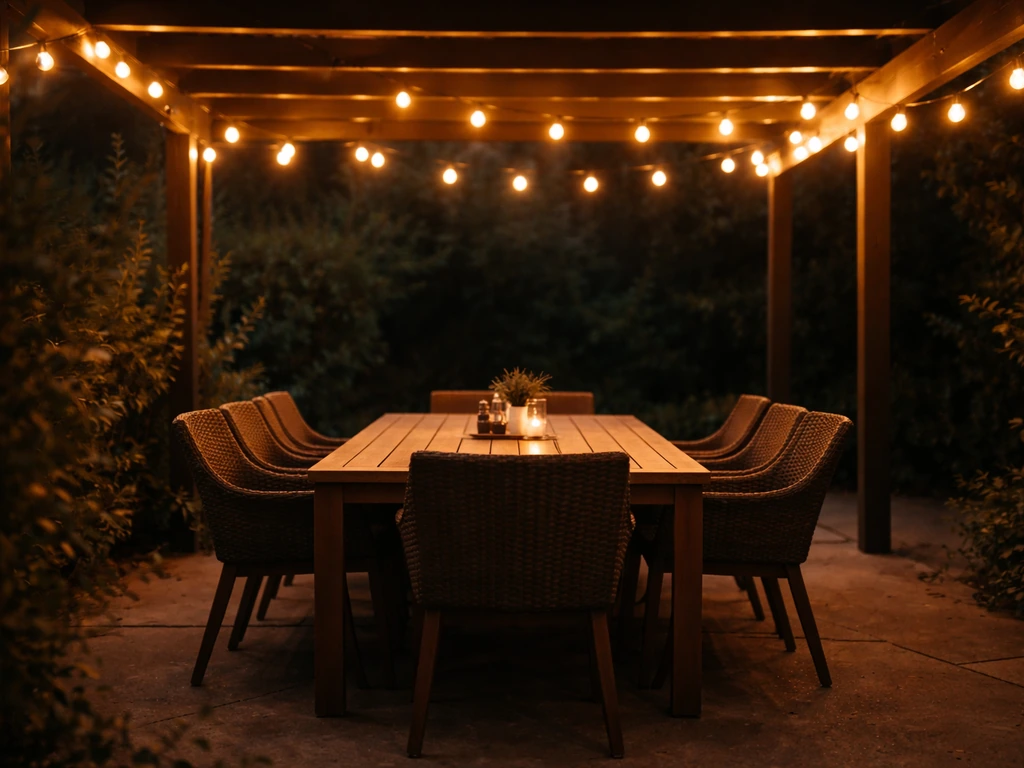
String lights, also called café lights or bistro lights depending on bulb style, are the most popular patio lighting choice for homeowners and renters alike, and that popularity is earned. A well-hung set of LED café lights transforms a bare deck into something that actually feels like a destination. The classic look uses S14 or G40 bulb shapes on a black or white cord, spaced 12 to 18 inches apart across a 48 ft run. Enbrighten's LED café bulbs, for example, produce around 60–65 lumens per bulb at roughly 0.9 W each. That's modest per-bulb output, but a 24-bulb strand delivers around 1,400–1,560 total lumens spread across a space, which lands comfortably in the ambient seating range (5–15 foot-candles) for a typical 150–200 sq ft patio.
Pros and cons
- PRO: Warm, flattering light that works for almost any outdoor aesthetic
- PRO: Renter-friendly, no permanent installation required
- PRO: Wide price range, from $20 budget sets to $150+ commercial-grade options
- PRO: LED versions are highly energy-efficient at 60–100+ lm/W vs. 10–20 lm/W for incandescent
- PRO: Many sets support daisy-chaining for long runs
- CON: Not bright enough for cooking or task-heavy zones
- CON: Cheap sets use non-replaceable integrated bulbs that require replacing the whole strand when they fail
- CON: Exposed to UV degradation over time if the cord isn't rated for outdoor use; look for ETL-listed, wet-location-rated cords
- CON: Sagging over long spans if not supported by guide wire or catenary cable
Price ranges and what you get
Budget sets ($20–$40) like the Hampton Bay 48 ft LED S14 Edison string (around $29.97 at Home Depot) get the job done for casual use, but the plastic sockets and non-replaceable bulbs mean you're likely replacing the whole set in two to three seasons with heavy use. Mid-range sets ($40–$80) from brands like Brightech typically offer commercial-grade construction, replaceable bulbs, and longer warranties (Brightech lists a 5-year warranty on some of its purchased-item string lights). Premium and smart sets ($80–$200+) step up to app control, color-changing capability, and in the case of LIFX's outdoor string, a 1,500 K to 9,000 K color range. For the best outdoor string lights and bistro-specific picks, there are dedicated roundups worth checking out that go deeper on individual products within these categories.
Best uses
- Overhead canopy lighting across a deck, pergola, or courtyard
- Perimeter lighting along a fence line
- Wrapped around pergola rafters or draped across umbrella ribs
- Party and seasonal lighting where easy removal matters
Wall-mounted and flood lights: when you need real brightness
String lights are beautiful, but they won't light up your grill at 9 p.m. or deter someone who walks up to your back door. That's where wall-mounted sconces and flood lights earn their keep. This category covers a wide spectrum: a decorative sconce at the back door producing 800–1,000 lumens, a motion-activated security flood at 2,000–5,000 lumens, and everything in between. For an outdoor dining table that needs 10–30 foot-candles over a 40 sq ft table area, you need roughly 400–1,200 lumens aimed at the surface, so a single well-placed 1,000-lumen wall sconce can do the job. For a 200 sq ft cooking zone needing 30+ foot-candles, you're looking at 6,000+ lumens total, which typically means two or more high-output flood fixtures.
IP ratings and NEC compliance matter most here
Because wall-mounted fixtures are usually hardwired or plugged into a fixed outdoor outlet, getting the weatherproofing spec right is non-negotiable. Under a covered eave that stays dry counts as a damp location under NEC Article 410, and the minimum is IP44 (splash-resistant from any direction). An exposed, open-air wall that takes direct rain needs IP65 (fully dust-tight, protected against water jets). If the fixture is mounted near an irrigation head or is ground-level in a wet area, go to IP67. Always verify the manufacturer's IP rating on the actual product datasheet, not just the Amazon listing description. The NEC also requires that hardwired outdoor fixtures be listed (UL/ETL-certified) for wet or damp locations depending on placement, and outdoor receptacles feeding plug-in fixtures must be GFCI-protected under NEC Article 210.8.
Pros and cons
- PRO: Highest lumen output of any patio light category
- PRO: Hardwired options are always-on reliable with no battery or solar dependency
- PRO: Motion-sensor and dusk-to-dawn models handle security automatically
- PRO: Modern LED wall fixtures achieve 60–140 lm/W, making them cheap to run long-term
- PRO: Long lifespans of 25,000–50,000 hours for quality LED fixtures
- CON: Hardwired installs require an electrician and typically a permit
- CON: Not renter-friendly unless plug-in models are used
- CON: Can look harsh or industrial if the fixture style doesn't match the patio aesthetic
- CON: Fixed position limits flexibility compared to string lights
Price-wise, a decent plug-in or hardwire LED wall sconce starts around $40–$60 for functional but basic models. Motion-sensor security floods from trusted brands run $60–$120. Premium smart-enabled or designer wall fixtures land at $120–$300 and beyond. For most patios, one or two mid-range LED wall fixtures paired with a string light canopy gives you the best of both worlds: functional task and security light from the wall, ambiance from above.
Solar patio lights: the honest truth about what they can and can't do
Solar patio lights get a lot of marketing hype, and they genuinely have a place in any outdoor setup, but that place is more specific than most buyers realize. The fundamental constraint is energy storage: a solar panel charges a battery during the day, and that battery powers the lights at night. Most consumer-grade solar string and stake lights produce between 50 and 400 lumens per set and deliver 4–8 hours of runtime after a full day of charging. On cloudy days or in partially shaded spots, runtime and brightness drop significantly. That's not a knock against the technology; it's just physics, and it shapes exactly where these lights work well.
Pros and cons
- PRO: Zero ongoing energy cost once purchased
- PRO: No outlet required, perfect for areas far from the house or with no wiring
- PRO: Easy to reposition and renter-friendly
- PRO: Brands like Brightech solar string lights have strong user reviews for run time and ease of use
- CON: Output is genuinely dim compared to plug-in options; not suitable for dining or task zones
- CON: Performance degrades in shade or partial sun locations
- CON: Solar panels and batteries typically last 2–5 years before degradation becomes noticeable
- CON: Cold climates reduce battery performance in winter
- CON: Reliable runtime requires 6+ hours of direct daily sun
Best uses and price ranges
Solar lights excel at pathway borders and garden edges (where even 50–100 lumens per stake is plenty for the 1–5 foot-candle pathway target), as supplemental accent lighting on fences, and in areas simply too far from an outlet to run a cord. Solar stake sets start around $15–$30 for basic path light packs. Solar string light sets from quality brands run $30–$90. If you're choosing between a $25 no-name solar string and a $60 Brightech solar set, the extra spend buys you a meaningfully better solar panel, a larger battery, and replaceable bulbs, which matters a lot when you're depending on the system to perform every night. IP65 is the minimum you should accept for any solar fixture left outdoors year-round.
LED fixtures and strip lights: the underrated workhorses
LED strip lights and dedicated LED patio fixtures (post caps, step lights, under-rail strips) don't get as much attention as string lights, but they solve real problems that string lights can't. Step lighting is a safety necessity on any deck with level changes; a trip hazard at night is a liability, and a $20–$40 run of IP65-rated outdoor LED strip solves it cleanly. Under-rail or under-bench LED strip creates a floating, architectural look that's increasingly popular in modern deck designs. Post-cap and bollard LED fixtures define pathways and seating zones without requiring overhead mounting.
What to look for in outdoor LED strips
The key spec difference between indoor and outdoor LED strip is the IP rating and the housing. Indoor strips are typically IP20 (no water protection) and will fail quickly if exposed to moisture. Outdoor-rated strips need at minimum IP65 (silicone-coated for water jets) and ideally IP67 if they're in a channel that could pool water. Modern LED fixtures easily hit 60–140 lm/W efficacy, per DOE guidance, meaning they're cheap to run even compared to other LEDs. The DOE's LED Outdoor Area Lighting Fact Sheet (LED Outdoor Area Lighting Fact Sheet (U.S. Department of Energy)) notes that modern LED outdoor area luminaires commonly achieve tens to over 100 lm/W and uses luminaire efficacy and reporting criteria as the reference for performance and life/lumen maintenance claims. Strip lights typically deliver 200–600 lumens per 16 ft reel depending on LED density, which is plenty for accent and safety purposes but not for primary ambient lighting over a large area.
Smart LED options
Smart LED strips add RGB color control and app scheduling to your outdoor step or rail lighting. The main decision is whether you want a hub-based system (Philips Hue, Lutron) or a Wi-Fi-direct setup (many brands on Amazon). Hub systems offer more reliable connectivity and better long-term app support but add upfront cost. Wi-Fi-direct strips are cheaper and simpler but app quality and long-term firmware support vary significantly by brand. If you're already building a smart patio ecosystem with smart string lights, matching your strip lights to the same ecosystem makes scheduling and scene control much easier.
Pros and cons
- PRO: Extremely long lifespans, up to 30,000–50,000 hours for quality LED strips
- PRO: Low-profile installation that doesn't change the visual character of the space during the day
- PRO: Effective for step, stair, and under-rail safety lighting
- PRO: Smart RGB versions offer full color control and scene programming
- PRO: Energy-efficient at 60–140 lm/W; cheap to run continuously
- CON: Not a standalone ambient light source; needs to be paired with other lighting
- CON: Outdoor IP65/IP67-rated strips cost more than indoor strips
- CON: Cutting and soldering waterproof strips to custom lengths requires some DIY comfort
- CON: Smart strip app quality is inconsistent across budget brands
Price-wise, a 16 ft run of basic outdoor IP65 LED strip runs $20–$40. Smart RGB outdoor strip kits from reputable brands land at $40–$80 for comparable lengths. Full landscape LED kits with transformer, cable, and multiple fixture heads start around $50 and scale up past $200 for larger properties or higher-quality components.
IP ratings decoded: matching weatherproofing to your actual conditions
The IP (Ingress Protection) rating system comes from IEC 60529 and tells you exactly how resistant a fixture is to dust and water. The first digit is dust protection (0–6) and the second is water protection (0–8). For practical patio buying decisions, here's what the relevant ratings mean in plain terms.
| IP Rating | Water Protection Level | Where It's Appropriate |
|---|---|---|
| IP44 | Splashing water from any direction | Covered porch, under eave (damp location) |
| IP54 | Splash-resistant from any direction, some dust | Semi-covered areas with occasional rain exposure |
| IP65 | Dust-tight + water jets from any direction | Open-air patio, exposed deck, near sprinkler zones |
| IP67 | Dust-tight + immersion up to 1 meter (30 min) | In-ground fixtures, areas that pool water after rain |
| IP68 | Dust-tight + continuous immersion beyond 1 meter | Underwater/pool applications only |
My practical recommendation: default to IP65 for any fixture that will be fully exposed to outdoor weather year-round. If you're ever uncertain whether your patio qualifies as damp or wet under the NEC, treat it as wet and buy accordingly. The cost difference between an IP44 and an IP65 rated fixture is usually minimal, and the consequences of getting it wrong (corrosion, short circuits, fixture failure) are significant.
Installation, safety, and maintenance
For plug-in string lights, installation is mostly about planning your hang points. Use screw hooks, cup hooks, or dedicated outdoor cable hooks rated for the cord weight. If you're spanning a distance longer than 15 ft unsupported, run a steel guide wire between anchor points and hang the string from that; this prevents the cord from stretching and the sockets from cracking over time. For overhead spans across a deck or courtyard, the guide wire approach is essentially mandatory for anything over 20 ft.
For hardwired wall fixtures, unless you're completely comfortable with residential wiring, hire a licensed electrician. Beyond the safety argument, improperly installed outdoor fixtures are a permit and insurance issue. The electrician visit is typically $100–$200 for a simple fixture swap and well worth it. Make sure the junction box is rated for outdoor/wet location use before mounting any exterior fixture to it.
On maintenance: LED fixtures require almost no active maintenance beyond occasional cleaning with a damp cloth. Replace any cracked or moisture-fogged globes promptly since water intrusion accelerates corrosion on the socket and driver. For solar lights, clean the solar panel monthly with a soft cloth because dust and pollen accumulation measurably reduces charging efficiency. Store battery-dependent solar lights indoors during prolonged winter periods if you live in a cold climate since lithium and NiMH batteries degrade faster when repeatedly discharged in freezing temperatures.
Where to buy and what to expect at each price tier
Amazon, Home Depot, and Lowe's are the three dominant retail channels for patio lights, and each has a different sweet spot. For a broad selection and user reviews, see the best patio lights on Amazon to compare models, specs, and prices in one place. Amazon has the widest selection and is hard to beat for LED strip lights and budget-to-mid string sets, but product quality varies enormously between brands, and IP rating claims on Amazon listings aren't always backed by actual third-party test reports. Home Depot and Lowe's carry a narrower but more vetted selection, and their return policies are more buyer-friendly for large or heavy items. For premium smart lighting systems, brand websites (Brightech, LIFX, Govee, Philips Hue) often offer better warranty terms and firmware support than the same products sold through Amazon third-party sellers.
| Price Tier | What You Typically Get | Where to Buy |
|---|---|---|
| Budget ($15–$40) | Commodity LED or incandescent strings, basic solar stakes, non-replaceable bulbs, 1-year warranty or none | Amazon, big-box stores |
| Mid-range ($40–$90) | Commercial-grade LED strings, replaceable bulbs, IP65 rating, 2–5 year warranty, reputable brands | Amazon, Home Depot, brand sites |
| Premium ($90–$200+) | Smart Wi-Fi control, color-changing RGB, high IP rating, long warranties, modular components | Brand websites, Home Depot, specialty retailers |
| Pro/landscape ($200+) | Low-voltage transformer kits, in-grade fixtures, full IP67 weatherproofing, contractor-grade construction | Lighting specialty stores, online landscape suppliers |
One practical tip for Amazon shopping: filter by listings that include an actual IP rating in the product specifications (not just "weatherproof" in the title), look for ETL or UL certification listed in the features, and check the Q&A section for user questions about bulb replaceability and warranty claims. The FTC's Lighting Facts label, when present on a product page, standardizes reported lumens, wattage, color temperature, estimated annual energy cost, and bulb life, making it far easier to compare products accurately.
Design and placement tips that actually make a difference
The single biggest mistake I see in patio lighting is relying on one light source at one height. The best outdoor spaces use at least two layers: overhead ambient (string lights, ceiling-mounted fixtures) and lower-level accent or task (wall sconces, path lights, strip lights on steps). Overhead-only setups create flat, even light that lacks depth and warmth. Adding a lower layer, even just solar stake lights along a garden edge or LED strip under a bench, immediately improves the visual quality of the space.
Color temperature is worth getting right. For dining and entertaining, 2,700–3,000 K (warm white) is almost always the right choice. It's flattering to people and food, it reads as relaxing rather than clinical, and it pairs well with natural wood and stone. Save 4,000 K and above for utility zones like a grill station or a workshop-adjacent patio where you need accurate color rendering for tasks. If you're adding other decorative elements to your patio, like outdoor flags or artwork that you want to see clearly at night, a slightly brighter 3,000 K warm white or a targeted accent light aimed at the feature works better than general ambient string light from 10 ft above. If you're interested in outdoor flags, see our guide to the best flags for patio for tips on weatherproof materials, proper sizing, and mounting options.
For string light layout, the most versatile hang pattern is a simple parallel run from house to fence or pergola beam, with 18–24 inches of sag in the middle of each span. The sag adds visual warmth and reduces mechanical stress on the sockets. Crisscross or grid patterns look great in photos but require more mounting hardware, more guide wire, and more careful planning to avoid creating a web of cords that tangles when you need to remove a bulb.
Your next steps
Start by measuring your patio, counting your hang points, and checking whether your outdoor outlet is GFCI-protected. Those three steps alone will eliminate most of the buying mistakes. If you're setting up a string light canopy, pick your IP rating based on your actual exposure level, choose LED over incandescent for any set you plan to leave up year-round, and go replaceable-bulb if your budget allows. For a curated list of options and quick comparisons, see our guide to the best outdoor patio lights. If you need task brightness near a grill or door, add one wall-mount LED flood with a motion sensor. If your patio has steps or a raised deck edge, run IP65 LED strip lighting along the risers before you do anything else. From there, adding smart control, solar accents, or additional decorative layers is a series of incremental upgrades rather than one overwhelming decision.
FAQ
Which industry standards and test reports should I cite to support LED performance and lifetime claims in a buyer’s guide for patio lights?
Cite IES standards LM‑79 (electrical and photometric measurements of LED luminaires) and LM‑80 (lumen‑maintenance testing of LED packages/arrays) plus TM‑21 extrapolation methods. Use independent LM‑79 lab reports and LM‑80 data (or manufacturer LM‑80 reports) to verify advertised lumens, efficacy (lm/W), and lumen‑maintenance/life (L70) claims.
What photometric and design guidance should I include to recommend brightness levels for different patio tasks?
Use IES/industry recommended maintained illuminance ranges: pathway/circulation ~1–5 fc (10–50 lx), ambient seating ~5–15 fc (54–161 lx), dining/table task ~10–30 fc (108–323 lx), and cooking/task areas >30 fc. Convert these to lumens needed by area (1 fc = 1 lumen/ft²) and show examples (e.g., 100 ft² dining area at 10 fc = 1,000 lumens total). Cite IES guidance or reputable summaries (LEDVANCE, IES RP references).
Which product specifications are essential to list and verify for each recommended patio light?
Require: total delivered lumens, fixture wattage (or per‑bulb wattage for strings), efficacy (lm/W), Correlated Color Temperature (CCT, K), Color Rendering Index (CRI), IP ingress rating, listing/ratings (wet/damp location), rated life (hours/L70), warranty length, power type (plug‑in/hardwired/solar/battery), connectivity (Wi‑Fi/Hub/Zigbee), and manufacturer datasheet or LightingFacts label. Where possible link to manufacturer spec sheets or LightingFacts/FTC listings to verify numbers.
How should I verify weatherproofing and durability claims for outdoor fixtures?
Verify the IEC IP rating on the manufacturer datasheet and confirm the intended installation scenario (under eave vs. exposed). Reference IP mapping guidance: IP44 for damp/under‑eave, IP65 for exposed fixtures/sprays, IP67/IP68 for immersion/ground/pool. For material/UV resistance, cite accelerated weathering standards (ASTM G154/G155 or ISO 4892) and request manufacturer test reports or warranty statements proving UV/temperature resilience.
What consumer‑facing energy and performance labels or programs should be used to check claims?
Use the FTC/Lighting Facts label to confirm reported lumens, wattage, CCT, CRI, life hours, and estimated annual energy cost. For energy‑efficiency context, cite U.S. DOE and ENERGY STAR guidance/program requirements for outdoor luminaires and luminaire efficacy (lm/W) thresholds.
What real‑world testing protocols should reviewers follow and cite when evaluating patio lights?
Include lux/foot‑candle measurements with a calibrated lux meter at fixed distances and mounting heights, runtime/discharge tests for solar and battery models, environmental exposure checks (rain/splash testing), and visual/color uniformity checks. Reference testing approaches used by trusted reviewers (Wirecutter/Reviewed) and include measured lux at set distances plus photographic evidence where possible.
Next Articles
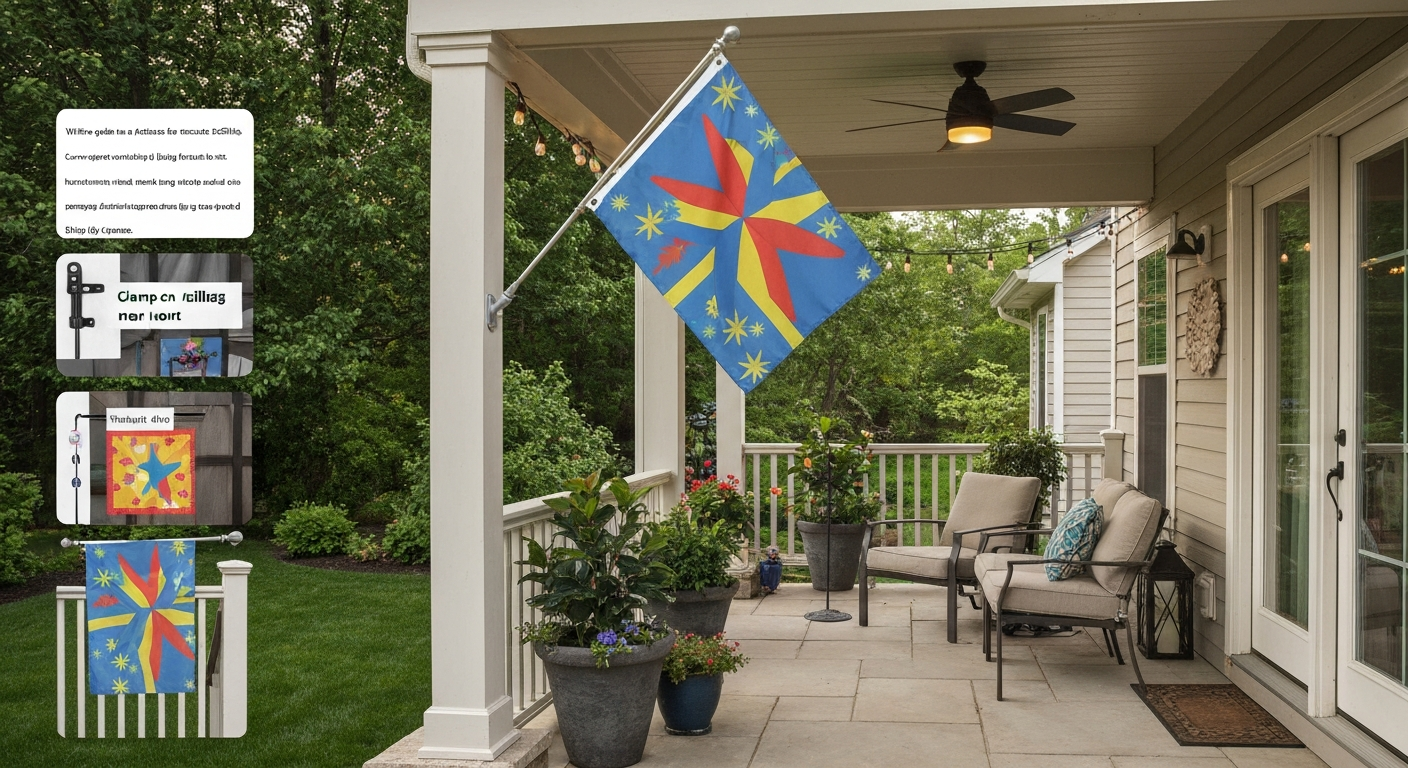
Best Flags for Patio: Top Picks, Materials, and Mounting
Best flags for patio: top picks by use and budget, materials, mounting, renter-friendly options, care, and install tips.
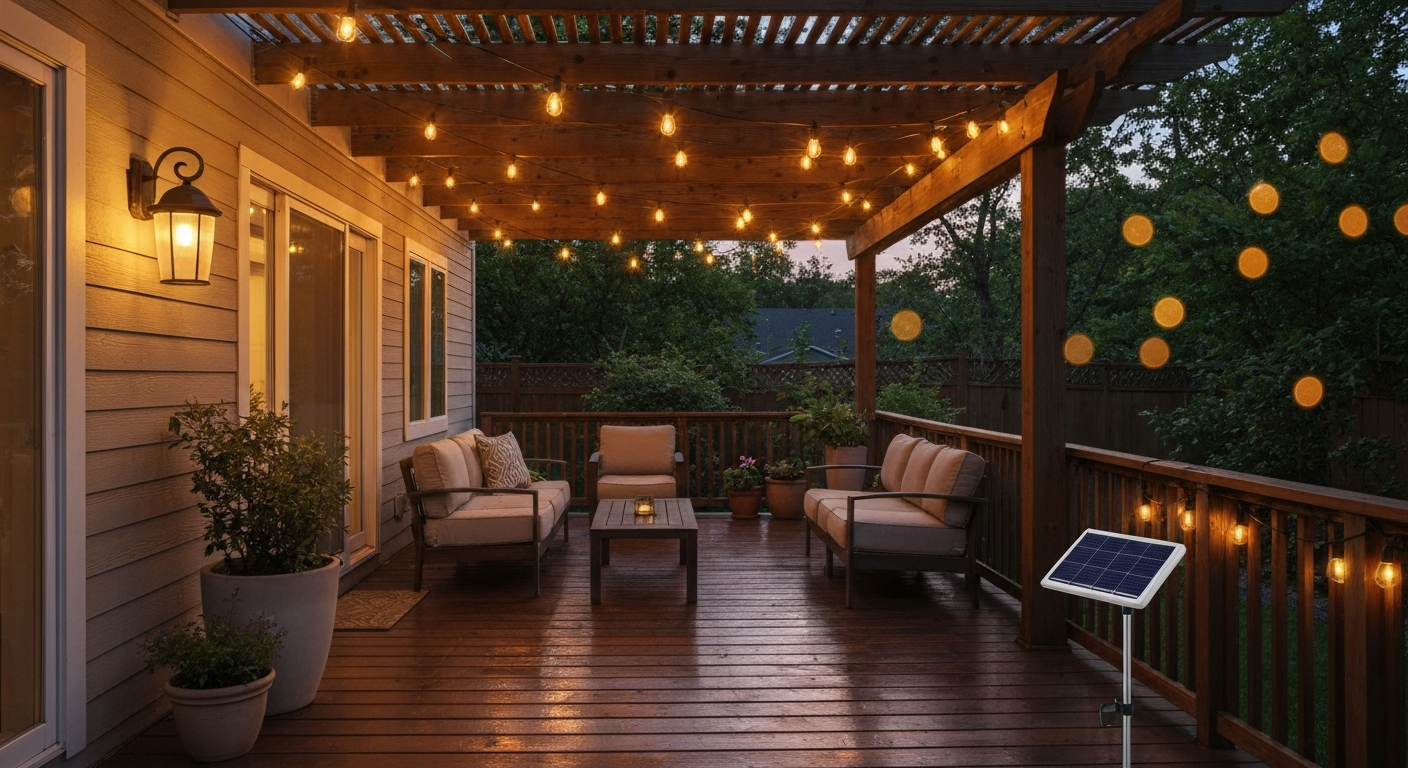
Best Patio Lights on Amazon: Top Picks, Buying Guide and Reviews
Best patio lights on Amazon: top string, solar, LED & hardwired picks with pros/cons, installation & buying tips.
Best Bistro Lights for Patio: Buy Guide and Setup Tips
Choose the best patio bistro lights with brightness, bulb type, coverage, power, weather safety, and setup tips by layou