
The best outdoor string lights for most patios are warm-white (2200K–2700K), wet-rated LED sets with at least an IP44 rating, spaced 12 to 24 inches apart, and powered by a standard plug-in outlet with a GFCI connection. If you have a small to medium patio, a 24-foot set like the Sunco 24ft LED string (12W, 900 lumens, IP44, 2200K) does the job beautifully.
Best Outdoor String Lights for Patio: 2026 Buyer Guide

Lark Perry
29 Apr 2026
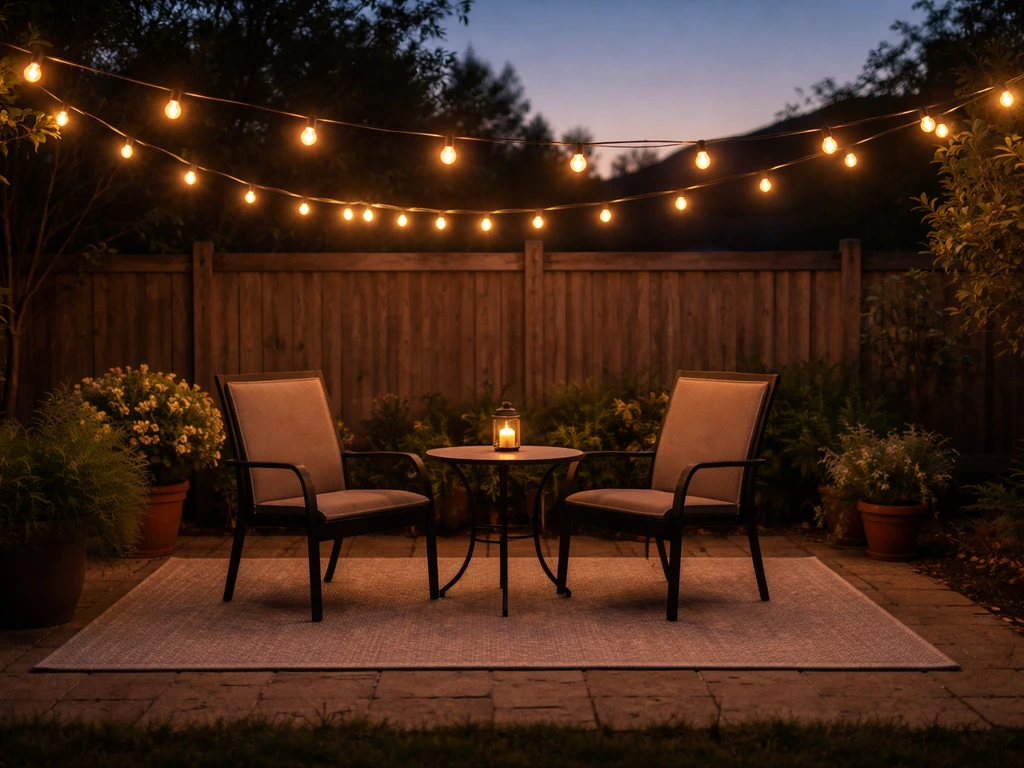
For a larger entertaining space, step up to something like the Torchstar Pro 96-foot set (30 bulbs, 2700K, IP65) which can wrap a pergola or cover a big deck without daisy-chaining six sets together. Solar is a solid option if you have no nearby outlet, but you trade raw brightness for convenience. Here is everything you need to know to choose, install, and keep your lights running season after season.
To find the best bistro lights for patio use, prioritize warm color temperature, wet-rated safety, and the right spacing for an even glow. If you want the best outdoor patio lights, start by prioritizing warm color temperature, weatherproof ratings, and safe power options.
How to choose the right string lights for your patio
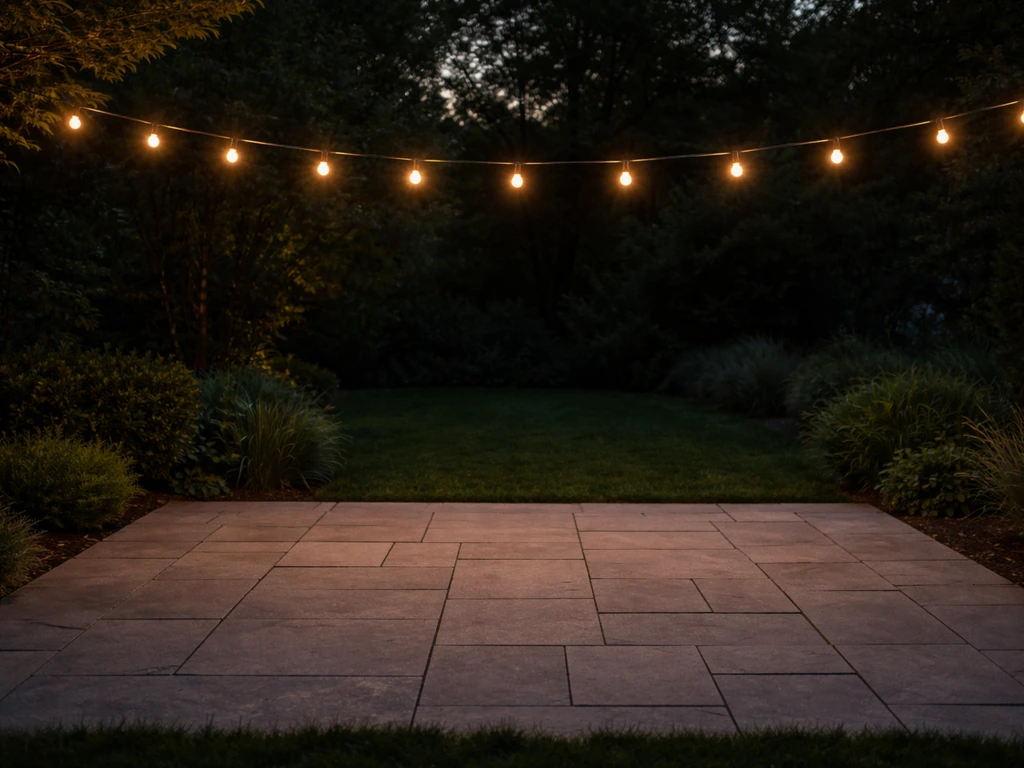
Start with two questions: how much space are you covering, and how bright do you actually want it? String lights are atmospheric by nature, not floodlights, so the goal is even, warm coverage rather than maximum lumens. A 24-foot set with 12 bulbs at 900 total lumens is enough to line a small balcony or define a cozy seating corner. A 96-foot set with 30 bulbs handles a full deck, pergola, or backyard dining area without feeling patchy.
Beyond length, look at bulb spacing. Most residential string light sets space bulbs 12 to 24 inches apart, which is the sweet spot between warm ambiance and energy efficiency. Tighter spacing (around 12 inches) creates a denser, more festive glow. Wider spacing (closer to 24 inches) gives a more elegant, spread-out look that works well for large areas. You can also connect multiple sets in series to cover more ground, but check the manufacturer's limit first. The SATCO S8030, for example, allows up to 10 sets connected end-to-end for a total of 240 feet.
Bulb style is mostly aesthetic, but it does affect light spread. S14 Edison-style bulbs (the large globe shape) scatter light in all directions and look great as a focal point. G40 globes are softer. Filament-style LED bulbs mimic the vintage incandescent look while staying efficient. Whichever you pick, make sure the bulbs are replaceable individually rather than integrated into the wire, so you are not junking an entire set when one burns out.
Power options: plug-in, extension cord, solar, and battery
The power source you choose determines how reliably your lights perform, how bright they are, and how much setup hassle you are dealing with. Each approach has a clear use case.
| Power Type | Best For | Brightness | Main Tradeoff |
|---|---|---|---|
| Plug-in (standard outlet) | Most patios with a nearby GFCI outlet | Highest and most consistent | Needs an outlet within reach |
| Extension cord | Patios where the outlet is 20–50 feet away | Same as plug-in | Cord must be rated for outdoor use |
| Solar | Areas with no outlet access and good sun exposure | Lower, varies by charge | Needs 20+ hours of sun to fully charge; dims in cloudy weather |
| Battery backup | Emergency or supplemental use | Limited runtime | Requires 24-hour initial charge; not a primary power strategy |
Plug-in is almost always the right first choice if you have a GFCI outlet on your patio. You get full brightness every night without worrying about charge levels. If your outlet is far away, use an outdoor-rated extension cord (12 or 14 gauge for longer runs) rather than daisy-chaining indoor cords.
Solar string lights are genuinely useful when there is no outlet option, but go in with realistic expectations. A good solar set like the LuminAID solar string light runs at about 40 lumens on high mode, which is noticeably dimmer than a 900-lumen plug-in set. The tradeoff is that you get portability and zero electricity cost.
Solar panels also need more charging time than most people expect: the LuminAID, for instance, requires about 20 hours of direct sunlight for a full charge, though it can also charge via USB in 2 to 3 hours. According to LuminAID’s product details, its solar string light recharges in about 20 hours of direct sunlight, or 2 to 3 hours via USB about 20 hours of direct sunlight (or 2 to 3 hours via USB).
If your patio gets mostly shade or you are in a rainy climate, solar is a frustrating experience.
Battery-powered string lights are best used as a backup or accent layer, not a primary source. Sunco's guidance on battery-equipped sets recommends a full 24-hour initial charge before first use or before relying on battery mode during a power outage. For casual accent lighting on a table or railing, battery-powered is fine. For full patio coverage, it is undersized for the job.
LED features that actually matter outdoors
Color temperature: warm wins for patios
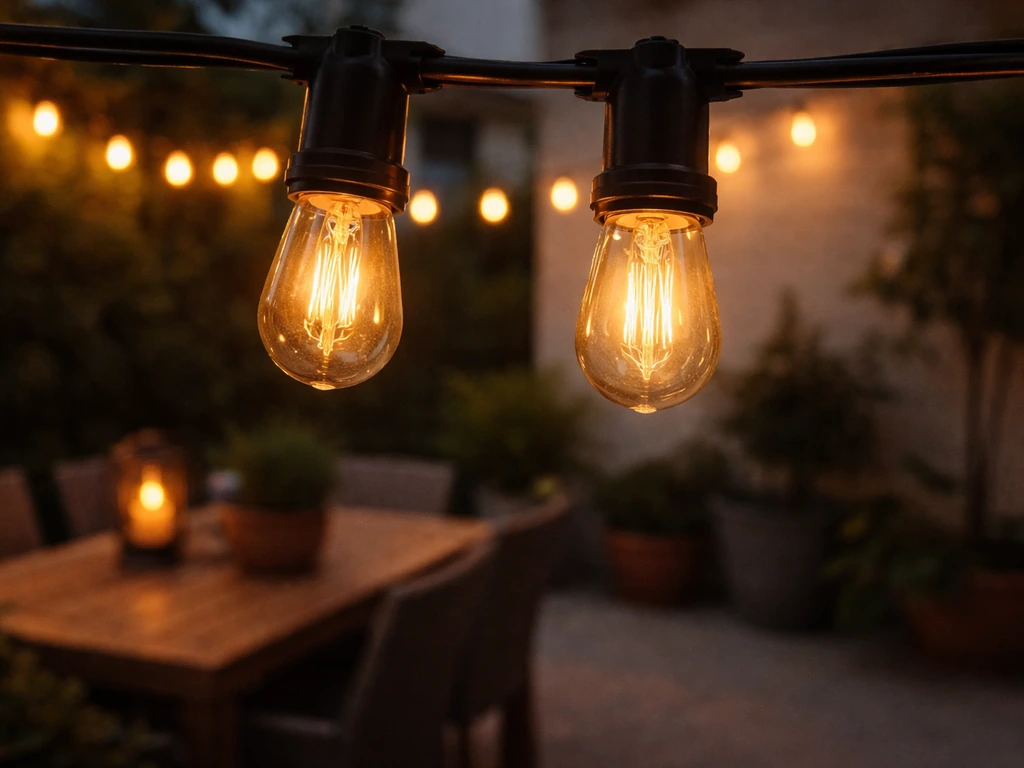
For patio ambiance, stick to 2200K–2700K (warm white). The Sunco 24ft set and the SATCO S8030 both run at 2200K, which is a deep, golden amber tone that reads as cozy and relaxed outdoors. The Torchstar Pro 96ft set is 2700K, which is slightly less amber but still firmly in warm-white territory. Anything above 3000K starts to feel clinical and washes out the warm outdoor atmosphere you are trying to create. Skip cool white (4000K–6500K) for any social or dining space.
CRI: the quality of the light, not just the quantity
Color Rendering Index (CRI) measures how accurately a light source shows the true colors of objects around it. For patio use, a CRI of 80 or above is the standard to look for, and both the SATCO S8030 (CRI 80+) and the Torchstar Pro (CRI 80+) hit that mark. Higher CRI means your plants, food, and furniture look natural rather than washed out or oddly tinted.
Dimming: a practical upgrade, not a luxury
Dimmable string lights are worth the slight price premium. Being able to dial down brightness is useful when you shift from dinner to after-dinner lounging, or when neighbors are close enough that full brightness feels invasive. Look for sets that are labeled 120V dimmable, and pair them with an outdoor-rated dimmer switch or a smart plug with dimming capability. Some sets, like certain AQLightingGroup models, are spec'd as dimmable right out of the box.
Weather and safety ratings: what to look for and what to ignore
This is where a lot of buyers make mistakes. Not all outdoor-labeled string lights are equal in weather resistance, and the difference matters if your patio gets real rain, not just light drizzle.
Wet vs. damp rated
A wet-location rating means the fixture is designed to prevent water from accumulating on internal electrical components, either through sealing or drainage design. It is safe for direct rain exposure. A damp-location rating means the fixture can handle humidity and occasional moisture contact, but it is not designed for direct water spray or prolonged rain. If your patio is fully exposed, buy wet-rated. If it is under a solid roof with no blowback, damp-rated is acceptable.
IP ratings explained simply
The IP (Ingress Protection) rating is a two-digit code. The first digit covers solid particle protection; the second covers water. For patio string lights, focus on the second digit. IP44 means the fixture is protected against water splashing from any direction, which covers light rain and sprinklers. IP65 means it is fully dust-tight and protected against low-pressure water jets from any direction, which is significantly more robust. For an open, exposed patio, IP65 (like the Torchstar Pro 96ft) is the safer long-term investment. For a covered patio or pergola with overhead protection, IP44 (like the Sunco 24ft) is generally sufficient.
UL listing and GFCI: non-negotiable safety basics
Always look for a UL wet-rated listing, not just a manufacturer's claim of being waterproof. UL 588 and UL 1598 are the relevant standards for outdoor string lights and luminaires respectively, and a listed product has been independently tested. Beyond the listing on the product, connect your string lights to a GFCI-protected outlet any time they are used in wet or damp locations. The SATCO S8030 documentation specifically calls this out, and it is the single most important safety step you can take. If your patio outlet is not already GFCI-protected, a licensed electrician can add one for relatively little cost.
Best picks by patio type and use case
Small patio or balcony (under 200 sq ft)
One 24-foot set is usually enough for a small balcony or apartment patio. The best patio lights to buy are the ones that match your patio size and exposure, like choosing the right length and IP rating. The Sunco 24ft LED set (12W, 900 lumens, 12 bulbs, 2200K, IP44) is a strong choice here. It is priced accessibly, provides warm and even light, and the IP44 rating handles typical covered-balcony exposure. If your balcony is fully open with no roof coverage at all, go with an IP65-rated set instead.
Medium patio or deck (200–500 sq ft)
Plan for 48 to 72 feet of string lights, either by using a longer single set or connecting two 24-foot sets. The SATCO S8030 is excellent in this range: it connects up to 10 sets in series, uses 1W S14 bulbs at 2200K (CRI 80+), and is wet-rated (IP44). The per-bulb replaceable design is a real long-term advantage. Connect to a GFCI outlet and you are set.
Large entertaining space or backyard (500+ sq ft)
The Torchstar Pro 96-foot set (30 bulbs, 2700K, CRI 80+, IP65) is built for this. At 96 feet, it wraps a large pergola or outlines a full deck in a single run. The IP65 rating means you do not need to worry about storms or heavy rain. This is where you spend a little more, because replacing a cheap 96-foot set every season ends up costing more than buying a quality one upfront.
Pergola or awning installation
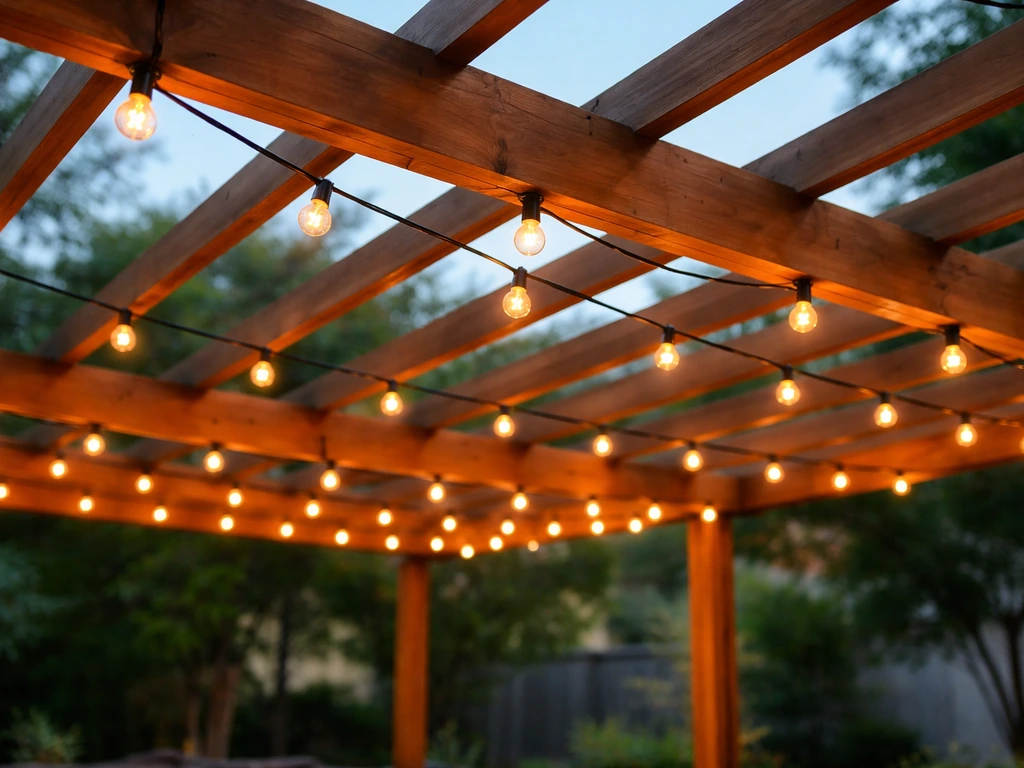
Pergolas are the ideal string light setup because you have natural attachment points on every beam. Drape lights across the beams in a grid or hang them in a canopy pattern. A longer IP65-rated set works best here since pergolas are often partially exposed to rain. You want at least 8 to 10 feet of clearance under the lights at the lowest point, so factor that into your hanging height.
Dining area vs. lounge area
For a dining table, hang lights directly overhead in a canopy or V-shape pattern so the light falls onto the table surface. For a lounge seating area, draping lights around the perimeter (along fence posts or poles) creates a more ambient, less directional effect. Dimmable sets shine in both scenarios because you can brighten up for dinner and dial back for relaxed evening drinks.
No-outlet patio or garden area
If you genuinely have no outlet access, solar is the practical choice. Set expectations correctly: solar string lights like the LuminAID top out around 40 lumens on high mode, so they work well as accent or pathway lighting rather than primary patio illumination. Make sure the solar panel gets several hours of direct sun each day, and remember it needs about 20 hours of accumulated sunlight for a full charge from empty.
Installation, spacing, and layout tips
- Hang lights at 8 to 10 feet off the ground to leave comfortable walking clearance underneath. Lower than 8 feet and tall guests will brush against them; higher than 10 feet and the light starts to feel distant.
- Space bulbs 12 to 24 inches apart depending on the look you want. Closer spacing (12 inches) feels festive and full. Wider spacing (24 inches) is more elegant and covers more linear feet per set.
- Use guide wire or catenary wire as a backbone for longer runs. Do not let the wire sag freely between points more than 8 to 10 feet apart, as the weight and wind load will stress the wire connections over time.
- Attach hooks, cup hooks, or screw-in eye bolts to posts, fence rails, or pergola beams rather than using adhesive clips alone. Adhesive fails in heat and humidity outdoors.
- Always connect to a GFCI-protected outlet. If you are running an extension cord, use one rated for outdoor use (look for a 'W' suffix on the rating, such as SJTW or SJOOW).
- Test the full string before final installation. Lay it out on the ground, plug it in, and check every bulb before you spend 45 minutes stringing it across your patio.
- For a pergola grid pattern: run the first string along the length, attach it to the beams, then run parallel strings 2 to 3 feet apart across the width. Connect all strings back to the same outlet circuit and stay within the manufacturer's wattage limit per circuit.
Maintenance, troubleshooting, and keeping them going season after season
Bulb replacement
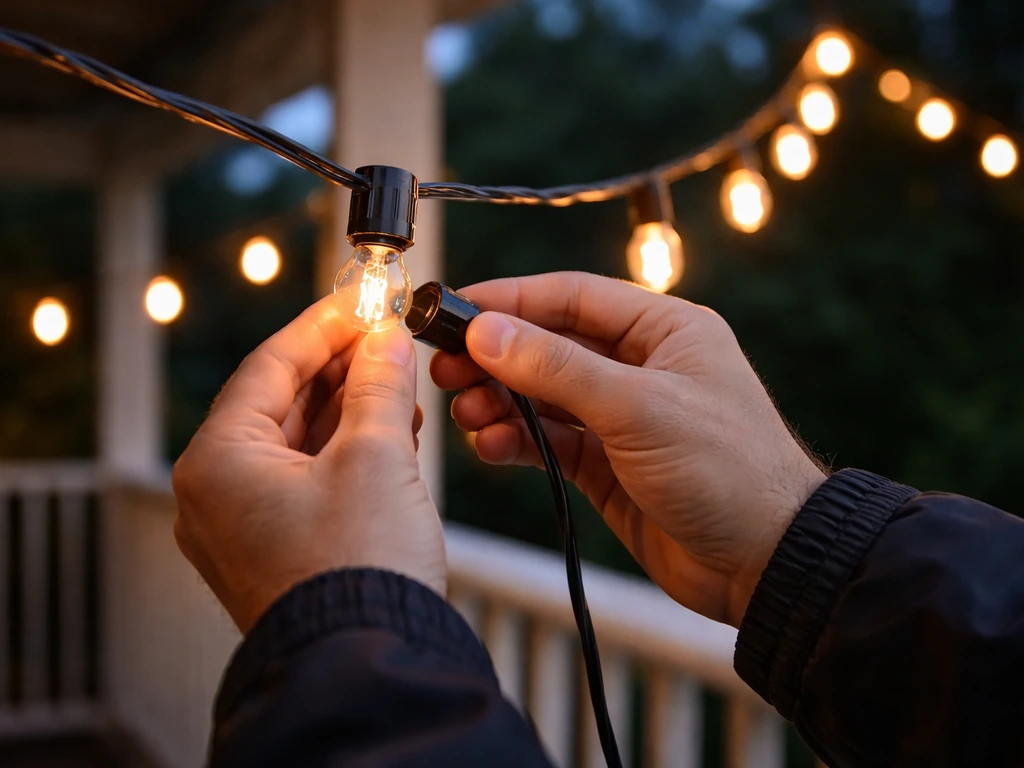
When a single bulb goes out on a quality set, replace it with the exact matching bulb type and wattage. Mixing bulb types or wattages creates uneven brightness and can cause hotspots that shorten the life of neighboring bulbs. The SATCO S8030 documentation specifically recommends contacting customer service about bulb replacements for wet or damp installations to make sure you get a compatible, listed replacement. Do not just grab the cheapest S14 bulb you can find online; match the spec exactly.
Flickering and dimming issues
If your lights flicker, check the connections first. A loose bulb socket or a partially seated plug is the most common cause. Some LED string sets can also produce a subtle 60Hz flicker that is more noticeable to some people than others, which is a hardware characteristic rather than a fault. If the entire string is dimmer than it used to be, check whether the dimmer switch or smart plug is set correctly, and inspect each bulb for signs of moisture intrusion or early failure.
Solar-specific troubleshooting
If your solar lights are not staying on through the night, the most likely culprit is insufficient charging time. Cloudy weeks, shaded panel placement, or a panel covered in dust or pollen will all cut runtime significantly. Wipe the panel surface clean periodically and make sure it is angled toward the sun with no overhead obstructions. If you have had the set for more than two or three seasons, the internal battery may be holding less charge than it did originally, which is normal battery degradation and usually means it is time to replace the set.
Fading and UV damage
Over time, direct sun exposure will yellow or fade the wire coating and bulb covers on most string lights. There is not much you can do to prevent this entirely, but storing the lights indoors during winter significantly extends their life. UV-resistant PVC or rubber-coated wire holds up longer than basic plastic, so it is worth noting in product specs when you are buying.
Seasonal storage
At the end of the season, take the lights down rather than leaving them up through winter unless the manufacturer explicitly rates them for year-round outdoor use. Coil them loosely (tight coiling stresses the wire), store them in a dry location, and replace any visibly damaged bulbs before putting them away so you are ready to go in spring. Many manufacturers, including Torchstar, handle failures through an RMA process where they replace defective products with the same or equivalent model, so hold onto your receipt and warranty documentation.
Where to spend money and where to save
Spend on IP rating and wet-location certification, wire quality, and replaceable bulbs. Save on brand prestige and decorative packaging. A well-spec'd set from a less flashy brand beats a beautifully marketed set with IP44 on paper and no real UL listing every single time. If you are covering a large patio and plan to leave lights up all season, the cost-per-year math almost always favors one quality set over two cheap ones.
FAQ
Do I need UL wet-rated outdoor string lights even if my patio is covered by a roof?
If the lights can get exposed to direct rain, blown water, or frequent hose spray, you still want a UL wet-rated listing. If they only see occasional humidity and no direct water spray, a damp-rated set can be acceptable, but you should base the decision on where water actually lands when it rains, not just whether there is an overhead roof.
How can I tell the difference between “wet-rated” and “waterproof” claims?
Use the actual wet-location and UL listing language, not marketing terms like “waterproof” or “all-weather.” The practical tell is whether the packaging or listing explicitly states wet-location suitability and whether it includes an independent listing you can verify, not only a generic “IP rated” statement.
Can I use a standard indoor extension cord with my outdoor string lights?
Only if it is clearly labeled for outdoor use and the correct gauge for the run length. For anything beyond short distances, choose an outdoor-rated cord (and avoid bundling the cord tightly, which can increase heat), and never replace safety-rated extension cord connections with improvised wire splices.
What happens if I exceed the maximum number of string sets that can be connected?
You can overload the driver and create uneven brightness, premature LED failure, or tripping at the outlet. If you need more coverage, it is usually safer to run a longer single set or split into two separate plugs on their own circuits, while staying within the manufacturer’s maximum series limit.
Should I match bulb spacing exactly, or is mixing spacing okay?
Mixing spacing within a single connected run usually creates visual inconsistencies and can lead to odd “hotspots” where bulbs cluster. If you are extending coverage, match the exact model and spacing pattern, or use separate runs with consistent spacing and aim for even coverage rather than maximum brightness.
Are warm-white lights like 2200K always the best choice, or can 3000K still work?
2200K to 2700K is ideal for a cozy dining and lounge atmosphere. Around 3000K can still look warm, but once you cross into 3500K plus territory, the tone often reads more neutral to cool and can wash out food colors and outdoor materials under evening lighting.
What CRI should I prioritize if I care about how food and plants look on camera?
Aim for CRI 80 or higher for natural color. If you are filming or taking photos frequently, higher CRI models will generally produce more accurate reds, greens, and skin tones, and reduce the “yellow or gray” look that lower-CRI lights can cause under warm-white LEDs.
Is it safe to install string lights under a ceiling or soffit?
It can be safe, but pay attention to clearance and airflow requirements, and avoid trapping connections where moisture can accumulate. Also ensure the fixture and cord routing are still rated for the exposure, for example use wet-rated products for any area that could see direct rain or condensation dripping.
How do I hang string lights so they distribute evenly and do not sag?
Use the manufacturer’s intended hang points and keep the horizontal run level, for example tighten the line across supports rather than leaving long unsupported spans. If your set sags heavily, it can create uneven spacing and darker areas, so add support points or choose a longer run that matches your geometry better.
Can I replace only the bulbs if one fails, and will any S14 bulb work?
Only replace with the exact matching bulb type and electrical spec (wattage and base). Even if the bulb “fits,” differences in wattage or design can cause uneven output and reduce lifespan of neighboring bulbs. For wet or damp installations, follow the manufacturer’s replacement guidance to keep the system compatible and safe.
My lights flicker slightly at night, is that always a defect?
Not always. Some LED string sets produce faint flicker due to driver characteristics, and it is more noticeable to some people. If the flicker is accompanied by loose plugs, moisture signs, or a burning smell, treat it as a fault and check connections and seals first.
Do dimmable string lights require a specific dimmer or smart plug model?
Yes, dimmable performance depends on compatibility with the dimmer type and the electronics of the LED driver. If you use a non-compatible dimmer, you may get buzzing, limited range, or strobing. Choose an outdoor-rated dimmer or smart plug that explicitly supports dimming for the voltage rating stated on the string lights.
How should I plan for power if my patio has only one outdoor outlet?
Map your lighting layout first, then use one outlet per run rather than forcing a long chain through multiple sets. If you need both dining and lounge lighting, consider two independent string runs so you can control them separately and avoid relying on one dimmer setting for everything.
What causes solar string lights to turn on but dim to almost nothing by midnight?
Most commonly, insufficient stored energy from the previous day, especially after cloudy weather, short winter daylight, or shaded panel placement. Also check whether the panel is kept clean, because dust and pollen can cut charge, and older internal batteries can degrade gradually after a couple of seasons.
How often should I store patio string lights indoors for winter?
If the product is not explicitly rated for year-round outdoor exposure, remove it for winter. Coiling loosely and storing indoors in a dry spot reduces UV and temperature cycling damage to the wire coating and bulb covers, which typically extends the life more than any other single step.
Should I clean the wire and bulbs, and will cleaning affect the weather rating?
Yes, clean gently with power off and let everything dry completely. Avoid harsh solvents that can damage plastic bulb covers or wire insulation, and do not open sealed components. Cleaning helps reduce grime on surfaces, which is especially important for solar panels but also improves overall light output for plug-in sets.
Next Articles
Alternative to Patio Cushions: Durable, Stylish Options and DIY
Alternative to patio cushions: durable, weatherproof seating options, pros, DIY tips & buying guide.
Best Color for Outdoor Patio Cushions in 2026
Choose the best cushion color for sun, heat, and fading in 2026, with pairing tips for patio furniture and durability.
Top Rated Patio Cushions: How to Choose Fast and Right
Step-by-step guide to choose top rated patio cushions by fit, materials, weather durability, and easy cleaning for your