
For most patios, warm-white string lights (2700K, 200–400 lumens per bulb) strung overhead are the single best starting point, they work for ambiance, dining, and small-to-medium spaces with zero wiring required. But "best" really depends on what you're trying to do: a string of bistro bulbs over a dining table is a completely different job than pathway lighting along a walkway or a wall-mounted fixture illuminating a large backyard. This guide maps every major patio light type to the scenario it actually solves, gives you real specs to shop by, and ends with a checklist so you can buy today.
Best Outdoor Patio Lights: Buying Guide by Patio Type

Lark Perry
2 May 2026
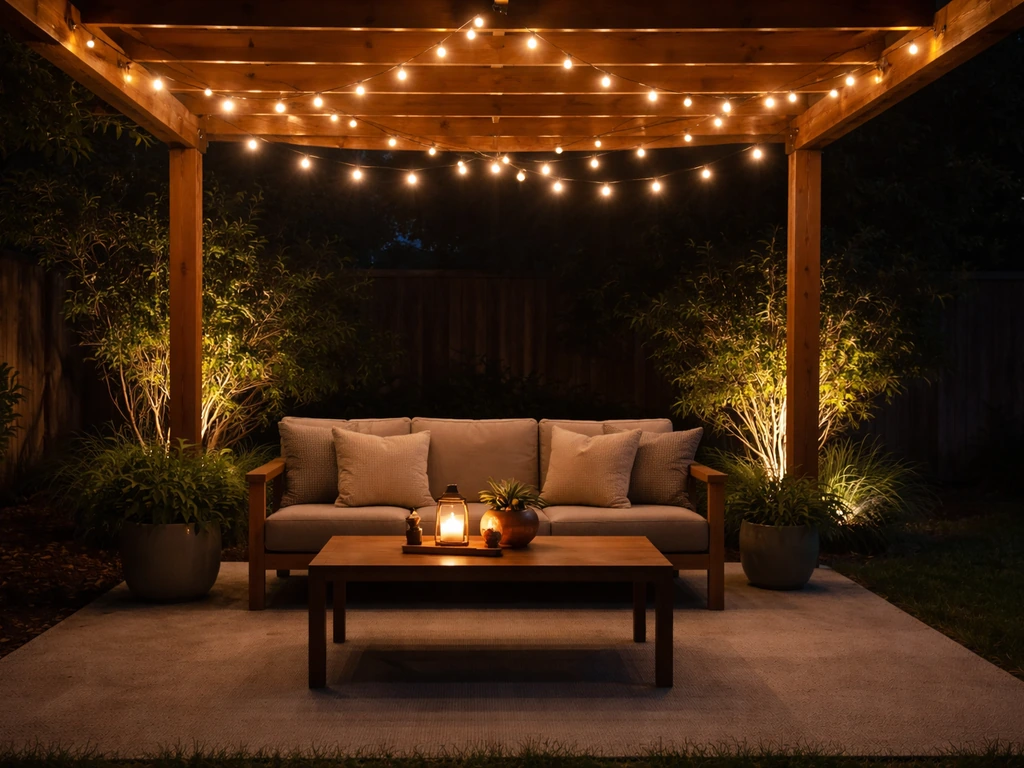
How to choose the right patio lighting for your space and goal
Before you look at a single product, answer two questions: What am I lighting for, and how is my patio powered? The first question determines brightness and fixture type. The second determines whether you can use plug-in or hardwired options, or whether you need solar or battery-powered lights.
The most useful framework I've found is layered lighting: ambient (your base layer that fills the whole space), task (directed light for eating, cooking, or reading), and accent (finishing touches like uplighting a plant or highlighting a feature wall). Most patios only have one layer, usually a single overhead light, and feel flat because of it. Adding a second layer changes everything. You don't need to nail all three to get a dramatic improvement; even going from one layer to two makes a patio feel intentional rather than accidental.
Once you know your goal, match it to a fixture type. String lights are the go-to ambient layer. Pathway lights and step lights solve safety and navigation. Wall-mounted fixtures and spotlights handle task and focused ambient. Hanging pendants work over tables where you want directional warmth. Solar and plug-in options decide your installation complexity. Each of those maps to specific patio scenarios in the section below.
Every major patio light type, and what each one is actually good for
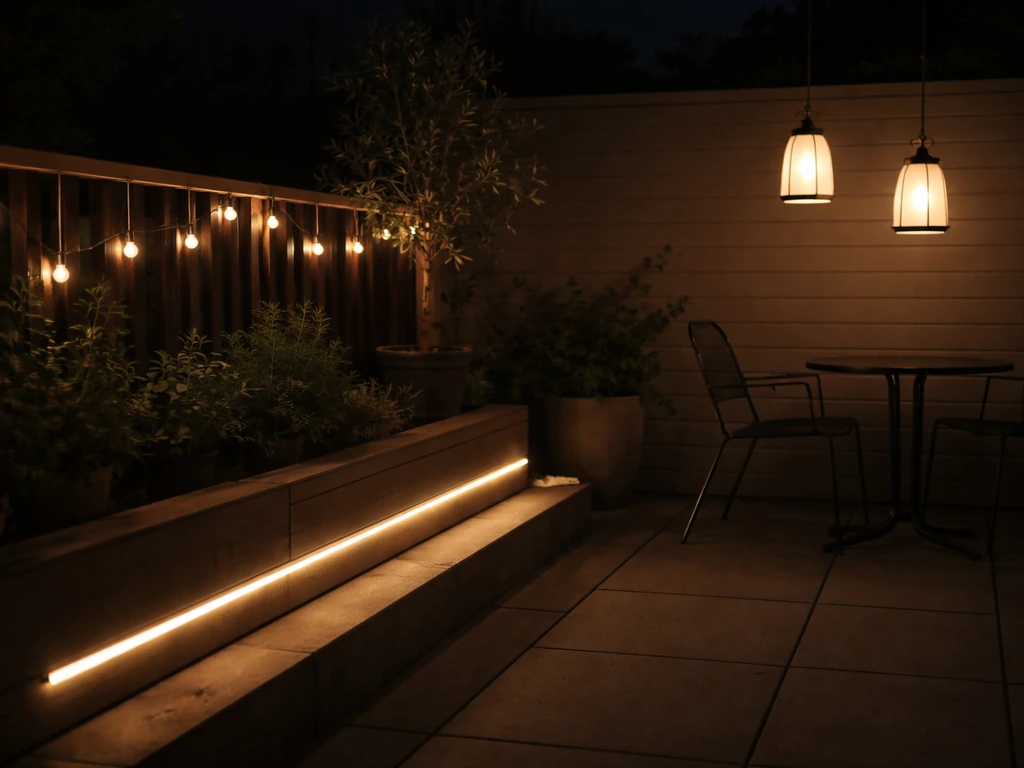
String and bistro lights
String lights are the most versatile patio light you can buy. They cover large horizontal areas, they're easy to install with hooks or a tension wire, and they create the warm overhead glow that makes outdoor spaces feel like destinations rather than afterthoughts. Look for Edison-style or G40 globe bulbs in the 200–400 lumen range per socket, on a strand of 25–50 feet. Plug-in versions are the easiest to use. If you want more coverage, commercial-grade bistro-style strands rated S14 or G50 are brighter and far more durable than budget versions, the difference in longevity is significant. String lights are a deep enough category that there's a full breakdown worth reading if this is your primary focus.
LED strip lights
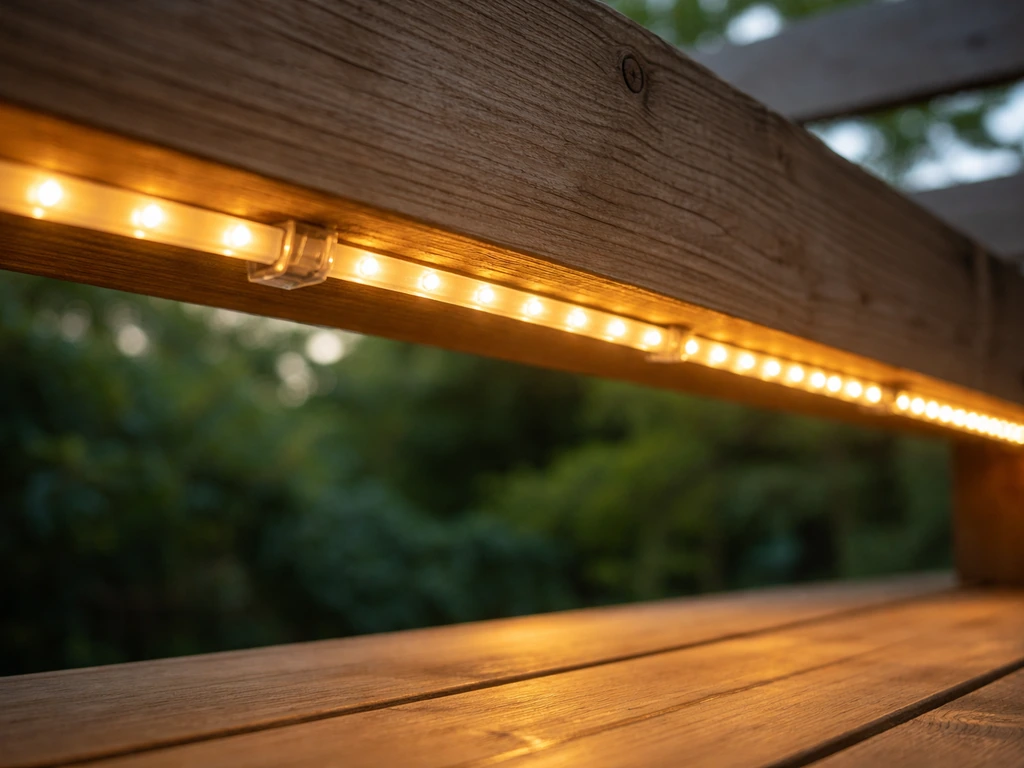
Strip lights (also called tape lights) mount under pergola beams, along deck railings, or under outdoor furniture edges to create a subtle ambient glow or accent effect. They're low-profile and nearly invisible during the day. For outdoor use, make sure you're buying IP65-rated strips at minimum, IP67 or IP68 if they're anywhere near water. Output is measured per meter (typically 400–800 lumens per meter for outdoor-grade strips). They need a transformer and are best run from a plug-in or hardwired source; solar-powered strip lights generally underperform.
Wall-mounted and sconce lights
A wall sconce or exterior wall light is the most functional fixture for a covered patio. Mounted at 7–8 feet on a wall near a door, it provides strong ambient coverage and adds a finished, architectural look. Most require hardwiring, though plug-in sconce adapters exist for renters. Look for at least 800 lumens for a meaningful coverage area. These fixtures are usually the most weather-durable option since they're designed to handle direct exposure for decades.
Pathway and step lights
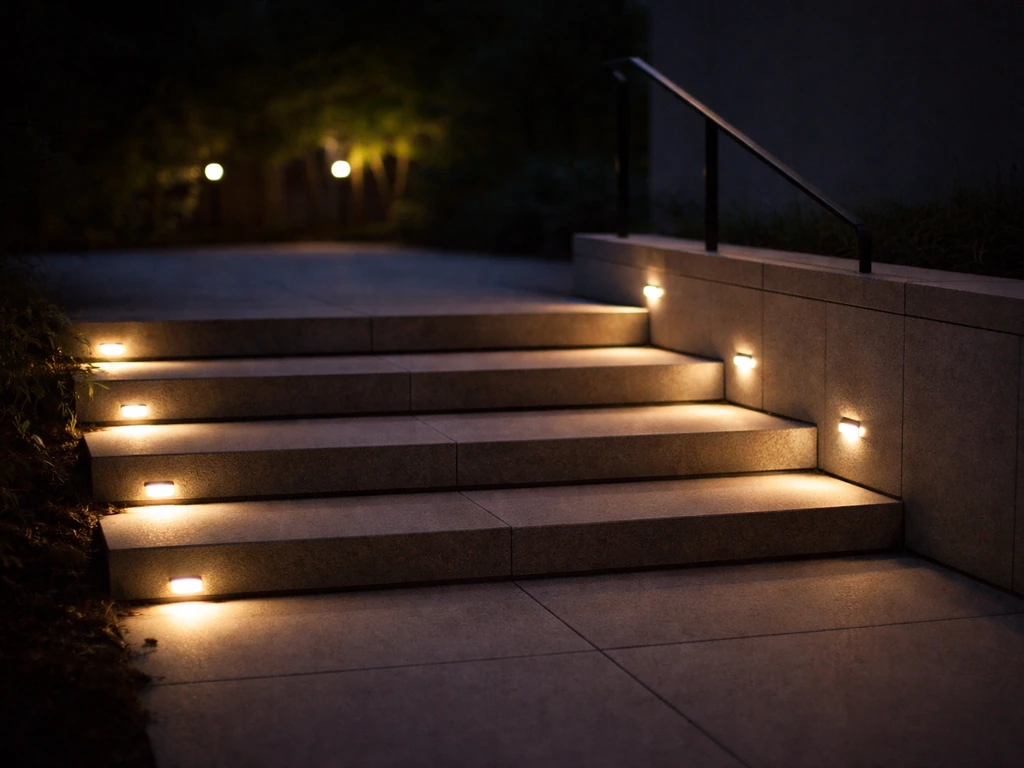
If someone has ever stubbed a toe on your patio steps in the dark, you already know you need these. Pathway lights are low-profile fixtures installed at ground level to mark edges, steps, and walkways. You don't need much brightness here, 50 to 100 lumens per fixture is enough to guide foot traffic safely. Solar pathway lights are genuinely good in this category because the power demand is low and the coverage doesn't need to be strong. Space them 6–8 feet apart along a path, and alternate sides for even coverage rather than lining one side only.
Spotlights and uplights
Spotlights and uplights are accent layer tools. Pointed at a tree, a feature wall, or a large planter, they add depth and visual drama to a patio at night. For landscape uplighting, you want a narrow beam angle (15–30 degrees) and 200–400 lumens pointed upward. For security or wider coverage, floodlights with 180-degree beam spread and 1000+ lumens are more appropriate, but those belong at the property perimeter, not the patio itself, where the glare would ruin the ambiance.
Hanging pendants and lanterns
A single hanging pendant over a patio dining table is one of the most impactful lighting changes you can make. It concentrates warm light exactly where you eat, reduces shadows on faces, and anchors the furniture arrangement visually. For a standard 4-person table, one pendant hung 30–36 inches above the tabletop is the sweet spot. For a larger table or a 6-person setup, two smaller pendants spaced evenly work better than one oversized fixture. Hardwired options look cleanest; plug-in pendant cords with an outdoor-rated hook and cord cover are a practical renter-friendly alternative.
Solar and battery-powered lights
Solar lights have gotten meaningfully better in the last few years. They're now a real option for pathway lights, lanterns, and decorative string lights on patios that don't have a convenient outlet. The honest limitation is that solar output depends heavily on how much direct sun the panel gets during the day, a shaded patio or a region with cloudy winters will see noticeably shorter run times. Battery-powered options give you more predictable output but require recharging or replacement. For anything that needs consistent brightness (like a dining area), stick with plug-in or hardwired. For accents and pathways, solar is perfectly capable.
Best picks by patio scenario
| Patio Scenario | Best Light Type | Target Lumens | Power Method | Key Feature to Look For |
|---|---|---|---|---|
| Small balcony (under 100 sq ft) | String lights or plug-in lantern | 200–400 lumens total | Plug-in or battery | Compact strand (15–25 ft), dimmable |
| Dining area / outdoor table | String lights overhead + hanging pendant | 300–600 lumens overhead | Plug-in or hardwired | 2700K warmth, dimmable |
| Walkway / steps / safety | Pathway or step lights | 50–100 lumens per fixture | Solar or low-voltage | IP65+, spaced 6–8 ft apart |
| Large backyard or full patio | String lights + wall sconce + spotlights | 800–1500 lumens combined | Hardwired or plug-in hub | Layered setup, timer or smart control |
For a small balcony, the biggest mistake is over-buying. A 25-foot plug-in string of warm Edison bulbs looped around the railing perimeter and one corner lantern is genuinely enough. Keep it simple and resist the urge to add five different fixture types to a 60-square-foot space.
For a dining area, the combination of overhead string lights plus a pendant or hanging lantern directly above the table is the most effective and the most common setup I've seen work in practice. The strings provide ambient fill; the pendant provides the table-level warmth that makes food and faces look good.
For walkways and steps, don't overthink it. A set of 6–10 solar pathway lights rated IP65 or better, spaced evenly along the path, handles 95% of safety needs without any wiring. The best ones have auto on/off sensors so you never have to think about them.
For a large backyard or full patio, you're building a layered system. Start with your ambient layer (string lights or a wall sconce), then add task light where you need it (near the grill, over the table), then finish with accent (uplights on trees or planters). Budget this as a phased project if needed, getting the ambient layer right first makes the biggest visible difference.
Specs that actually matter when you're shopping
Lumens: how bright is bright enough?
Lumens measure total light output. For patio ambiance, you don't want or need the same lumens you'd use indoors, too much light kills the mood and creates glare. A good rule of thumb: 200–400 lumens per string-light bulb for overhead ambient, 800–1200 lumens for a wall sconce covering a medium patio, and 50–100 lumens for pathway lights. If a product listing only gives you wattage (like "40W equivalent"), multiply by roughly 10 to get a lumen estimate for LED.
Color temperature: warm white is almost always the right choice
Color temperature is measured in Kelvin. For outdoor patio lighting, 2700K to 3000K is the consistent recommendation from lighting designers, it reads as warm, amber-tinged white that flatters skin tones, food, and natural wood or stone materials. Anything above 3500K starts looking clinical and harsh on a patio. One thing worth taking seriously: don't mix color temperatures across your patio fixtures. A 2700K string light next to a 4000K wall sconce looks jarring and disconnected. Pick one temperature and stick with it across everything you buy.
Weather rating: IP ratings explained simply
blank" rel="noopener noreferrer">IP (Ingress Protection) ratings tell you how well a fixture resists water and dust. The two numbers matter differently: the first digit is dust protection (6 is fully sealed), the second is water protection (4 = splash-resistant, 5 = water jets, 7 = temporary submersion). For a covered patio, IP44 is the minimum you should accept. For an exposed deck or anywhere rain hits directly, IP65 or higher is the right call. "Outdoor rated" on a product label without an IP number is vague, push for the actual rating.
Power method: plug-in vs. solar vs. hardwired
Plug-in lights are the easiest starting point, you need a GFCI outdoor outlet within reach of the strand or fixture, and you're done. Solar is great for pathways and low-demand accent lights but underpowered for dining or task lighting. Hardwired fixtures are the most permanent and reliable option but require an electrician if you don't already have exterior junction boxes. Battery-powered lights are best for temporary use or renters who can't make any modifications. Most people find that plug-in covers 80% of their patio lighting needs without any installation complexity.
Smart features, dimmers, and timers
Dimmability is one of the most underrated patio light features. Being able to dial down your string lights from full brightness during dinner to a low warm glow later in the evening changes how useful the space feels. Look for fixtures or bulbs labeled "dimmable" and pair them with a compatible outdoor dimmer switch or a smart plug. Timers are worth it for any lights you use daily, even a basic mechanical timer on an outdoor outlet saves you from leaving lights on all night. Smart plugs with voice control or app scheduling are an easy upgrade if you already have a smart home ecosystem.
How to install, place, and space your patio lights
Measure your patio before you buy anything. Length, width, and the height of any overhead structure (pergola beam, eave, or fence post) all determine strand length and fixture count. For string lights overhead, a simple grid or zigzag pattern works best for rectangular spaces, run the strands parallel to the short side of the patio, spaced 2–3 feet apart, anchored to hooks or a tension wire. For a square space, a starburst pattern from a center hook to perimeter points looks good and is easy to execute.
Hang string lights at 8–10 feet off the ground for comfortable overhead clearance. Lower than 7 feet and tall guests duck; higher than 12 feet and the warm glow becomes too diffused to feel intimate. For pendants over a table, the bottom of the shade should sit 30–36 inches above the tabletop, measure this before you commit to a cord length.
Wall sconces belong at 7–8 feet above the floor on a covered patio wall, flanking a door or centered on a blank wall. If you're mounting two sconces, space them 8–10 feet apart so the light pools overlap slightly in the middle without creating a bright hotspot. For pathway lights, alternate placement on both sides of the path rather than one single line, this gives better edge definition and more even coverage without doubling the fixture count.
Troubleshooting common problems
- Flickering string lights: usually a loose bulb socket or an overloaded circuit. Check each bulb is seated firmly and make sure you're not daisy-chaining more strands than the manufacturer recommends (typically 3–5 strands max end-to-end).
- Insufficient light: you probably need more lumens, not more fixtures. Swap standard LED string bulbs for filament-style replacements rated 1–2 watts higher, or add a wall sconce as a second layer instead of adding more string runs.
- Uneven coverage: caused by hanging strands too far apart or placing fixtures only on one side of the space. Add a parallel strand run or a mirror-side fixture to fill the dark zone.
- Harsh glare: often a color temperature problem (too high Kelvin) or a bare-bulb fixture at eye level. Switch to 2700K bulbs and make sure overhead fixtures are hung high enough that you're not looking directly at the light source when seated.
- Solar lights not lasting the night: the panel isn't getting enough sun. Reposition the panel to a spot with 6+ hours of direct sun, or clean dust and debris off the panel surface.
Costs, energy use, and how long patio lights actually last
LED patio lights are cheap to run. A 25-bulb strand of 0.6-watt LED Edison bulbs draws about 15 watts total, running it 6 hours a night costs roughly $0.30 to $0.40 per month at average U.S. electricity rates. Even a set of four wall sconces at 10 watts each runs under $3 a month at the same usage. The energy cost argument for LEDs over incandescent string lights is significant, incandescent versions of the same strand draw 4–5 times more power and generate heat that shortens their own lifespan.
On durability: commercial-grade string lights with shatterproof plastic or heavy-duty glass bulbs last 3–5 years of outdoor use before bulbs start failing. Budget string lights from discount retailers often fail within a single season, especially if left out through winter. The price difference between a quality commercial-grade strand ($40–80) and a budget version ($10–20) is easily worth it over a two-to-three year window. Wall-mounted and hardwired fixtures from reputable outdoor brands (think brass, powder-coated aluminum, or marine-grade stainless components) can last 10–20 years with minimal maintenance.
Weather resistance directly affects longevity. Any fixture rated IP65 or higher and UV-stabilized will hold up to sun, rain, and temperature swings far better than fixtures that are just labeled "outdoor safe" without specifics. If you live in a coastal area, look specifically for salt-air resistant finishes, standard powder coat can rust within a year near salt water, while marine-grade coatings hold up properly.
Maintenance is minimal for LED systems: wipe down fixtures a couple of times a season, check that no moisture has gotten into pendant or sconce housings, and replace individual failed bulbs rather than the whole strand. Most quality strands sell replacement bulbs separately, confirm this before you buy, because some budget brands don't.
Your quick buying checklist and next steps
Before you add anything to a cart, run through this list. It takes five minutes and saves you from buying something that doesn't work for your space.
- Measure your patio: length, width, and ceiling or structure height. Write it down. You need this to calculate strand length and fixture count.
- Identify your power source: locate your nearest outdoor GFCI outlet and measure how far it is from where you want lights. If it's more than 25 feet away, plan for an outdoor-rated extension cord or an additional outlet. No outlet nearby means solar or battery.
- Pick your primary goal: ambiance and dining, safety and navigation, or both. This tells you which fixture type to prioritize first.
- Choose your color temperature and stick to it: 2700K for the warmest residential feel, 3000K if you want slightly crisper white. Buy everything in the same Kelvin value.
- Check the IP rating: IP44 minimum for covered patios, IP65 or higher for exposed decks and anywhere rain hits directly.
- Decide on smart features: if you want dimmability, confirm both the fixture and any dimmer switch you plan to use are compatible. If you want timers, a simple outdoor smart plug handles this for plug-in lights.
- Confirm strand or fixture limits before daisy-chaining: check the max number of strands you can connect end-to-end (usually 3–5) and stay within it.
- Plan your layers: start with ambient (string lights or wall sconce), add task or accent second. You don't have to do everything at once.
- Budget for quality on anything permanent: wall sconces and hardwired fixtures are worth spending more on. String lights for a seasonal setup can be mid-range.
- Order with a return window: patio lighting looks different at night than in a product photo. Buy from somewhere with an easy return policy so you can swap if the warmth level or brightness isn't right in your actual space.
If you want to go deeper on specific formats, there are detailed guides worth exploring on bistro-style string lights and the best options available on Amazon that match these criteria. The core advice stays the same across all of them: warm white, weather-rated, and layered. Get those three things right and the specific product almost doesn't matter. If you want to speed up the decision, use the best flags for patio options based on your setup and power source.
FAQ
What’s the safest way to run patio string lights if my outlet is far from the seating area?
Use a plug-in strand only if the entire run can stay within reach of a GFCI outdoor outlet, or choose a longer strand designed for outdoor use. Avoid extension cords that are not explicitly outdoor-rated and weather-resistant, and keep all connections off the ground under a covered area when possible.
Can I use the same light color temperature for every fixture, even if I mix string lights and a wall sconce?
Yes, and it’s recommended. Pick one warm range (roughly 2700K to 3000K) and match across string bulbs, sconces, and spotlights. If you already bought a fixture with a different Kelvin rating, swap bulbs rather than trying to “tone it down” with dimming.
How do I choose the right brightness for a string light, without overglow?
Start with 200 to 400 lumens per bulb for overhead ambiance, then reduce the perceived brightness with spacing and dimming. If you’re close to neighboring windows or you sit directly under the strand, choose the lower lumen range and use a dimmer or warm-dimming smart plug if the product supports it.
Do I need a transformer for strip lights, and what happens if I buy the wrong type?
Most outdoor strip lights require a transformer because they run on low voltage. If you connect a strip to the wrong voltage or an incompatible driver, you can get flicker, overheating, or shortened lifespan. Check whether the listing specifies a compatible transformer voltage (often 12V or 24V) before purchasing.
What’s the difference between IP44, IP65, and IP67 for patios?
IP44 is a minimum for covered areas (mostly splash resistance). IP65 is better when rain can hit directly, it protects against jets of water. IP67 is for stronger exposure, including temporary submersion, but note that higher IP ratings often mean bulkier housings that may change how a fixture mounts.
Can I rely on solar lights for a dining area instead of plug-in lights?
Usually no. Even improved solar units struggle to maintain consistent output after cloudy days or in winter, and “warm” solar often still looks dim under dining conditions. Use solar for pathways and accents, then reserve plug-in or hardwired lighting for steady task-level illumination over tables or grills.
How far apart should I space pathway lights so they actually guide foot traffic?
For most patios, spacing around 6 to 8 feet gives smoother navigation, but adjust for your brightness and beam pattern. If the fixtures have wide-angle spread, you can go slightly farther apart, if they are narrower or dimmer, reduce spacing and alternate sides for even edge definition.
Are dimmers worth it for outdoor patio lighting, and what if my string lights are not dimmable?
Dimmers are worth it because patio comfort depends on changing brightness through the evening. If the strand or bulb is not labeled dimmable, dimming can cause flicker or reduced bulb life. Confirm dimmability on the product listing, and when using smart plugs, verify the bulb type is compatible with low-end dimming.
How do I prevent glare from spotlights or uplights?
Use narrower beam angles for uplighting (about 15 to 30 degrees) and aim so the beam lands on surfaces rather than at eye level. Add shielding or reposition fixtures farther from seating. For security-style floodlights with very wide spread and high lumens, keep them at the property perimeter to protect patio ambiance.
What’s the easiest way to anchor string lights securely without damaging siding or gutters?
Use hooks or mounting clips designed for your surface type, and if you have no solid anchor points, use a tension wire system that spans between two stable posts. Avoid fasteners that rely on just fascia or loose gutters. Before drilling, confirm cable routing so connections stay dry and accessible.
How should I clean and maintain outdoor pendant or sconce fixtures without causing moisture issues?
Turn power off at the outlet or breaker, then wipe with a damp cloth and dry thoroughly. Check the fixture openings and seals at the start of each season, especially around pendant housings where condensation can gather. Replace failed individual bulbs if the manufacturer sells replacements, it’s usually cheaper than swapping the entire strand.
If I’m renting, what setup gives the same look as hardwired pendant lights?
Choose an outdoor-rated plug-in pendant with a cord cover and a hook designed for outdoor use, then run the cord along a protected path to the nearest GFCI outlet. Keep the cord away from areas where it can be stepped on or kinked, and confirm the pendant hardware is rated for the fixture weight you plan to use.
How do I calculate how many string lights I need for a rectangular patio?
Measure length and width, then pick a spacing target (commonly 2 to 3 feet between bulbs across the run). Run the strands parallel to the short side for a rectangle, use a zigzag pattern if you want fuller coverage, and add extra bulbs if you plan to hang around corners or under a pergola.
Next Articles
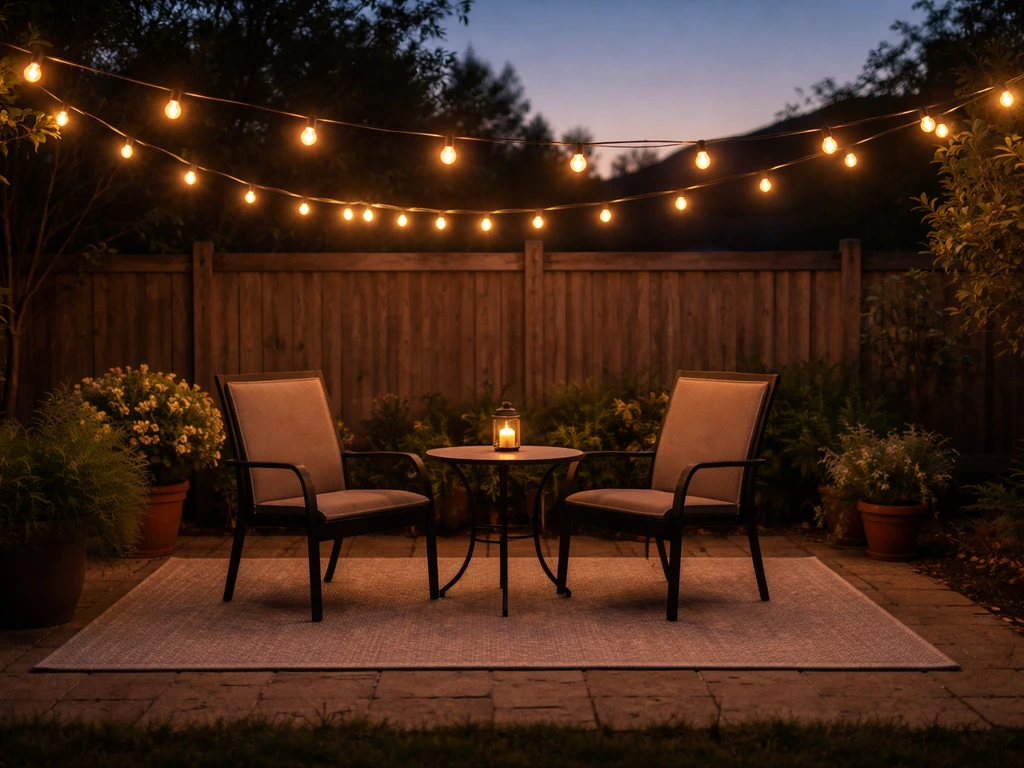
Best Outdoor String Lights for Patio: 2026 Buyer Guide
2026 guide to the best outdoor patio string lights with LED, solar, sizing, wet rating, setup tips, and troubleshooting.
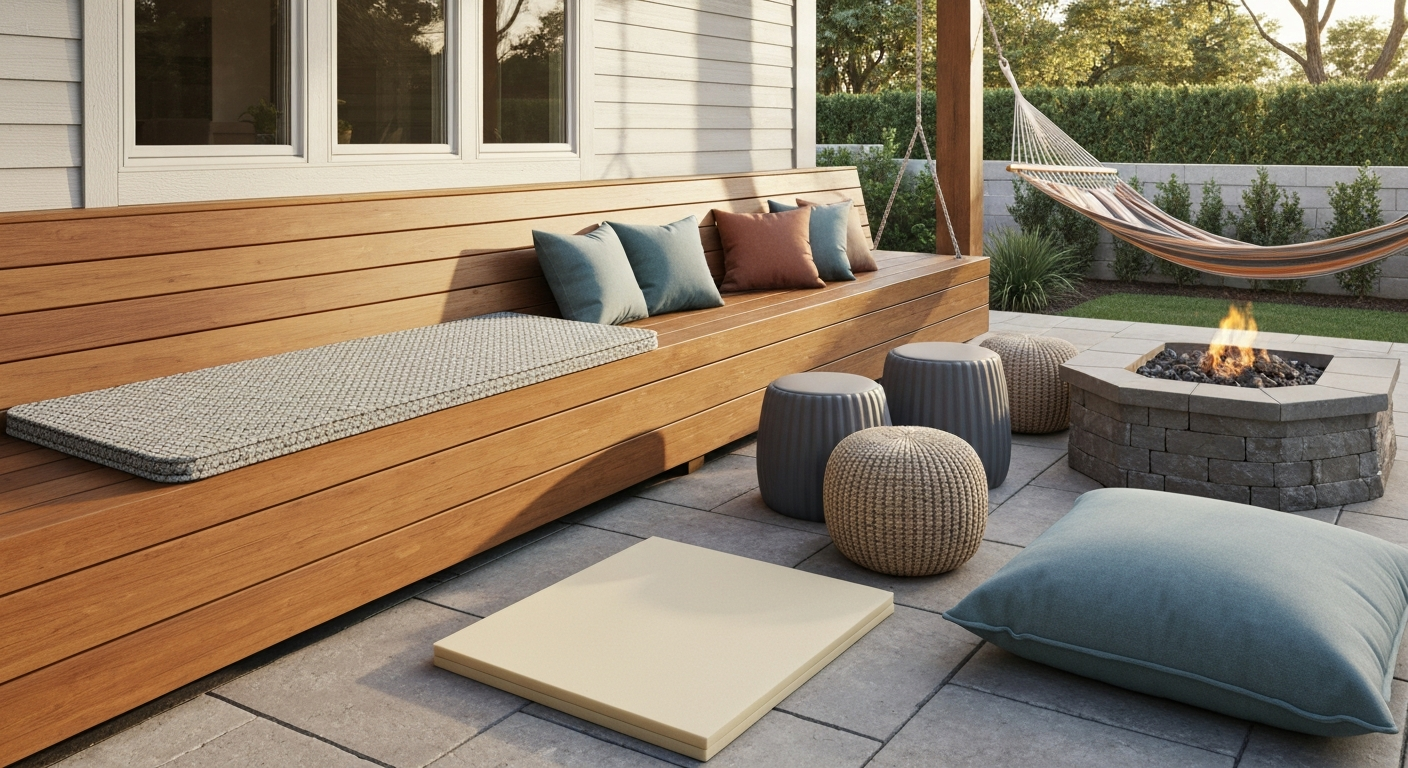
Alternative to Patio Cushions: Durable, Stylish Options and DIY
Alternative to patio cushions: durable, weatherproof seating options, pros, DIY tips & buying guide.
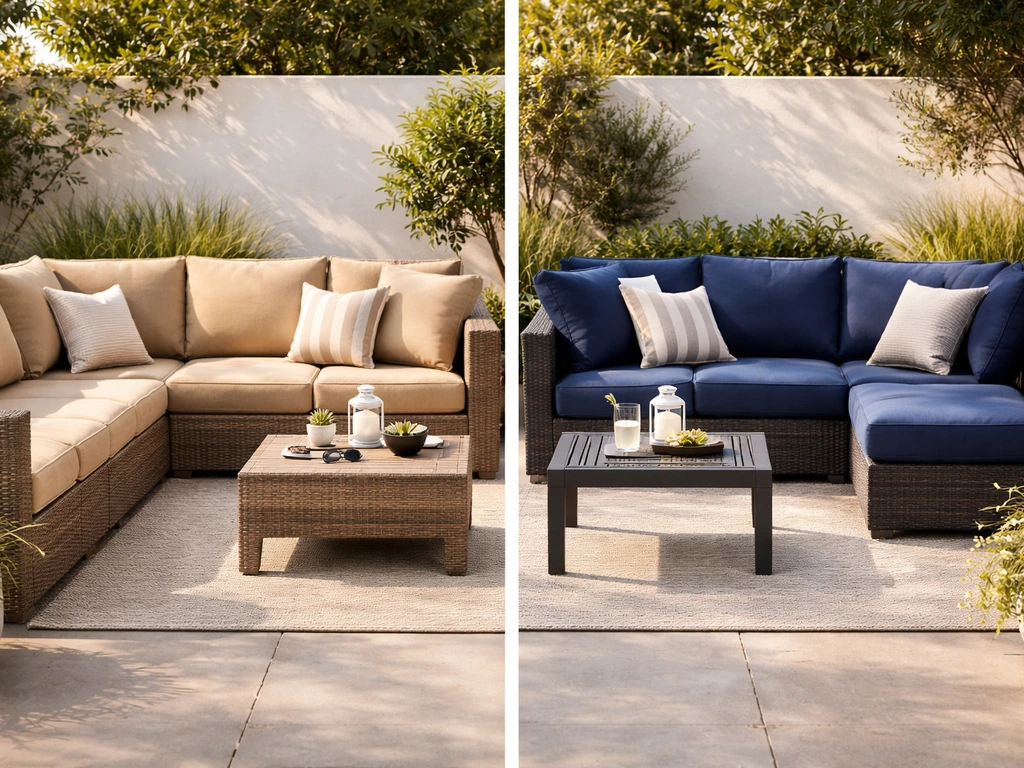
Best Color for Outdoor Patio Cushions in 2026
Choose the best cushion color for sun, heat, and fading in 2026, with pairing tips for patio furniture and durability.