
For most patios, the best bistro lights are a plug-in, 48-foot LED string with E26 sockets, 2700K warm white bulbs rated around 2W each (about 200 lumens per bulb), spaced 24 inches apart, and carrying at least an IP65 rating or a UL wet-location listing. That combination gives you warm, flattering light without glare, enough coverage for a standard 10x20 dining area, easy setup without an electrician, and durability that holds up through rain and temperature swings. Everything below helps you dial that formula in for your specific patio, budget, and layout. If you are shopping specifically for the best outdoor patio lights, prioritize a plug-in string that is rated for wet locations and uses warm 2700K bulbs.
Best Bistro Lights for Patio: Buy Guide and Setup Tips

Lark Perry
1 Jun 2026
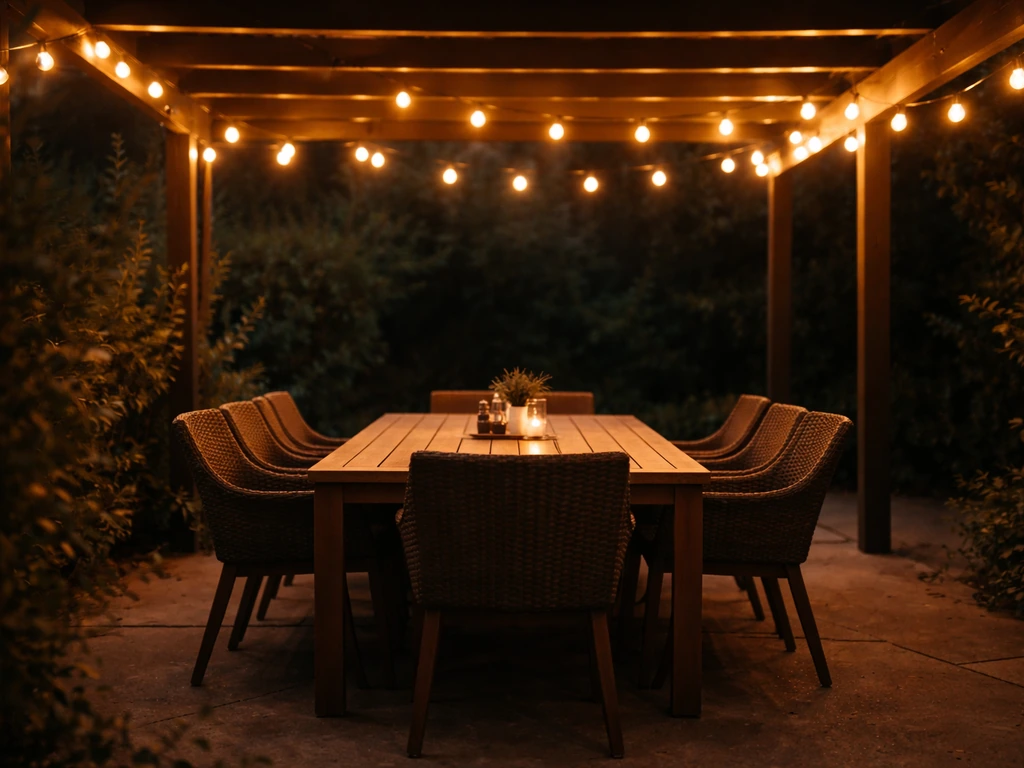
How to choose the best bistro lights for your patio
"Best" is context-dependent here. A 6x8 apartment balcony has completely different needs than a 20-foot pergola over a dining table. Before you look at any product, get clear on four things: how much linear footage you need to cover, what power source you have available, whether your space is fully exposed to rain or just damp, and what kind of mood you want (soft and romantic versus bright enough to actually see your food).
Once those four are settled, the actual product choice becomes much easier, and you stop paying for features you don't need. For more direct options, see our guide to the best patio lights to buy, then narrow it down to bistro strings that match your coverage, power, and exposure.
The other thing worth knowing upfront: bistro lights and outdoor string lights are largely the same category. The "bistro" label typically refers to strings with individual globe or Edison-style bulbs in sockets, spaced several inches apart, as opposed to tightly packed fairy light clusters. That distinction matters for spacing calculations and the kind of ambiance they create. If you are also shopping for tighter decorative options, the broader outdoor string lights and outdoor patio lights categories overlap with this one and are worth a quick look depending on your setup.
Outdoor safety and durability: what the ratings actually mean
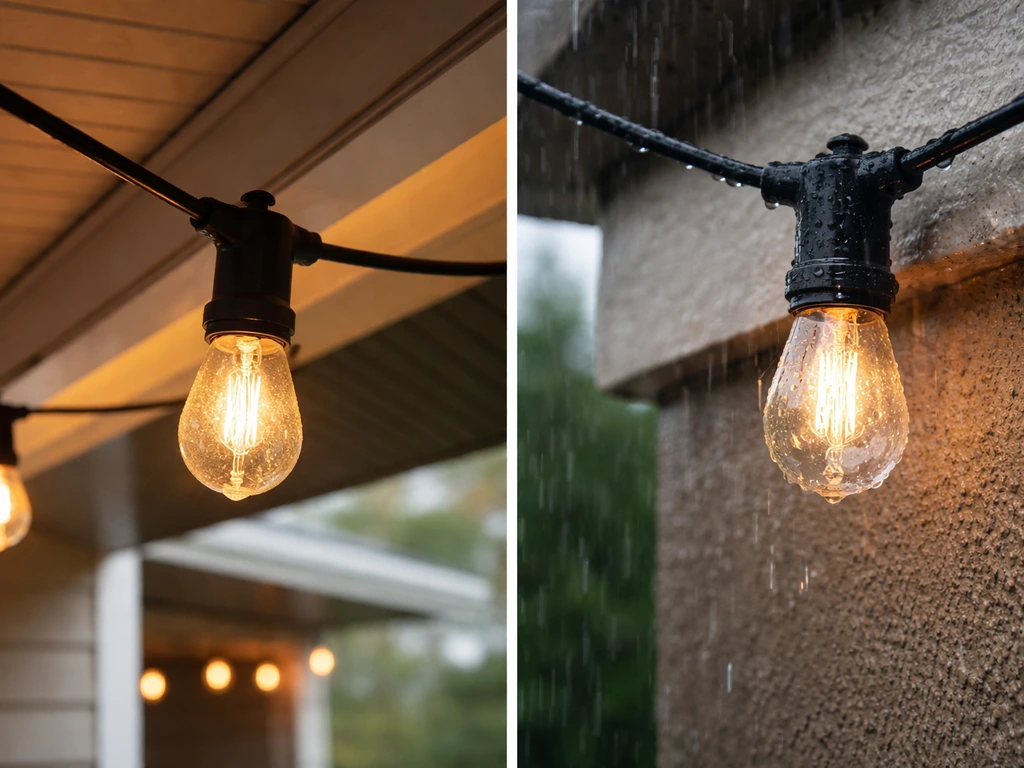
This is the section most buyers skip and then regret. There are two rating systems you will see on bistro lights: UL location ratings and IP (Ingress Protection) ratings. They measure slightly different things, but both tell you whether a product can handle your specific outdoor environment.
UL wet vs. damp location ratings
A UL "damp location" rating covers partially protected spots where moisture or condensation is present but rain isn't hitting the fixture directly. Think of a covered porch ceiling or a pergola with a solid roof. A "wet location" rating is what you need when water can actually drip, splash, or flow onto the lights, which describes most open patios, exposed balconies, and anything that sees direct rain. Always match the rating to your actual exposure. Using damp-rated lights in a wet location will cause early failure and can be a safety hazard.
IP ratings decoded
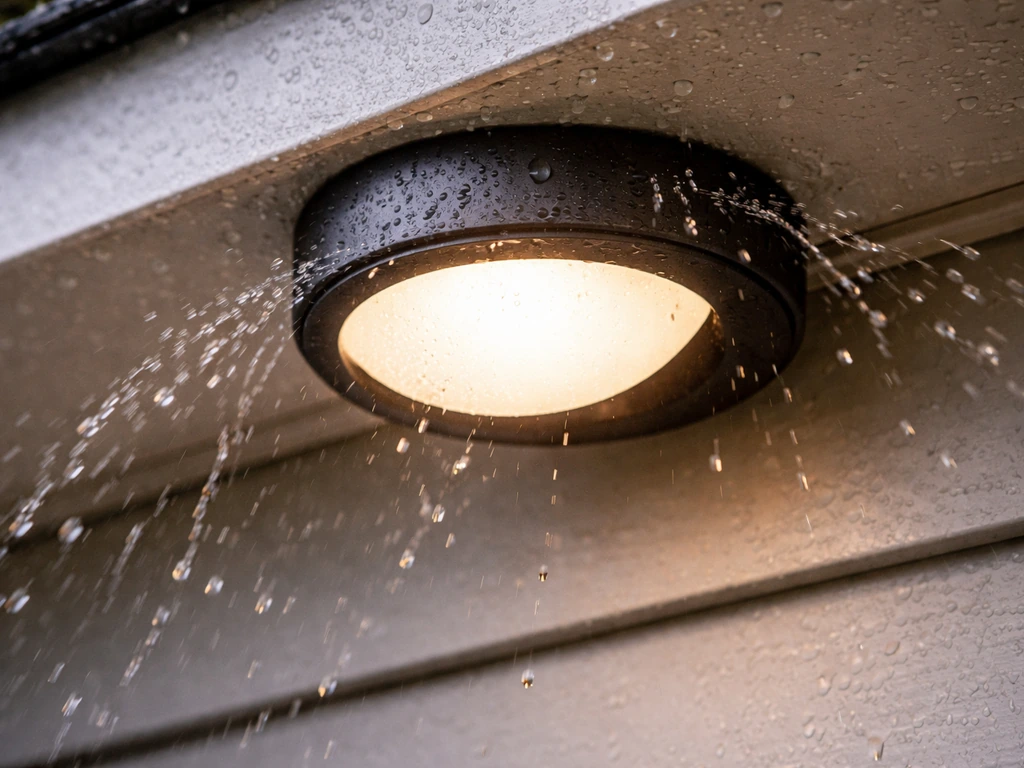
IP ratings use two digits. The first covers dust protection, the second covers water. IP44 handles splashing water from any direction, which is the bare minimum for an outdoor string light in a covered area. IP65 is dust-tight and protected against water jets, making it suitable for open patios. IP67 adds submersion protection, which is more than you need for bistro lights but signals a well-sealed product. For most residential patios, IP65 is the practical sweet spot. Anything below IP44 belongs indoors only.
Wire gauge, cord type, and GFCI
On the wire side, look for SJTW-rated cord (that "W" means weather-resistant) and 16-gauge or heavier wire for longer runs. Sockets should have weatherproof PVC or rubber coating. On the power side, if you are using plug-in lights, make sure the outdoor outlet is GFCI-protected, which is a requirement under current NEC guidelines for outdoor receptacles. Never use an indoor extension cord to extend a plug-in string light outdoors. Use a UL-listed outdoor-rated extension cord, and keep any connectors capped or covered when not in use to prevent water entry.
Bulb and brightness guide: color temperature, LED vs incandescent, and avoiding glare
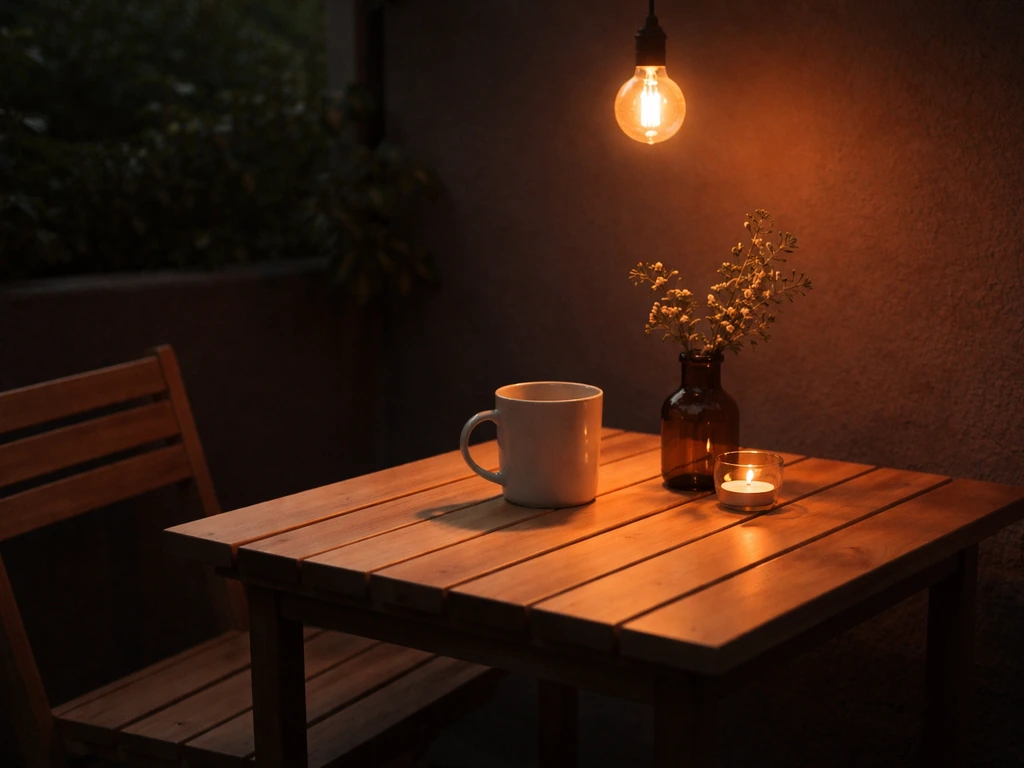
Color temperature: stick with 2700K
For a patio bistro look, 2700K is the target. It reads as warm amber, the same tone you see in restaurants and candlelit dining rooms. It flatters people, food, and wood surfaces without feeling harsh. A step up at 3000K is still warm white but slightly cleaner, fine for a more modern patio aesthetic. Avoid anything 4000K or higher outdoors unless you specifically need task lighting, because it shifts toward a cool, clinical tone that kills the mood entirely.
LED vs incandescent: the honest trade-off
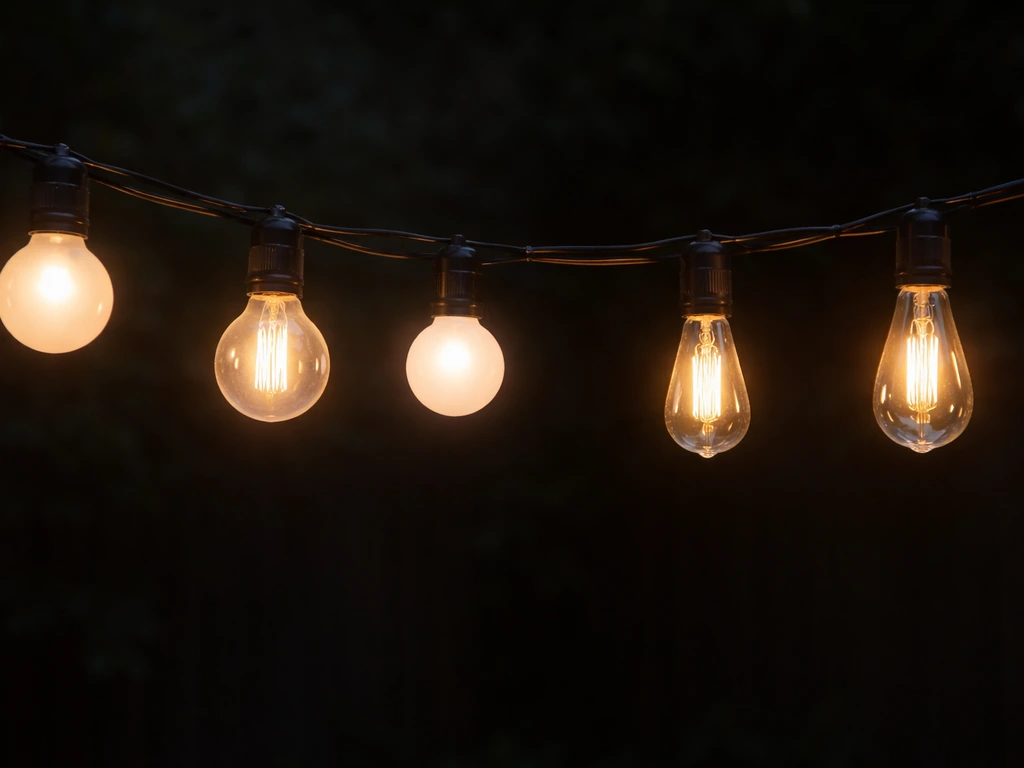
Incandescent bistro bulbs still exist and produce a very slightly warmer, more organic glow. But they burn out faster, run hotter, and use significantly more energy. LED at 2700K now matches incandescent warmth closely enough that most people cannot tell the difference once the lights are strung up. The practical specs bear this out: a 2W LED bistro bulb produces around 200 lumens, a 4W bulb produces around 350 lumens, and a 1W bulb sits around 100 lumens. For a dining area where you want to actually see your guests, go with 2W bulbs spaced every 24 inches. For a purely ambient lounge setup, 1W bulbs or even 50-lumen decorative bulbs do the job.
Managing glare
Globe-shaped and Edison-style bulbs diffuse light better than bare filament styles, which can create hot spots directly below the socket. If your seating is directly under the string line, globe bulbs in the G40 or G50 size keep things comfortable. Also consider that dimming capability, which most quality LED bistro strings support, lets you dial the brightness down for evenings when ambiance matters more than visibility.
Coverage and spacing: measuring before you buy
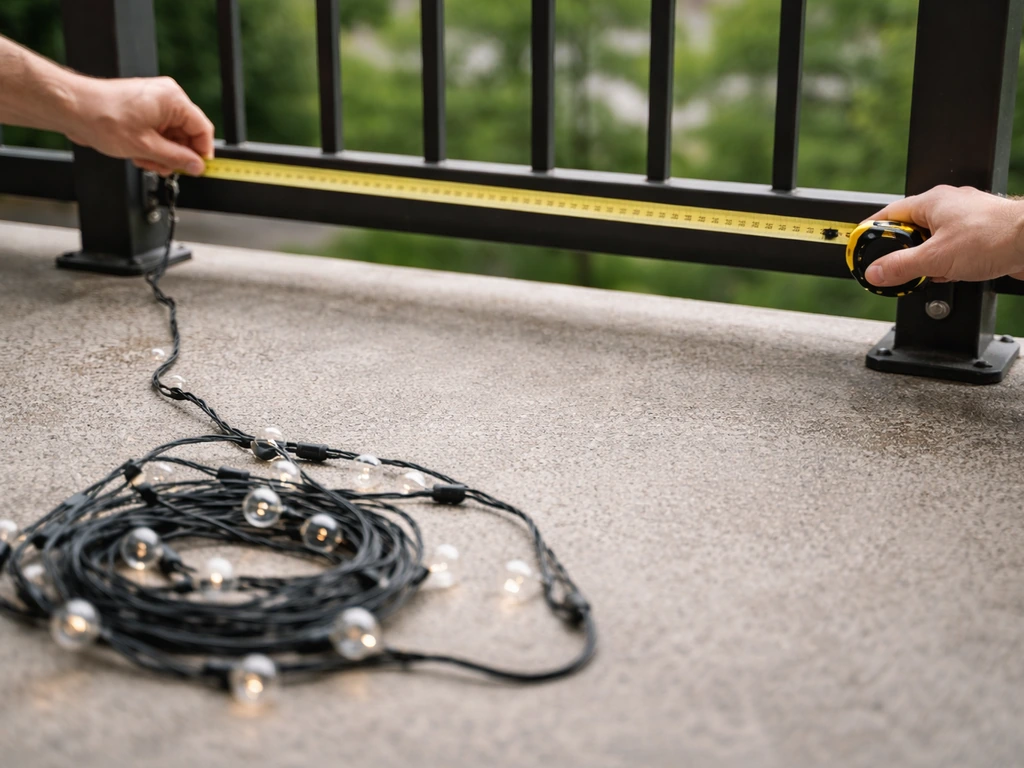
How much string length do you actually need
Start by measuring the linear distance between your anchor points. Then account for two things most people miss: the lead wire from the plug to the first bulb (often 12 to 18 inches of unlit cord), and natural sag between anchor points. Sag and slack planning typically adds 2 to 6 feet of extra length depending on your span. For a 20-foot run between two posts, budget at least 24 to 26 feet of string. If you are hanging lights in a zigzag or grid pattern across a patio, multiply each run by that same factor before adding them up.
Bulb spacing and coverage density
Socket spacing on commercial bistro strings is commonly 24 inches, which gives you 25 sockets on a 50-foot string. That is a good baseline for most patios. For a cozier, more evenly lit space, 12 to 18 inch spacing increases bulb density. For a sparse, Mediterranean cafe look with deliberate gaps, 24 inches or more works well. As a practical example, a dimmable 48-foot string with 24-inch spacing delivers around 9,600 lumens total at full brightness, which is more than enough for outdoor dining.
Mounting height
A mounting height of 8 to 10 feet is the sweet spot for most residential patios. High enough to clear standing guests, low enough to feel intimate rather than stadium-like. If you are working with a pergola or fence that sits lower, you can get away with 7 feet as long as the lights are not directly at head height. Overhead clearance at the lowest sag point of the string should be at least 7 feet.
Power and control options: plug-in, hardwired, and solar
| Power Type | Best For | Brightness | Setup Difficulty | Cost |
|---|---|---|---|---|
| Plug-in (120V) | Most patios with nearby outlets | Highest (dimmable options available) | Easy DIY | Low to moderate |
| Hardwired | Permanent installs, no outlet nearby | High, consistent | Requires electrician | Moderate to high |
| Solar | Remote spots with no outlet access | Lower (example: ~180 lm total) | Easy DIY | Low upfront, variable runtime |
| Battery | Temporary setups, renters | Moderate | Easiest DIY | Low upfront, ongoing battery cost |
Plug-in is the right choice for the vast majority of homeowners and renters. You get the most reliable brightness, dimmable control, and no electrical work required, as long as you have a GFCI outdoor outlet within reach. Solar bistro lights have improved but still fall short on brightness and consistency compared to plug-in. They work well for a supplemental accent string in a sunny spot, but for a main patio light source, they are not quite there yet. Battery is the go-to for renters who cannot mount hardware or run cords, accepting the trade-off of occasional battery replacement. Hardwired installs make sense only for permanent setups where running a cord is either impossible or looks bad.
Dimming and controls
Most quality 120V plug-in bistro strings are dimmable through an inline dimmer or smart plug. This is worth paying a little extra for. Being able to drop the lights to 30 to 40 percent brightness for a late-night gathering versus running full brightness for dinner makes a real difference in how the space feels. Some strings also support dusk-to-dawn sensors or timer plugs, which are a nice-to-have for hands-off operation.
How to actually hang bistro lights: a setup walkthrough
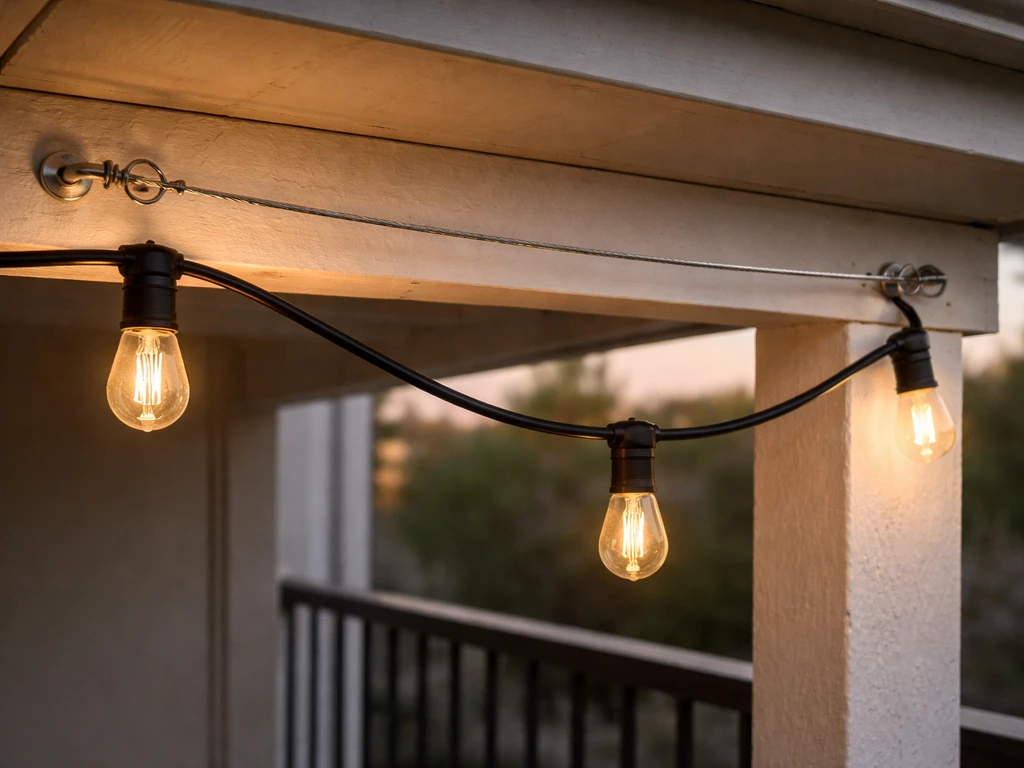
The guide wire principle (and why it matters)
The single most important installation tip is this: do not let the electrical cord take the mechanical load of the lights. The cord is not designed for that, and over time it will stretch, degrade, and fail at the sockets. Instead, run a separate galvanized steel or stainless steel guide wire between your anchor points, and thread the string light's grommet holes over it. The guide wire carries the weight; the cord just carries the electricity. For spans over 15 feet, this is non-negotiable. Use turnbuckles at the anchor points to keep the wire tensioned and prevent excessive sag.
Balcony setup
On a small balcony, you typically have two anchor points: the building wall and the railing or a far corner post. Screw in a stainless cup hook or eye bolt on each end, string your guide wire between them, then hang the bistro string over it. Keep the lowest sag point at least 7 feet above the floor. For a 6-foot-wide balcony, a single 12-foot string (accounting for lead wire and sag) is usually enough. If your lease does not allow drilling, adhesive hooks rated for outdoor use on the specific surface type can work for lightweight strings, but test the hold before trusting it with the full string weight.
Fence line setup
Run the guide wire along the top of fence posts using cup hooks. Zigzag the string back and forth across the patio width for even coverage, or run a single line parallel to the fence for a perimeter look. For fence runs longer than 20 feet, add an intermediate anchor point to prevent a deep central sag. Treat each fence post as a potential tie-off point using S-hooks for easy adjustment.
Pergola setup
A pergola is the easiest bistro light setup because the structural beams give you natural anchor points at the right height. Wrap the string along the top of the beams or drape it across the rafters in parallel runs. Use cable ties or S-hooks to secure to each rafter crossing. No guide wire is strictly necessary on a pergola since the beams provide direct support, but for runs longer than 10 feet between beam supports, adding a wire keeps the lights from drooping between attachment points.
Tree-to-house or tree-to-tree setup
Use a tree strap (not a screw into the tree if you want to preserve the bark and avoid decay entry points) to create an anchor point on the trunk or a main branch. Run your guide wire from the tree strap to a hook on the house eave or a freestanding pole. Then string the bistro lights along the guide wire. For spans over 20 feet between trees or between a tree and the house, a heavy-gauge (3/32 inch or 1/8 inch) stainless steel cable keeps sag minimal. You need a minimum of two anchor points per string run, so plan your layout accordingly before buying.
Step-by-step installation checklist
- Measure your anchor-to-anchor distances and add 10 to 20 percent for sag and lead wire
- Choose and install anchor hardware (cup hooks, eye bolts, or tree straps) at 8 to 10 feet height
- Run and tension your galvanized guide wire between anchor points, using turnbuckles at each end
- Thread the bistro string's grommet holes onto the guide wire or attach S-hooks every few sockets
- Plug into a GFCI-protected outdoor outlet using an outdoor-rated extension cord if needed
- Test all bulbs before finalizing placement and tighten any loose sockets
- Inspect wiring, sockets, and connectors at least once per season for UV damage or corrosion
Best picks by patio type and budget, plus mistakes to avoid
Matching the light to your setup
| Patio Type | Recommended Length | Bulb Spacing | Wattage per Bulb | Power Option |
|---|---|---|---|---|
| Small balcony (under 80 sq ft) | 12–25 ft | 12–18 inches | 1W (100 lm) | Plug-in or battery |
| Mid-size patio or deck (80–200 sq ft) | 48 ft (one or two strands) | 24 inches | 2W (200 lm) | Plug-in, dimmable |
| Large dining area or backyard (200+ sq ft) | 100 ft+ (multiple strands) | 24 inches | 2–4W (200–350 lm) | Plug-in or hardwired |
| Covered pergola (dry location) | Match pergola span | 18–24 inches | 2W (200 lm) | Plug-in, damp-rated OK |
| Fully exposed open patio | Match patio perimeter/run | 24 inches | 2W (200 lm) | Plug-in, IP65+ required |
Budget vs premium: where to spend and where to save
Budget bistro strings in the $25 to $50 range for a 48-foot strand can work fine if they carry an IP65 rating and use SJTW cord. The trade-off is usually less durable sockets, lower-quality bulbs that may fade or fail sooner, and limited dimming support. Premium options in the $80 to $150 range typically offer shatter-resistant bulbs, better UV-resistant cord, replacement bulbs that are actually sold separately, and dimmer compatibility. For a permanent installation, spending more upfront is worth it.
For a rental patio or a seasonal setup you store in winter, mid-range is perfectly reasonable. If you are comparing options across retailers including Amazon, budget picks can be fine as long as you verify the IP rating and UL listing before buying, since those details are sometimes buried or omitted in lower-quality listings.
Feature combinations worth seeking out
- 2700K color temperature with E26 screw-base sockets (replaceable bulbs, widely available)
- IP65 or UL wet-location rated with SJTW 16-gauge cord
- Dimmable (inline dimmer included or compatible with smart plug dimmer)
- G40 or G50 globe bulbs at 2W for dining areas; 1W or decorative filament for lounge setups
- 24-inch socket spacing for standard coverage; 18-inch for denser, more evenly lit areas
- Grommet holes or built-in support loops for guide wire installation
Common mistakes to avoid
- Buying indoor-rated or damp-only lights for an exposed outdoor patio (they will fail and can be unsafe)
- Letting the electrical cord bear the weight of the lights instead of using a guide wire (causes socket and wire damage over time)
- Skipping the sag allowance in your length calculation and ending up 3 to 5 feet short
- Using an indoor extension cord to reach the outdoor outlet (serious safety and fire risk)
- Choosing 4000K or daylight bulbs because they are "brighter," then finding they ruin the outdoor ambiance
- Not checking for a GFCI outlet before installation (required for outdoor use, and important for safety)
- Going with solar as the primary light source for a dining or entertaining space and being disappointed by inconsistent brightness
- Spacing bulbs too far apart (beyond 24 inches) without a guide wire, resulting in deep sag and an unfinished look
Your next steps
- Measure your patio anchor points and calculate your total length needed (linear distance plus 15 percent for sag and lead wire)
- Check your outdoor outlet: confirm it is GFCI-protected and within reach, or plan your extension cord run with an outdoor-rated cord
- Decide on your exposure level: covered pergola (damp-rated OK) or open sky (IP65 or UL wet-location required)
- Pick your bulb wattage based on use: 1W for ambient lounge, 2W for dining, 4W for a large well-lit space
- Confirm the string is dimmable and uses E26 sockets so you can replace bulbs individually
- Buy or gather guide wire, cup hooks or eye bolts, turnbuckles, and S-hooks before install day
- After hanging, inspect every socket and test every bulb before your first evening use
FAQ
Can I use plug-in bistro lights on a fully exposed patio if I keep the plug dry?
Yes, but only if the outlet is truly weatherproof (use an outdoor in-use cover) and it is GFCI-protected. For plug-in strings, keep the first connection point elevated above likely puddling, and route the cord along the wall or under an overhang rather than letting it hang where rain can flow into the plug area.
Is it safe to link two bistro light strings together to cover a larger patio?
Do not connect multiple plug-in bistro strings together unless the manufacturer explicitly says it is allowed. Even if the wattage seems low, adding extra strings can exceed the plug-in string’s designed electrical load and can overheat sockets or the inline dimmer.
What dimmer should I use for LED 2700K bistro lights, and will any dimmer work?
If your string supports a dimmer, use an outdoor-rated dimmer matched to LED loads. Check that the dimmer is compatible with low-watt LED bulbs, because some generic dimmers cause flicker or buzzing, especially when you dim below 30 percent.
When should I choose wet-location lights versus damp-location lights?
If you have damp spots, condensation, or a covered-but-not-sealed area, damp rating can be fine. But if water can actually drip or splash onto the sockets or bulbs, you need wet-location or IP65 level protection, otherwise the sockets and internal seals fail prematurely.
Can I replace the bulbs with my own (dimmer-compatible) bulbs, or do I have to use the included ones?
For commercial-style globe sockets, E26 is the common expectation, but lamp caps and watt limits vary by brand. Verify the included bulb type and wattage limit before swapping bulbs, and only replace with bulbs rated for outdoor use if the string design requires it.
What’s the correct way to extend power if the patio outlet is far from where I want to mount the lights?
A longer cord run is not the same as extending the string, and using an indoor extension cord is the common mistake. If you must extend reach, use a UL-listed outdoor extension cord that is rated for the full load and keep all connections off the ground and protected from rain.
Why do the guide wire and grommet holes matter, can’t I just hang the string from the cord?
Choose a wire-and-grommet approach if you want the lights to last. The cord can stretch and pull strain onto the socket wiring over time, while a guide wire keeps weight off the cord and maintains consistent sag spacing across seasons.
Can I mount bistro lights without drilling, using adhesive hooks?
Yes, but adhesive solutions should be treated as a lightweight option only. Use outdoor-rated adhesive hooks made for the exact surface (wood, tile, vinyl, painted wall), test pull strength before hanging the full strand, and avoid high-tension placement that increases peel risk.
Are battery bistro lights a good replacement for plug-in lights on a dining patio?
Battery lights usually look best as an accent in bright conditions or for short evenings, because output is typically lower and consistent “even dining” illumination is harder to achieve. If you want restaurant-style visibility for dinner, plug-in (with warm 2700K) is still the more reliable main lighting choice.
How do I ensure the lights are high enough after sag, and what clearance should I plan for over seating?
Aim for a walkway-friendly layout where no bulb lands at head height during standing and leaning, and confirm clearance at the lowest sag point after installation. If you are using a 7-foot clearance setup, re-check it with people at the seating spots, not just standing in the open area.
Do I still need a guide wire on a pergola if the beams are spaced far apart?
For a pergola, natural beam anchors usually reduce droop risk, but you still need extra support when spans between attachment points are long. A simple rule is to add an additional wire or more tie points when the gap between beam supports would otherwise cause noticeable droop in the string.
How does bulb spacing change the final look, and how should I pick between 12 to 18 inch and 24 inch spacing?
Expect a different look: tighter spacing increases visual density and reduces shadows, while wider spacing looks more like cafe ambiance. If you are choosing between 12 to 18 inch spacing and 24 inch spacing, pick based on whether you want “even dinner light” or “intentional glow with gaps.”
What’s the simplest way to automate bistro lights for evenings without installing new wiring?
For small runs or renters storing seasonally, a timer plug is often the easiest “dusk-to-dawn style” solution. Use it with dimmable strings so you can set a brighter window for early evening and dial down later if you prefer.
Next Articles
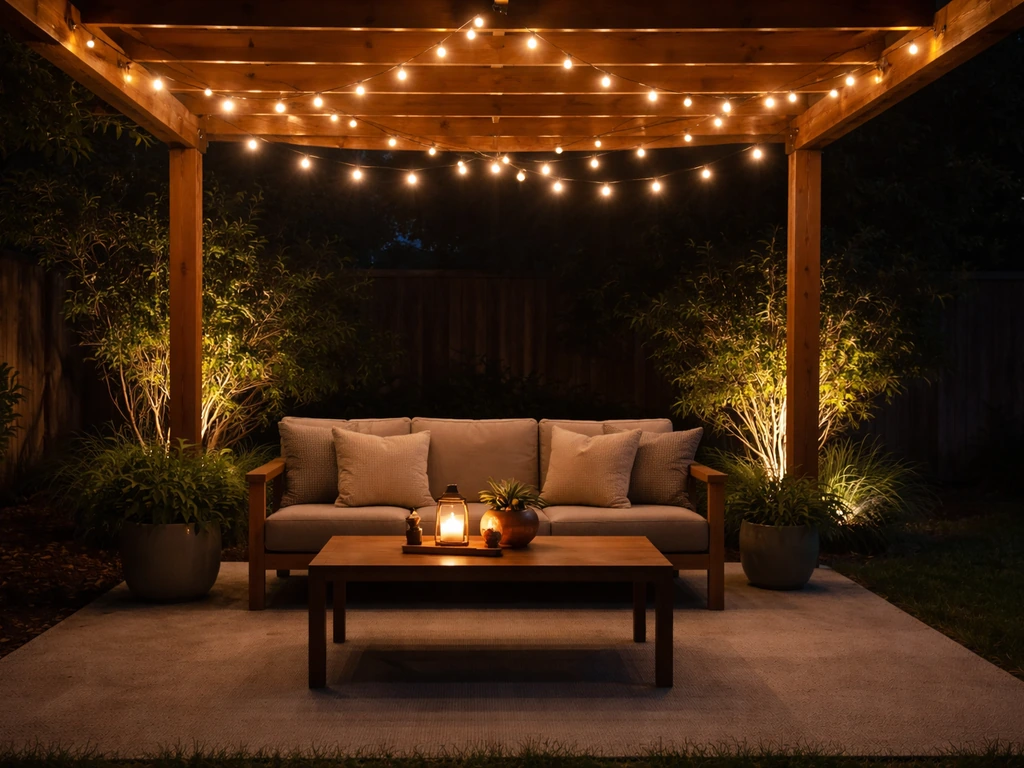
Best Outdoor Patio Lights: Buying Guide by Patio Type
Best outdoor patio lights by patio type, with brightness, color, power, and placement tips to choose and install fast.
Best Outdoor String Lights for Patio: 2026 Buyer Guide
2026 guide to the best outdoor patio string lights with LED, solar, sizing, wet rating, setup tips, and troubleshooting.
Best Sunbrella Patio Cushions: Top Picks, Guide & Maintenance
Find the best Sunbrella patio cushions: durable, fade‑resistant picks, buying tips, care, and top recommendations.