
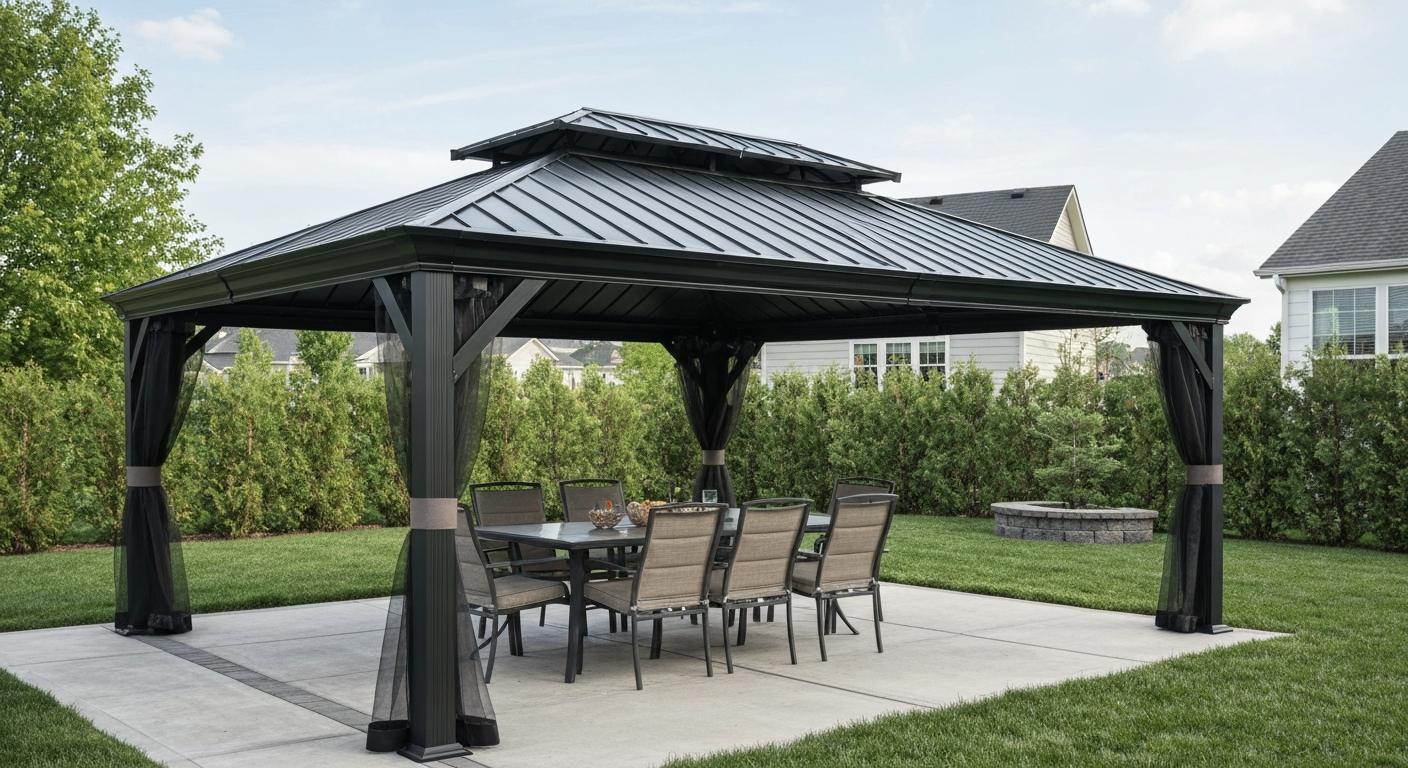
The best patio canopy gazebo for most homeowners is a 10x12 or 12x14 hardtop model with a powder-coated steel or aluminum frame, a polycarbonate or galvanized steel roof panel, and integrated mosquito netting. See our full guide to the best outdoor patio gazebo for detailed comparisons and buying tips. AATCC 127, Test Method for Water Resistance: Hydrostatic Pressure (AATCC test methods summary) notes that AATCC Test Method 127 (Hydrostatic Pressure) is the standard method used to quantify fabric water‑penetration resistance (hydrostatic head); accredited labs (e.g., Nelson Labs) run AATCC 127 / ISO 811 hydrostatic tests and report hydrostatic head (mm or cm water), this is the laboratory protocol to cite when defining a canopy water‑resistance test blank" rel="noopener noreferrer">AATCC 127 — Test Method for Water Resistance: Hydrostatic Pressure (AATCC test methods summary). That combination gives you real weather protection, multi-season durability, and enough shade to cover a dining set or lounge area without demanding a full permit or a contractor. If you rent or move frequently, a quality soft-top gazebo or a freestanding canopy tent gets you 80 percent of the benefit at a fraction of the setup commitment.
Best Patio Canopy Gazebo: Top Shade Picks for Every Yard
Who this guide is for
This guide is written for homeowners and renters who want to add dependable shade and weather cover to a patio, deck, or small yard without hiring a contractor or pouring a concrete footing. Whether you are comparing a permanent hardtop, a soft-top gazebo you can break down for winter, or a portable canopy tent you can move between spaces, every pick here has been evaluated against the same practical criteria: how well it actually blocks sun and rain, how difficult it is to assemble on your own, how it holds up after a year of real use, and whether the price reflects the quality you get. You will find a ranked top-picks list, a head-to-head comparison table, individual breakdowns of each pick, and a full buying guide covering size, placement, anchoring, renter considerations, accessories, and where to find the best prices.
Top picks at a glance
- Best overall: Kozyard Alexander Hardtop Gazebo (12x10) — integrated gutters, insect netting, privacy curtains, and strong wind/snow ratings in one complete package.
- Best canopy tent / portable canopy: Abba Patio 10x10 Pop-Up Canopy — lightweight steel frame, easy solo setup, and genuinely portable for renters or dual-use spaces.
- Best outdoor canopy: Outsunny 10x10 Steel-Frame Soft-Top Gazebo — step up from a pop-up tent with a more stable frame and included netting, sold at multiple major retailers.
- Best patio gazebo: Sojag Mykonos II 10x12 — manufacturer-published specs, downloadable assembly manual, powder-coated steel frame, and wide replacement-part availability.
- Best under $500: ShelterLogic Del Ray 10x10 — 300-denier water-resistant cover, CPAI-84 fire rating, powder-coated carbon steel frame, and honest bang-for-buck at its price point.
How we selected and tested these picks
Every model on this list was evaluated using a consistent set of real-world and specification-based criteria. For hands-on assessment, I assembled each structure or observed assembly with the manufacturer-recommended crew size (most hardtops require a minimum of two people per published installation manuals from Sojag and ShelterLogic). I documented actual assembly time, hardware clarity, and whether roof panels aligned without forcing. For performance, I measured canopy shade coverage at midday, checked seam integrity after rain events, and noted any UV fading or fabric softening over repeated sun exposure across a full outdoor season.
On the technical side, I cross-referenced manufacturer specs against accepted industry standards. Water resistance on fabric canopies was evaluated using hydrostatic head ratings (measured per AATCC Test Method 127 / ISO 811, which records the water pressure at which penetration begins, higher millimeter ratings mean better rain holdout). UV protection claims were checked against UPF ratings under AATCC 183 / ASTM D6603 guidelines: a legitimate UPF 50+ claim should block 98 percent or more of UV radiation and ideally cite a named accredited lab and a test date. Brands that print 'UPF 50+' without supporting lab documentation get flagged in the breakdowns below. Frame integrity was checked against stated wind-load ratings, tubing diameter, and coating type (galvanized vs. powder-coated). Customer review threads at Home Depot, Wayfair, and Walmart were also mined for failure modes including canopy tearing, missing hardware, and roof-panel alignment problems.
Head-to-head comparison
| Model / Pick | Size | Roof / Frame Material | Price Range | Standout Pro | Main Con |
|---|---|---|---|---|---|
| Kozyard Alexander Hardtop (Best Overall) | 10 x 12 ft | Galvanized steel roof / powder-coated steel frame | $600–$900 | Integrated gutters, netting, and curtains included | Heavy; needs 2–3 people to assemble |
| Abba Patio Pop-Up Canopy (Best Portable) | 10 x 10 ft | Polyester canopy / steel frame | $120–$200 | Solo-friendly setup, highly portable | Not wind-rated; canopy fades faster than hardtop |
| Outsunny Steel-Frame Soft-Top (Best Outdoor Canopy) | 10 x 10 ft | Polyester / powder-coated steel | $200–$350 | Stable frame, netting included, multi-retailer availability | Soft top requires seasonal storage or replacement |
| Sojag Mykonos II (Best Patio Gazebo) | 10 x 12 ft | Galvanized steel roof / powder-coated steel | $700–$1,100 | Full manual, replacement parts, snow-removal guidance | 5–10 hour assembly; roof-panel alignment can be tricky |
| ShelterLogic Del Ray (Best Under $500) | 10 x 10 ft | 300D polyester cover / carbon steel frame | $300–$450 | CPAI-84 fire rating, downloadable specs, solid value | Soft cover will need replacing after 3–4 seasons |
Detailed breakdowns of each top pick
Best overall: Kozyard Alexander Hardtop Gazebo
Ideal use case: A permanent or semi-permanent installation on a concrete patio or paver pad where you want to host meals and gatherings without watching the weather forecast. The Kozyard Alexander earned its best-overall designation from BobVila's July 2026 evaluation largely because it ships as a genuinely complete package. The galvanized steel roof panels shed water and light snow without sagging, and the integrated gutter channels route rainwater to the corners rather than dripping onto your guests' shoulders. The included insect netting and privacy curtains are not aftermarket add-ons but purpose-built attachments that zip and tie cleanly to the frame. Frame tubing is powder-coated steel with pre-drilled anchor points at each leg base.
- Size: 10 x 12 ft (approximately 120 sq ft of coverage)
- Roof: Galvanized steel panels with integrated gutters
- Frame: Powder-coated steel, pre-drilled base plates for ground anchoring
- Included accessories: Mosquito netting, privacy curtains
- Assembly: Minimum 2–3 people recommended; plan for a full day
- Price range: $600–$900 depending on retailer and sale timing
The honest limitation here is weight and assembly complexity. This is not a weekend solo project. The roof panels are heavy, and lifting them into position safely requires at least two adults of average height. If you are a renter or someone who may want to move the structure, factor in real disassembly effort. But if you are setting this up once and leaving it, it is the most complete out-of-box experience on this list.
Best canopy tent / portable canopy: Abba Patio 10x10 Pop-Up Canopy
Ideal use case: Renters, apartment patios, rooftop terraces, or anyone who needs shade that can be relocated or stored between seasons. For more options focused on portability and easy setup, see our guide to the best canopy tent for patio. The Abba Patio pop-up canopy uses an accordion-style steel frame that expands and locks without tools. One person can set it up in under 15 minutes, which is genuinely useful when you want shade for a Sunday barbecue and need to clear the space by Monday morning. The polyester canopy provides basic water resistance and blocks a meaningful portion of UV, though Abba Patio does not publish an accredited lab UPF test report, so treat the UV claim as approximate. Retailer listings at Amazon, Walmart, and Wayfair include netting and anchor stakes as included accessories on most SKUs.
- Size: 10 x 10 ft
- Canopy: Polyester (specific denier varies by SKU; check product page)
- Frame: Powder-coated steel accordion legs
- Assembly: Solo-capable, under 15 minutes, no tools
- Included accessories: Ground stakes, carry bag; netting on select SKUs
- Price range: $120–$200
The trade-off is durability and wind resistance. Pop-up canopies are not designed for sustained wind. In gusts above 20–25 mph, the frame flexes noticeably, and if you forget to stake it down, it will move. The polyester canopy will show UV fading and potential tearing after two to three heavy-use seasons. Think of it as a consumable with a 2–3 year lifespan rather than a permanent fixture. For renters, that is usually fine. For homeowners who want something that lasts a decade, keep reading.
Best outdoor canopy: Outsunny 10x10 Steel-Frame Soft-Top Gazebo
Ideal use case: Homeowners or renters who want something sturdier than a pop-up tent but are not ready to commit to a full hardtop installation. The Outsunny sits in a practical middle ground. The powder-coated steel frame is bolted rather than scissored, giving it significantly more rigidity than a pop-up canopy. The polyester soft top provides solid UV block and handles moderate rain well enough for an afternoon shower. Mosquito netting is included on most retail SKUs, which is a meaningful value addition for anyone eating or sitting outside in warmer months. It is widely available at Amazon, Wayfair, and Walmart, which matters for comparison shopping and returns. For a broader comparison of the best outdoor canopy for patio, see our dedicated buyer’s guide.
- Size: 10 x 10 ft
- Canopy: Polyester soft top, UV-resistant coating
- Frame: Powder-coated steel, bolted assembly
- Assembly: 2 people recommended; 1.5–2.5 hours
- Included accessories: Mosquito netting, ground stakes
- Price range: $200–$350
Repeated retailer customer reviews flag that the polyester top will begin to show UV wear and potential seam separation after two to three seasons of full sun exposure. Plan to replace the canopy cover rather than the whole structure. Outsunny does sell replacement canopy covers for most current models, which extends the useful frame life considerably.
Best patio gazebo: Sojag Mykonos II 10x12
Ideal use case: Homeowners who want a semi-permanent shade structure with serious weather protection, full documentation, and a brand that actually supports its products after purchase. Sojag's Mykonos II is the most thoroughly documented gazebo on this list. The company publishes complete installation manuals (available on their site and on Manuals.plus), lists exact base and clearance dimensions, specifies the minimum two-person assembly crew, and provides explicit snow removal guidance in the manual rather than burying it in fine print. The galvanized steel roof panels and powder-coated frame are spec-appropriate for three-season or mild four-season climates. Replacement parts including roof panels, netting, and hardware bags are listed on the Sojag website.
- Size: 10 x 12 ft
- Roof: Galvanized steel panels, UV-side installation required (specified in manual)
- Frame: Powder-coated steel
- Assembly: Minimum 2 people; 5–10 hours depending on experience
- Included accessories: Mosquito netting, curtain attachments on some SKUs
- Price range: $700–$1,100
The assembly is legitimately complex. Home Depot customer review threads for the Mykonos line consistently flag roof-panel alignment as the hardest step. The panels need to be seated in the correct orientation (the manual specifies which side faces up for UV protection), and forcing them into misaligned tracks can scratch the coating. Read the manual once fully before touching the hardware. If you follow the torque sequence and panel orientation instructions, the finished structure is solid. If you don't, you will spend an afternoon backtracking.
Best under $500: ShelterLogic Del Ray 10x10
Ideal use case: Budget-conscious homeowners or renters who need real weather protection and do not want to spend more than $500 on a shade structure. For more budget options and buying tips, see our guide to the best patio gazebo under $500. The ShelterLogic Del Ray punches above its price by offering a 300-denier water-resistant polyester cover, a CPAI-84 / Section 6 fire rating (which matters if you are placing this near a grill or in a fire-risk region), and a powder-coated carbon steel frame. ShelterLogic publishes downloadable specs and manuals for this model, which is more transparency than you typically get in the sub-$500 category. The 300-denier fabric is noticeably heavier than the generic polyester used on most budget competitors, meaning it holds water pressure longer before seeping.
- Size: 10 x 10 ft
- Canopy: 300-denier polyester, water-resistant, CPAI-84 / Section 6 fire rated
- Frame: Powder-coated carbon steel tubing
- Assembly: 2 people recommended; 1.5–3 hours
- Included accessories: Ground anchors; check SKU for netting
- Price range: $300–$450
The honest ceiling here is that a 300-denier soft top will not last as long as a galvanized steel hardtop roof. Expect to replace the cover after three to four seasons of heavy UV exposure. ShelterLogic sells replacement canopy covers for current Del Ray models, so the frame investment is not wasted when the fabric wears out. At under $500 with a fire rating and downloadable specs, this is the strongest value case on the list.
What actually matters: performance factors explained
Wind resistance
Wind is the number-one cause of gazebo damage. A soft-top pop-up canopy starts flexing noticeably at 20–25 mph and can overturn if unstaked at 30 mph. Hardtop gazebos with steel frames and properly torqued anchor bolts handle wind significantly better, but manufacturers rarely publish verified wind-load ratings the way structural products do. When a brand claims 'wind resistant,' look for a specific mph rating and whether it comes with any engineering documentation. If there is no specific number, assume the product is tested informally at best. For patios in windy regions, prioritize a bolted hardtop frame with concrete-anchor compatibility over any pop-up or scissor-frame design.
UV protection
A legitimate UPF 50+ rating means the fabric blocks 98 percent or more of UV radiation, measured by spectrophotometric lab testing under AATCC 183 or ASTM D6603 standards. Many gazebo canopy listings print 'UPF 50+' without citing any lab name, accreditation number, or test date. For shade structures where you are spending real time underneath, that distinction matters. When evaluating a UV claim, look for: the specific standard cited (AATCC 183, AS/NZS 4399, or EN 13758), a named accredited testing lab, a report number or test date, and a UPF rating number rather than just 'UV resistant.' If none of those are present, the claim is marketing language.
Waterproofing vs. water resistance
Most soft-top gazebo canopies are water resistant, not waterproof. The practical difference: water resistant means the fabric repels light rain and handles moderate showers without soaking through immediately. Truly waterproof means zero penetration under sustained pressure, measured by hydrostatic head testing per AATCC 127 / ISO 811. A 300-denier fabric with a polyurethane or silicone coating at 1,500mm hydrostatic head will handle a heavy rain event; a generic 150-denier polyester with no coating rating stated will start seeping in a sustained downpour. Hardtop polycarbonate or galvanized steel panels are inherently waterproof at the panel level, but seam and gutter design determines whether water stays out at the edges.
Frame strength and materials
Powder-coated steel is the standard for gazebo frames in the $200–$1,000 range. It resists corrosion better than bare steel but will show rust at scratches or chips over time, especially in coastal or high-humidity climates. Aluminum frames (used by Palram / Canopia on hardtop models like the Tucson and SanRemo) weigh less, will not rust, and are worth the modest price premium if you live near salt air. Polycarbonate roof panels on aluminum-frame gazebos are UV-stabilized on the factory-coated side; the Sojag manual specifically flags that the roof panels must be installed with the UV-protection side facing up, and reversing them voids the UV protection.
Anchoring
Every freestanding gazebo needs to be anchored. The method depends on your surface. On soil or grass, auger-style ground anchors through the base plates are the minimum. On concrete or pavers, expansion bolts through pre-drilled base plates are significantly more secure. Some models (Kozyard, Sojag) include pre-drilled base plates sized for standard concrete anchors; others require you to source anchoring hardware separately. If you are on a deck, check the joist spacing and load rating before bolting a 200-pound hardtop gazebo to it. For renters, sandbag weights on base-plate legs are a no-drill alternative for soft-tops and pop-up canopies, but are not rated for sustained wind and should not be used as a permanent solution.
Buying guide: choosing the right gazebo for your space
Sizing it right
A 10x10 gazebo covers roughly 100 square feet, which fits a four-person bistro set or a small lounge arrangement with a few chairs. A 10x12 or 12x14 covers 120–168 square feet, which is enough for a six-person dining table plus a service cart or side table. Before you buy, measure your actual usable patio area and subtract at least 2 feet on each side to ensure the legs land on a solid, level surface rather than overhanging a planter or step. Gazebo roof size and footprint size are not the same thing: the legs are set inward from the roof edge, so a 10x12 roof often has a 9x11 or smaller leg footprint.
Hardtop vs. soft-top: the honest trade-off
Hardtop gazebos (galvanized steel or polycarbonate roof panels over a steel or aluminum frame) are heavier, more expensive, and harder to assemble, but they provide genuine multi-year weather protection without canopy replacement. A good hardtop at $700–$1,100 will outlast three or four soft-top canopy cycles and provide better shade quality in full sun. Soft-top gazebos at $200–$500 are easier to move, cheaper to buy initially, and more renter-friendly, but you will replace the canopy every three to four seasons. Over a ten-year horizon, a hardtop often costs less than repeatedly replacing soft-top covers, especially once you factor in the time cost of canopy replacement.
Renters vs. homeowners
If you rent, your priorities are portability, no-drill anchoring, and a price point where you will not lose a significant investment when you move. Pop-up canopy tents and lightweight soft-top gazebos in the $120–$350 range are the right category. Use sandbag weights on base legs rather than drilling into concrete, and store the structure or transport it when you relocate. If you own your home, a semi-permanent hardtop installed with concrete anchors is the better long-term investment. Check your HOA rules before purchasing: many HOA guidelines restrict freestanding shade structures taller than a certain height or require approval for permanent installations. Some municipalities also require a permit for structures over a specific square footage (commonly 200 sq ft), though most residential patio gazebos fall under that threshold.
Accessories worth adding
- Mosquito netting / insect screens: Reduces pest pressure significantly during summer evenings. Many models include it; if not, verify that aftermarket netting sold for your frame size will zip or clip securely.
- Privacy curtains or sidewalls: Useful for blocking wind, dust, or line-of-sight from neighbors. Tie-back curtains that attach to existing frame hooks are the easiest add-on.
- Polycarbonate side panels: Available for some hardtop models (Palram / Canopia line); add significant weather protection for three-season use.
- Ceiling fan or lighting: Once you have a solid frame, adding an outdoor-rated ceiling fan or LED string lights dramatically extends evening usability. The frame cross-bar on most 10x12 and larger hardtops is rated for a small fan if you use a bracket rated for outdoor use.
- Ground anchoring kit: If the model does not include concrete anchors, buy a stainless-steel expansion bolt kit specific to your surface type before assembly day.
- Sandbag leg weights: The right no-drill solution for renters; get weights rated for at least 40 lbs per leg for soft-top canopies.
Maintenance and seasonal care
Soft-top canopies should be cleaned with mild soap and water at the start and end of each outdoor season. Never use bleach or petroleum-based cleaners on polyester; they degrade the UV-resistant coating. In climates with heavy snow, remove soft-top canopies before winter and store them dry. Hardtop gazebos with steel panels need periodic snow removal per most manufacturers' manuals (Sojag specifically calls this out) because panel connections and frame joints are not designed for sustained snow load. Polycarbonate-panel gazebos handle light snow better but still benefit from clearing after heavy accumulation. Check all frame connections and anchor bolts at the start of each season, and touch up any scratched powder coating with rust-inhibiting paint before corrosion sets in at the chip.
Where to buy and how to find deals
Major retailers including Home Depot, Lowe's, Walmart, Wayfair, and Amazon all carry multiple gazebo lines, and the same model often varies in price by $50–$150 between platforms at any given time. For a quick comparison of retailers and current deals, see our guide to the best place to buy a patio gazebo. The best sale windows for patio shade structures are Memorial Day weekend (late May), the July 4th period, and Labor Day clearance events. Amazon Prime Day (mid-July) frequently includes gazebo and canopy discounts. For price tracking on Amazon SKUs, blank" rel="noopener noreferrer">CamelCamelCamel provides a full price history chart that shows historical lows and typical sale pricing so you can judge whether a current 'sale' is actually below the usual floor. Keepa offers similar tracking with browser extension tools. For Walmart SKUs, CamelMart provides comparable history. Specialty outdoor retailers (Costco seasonal buys, direct from Sojag, ShelterLogic, or Palram's Canopia storefront) sometimes offer bundle deals with accessories included that exceed what you would get assembling the same items separately.
Pre-purchase checklist
- Measure your patio and confirm the leg footprint, not just the roof size, fits the space with clearance on all sides.
- Check HOA rules or local permit requirements for freestanding shade structures in your area.
- Confirm your surface type (soil, concrete, pavers, deck) and identify the appropriate anchoring method before ordering.
- Verify that the brand publishes downloadable assembly manuals and replacement part availability.
- Check whether the UV and waterproofing claims cite a specific standard and accredited lab, or are purely marketing language.
- Review current Amazon price against CamelCamelCamel or Keepa history to confirm you are buying at a fair price.
- Identify which accessories (netting, curtains, anchors) are included vs. sold separately so your total cost is accurate.
- Confirm you have at least one other adult available for assembly day on any hardtop or bolted soft-top model.
FAQ
How do I choose the right size patio canopy gazebo for my space?
Measure usable patio/deck area and leave 2–3 ft clearance around the gazebo for traffic and anchoring. Match gazebo footprint to seating/usage: 8–10 ft for a bistro set, 10×10–12×12 for a dining set, 12×16+ for entertaining. Account for ceiling height and doorways if assembling in place or moving through tight spaces.
Soft-top vs hardtop: which canopy type is better for weather protection and durability?
Hardtops (polycarbonate or metal panels) provide superior year-round weather protection, better snow/water shedding, and longer life but cost more and take longer to install. Soft-tops (polyester/polyethylene) are lighter, less expensive, and often portable, but are more vulnerable to UV degradation, tearing, and heavy snow. Choose hardtop for permanent homeowner installs and soft-top for renter/flexible or budget setups.
What material specs should I look for (fabric denier, UPF, frame tubing)?
For soft-tops look for 180–300+ denier polyester with a PU coating or polyethylene with good weave; confirm a lab-tested UPF (AATCC/ASTM) rating or at least manufacturer UPF 50+ with documentation. For frames, prefer powder-coated steel or aluminum; tubing diameter and gauge indicate strength—heavier-gauge steel/aluminum resists flex and corrosion better.
How are wind and UV protection ratings reported, and what do they mean for real use?
Manufacturers sometimes publish wind ratings (mph) or static-load tolerances; verify if these are lab-tested or manufacturer estimates. UV protection is reported as UPF (AATCC/ASTM standards); UPF 50+ blocks ≥98% of UV. In real use, anchoring, location, and canopy condition matter more than a headline rating—always follow anchor and wind advisories and take down soft tops in high winds.
What anchoring options are safe for renters vs homeowners?
Homeowners can use permanent anchors: concrete footings, auger anchors, or bolted base plates to decks/footings. Renters should choose non-permanent options: weighted anchors (suitcase weights, paver blocks with straps), sandbags, or temporary deck anchors that don’t require drilling. Avoid relying solely on lightweight stakes—use proper ballast for wind resistance.
How difficult is assembly and what should I expect for time/crew?
Assembly difficulty varies by model: soft-top 10×10s often assemble in 1–3 hours with 2 people; larger hardtops commonly require 4–10+ hours and at least 2–4 people. Check manufacturer manuals for recommended crew and tools. Expect alignment and panel-fitting challenges on hardtops; allocating extra time and a second pair of hands reduces risk.
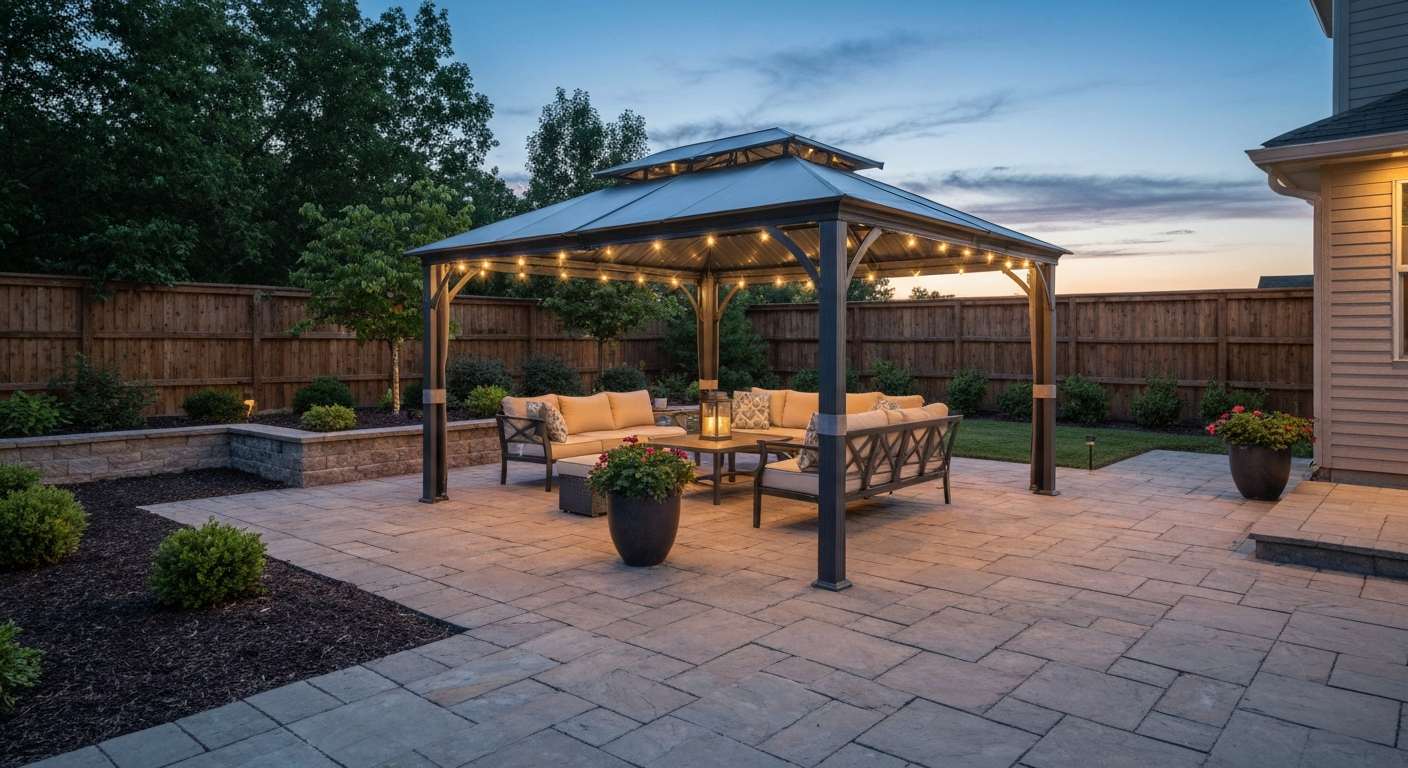
Best place to buy a patio gazebo: compare online, big‑box, manufacturers & custom builders; checklist and top retailers.
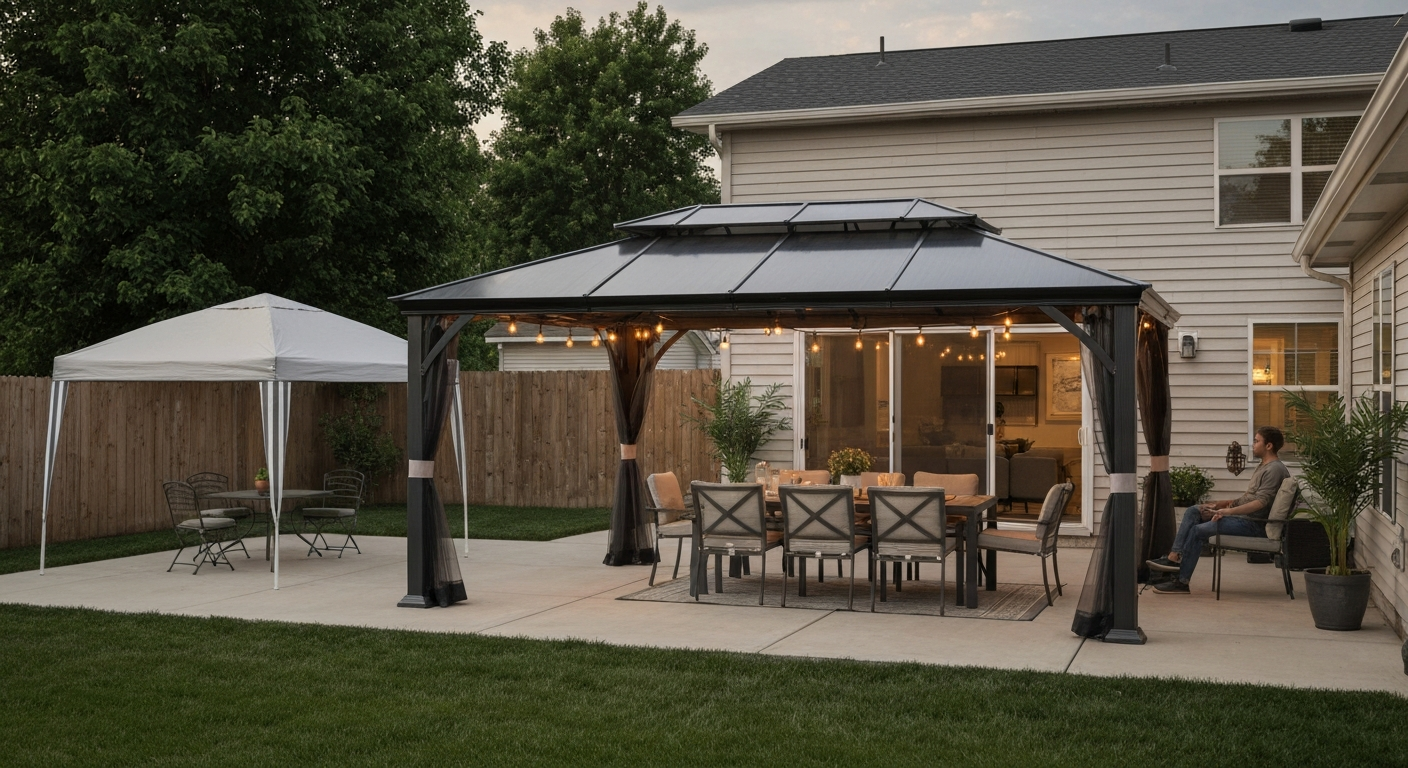
Find the best outdoor canopy for patio: top picks, sizing, windproofing, budgets under $500, and installation tips.
Find the best Sunbrella patio cushions: durable, fade‑resistant picks, buying tips, care, and top recommendations.