
The best outdoor patio gazebo for most homeowners is a hard-top model like the Palram Canopia Palermo 10x10 or the Yardistry 12x14 cedar gazebo. They hold up in real weather, look good year after year, and don't require you to run outside before every thunderstorm to yank down a fabric canopy. If you're renting, or just want something you can break down and store, a quality pop-up soft-top like the Sunjoy 10x10 is a solid second choice, just go in knowing you'll need to remove the canopy when serious wind rolls in. This guide covers everything you need to decide: which type fits your space and climate, what to spend, where to buy, and how to get it installed without surprises.
Best Outdoor Patio Gazebo: Top Picks, Buyer's Checklist & Budget Picks

Lark Perry
26 Jul 2026
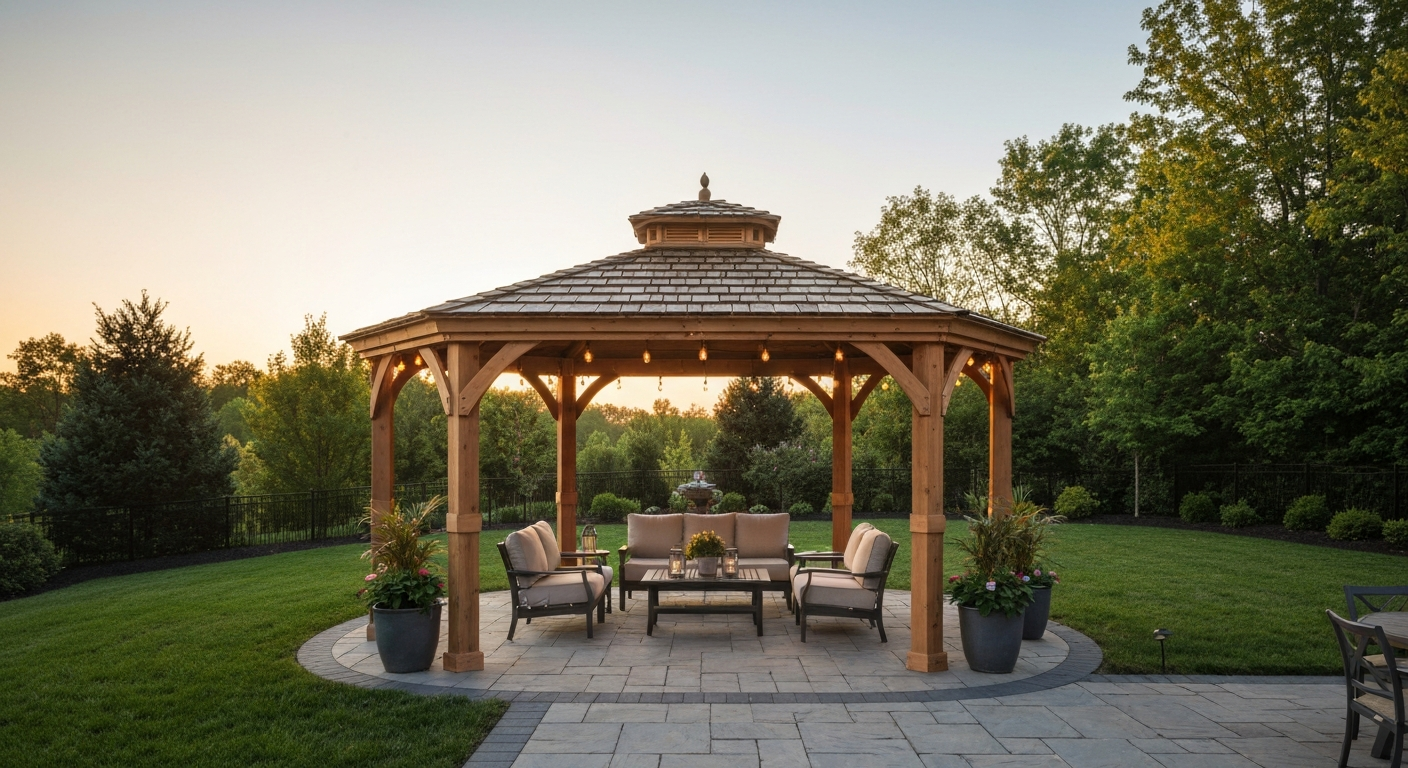
Who this guide is for
Whether you own your home or rent, have a sprawling backyard or a 10x10 concrete slab, and whether your climate brings blazing sun or heavy snow, you'll find a recommendation here. I've dug into manufacturer specs, assembly manuals, retailer policies, and real-world performance data to give you a practical, no-fluff breakdown. If you're specifically hunting for a temporary shade structure, the canopy tent options in this guide will also point you toward lightweight alternatives worth considering alongside a full gazebo.
Quick picks: top gazebos by category
Here's the short version if you're in a hurry. Every pick below is covered in depth further down the page. BobVila's roundup, The Best Gazebos of 2026, Picks from Our Editors (BobVila), presents category picks across pop-up, pop-up with netting, and hard-top gazebos and notes real-world setup times and use cases.
- Overall best: Yardistry 12x14 Cedar Gazebo — solid wood construction, beautiful curb appeal, wind and snow capable, 10-year warranty on lumber
- Best value: Palram Canopia Palermo 10x10 — aluminum frame, polycarbonate roof, tested wind and snow ratings, typically priced around $800–$1,100
- Best for renters: Sunjoy 10x10 Steel Soft-Top Gazebo — tool-light setup, fully removable, no anchoring required
- Best for small patios: ABCCANOPY 10x10 Pop-Up — folds down flat, fits a 6x6 storage footprint, sets up in under 10 minutes
- Best for windy climates: Palram Canopia Ledro 12x16 Enclosed Gazebo — aluminum frame with tested structural integrity, panels reduce wind load on the interior
- Best for snow: Yardistry 12x14 or any hard-top aluminum/polycarbonate model with a stated snow load rating of at least 15 lb/ft²
- Best under $500: VredHom/PURPLE LEAF 10x10 hard-top steel-frame options — see the budget section for full notes
Side-by-side specs: recommended models compared
| Model | Size | Frame Material | Roof Type | Wind Rating | Snow Load | Approx. Price | Best For |
|---|---|---|---|---|---|---|---|
| Yardistry 12x14 Cedar Gazebo | 12 ft x 14 ft | Cedar wood | Cedar shingle/wood | Moderate (manufacturer guidance) | Moderate | $2,500–$3,500 | Permanent install, homeowners |
| Palram Canopia Palermo 10x10 | 10 ft x 10 ft | Powder-coat aluminum | Twin-wall polycarbonate | ~56 mph (per spec sheet) | ~17.8 lb/ft² | $800–$1,100 | Value hard-top, homeowners |
| Palram Canopia Ledro 12x16 Enclosed | 12 ft x 16 ft | Powder-coat aluminum | Twin-wall polycarbonate | Tested structural rating | Stated in manual | $2,000–$2,800 | Windy climates, enclosed use |
| Sunjoy 10x10 Steel Soft-Top | 10 ft x 10 ft | Steel | Polyester fabric canopy | Low — remove in high wind | Not rated | $150–$350 | Renters, occasional use |
| ABCCANOPY 10x10 Pop-Up | 10 ft x 10 ft | Steel/aluminum | Polyester top | Not rated — take down in wind | Not rated | $100–$200 | Portability, small patios |
| VredHom 10x10 Hard-Top Steel | 10 ft x 10 ft | Steel | Metal/tile-look panel roof | Low-moderate | Basic | $350–$480 | Budget hard-top under $500 |
A note on wind and snow ratings: manufacturer numbers are only meaningful when tested against a recognized standard. Palram Canopia references tested ratings in their product manuals, which gives them more credibility than vague claims like 'wind resistant.' For any model you're considering, look for the actual lb/ft² snow load and mph wind figure in the product manual or spec sheet, not just the marketing copy on the box.
Your buying checklist before you order anything
I've watched people buy a beautiful gazebo and then spend two frustrated weekends figuring out that it doesn't fit their deck, can't be anchored to their surface type, or was overkill for a rental apartment patio. Run through this checklist first.
Size and footprint
Measure your usable patio space and subtract at least 2 feet on each side for walking clearance. A 10x10 gazebo needs roughly a 14x14 patio to feel comfortable, not cramped. Also check the roof overhang dimension, on many models the roof extends 1–2 feet beyond the post footprint, which matters for setback from fences or property lines. Many municipalities follow ICC International Building Code guidelines that require a permit for covered structures exceeding 120 square feet that will host 10 or more people. A 12x12 gazebo hits 144 square feet, so check your local code before you buy.
Frame and roof materials
Aluminum frames don't rust, don't warp, and require almost no maintenance. Steel frames cost less but need protective coatings, check that any budget steel-frame model has powder-coat or galvanized finish. Cedar and pressure-treated wood look stunning and are structurally solid, but they need sealing or staining every 1–3 years. For roofing, polycarbonate panels (used on Palram Canopia models) block UV, handle hail, and are translucent, they let diffused light through without direct sun glare. Fabric/polyester canopies are lightweight and cheap to replace but aren't structurally rated for wind or snow.
Wind and snow ratings, and how to read them
The U.S. engineering standard for wind loads is ASCE 7, which defines design wind speeds as 3-second gusts measured 33 feet (10 meters) above ground. When a manufacturer states a wind rating in mph, it should ideally map to those conditions, though most consumer-grade manufacturers don't publish the test methodology. Palram Canopia is one of the few brands that publishes specific tested figures (the Palermo 10x10, for example, lists approximately 56 mph wind resistance and around 17.8 lb/ft² snow load in its spec documentation). For structural wind testing, the relevant U.S. standard is ASTM E330. If you live in a coastal or high-wind zone, don't buy any soft-top, and insist on manufacturer-published ratings for hard-tops. For snow, anything above 20 lb/ft² is meaningful in a moderate snow climate; light snow climates can get by with 15 lb/ft².
Anchoring and foundation
This is where most guides gloss over the details and where most DIY installs go wrong. Palram Canopia's assembly manuals explicitly state that the supplied fasteners are intended for concrete anchoring only, and that you should consult an expert if you're mounting to a deck or pavers. For concrete, Simpson Strong-Tie wedge anchors (or screw anchors for lighter-duty applications) are the industry-standard choice. Embedment depth matters, a shallow anchor in a thin concrete slab is nearly useless in a windstorm. For wood decks, use through-bolts with washers, not lag screws alone. For pavers or gravel, your best option is weighted base plates or ground stakes combined with a windbreak, but don't expect the same stability as a concrete-anchored install.
Portable vs. permanent
If you're renting or expect to move within a few years, a permanent hard-top kit that requires concrete footings is a bad investment, both financially and practically. Pop-up frames and soft-top steel-frame gazebos are designed for exactly this situation. If you own your home and plan to be there for the long term, the cost-per-year math strongly favors a permanent hard-top or wood gazebo. A $2,800 Yardistry cedar gazebo with a 10-year warranty works out to $280/year before any resale value benefit.
Budget and warranty
Set a realistic range before you browse. Under $300 gets you a soft-top for occasional use. $500–$1,200 is the sweet spot for entry-level to mid-range hard-tops. $1,500–$3,500+ gets you cedar, premium aluminum, or contractor-grade prefab kits. Warranty terms vary enormously: Palram Canopia and Yardistry both offer 10-year limited warranties on qualifying models, that's exceptional and worth factoring into the price comparison. Many budget brands offer 1 year or nothing at all. Always read what the warranty actually covers: frame corrosion vs. fabric fading vs. hardware failure are often treated differently.
Canopy tents vs. permanent gazebos: which one actually fits your life
This is a decision a lot of buyers delay making and then regret. A canopy tent and a permanent gazebo serve fundamentally different purposes, and getting the wrong one is an expensive mistake. Here's an honest look at both.
| Factor | Canopy Tent | Permanent Gazebo |
|---|---|---|
| Setup time | 5–20 minutes | 4–16+ hours (DIY kit) |
| Portability | Folds flat, fits in a bag | Not portable — fixed structure |
| Wind resistance | Very low — must stake or remove in wind | Moderate to high (hard-top with anchoring) |
| Snow load | Not rated — remove before any snow | Rated on hard-top models (check spec sheet) |
| Cost | $80–$300 | $300–$5,000+ |
| Anchoring required | Ground stakes or weights only | Concrete anchors or deck bolts recommended |
| Permit likely needed | Rarely (temporary use) | Often for 120+ sq ft permanent structures |
| Best for | Events, camping, renters, small spaces | Homeowners wanting year-round shade/shelter |
| Lifespan | 1–5 years with care | 10–25+ years (hard-top or wood) |
| Aesthetics | Functional, utilitarian | Architectural, adds property value |
The real-world performance gap becomes obvious in a storm. Sunjoy's own assembly manual for their soft-top gazebo instructs owners to remove the canopy or take precautions in high winds, that language tells you everything you need to know about relying on a fabric-top structure as a permanent shade solution. For a focused comparison of lightweight, temporary shade options, see our guide to the best canopy tent for patio. A hard-top polycarbonate or wood gazebo with proper anchoring stays put. A well-staked canopy tent might too, but 'might' isn't good enough when you're talking about a structure over people.
The best gazebo for your specific situation
Overall best: Yardistry 12x14 Cedar Gazebo
If budget isn't your primary constraint and you want something that looks like it belongs on your patio rather than over it, the Yardistry 12x14 is the one I'd buy. Cedar is naturally rot and insect resistant, the assembled dimensions give you a genuinely livable outdoor room, and Yardistry's product pages include foundation prep notes, assembly service options (with listed lead times), and warranty terms that are clearly documented. It's a Costco-exclusive line, which means pricing is competitive and the return policy is famously generous. You will need a proper concrete or deck foundation, and assembly is a two-person weekend project minimum, or you can pay for Yardistry's assembly service.
Best value: Palram Canopia Palermo 10x10
For homeowners who want a hard-top with real weather credentials but don't want to spend $2,500+, the Palermo is the most defensible choice in the $800–$1,100 range. The aluminum frame won't rust, the twin-wall polycarbonate roof blocks UV and sheds rain without being flimsy, and the published wind (~56 mph) and snow (~17.8 lb/ft²) ratings are among the most specific you'll find in this price tier. The supplied anchors are for concrete only, if your patio is pavers or a wood deck, plan ahead and consult a hardware supplier for appropriate fasteners. Palram Canopia's 10-year limited warranty on hard-top lines adds meaningful long-term value.
Best for renters: Sunjoy 10x10 Steel Soft-Top
Renters need something they can take with them, and the Sunjoy 10x10 is the most popular choice in this space for good reason. Steel frame, vented canopy top, and a price point typically under $300 make it easy to justify. The ground rules: don't leave the canopy up during wind warnings, treat it as seasonal shade rather than a year-round structure, and store the fabric canopy over winter if you're in a freeze-thaw climate. The canopy itself is replaceable if it gets damaged, replacement canopies for common Sunjoy frames are widely available online.
Best for small patios: ABCCANOPY 10x10 Pop-Up
If your patio is under 200 square feet or you share outdoor space with neighbors, a pop-up is the most practical option. The ABCCANOPY 10x10 opens in under 10 minutes, packs into a rolling bag, and doesn't require any anchoring beyond ground stakes or leg weights. It's not a storm shelter, but for blocking afternoon sun over a small table and two chairs, it does the job without permanent commitment. Keep weighted bags on the legs any time there's wind, and you'll get 2–3 seasons of solid use out of it.
Best for windy climates: Palram Canopia Ledro 12x16 Enclosed
If you live in a region with frequent high winds, think coastal areas, open plains, or anywhere that regularly sees gusts above 40 mph, an open-sided gazebo is a liability. The Ledro 12x16 is an enclosed gazebo kit with aluminum side panels that dramatically reduce the wind load on the interior structure. Palram Canopia's manuals for this line include concrete and deck foundation guidance, and the enclosed design means you're also getting meaningful weather protection for outdoor electronics, speakers, or furniture stored inside. Budget $2,000–$2,800 and plan for a proper concrete anchor installation.
Best for snow: any hard-top with a stated snow load rating
If you get measurable snowfall, your gazebo roof needs a stated snow load rating in lb/ft², not a vague 'heavy duty' claim. Ground snow loads vary significantly by region; most of the U.S. Northeast and Midwest sees 20–40 lb/ft² design loads. Palram Canopia's polycarbonate hard-top lines and the Yardistry cedar models are your two best options here. Avoid any steel-frame model without a published snow load rating, a heavy wet snow event will damage an under-rated roof. Also consider roof pitch: steeper pitches shed snow naturally and reduce accumulation loads.
Budget guide: what your money actually gets you
Gazebo pricing has a steep quality cliff around the $500 mark. Here's what you can realistically expect at each budget level.
| Budget Range | What You Get | Limitations | Best Example |
|---|---|---|---|
| Under $200 | Pop-up canopy tent, steel frame, polyester top | No weather rating, replace yearly, no anchoring | ABCCANOPY 10x10 Pop-Up |
| $200–$500 | Steel soft-top or entry hard-top, basic assembly | Limited wind/snow resistance, short warranty | Sunjoy 10x10, VredHom 10x10 Hard-Top |
| $500–$1,200 | Aluminum hard-top, polycarbonate or metal roof, published ratings | May need concrete anchoring, modest aesthetics | Palram Canopia Palermo 10x10 |
| $1,200–$2,500 | Premium aluminum enclosed or large-footprint hard-top | Full installation required, permit may be needed | Palram Canopia Ledro 12x16 |
| $2,500–$4,000+ | Cedar/wood prefab kit, architectural look, long warranty | Major DIY project or hire assembly service | Yardistry 12x14 Cedar Gazebo |
For the under-$500 category specifically, the VredHom 10x10 and similar hard-top steel-frame gazebos are worth a look if you want the look of a hard roof without the Palram Canopia price tag. The trade-offs are real: steel frames are heavier and more rust-prone than aluminum, roof panels tend to be thinner and less insulating, and warranties are typically one year or less. They're not bad products, they're just built to a price. If you're in a mild climate and don't leave the gazebo out year-round, a budget hard-top can serve you well for 3–5 years. For more detail on this category, the guide to the best patio gazebos under $500 goes deeper into specific models and real-world durability notes.
Where to buy: big-box, online, and specialty options
Where you buy matters nearly as much as what you buy, especially for a large item that's expensive to return if something is wrong.
Home Depot and Lowe's
Both big-box retailers carry a solid range of gazebos, particularly Palram Canopia and private-label soft-tops. Home Depot's return policy typically allows 90 days for most large seasonal items, though special-order rules can differ, always check the product page for item-specific return terms before you buy. Lowe's similarly enforces a 90-day return window for most new, unused merchandise, though large-freight and installed items may have separate policies. The big advantage of buying in-store or from a big-box website: you can often arrange a store return rather than dealing with return freight on a 150-lb flat-pack box.
Wayfair
Wayfair has the widest selection of gazebo styles and sizes online, but their standard return window is 30 days from delivery, shorter than either big-box retailer. For a structure that might take you a full weekend to assemble, that's a tight window to discover a defect or fit problem. If you buy through Wayfair, open and inspect all boxes immediately upon delivery, before you start assembly. Return freight on large gazebo shipments can run $100–$200 or more, which effectively becomes a restocking cost if you change your mind.
Costco (Yardistry)
Costco's return policy is the most buyer-friendly in retail, most members know they can return almost anything at almost any time. For a cedar gazebo that costs $2,500–$3,500, that protection is genuinely meaningful. The Yardistry line is exclusive to Costco, and their product pages include clear specs on assembled dimensions, site prep requirements, and assembly service pricing with lead times. If you want a wood gazebo and you have a Costco membership, this is the obvious place to buy.
Specialty dealers and direct from manufacturer
Buying directly from Palram Canopia's website or through specialty outdoor living retailers sometimes gives you access to models and configurations not available at big-box stores, along with more direct warranty service. Specialty dealers often offer in-home measurement services and professional installation referrals, worth considering for anything in the $2,000+ range where a bad install voids the warranty. For a broader look at where to source patio gazebos, including regional dealers and online marketplaces beyond the big three, the guide to the best place to buy a patio gazebo covers that ground in detail.
Warranty and return tips before you click 'buy'
- Read the specific product page return policy — not the retailer's general policy page, which may not apply to oversized freight items
- Check if assembly voids the return — some retailers won't accept assembled structures
- Confirm the warranty covers what you care about: frame corrosion, roof panel cracking, and hardware failure are often covered separately or excluded
- Palram Canopia and Yardistry both offer 10-year limited warranties on qualifying hard-top models — ask before assuming this applies to every SKU
- For steel-frame budget models, check if a replacement canopy is available and at what cost before buying the base unit
- If buying through a third-party marketplace seller on Amazon or Wayfair, verify that warranty claims go through the manufacturer directly, not the seller
Assembly, anchoring, and keeping it standing
Most gazebo kits are rated for two adults with basic tools, a rubber mallet, a drill, and a socket set. The Palram Canopia hard-tops typically take 4–8 hours for two people for a 10x10; a Yardistry cedar 12x14 is more like a full weekend. The honest advice: read the manual the night before, not the morning of. Palram Canopia's manuals are detailed and well-illustrated, but they do assume you understand that the supplied anchor hardware is for concrete only. If your surface is a wood deck or pavers, plan your anchor solution before the kit arrives.
For concrete anchoring, Simpson Strong-Tie wedge anchors are the professional choice. The key variables are anchor diameter, embedment depth, and spacing, all of which depend on your slab thickness and the weight/wind load of the structure. A 3/8-inch wedge anchor embedded 2.5 inches into a 4-inch concrete slab is a common spec for residential gazebo posts, but verify against the Simpson Strong-Tie technical data for your specific anchor model and load requirements. Adhesive anchors are an option for thinner slabs or when you need more flexibility in placement.
Accessories worth adding
A gazebo is a framework, what you add to it determines how much you actually use it. Here's what makes the biggest difference in practice.
- Mosquito netting or screen panels: most Palram Canopia and Yardistry models have compatible screen kits; aftermarket universal screens work too but fit less cleanly
- Privacy curtains: weather-resistant outdoor curtain panels block afternoon sun and wind, and add privacy without permanent walls
- Outdoor ceiling fan or lighting: most hard-top gazebos have a center ridge or peak that can support a hanging fan or pendant light — run conduit before assembly if you're planning for this
- Outdoor speakers: a pair of weather-resistant satellite speakers mounted to the posts transforms a gazebo into an actual outdoor room; keep the receiver/amplifier protected from moisture
- Interlocking deck tiles or outdoor rugs: define the floor space and add comfort underfoot without requiring a permanent concrete pour
- Gazebo anchor weights: for soft-top models that can't be staked (balcony or rooftop use), purpose-made leg weights filled with sand are the most stable non-penetrating option
Maintenance: what it takes to keep a gazebo in shape
Aluminum hard-top gazebos are genuinely low maintenance, rinse the frame with water annually, wipe the polycarbonate panels with a soft cloth and mild soap, and inspect the anchor bolts once a year for loosening. Cedar and wood gazebos require more attention: plan on a fresh application of sealant or stain every 1–3 years depending on your climate and sun exposure. Neglected cedar turns grey and eventually checks (surface cracks), which is cosmetic at first but becomes structural if water gets into the cracks repeatedly.
Soft-top and pop-up canopies need the most vigilance. Remove the fabric before any forecast with sustained winds above 25–30 mph or snow accumulation, this isn't optional. Sunjoy's own manual makes this explicit. Store canopies clean and completely dry to prevent mildew; a mildewed canopy is usually ruined within one season. Replacement canopies are available for most popular frames, typically $40–$100, which makes soft-tops easier to refresh than to replace entirely.
Final recommendations by situation
Here's how I'd summarize the decision based on four key variables: patio size, climate, budget, and whether you own or rent.
| Situation | Recommended Pick | Why |
|---|---|---|
| Small patio (under 10x10), renter, mild climate | ABCCANOPY 10x10 Pop-Up | Portable, affordable, no anchoring needed |
| Medium patio (10x12–10x14), renter, any climate | Sunjoy 10x10 Steel Soft-Top | Sturdier than pop-up, affordable, moveable |
| Medium patio, homeowner, mild to moderate climate, value-focused | Palram Canopia Palermo 10x10 | Best mix of weather performance and price |
| Large patio, homeowner, high-wind or coastal location | Palram Canopia Ledro 12x16 Enclosed | Enclosed panels reduce wind load significantly |
| Large patio, homeowner, heavy snow climate | Yardistry 12x14 Cedar or Palram Canopia hard-top with 15+ lb/ft² snow rating | Structural integrity under snow load is critical |
| Large patio, homeowner, wants premium aesthetics and longevity | Yardistry 12x14 Cedar Gazebo | Unmatched appearance, long warranty, real wood |
| Budget under $500, homeowner, mild climate | VredHom 10x10 Hard-Top Steel | Hard roof look without full Palram price |
If you're still deciding between a full gazebo and a lighter canopy structure, the comparisons between patio canopy gazebos and standard outdoor canopies for patios are worth reading through before you commit, there are meaningful differences in installation, longevity, and what each structure is actually built for. For readers focused on lightweight shade options, see our roundup of the best outdoor canopy for patio to compare pop-up and soft-top choices. The bottom line: buy the most permanent structure your situation allows, anchor it properly, and don't skip the warranty check. A gazebo is one of the few patio investments that pays you back every single time you sit outside.
FAQ
What product specifications must be collected for every gazebo model listed?
Collect exact assembled footprint and clear interior dimensions, peak and eave heights, shipped/carton dimensions and weight, materials for frame/fasteners (steel gauge/coating, aluminum, wood species), roof type (soft-top fabric, polycarbonate, metal, shingles), canopy fabric specs (denier, UV rating, water resistance), finish/coating details (powder coat, galvanization), listed wind and snow ratings (with units and test references), recommended anchoring method, warranty length and terms, MSRP and street price ranges, estimated assembly time and required tools, manufacturer part numbers, and retailer/UPC links.
Which engineering and testing standards should be referenced when evaluating wind and snow claims?
Reference ASTM E330 for structural wind-performance testing and ASCE 7 for design wind speeds and how manufacturers’ wind-rating claims map to local design criteria. Note whether a manufacturer cites lab tests or in-field ratings and record the exact model manual or spec sheet citation for verification.
What anchoring and foundation information is required?
Document the manufacturer’s recommended anchoring type (concrete wedge/screw/adhesive anchors, lag bolts to wood, ground spikes), required embedment depths and spacing if provided, foundation recommendations (concrete slab, deck blocking, paver prep), Simpson Strong‑Tie or equivalent anchor product references for custom specs, and any manual instructions advising professional consultation for non‑concrete substrates.
What retailer and warranty/return details must be captured?
Record the primary sellers (big‑box: Home Depot, Lowe’s; online: Wayfair, Amazon; specialty: manufacturer direct, Costco/Costco-exclusives), current retailer return windows and restocking/return freight policies for large items, available installation/assembly services and fees, warranty length and scope (parts, canopy, corrosion) with verbatim warranty language and manual citations, and any special-order or clearance terms affecting returns.
What field performance and user‑evidence should be gathered?
Collect verified user reviews and verified buyer reports focusing on wind/snow behavior, canopy longevity, corrosion or finish failures, real assembly times, missing‑parts incidence, and post‑installation fixes (additional anchors, bracing). Prefer reviews with photos or videos, time‑series reports (performance after 1–3 seasons), and independent installer or contractor feedback. Flag recurring failure modes and real-world maintenance intervals.
Which expert sources and editorial guides should be used to corroborate picks and advice?
Use industry and editorial sources such as This Old House, BobVila, Good Housekeeping, and product tests from consumer‑facing outlets. For technical corroboration use ICC/IBC chapters for permit thresholds, ASTM/ASCE standards for load interpretation, and manufacturer manuals for model‑specific specs. Cite installers, structural engineers or experienced contractors when recommending anchors or modifications.
Next Articles
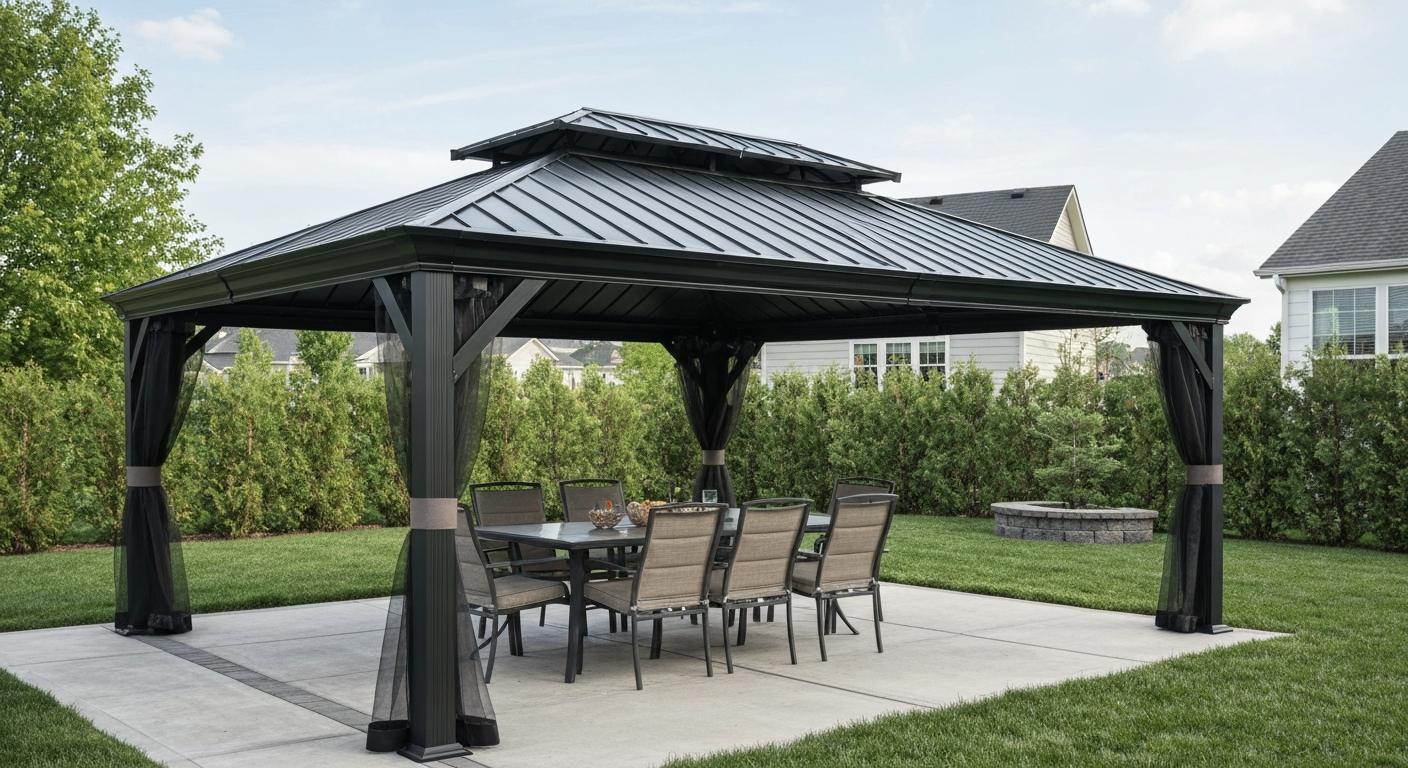
Best Patio Canopy Gazebo: Top Shade Picks for Every Yard
Find the best patio canopy gazebo for shade, weather protection, and style, top picks, buying guide, and budget options
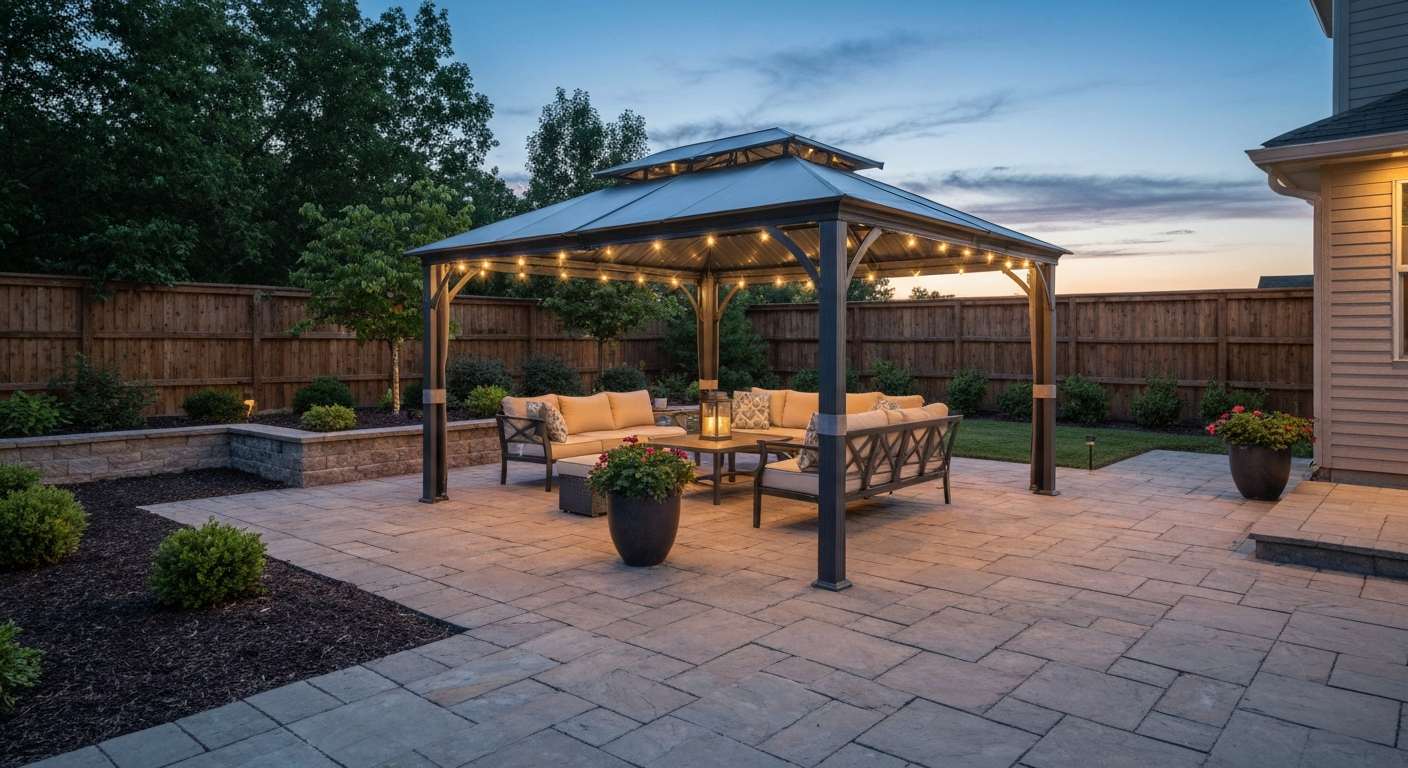
best place to buy a patio gazebo: where to shop in 2026
Best place to buy a patio gazebo: compare online, big‑box, manufacturers & custom builders; checklist and top retailers.
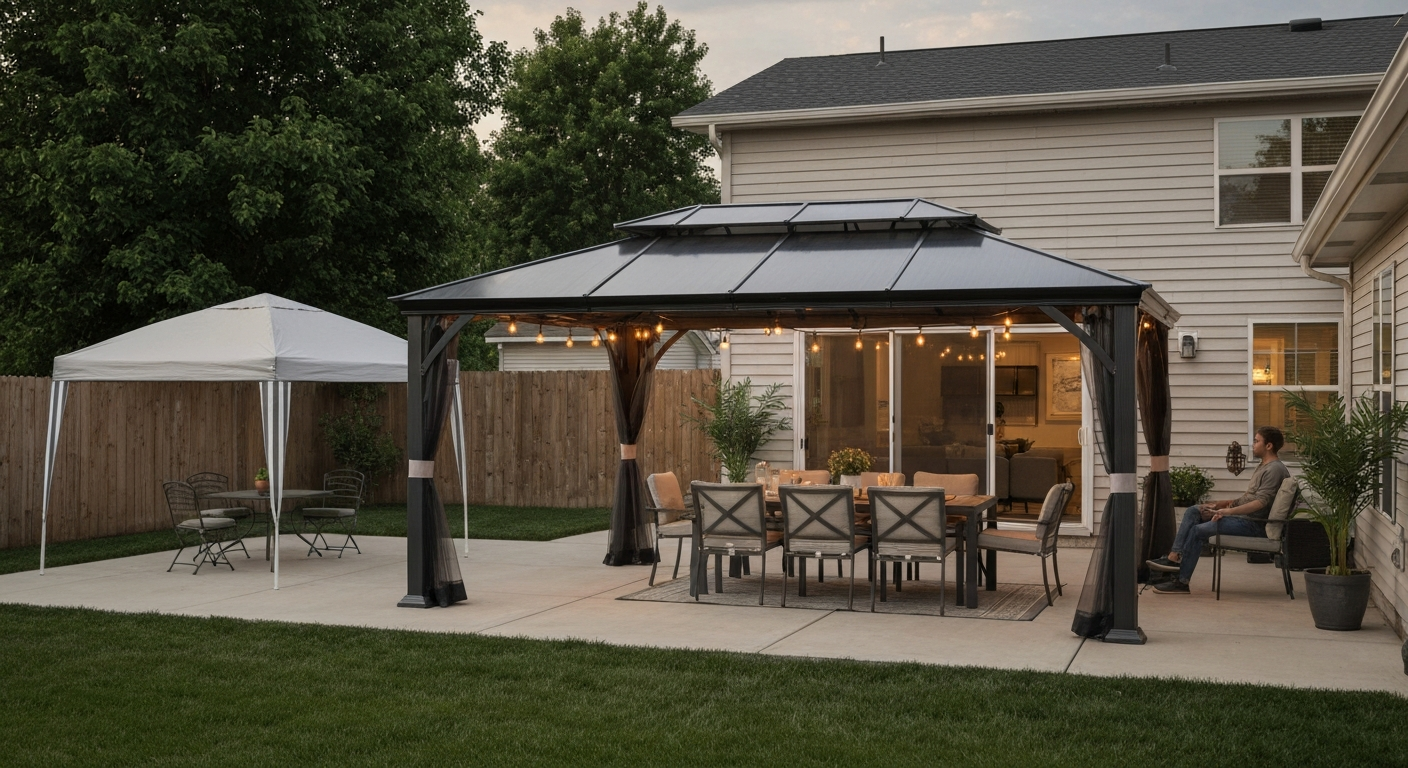
Best Outdoor Canopy for Patio: Top Picks & Buying Guide
Find the best outdoor canopy for patio: top picks, sizing, windproofing, budgets under $500, and installation tips.