
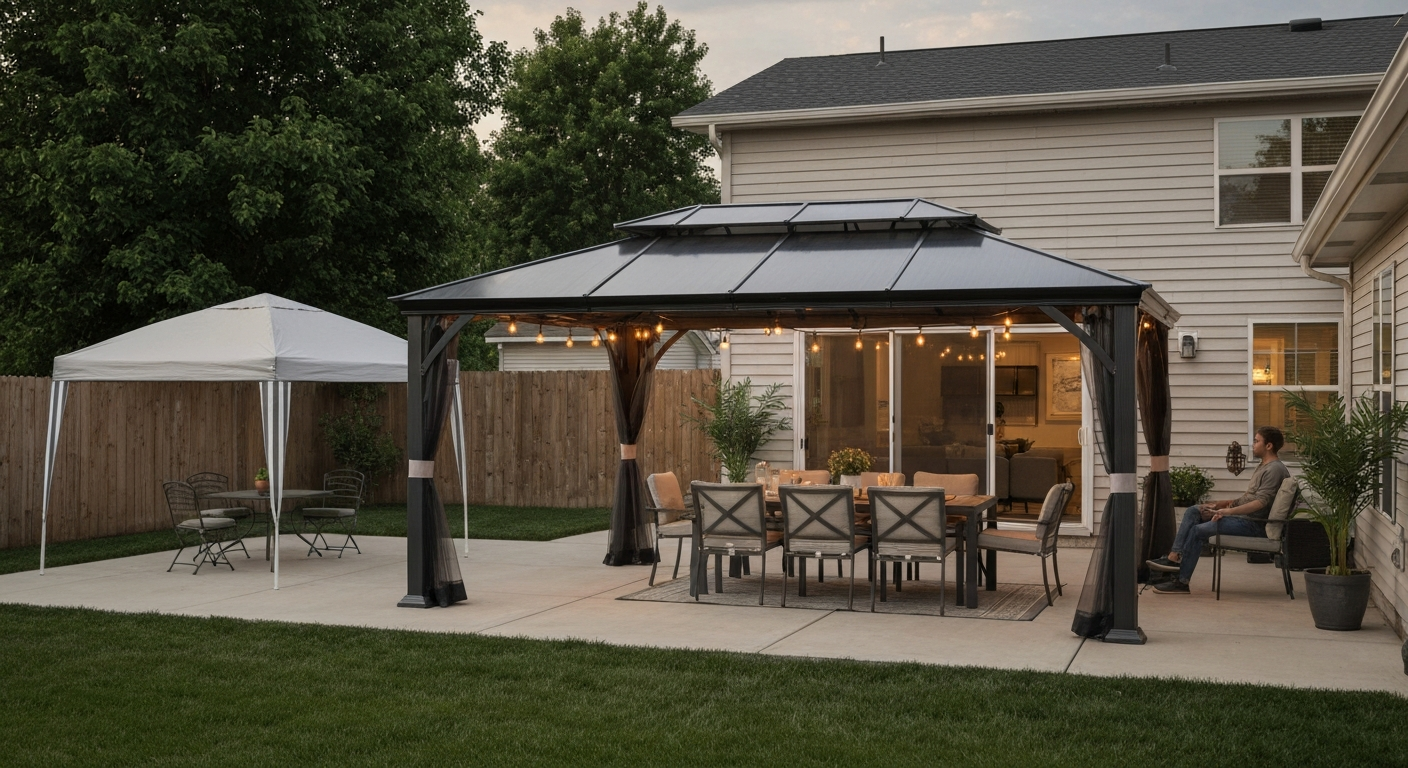
The best outdoor canopy for most patios is a mid-range steel-frame pop-up or hard-top aluminum gazebo in the 10x10 to 10x12 ft range, priced between $150 and $800 depending on how permanent you want it. Revisiting Gust Averaging Time and Gust Effect Factor in ASCE 7, ASCE Journal of Structural Engineering notes that The structural wind literature and ASCE discussions show that the ‘gust’ metric used in codes and standards corresponds to short‑duration peak gusts (commonly treated as a 3‑second gust for ASCE 7 calculations); this matters when comparing manufacturer ‘wind ratings’ (which rarely specify gust averaging time) to code/engineering limits Revisiting Gust Averaging Time and Gust Effect Factor in ASCE 7 — ASCE Journal of Structural EngineeringST.1943-541X.0001102). If you need something fast and portable, a quality pop-up canopy like the E-Z UP Eclipse or Quik Shade Expedition 100 covers a standard seating area, sets up in under five minutes, and costs $150 to $300. If you want something that stays put season after season, a hard-top aluminum gazebo from Sojag, Sunjoy, or Kozyard runs $700 to $1,500 and can handle real weather without being babied. The right pick depends on four things: how big your patio is, how long you want the structure to stay up, how exposed your yard is to wind, and whether you own your home or rent.
Best Outdoor Canopy for Patio: Top Picks & Buying Guide
Who this guide is for and how to use it
This guide is for anyone trying to cover a patio without overcomplicating it. That includes homeowners who want a semi-permanent shade structure over a dining set, renters who need something that doesn't require drilling into a concrete slab, and people who've bought a cheap canopy and watched it end up in the neighbor's yard after a summer storm. I've tested and assembled pop-ups, frame canopies, and hard-top gazebos across different backyard setups, and what I've learned is that most buying mistakes come from picking the wrong category, not the wrong brand.
Start with the top picks section to find the right fit for your situation. Then read the canopy types section to understand why that category makes sense, and check the materials and sizing sections before you buy. If you're already committed to a permanent structure, the permitting note in the temporary vs. permanent section will save you a phone call to your local building department. If you're adding lighting or outdoor speakers under your new canopy, there are callouts throughout for accessories worth planning for from the start.
Top picks at a glance
| Category | Pick | Size | Price Range | Best For |
|---|---|---|---|---|
| Best Overall | Sojog Fontana Hard-Top Gazebo | 10' x 12' | $900–$1,100 | Year-round semi-permanent coverage with real wind resistance |
| Best Budget Under $500 | Quik Shade Expedition 100 | 10' x 10' | $150–$200 | Occasional use, renters, easy storage |
| Best for Wind | Kozyard Alexander Hard-Top | 10' x 12' | $700–$900 | Exposed yards, coastal or windy regions |
| Best for Small Patios | E-Z UP Eclipse 8x8 | 8' x 8' | $180–$250 | Tight patios, balconies, compact dining sets |
| Best for Renters / Easy Setup | E-Z UP Vantage 10x10 | 10' x 10' | $200–$300 | Renters, frequent setup/takedown, no anchoring |
| Best Permanent Gazebo | Sunjoy Premium Steel Hard-Top | 12' x 14' | $1,200–$1,800 | Permanent outdoor room, anchored to concrete |
Why each pick made the list
Best Overall: Sojag Fontana 10' x 12' Hard-Top Gazebo
The Sojag Fontana hits the sweet spot between durability and affordability. The powder-coated aluminum frame resists rust, the polycarbonate roof panels block UV and shed rain without pooling, and the two-person assembly takes about three to four hours following the manufacturer's downloadable manual. Advertised wind resistance runs around 47 to 55 mph (manufacturer-rated), which is solid for most suburban patios, though I'd still anchor it to a concrete pad in exposed locations. Mosquito netting and privacy curtains are sold as add-ons. The main limitation is weight: at roughly 100 lbs for the frame and panels, moving it after installation is a real project.
- Pros: durable aluminum frame, UV-blocking polycarbonate roof, rain-ready, modular accessories available
- Cons: heavy, takes 3–4 hrs to assemble, add-on curtains and netting cost extra
- Ideal for: homeowners who want a permanent-ish structure but don't want to pour a concrete roof
Best Budget Under $500: Quik Shade Expedition 100
At $150 to $200 at Lowe's and Home Depot, the Quik Shade Expedition 100 is one of the best-selling pop-up canopies in the U.S. for a reason. The 10x10 ft footprint covers a standard four-person patio table comfortably, the 150D polyester top handles light rain, and the hub-and-slider frame pops open in under three minutes. The tradeoff is longevity: the fabric and frame are designed for occasional use, not full-season exposure. Customer reviews on Home Depot flag frame flex in wind above 20 mph, which is consistent with what I've seen from this class of canopy. Use it for weekend gatherings, bring it down in bad weather, and it'll last for years. Leave it up through a storm, and it won't. If you're specifically hunting for the best patio gazebo under $500, see the budget picks for options that balance cost and durability.
- Pros: very affordable, fast setup, widely available, compact when folded
- Cons: not wind-rated for sustained exposure, fabric lifespan under continuous outdoor use is 1–2 seasons
- Ideal for: renters, occasional entertaining, event use, patios with storage access nearby
Best for Wind: Kozyard Alexander 10' x 12' Hard-Top
If your patio is in a windy corridor, a coastal area, or an open backyard with no natural windbreak, you need a hard-top with a sturdy frame and proper anchor points. The Kozyard Alexander uses a galvanized steel frame with cross-bracing and a powder-coated finish, and it's one of the few consumer-grade hard-tops with manufacturer wind ratings reaching the 55–65 mph range. That still doesn't mean you leave it unanchored: the structure needs to be bolted to a solid base to get anywhere near those numbers. For context, ASCE 7 uses three-second peak gust speeds as the standard for wind load calculations, and most manufacturer ratings don't specify whether they're referring to peak gusts or sustained winds, so treat those numbers as a guideline rather than a guarantee.
- Pros: galvanized steel frame, high wind rating for a consumer hard-top, cross-braced design
- Cons: heavier than aluminum alternatives, takes longer to assemble, needs proper anchoring to realize wind resistance
- Ideal for: open yards with regular wind, coastal patios, homeowners who want to leave the structure up year-round
Best for Small Patios: E-Z UP Eclipse 8' x 8'
Most canopy guides default to 10x10 as the baseline, but if your patio is genuinely compact, say a 10x12 deck or a 6x10 balcony, a full 10x10 canopy either won't fit or will feel like a circus tent. The E-Z UP Eclipse in 8x8 covers a loveseat-plus-two-chairs arrangement without overhanging into a walkway, and E-Z UP's frames are consistently better built than generic big-box equivalents in the same size class. The 8x8 footprint also makes storage and transport much easier. Powder-coated steel frame, 150D vented polyester top, and a carry bag included.
- Pros: compact footprint, quality frame for the price, fast setup, good for tight spaces
- Cons: limited coverage for larger furniture groupings, less stable in wind than heavier structures
- Ideal for: small decks, balconies, bistro-set patios, apartment renters with limited outdoor space
Best for Renters / Easy Setup: E-Z UP Vantage 10' x 10'
Renters face two real constraints: they can't install footings or drill into a landlord's concrete, and they need to be able to take the structure down when they move. The E-Z UP Vantage checks both boxes. The commercial-grade powder-coated steel frame holds up better than the Expedition-class competitors, and E-Z UP sells fillable leg weight bags as accessories that let you anchor the canopy on hard surfaces without penetrating anything. Fill them with sand or water, hang them on the legs, and you have meaningful ballast without a single screw. For windy days, take it down. That's the honest renter strategy.
- Pros: better-than-average build quality for a pop-up, renter-friendly non-penetrating ballast options, fast setup and takedown
- Cons: still a fabric-top canopy with limited wind tolerance, weight bags add cost, not for permanent outdoor placement
- Ideal for: renters, people who want weekend-use portability, patios without ground-penetrating anchor options
Best Permanent Gazebo: Sunjoy Premium Steel Hard-Top 12' x 14'
If you want a true outdoor room that stays up year-round and looks like it belongs on the patio rather than in a campsite, this is the category. The Sunjoy Premium Steel Hard-Top in 12x14 covers a full outdoor dining set with room to spare, and the steel construction anchors to concrete piers or a slab for real structural integrity. At $1,200 to $1,800, it's a serious investment, but it's comparable to the lower end of contractor-built patio cover installations. One practical note: at 144 square feet (12x12 and larger footprints), you're right at or above the common 120 sq ft permit exemption threshold that many U.S. municipalities use for detached accessory structures. Check with your local building department before ordering this category of product.
- Pros: large coverage, year-round durability, looks like a built structure, can be accessorized with curtains, lighting, and speakers
- Cons: requires permit check for larger sizes, needs concrete anchoring, two-person assembly taking 4–6 hours, heavy and non-portable
- Ideal for: homeowners doing a real outdoor living upgrade, patios with permanent furniture, anyone budgeting for a long-term shade solution
Types of outdoor canopies and the trade-offs between them
Pop-up canopy tents
Pop-up canopies use a collapsible hub-and-slider steel or aluminum frame that unfolds like an accordion and locks into position in under five minutes. They're the most portable, most affordable, and most widely sold canopy category. OutdoorGearLab's canopy reviews provide lab‑style comparative testing of pop‑up and camping canopies to evaluate durability and wind performance. Standard sizes are 8x8, 10x10, and 10x20 ft. Fabric tops are typically 150D to 300D polyester with water-resistant coatings (not waterproof), and the better commercial models (E-Z UP, Caravan Canopy, Eurmax) meet CPAI-84 or NFPA 701 flame-resistance requirements, which matters if you're using them near a grill or in a state with fire-risk regulations. The ceiling on wind tolerance is genuinely low: customer reviews and real-world reports consistently show frame deformation and canopy loss starting around 20 to 25 mph without proper anchoring. For a patio canopy, they're excellent for occasional use and renter situations but not as a permanent, year-round cover.
Frame canopies (semi-permanent fabric tops)
Frame canopies use a rigid, pre-assembled steel or aluminum frame with a fabric top that's designed to stay up for a full season rather than just a weekend. The frame doesn't collapse like a pop-up; you bolt or stake it down and leave it. Common sizes run from 10x10 to 12x20 ft. The best fabric tops in this category use solution-dyed acrylic (like Sunbrella-grade) or heavy coated polyester that resists UV fading and handles sustained rain better than standard pop-up fabric. They're more weather-resistant than pop-ups but less rigid than hard-tops, and most require takedown in winter in cold climates to prevent frame damage from snow load.
Hard-top gazebos
Hard-top gazebos replace the fabric canopy with rigid roof panels, typically polycarbonate (clear or tinted) or powder-coated aluminum panels. The frame is usually powder-coated steel or aluminum, and the whole structure anchors to a concrete pad or patio surface with lag bolts or expansion anchors. These are the most durable consumer canopy option, the most expensive, and the heaviest. Roof drainage is built in (most have gutters and downspout connectors). Wind ratings from manufacturers in this category range from about 47 mph on the lower end to 75 mph on premium models, though those numbers assume proper anchoring. If you're shopping this category, also look at patio canopy gazebos, which blend gazebo-style frames with softer fabric or polycarbonate panels.
Semi-permanent hybrids
Semi-permanent hybrids are the fastest-growing category because they fill the gap between a pop-up and a hard-top gazebo. They typically use a heavier steel frame (more like a gazebo than a pop-up) with a replaceable fabric top made from heavier materials like 300D oxford polyester or ripstop canvas. Some feature side curtain tracks, mosquito net panels, and anchor kits. Brands like Outsunny, Yardistry (cedar frame), and some Sojag models fall here. They're designed to stay up for months, can handle moderate wind when anchored, and the fabric top can be replaced without replacing the whole structure. They're worth considering when you want more permanence than a pop-up but don't want to commit to the cost and weight of a full hard-top. This category overlaps with what some search results call a canopy tent for patio.
Temporary vs. semi-permanent vs. permanent: what the difference actually costs you
The permanence question isn't just about how often you want to set up and take down. It affects what you spend, what your HOA or landlord will allow, and whether you need a building permit. Here's how the three categories break down in practical terms.
| Category | Typical Lifespan | Price Range | Permit Needed? | Renter-Friendly? |
|---|---|---|---|---|
| Temporary (pop-up) | 1–3 seasons of casual use | $100–$400 | No | Yes |
| Semi-permanent (frame or hybrid) | 3–7 years with maintenance | $300–$900 | Rarely | Depends on anchoring method |
| Permanent (hard-top gazebo, built structure) | 10–20+ years | $700–$5,000+ | Often yes for 120 sq ft+ | No |
The permit threshold that comes up most often in U.S. municipal codes is 120 square feet. Many local building departments, including cities in California and across the country, exempt detached one-story accessory structures at or below 120 sq ft from building permit requirements. But that exemption doesn't mean no rules apply: setback requirements, zoning rules, and HOA covenants can all restrict where and how you place a gazebo regardless of permit status. A 10x10 ft footprint is 100 sq ft, so it typically falls under the threshold. A 12x12 is 144 sq ft, which often triggers the permit requirement. Before ordering anything larger than 10x10, call your local building department and confirm both the permit threshold and the setback requirements for your lot.
Contractor-built permanent patio covers (attached pergolas, solid roof extensions) fall in a completely different price tier, typically several thousand dollars and up, making pre-built hard-top gazebo kits genuinely competitive for homeowners who want something lasting but don't want a major construction project.
Materials and durability: what actually holds up
Canopy fabrics and coatings
The fabric spec you'll see most often is denier rating, written as "150D" or "300D polyester." Denier measures thread thickness: higher numbers mean thicker, heavier yarn and generally better tear resistance and UV durability. A 150D top is fine for occasional use and light weather. A 300D or heavier top holds up to a full outdoor season with proper care. Beyond denier, look for a PU (polyurethane) coating for water resistance, a UPF rating of 50+ for sun protection, and a CPAI-84 or NFPA 701 flame-resistance certification if you're using the canopy near heat sources or in jurisdictions that require it. Solution-dyed acrylic (the fabric used in brands like Sunbrella) is the most UV-stable material available for patio applications, but it's typically found in the semi-permanent and custom-top categories rather than mass-market pop-ups.
Frame metals and finishes
Most canopy frames are either steel or aluminum. Steel is heavier and stronger, aluminum is lighter and naturally corrosion-resistant. For a pop-up canopy used seasonally, powder-coated steel is fine. For anything left outdoors year-round, powder-coated aluminum or galvanized steel is worth the extra cost because bare or inadequately coated steel will rust at the joints within two to three seasons in humid climates. Check that joints and connectors are also coated or stainless, because that's where rust typically starts. Zinc die-cast connectors are better than raw steel at this point. For hard-top gazebos, look for a minimum 1.5-inch-diameter frame tube for steel models and 2-inch for aluminum to get adequate rigidity.
| Material | Weight | Rust Resistance | Strength | Best Use | Expected Lifespan |
|---|---|---|---|---|---|
| Powder-coated steel | Heavy | Moderate (check joints) | High | Semi-permanent and hard-top gazebos | 5–10 years with maintenance |
| Galvanized steel | Heavy | Good | High | Permanent and high-wind structures | 10–15+ years |
| Powder-coated aluminum | Light | Excellent | Moderate–High | Hard-top gazebos, year-round | 10–15+ years |
| Fiberglass (rare) | Very light | Excellent | Moderate | Portable frame canopies | 3–7 years |
| 150D polyester top | Light | N/A | Low–Moderate | Occasional-use pop-ups | 1–3 seasons |
| 300D oxford polyester top | Moderate | N/A | Moderate | Semi-permanent canopies | 3–5 seasons |
| Solution-dyed acrylic top | Moderate | N/A | High | Premium long-term covers | 7–10+ seasons |
Sizing and layout: measuring your patio the right way
The most common sizing mistake is buying a canopy that matches the table and forgetting about chair clearance and foot traffic. A 10x10 ft canopy sounds like it covers a 10x10 ft space, but once you account for four chairs pushed back from a table, you're using every inch of that footprint. Here's a practical way to think through it.
- Measure your furniture footprint with chairs pulled out (not tucked in): chairs typically extend 18–24 inches behind the table edge when someone is seated.
- Add 2 feet on each side of the furniture footprint for comfortable circulation without bumping into a canopy leg.
- Check headroom: most pop-up canopies max out at 6.5 to 7.5 ft at center height after adjustment; hard-top gazebos typically range from 7 to 8.5 ft at the eave. If you're over 6 ft tall, verify the eave height before buying.
- For a 4-person dining set (table plus four chairs), a 10x10 minimum is the typical recommendation. For a 6-person table, look at 10x12 or 10x14.
- For a sectional sofa setup, measure the sofa length plus the coffee table depth plus 2 ft of clearance on each open side.
- Note any overhead obstructions (tree branches, roof overhangs, satellite dishes) that could conflict with the canopy roof at full height.
- Check your patio or deck dimensions to confirm the canopy legs will land on the patio surface and not in planters, on steps, or off the edge.
Common patio canopy sizes and what they realistically cover: 8x8 ft works for a bistro set or two-chair setup. 10x10 ft covers a 4-person dining table or small sectional. 10x12 ft is the sweet spot for 4 to 6 people and a grill nearby. 12x12 or 12x14 ft covers a large dining set or an outdoor living room arrangement. At 12x12 (144 sq ft), remember the permit threshold issue discussed above.
Weather and wind resistance: what the specs actually mean
Manufacturer wind ratings are one of the most misunderstood specs in the canopy category. When a product page says "wind-rated to 47 mph," it usually isn't specifying whether that's a sustained wind speed or a peak three-second gust. The standard used by structural engineers and building codes (ASCE/SEI 7) uses three-second peak gust speeds as the design wind metric, which is typically higher than a sustained wind reading from a weather station. A storm that your weather app reports as "20 mph winds" may have gusts hitting 35 mph or higher. For consumer canopies without engineering certification, treat manufacturer wind ratings as a rough guide and add a meaningful safety margin: if a pop-up is rated to 30 mph, consider taking it down when sustained winds are forecast above 20 mph.
Waterproofing versus water resistance is another common distinction worth knowing. A water-resistant canopy (most pop-ups) will shed light rain and drizzle but will saturate and sag under prolonged rain or pooling. A waterproof canopy (hard-top panels, high-quality coated fabrics) actively repels water and routes it to the edges. If you live somewhere with regular summer rain, waterproof wins every time.
Anchoring your canopy: options for every surface type
Anchoring is where most canopy installations fail. An unanchored 10x10 canopy in a 25 mph gust is a flying hazard. Here are the main options organized by patio surface and situation.
- Grass or dirt: Steel auger anchors (sometimes called corkscrew stakes) driven into undisturbed soil are effective. Small screw-type anchors marketed for tents typically resist around 800 lb of pull-out force; larger deep augers in firm soil can exceed 1,500 lb according to industry supplier specs. Use one anchor per leg minimum.
- Concrete or paver patio: Expansion anchors or concrete screws (Tapcon style) through the canopy leg base plates are the most secure option. For renters or anyone who can't penetrate the surface, fillable weight bags hung from each leg provide non-penetrating ballast. E-Z UP and third-party suppliers sell purpose-built leg weight bags; fill them with sand (denser than water) for maximum ballast per bag.
- Wooden decks: Lag bolts through the deck boards into the decking structure are the strongest option. Avoid screwing through deck boards into nothing — anchor into the deck joists.
- Hard-top gazebos (permanent): These require anchor bolts into a concrete slab or concrete pier footings. Follow the manufacturer's instruction manual for footing dimensions and bolt specifications. Sojag, for example, provides downloadable installation manuals with anchor bolt callouts specific to each model.
- Wind exposure adjustment: In areas with high seasonal wind, add ballast or anchors beyond the minimum. The general engineering principle is that each anchor point needs to resist the uplift and lateral load from a fraction of the canopy's total wind area. More anchors and heavier ballast always beats the minimum.
Installation step-by-step (what to expect)
Pop-up canopy (2 people, under 15 minutes)
- Lay out the collapsed frame on the ground and identify all four legs.
- Have one person hold the top hub while the other slides the lower sliders upward on each leg to extend the frame to half height.
- Walk the canopy to the installation spot in half-extended position, then push the sliders to the second (full) locking position.
- Attach the fabric top by looping the corner pockets over the top-hub corners and securing any Velcro straps along the frame.
- Adjust leg height to your preferred eave level (most models have 3 to 4 height settings).
- Anchor each leg: stake to grass or attach weight bags for hard surfaces.
Hard-top gazebo (2 people, 3–6 hours)
- Lay out all components and check against the parts list in the manufacturer manual before starting.
- Assemble the base frame (four posts and bottom rail sections) on a flat surface first.
- Install the roof frame cross-members before lifting the roof frame off the ground, as this is easier at waist height.
- Attach the roof panels or polycarbonate sheets before raising the roof frame — the manufacturer manual will specify whether to attach panels before or after raising.
- Raise the roof frame onto the posts; this step requires two people. Some models use a lifting bracket; others require careful coordination to simultaneously seat all four post tops.
- Insert and tighten all bolts per the torque spec or instruction manual before final anchoring.
- Anchor the post bases to your patio surface using the specified anchor bolts.
- Install any included gutters, downspout connectors, and accessory mounting tracks.
Maintenance and keeping it in good shape
Fabric tops on pop-up and frame canopies need the most attention. Brush off debris and standing water after every rain, because pooled water accelerates fabric degradation and puts localized stress on the frame. At the start and end of each season, clean the fabric with a mild soap (not bleach on polyester, which degrades the coating), rinse thoroughly, and let it dry completely before storing or stowing. UV-protectant sprays sold for outdoor fabrics (303 Aerospace Protectant is a widely used product) can extend the life of a polyester top by reducing UV breakdown between seasons.
For metal frames, check joint connections at least once a season and tighten any bolts or locking pins that have worked loose. On powder-coated frames, touch up any chips with matching outdoor metal paint to prevent rust from spreading at the exposed spot. Hard-top polycarbonate panels should be cleaned with a soft cloth and mild soap only; abrasive cleaners and scrubbing pads will scratch the surface and reduce clarity over time. For aluminum hard-top frames, an annual wipe-down with a car wax or metal sealant helps maintain the finish in humid or coastal environments.
Most pop-up canopy frames and hard-top gazebo manufacturers sell replacement fabric tops and individual frame components separately, which makes sense to check before buying a whole new canopy when one part wears out. E-Z UP, Sojag, and Quik Shade all offer replacement canopy tops for their most popular models.
Accessories that are actually worth it
Sidewalls and curtains are the first accessories worth considering if you're going to use the canopy regularly. Full sidewall panels (usually included as add-ons) block wind, extend the usable season into shoulder months, and create a sense of enclosure for outdoor dining or movie nights. Mosquito netting panels serve the same purpose but let air through, which is more comfortable in warm weather. For permanent or semi-permanent structures, look for curtain track systems that allow you to slide panels open and closed rather than removing and reattaching them.
Lighting is an underrated upgrade. A canopy or gazebo that's well-lit transforms a patio into an outdoor room after dark. Most hard-top gazebos have integrated hook points or beam tracks where you can hang string lights or mount track lighting. If you're also setting up outdoor speakers under the canopy, plan the lighting and speaker mounting positions at the same time, since both typically hang from or attach to the same roof beams. Speaker wire routing is cleaner when you plan it before everything is installed.
Anchor and ballast kits are worth buying with the canopy rather than sourcing separately later. E-Z UP and several other manufacturers offer bundled kits with weight bags, stakes, and tie-down ropes that are sized for their specific frame geometry. Generic anchor kits can work, but matching hardware is generally easier to install and better proportioned.
Side-by-side comparison of the top canopy picks
| Model | Type | Size | Frame Material | Wind Rating (Mfr.) | Waterproof? | Price Range | Best Suitability |
|---|---|---|---|---|---|---|---|
| Quik Shade Expedition 100 | Pop-up | 10' x 10' | Steel | ~25 mph (unanchored est.) | Water-resistant | $150–$200 | Budget, renters, occasional use |
| E-Z UP Vantage | Pop-up | 10' x 10' | Powder-coated steel | ~30 mph anchored | Water-resistant | $200–$300 | Renters, easy setup/takedown |
| E-Z UP Eclipse 8x8 | Pop-up | 8' x 8' | Powder-coated steel | ~25–30 mph anchored | Water-resistant | $180–$250 | Small patios, compact setups |
| Sojag Fontana | Hard-top gazebo | 10' x 12' | Powder-coated aluminum | ~47–55 mph anchored | Yes (polycarbonate) | $900–$1,100 | Year-round semi-permanent |
| Kozyard Alexander | Hard-top gazebo | 10' x 12' | Galvanized steel | ~55–65 mph anchored | Yes (aluminum panels) | $700–$900 | Windy/exposed patios |
| Sunjoy Premium Steel | Hard-top gazebo | 12' x 14' | Powder-coated steel | ~47–60 mph anchored | Yes (steel panels) | $1,200–$1,800 | Permanent outdoor room |
Pricing and where to buy
For pop-up canopies, Home Depot and Lowe's have the widest in-store availability and the most competitive street prices, especially for Quik Shade and Coleman models. You can inspect the box condition in store, which matters for large canopy kits where missing or damaged parts are a real frustration. Amazon carries the same major brands and often matches in-store pricing with the added convenience of home delivery, but check that the seller is the actual brand or a fulfilled-by-Amazon listing rather than a third-party seller with an ambiguous return policy. For a single-stop comparison of retailers and models, see our guide to the best place to buy a patio gazebo.
For hard-top gazebos, Wayfair has the largest selection of mid-range models (Sojag, Sunjoy, Kozyard, Domi) and frequently runs site-wide sales that bring $900 to $1,200 models into the $700 range. Costco and Sam's Club occasionally carry seasonal hard-top gazebo offerings, usually at strong price-to-quality ratios, but selection is limited to whatever models they've bought for that season. Specialty outdoor retailers (Overstock, Hayneedle) are also worth checking for discontinued or last-season models at a discount.
For commercial-grade or heavy-duty pop-up canopies (E-Z UP, Caravan Canopy), buying direct from the manufacturer's website often gets you access to bundle pricing on accessories (weight bags, sidewall sets, replacement tops) that isn't available at mass-market retailers. If you're buying an E-Z UP specifically for a renter situation where you'll need weight bags anyway, the bundled accessory packages are often a better deal than buying the canopy and weights separately.
Buyer checklist before you order
- Measure your patio and furniture footprint with chairs pulled out, not tucked in.
- Decide on permanence level: temporary (pop-up), semi-permanent (frame/hybrid), or permanent (hard-top gazebo).
- Check your local building department's permit threshold if the footprint will exceed 120 sq ft or if you're planning concrete footings.
- Assess wind exposure: open yard with no windbreak = invest in a hard-top or at minimum a commercial-grade frame with proper anchoring.
- Confirm anchoring method: grass (auger stakes), concrete (weight bags or expansion anchors), deck (lag bolts).
- Check eave height specs to ensure comfortable headroom for the tallest person using the space.
- Confirm whether the canopy is water-resistant (fabric pop-up) or waterproof (hard-top panels).
- Budget for accessories: sidewalls, mosquito netting, anchor kits, replacement top, lighting mounting hardware.
- If renting, confirm the anchoring method doesn't require surface penetration unless you have landlord approval.
- Check the return policy and replacement parts availability before purchasing, especially for larger kits.
The honest bottom line
For most homeowners upgrading a patio, the Sojag Fontana in 10x12 hits the best balance of durability, weather protection, and price. For more detailed comparisons and side-by-side specs, see our roundup of the best patio canopy gazebo options. For a deeper look at top-rated choices and buying guidance, see our roundup of the best outdoor patio gazebo options. It's not cheap at $900 to $1,100, but it's significantly cheaper than a contractor-built shade structure and it will still be standing in five years if you anchor it properly. For renters or anyone who needs flexibility, the E-Z UP Vantage with weight bags is the most practical option in the pop-up category. And if you're on a true budget and just need seasonal shade for weekend use, the Quik Shade Expedition 100 at $150 to $200 does what it says as long as you manage your expectations about wind tolerance and bring it down before a storm. Whatever category you land in, don't skip the anchoring step. That's the single most important factor in whether a canopy performs or becomes a problem.
FAQ
What primary factual data is essential to evaluate a canopy's suitability for a specific patio?
Size and footprint (exact dimensions), declared wind rating or recommended maximum wind speed, fabric type and denier/coating, frame material/diameter/thickness and finish (powder coat, galvanization), water-resistance and seam-sealing details, fire/flame certification (CPAI-84, NFPA 701 where applicable), weight (for transport/ballast calculations), anchoring and mounting options, and recommended clearances/ceiling height for the intended use.
Which official codes and standards should be consulted to assess structural and wind safety?
ASCE 7 (wind speed and gust definitions) and local building codes/municipal permit guides (many US cities use a 120 sq ft threshold for detached accessory permit exemptions). Use ASCE guidance to interpret manufacturer 'wind ratings' (note: ASCE uses 3-second gusts), and check your local jurisdiction for permit, setback and zoning requirements.
What manufacturer and product sources are required and why?
Manufacturer product pages and downloadable spec sheets/manuals for model-specific data (fabric specs, frame details, assembly/anchor instructions, SKU and MSRP). These are authoritative for what the product actually is and how it must be installed/anchored.
What independent testing or review sources improve reliability of performance claims?
Editorial lab tests and comparisons (OutdoorGearLab, This Old House style reviews), independent teardown/reliability evaluations, and accredited test labs for wind, waterproofing, and flammability. These sources reveal real-world performance, failure modes, and test-proven durability beyond manufacturer claims.
How should consumer reviews and retailer listings be used?
Use retailer listings (Home Depot, Lowe’s, Wayfair) for current pricing, real-time availability and model SKUs. Read verified customer reviews to detect common field failures (frame bending, canopy tears, missing parts), assembly difficulty, and seasonal performance. Treat anecdotal reports as indicators, corroborated by pattern frequency rather than single reviews.
Which technical data about anchoring and ballast is required to size anchors correctly?
Manufacturer anchor recommendations, anchor supplier pull-out ratings (auger, spike, concrete anchors), soil-type pull-out multipliers, and expected uplift/drag loads estimated from canopy area and rated/design wind speeds. These let you calculate required anchor count and ballast mass for safe installation, especially for renter-friendly non-penetrating solutions.
Find the best Sunbrella patio cushions: durable, fade‑resistant picks, buying tips, care, and top recommendations.
Alternative to patio cushions: durable, weatherproof seating options, pros, DIY tips & buying guide.
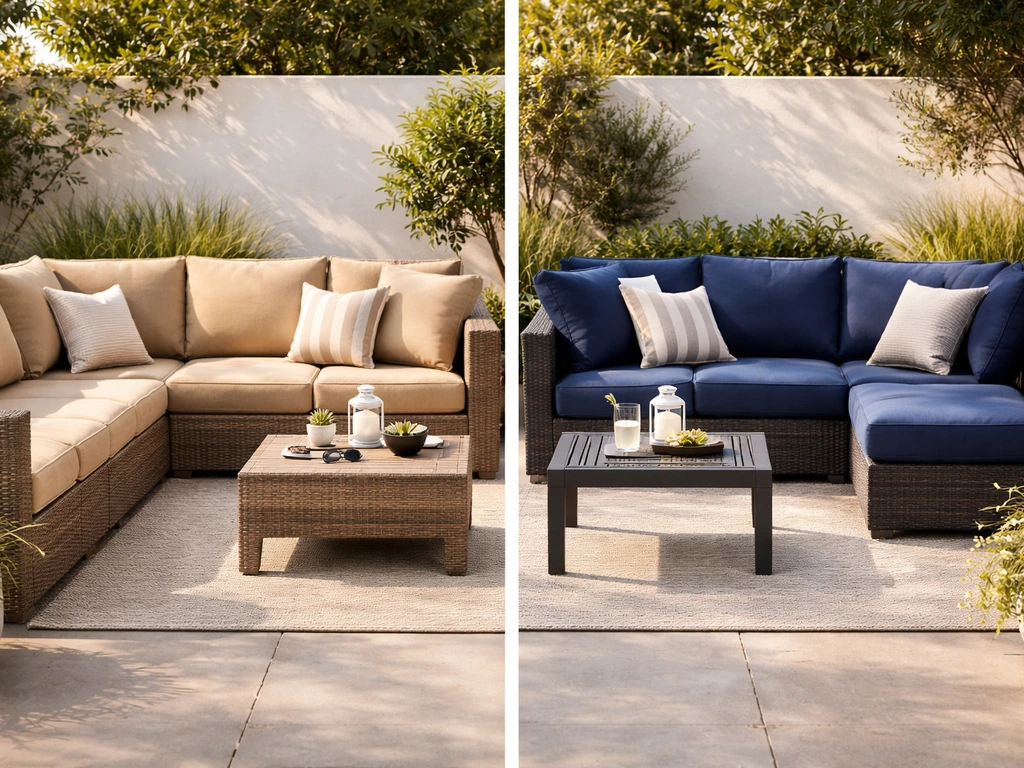
Choose the best cushion color for sun, heat, and fading in 2026, with pairing tips for patio furniture and durability.