
For most buyers, the best place to buy a patio gazebo is Amazon or Wayfair for soft-top and mid-range framed models, The Home Depot for in-store browsing plus online ordering of hardtop kits, and direct from the manufacturer (Sunjoy, Palram/Canopia, Yardistry) when you need engineering specs, warranty clarity, and anchoring documentation. If you want a custom or permanent structure, a local dealer or landscape contractor beats every online channel. The right answer depends on your budget, how permanent the structure needs to be, and how much assembly headache you're willing to tolerate.
best place to buy a patio gazebo: where to shop in 2026
Lark Perry
14 Jul 2026
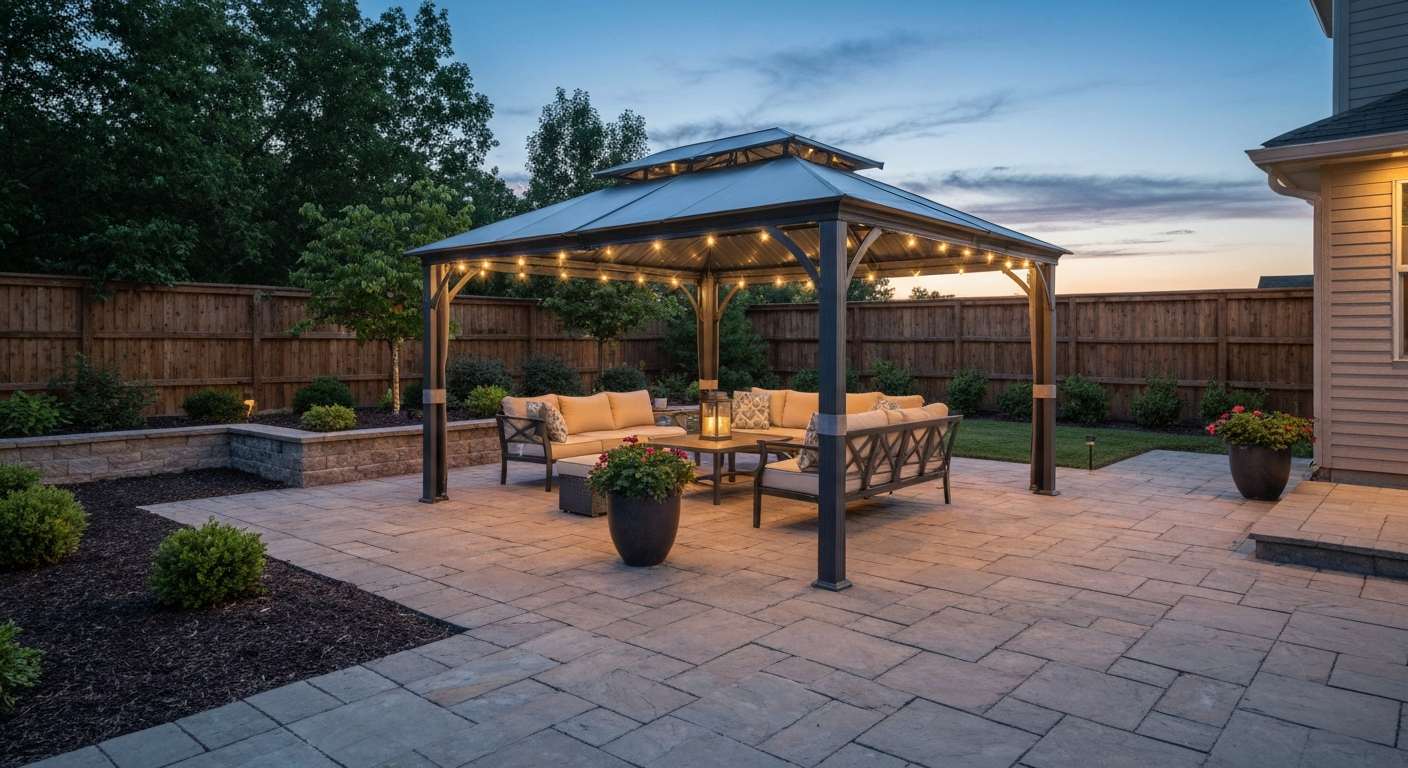
Quick take: Best place to buy by buyer situation
| Buyer situation | Best channel | Why it fits |
|---|---|---|
| Tightest budget, temporary use | Amazon or Walmart | Widest selection under $300, easy online returns, fast shipping |
| Mid-range hardtop, want to see it first | The Home Depot (store + online) | 90-day return policy, in-store display models, curbside delivery options |
| Heavy-duty permanent structure | Manufacturer direct (Sunjoy, Palram, Yardistry) or local dealer | Engineering specs, anchoring docs, better warranty support |
| Custom size or aesthetic match | Local dealer or custom builder | Made-to-measure, professional install, permit help |
| Renter or frequent mover | Amazon, Walmart, or Wayfair for pop-up/soft-top | Portable, no anchoring required, affordable replacement cost |
Canopy tents vs. framed gazebos: know what you're actually buying
The outdoor shelter market uses the words gazebo, canopy, and pavilion almost interchangeably in product listings, which causes a lot of buyer confusion. The practical split that matters is temporary versus permanent, and that distinction drives everything from price to which retailer makes sense. Popular Mechanics recommends hardtop or professionally anchored pavilions for year‑round use and pop‑ups for temporary shelter Popular Mechanics recommends hardtop or professionally anchored pavilions for year‑round use and pop‑ups for temporary shelter..
Temporary canopy tents and soft-top pop-ups
These are the sub-$400 options you see everywhere: steel or aluminum frames with a polyester canopy, ground stakes, and sometimes sidewalls. A Coleman Oasis 10x10 runs around $139. An Outsunny 10x10 soft-top framed gazebo with double-roof vents lands between $100 and $300 depending on the sale cycle. They're genuinely water-resistant and block UV, but they don't publish engineering wind ratings the way hardtop manufacturers do. In practice, real-world failure modes I've seen and read about repeatedly include canopy seams splitting after one season, grommet failures, frame legs bending in 30+ mph gusts, and missing hardware out of the box. Think of these as seasonal shelter, not year-round infrastructure.
Framed hardtop gazebos
These are the kits you assemble over a weekend (or two weekends, if you're honest with yourself): aluminum or steel frames with polycarbonate, galvanized steel, or wood roofing panels. Brands like Sunjoy, Palram/Canopia, and Sojag publish actual wind ratings. Sunjoy's cedar/hardtop models cite 50 mph when permanently anchored; Palram/Canopia's Dallas and Colorado series list 30 m/s (about 67 mph) for anchored installations. Sojag hardtop listings on Wayfair quote 47 to 54 mph depending on the model. Those numbers only apply when the structure is bolted to concrete footings, which is the fine print most buyers miss.
Permanent pavilions and custom structures
At the top end you have cedar or pressure-treated wood pavilion kits (Yardistry being a well-known example sold at Costco and through other retailers) and fully custom-built structures from local contractors. These require real tools, multiple people, often concrete footings, and in many jurisdictions, a building permit. The Yardistry manual explicitly notes that permanent installation may require local permits, and lists the assembly as a multi-person job requiring a tape measure, level, drill, wrenches, and ladders. This is a project, not an afternoon task.
Where to actually buy: every channel explained
Online marketplaces (Amazon, Wayfair, Walmart.com)
Online marketplaces have the largest selection and the easiest price comparison, which is why most buyers start here. Amazon is generally strongest for sub-$500 soft-top and pop-up canopy styles, with faster shipping and a return process that's more predictable than furniture-specific sites. Wayfair carries a wider range of framed hardtop gazebos and pavilion kits but comes with caveats: shipping and return windows vary by seller and product, large-item freight deliveries can be slow, and sourcing replacement parts through marketplace sellers can be frustrating. Consumer complaint records and BBB filings for Wayfair show a consistent pattern of issues with large outdoor structures, mostly around missing hardware, long lead times for replacements, and return complications on oversize items. That doesn't mean Wayfair is a bad choice, but read the seller-specific return policy before you buy, not after. Walmart.com sits in a useful middle ground, particularly for budget soft-tops from brands like Best Choice Products and Outsunny.
Manufacturer direct (Sunjoy, Palram/Canopia, Yardistry, Sojag)
Buying direct from the manufacturer is underrated for hardtop and pavilion kits. You get access to the full spec sheet, anchoring documentation, and a cleaner warranty claim path. Sunjoy's own site lists model-specific Q&A answers, including which models can or cannot support a ceiling fan load (some can't, and they say so directly). Yardistry's one-year limited warranty on materials extends to five years for lumber rot on lumber-containing products, but excludes damage from acts of nature or improper installation, so reading the manual before anchoring matters. The tradeoff is that manufacturer sites often charge full MSRP and have slower shipping than Amazon Prime.
Big-box stores (The Home Depot, Lowe's, Costco)
The Home Depot is the strongest big-box option for gazebos because of its return policy and the ability to see display models in store. Most merchandise is refundable within 90 days, and for large or oversized items that can't be returned in-store, Home Depot arranges home pickup with refunds issued after inspection. That's a meaningful safety net for a product that ships in multiple heavy boxes and might have missing hardware. Costco carries Yardistry and similar pavilion kits, often at a price point lower than MSRP, and Costco's return policy is famously generous. The limitation at both stores is selection: you're choosing from a curated set of models, not the full market.
Local dealers and custom builders
For a permanent roofed structure, this channel is worth the extra cost. A local dealer can show you materials in person, confirm whether your municipality requires a permit (roofed structures that exceed a certain square footage almost always do), and often provide or arrange professional installation. Custom builders give you size flexibility that no kit can match. The downside is obvious: price. A custom cedar pavilion from a local contractor typically starts around $3,000 to $5,000 installed and goes up quickly with size and finish. But you're also getting a structure that was designed for your specific climate and soil conditions, which matters for longevity.
Budget tiers and what you actually get
Spending more on a gazebo doesn't always mean spending wisely. Here's what each tier realistically delivers, and where the value drops off.
| Budget tier | Price range | Typical product | Best for | Key limitations |
|---|---|---|---|---|
| Under $500 | $100–$499 | Soft-top framed canopy (10x10), pop-up canopy | Renters, seasonal use, temporary events | No engineering wind rating, fabric degrades in 1–2 seasons, frame prone to bending in wind |
| Mid-range | $500–$1,500 | Aluminum or steel hardtop kit (Sunjoy, Sojag, Palram) | Homeowners wanting semi-permanent shade and rain cover | Still requires anchoring for rated wind resistance, assembly takes 4–8 hours with help |
| Heavy-duty / premium kit | $1,500–$3,000+ | Cedar or steel pavilion kit (Yardistry, Palram Colorado) | Year-round use, 4-season climates, integrated lighting/fan setups | Multi-person assembly, potential permit requirement, footings add cost and time |
| Custom / professional build | $3,000–$10,000+ | Contractor-built wood or aluminum structure | Permanent installation, custom sizing, high-end aesthetic | Longest lead time, highest cost, permit almost certain required |
If budget is the constraint, the under-$500 soft-top category is a legitimate option as long as you go in knowing the limitations. The best patio gazebo under $500 guides on this site go deeper on specific models worth your money in that range. See our guide to the best patio gazebo under $500 for detailed model recommendations and buying tips. See our best patio canopy gazebo guide for specific model recommendations and buying tips. For most homeowners who want something that lasts more than two seasons without constant repair, the $800 to $1,500 hardtop range is the practical sweet spot.
Features that actually matter when you're comparing models
Frame material
Aluminum frames resist rust and are lighter to handle during assembly. Steel is heavier and stronger but will rust if the powder coating is damaged. Cedar and pressure-treated wood look better and feel more permanent but require occasional staining or sealing. For anything exposed to coastal air or high humidity, aluminum wins on long-term maintenance.
Roof type
Polycarbonate panels (clear or tinted) let in light and handle snow load better than fabric. Galvanized steel panels are the most weatherproof. Fabric soft-tops are the lightest and cheapest but degrade fastest. If your goal is integrating a gazebo with outdoor lighting or patio speakers, a hardtop gives you something to mount to; a soft-top doesn't.
Wind and water resistance
Pay attention to whether a wind rating is for anchored or unanchored use. Most hardtop manufacturer ratings (Sunjoy at 50 mph, Palram at 67 mph, Sojag at 47 to 54 mph) assume the structure is bolted to concrete footings. An unanchored hardtop in high wind is a hazard. Soft-tops generally don't publish wind ratings at all, which tells you something. If you're in an area with regular 30+ mph wind events, spend up for a rated hardtop and anchor it properly.
Assembly requirements
Manufacturers routinely understate assembly time. Yardistry's manual explicitly requires multiple people for several steps, and Reddit threads from Yardistry and Costco pavilion owners consistently report that assembly takes two to three times the manufacturer's estimated hours. Budget for a full day with two or three people, or price out a local handyman or installer before you order. If you're buying a kit over 12 feet wide, hiring help upfront is almost always worth it.
Ceiling fan and hanging load compatibility
This one catches people off guard. Several Sunjoy hardtop models explicitly state in their product Q&A that hanging a ceiling fan from the roof is not recommended. Before you plan a fan or lighting integration, check the specific model's load rating. If the manufacturer's own Q&A says don't do it, don't do it.
Warranty and returns
For hardtop kits in the $500 to $1,500 range, look for at least a one-year structural warranty and coverage for manufacturing defects. Yardistry offers one year on materials and five years against lumber rot. Home Depot's 90-day return window with home pickup for oversized items is the most consumer-friendly policy among major retailers. Wayfair's policy varies by seller, so read it product by product. Manufacturer-direct purchases typically have the clearest warranty path but may require you to ship parts back at your cost.
Comparison checklist: how to score any model or retailer
Before you commit to a purchase, run through this checklist. It takes about 20 minutes and eliminates most of the common regrets buyers report after the boxes arrive.
- Does the size fit your space with at least 2 feet of clearance on each side?
- Is the wind rating published, and does it apply to anchored or unanchored use?
- Does the frame material match your climate (aluminum for coastal/humid, steel or wood for inland/dry)?
- Have you confirmed the roof type supports any planned lighting, fan, or speaker integration?
- Is the assembly process documented with a parts list, and have you checked reviews for missing hardware reports?
- Does the retailer's return policy cover oversized/freight items specifically, not just standard merchandise?
- Is there a manufacturer warranty separate from the retailer's return window?
- If permanent anchoring is planned, does your jurisdiction require a permit for a roofed structure of this size?
- Have you accounted for footing or anchoring costs in your total budget?
- Is replacement hardware or canopy fabric available for purchase separately if you need it in year 2 or 3?
Online vs. in-person buying: honest pros and cons
| Factor | Buying online | Buying in-person (store or dealer) |
|---|---|---|
| Selection | Widest, full market access | Limited to store inventory or dealer catalog |
| Price | More competitive, easier to compare | Often MSRP, though Costco is a notable exception |
| Seeing before buying | Photos and specs only | Can view display models and touch materials |
| Shipping damage risk | Higher, especially for multi-box freight | Lower if you're picking up or using delivery from a local dealer |
| Returns | Varies widely by seller, freight returns are slow | Home Depot 90-day policy is strong; local dealers vary |
| Assembly help | None included | Local dealers often offer or refer installation services |
| Permit guidance | None | Local dealers familiar with local codes |
| Best for | Budget and mid-range soft-top/hardtop kits | Heavy-duty kits, permanent structures, custom builds |
For anything under $800, buying online is almost always the practical choice. The price difference between online and in-store is typically 10 to 25 percent, and for a soft-top gazebo you plan to replace in a few years anyway, that savings matters. Once you cross into the $1,500-plus permanent structure range, the case for in-person or local dealer involvement gets much stronger. Shipping damage on a cedar pavilion kit that arrives in six to eight heavy boxes is a real risk, and having a local contact who can help resolve it is worth paying for.
Retailer shortlist by buyer goal
Best for budget buyers: Walmart.com or Amazon
Walmart and Amazon carry the largest selection of soft-top framed gazebos and pop-up canopies under $400, with the most predictable return processes in that price tier. Amazon's return infrastructure is better than most for catching missing hardware or shipping damage quickly. If the pop-up or canopy category is what fits your situation, other guides on this site covering the best canopy tent for patio and best outdoor canopy for patio can help you narrow down specific models.
Best for heavy-duty buyers: Manufacturer direct or The Home Depot
Sunjoy, Palram/Canopia, and Yardistry direct are the strongest options when you need engineering documentation, anchoring specs, and a traceable warranty. Home Depot works well as a secondary option when you want the 90-day return safety net and occasional in-store display access. Costco is worth checking if Yardistry or a comparable pavilion kit is currently in rotation, because the price and return policy combination is hard to beat.
Best for aesthetic-focused buyers: Local dealer or Wayfair (with caution)
If your primary concern is finding something that looks right for your specific patio design, local dealers give you the most flexibility: custom sizing, finish options, and the ability to match your existing furniture or hardscape. Wayfair has the widest visual variety online, but go in knowing that return complications on large items are common. Read the seller-specific policy, confirm the return window in writing before purchasing, and factor in that replacement part sourcing through marketplace sellers can take weeks.
Best for renters: Amazon or Walmart for pop-up or soft-top options
Renters need something portable, non-damaging to the property, and affordable enough to leave behind or replace when moving. A soft-top framed gazebo in the $150 to $350 range is the right product class: no anchoring required (or minimal ground stakes), fast setup, and low replacement cost. Don't spend $1,200 on a hardtop kit you can't anchor and will struggle to move. For this situation, the best outdoor patio gazebo and best patio canopy gazebo guides on this site cover specific soft-top models that balance portability with enough structure to be useful. For specific recommendations, see our guide to the best outdoor canopy for patio.
A few practical things most buyers overlook
- Check permit requirements before you buy anything permanent. In most U.S. jurisdictions, a roofed structure over 100 to 200 square feet attached to or near the house requires a permit. A 12x20 hardtop gazebo is 240 square feet. Call your local building department before ordering.
- Anchoring adds real cost. Concrete footings for a four-post gazebo typically run $200 to $600 depending on your soil and region. Factor that into the budget before you fall in love with a kit price.
- Watch for seasonal sales cycles. Big-box stores typically discount outdoor structures 20 to 40 percent in late August through October as they clear seasonal inventory. If your timeline allows, waiting pays off.
- A hardtop roof changes your patio speaker and lighting setup. Speakers mounted to a gazebo frame or roof experience different vibration and weather exposure than freestanding units. Plan speaker and lighting placement at the same time as your gazebo selection, not after.
- Assembly help is almost always worth hiring. Even experienced DIYers regularly report that a 10x12 or larger hardtop kit takes a full day with three people. A local handyman for three to four hours is typically $150 to $250, which is often cheaper than the time cost of doing it with one person over two weekends.
FAQ
Where’s the best place to buy a patio gazebo?
There’s no single “best” retailer—pick the channel that matches your needs. For budget/temporary needs, big marketplaces (Amazon, Walmart) and discount brands sell pop‑up or soft‑top canopies under $500. For heavier, weatherproof hardtop kits, buy from specialty manufacturers (Sunjoy, Palram/Canopia, Yardistry) or big‑box stores (Home Depot, Lowe’s) that stock name‑brand pavilions. Use local dealers or custom builders if you want site‑specific sizing, higher build quality, or professional installation.
How do I decide between a soft‑top canopy (pop‑up) and a framed hardtop gazebo?
Match expected use: soft‑tops (10×10 pop‑ups, ~$100–$400) are portable, renter‑friendly and fine for occasional shade; they’re not engineered for high winds or heavy snow. Hardtop/pavilion kits and permanent framed gazebos use sturdier materials, have published wind/snow ratings, require anchoring and sometimes permits, and are better for year‑round use and heavy rain/snow protection.
What are the key features to compare when buying a gazebo?
Compare materials (steel/alu vs cedar), roof type (polycarbonate/hardtop vs polyester), size and clear interior space, published wind/snow ratings, frame and fastener quality, assembly complexity and required helpers, warranty terms, shipping/return policies, and whether permanent anchoring is specified.
What should I expect for assembly and installation?
Manufacturer times are optimistic—expect 2–3× the listed time for complex kits and plan for 2–4 people for larger hardtop builds. Many kits require concrete footings or lag‑bolted post mounts to meet wind ratings. If you can’t DIY, plan for a paid installer; custom builds or permanent installs may need a contractor.
Do I need a permit for a permanent gazebo?
Possibly. Local codes vary: many jurisdictions require permits for structures with roofs, attached foundations, or above a certain size. Check your municipal building department before installing a permanent hardtop or anchoring to concrete.
Which retailers are best by buyer goal?
Budget/renter: Amazon, Walmart, Coleman, Outsunny (soft‑top/pop‑up, under $500). Heavy‑duty/permanent: Sunjoy, Palram/Canopia, Yardistry, Sojag, purchased from manufacturer or Home Depot/Lowe’s. Aesthetic/design focus: Yardistry, custom local builders, high‑end pavilion makers. Quick local service/installation: local dealers, landscaping contractors, big‑box stores that offer installation.
Next Articles
Best Outdoor Canopy for Patio: Top Picks & Buying Guide
Find the best outdoor canopy for patio: top picks, sizing, windproofing, budgets under $500, and installation tips.
Best Sunbrella Patio Cushions: Top Picks, Guide & Maintenance
Find the best Sunbrella patio cushions: durable, fade‑resistant picks, buying tips, care, and top recommendations.
Alternative to Patio Cushions: Durable, Stylish Options and DIY
Alternative to patio cushions: durable, weatherproof seating options, pros, DIY tips & buying guide.