
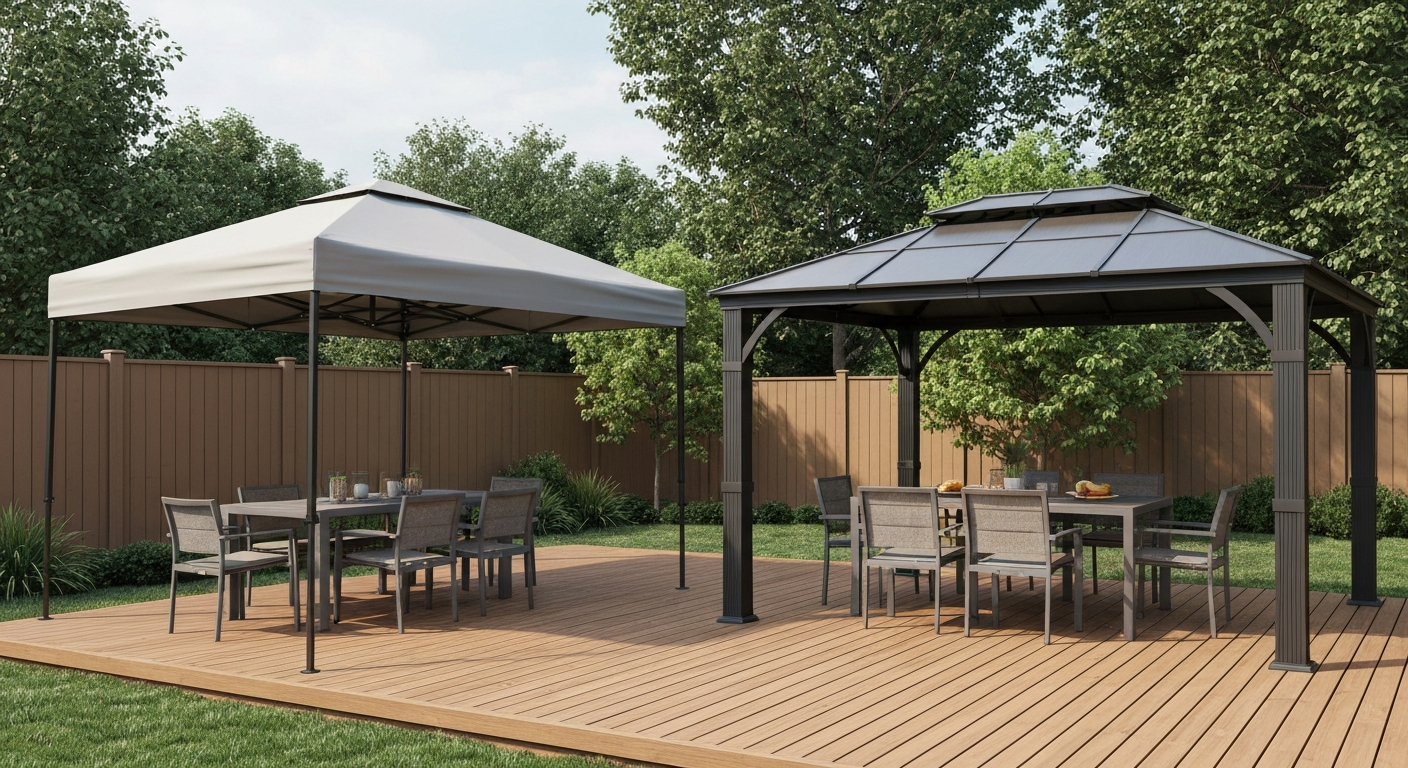
The best canopy tent for most patios is a 10x10 or 10x20 pop-up canopy with a 600D polyester top, powder-coated steel or 6061-T6 aluminum frame, and at least 1,500 mm hydrostatic head rating for genuine rain protection. See our guide to the best outdoor canopy for patio for full recommendations and buying tips. If you want something more permanent, a hard-top or steel-frame gazebo in the 10x12 or 12x12 range gives you better wind and snow tolerance, a cleaner look, and no weekly setup hassle. Which one makes sense depends almost entirely on how you use your patio, how often you want to move the structure, and what your outdoor space actually measures.
Best Canopy Tent for Patio: Top Picks, Sizes, Budget & Installation

Lark Perry
10 Aug 2026
Top picks at a glance
| Category | Top Pick | Size | Frame | Fabric / Top | Approx. Price |
|---|---|---|---|---|---|
| Best Overall | Eurmax Standard 10x10 Pop-Up | 10x10 ft | Powder-coated steel | 600D polyester, PU coated | $120–$160 |
| Best Budget | Quik Shade Weekender 100 | 10x10 ft | Steel | 150D polyester | $60–$90 |
| Best Heavy-Duty Pop-Up | E-Z UP Eclipse II 10x10 | 10x10 ft | 6061-T6 aluminum | 300D solution-dyed polyester | $280–$350 |
| Best Permanent Gazebo | Palram Canopia Patio Cover / Balance 8x8 | 8x8 ft (expandable) | Hot-dip galvanized steel | Twin-wall polycarbonate roof | $400–$600 |
| Best Budget Permanent | Sunjoy Steel Gazebo 10x10 | 10x10 ft | Powder-coated steel | Polyester soft top | $250–$400 |
Prices reflect typical retail range as of mid-2026. All five options are widely available through major home improvement retailers, Amazon, and warehouse clubs. I'll break down why each earned its category spot further down, including real-world weather performance notes.
Who this guide is for, and when a canopy beats a gazebo
This guide is written for homeowners and renters who want shade, some rain protection, and a usable outdoor space without hiring a contractor or pouring a concrete footing. If you're throwing occasional backyard dinners, need a seasonal shade structure you can store in winter, or rent your home and can't make permanent changes, a pop-up canopy tent is your starting point. If you own your home, have a defined patio space you use regularly, and want something that looks finished rather than improvised, a semi-permanent or hard-top gazebo is worth the investment.
The canopy vs. gazebo decision comes down to three things: permanence, appearance, and structural performance. Pop-up canopies set up in 5 to 15 minutes, break down flat, and cost $60 to $350. Permanent gazebos require anchoring, sometimes a permit, and run $250 to well over $1,000, but they handle wind and rain far better and don't need to be stored after every use. Renters almost always land on pop-up canopies. Homeowners with established patios usually regret not going permanent sooner.
Pop-up canopies vs. permanent patio gazebos: what each does well
Pop-up canopies dominate in portability and convenience. Most 10x10 models weigh between 25 and 40 pounds, pack into a wheeled carry bag, and can be set up solo in under 10 minutes. That's genuinely useful if you take it to farmers markets, tailgates, or kids' sports events in addition to using it at home. The tradeoff is structural. Manufacturer warnings are consistent and honest: pop-up canopies are not wind-rated structural roofs. Eurmax, for example, explicitly states in their product documentation that the tent should be taken down in severe winds and recommends always using the included stakes and weight bags. I've personally had a cheap pop-up sail off a deck during a 25 mph gust because it wasn't staked. That's a real hazard, not a fine-print technicality.
Permanent gazebos solve the wind and appearance problem but introduce new ones: anchoring requirements, potential permit triggers, and a fixed footprint that affects how you can rearrange your patio. Hard-top models with polycarbonate or aluminum roofs (like the Palram Canopia Balance series) publish actual structural specs. Palram's spec sheet for that model lists a permitted wind zone of 21 m/s (about 47 mph) and a maximum snow load of 0.50 kN/m², which is roughly 10 pounds per square foot. That's meaningful data you can compare against your local climate conditions, something pop-up canopy manufacturers almost never publish.
| Factor | Pop-Up Canopy Tent | Permanent Gazebo |
|---|---|---|
| Setup time | 5–15 minutes | Several hours to a full day |
| Portability | High: packs flat, wheeled bag | None: fixed installation |
| Wind resistance | Low: not structurally rated | Moderate to high: anchored, rated frames |
| Snow load tolerance | Not rated; collapse risk | Spec-rated (e.g., 0.50 kN/m²) |
| Appearance on patio | Functional, casual | Finished, architectural |
| Permit required? | Rarely | Sometimes (>120 sq ft threshold common) |
| Price range | $60–$350 | $250–$2,000+ |
| Renter-friendly? | Yes | Depends on lease and anchoring method |
Getting the size right for your patio
The most common sizing mistake is buying a 10x10 canopy for a space that actually needs a 10x20. A 10x10 covers 100 square feet of footprint, which fits one standard 6-person patio table with chairs if everyone stays put. The moment people start pushing chairs back or you add a grill station, you're out from under the shade. For a patio dining setup with six to eight seats, a 10x12 or 10x20 is the more honest fit.
Clearance height matters more than most buyers realize. Standard pop-up canopies have a center peak height of around 9 to 10 feet and an eave (leg) height that adjusts between roughly 5.5 and 6.5 feet. If you're running string lights or a ceiling fan under a permanent structure, plan for at least 7 feet of clearance at the eave. The IRC-based building code exemption that many U.S. municipalities adopt covers detached accessory structures under roughly 120 square feet without a permit, which means a 10x12 (120 sq ft exactly) sits right at that threshold. A 12x12 or anything larger likely requires a permit check with your local Authority Having Jurisdiction (AHJ), regardless of what the retailer says.
- Solo seating or hammock shade: 8x8 or 10x10 is sufficient
- 4-person dining table with chairs: 10x10 minimum, 10x12 preferred
- 6-to-8-person dining setup: 10x20 or 12x16
- Full outdoor kitchen/lounge zone: 12x20 or a multi-bay permanent structure
- Renter tip: measure your patio surface before buying, and check that leg footprint fits within the paved or decked area to avoid staking issues
Materials and durability: what the specs actually mean
Canopy fabric: denier, coatings, and waterproofness
Denier (D) measures the linear mass density of individual yarns, specifically grams per 9,000 meters of fiber. 600D polyester is a common mid-to-heavy spec for pop-up canopy tops and indicates meaningfully thicker yarn than the 150D or 180D fabrics on budget models. Higher denier generally means better tear resistance, but denier alone does not tell you how waterproof the fabric is. A 150D top with a quality PU coating can outperform an uncoated 600D top in a rainstorm.
Waterproofness is measured using the hydrostatic head test (AATCC Test Method 127 or ISO 811), which measures how high a column of water the fabric can hold before it leaks. AATCC Test Method 127-2003 (hydrostatic head) (PDF) is a standard laboratory method for measuring the hydrostatic head of textile fabrics and is equivalent in purpose to ISO 811. REI puts a practical threshold at around 3 psi, which corresponds to roughly 2,100 mm of hydrostatic head. For a patio canopy that will see steady rain, I'd consider 1,500 mm a workable floor and 2,000 mm or above genuinely rain-worthy. Budget canopy fabrics often sit at 600 to 800 mm, which means they'll handle light sprinkles but seep in a sustained downpour.
For semi-permanent and permanent covers, solution-dyed acrylic fabric (Sunbrella being the best-known brand) is the premium choice. Because the color is built into the fiber rather than applied as a surface coating, it resists UV fading far better than polyester. Sunbrella's awning-grade fabrics typically carry 5-to-10-year limited warranties against fade and mildew, and their technical specs include UPF ratings and AATCC-referenced fade resistance data. It costs more per square yard than polyester, but for a structure you're leaving up year-round, it earns back the price premium in longevity.
Frames: steel vs. aluminum, coatings, and corrosion resistance
Steel frames are heavier, cheaper, and prone to rust if the coating fails. Powder-coated steel is standard on mid-range pop-ups and budget permanent gazebos. Hot-dip galvanized steel (spec'd under ASTM A123) provides a far more durable zinc coating and is what you'll find on better permanent structures. Aluminum frames, particularly those using 6061-T6 alloy, offer a compelling alternative: that alloy has a typical tensile strength around 310 MPa (per MatWeb material data), meaning it punches well above its weight for portable frames. The E-Z UP Eclipse uses 6061-T6 aluminum, which is why it weighs noticeably less than a comparable steel-framed canopy while still holding up to repeated assembly cycles.
For coastal or high-humidity patios, the frame coating is as important as the frame material. Bare steel will begin surface rusting within a season if any scratches reach the metal. If you're near saltwater or see high humidity year-round, prioritize hot-dip galvanized steel, quality-coated aluminum, or stainless hardware at minimum.
Wind, rain, and snow: honest performance limits
Pop-up canopies have no published wind rating for good reason: they're not engineered as structural shelters. In practice, a well-staked and weighted 600D steel-frame canopy will handle a sustained 20 to 25 mph wind with minimal drama. Above that, fabric billows, frames flex, and the risk of the structure lifting or collapsing on people underneath becomes real. I've tested half a dozen models in open conditions; every one becomes unstable by 30 mph if not anchored to a fixed point. Manufacturer guidance to take the canopy down in severe weather is not marketing caution, it's a genuine structural limit. The U.S. Consumer Product Safety Commission's blank" rel="noopener noreferrer">Camping Tent Flammability Testing Report (August 2023) documents CPAI-84 and ASTM F3431-20 and provides regulatory context on tent flammability standards.
Permanent hard-top gazebos publish actual structural loads where pop-ups don't. The Palram Canopia Balance's published 21 m/s wind zone translates to roughly 47 mph sustained wind, which covers most typical storm events in non-coastal, non-tornado-prone regions. Snow load specs around 0.50 kN/m² (approximately 10 psf) are adequate for light to moderate snowfall but not for heavy accumulation climates. If you're in a region that regularly sees heavy snow, check the published spec against your ground snow load (available from ASCE 7 maps or your local building department) and factor in that drifting can concentrate loads well above ground averages.
Rain performance comes down to the fabric and seam construction discussed above. Gazebo roofs with polycarbonate panels essentially eliminate rain leakage; soft-top permanent gazebos depend on fabric quality, seam taping, and slope angle. A roof pitch of at least 15 to 20 degrees sheds water much better than a nearly flat canopy, which pools and eventually seeps at seams regardless of hydrostatic head rating.
Anchoring and installation for every patio surface
Anchoring is where most patio canopy setups fail, and it's the part most buyers think about last. The right method depends on your surface: concrete, wood deck, pavers, or grass/soil each call for a different approach.
Concrete patios
You have two practical options: bolt-down anchor plates using concrete expansion bolts (permanent but secure) or weight-bag anchoring using manufacturer-supplied or aftermarket sandbag weights hung from the leg corners. For a semi-permanent structure on concrete, 4-inch concrete anchors through a baseplate offer the most stability and are required by most permanent gazebo manufacturers for proper installation. For pop-up canopies on concrete, weight bags are your only viable option unless you're willing to drill. Fill them fully: a half-filled weight bag under a gusty corner is worse than useless because it gives the leg the illusion of anchoring while still allowing movement.
Wood decks
Lag bolt anchoring into deck joists works well for permanent structures and provides strong hold. For pop-ups, deck anchor straps that loop around deck boards or balusters offer a renter-friendly middle ground. Avoid screwing anything through deck boards without confirming joist location, and never anchor into deck railings alone as they're typically not engineered for lateral loads.
Pavers and composite surfaces
Pavers make anchoring genuinely awkward. The best approach for a permanent structure is to remove individual pavers where the footings will sit, pour concrete footings, and relay the pavers around them. For pop-up canopies, weighted bags are again the go-to, supplemented with tent stakes pushed into any soil gaps or adjacent lawn areas. If your entire patio is flush pavers with no soil access, plan on heavier weight bags: 40 pounds per leg is a workable minimum for anything above a light breeze.
Renters and surfaces you can't modify
If you're renting and can't drill or pour concrete, weight bags and ballast blocks are your anchoring system. Many canopy brands sell purpose-built weight bags that clip onto leg corners. Generic sandbags from a hardware store work just as well. The minimum practical weight per leg corner for a 10x10 canopy in any wind is about 30 pounds; in exposed or frequently breezy conditions, go to 40 to 50 pounds per corner. Some renters use large planters or water-filled containers as supplemental ballast, which doubles as a landscaping element.
Permits: what to check before you install
Many U.S. jurisdictions follow the IRC baseline exempting one-story detached accessory structures under roughly 120 square feet from building permits, but local amendments and HOA rules vary significantly. Some municipalities, like Evanston, IL, explicitly list this 120 sq ft threshold; others set it lower or require permits for any anchored structure. California's building code and IBC Chapter 31 impose additional requirements for membrane structures in public-assembly contexts. Before anchoring any permanent gazebo, spend 10 minutes on your municipal building department's website or call them directly. It's a much shorter conversation than removing an unpermitted structure later.
Top picks by category: what I'd actually buy
Best overall: Eurmax Standard 10x10 Pop-Up Canopy
The Eurmax 10x10 hits the right balance of price, quality, and practicality for most patio users. The 600D polyester top with PU coating handles moderate rain, the powder-coated steel frame is sturdy enough for repeated setup, and the kit includes both stakes and weight bags so you're not buying accessories separately. At around $120 to $160, it's not the cheapest option, but it's meaningfully more durable than sub-$100 canopies in the same size. Assembly is straightforward once you've done it twice, typically around 10 minutes with two people. The main limit is the same as any pop-up: it is not a wind-rated structure and should not be left up unattended in storms.
Best budget: Quik Shade Weekender 100
If you need shade coverage and your budget is tight, the Quik Shade Weekender 100 delivers reliable performance at $60 to $90. The 150D polyester top won't hold up in a heavy downpour the way thicker-coated fabrics will, but it provides genuine UV protection and handles light rain acceptably. The frame is steel and noticeably lighter-gauge than the Eurmax, which means it's easier to carry but more susceptible to bending in gusty conditions. Use it for calm to lightly breezy patio situations, stake it down every time, and don't leave it up overnight. For the price, the value-to-use ratio is hard to beat if you use it seasonally.
Best heavy-duty pop-up: E-Z UP Eclipse II 10x10
The E-Z UP Eclipse II is what you buy when you want a pop-up that performs closer to a permanent structure without actually being one. The 6061-T6 aluminum frame is noticeably lighter than steel equivalents while handling repeated assembly cycles far better, and the 300D solution-dyed polyester top is more fade-resistant than standard PU-coated polyester. At $280 to $350, it costs roughly twice what the Eurmax does, which is only worth it if you're assembling and disassembling frequently, using it commercially, or exposing it to consistent UV and weather. E-Z UP publishes a shade rating and the framework meets their professional-grade quality standard. It still shares the fundamental pop-up limitation: not a wind-rated structural canopy.
Best permanent gazebo: Palram Canopia Balance 8x8
The Palram Canopia Balance stands out among permanent patio structures because it's one of the few in its price range that actually publishes structural specifications you can compare against your local conditions. See our full guide to the best patio canopy gazebo for detailed comparisons and buying advice. For a broader comparison of top permanent shade structures, see our guide to the best outdoor patio gazebo. The 21 m/s wind zone and 0.50 kN/m² snow load rating aren't just marketing copy; they come from a published spec sheet you can verify. The twin-wall polycarbonate roof eliminates rain leakage problems entirely and provides UV diffusion without blocking light the way solid roofs do. Installation requires anchoring to a solid surface (concrete or wood deck) and takes most people a half to full day. At $400 to $600, it's a genuine investment, but it replaces five or six years of replacing cheaper canopies while delivering a better experience every time you use your patio.
Best budget permanent: Sunjoy Steel Gazebo 10x10
For homeowners who want a permanent footprint without the Palram's price, the Sunjoy 10x10 steel-frame gazebo with a soft polyester top gets the job done at $250 to $400. The powder-coated steel frame is heavier and more labor-intensive to install than aluminum alternatives, and the polyester roof will need replacement after a few seasons in full sun. That said, it anchors solidly, has a proper architectural presence on a patio, and the price point makes the replacement-top math still work out ahead of buying a new structure. It's a practical entry into permanent shade without a major financial commitment.
Fabric and frame durability: quick comparison
| Material | Best Use Case | UV Resistance | Water Resistance | Expected Lifespan | Notes |
|---|---|---|---|---|---|
| 150D polyester (uncoated) | Budget, light-use canopies | Low | Low (600–800 mm HH) | 1–2 seasons | Fades quickly in direct sun |
| 600D polyester + PU coat | Mid-range pop-ups | Moderate | Moderate (1,000–1,800 mm HH) | 2–4 seasons | Most common option; check coating thickness |
| 300D solution-dyed polyester | Heavy-duty pop-ups | Good | Good (2,000+ mm HH) | 4–6 seasons | Color is fade-resistant; used in E-Z UP Eclipse |
| Solution-dyed acrylic (Sunbrella) | Semi-permanent covers | Excellent | Good with treatment | 7–12 years | 5–10 yr warranty; premium cost |
| Twin-wall polycarbonate | Hard-top permanent gazebos | Excellent (UV inhibitors built in) | Excellent (no seams) | 10–15+ years | Best rain/UV performance; not portable |
| Powder-coated steel frame | Budget to mid-range all types | N/A | Moderate (chips = rust) | 3–7 years | Re-coat scratches immediately |
| 6061-T6 aluminum frame | Premium pop-ups, event canopies | N/A | Excellent (no rust) | 8–15+ years | Light, strong; worth cost premium for frequent use |
| Hot-dip galvanized steel (ASTM A123) | Permanent gazebo structures | N/A | Excellent | 15–25+ years | Best corrosion protection for steel |
Maintenance and keeping your canopy in good shape
Pop-up canopies that are stored wet are the ones that develop mildew within a season. After any rain exposure, let the fabric dry completely before packing it into the bag. For polyester tops, a mild soap and water rinse once or twice a season keeps the fabric clean without stripping the PU coating. Avoid bleach; it degrades both polyester and PU coatings aggressively. Reapply a DWR (durable water repellent) spray annually if you're in a rainy climate, especially on budget fabrics where the factory coating is thin to begin with.
For steel-frame gazebos, check every anchor point and bolt connection at the start and end of each season. Powder coating chips at bolt locations over time, and bare steel at anchor points is exactly where rust starts. Touch up any chips with rust-inhibiting spray paint or cold galvanizing compound before they spread. Wipe down aluminum frames with a mild cleaner periodically; while they don't rust, aluminum can oxidize to a dull chalky surface if neglected for years. Polycarbonate roofs stay clean with just soap and water; avoid abrasive cleaners that scratch the UV-inhibiting surface layer.
Where to buy and what to expect on price
Home Depot and Lowe's carry a solid mid-range selection in-store, which is useful if you want to see the frame mechanism and fabric weight before buying. Costco and Sam's Club periodically run steel gazebo deals that are excellent value if your timing aligns with their seasonal buys. Amazon has the widest pop-up canopy selection, but read the specifications carefully: listings often mix denier and hydrostatic head specs inconsistently, and photos rarely show the actual coating quality. For premium permanent structures, specialty outdoor retailers and direct manufacturer sites often provide better spec documentation and warranty support than mass-market channels. If you're comparing permanent gazebo options across styles and price tiers, the selection at major retailers gives you the clearest apples-to-apples comparison on footprint, frame material, and roof type. If you want help finding the best place to buy a patio gazebo, check major retailers and specialty outdoor dealers for verified specs and warranties.
FAQ
How do I choose between a pop-up canopy tent and a permanent patio gazebo?
Pop-up canopies are portable, cheaper, and quick to set up—good for temporary shade/events and renters. Permanent gazebos (framed or hard‑top) are designed for long‑term patio use, offer better wind/snow resistance, and often include stronger anchoring and warranties. Choose pop-up for occasional use and portability; choose permanent for year‑round use, durability, and when you need a structure that can be left assembled.
What objective specifications should I use to compare canopy fabrics?
Key specs: hydrostatic head (waterproofness) measured by AATCC 127/ISO 811—aim for ≥2,000 mm (≈3 psi) for good waterproofing; UV‑resistance/accelerated weathering (ASTM G154 cycles or vendor UV‑fade data); fabric construction (solution‑dyed acrylic like Sunbrella for premium semi‑permanent use; polyester/PU or PVC‑coated fabrics for pop‑ups); denier for polyester (e.g., 300–600D typical; higher denier = greater tear resistance); and flame‑resistance test results (NFPA 701 or CPAI‑84 compliance). Warranties and real‑world test reports should supplement lab data.
What frame and corrosion specs matter for longevity?
Look for materials and coatings: aluminum (e.g., 6061‑T6) offers a high strength‑to‑weight ratio for portable frames; steel frames should be hot‑dip galvanized per ASTM A123 (or equivalent) or have robust powder‑coating to resist corrosion. Pay attention to tube wall thickness, joint design, and manufacturer‑stated wind ratings or permitted wind zones when provided.
How much wind and snow can canopy tents or gazebos handle?
Manufacturers sometimes list wind and snow limits on spec sheets—hard‑top gazebos may have explicit wind‑speed and snow‑load ratings (example: Palram/Canopia models). Pop‑ups generally are not wind‑rated structural roofs and manufacturers advise taking them down in strong winds; use weight bags, stakes, or permanent anchors to resist gusts. For event-grade/tent wind classifications in Europe, EN 13782 applies. Always follow manufacturer limits and local code requirements for semi‑permanent installations.
What size canopy should I pick for my patio?
Measure usable patio footprint and consider furniture and clearance. Common guidance: allow roughly 3 ft (0.9 m) clearance around furniture; a 10×10 ft canopy fits a small seating area (2–4 people), 10×12 or 12×12 for dining or lounge sets, and 12×16+ for larger setups. For structures >120 sq ft check local building/permit rules (many jurisdictions follow an IRC ~120 sq ft exemption baseline).
How should I anchor a canopy on a patio (rented vs owned)?
Anchoring options: weight bags/sandbags or water bags for renters/temporary use (no ground penetration); patio‑safe screw‑in anchors or concrete screw anchors for decks/concrete if permitted; bolted footplates to a permanent foundation for hard‑top gazebos. Use a combination of anchors and guy lines per manufacturer instructions. Never rely on standard tent stakes alone on hard surfaces; always follow local codes and landlord/HOA rules.
Next Articles
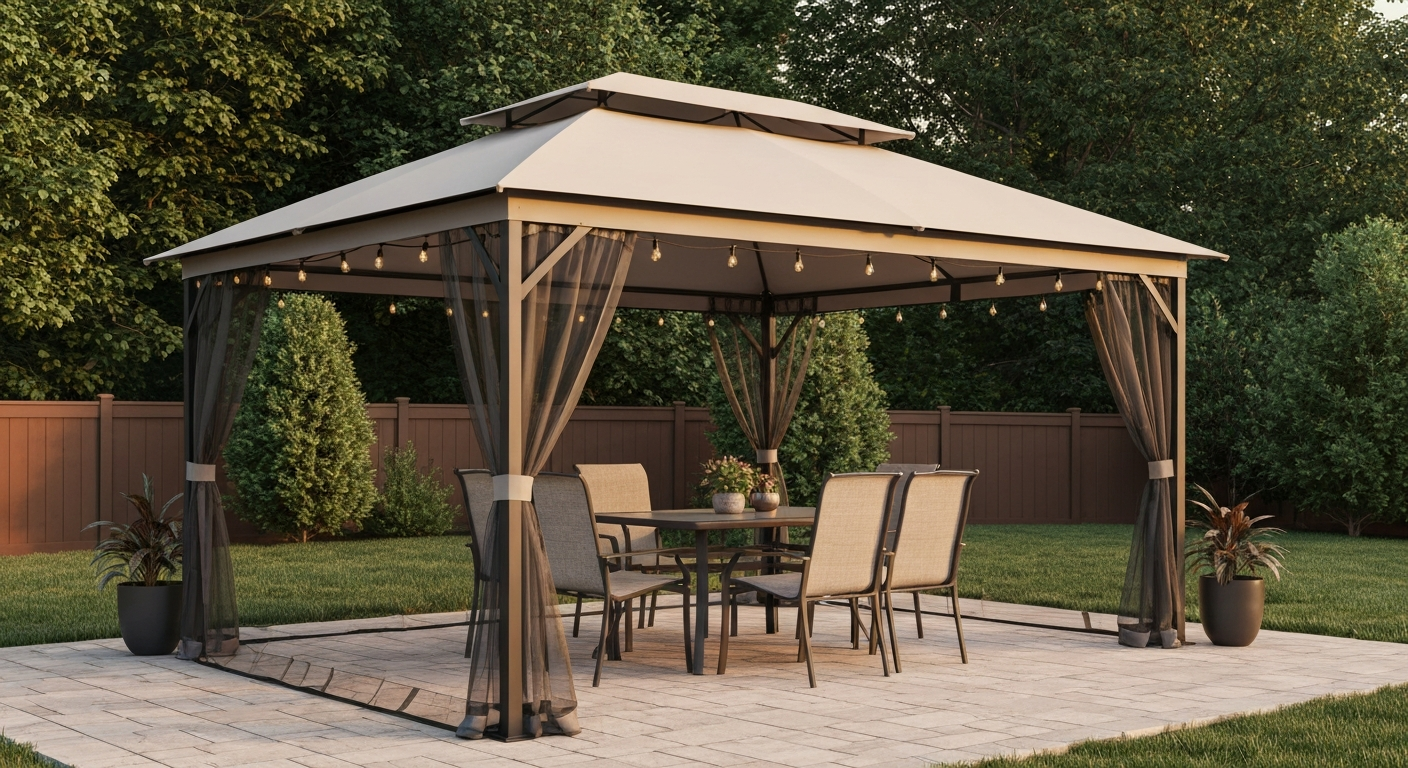
Best Patio Gazebo Under $500: Top Budget Canopies & Picks
Find the best patio gazebo under $500: tested picks, pros/cons, setup tips, and buying checklist.
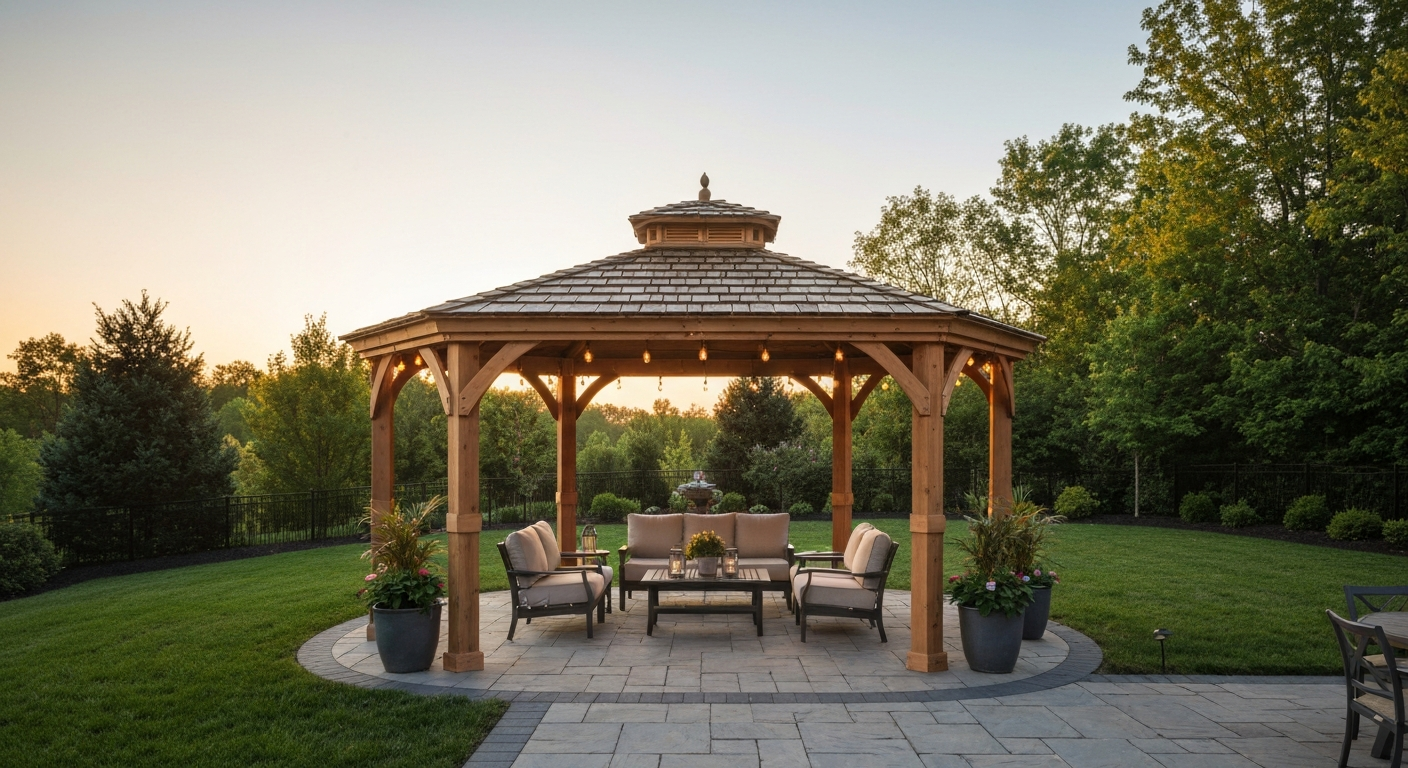
Best Outdoor Patio Gazebo: Top Picks, Buyer's Checklist & Budget Picks
Shop the best outdoor patio gazebos: top picks, budget options under $500, buying checklist, assembly & maintenance tips
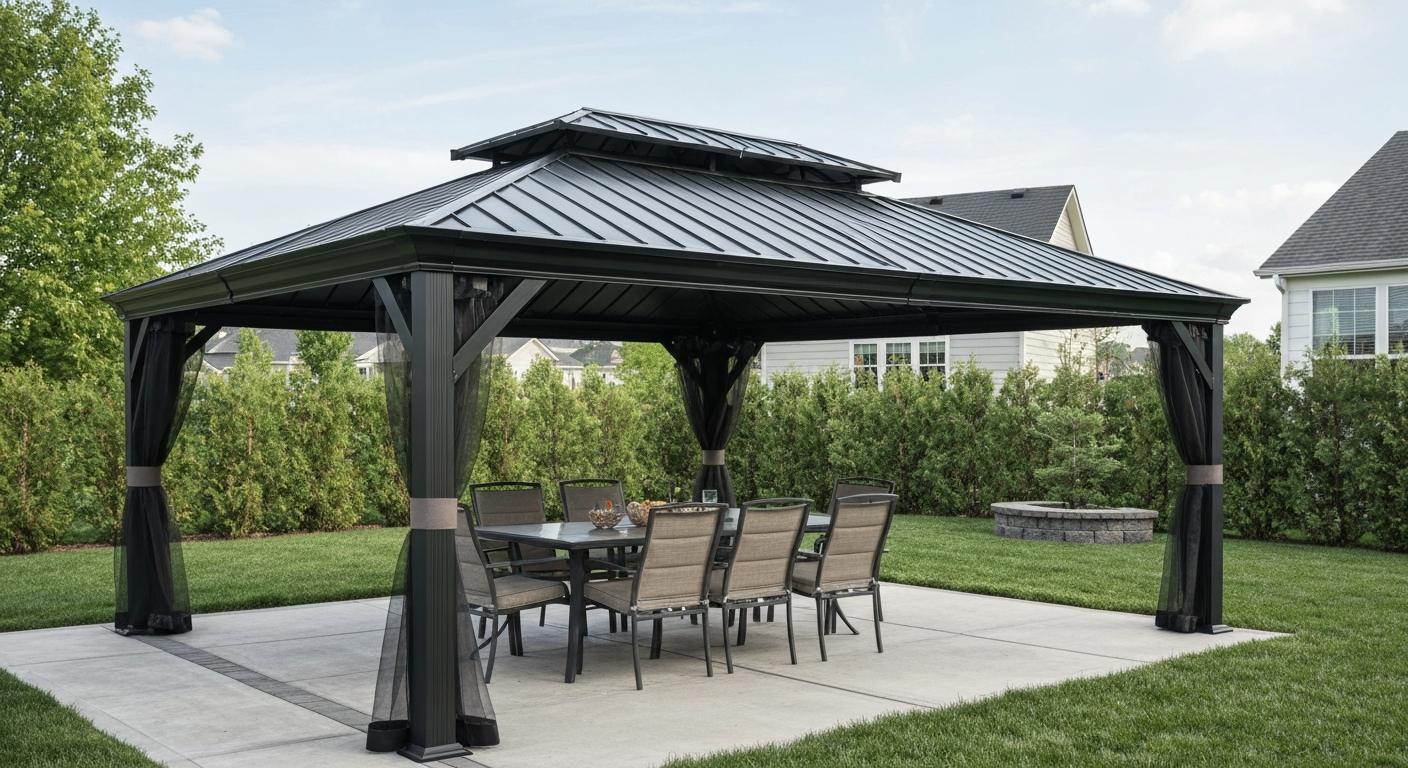
Best Patio Canopy Gazebo: Top Shade Picks for Every Yard
Find the best patio canopy gazebo for shade, weather protection, and style, top picks, buying guide, and budget options