
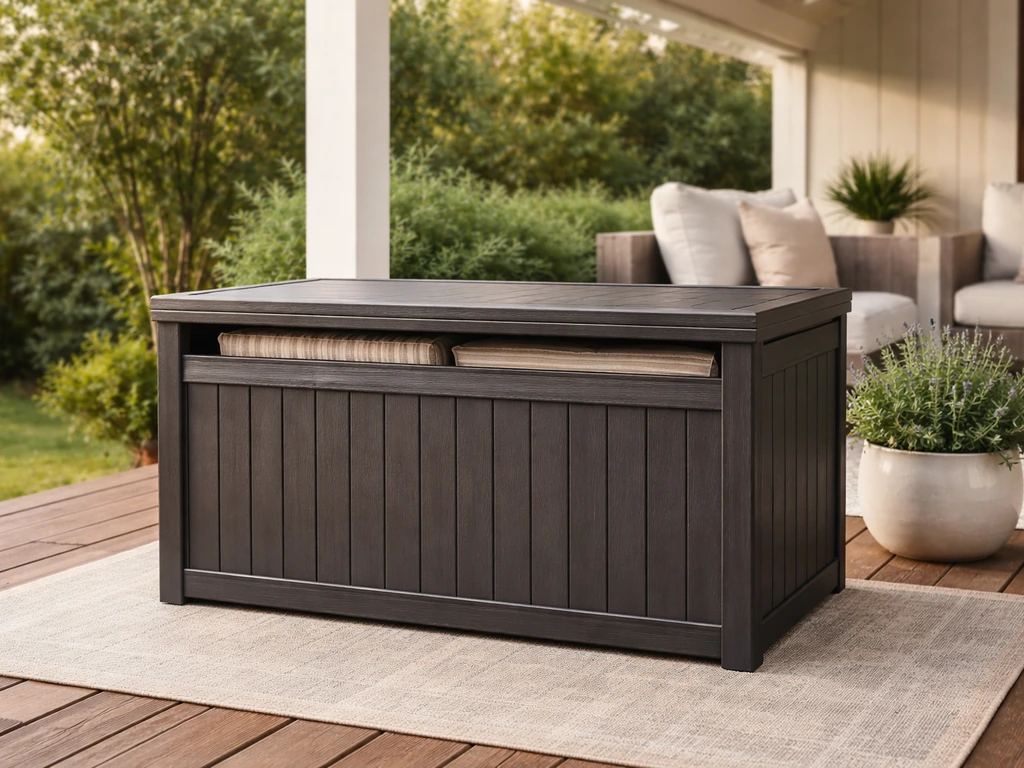
The best outdoor storage for patio cushions is a vented deck box or storage chest made from UV-resistant resin or wood, sized to fit your cushions flat without folding. For most setups, a 150–200 gallon resin deck box with a ventilated lid, sealed seams, and a lockable latch handles rain, pests, and humidity without trapping the moisture that causes mildew. That said, the right pick genuinely depends on your climate, how much space you have, and whether your patio is covered or fully exposed, so this guide walks you through all of it.
Best Outdoor Storage for Patio Cushions: How to Choose

Lark Perry
25 Jun 2026
Why patio cushions need special outdoor storage
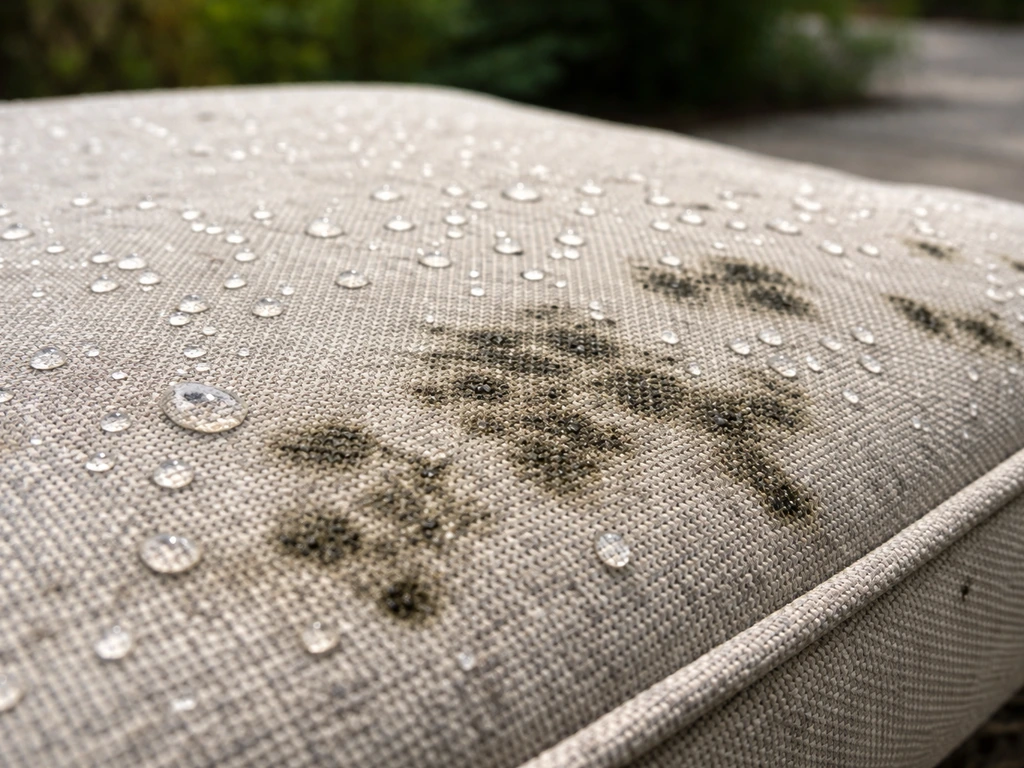
Patio cushions are basically sponges with fabric covers. Even Sunbrella-grade or solution-dyed acrylic cushions, which resist water well on the surface, will absorb moisture over time, especially at the seams and foam core. Once moisture gets in and stays in, you've created exactly the conditions mold and mildew need: humidity above 60%, organic material (the foam and fabric), and warmth. The EPA notes that mold can establish itself within 24 to 48 hours of exposure to wet conditions, and the Smithsonian Museum Conservation Institute points out that organic residues and stains on textiles only accelerate mildew growth. That stain from last summer's barbecue sauce? It's basically fertilizer for mold.
Beyond mildew, cushions face UV degradation from sun exposure, pest damage from rodents and insects looking for nesting material, and color fading that's irreversible once it sets in. Generic plastic bags or tarps seem like an easy fix, but they trap humidity inside, creating a warm, sealed microenvironment, what you might call a mildew chamber. Proper cushion storage has to manage all three threats: moisture, UV exposure, and pests, without creating new problems by sealing dampness in.
Best types of outdoor cushion storage (and who each is for)
There's no single product that works perfectly for everyone. Here's how the main storage types break down in the real world.
Deck boxes and storage chests
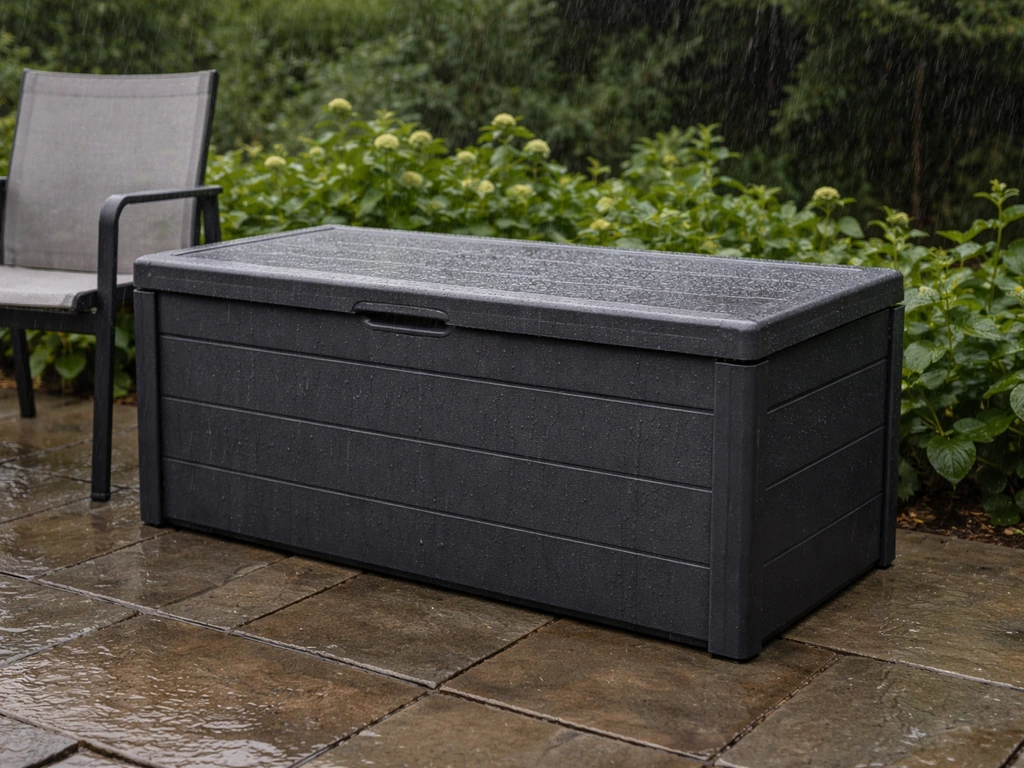
This is the workhorse option for most homeowners. A deck box or outdoor storage chest sits on your patio permanently, doubles as extra seating or a side table, and keeps cushions accessible every time you want to use the furniture. Look for resin or HDPE construction with UV inhibitors built into the material, these won't rot, warp, or rust. Sizes typically run from 70 gallons (too small for most lounge cushions stored flat) up to 230+ gallons.
The best deck boxes for patio cushions are specifically designed with a wide, shallow profile so cushions don't need to be folded. If you're comparing options across price ranges and sizes, the dedicated guide on best deck boxes for patio cushions goes deeper on specific model picks.
Waterproof storage bins and rolling carts
If you have a large collection of cushions or need to move storage around seasonally, a heavy-duty rolling bin can work well. These are more common in commercial settings but increasingly available for residential use. They tend to be taller and narrower than deck boxes, which means you'll likely need to fold thicker cushions, a compromise worth knowing upfront. They're best for people who store cushions in a garage or shed for part of the year and want an easy way to wheel them in and out.
Outdoor storage benches
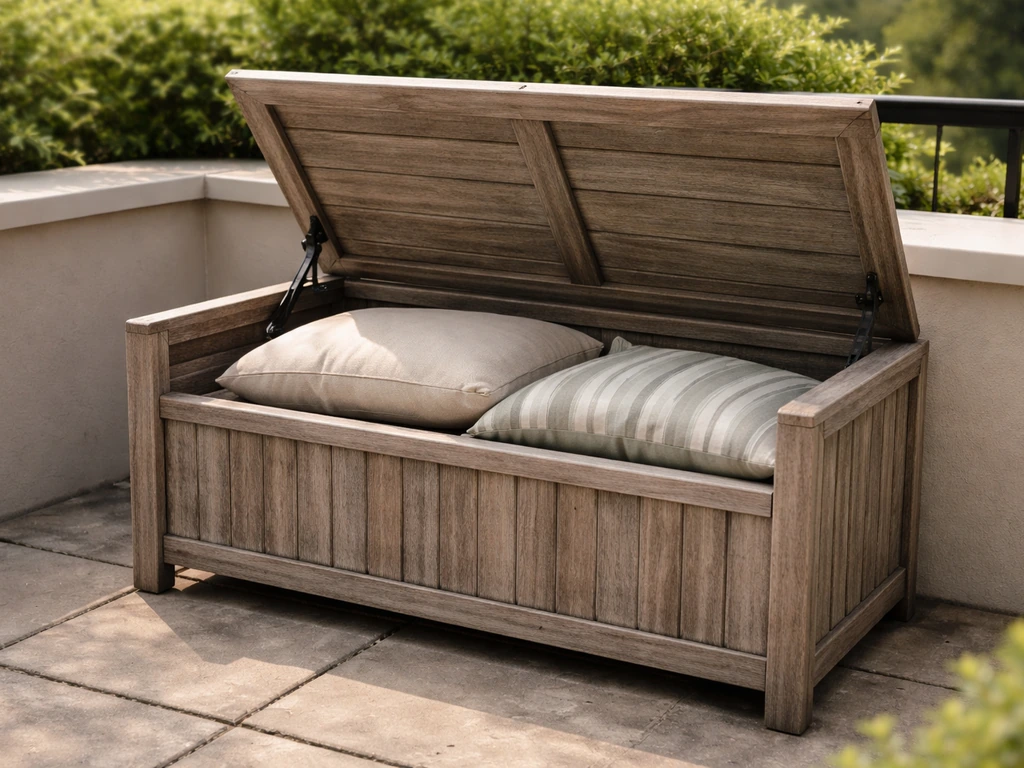
Storage benches are popular for small patios and balconies because they serve double duty as seating. The downside: most have relatively shallow internal dimensions, which limits cushion size. They're a solid fit for chair cushions (typically 16–20 inches wide), but lounge or sectional cushions usually won't fit without heavy compression. Also, ventilation on budget storage benches is often poor, so pair one with silica gel packs inside and make sure cushions are fully dry before closing the lid.
Shed-style outdoor storage
For large patios with multiple furniture sets or for people who also need to store garden tools, a small resin shed gives you the most volume and flexibility. The catch: plastic sheds can experience significant condensation issues, especially with temperature swings, this is a well-documented complaint from real users dealing with moisture buildup inside closed plastic enclosures. If you go this route, add vents or prop the door slightly and use a dehumidifier during humid months. It's more management than a quality deck box requires.
Outdoor cushion covers and bags
Breathable cushion covers or storage bags are the right call when you're on a strict budget, have a covered patio where cushions are mostly protected from direct rain, or need a lightweight seasonal solution. The key word is breathable: woven polyester or canvas-style covers allow moisture vapor to escape rather than sealing it in. Plastic bags and non-breathable covers are genuinely counterproductive, they trap humidity, especially as temperatures fluctuate overnight. Use cushion covers as a supplement to a deck box rather than a replacement, or as a good-enough solution for covered patios in dry climates.
Indoor seasonal storage
In climates with genuine winters, freezing temperatures, heavy snow, or prolonged rain, the most effective long-term storage is bringing cushions inside. A climate-controlled garage, basement, or utility room keeps humidity and temperature stable. Stack cushions flat on a shelf or hang them vertically using wall-mounted hooks. If you're storing in a basement, keep relative humidity below 60% with a dehumidifier; above that threshold, you're back to mildew risk territory per EPA guidance. The US EPA notes that elevated indoor relative humidity and condensation can create conditions that support mold growth keep relative humidity below 60%. Indoor storage is free and genuinely the best protection for premium cushions, but it requires the space and the discipline to actually do it.
Key features that actually matter when buying cushion storage
Waterproof vs. water-resistant: know the difference
Water-resistant means the material repels surface water under normal rain. Waterproof means it keeps water out even under sustained exposure, pressure, or pooling. For an uncovered patio in a rainy climate, you want a box with waterproof construction, specifically, a lid with a drip-edge overhang, sealed or gasket-fitted seams, and no drain holes that could let water in from splashback. For the best waterproof patio storage box, look for sealed or gasket-fitted seams plus a lid with a drip-edge overhang to block splashback and pooling waterproof construction. Water-resistant boxes are fine for covered patios or dry climates where rain exposure is limited and brief.
Ventilation: the most overlooked feature
This is the one feature people consistently underestimate. A perfectly sealed box sounds great until you realize that even cushions that feel dry to the touch can release moisture vapor as temperatures rise during the day. That vapor has nowhere to go in a sealed box, it condenses on the cooler interior walls and drips back onto the cushions. USDA Forest Products Laboratory research confirms that trapped humidity and warmth are the core drivers of mildew growth. Good deck boxes solve this with small vent holes (usually on the underside of the lid edge or the back panel) that allow airflow without letting rain in. If the box you're considering doesn't mention ventilation, treat it as a red flag.
UV resistance
UV-resistant materials are critical for the storage box itself, not just the cushions inside it. Resin boxes without UV inhibitors turn brittle and crack within a few seasons of sun exposure. Look for product descriptions that specifically mention UV-stabilized resin or UV-resistant materials, this isn't just marketing language; it's a meaningful spec that affects lifespan. Same applies to covers: look for UV-resistant fabric ratings, usually measured in UPF (Ultraviolet Protection Factor).
Security and lockability
Most deck boxes come with a latch that can accept a padlock. If you're in a neighborhood where theft is a concern, or if you also store tools or valuables in the box, pay attention to latch quality. Padlock-compatible latches on budget boxes are often flimsy plastic, look for a metal hasp or reinforced latch. For cushion-only storage, a basic latch is usually enough to keep pests and wind from opening the lid.
Ease of cleaning and drainage
Resin and HDPE boxes are easy to wipe down with soapy water, which matters more than you'd think after a season of collecting dust, dead insects, and pollen. Avoid boxes with heavily textured interiors that trap debris. A flat, smooth interior surface is the practical choice. Some boxes include small drainage holes in the floor, these help if any condensation or minor leak occurs, but make sure they're positioned so that ground-level water can't splash back up into them.
How to measure and choose the right size
The single biggest buying mistake with cushion storage is guessing on size. Cushions that are stored folded, bent, or compressed at the edges lose their shape over a season. Measure before you buy.
- Measure each cushion type: length, width, and depth (thickness). Do this with the cushion in its normal flat position.
- Identify your largest piece — usually a lounge cushion or sofa seat cushion. This single measurement determines your minimum interior length requirement.
- Stack cushions in the order you'd store them and measure the total stack height. That's your minimum interior depth requirement.
- Add 2–3 inches to each dimension to account for easy loading and unloading — a box that's just barely big enough becomes frustrating to use every day.
- Check the product's interior dimensions, not just the exterior. Manufacturers often list only exterior dimensions; wall thickness can reduce usable interior space by 2–4 inches on each side.
- For a standard patio set with four dining chair cushions (typically 16x16 inches) plus a bench cushion (48x18 inches), a 100–130 gallon deck box usually fits comfortably. For sectional or lounge sets with cushions 70–80 inches long, you're looking at 200+ gallons with wide interior dimensions.
| Cushion Type | Typical Dimensions | Recommended Box Size |
|---|---|---|
| Standard dining chair cushion | 16x16 to 20x20 inches | 70–100 gallons (small sets) |
| Deep seat / lounge chair cushion | 25x25 to 30x30 inches | 100–150 gallons |
| Sofa or loveseat cushion | 50x24 to 60x24 inches | 150–200 gallons |
| Sectional or chaise cushion | 70x30 to 84x30 inches | 200+ gallons, wide-profile box |
| Mixed patio set (multiple types) | Varies | Go by your largest piece + 20% buffer |
Prep and store cushions safely to prevent mildew and fading
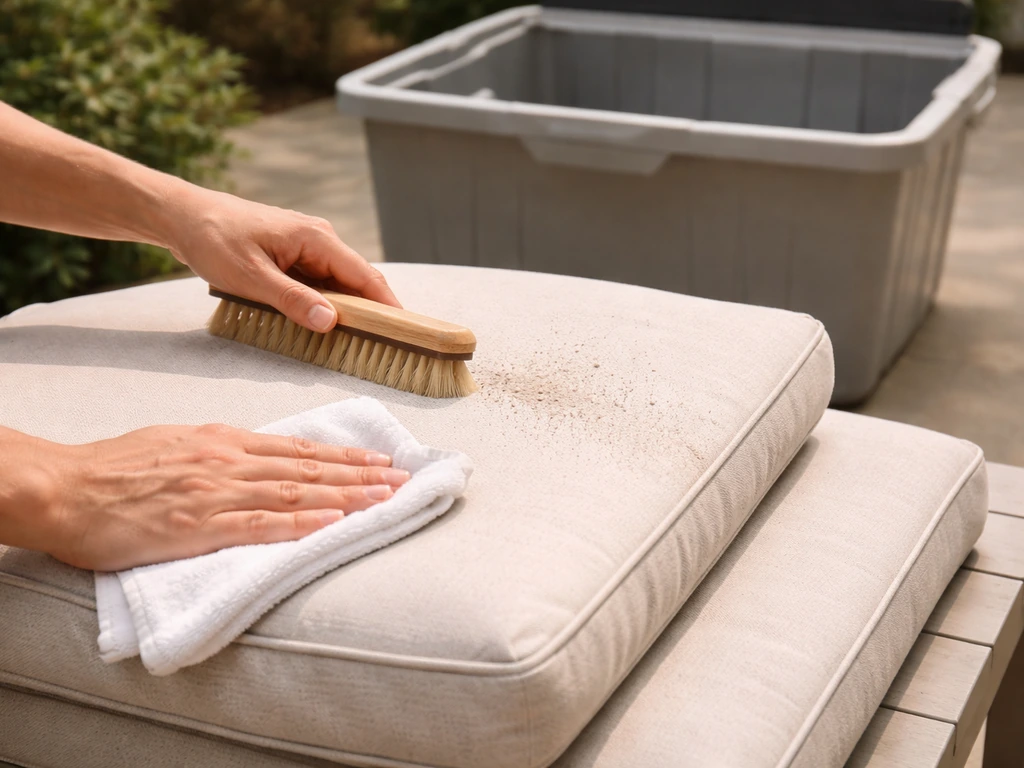
Getting the storage right is only half the job. How you prepare cushions before storing them matters just as much, skipping this step is how people end up with mildewed cushions even inside an expensive deck box.
- Clean cushions before storing. Brush off loose dirt, then spot-clean any stains with mild dish soap and water. Organic residues like food, pollen, and bird droppings accelerate mildew growth on fabric. Rinse thoroughly.
- Dry completely before closing the lid. This is non-negotiable. Even a slightly damp cushion in an enclosed box can generate enough humidity to cause mildew within days, especially in warm weather. Stand cushions upright in sun or a ventilated area for several hours after washing. If cushions got rained on, give them at least a full day — ideally two — before storing.
- Use breathable cushion bags inside the box. Individual breathable storage bags keep cushions separated and allow residual vapor to dissipate rather than transferring between cushions.
- Add silica gel desiccant packs. For humid climates or boxes with limited ventilation, placing a few large silica gel packets inside the box absorbs excess moisture vapor. Replace or recharge them each season.
- Store cushions flat, not standing on edge. Foam cushions develop permanent compression set if stored folded or bent for months at a time. Flat storage preserves shape.
- Keep the box off the ground if possible. Moisture wicks up from concrete and wood decking, especially in wet climates. Rubber feet or a simple platform keep the box base drier.
Maintenance, weatherproofing, and when to switch strategies
Seasonal maintenance routine
At the start and end of each outdoor season, do a quick inspection of your storage unit. Check the lid seals or gaskets for cracks; resin degrades over time even with UV protection. Wipe the interior with a diluted white vinegar solution (one part vinegar to one part water) to kill any mold spores before they establish. Let it dry fully before adding cushions. If you're using silica gel packs, this is when to recharge them by spreading them on a baking sheet at 250°F for two hours.
Adjusting strategy by climate
In wet, humid climates (Pacific Northwest, Gulf Coast, Southeast), ventilation is your biggest priority, and indoor seasonal storage is genuinely worth the effort for expensive cushions. A high-quality vented deck box works well for day-to-day storage when you're actively using the furniture, but at the end of the season, bringing cushions inside a climate-controlled space is the most reliable protection. In hot, dry climates (Southwest, California), UV damage and pest intrusion are bigger concerns than mildew. Prioritize a UV-stabilized box with a good lid latch, and cushion covers work reasonably well as a supplement. In climates with freeze-thaw cycles, bring cushions inside before the first frost, foam that freezes and thaws repeatedly can delaminate and lose resilience.
Covered vs. uncovered patio: does it change the math?
A covered patio significantly reduces direct rain exposure but doesn't eliminate humidity, wind-driven moisture, or condensation. If your patio has a pergola, awning, or roof overhang, a water-resistant deck box or even breathable cushion covers may be sufficient for day-to-day storage. On a fully exposed patio with no overhead protection, you need a waterproof box with proper lid sealing, and you should expect to do more frequent lid checks after heavy rain to confirm no water has gotten in.
When to switch strategies entirely
If you're finding mildew recurring despite proper prep and a decent storage box, step back and evaluate whether the box is actually the right solution. Recurring mildew usually means one of three things: cushions aren't fully dry before storage, the box has inadequate ventilation, or ambient humidity is high enough that even stored cushions are absorbing moisture vapor. At that point, the right move is adding a small desiccant, improving ventilation, or switching to indoor storage. Spending more on a premium waterproof box won't solve a ventilation or pre-storage drying problem.
Quick shortlist: best storage pick by patio setup and budget
| Setup | Best Storage Type | Key Feature to Prioritize | Budget Range |
|---|---|---|---|
| Small balcony, limited space | Storage bench or compact deck box (70–100 gal) | Dual-function seating, water-resistant lid | $80–$200 |
| Covered patio, mild climate | Mid-size resin deck box (100–150 gal) or breathable covers | Ventilation, UV-stable resin | $150–$350 |
| Uncovered patio, rainy climate | Large vented deck box (150–200 gal) with sealed lid | Waterproof seams, drip-edge lid, venting | $250–$500 |
| Large patio, multiple furniture sets | 200+ gallon wide-profile deck box or resin shed | Interior width for flat storage, robust ventilation | $350–$700+ |
| Seasonal/winter storage, cold climate | Indoor shelving or breathable bags in climate-controlled space | Low humidity (below 60% RH), flat stacking | $20–$80 for bags/organizers |
| Budget-first, covered patio | Breathable cushion covers or bags | Breathable (not plastic), UV-resistant fabric | $30–$100 |
A few final things worth keeping in mind: if you're also evaluating storage for other patio gear beyond cushions, tools, planters, furniture accessories, it's worth looking at broader outdoor patio storage options that can consolidate everything in one place. This same approach also helps when shopping bug out patio products, like covers, bins, and accessories designed to keep outdoor items safe between seasons. And if waterproofing is your top concern and you want to go deep on specs and model comparisons for sealed boxes specifically, the waterproof patio storage box category is worth your time. But for most people with a standard patio and a set of cushions they want to protect without overthinking it, a 150-gallon UV-resistant resin deck box with a vented lid, stored on an uncovered patio, is the answer that holds up season after season.
FAQ
Can I use a plastic storage bin or a contractor trash-bin style bin for patio cushions?
Usually not as a primary solution. Many plastic bins are essentially unvented, so trapped moisture vapor condenses inside and can drive mildew even if it looks “dry” from the outside. If you must use a bin temporarily, keep cushions fully dry, add airflow (for example, a way to vent the lid), and avoid fully sealing the interior like a container for food.
Do I need to dry cushions in the sun before putting them away, or will a quick wipe be enough?
A quick wipe is not enough, you need to confirm the seams and foam core are dry. The practical check is to store only after the cushions feel dry and do not feel cool or damp when you press along the seam areas. If you bring them in from a damp day, air-dry them longer than you think, then let them sit until the fabric and edges feel dry to the touch.
Is it better to store cushions in a deck box flat or standing up?
Flat storage is safer for shape retention, it reduces bending at the corners and helps prevent edge compression. Standing up or leaning can be acceptable for tight spaces, but thicker cushions may still warp at pressure points, and ventilation patterns can change, so ensure the lid vents are not blocked by how you load the box.
What size deck box should I choose if my cushions don’t fit without folding?
If folding is unavoidable, you should generally size up rather than trying to compress cushions. Folding thicker lounge cushions often leads to permanent creases and degraded foam structure over a season. A larger, shallower profile box that holds cushions flat is usually the better long-term choice even if it costs a bit more.
My patio cushions are “water-repellent,” so should I still treat the storage box as waterproof?
Water-repellent fabric helps on the outside, but it does not prevent moisture from getting into seams and foam. If your patio is uncovered or exposed to wind-driven rain, prioritize a genuinely waterproof box approach with sealed or gasket-fitted seams and a lid that sheds water with a drip-edge overhang.
Should I use silica gel packs year-round, even in humid climates?
They help most when ambient humidity is high or when you are storing cushions for long stretches. In very humid regions, you typically need more than a few packs, and they should be monitored and recharged on a schedule. If mildew keeps recurring, ventilation and indoor storage often solve the root cause more reliably than adding more desiccant.
How do I tell if my deck box has “enough” ventilation?
Look specifically for vent holes or airflow paths that are described as preventing rain intrusion, often located on the underside of the lid edge or back panel. If there is no mention of vents, treat it as a red flag in humid climates. Also confirm vents are not blocked when the box is loaded, otherwise airflow can be effectively shut off.
Is it safe to add a dehumidifier inside or near the storage unit on a patio?
It can work, but you must manage power, weather exposure, and drainage. A small plug-in dehumidifier placed inside an outdoor unit is usually not ideal due to moisture and outdoor electrical safety. A better approach is to improve ventilation in the box and use desiccants inside, or move cushions indoors when humidity stays high.
What’s the best way to prevent pests from nesting in stored cushions?
Don’t rely only on the lid being closed, make sure the lid seals or gasket areas are intact and the latch is secure. Keep storage bins off the ground when possible, reduce gaps around the base, and consider adding a few breathable deterrents like sealed pest baffles in nearby areas rather than stuffing cushions with anything that traps moisture.
If mildew starts forming, should I throw the cushions out right away?
Not always. If you catch it early, clean and dry thoroughly before restorage. For serious mildew, you may need a deeper clean and complete drying, then inspect the storage unit because recurring mildew usually indicates the cushions were not fully dry, ventilation is insufficient, or the ambient humidity is too high for outdoor storage.
How often should I inspect the storage unit after rain?
For uncovered patios or fully exposed setups, check the lid seals and inside dryness after heavy storms, especially in climates with wind-driven rain. A simple routine is to open the box shortly after a major rain event and confirm there is no pooled water, no damp scent, and no condensation on interior surfaces.
Next Articles
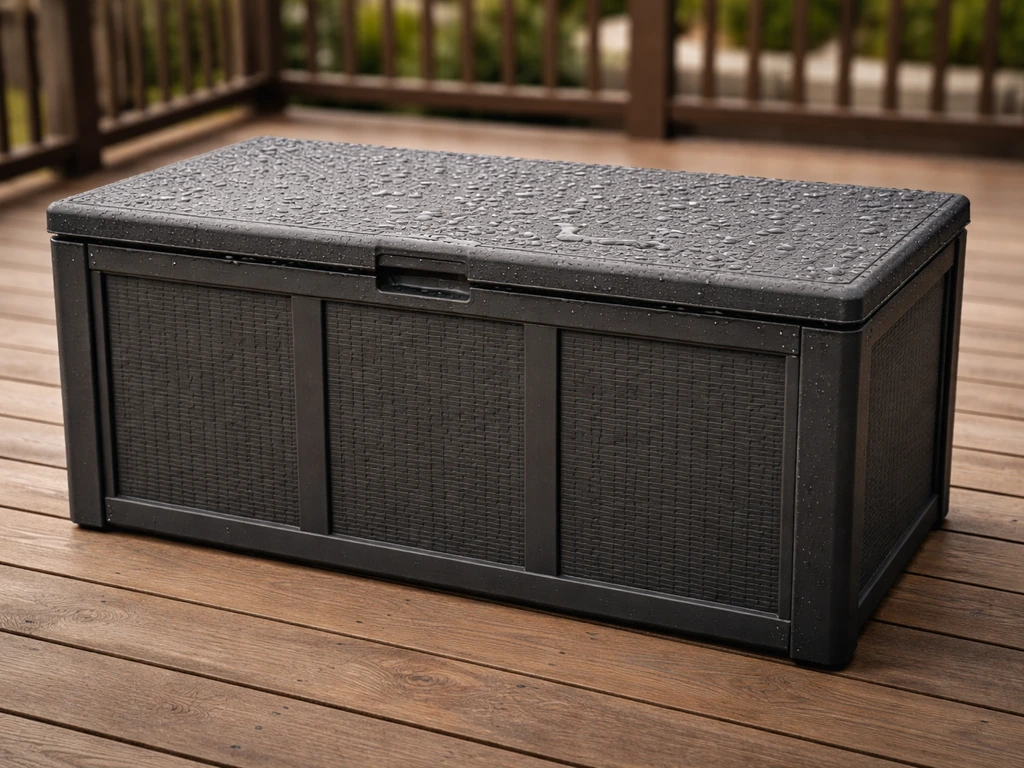
Best Waterproof Patio Storage Box: How to Choose Wisely
Buying guide to pick the best waterproof patio storage box, compare materials, features, and prevent mildew and leaks.
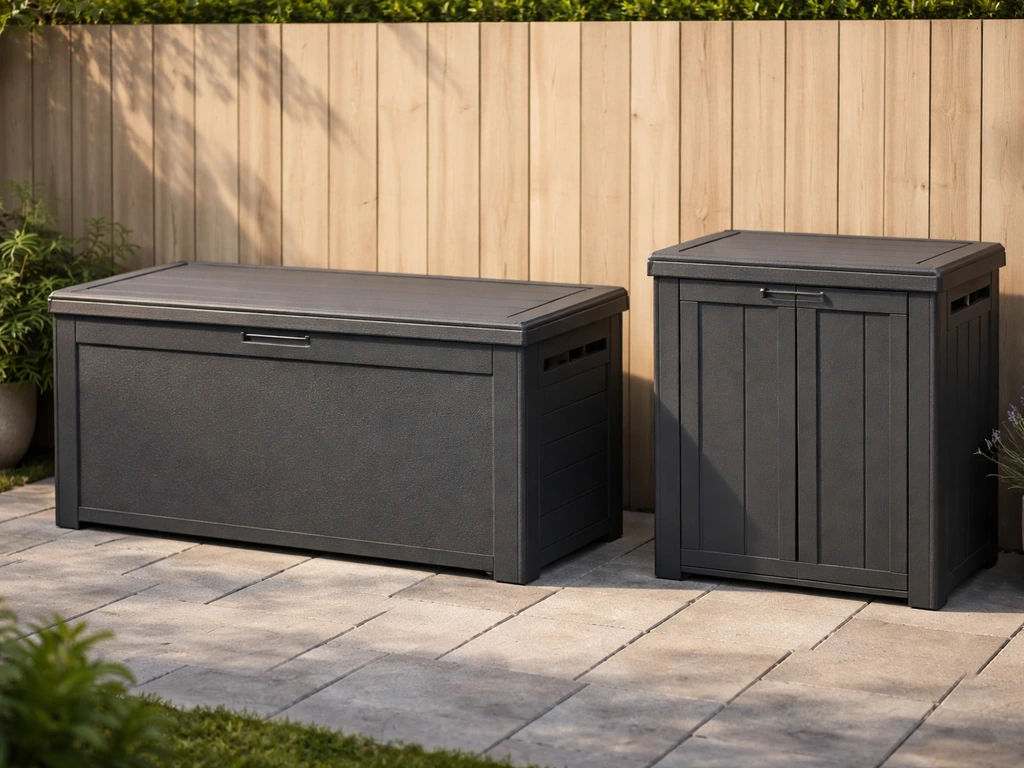
Best Deck Boxes & Patio Storage: How to Choose Size, Materials
Choose the right deck box or patio storage: size, placement, materials, weather protection, and budget picks for real us
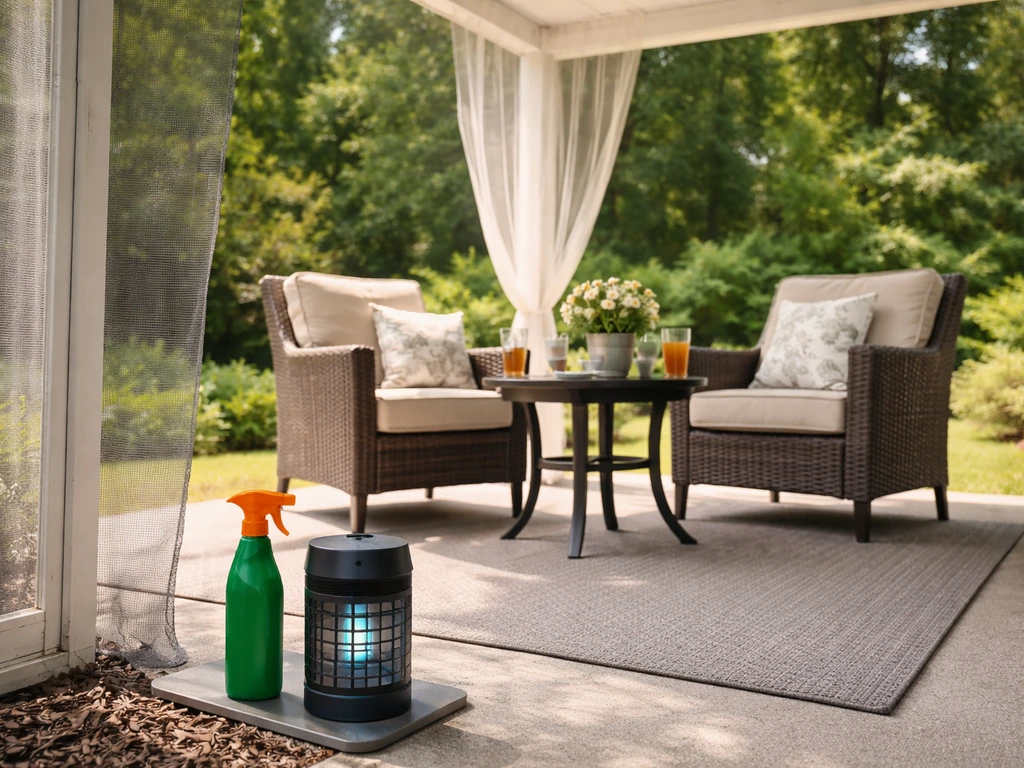
Bug Out Patio Products: How to Stop Bugs Fast
Quick fixes and product picks to stop patio bugs fast with repellent, traps, mesh barriers, and placement tips.