
The best outdoor patio dining setup is one that fits your actual space without crowding, survives your local weather without constant babysitting, and is comfortable enough that you actually use it. If you are setting up an outdoor patio right now, these must have items help you build a setup that feels comfortable and works in your weather must have for outdoor patio.
Best Outdoor Patio Dining: How to Choose the Right Setup

Lark Perry
31 May 2026
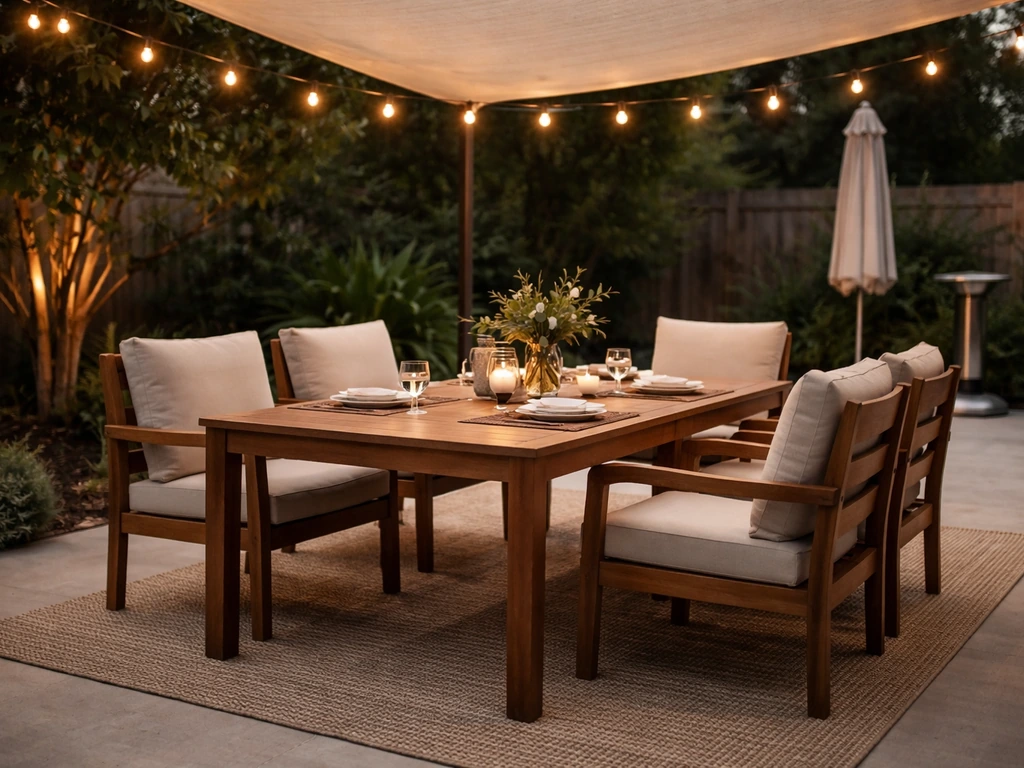
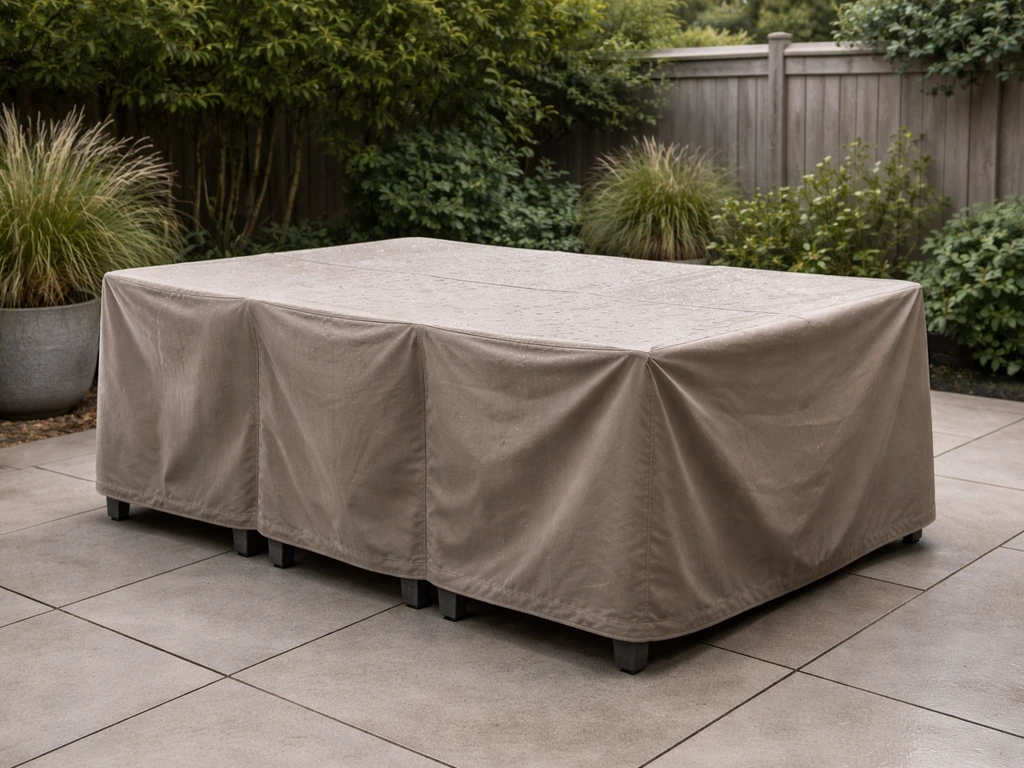
For most people, that means a powder-coated aluminum or teak table with solution-dyed acrylic cushions, a cantilever umbrella or pergola for shade, and a breathable furniture cover for off-season storage. If your patio stays uncovered, choosing the best outdoor furniture for an uncovered patio also means prioritizing weatherproof materials and storage options so it survives off-season exposure breathable furniture cover.
The rest of this guide walks you through exactly how to size it, pick materials for your climate, and layer in the lighting and accessories that turn a patio into a place you genuinely want to eat dinner.
What 'best' actually means for your patio
Before you start browsing sets, you need to get honest about four things: your space, your budget, your climate, and how much maintenance you're willing to do. These four factors drive every decision downstream, and skipping this step is how people end up with a beautiful teak table that warps because they live in Phoenix, or a wrought iron set that rusts in a coastal backyard in Charleston.
Space is the most objective one. You either have room for a 6-person rectangle or you don't. Budget is personal, but there are real-world tiers where the performance jumps noticeably (more on that in the comparison section below). Climate matters because UV exposure, humidity, salt air, and freeze-thaw cycles all attack furniture in different ways. And maintenance honestly trips people up the most: if you're not going to teak oil your table every year or bring cushions inside every night, plan for furniture and fabrics rated to handle neglect gracefully.
Style matters too, but it's the most flexible variable. Most good outdoor dining furniture comes in neutral finishes (charcoal frames, warm teak tones, white or grey cushions) that work across a range of patio aesthetics. If you nail the first four factors, style tends to sort itself out. And once you've locked in your dining setup, you can layer in accessories, decor, and bar furniture to complete the space. Once your dining setup is covered, focus on the rest of the best outdoor patio decor like textiles, planters, and lighting accents so the whole space feels intentional.
Sizing and layout: get this right before you buy anything
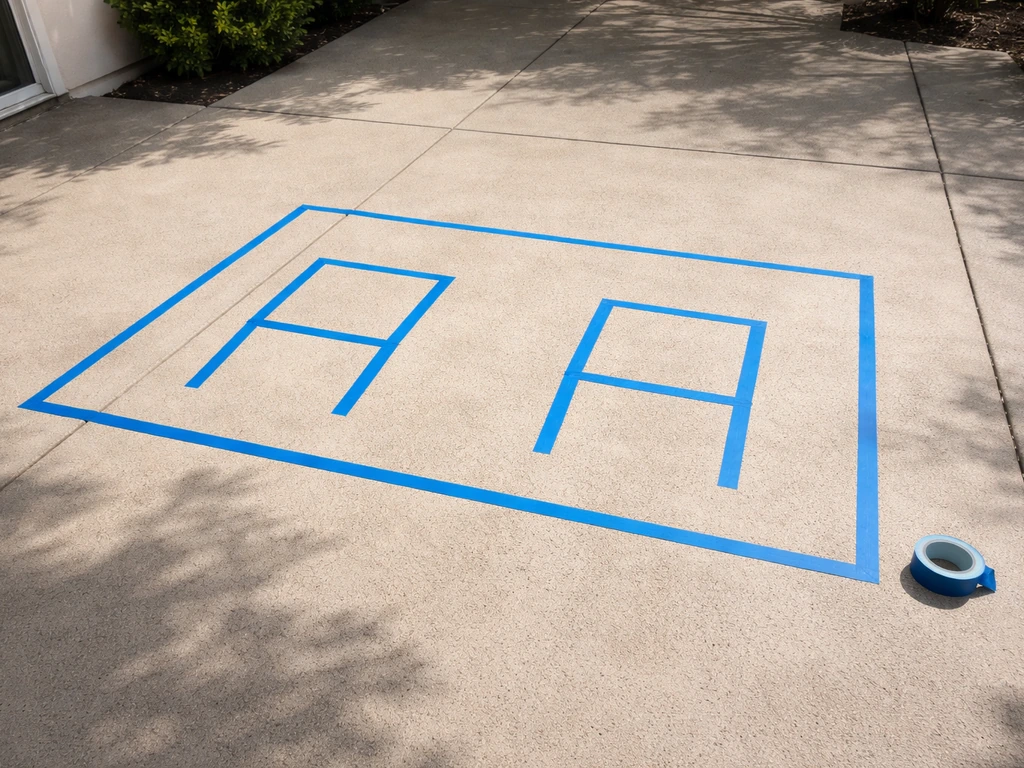
The single most useful thing you can do before ordering a dining set is the painter's tape test. Grab a roll of blue tape, measure out the footprint of the table and chairs on your actual patio surface, and then walk every circulation path at a normal stride. This sounds low-tech, but it saves returns. A lot of people discover their 'large' patio actually fits a 4-person set comfortably and a 6-person set awkwardly.
Clearance numbers to know
- Allow at least 3 feet of clearance on all sides of the dining set so chairs can be pulled out fully and people can pass without squeezing
- Minimum 24 inches from the table edge to a wall, railing, or planter if you're in a tighter spot and traffic is light
- Standard outdoor dining table height is 29–30 inches; pair with chairs that have a seat height of 18–20 inches
- Aim for 10–12 inches of clearance between the underside of the table and the seat cushion top when chairs are pushed in, so legs slide in and out comfortably
- Leave a clear path to any door, grill, or outdoor kitchen so the dining zone doesn't block traffic flow
Table shape and seating count
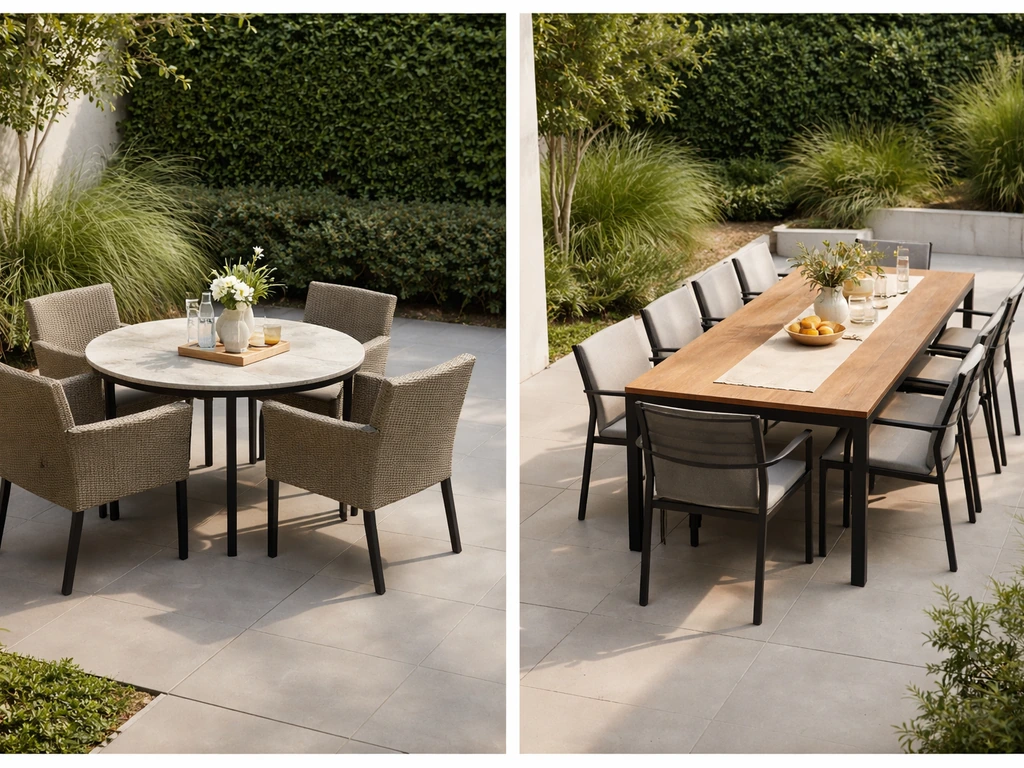
Round tables work well in smaller, square patios and feel more social because everyone faces each other. Rectangular tables are better for long, narrow spaces and scale more naturally from 4 to 8 seats. Oval is a nice middle ground if you like the friendliness of round but need the length of rectangular. For a 4-person setup on a typical apartment patio or small yard, a 36–42 inch round or a 60-inch rectangle is usually the right call. For 6 people, plan on at least a 72-inch rectangle. For 8, you're looking at 84–96 inches, and your patio needs to be genuinely large to handle the 3-foot clearance buffer on all sides.
Best materials for outdoor dining tables and chairs
This is where most buying decisions live or die. The material you choose determines how much maintenance you'll do, how long the furniture lasts, and what it costs to replace or repair. Here's how the main options stack up in real-world use.
| Material | Durability | Maintenance | Best Climate | Relative Cost |
|---|---|---|---|---|
| Powder-coated aluminum | Excellent (rust-resistant, chip-resistant finish) | Very low (wipe down, occasional re-coating if scratched) | All climates, especially coastal/humid | Mid ($) |
| Teak | Excellent (naturally weather-resistant oils) | Low-medium (annual cleaning, optional oiling) | All climates; weathers to silver-grey if untreated | Premium ($$$) |
| HDPE/resin wicker | Very good (UV-stabilized, won't crack or fade quickly) | Very low (hose down) | High-sun, dry climates; also handles rain well | Mid ($–$$) |
| Wrought iron | Good (heavy, stable) but can rust if coating fails | Medium (touch up paint/coating if chipped) | Mild, dry climates; avoid coastal salt air | Mid ($) |
| Natural wicker/rattan | Poor for outdoors (cracks, fades, molds) | High | Covered patios only, mild climates | Low ($) |
Powder-coated aluminum is my default recommendation for most people. It's lightweight enough to rearrange easily, resists rust even in humid or coastal environments, and holds its finish well. Look for brands that offer at least a 3-year finish warranty and a 5-year structural warranty, which is a reasonable benchmark from quality manufacturers. Teak is the splurge choice that genuinely justifies the price: it handles neglect better than almost any other material, and if you let it go silver-grey naturally, it looks great with zero maintenance beyond an annual wash. HDPE resin wicker is the smart pick for high-sun climates because UV-stabilized HDPE won't crack or bleach out the way cheaper synthetics do.
Comfort upgrades: cushions, storage, and weatherproofing
Cushion fabric and thickness
The fabric on your cushions matters almost as much as the frame material. Solution-dyed acrylic (Sunbrella and Perennials are the two most recognized brands) is the benchmark here. The dye goes all the way through the fiber, so even when the surface fades from UV exposure, the color underneath is the same. These fabrics also resist mildew when properly constructed, which is a bigger deal than most people realize if you live somewhere humid. Avoid cheap polyester cushions if you want them to last more than a season or two.
For thickness, outdoor dining chair cushions typically work best in the 2–3 inch range since you're already sitting fairly upright on a dining chair. Deeper lounge or deep-seat chairs call for 4–5 inches. Before ordering replacement cushions, measure seat depth, seat width, and the back height of your chairs, and confirm the table-to-seat clearance numbers above so the cushion doesn't push your knees into the table underside.
Furniture covers and weatherproofing
A cover is the easiest maintenance upgrade you can make, but the cover material matters. Fully sealed vinyl or plastic covers trap moisture and cause exactly the mold and mildew they're supposed to prevent. Look for breathable, water-resistant covers made from solution-dyed polyester or similar materials. When you cover your set, push chairs in first to reduce the overall footprint and prevent wind from getting under the cover. Regularly shake off pooled water and debris, especially after heavy rain. Before long-term seasonal storage, clean both the furniture and the covers and let everything dry completely.
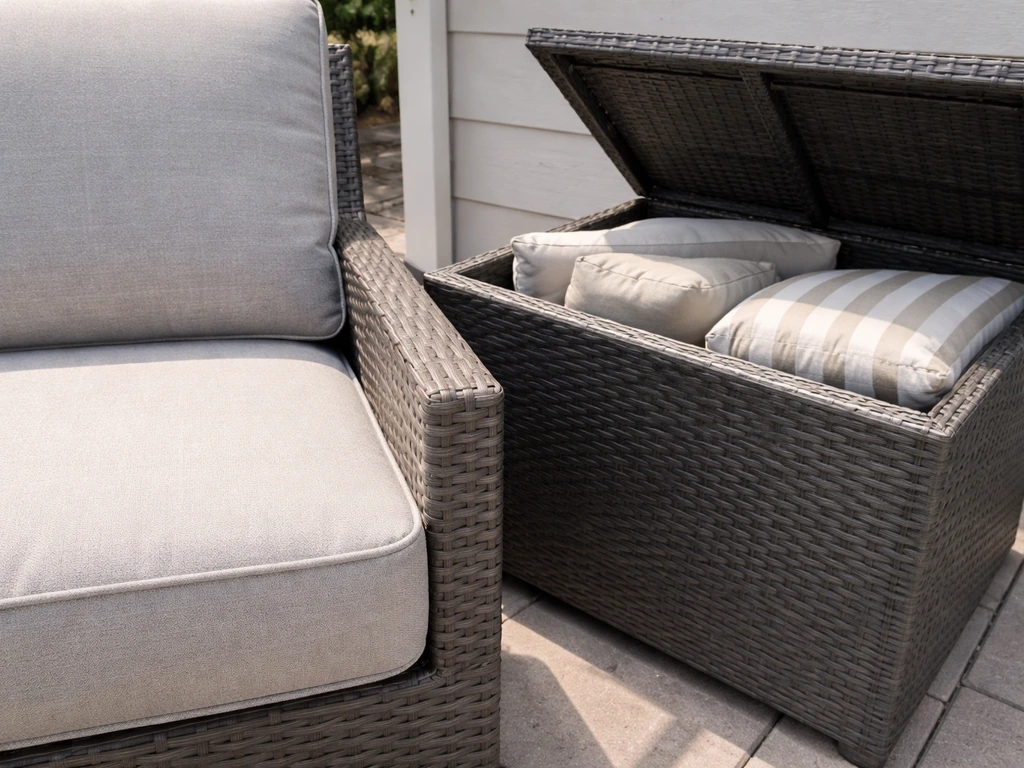
If your set includes cushions and you don't have dedicated storage, a weatherproof deck box is worth buying alongside the dining set. It keeps cushions dry, extends their lifespan significantly, and eliminates the daily in-and-out routine that most people stop bothering with after the first week.
Shade, wind, and weather protection
Direct sun on a dining table is uncomfortable and accelerates fabric fading. Wind makes napkins and tablecloths useless and can tip lightweight chairs. Rain either ends the meal or soaks everything. Solving at least one of these problems will make your dining area dramatically more usable, and the good news is there's a solution at almost every price point.
Umbrellas
A cantilever (offset pole) umbrella is the most versatile option for dining tables because it provides shade without a center pole punching through your table. You can angle it throughout the day to track the sun, and it works whether or not your table has a center umbrella hole. Size it so the canopy extends at least 2 feet beyond the dining set on all sides for real coverage. For wind, choose an umbrella with a vented canopy top, which releases pressure instead of catching it like a sail.
Pergolas and canopy covers
A pergola anchors your dining zone and creates a real sense of destination. When choosing a canopy cover for a pergola, you essentially pick between two categories: fully waterproof covers (sometimes marketed as 'Shield' type) that block rain entirely, and breathable shade covers ('Breeze' type) that block UV and reduce heat but let air move. If you live somewhere with regular rain and want to eat outdoors regardless, go waterproof. If your climate is dry and your main enemy is afternoon sun, a breathable shade canopy is cooler and more pleasant because it doesn't trap heat the way solid covers do.
Wind and exposure strategy
Position your dining zone thoughtfully relative to your home's walls and any existing landscaping. A corner location with two walls nearby provides natural wind protection. If your patio is fully exposed, a privacy screen, lattice panel, or tall potted plants on the windward side can knock wind down significantly without requiring a structural installation.
Lighting and ambiance for evening meals
Good outdoor dining lighting is layered, warm, and never blinding. A single bright overhead fixture kills the mood and makes everyone squint. The goal is multiple light sources at different heights that guide the eye and flatter the space without flooding it.
Aim for a color temperature around 2700K for your primary dining light source. That's the warm, slightly golden tone that feels cozy rather than clinical. For very low ambient light (path lighting, ground-level accents), even warmer amber tones in the 1000–2200K range work beautifully and reduce glare. String lights hung overhead over the dining table are one of the most cost-effective ways to get this right: they're dimmable, widely available, and create exactly the right layered effect.
If you're adding path lighting from the dining area to the house, plan on fixtures spaced roughly every 6–8 feet and sized for about 100–200 lumens each. That's enough to navigate safely without washing out the warmer dining ambiance. A table lantern or a couple of low-level side lights add depth and prevent the table from feeling like an island of light in total darkness.
For wiring, solar path lights work fine for accent and navigation, but for your main overhead dining light, a low-voltage hardwired or plug-in string light on a dimmer gives you much more control. Pair it with a weatherproof outdoor outlet if you don't already have one near the dining zone.
Quick comparisons and a buying checklist by budget and climate
Budget tiers at a glance
| Budget Tier | What You Should Expect | Best Material Choice | What to Skip |
|---|---|---|---|
| Under $800 | 4-person powder-coated aluminum set with basic cushions; functional and weather-resistant | Powder-coated aluminum frame, polyester cushions | Cheap natural wicker, bare steel frames |
| $800–$2,000 | 6-person set with solution-dyed acrylic cushions, better finish quality; umbrella or cover included | Powder-coated aluminum or HDPE resin wicker | Untreated wood, low-grade synthetic wicker |
| $2,000–$5,000 | Teak or premium aluminum 6–8 person set, Sunbrella cushions, cantilever umbrella, deck box | Teak or commercial-grade aluminum | N/A at this tier; focus on verified warranties |
| $5,000+ | Full dining zone with pergola, premium materials, integrated lighting, upholstered seating | Teak, premium powder-coated aluminum | Anything without a structural and finish warranty |
Material recommendations by climate
| Climate Type | Best Table/Chair Material | Cushion Priority | Shade Priority |
|---|---|---|---|
| Coastal/humid (salt air, high humidity) | Powder-coated aluminum or teak | Solution-dyed acrylic (mildew resistance critical) | Waterproof pergola canopy or vented cantilever umbrella |
| Hot/dry/high-UV (Southwest, desert) | HDPE resin wicker or powder-coated aluminum | Solution-dyed acrylic (fade resistance critical) | Breathable shade canopy or large cantilever umbrella |
| Rainy/temperate (Pacific Northwest, Midwest) | Teak or powder-coated aluminum | Solution-dyed acrylic; store or cover when not in use | Waterproof pergola canopy; furniture covers essential |
| Freeze-thaw (Northeast, mountain regions) | Powder-coated aluminum (lightweight to store) | Store cushions indoors in winter | Umbrella removable for winter; full furniture covers |
Your pre-purchase checklist
- Measure your patio and use painter's tape to map the full table + chair footprint including the 3-foot clearance buffer on all sides
- Confirm table height (29–30 in) and chair seat height (18–20 in) match; check 10–12 inch underside clearance for leg room
- Choose frame material based on your climate (aluminum or teak for coastal/humid; HDPE resin for high-UV dry climates)
- Specify solution-dyed acrylic fabric for all cushions; measure seat depth, seat width, and confirm cushion thickness (2–3 in for dining chairs)
- Pick a shade solution: cantilever umbrella if you need flexibility, pergola canopy if you want a permanent anchor (waterproof vs. breathable based on your climate)
- Buy breathable furniture covers and a deck box for cushion storage before your first rainy season
- Plan lighting with layered warm sources at 2700K overhead and 100–200 lumen path lights spaced every 6–8 feet
- Check lead times before ordering: some furniture brands have production and delivery transit times that can push arrival weeks out
- Review warranty terms: look for at least a 3-year finish warranty and 5-year structural warranty on metal frames
- Set a seasonal maintenance reminder: annual cleaning for teak, cushion inspection every spring, cover brush-down after every heavy rain
Once your dining setup is dialed in, the natural next step is filling out the rest of the space. Think about what accessories make the dining zone feel complete: an outdoor rug to define the area, some ambient lighting beyond the dining table itself, or a side bar cart to keep drinks close. If you're working on a larger patio, you may also want to think about how the dining zone connects to a lounge or bar area so the whole space flows together rather than feeling like separate furniture collections dropped in random spots. If you want the best outdoor patio bar setup, plan for easy drink access, durable bar seating, and lighting that works after dark bar area.
FAQ
How do I know my patio can handle an 8-person dining setup without it feeling cramped?
Use a clearances check, not just a seat count. Plan for about 3 feet of walking space on all sides of the table (especially near chair legs) and re-run the painter’s tape test at normal walking speed. If you have doors, gates, or furniture you need to pass behind, subtract that traffic path before deciding on 84–96 inch sizes.
Is it ever a bad idea to choose a cover or canopy if my patio is mostly sunny?
Yes, if you trap heat. For bright, dry climates where the main issue is afternoon sun, breathable shade covers typically feel cooler than fully sealed waterproof options, which can hold heat. If you must use a waterproof cover, consider partial coverage or ventilation panels to reduce heat buildup during longer sunny stretches.
What’s the most common cushion mistake people make when buying replacement covers?
Buying by the chair style name instead of the measurements. Measure seat depth, seat width, and back height, then confirm that the cushion thickness still preserves safe table-to-seat clearance. A cushion that’s even 1 to 2 inches too deep can push knees or make dining uncomfortable.
Can I leave outdoor cushions outside during light rain if I have a cover?
Not for extended periods. Covers reduce daily exposure, but dampness can still linger if the cover isn’t breathable or if pooled water collects. For best results, keep cushions in a deck box or another dry storage solution, and shake off debris after storms, then fully dry cushions before re-storing.
What should I look for in an umbrella base so it stays stable during wind?
Stability starts with weight and fit. Choose a base sized for the umbrella pole diameter and set it so the feet sit fully on the patio surface, not on uneven pavers or rugs. Also, use a vented canopy and close or angle the umbrella during strong gusts instead of treating it like a fixed roof.
Do I need a center umbrella hole to use a cantilever umbrella?
Usually no. Cantilever umbrellas are designed to work without requiring a hole through the table, but you should still check your table’s dimensions and where the base will sit so it doesn’t block access to chairs or bar seating. If you share space with a walkway, test the base footprint before buying.
Is solution-dyed acrylic always the best fabric choice, or are there exceptions?
Solution-dyed acrylic is a strong default, but exceptions are about your routine. If you plan to leave cushions out year-round without drying, you may still prefer additional storage protection like a deck box. In very cold regions, look for cushions rated for freeze conditions to reduce stiffness and fabric degradation over time.
How can I prevent mold and mildew when using a breathable furniture cover?
Keep airflow moving and stop moisture from being trapped. Clean furniture and covers before long-term storage, let everything dry completely, and periodically lift edges to check for trapped condensation after humid spells or heavy rain. Also, push chairs in to reduce exposed gaps where wind-driven moisture can collect.
What’s the minimum lighting setup that still feels “layered” for best outdoor patio dining?
At minimum, use one warm primary source plus an accent. For example, a dimmable main light around 2700K, then add either string lights across the table or low-level path or side lighting. Avoid relying on a single overhead fixture, because it creates glare and reduces depth once people sit down.
How far apart should path lights be if my walkway is narrower than 3 feet?
Use the same 6 to 8 feet spacing as a starting point, but adjust fixture placement to avoid putting lights in the center of a narrow route where shadows from chairs become disruptive. Aim for roughly 100 to 200 lumens per fixture, and verify that the path stays visible without overpowering the dining area’s warmer ambient glow.
Should I choose a bar cart or a built-in bar area for a patio that’s not very large?
If storage and flexibility matter, a bar cart is usually the better first step because it can move away when you need clearance. For very large patios, a bar zone can feel intentional with dedicated seating and task lighting. For compact spaces, prioritize easy drink access and place the cart so it doesn’t block the circulation paths used during dinner.
Next Articles
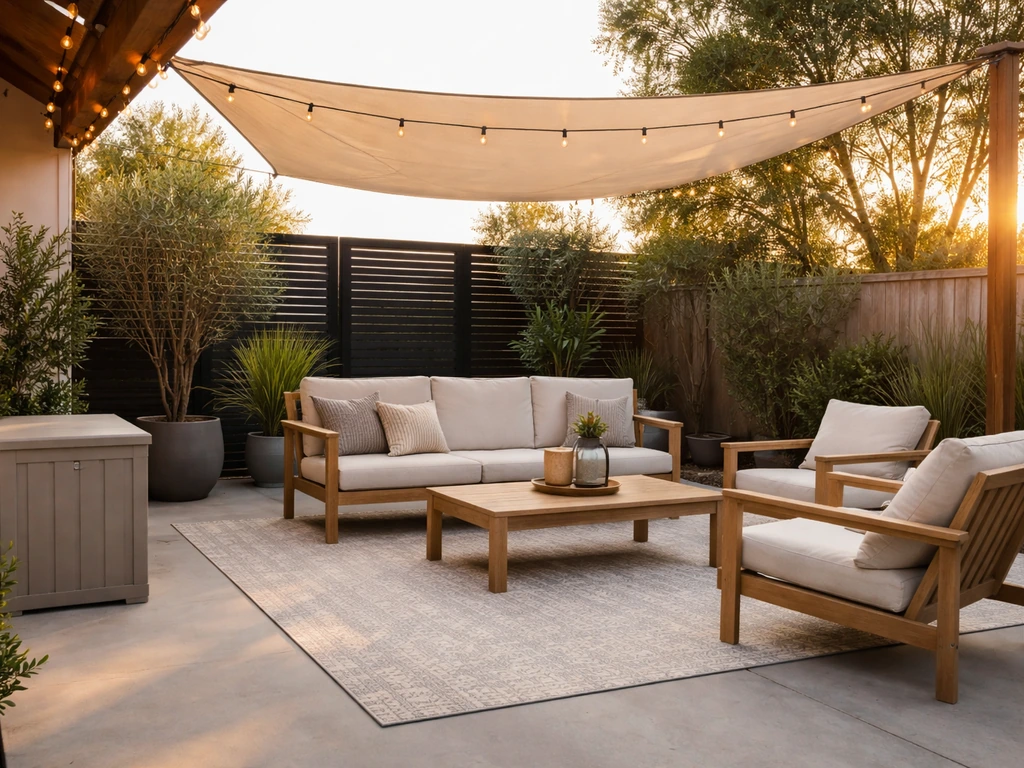
Best Outdoor Patio Accessories: Buyer Guide by Need
Buy the best outdoor patio accessories with a tailored checklist for comfort, lighting, shade, privacy, and weather prot
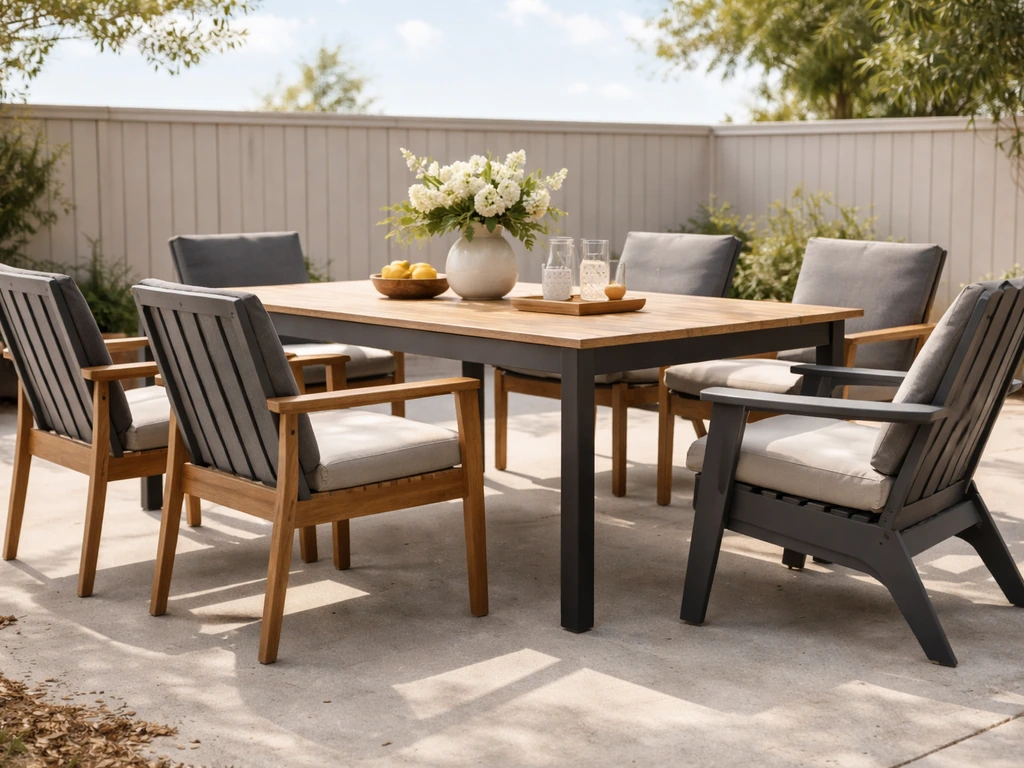
Best Outdoor Furniture for Uncovered Patio: A Buying Guide
Choose the best outdoor furniture for uncovered patios with weatherproof materials, size tips, and a buying checklist.
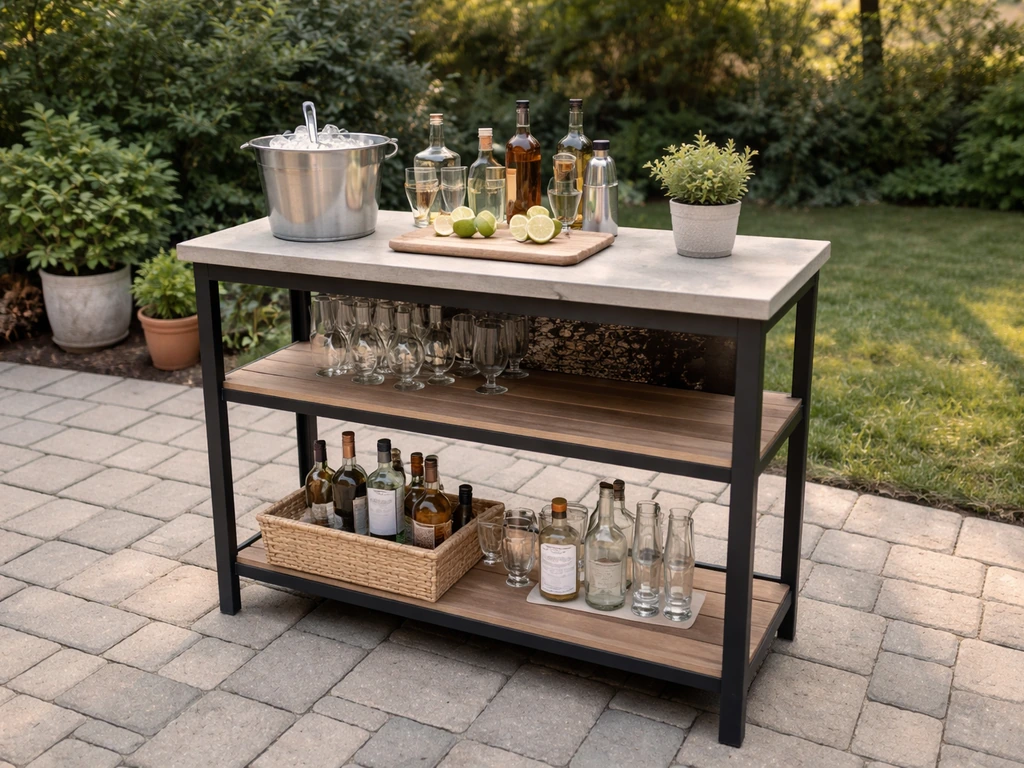
Best Outdoor Patio Bar: Buyer Guide for Any Space
Find the best outdoor patio bar with a size, storage, materials, and maintenance guide plus top picks for any space.