
The best outdoor patio bar for most people is a weather-resistant freestanding bar cabinet or modular outdoor kitchen bar unit, built from powder-coated aluminum or 304/316 stainless steel, with a stone or composite countertop, locking storage, and enough surface space to serve 4 to 8 guests comfortably. If you're renting, working with a small balcony, or need flexibility, a portable folding bar with a built-in ice bin and casters is the smarter move. Which one wins for you depends on four things: how often you entertain, whether you own or rent, your local climate, and how much prep work you want to do at the bar itself.
Best Outdoor Patio Bar: Buyer Guide for Any Space

Lark Perry
17 May 2026
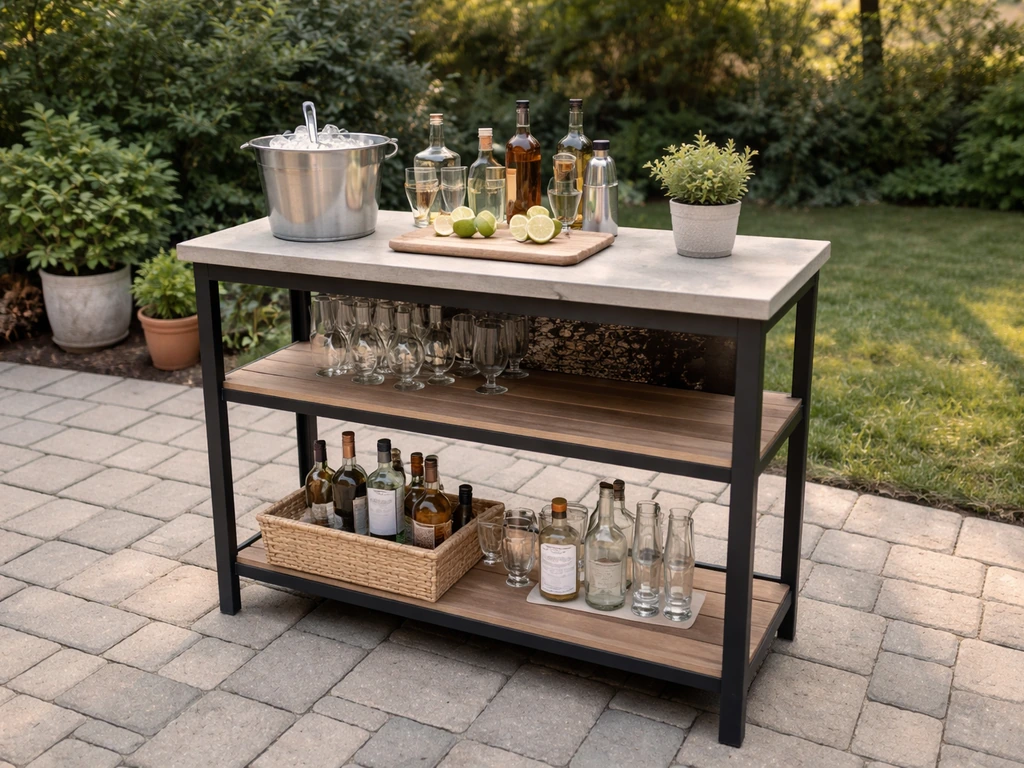
What Counts as the Best Outdoor Patio Bar (Types and Who Each One Is For)
Outdoor patio bars come in a handful of distinct categories, and picking the wrong type is the most common mistake people make. Here's a quick breakdown of what's actually out there and who each format suits best.
- Portable folding bar carts: Lightweight, wheeled units that fold flat for storage. Great for renters, small patios, and anyone who hosts occasionally and wants to tuck the bar away when it's not in use. Some, like those from Belson and The Portable Bar Company, include a stainless steel ice bin (holding up to 95 lbs of ice in larger restaurant-grade versions), a speed rail, and a zippered carry cover.
- Bar cabinets and sideboards (outdoor-rated): Freestanding cabinet units designed for outdoor use. These typically have enclosed storage, drawers, and a proper countertop. Best for homeowners with a defined patio space who want something that looks permanent but doesn't require construction.
- Modular outdoor kitchen bar systems: Systems like Kalamazoo's Arcadia series use interchangeable modules from 12 to 48 inches wide, letting you build a full bar run with refrigeration drawers, cabinetry, and a countertop to match your patio dimensions exactly. Best for serious entertainers and homeowners doing a full outdoor kitchen build.
- Convertible furniture bars: Bar-height tables or storage benches that double as a serving surface. Ideal for small spaces where a dedicated bar footprint isn't realistic.
- Built-in bar structures: Concrete block, stucco, or framed outdoor bars with a countertop and plumbing rough-in. Permanent, expensive, and only makes sense if you own your home and plan to use it for years.
If you're primarily looking for outdoor furniture that complements a bar setup, the guides covering the best outdoor patio dining and best outdoor furniture for uncovered patios are worth a look alongside this one. For uncovered patios, choosing weather-resistant outdoor furniture matters just as much as the bar itself so everything stands up to sun and rain best outdoor furniture for uncovered patios. They cover seating and table options that pair well with the bar formats discussed here.
Getting the Size, Layout, and Serving Workflow Right
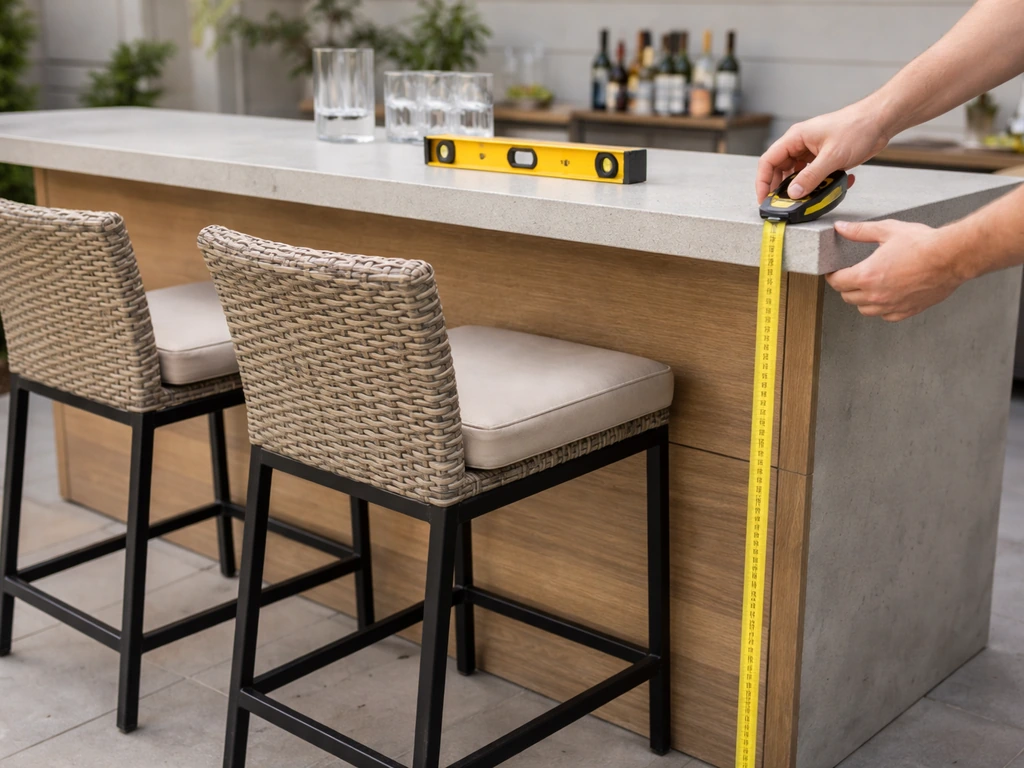
Size mistakes kill a patio bar setup fast. Too small and you're juggling bottles and glasses with no elbow room. Too large and you've eaten up the circulation space that makes a patio feel open. A few measurements to keep in mind before you buy anything.
Bar height is standard at 40 to 42 inches. If you're adding bar stools, look for seats between 27 and 30 inches tall, which gives the recommended 10 to 12 inches of clearance between the seat and the underside of the counter. A 12-inch overhang on the bar top is enough for comfortable seating without the counter edge cutting into guests' legs. These aren't arbitrary numbers. Get them wrong and your bar becomes uncomfortable after 20 minutes.
For circulation, the rule of thumb designers use is at least 42 inches of clearance behind a bar counter, between the serving side and the nearest wall, furniture edge, or grill. If you're building a full outdoor kitchen layout, zone it into prep, serving, and storage areas and resist the urge to cram everything together. You need room to move when you're actually using it, not just when you're measuring it on paper.
For most residential patios, a bar unit between 48 and 72 inches wide is the practical sweet spot. It gives you enough counter surface to stage drinks, hold an ice bin, and keep a cutting board out for garnishes, without dominating the patio. If you're working with a modular system, start with a 48-inch base module and add a 12 or 24-inch extension only if your space genuinely supports it.
Serving Workflow: Think About the Order of Operations
Picture yourself actually making drinks for six people. You need ice first, then your spirit, then a mixer, then a garnish, then a glass. Your bar layout should let you do that in a logical sequence without reaching across people or pivoting constantly. Keep the ice bin on one end (or under the counter), the speed rail for bottles near the center, and the glassware rack within easy reach of where you're mixing. Some portable bar systems let you swap a drop-in ice bin (typically 25 to 95 lbs capacity depending on the model) with an accessory shelf for glassware drying, which is a smart feature if your setup doubles as a serving station and a cleanup zone.
Weatherproofing and Materials That Actually Hold Up Outdoors
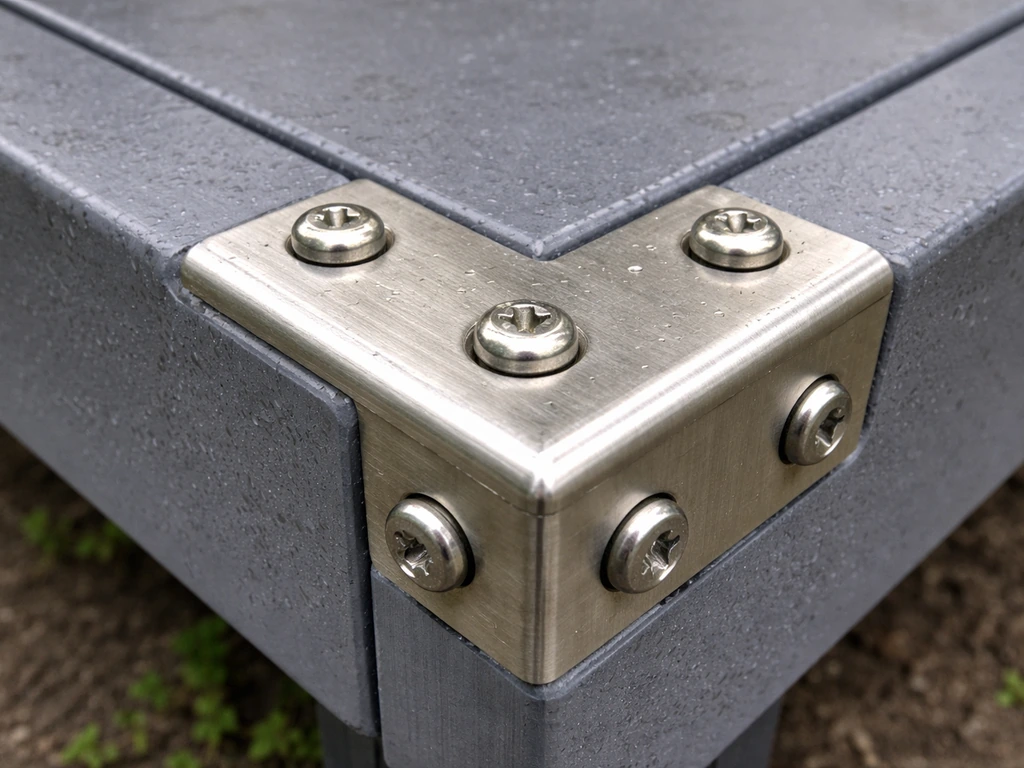
This is where most cheap outdoor bars fail within a season or two. Material selection is the single biggest driver of how long your bar lasts and how much maintenance it demands. Here's what to know before you buy.
| Material | Best For | Watch Out For | Coastal Rating |
|---|---|---|---|
| 304 Stainless Steel | Most climates, frequent use | Salt air environments without extra care | Moderate |
| 316 Stainless Steel | Coastal and oceanfront patios | Higher cost than 304 | Excellent |
| Powder-Coated Aluminum | Lightweight builds, most climates | Scratches exposing bare metal will rust if untreated | Good (with maintenance) |
| HDPE Polymer | Coastal, humid, wet climates | Less structural for large builds | Excellent |
| Teak/Hardwood | Aesthetic-first builds, dry climates | Requires annual oiling, not great for coastal use | Poor to Moderate |
| Composite/Capped Boards | Low-maintenance builds | Can look less premium | Good |
For most homeowners in non-coastal climates, powder-coated aluminum framing with a polyester-based UV-stable finish is the right call. It's light, rust-resistant, and holds up well with basic cleaning. For anything within a few miles of the ocean, upgrade to 316 stainless steel hardware and frames. The difference between 304 and 316 is meaningful: 316 contains molybdenum, which gives it significantly better resistance to chloride (salt) corrosion. Brands like Danver specifically recommend 316 for oceanfront and near-ocean environments, and it's worth the price premium if you're in that situation. For Florida, Gulf Coast, or Pacific Northwest climates, marine-grade HDPE polymer cabinetry is another excellent option because it simply doesn't absorb moisture or rust.
If you go with a powder-coated steel unit (common in mid-range portable bars), check any scratches or dings immediately. Exposed bare metal on a powder-coated frame will rust quickly, especially in humid environments. Touch up with a rust protectant or a clear Krylon-type spray on hinges and any worn spots, and keep up with that maintenance at least twice a year.
Countertop Material: What to Put on Top
Granite and porcelain tile tops are durable and look excellent, but they're heavy and need to be sealed periodically. Concrete is similar. Composite countertops (quartz-look or solid-surface materials) are lighter and low-maintenance, which makes them the practical winner for freestanding bar units you might need to move. For portable bars, the top is usually a laminated or phenolic surface that's easy to wipe down. It won't win any beauty contests, but it handles spills and UV exposure without warping. Avoid natural wood tops unless you're committed to oiling them every season.
Storage, Surfaces, and Accessory Compatibility
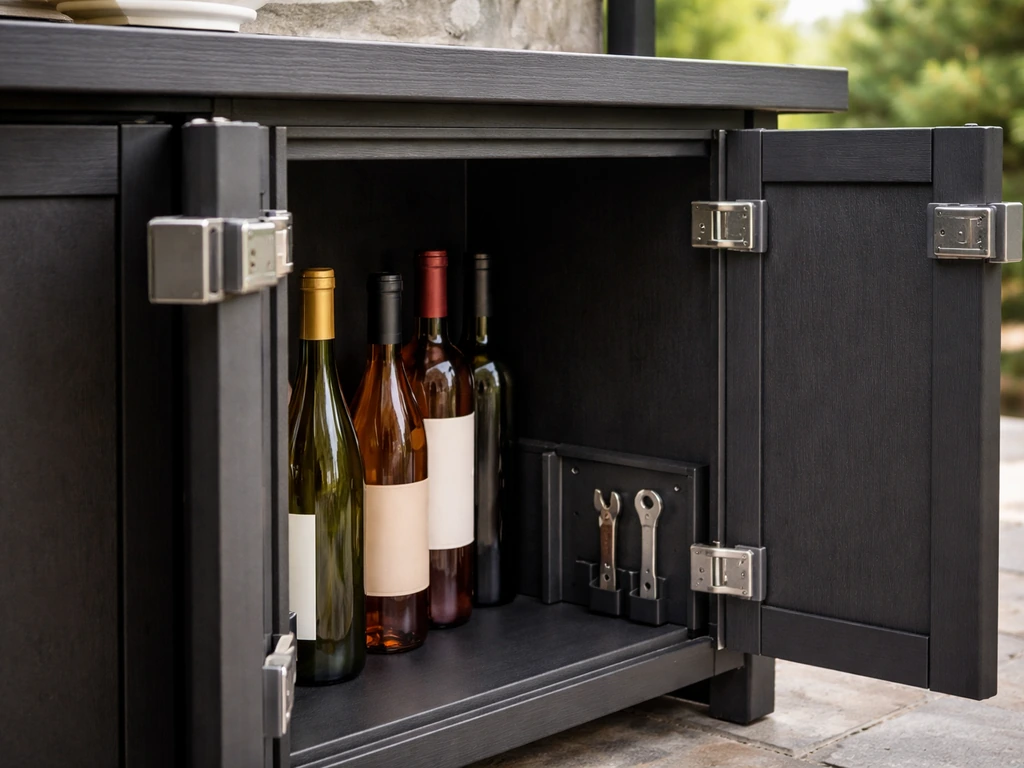
A bar without proper storage becomes clutter instantly. Look for these specific features when evaluating any unit.
- Enclosed cabinet space: Protects bottles and tools from direct sun and rain. Doors with magnetic or latch closures are better than open shelving for outdoor use because they keep bugs, debris, and moisture out.
- Drawers: Bar tools (jiggers, openers, strainers, picks) disappear fast in outdoor settings. A shallow drawer is far more useful than a third open shelf.
- Speed rail or bottle rail: A horizontal rail inside or along the front of the bar keeps frequently used bottles within arm's reach and off the counter, which matters when you're working fast for a group.
- Drop-in ice bin with drain: Essential if you're serving cold drinks without a refrigerator. Look for stainless steel bins with a drain petcock so you can drain melted ice easily rather than tipping a heavy bin.
- Glassware rack: Overhead or under-counter glass racks keep stemware secure. Some modular systems let you swap between an ice bin and a glassware shelf depending on your event setup.
- Towel bar or hooks: Small detail, but having a place to hang a bar towel without it touching the counter matters during service.
- Refrigerator drawer compatibility: If you're going modular, check whether the cabinet system supports an under-counter fridge or refrigerator drawer module. Kalamazoo's Arcadia series, for example, is designed as a complete system that integrates refrigeration drawers alongside cabinetry.
On accessories: if you plan to add lighting (under-counter LEDs or pendant lighting overhead), confirm there's a way to route a power cord before you buy. This is especially relevant if the bar will sit near a covered area, pergola, or shade structure. The best outdoor patio accessories, including bar lighting and shade solutions, are worth thinking through in parallel with the bar itself since adding them after the fact often means working around a setup that wasn't designed for them.
Best Picks by Scenario
There's no single best outdoor patio bar. Here's how to match the format to your actual situation.
Small Patios and Tight Spaces
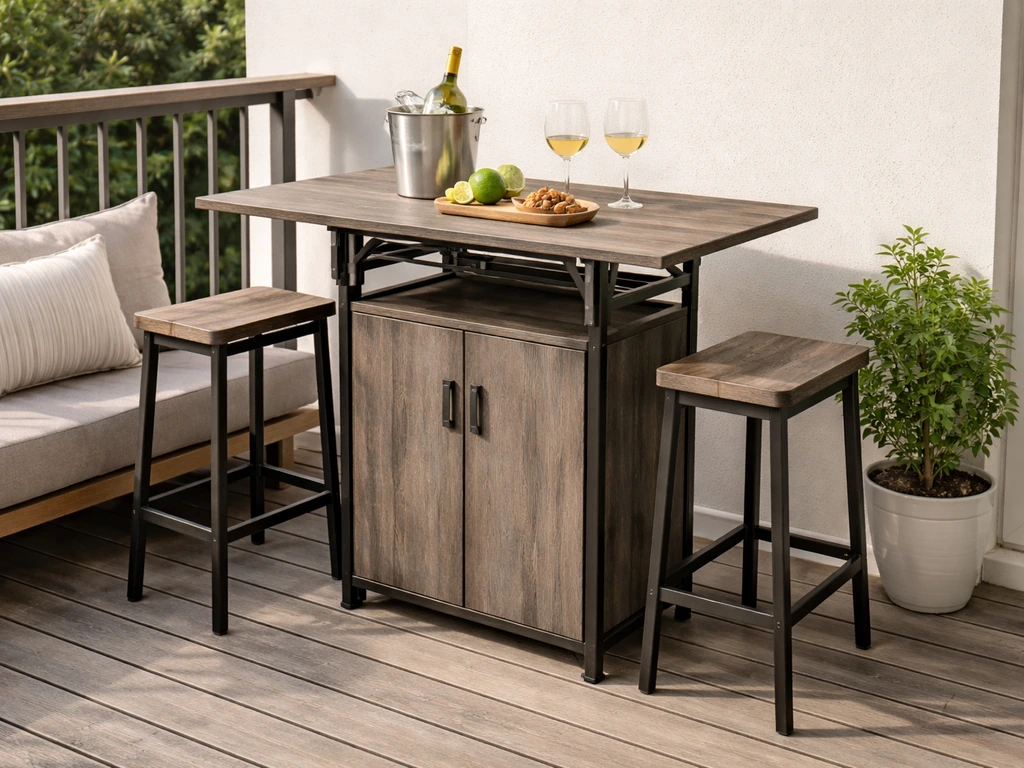
Go with a compact freestanding bar cabinet in the 36 to 48-inch range, or a folding portable bar you can collapse and store when guests aren't coming. Convertible bar-height tables with lower shelving work well here too. The key is that every piece earns its footprint. Avoid sprawling L-shape setups or any unit wider than 48 inches unless your patio is at least 10 feet across with clear circulation room.
Renters and Apartment Balconies
Portable folding bars are the obvious answer, but buy one that's genuinely outdoor-rated. Look for powder-coated aluminum or stainless steel frames, not painted steel, because balconies trap heat and moisture more than open patios. A rolling bar cart with locking casters gives you flexibility to move it indoors when a storm rolls in. The Belson StowAway style bars (folding, with a cover bag and ice bin) are purpose-built for this scenario. Just make sure to check your building's balcony weight limits if you're adding a full ice load, since 95 lbs of ice on top of the bar itself adds up fast. Belson's StowAway folding bar example lists a stainless steel ice bin that holds approximately 95 lbs of ice.
Coastal and Wet Climates
Spend more on materials and less on size. A smaller bar built from 316 marine-grade stainless steel or marine-grade HDPE polymer will outlast a bigger, cheaper unit by years in a coastal environment. Make sure all hardware (hinges, handles, screws) is marine-rated stainless. Powder-coated frames are acceptable if the coating is thick and UV-stable, but expect to touch up scratches more frequently and clean the unit more often. Salt air accelerates corrosion at any exposed metal point, so a material-first approach is non-negotiable here.
Frequent Entertainers
This is where modular outdoor kitchen bar systems pay for themselves. If you're hosting regularly, you want integrated refrigeration, a proper prep surface, enclosed storage, and the ability to add modules as your setup evolves. Budget for 304 or 316 stainless steel cabinetry, a stone or composite countertop, a drop-in ice bin with significant capacity, and at minimum one under-counter refrigerator drawer. Plan the layout around the 42-inch circulation rule. This is a longer-term investment, but a well-built modular bar setup functions as a genuine outdoor amenity, not just a piece of furniture.
How to Compare Options: Quality Signals, Warranties, and Value
Most outdoor bar listings look similar on paper. Here's how to actually separate a good unit from a cheap one that'll look rough by year two. Zinga’s states its Z-Galley is backed by a comprehensive 5-year warranty covering the entire kitchen, including the structure, appliances, countertops, hardware, and cabinetry.
- Check the steel grade: If the listing says 'stainless steel' without specifying 304 or 316, ask. 304 is acceptable for most climates. 316 is required near saltwater. No grade listed usually means it's neither.
- Look at the powder coat specification: A quality polyester-based, UV-stable coating with double-bond application (like the ALUMINA cabinetry system using 6061 marine-grade aluminum with UV-stable powder coat) will last significantly longer than a basic spray coat. Cheap powder coat chips, scratches, and fades within a couple of seasons.
- Read the warranty terms carefully: Trex Outdoor Kitchens offers a lifetime warranty on residential cabinets plus 5 years on powder coat finishes. Kalamazoo covers specific stainless components for 5 years and certain fabricated structures for up to 25 years. Zinga's Z-Galley covers the entire kitchen structure, appliances, and cabinetry for 5 years. A brand that warranties the finish separately from the structure is telling you something important about where they expect wear to happen.
- Test the door and drawer action: Soft-close hinges and drawer slides rated for outdoor humidity changes are a quality signal. Flimsy hinges that rattle or stiffen are a red flag for any bar that will live outside year-round.
- Assess modular expandability: If you think you might want to add a fridge or an ice bin later, buy a system that's designed to accept those modules. Arcadia-style modular widths (12 to 48-inch increments) let you expand without replacing the whole setup.
- Count the real storage: Open shelves sound useful but collect rain, debris, and UV damage. Prefer enclosed cabinets with weatherproof seals, and count only that enclosed storage when comparing models.
- Factor in the cover: A good outdoor bar cover adds meaningful life to any unit by cutting UV exposure and keeping moisture off the counter and frame between uses. Some portable bar systems include a zippered cover; for cabinet-style units, budget for a fitted cover separately if it's not included.
Setting Up and Maintaining Your Outdoor Bar So It Stays Looking New
Setup is straightforward but a few choices here make a big difference in long-term performance. Position your bar on a stable, level surface, whether that's a patio pad, pavers, or deck boards. Avoid placing it directly on grass or soil where moisture will wick up into the frame and accelerate corrosion. If the bar has casters, lock them once it's in position to prevent drift and wobble during service.
For electrical: if you're adding under-counter lighting or a refrigerator drawer, plan the cord routing before everything is in place. Running a cord through cabinetry after assembly is frustrating. Use outdoor-rated extension cords and GFCI outlets only, which should be code in any outdoor installation anyway.
Cleaning and Maintenance Schedule
The simplest maintenance cadence that actually works: clean the entire bar with a mild soap-and-water solution, rinse thoroughly, and let it fully dry before covering it. Do this twice a year at minimum, ideally once before summer and once before winter. For stainless steel surfaces, use a non-toxic stainless steel polish to restore the finish and add a thin layer of protection. For powder-coated frames, check for scratches or chips at each cleaning and touch up any exposed bare metal with a rust protectant or clear coat spray immediately. Don't wait on this. A small scratch left untreated in a humid climate can spread to visible rust within one season.
For coastal environments specifically, increase cleaning frequency to monthly during the season. Salt air deposits on any metal surface, and even 316 stainless will develop surface corrosion if it's not wiped down regularly. Rinse the entire bar with fresh water after any storm or heavy salt-air event, and re-apply rust protectant to hinges and hardware at the start and end of each season.
Cover your bar whenever it's not in use. This single habit extends finish life, protects the countertop, and keeps the interior dry. If the bar is under a pergola or shade structure already, you're partially protected from UV, but you still need a cover for rain and morning dew. If you're thinking about adding a shade structure near your bar, that decision pairs naturally with choosing the bar itself since a covered bar area changes what materials you can get away with and how much maintenance you'll actually need to do.
Beyond the bar itself, the accessories and decor around it matter more than most people expect. Beyond the bar itself, the best outdoor patio decor comes from the right outdoor lighting, complementary furniture, and a few well-chosen patio accessories. The right outdoor lighting, complementary furniture, and a few well-chosen patio accessories can make even a compact bar setup feel like a destination rather than just a storage surface with ice in it. Start with the bar, get it right, and build the surrounding setup from there. As you plan your setup, make sure you cover the must have for outdoor patio essentials so your bar stays practical and comfortable all season.
FAQ
How do I choose between a freestanding outdoor patio bar and a modular outdoor kitchen bar system?
Pick freestanding if you host occasionally and want a complete unit that you can set up quickly, modular if you entertain regularly and want refrigeration plus the option to expand. A practical test is whether you will add at least one more module in the next 2 to 3 years, because modular systems usually justify their cost through customization and workflow upgrades.
What’s the ideal placement for an outdoor patio bar so guests don’t get stuck in traffic?
Place the bar so the main walking path stays uninterrupted, then measure circulation behind the serving side to the nearest obstacle (wall, grill, or seating). If your patio is narrow, shorten the effective bar length by keeping fewer “service zones” on the far end, for example store ice and glassware at one end and reserve the other end only for garnishes.
Can I put an outdoor patio bar on pavers, deck boards, or a patio pad?
Yes, but you should ensure the surface is level and able to support the combined weight of the empty unit plus ice loads. Avoid uneven deck boards or sloped pavers because small tilts can make casters drift and can cause doors and lids to misalign over time.
What type of countertop is best if I spill drinks often?
Composite or phenolic-laminated tops are usually the easiest to live with because they wipe clean quickly and are less likely to be stained by sugary mixers. If you choose granite or tile, you must commit to sealing and prompt cleanup, because grout and sealed surfaces can still trap spills if neglected.
How much bar top overhang do I really need for comfortable seating?
The 12-inch overhang guidance works well for standard patio bar stools, but you should verify with your actual stool models. If you plan stools with wider seats or armrests, you may need a slightly larger overhang or a higher clearance between seat and counter underside to prevent leg and thigh contact.
Is it safe to run electricity to an outdoor patio bar with a refrigerator drawer or lighting?
Use GFCI protection and route cords so they cannot be pinched, kicked, or exposed to standing water. If your bar sits under a cover, still treat it as outdoor-rated wiring, and consider adding a drip loop before the connection point to shed moisture away from the outlet.
What’s the best way to protect a powder-coated bar from rust if it gets scratched?
Touch up scratches immediately, especially at edges, hinges, and handle points where moisture collects. Before applying touch-up, clean the spot and let it fully dry, then apply a rust protectant or clear protective spray, and recheck after a heavy rain because trapped moisture can reactivate surface rust.
Do I need a cover for an outdoor patio bar if it’s under a pergola or shade?
Yes, especially to prevent rain intrusion, morning dew, and salt-air buildup. A cover that fits snugly or is designed to vent slightly can reduce moisture trapped under the fabric, which helps prevent interior corrosion of hinges and metal racks.
What’s the best ice strategy for a small portable patio bar?
If your portable bar uses a drop-in ice bin, confirm the actual capacity and whether the bin can be swapped quickly without moving the whole unit. For frequent hosting, stage ice in a separate cooler before parties and keep the bar bin stocked, because repeatedly refilling a small bin encourages melting and makes spills more likely.
How do I prevent a portable folding bar from tipping or wobbling while serving?
Lock casters once the bar is positioned, and place it on a stable, level surface rather than grass. If the bar has adjustable feet, test them by gently applying side pressure at the serving side, then recheck after a few minutes of use because metal expands and can settle slightly.
What should I look for in storage features so the bar doesn’t become cluttered?
Prioritize locking doors or latches, plus removable or separated storage for items you access at different times (glassware, bottles, garnishes). If you plan to do cleanup at the bar, consider a unit that includes a covered or enclosed area for trash bags or draining tools to keep the service surface organized.
How often should I clean and re-treat the bar in coastal areas?
Plan on rinsing after storms or heavy salt-air exposure and doing a deeper wipe-down and protective reapplication at least monthly during active weather. Even 316 stainless can develop visible corrosion if salt deposits sit on surfaces, so schedule cleanup the same day after windy coastal events.
What’s the biggest mistake people make when buying the best outdoor patio bar for a balcony?
They buy a non-outdoor-rated unit or they underestimate weight once ice and glassware are loaded. Before buying, check building or balcony weight limits and consider how fast you can relocate the bar during storms, a locking caster setup can help, but only if the surface is suitable for rolling.
Next Articles
Must Have for Outdoor Patio: A Practical Checklist
Must-have patio checklist: furniture, comfort, lighting power, weather protection, privacy and next-step upgrades for an
Best Sunbrella Patio Cushions: Top Picks, Guide & Maintenance
Find the best Sunbrella patio cushions: durable, fade‑resistant picks, buying tips, care, and top recommendations.
Alternative to Patio Cushions: Durable, Stylish Options and DIY
Alternative to patio cushions: durable, weatherproof seating options, pros, DIY tips & buying guide.