
The best outdoor patio accessories to buy first are string lights, weather-resistant cushions, a quality furniture cover, and an outdoor rug. If your patio is uncovered, the best outdoor furniture for uncovered patio focuses on weather-resistant materials and protection so you can use the space year-round. Those four alone will transform how much you actually use your patio. After that, the right additions depend on your space size, climate, and how often you entertain. This guide walks through every major category in priority order so you know exactly what to buy, what specs to look for, and what to skip until later.
Best Outdoor Patio Accessories: Buyer Guide by Need
Lark Perry
30 May 2026
Start here: how to match accessories to your space and budget
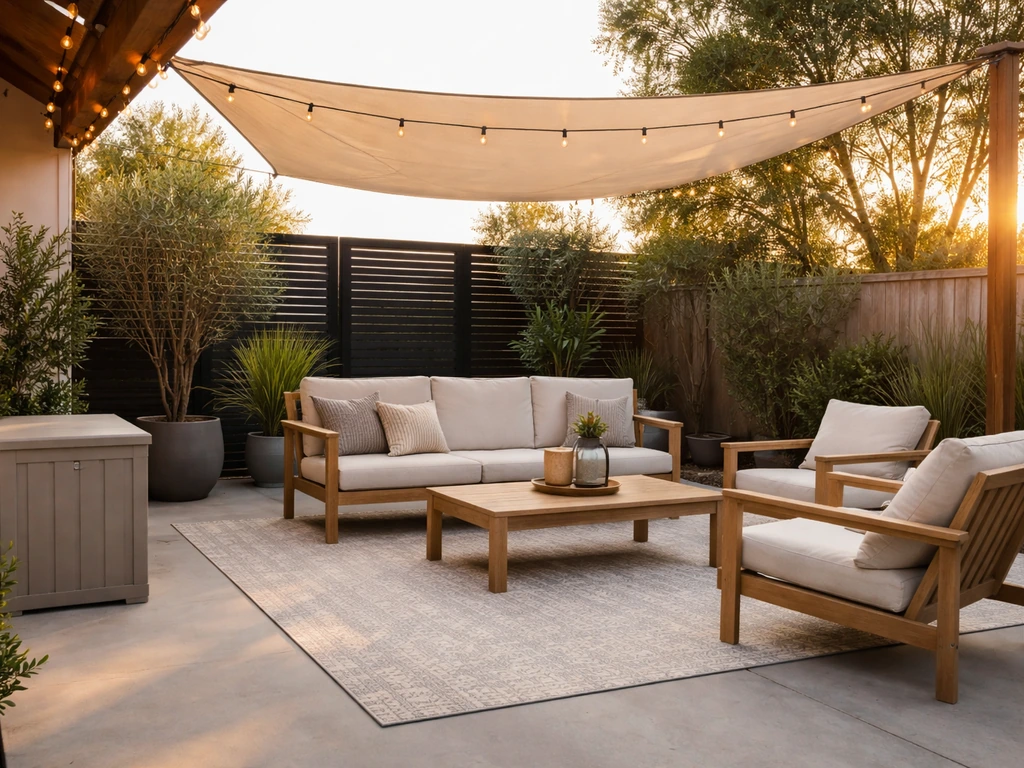
Before you buy anything, answer three questions: How big is your patio? How exposed is it to sun, wind, and rain? And how often do you actually entertain? A small apartment balcony in a rainy climate needs completely different accessories than a large covered backyard patio in a hot, dry region. Buying without that clarity is how people end up with a pile of stuff that doesn't quite work.
For budget, think in tiers. A solid starter setup (lights, cushions, a cover, and a rug) runs $150 to $400 depending on quality. A full entertaining-ready patio with speakers, shade, cooking accessories, and storage will run $600 to $1,500 or more. The smart move is to prioritize comfort and protection first, then layer in ambiance and entertainment gear as budget allows. Skipping protection accessories early almost always costs more in the long run when furniture gets damaged.
- Small patio (under 100 sq ft): focus on one seating zone, compact lighting, a single umbrella or shade sail, and a cover for furniture
- Medium patio (100 to 300 sq ft): add a proper outdoor rug, zone lighting, and basic speaker setup
- Large patio (300+ sq ft): zone the space into dining and lounging areas, use multiple light strings, consider mounted wall speakers, and add privacy screens if needed
- Uncovered/exposed patio: prioritize IP65+ rated lighting, UV-resistant fabrics, and breathable vented furniture covers
- Covered patio: you have more flexibility on materials, but moisture and condensation still matter for cushions and speaker placement
Lighting that actually works after dark
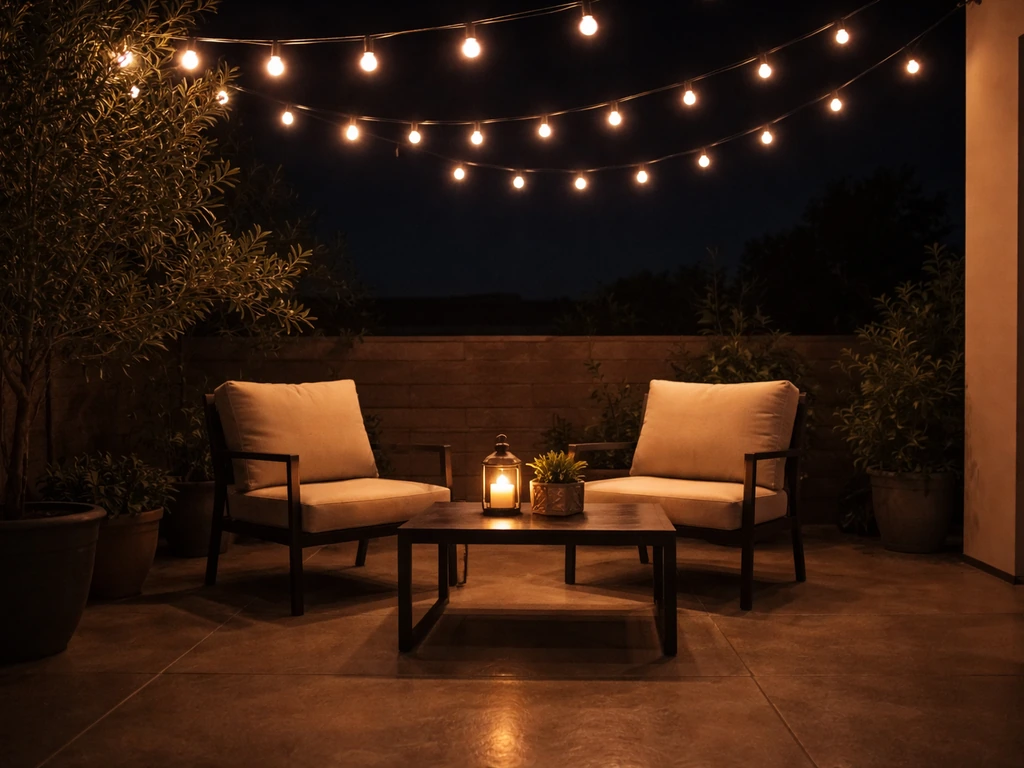
String lights are the single highest-impact accessory you can add to a patio. They set the mood, extend your evening use, and cost surprisingly little to do well. Look for LED string lights rated IP65 or better. The IP rating tells you how protected the fixture is against dust and water. IP65 means it handles water jets from any direction, which covers rain and hose spray. The Brightech Ambience Pro, for example, carries an IP65 rating and is a reliable benchmark for what outdoor string lights should handle.
Color temperature matters more than most people realize. Aim for 2700K to 3000K for patio use. That range produces the warm, slightly amber glow that makes outdoor spaces feel relaxing and inviting rather than bright and clinical. Anything above 4000K will feel more like a work light than a patio vibe. Keep your lighting consistent across the space so the whole patio reads as one cohesive zone.
Your lighting toolkit by category
- String lights: best for overhead ambiance; hang between posts, along fences, or over pergola beams; use IP65 or higher rated fixtures
- Path lights and step lights: practical safety addition; solar-powered options work well for low-maintenance zones
- Lanterns: great for table surfaces and floor accents; battery-operated or rechargeable models are the most flexible
- Smart lighting: Wi-Fi-enabled outdoor lights let you control brightness and schedule via app; useful if your patio use is regular and varied
One non-negotiable for any outdoor electrical setup: always plug into a GFCI-protected outlet. This is basic outdoor electrical safety and is specifically called out in city safety guidance for outdoor electrics. If your patio doesn't have a GFCI outlet, have one installed before you string a single light. It protects against shock in wet conditions and is not optional.
Comfort upgrades that make you actually stay outside
Cushions and fabric
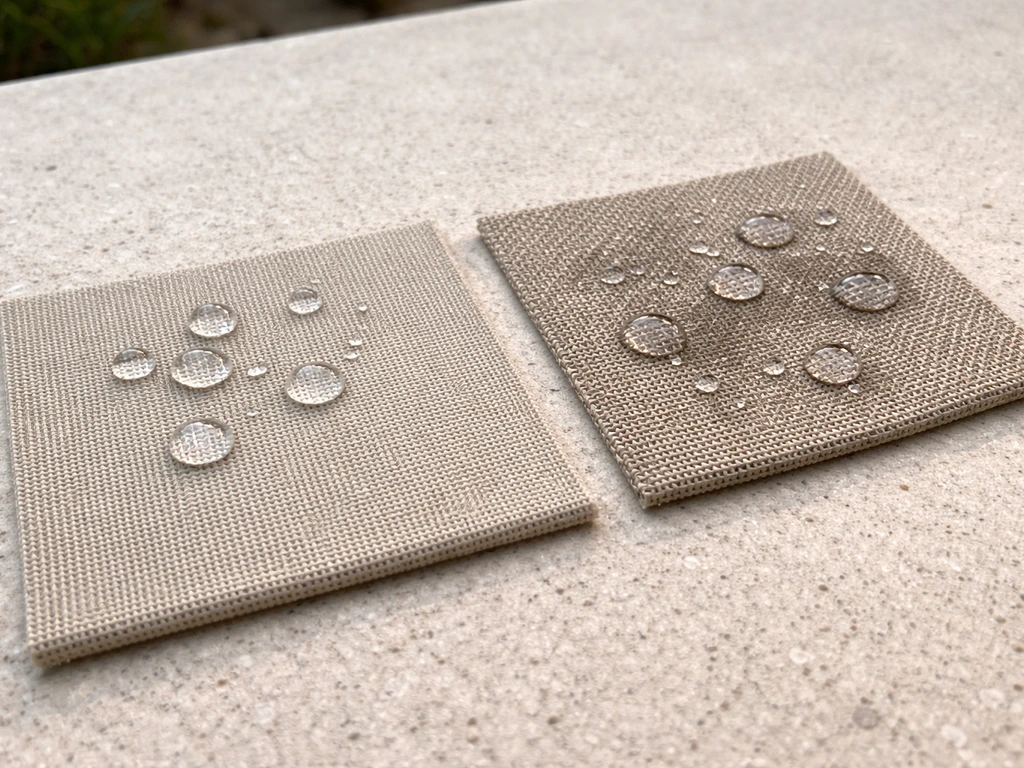
The cushion fabric you choose is the single biggest factor in how long your outdoor seating stays usable. Solution-dyed acrylic (Sunbrella is the most recognized brand) is the top-tier choice. The color is baked into the fiber during manufacturing, which gives it excellent UV and fade resistance, plus natural mold resistance. It's noticeably more expensive than polyester, but it can outlast a cheaper cushion by three to five years in a sunny climate. For the cushion interior, look for antimicrobial open-cell foam that allows moisture to drain rather than stay trapped.
| Fabric Type | UV Resistance | Water Resistance | Mold Resistance | Cost |
|---|---|---|---|---|
| Solution-dyed acrylic (e.g., Sunbrella) | Excellent | High | High | Premium ($$$) |
| Solution-dyed polyester | Good | Good | Moderate | Mid-range ($$) |
| Standard polyester | Fair | Fair | Low | Budget ($) |
| Olefin/polypropylene blend | Good | Very high | Good | Mid-range ($$) |
Outdoor rugs
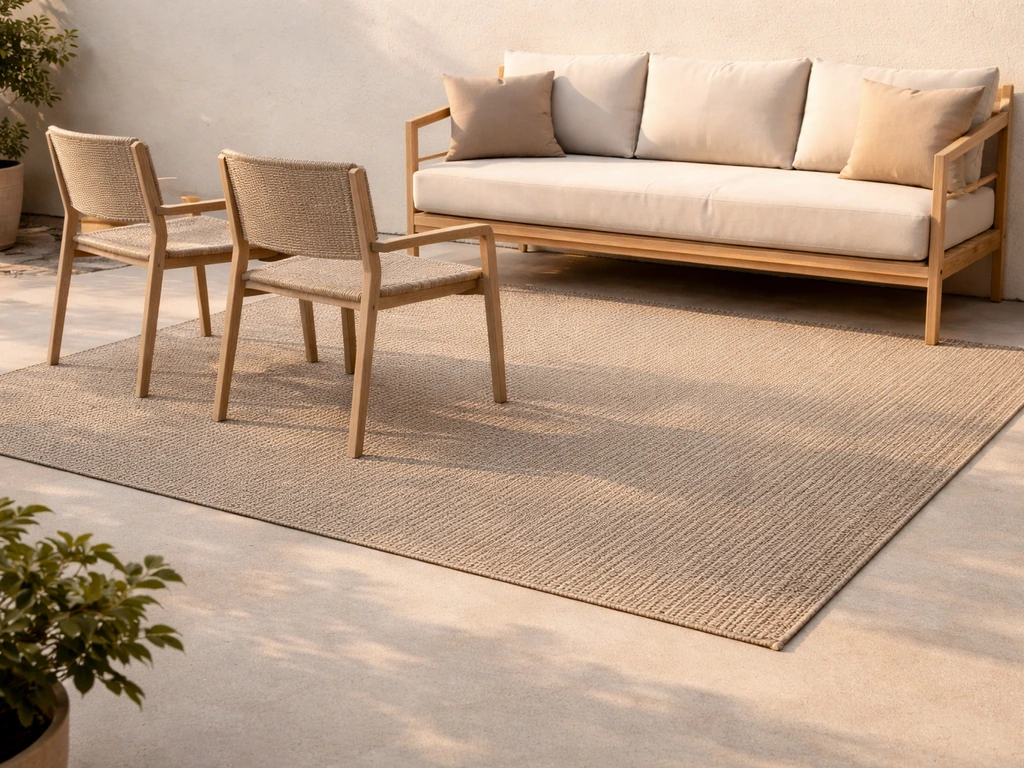
An outdoor rug defines the seating zone visually and adds underfoot comfort. Polypropylene is the best all-around material: it resists water, UV degradation, and mold, and it's affordable. It's also easy to hose down and air dry. If your patio is a slatted deck with gaps for drainage, a water-resistant polypropylene rug works well. If your patio is solid concrete or tile with no drainage, lean toward a fully waterproof vinyl/PVC mat that won't trap moisture underneath. Size-wise, make sure the rug extends at least 12 to 18 inches beyond your furniture legs on all sides so it reads as a defined zone rather than a small accent piece.
Shade and umbrellas
Shade is not optional if your patio gets direct afternoon sun. A 9-foot market umbrella handles a small to medium dining table. With the right setup, you can turn your space into a comfortable area for best outdoor patio dining, even when the weather changes. A 10 to 13-foot cantilever umbrella is better for lounging zones because it doesn't require a center pole. For larger exposed patios, a shade sail (triangular or rectangular) provides more flexible coverage and a modern aesthetic. Look for UV-blocking fabric rated UPF 50+ and make sure mounting points are secured into studs or posts, not just drywall anchors.
Outdoor cooking and entertaining gear
If you grill or entertain outdoors regularly, a few targeted accessories make a huge difference in how smooth the experience is. This isn't about buying every gadget; it's about the three or four things that eliminate friction on a busy cooking night.
- Grill tool set: a long-handled spatula, tongs, and basting brush rated for high heat; stainless steel holds up outdoors without rusting
- Side table or prep cart: even a small wheeled cart next to the grill eliminates the constant back-and-forth to the kitchen
- Outdoor serving station or bar cart: a weatherproof cart with storage keeps drinks, plates, and condiments in one place during a party
- Insulated cooler or outdoor bar setup: a rolling cooler handles drinks without repeated trips; an outdoor bar cabinet (with a lock) keeps tools and spirits organized
- Grill cover: a fitted, weather-resistant cover protects the grill between uses and extends its life significantly
For those who entertain regularly, the outdoor patio dining and bar setups work best when accessories are designed around a zone: a cooking zone near the grill, a serving zone near the bar cart, and a dining zone anchored by the table. The accessories follow the zones. If you're building out a full outdoor bar, that's a deep enough topic to deserve its own planning process.
Weather protection and keeping everything in good shape
Furniture covers: what to buy and how to measure
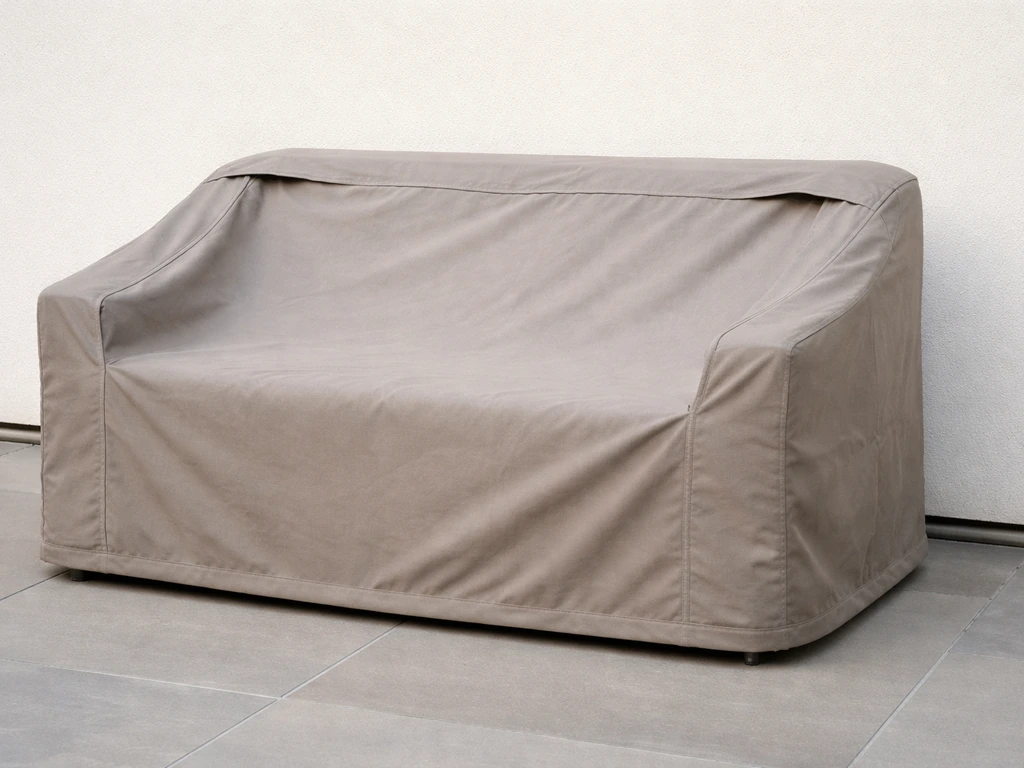
A quality furniture cover is one of the best investments for patio longevity. Here's the counterintuitive part: fully waterproof covers can actually cause damage over time because they trap condensation underneath, which leads to mold, mildew, and rust. The better choice is a breathable, water-resistant cover with vented panels that allow airflow while still blocking rain. Look for covers with tie-downs, buckle straps, or drawstring bottoms to prevent wind from blowing them off.
Measure before you buy. For chairs, measure width, depth, and back height. For sofas and sectionals, measure length, depth, and height. For tables, measure the diameter or length and width. Add about 2 to 3 inches on each side for a cover that fits snugly without being impossible to pull on. A cover that's too large will catch wind and flap around, which can cause scratches.
Winterizing and seasonal storage
At the end of the season, bring in anything that can be stored: cushions, umbrellas, lightweight furniture, decorative accessories, and outdoor speakers. For cushions specifically, air-dry them for 24 to 48 hours before storing. Storing damp cushions leads to mold, odor, and rusted zippers, and no amount of washing fully fixes that. For furniture that stays outside through winter, clean it thoroughly, let it dry completely, and then cover it with a breathable cover. Check outdoor lighting fixtures for corrosion or cracked seals before storing or before the next season begins.
Outdoor audio: speakers that hold up and sound good
Outdoor speakers are one of those categories where the wrong purchase is painful. A standard indoor Bluetooth speaker on a patio will fade, warp, or stop working within a season in direct sun and rain. You need speakers built specifically for outdoor exposure with IP ratings designed for installed (not just occasional) outdoor use. IP66 is the benchmark for permanently mounted outdoor speakers.
It handles strong water jets from any direction. The Sonos Outdoor Speaker, for example, carries an IP66 rating plus a Mil Spec 810 humidity certification, which is what you want for a mounted installation. The Sonos Roam is IP67 (short submersion tested) but Sonos themselves note it is not rated for long-term outdoor exposure, so it's a portable option, not a permanent install.
Wi-Fi vs. Bluetooth: which connectivity is right for your patio
Bluetooth tops out at roughly 30 feet before signal starts dropping, which is fine for a small patio right outside the back door. For a larger patio or one that's farther from the house, Wi-Fi streaming is more reliable because it doesn't have the same distance limitations. The tradeoff is that Wi-Fi speakers require your home network to reach the patio, which may need a Wi-Fi extender or a mesh node. If you're pairing speakers with an outdoor TV, watch for latency: Wi-Fi audio streaming can occasionally have sync delay, which causes audio to lag behind video. Bluetooth is typically lower latency for that use case.
Placement tips that actually improve sound
- Mount wall-bracket speakers at or near ear level when seated for the most natural sound; too high and the sound feels distant
- For small patios close to the house, a stereo pair of wall-mounted speakers provides good coverage without needing multiple zones
- For large patios, consider multiple smaller speakers spread across the space rather than cranking one pair to maximum volume
- Use stainless steel mounting hardware to prevent rust at the bracket; this is usually included with quality outdoor speakers
- Keep the speaker power source on a GFCI-protected outdoor outlet, same as your lighting
Safety, privacy, and the finishing touches that make a patio feel complete
Outdoor mats and entry points
A heavy-duty outdoor mat at the patio entry point keeps dirt and debris from tracking inside, protects the patio surface near high-traffic areas, and adds a visual anchor to the doorway. Look for rubber-backed mats or coir mats with a rubber base for stability. Avoid thin fabric mats that slide or soak up water and stay wet.
Privacy screens and planters
If your patio is visible to neighbors or a street, a privacy screen or a strategic row of tall planters makes a noticeable difference in how comfortable and relaxed you feel outdoors. For solid privacy screens on a windy patio, be careful: solid barriers create significant wind load, which can cause structural issues or tip over during gusts. Mesh screens are a better choice for exposed, windy locations because they let air pass through while still blocking sightlines. Look for grommet-edged mesh screens that you can attach to fencing or posts at multiple points. For planters, large raised planters with tall ornamental grasses or bamboo create a natural privacy buffer that also looks great.
Hooks, hangers, and outdoor organizers
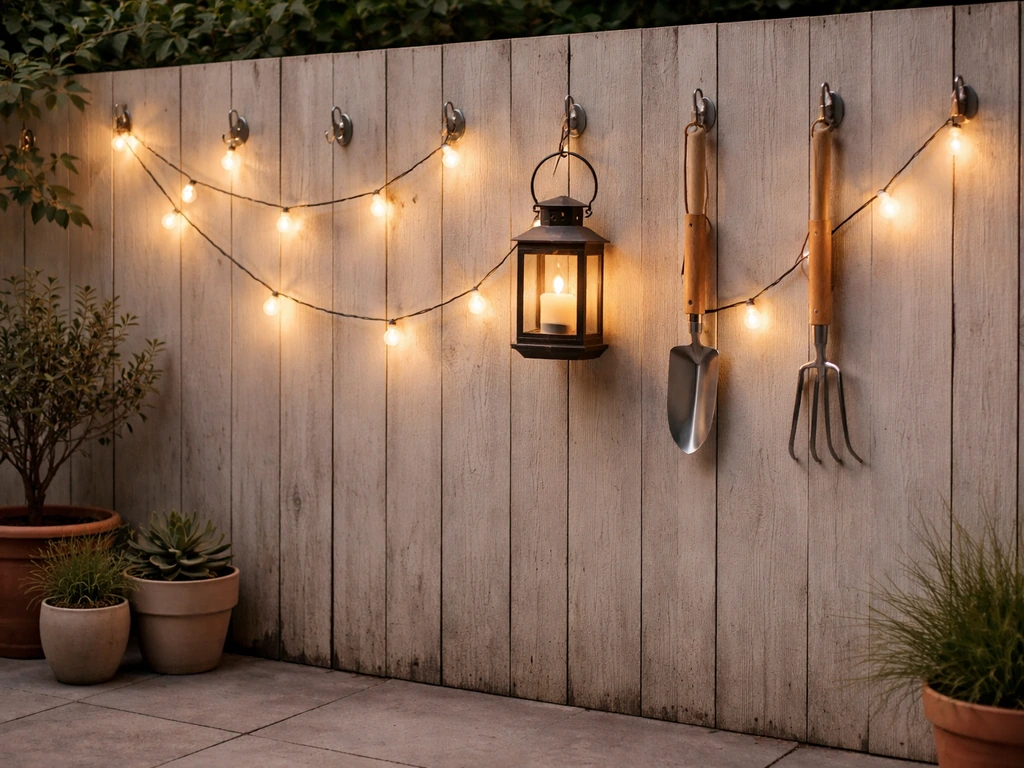
Patio clutter kills the vibe fast. A few stainless steel or powder-coated hooks on an exterior wall or fence panel let you hang string lights, lanterns, tools, and bags without taking up floor space. Weatherproof storage boxes (often called deck boxes) are great for storing cushions, tools, or kids' outdoor toys when not in use. A deck box in the 70 to 150-gallon range handles most medium patio cushion sets.
Where to start and what to buy in order
If you're starting from scratch or working with a limited budget, here's the order that gives you the most usable patio the fastest. Get your furniture covered and protected first. For anyone planning an outdoor patio, these essentials are a must have for outdoor patio comfort and longevity from day one Get your furniture covered and protected first.. Then add comfort with cushions and a rug. Then lighting, because it extends your patio hours into the evening. Then shade, because it makes the space usable during the hottest parts of the day. After that, audio, cooking accessories, and privacy add-ons based on your specific use patterns.
- Furniture covers: measure your pieces, buy breathable vented covers, store cushions separately
- Cushions and rug: solution-dyed acrylic cushions for durability, polypropylene rug sized to the seating zone
- String lights: IP65 or higher, 2700K to 3000K color temperature, plugged into a GFCI outlet
- Shade: market umbrella or cantilever for smaller spaces, shade sail for larger exposed patios
- Outdoor speakers: IP66 for mounted installations, Bluetooth for small patios, Wi-Fi for larger zones
- Cooking and entertaining: prep cart, grill tools, serving station, and grill cover
- Privacy and organization: mesh privacy screen, large planters, deck box, and wall hooks
You don't need everything at once. Even the first two or three items on that list will make your patio genuinely more comfortable and longer-lasting. The accessories in later categories, including outdoor decor, seasonal decorations, and specialty bar setups, are worth exploring once the foundation is solid. Build the practical layer first, then personalize from there.
FAQ
Do I need a cover if I plan to store my cushions every winter?
Yes, for long-term protection you still need a furniture cover, especially for frames, hardware, and cushions you may leave out during shoulder seasons. If you store cushions fully, choose a breathable water-resistant cover for the chair set, and make sure it has tie-downs so wind does not pull fabric tight and create abrasion points.
What’s the difference between an IP65 light and an IP44 light for patio use?
IP44 is protected against splashes and some small water exposure, but it is not designed for hose-level or rain hitting from all directions. IP65 is rated to handle water jets from any direction, so it is the safer choice when lights will sit on open patios, near sprinklers, or where wind-driven rain is common.
Can I use outdoor cushions indoors, or should I match fabric types?
You can use outdoor cushions indoors, but the main issue is moisture control and foam behavior. Outdoor cushions often use open-cell foam to drain moisture, so indoors they may dry quickly but can feel firmer or behave differently than all-indoor foam. If you have pets or spills, outdoor fabric can be an advantage because it is usually easier to rinse and resists mildew better.
How do I stop an outdoor rug from curling or trapping water?
Start by matching the rug material to your patio drainage. If your deck has gaps, polypropylene can work, but use a rug pad or anchors if the wind lifts edges. If your surface is flat concrete or tile, consider a waterproof vinyl/PVC mat designed to prevent moisture from staying under the rug, and avoid rugs that allow water to pool beneath.
What rug size should I use if my seating is L-shaped or the table is off-center?
Instead of sizing only by the table, size by the seating footprint you want to unify. A practical rule is to extend 12 to 18 inches beyond the furthest furniture legs on all outer sides, and if the configuration is L-shaped, treat each side as its own margin so one corner does not look like it is floating.
Do I need to buy a privacy screen that is solid, or is mesh always better?
Mesh is often the better choice for exposed patios because it reduces wind pressure, which lowers the risk of movement or tipping. Solid screens can still work if they are engineered for the wind load and securely anchored into posts or structural members, not just light fencing panels or drywall. If you get frequent gusts, default to mesh.
How can I tell if my patio speakers are truly outdoor-rated and not just “weather resistant”?
Look for an IP rating intended for installed outdoor use (not only “portable” usage). If the listing does not specify an IP number for moisture and dust, assume it is not built for long-term rain exposure. Also confirm whether they are meant for permanent mounting, some models are designed for covered patios only.
Is Bluetooth always worse than Wi-Fi for outdoor sound?
Not always. Bluetooth is often lower latency, which can help if audio is paired with an outdoor TV. Wi-Fi can be more reliable for larger distances, but it depends on network coverage at the patio, and it may introduce occasional sync delay with video. The best approach is to test at the farthest seating spot you will use most.
What should I do with string light wiring and connections before storage season?
Unplug before you remove anything, and keep connectors and plugs dry and off the ground. If lights get heavy condensation in your climate, wipe connections and let everything air-dry before coiling. For long runs, coil loosely and store in a breathable bag so cables do not trap moisture against themselves.
How do I choose shade that won’t damage my patio or walls in wind?
Use the type that matches how your space gets hit by wind. If you mount an umbrella, secure the base properly and avoid setups that rely on weak anchors. For shade sails, confirm the mounting points are secured into studs or posts, and consider adding a slack or retraction approach if your area has strong seasonal gusts.
What’s the most common mistake people make when they start buying patio accessories?
Buying for aesthetics before you solve protection and sizing. The result is often lights without GFCI safety, rugs that trap moisture, or furniture covers that are the wrong size and flap in wind. Measure first, prioritize weather protection, and only then add ambiance and convenience items.
Next Articles
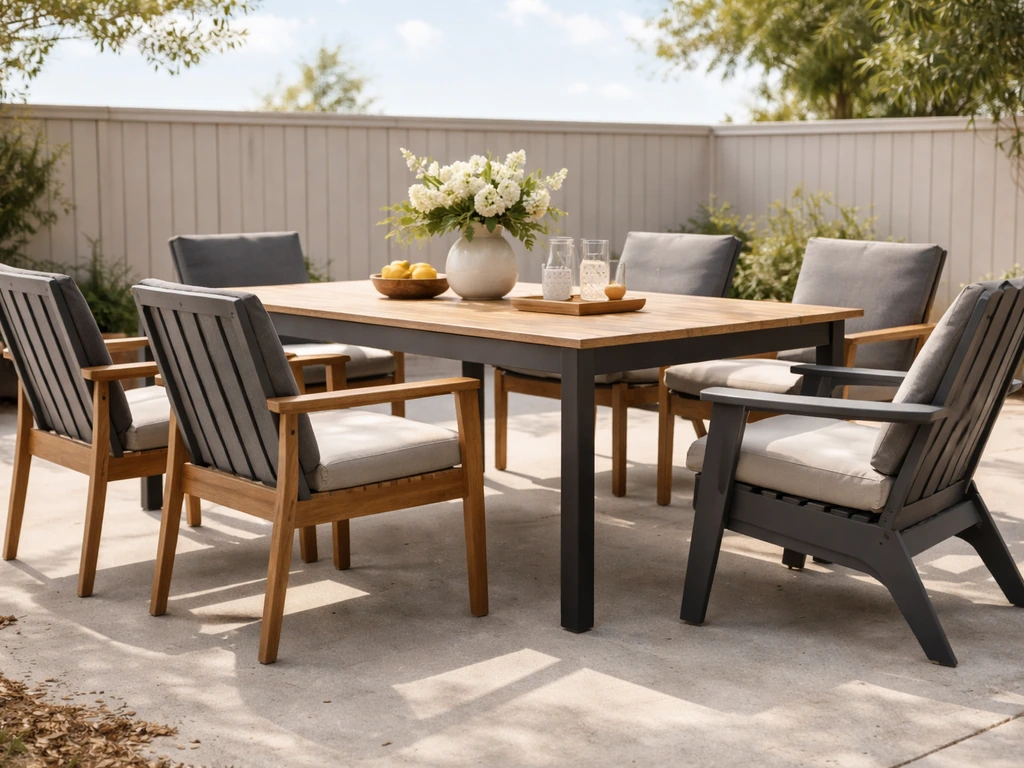
Best Outdoor Furniture for Uncovered Patio: A Buying Guide
Choose the best outdoor furniture for uncovered patios with weatherproof materials, size tips, and a buying checklist.
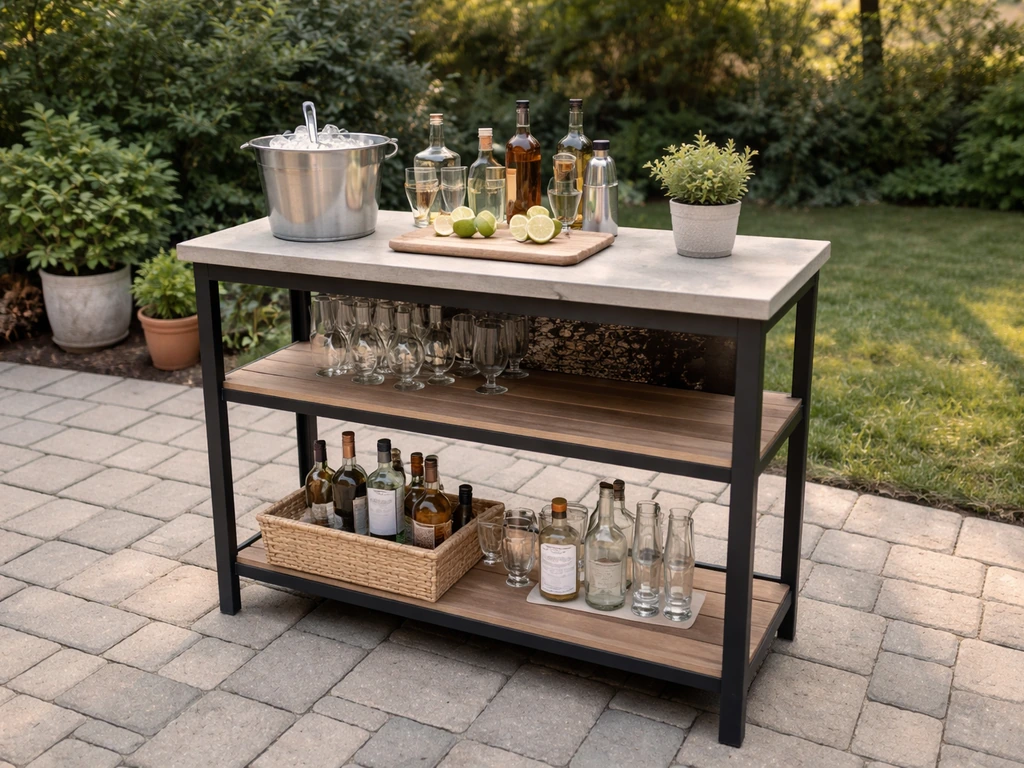
Best Outdoor Patio Bar: Buyer Guide for Any Space
Find the best outdoor patio bar with a size, storage, materials, and maintenance guide plus top picks for any space.
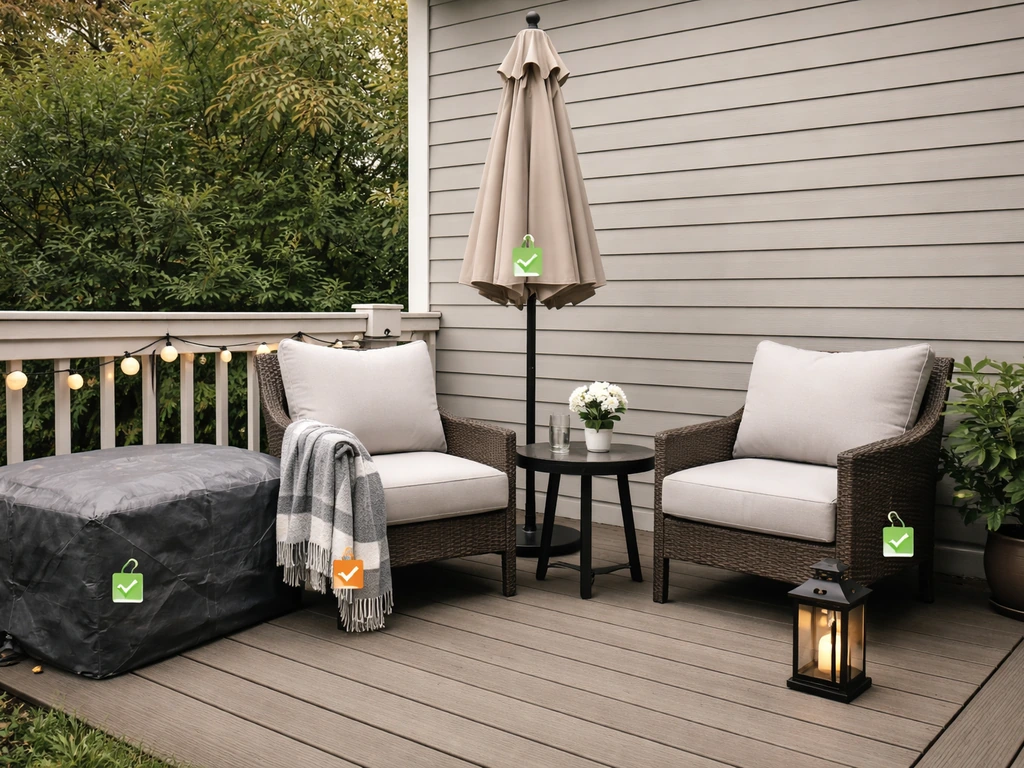
Must Have for Outdoor Patio: A Practical Checklist
Must-have patio checklist: furniture, comfort, lighting power, weather protection, privacy and next-step upgrades for an