
For most homeowners, the best aluminum patio cover is a solid insulated panel cover in a mid-span size (typically 12x16 or 12x20 feet), powder-coated in white or tan, attached to the house with a proper ledger board, and rated for your local wind and snow loads. That setup handles sun, rain, and light snow, looks clean on almost any home, and holds up for decades with almost zero maintenance. But the right answer really does depend on your climate, how you use the patio, and whether you want DIY or professional installation. This guide walks you through every decision point so you can compare options confidently and get an accurate cost estimate before you buy.
Best Aluminum Patio Cover: How to Choose the Right One

Lark Perry
2 Jun 2026
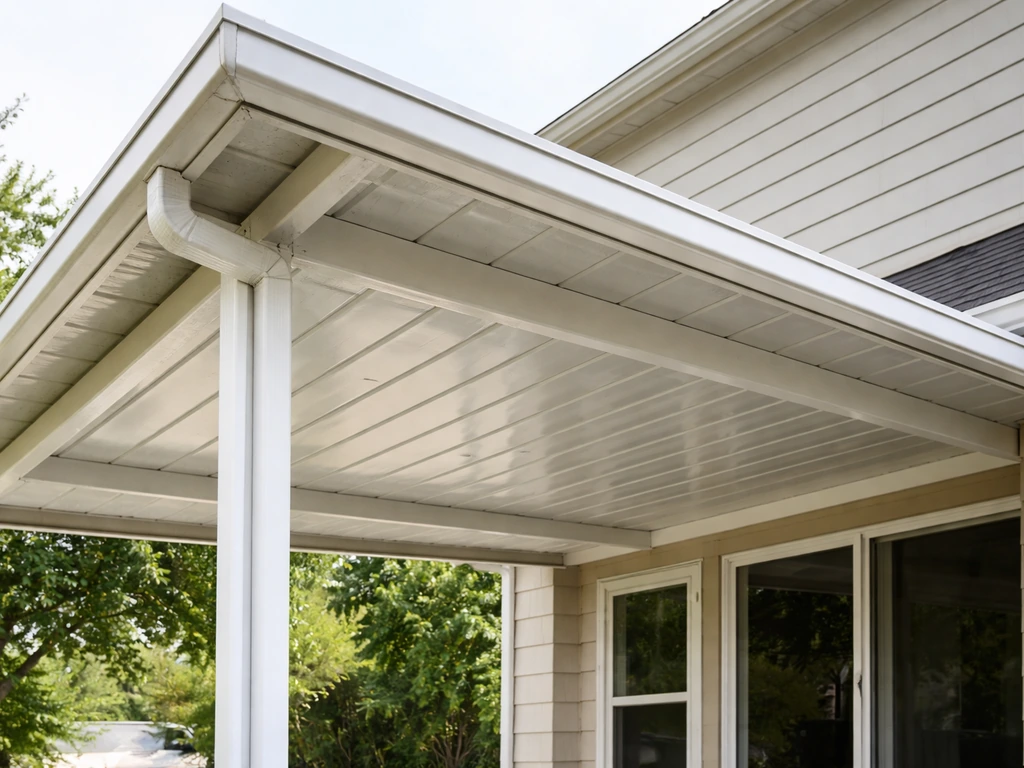
How to choose the best aluminum patio cover for your home
Start with two questions: what do you want the cover to do, and what are your local structural requirements? Those two things narrow the field faster than any brand comparison. A cover that looks great in a Phoenix backyard might be totally wrong for a home in Denver that gets heavy spring snowpack. And a breezy lattice-style pergola might be perfect for light shade but useless if you actually need rain protection.
Attached vs. freestanding
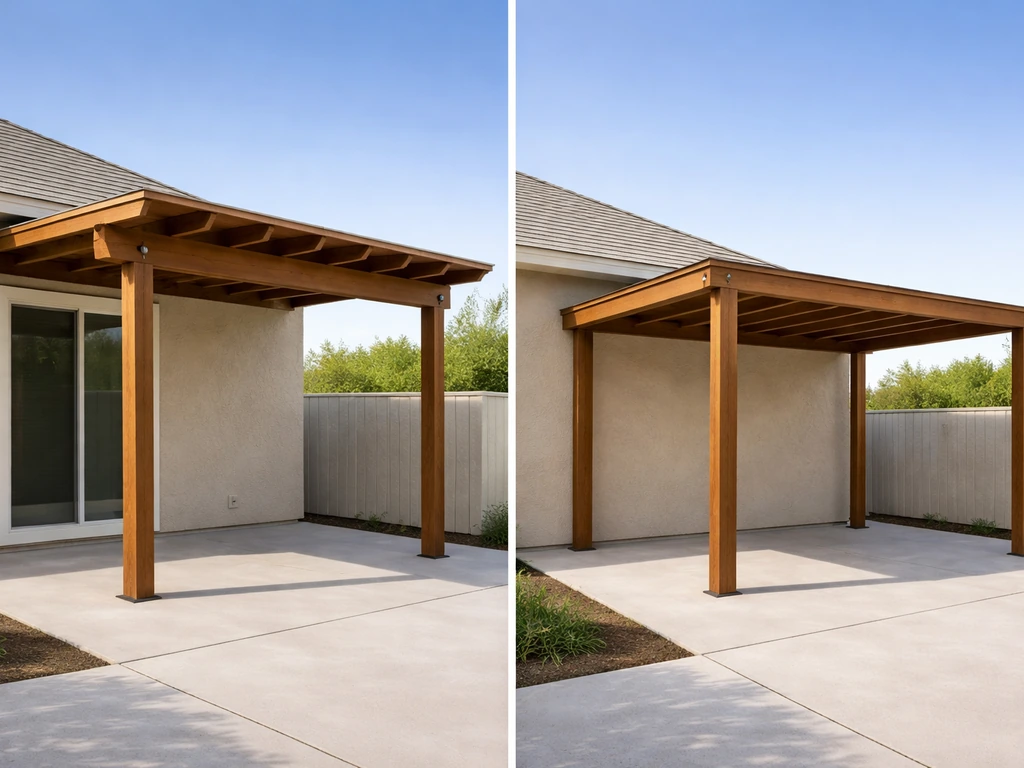
Attached covers bolt to your home's ledger board and are the most popular choice because they're sturdier, cheaper (fewer posts), and integrate with the roofline naturally. Freestanding covers are completely independent structures, which gives you flexibility on placement but requires more posts and a more substantial foundation. For most patios that sit right off the back door, attached is the way to go. If your patio is a detached pad across the yard, freestanding is your only option.
Roof style: open lattice vs. solid panel
Open lattice (sometimes called patio pergola-style) covers filter light and look like a traditional pergola but offer almost no rain protection and less sun blocking than solid covers. Solid panel covers block 100% of rain and direct sunlight. Insulated solid covers go a step further, adding a foam core between two aluminum skins to reduce heat transfer and prevent the condensation drip you can get on hot summer days with single-skin covers. If you live somewhere hot or wet, solid insulated is worth the extra cost upfront.
Measuring your span correctly
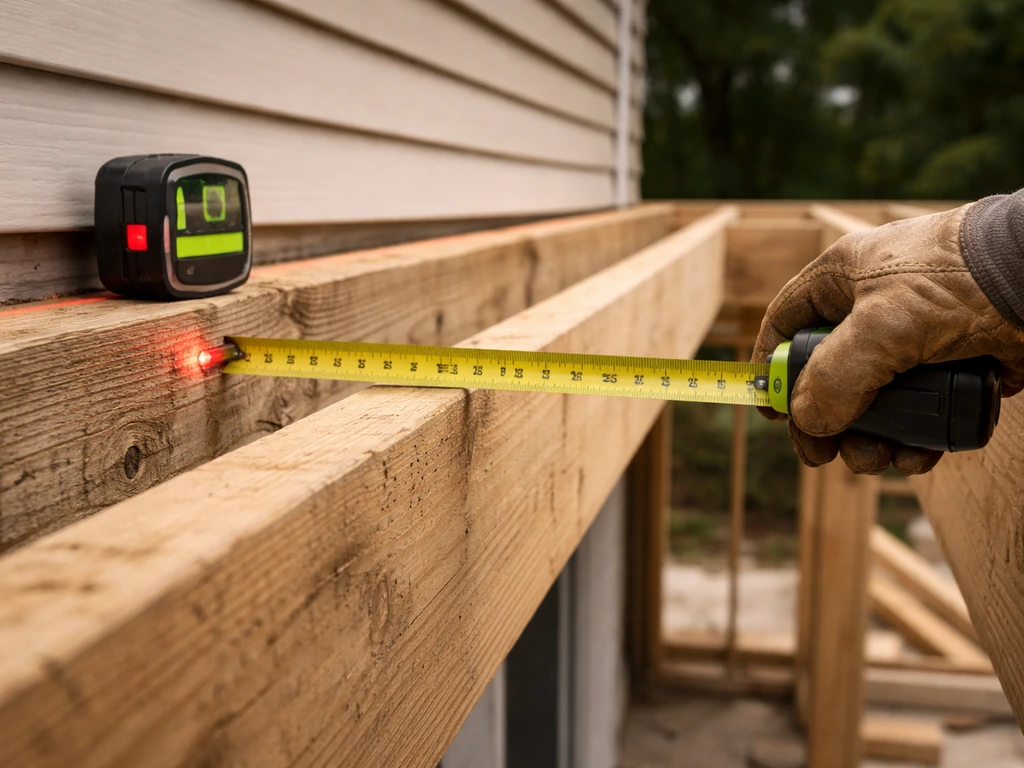
The rafter span is the key structural measurement. For an attached cover, that's the distance from the house ledger to the outer header beam. For a freestanding cover, it's header to header. Span determines what post spacing, rafter size, and beam dimensions you need. Don't eyeball this. Measure the actual distance, note the post locations, and check the manufacturer's span tables before ordering. Getting the span wrong is one of the most common and expensive mistakes buyers make.
Climate and load requirements
Under the 2024 International Residential Code (IRC Appendix BF), patio covers must be designed for all dead loads plus a minimum vertical live load of at least 10 psf (pounds per square foot). In areas where local snow loads exceed that minimum, the actual snow load governs. Wind requirements are tied to your local ultimate design wind speed (Vult) per IRC Tables BF106.4.1(1) and BF106.4.1(2). In practical terms: if you're in coastal Florida or the Texas Gulf Coast, wind rating is the priority. If you're in Colorado, Ohio, or the Pacific Northwest, snow load matters. Tell the manufacturer your zip code. Any reputable supplier will confirm whether their product is engineered for your load requirements or can supply an engineering package.
Key features that separate top-rated aluminum covers
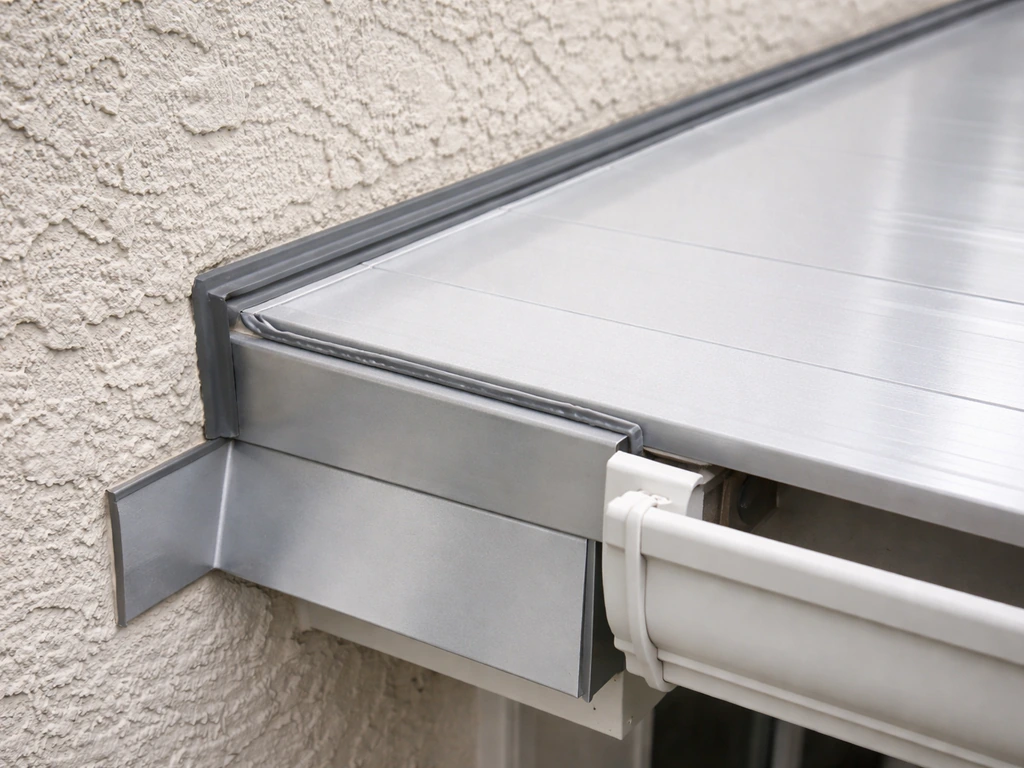
Not all aluminum covers are built the same. The structural extrusion profile, the finish system, the fasteners, and the drainage design all affect how the cover performs five and ten years down the road. Here's what to actually look at when comparing products.
Powder coating vs. paint
Powder coating is the finish standard you want. Research on 6060 aluminum alloy shows that powder-coated specimens corrode at rates roughly 60 times lower than untreated aluminum, and pre-anodized plus powder-coated specimens corrode at nearly 1,000 times lower rates than untreated. That's a massive difference in real-world durability. A baked-on powder coat also resists chipping, peeling, and UV fade far better than liquid paint. Top brands like Alumawood back their finish with a lifetime limited warranty against chipping, peeling, flaking, and blistering under normal use. Always ask what the finish warranty covers before you buy.
Fasteners and hardware
The cover itself may be corrosion-resistant aluminum, but if the fasteners are cheap zinc-plated steel, you'll have rust streaks running down your posts within a few years. Quality covers use exterior-grade hardware: galvanized, mechanically galvanized, aluminized, or 300-series stainless steel fasteners. If a supplier doesn't specify fastener grade, ask. This detail is easy to overlook and hard to fix after installation.
Drainage and pitch
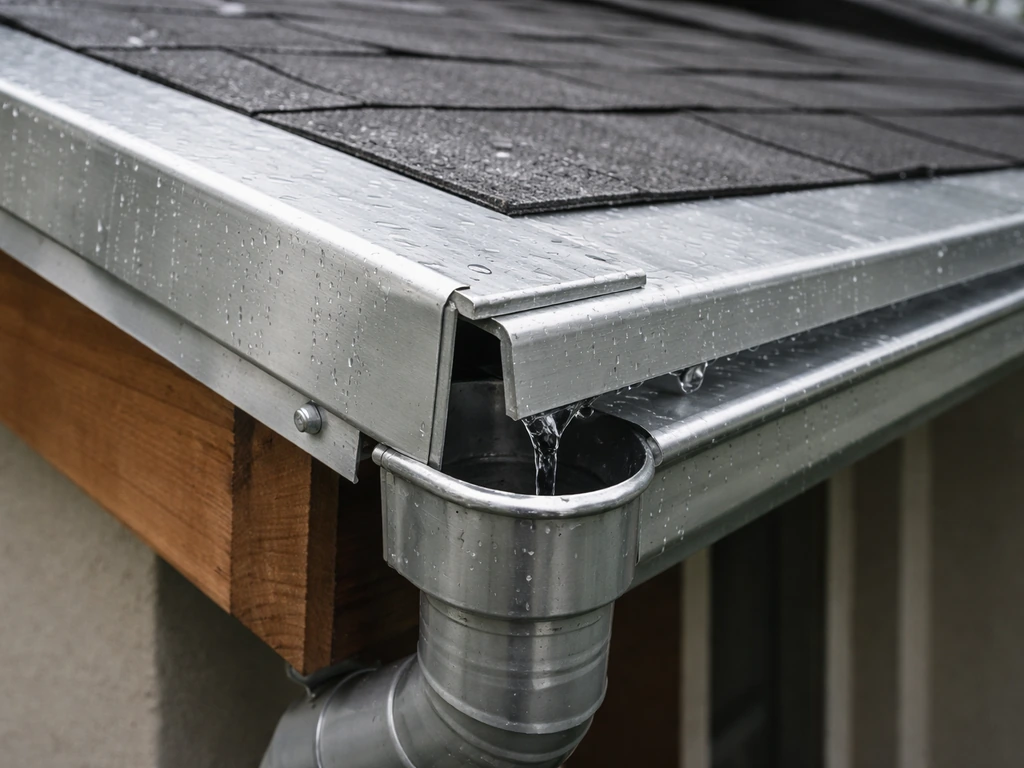
A solid cover needs proper pitch to shed water, and the drainage details matter more than most buyers realize. The panels, gutters, and downspout locations all need to work together. Some insulated panel systems have a specific drain notch orientation that has to be installed correctly for water to flow properly. If the cover is installed flat or the drain notch is reversed, water pools on top and eventually finds its way into the seams. Make sure whoever installs the cover follows the manufacturer's pitch and drainage specifications exactly.
Insulated panel R-value and thermal performance
Insulated covers use a foam core sandwiched between two aluminum skins to reduce thermal transfer. That means less heat radiating down on you in summer and less condensation on the underside of the panels. The foam core also makes the cover noticeably quieter in rain. Insulated covers typically cost 25 to 35 percent more than non-insulated versions, which on a 12x16 foot cover adds a few hundred to a thousand dollars depending on the supplier. In hot climates or if you spend a lot of time on the patio midday, the upgrade is almost always worth it.
Sealing at the wall and gutter ends
Where the cover meets your house wall is a leak point if it's not sealed properly. Good installation practice calls for sealant between the house wall and the flashing, plus sealed gutter end caps. Some manufacturers supply proprietary sealants or gutter plugs for this purpose. Don't skip this step or substitute a random tube of caulk. A bad seal at the ledger is the number one source of callbacks on professionally installed covers.
Best options by patio cover style and use case
The "best" cover changes depending on what you actually need from it. Here's how to think about it by use case.
| Use Case | Best Style | Why |
|---|---|---|
| Rain protection in wet climate | Solid insulated panel, attached | 100% waterproof, foam core prevents condensation, sealed flashing at wall |
| Sun shade in hot dry climate | Solid non-insulated or insulated panel | Blocks direct sun; insulated reduces radiant heat transfer to space below |
| Light shade / open-air feel | Open lattice / pergola-style aluminum | Filters light, feels open, but offers minimal rain or heat protection |
| Heavy snow load area | Solid panel with engineering for local snow load | Must meet or exceed local live load requirements per IRC Appendix BF |
| High-wind coastal area | Solid panel rated for local Vult wind speed | Requires engineering package with wind load tables for your zip code |
| Freestanding / detached patio | Freestanding solid panel with 4 posts | No house attachment needed; requires proper footing/foundation |
| Year-round outdoor living room | Insulated solid panel, attached, with ceiling fan rough-in | Best thermal comfort, rain/sun protection, and accessory compatibility |
If you're in a moderate climate and just want to knock down the sun and handle typical afternoon rain showers, a non-insulated solid panel cover is perfectly fine and saves money upfront. If you're in Phoenix, Houston, or anywhere you want to actually sit outside midday in summer, spend the extra 25 to 35% on insulated panels. You'll use the patio far more often.
Brands and product types to compare (and what to look for)
The aluminum patio cover market has a handful of well-established brands and a larger number of regional fabricators. Here's how the main product types and brand tiers break down.
Alumawood (Patio Kits Direct and regional dealers)
Alumawood is one of the most widely recognized product lines in the DIY aluminum cover space. It's available through Patio Kits Direct and a network of regional dealers. The product covers lattice, solid panel, carport, and awning styles. Alumawood's finish warranty covers chipping, peeling, flaking, and blistering for the life of the original retail purchaser, which is one of the stronger finish warranties in the category. It's a solid choice for DIY buyers who want a structured kit with engineering documentation.
Duralum
Duralum is a long-standing manufacturer with a lifetime warranty claim across their product line. Their insulated cover installation guidelines are detailed and specifically address sealant application at the wall flashing and gutter end details, which is a good sign that the product is engineered for real-world water management. Worth comparing on price and available colors against Alumawood in your region.
Alumashade and Solara adjustable covers
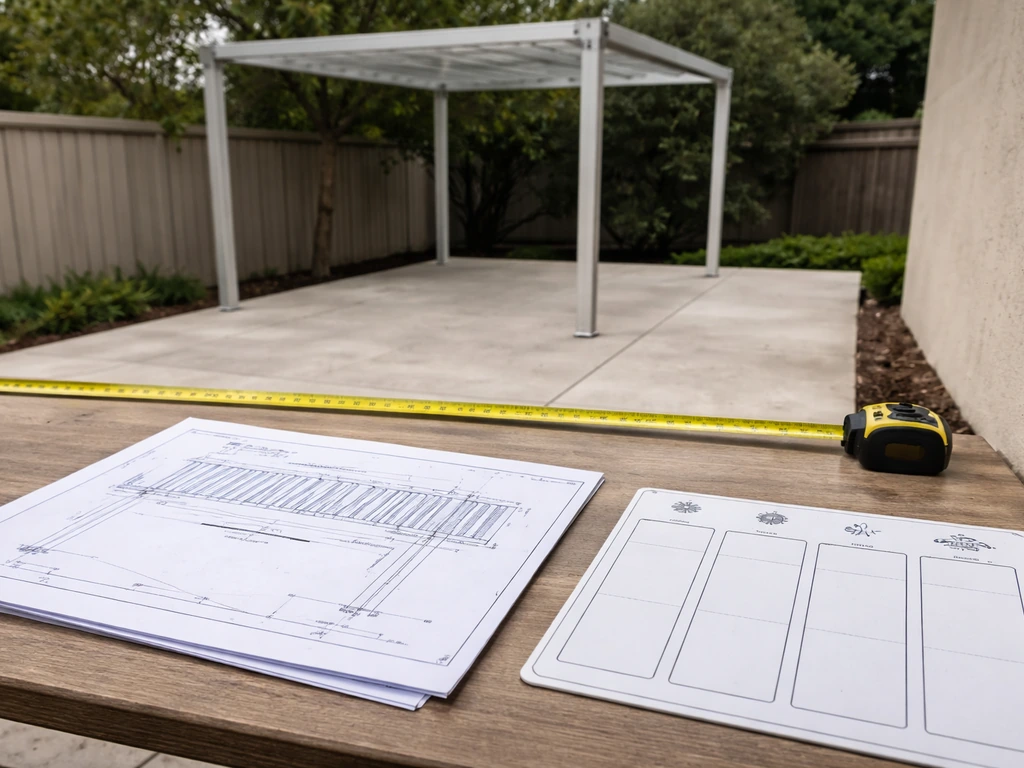
Alumashade offers solid technical documentation for DIY buyers, including clear span measurement definitions and engineering package details for ledger board attachment. The Solara adjustable cover system is a higher-end option that lets you open and close the roof panels, giving you control over light and ventilation. Adjustable covers cost significantly more than fixed systems but are excellent for year-round covered patio rooms where you want flexibility.
ScreenHouse and insulated system specialists
ScreenHouse focuses on insulated panel systems with foam core construction and thermal break detailing to minimize condensation. If heat and moisture management are your top concerns, an insulated-specialist brand like this is worth a close look alongside the general-market brands.
What to actually compare across brands
- Finish warranty: lifetime vs. limited term, and what it actually covers (chipping, fade, peeling)
- Engineering documentation: do they provide stamped engineering for your load zone, or just a generic spec sheet?
- Fastener grade: galvanized, stainless, or aluminized hardware included?
- Insulated panel thickness and foam core density (affects R-value and rigidity)
- Available colors and whether custom colors add cost or lead time
- Span capability: maximum rafter span before an intermediate post is required
- DIY kit vs. fabricated-to-order: kits ship faster but may have fewer custom size options
Costs, installation (DIY vs pro), and timelines
Aluminum patio covers run from about $12 to $75 per square foot installed, with the realistic range for a standard solid panel cover landing between $20 and $50 per square foot for professional installation. If you're trying to budget right away, you can use these ranges as a starting point for how much do aluminum patio covers cost in your area. On a common 12x16 foot (192 sq ft) patio, that's roughly $3,800 to $9,600 installed. The spread is wide because size, insulation, finish upgrades, local labor rates, and engineering complexity all move the number.
What drives cost up or down
- Insulated vs. non-insulated panels: insulated adds 25 to 35% to material cost
- Span and size: larger covers need heavier beams and more posts, which adds material and labor
- Attached vs. freestanding: freestanding requires more posts and potentially concrete footings
- Engineering package: required in most jurisdictions, typically $200 to $500 extra if not included
- Finish and color: standard colors (white, tan, bronze) are stock; custom colors may add lead time and cost
- Electrical rough-in: adding conduit or a junction box for ceiling fans or lighting adds to labor
- Local permit fees: vary by jurisdiction, typically $100 to $500 for a patio cover permit
DIY vs. professional installation
Aluminum patio covers are one of the more DIY-friendly outdoor structures because the components are lightweight, modular, and come with detailed instructions. If you're comfortable with a drill, a level, and following engineering diagrams, a DIY kit from a supplier like Alumashade or Patio Kits Direct can save you 40 to 60% on total cost. The critical steps are getting the ledger board attachment right (bolt spacing is specified in the engineering package and varies with cover size and load), ensuring proper pitch for drainage, and sealing the wall flashing correctly. Duralum’s insulated patio cover installation guidelines include sealing between the house wall and flashing and detail sealing and gutter-end closures to help prevent leaks sealing the wall flashing correctly. If any of those feel out of your comfort zone, hire a pro for at least the structural and flashing work.
A typical professional installation on a 12x20 foot attached solid cover takes one to two days for an experienced crew. DIY on the same project, working weekends, is usually a two to three weekend project. Permit approval can add one to four weeks depending on your jurisdiction, so factor that into your timeline before ordering materials.
Maintenance, durability, and weather performance
One of the biggest advantages aluminum covers have over wood is how little maintenance they require. A quality powder-coated aluminum cover should need nothing more than an occasional rinse with a garden hose and a wipe-down of the gutters to keep them clear. There's no painting, staining, or sealing required. That's a meaningful difference compared to wood covers, which need refinishing every two to three years.
Long-term corrosion resistance
Aluminum doesn't rust the way steel does, but it can oxidize and pit over time if the finish is compromised. That's why powder coating quality matters so much. A properly powder-coated cover with corrosion-resistant fasteners should look and function well for 20 to 30 years in most climates. In coastal or high-humidity environments, the combination of pre-anodizing plus powder coating offers the best long-term corrosion resistance.
Wind and snow performance
A properly engineered and installed aluminum cover handles wind and snow loads well. The key word is "properly engineered." A cover that's sized and rated for your local conditions per IRC Appendix BF and ASCE 7 wind load requirements will perform as expected. A cover that was sized generically or installed without attention to ledger bolt spacing and post footing depth is a liability in a storm. Always ask for the engineering documentation before you sign off on a purchase or installation.
Heat performance in summer
Non-insulated solid aluminum panels do get hot and radiate some heat downward, which is worth knowing if you're in a hot climate. Non-insulated solid aluminum panels do get hot and radiate some heat downward, but choosing insulated panels is a good adjacent option to reduce that heat buildup in the first place are aluminum patio covers hot. If you’re wondering whether are aluminum patio covers good for everyday comfort, insulated solid panels are usually the best bet for reducing radiant heat. It's one of the questions that comes up often and it's worth addressing directly: yes, aluminum covers can get warm, but an insulated panel cover with a foam core substantially reduces that radiant heat transfer. Adding a ceiling fan also makes a significant difference in perceived comfort. For a more detailed look at heat performance across cover types, the thermal dynamics of aluminum covers are worth understanding before you choose a panel style.
Common mistakes and questions before you buy
Ordering the wrong size
The most common and costly mistake is measuring wrong. Measure twice, then measure again. The rafter span drives structural requirements, and getting it wrong means you either over-engineer (waste money) or under-engineer (safety risk). For an attached cover, measure from the outside face of the house wall to where the outer header will sit. Note any obstructions: doors, windows, dryer vents, or electrical panels that affect where the ledger can attach.
Skipping permits and HOA approval
Most jurisdictions require a building permit for a permanent attached patio cover. Skipping the permit is a risk you don't want to take because it can affect your homeowner's insurance coverage, create problems when you sell the house, and result in a costly removal order if the unpermitted structure is flagged. If you're in an HOA, check the CC&Rs before you order anything. Some HOAs restrict cover colors, styles, or require design board approval. Find out early so you don't order a color that gets rejected.
Ignoring drainage design
A solid cover with no gutters or improper pitch will dump water at the worst possible spots: right at your back door, onto your plants, or against your foundation. Plan the gutter and downspout locations as part of the design, not as an afterthought. The downspout needs to direct water at least 6 feet away from the foundation. This is simple to get right during planning and surprisingly painful to fix after installation.
Choosing a cover without load documentation
If a supplier can't provide engineering documentation showing the cover is rated for your local wind and snow loads, move on. The IRC minimum of 10 psf live load is a floor, not a target. In many parts of the country your actual load requirements are higher. Insisting on documentation protects you structurally and is usually required for your permit application anyway.
Underestimating total installed cost
The kit or material price you see online is rarely the whole story. Add engineering if it's not included, permit fees, concrete footings for posts (typically $150 to $300 per footing installed), gutter and downspout materials, electrical rough-in if you want a fan, and any finish work where the cover meets the existing structure. For a more detailed breakdown of what drives the total price, it's worth looking at the full cost picture for aluminum patio covers before you budget.
Overlooking how wood and aluminum compare long-term
Some buyers get drawn to wood covers for aesthetics but underestimate the ongoing maintenance costs. Aluminum wins on total cost of ownership in almost every climate because you eliminate refinishing labor and materials every few years. If you're weighing both options, the material comparison between aluminum and wood covers comes down to upfront aesthetics versus long-term simplicity, and aluminum usually wins unless a very specific traditional look is non-negotiable.
Your next steps before buying
- Measure your rafter span (house ledger to outer header) and overall patio dimensions
- Look up your local wind speed zone and snow load requirements (your local building department can tell you in five minutes)
- Decide: attached or freestanding, solid or lattice, insulated or non-insulated
- Get quotes from two or three suppliers with your measurements and load zone information
- Confirm each quote includes engineering documentation and clarify what fastener grade is supplied
- Check HOA rules and apply for your building permit before ordering materials
- Plan gutter and downspout locations as part of your design, not after the fact
FAQ
Do I need gutters on an aluminum patio cover, or can I leave them off?
You can leave gutters off in some designs, but you must ensure the cover has the required pitch and that roof runoff is directed away from the house and landscaping. If water falls near the foundation or back door, you may still get seepage and staining even with a well-sealed ledger. If you do use gutters, confirm the downspouts discharge at least 6 feet away from the foundation and that they do not dump onto walkways or steps.
How can I tell if a cover is actually engineered for my snow and wind loads?
Ask for the signed engineering documentation or an engineering package that references your applicable design criteria (local snow load and ultimate wind speed). Do not rely on a generic “meets code” statement. Also confirm the document covers the specific cover size, span, and attachment method (ledger bolt pattern and post footing depth), since changing any of those can void the engineering assumptions.
What’s the biggest cause of leaks on attached aluminum covers, aside from bad caulking?
Most leaks come from mismatches between the wall flashing plan and the house surface, improper overlap, or end-detail failures where water can wick into seams. Random caulk usually breaks down faster than the system details. Make sure the system uses correct flashing integration, sealed gutter end caps, and manufacturer-recommended sealant placement at the ledger interface.
Can I install an aluminum patio cover myself if I’m handy, or should I hire a pro?
DIY is often reasonable if you can follow engineering diagrams precisely for ledger bolt spacing, post layout, and pitch, and you have the right tools for level and alignment. However, hiring a pro is strongly advisable if you are uncomfortable with attaching to the house framing, sealing the ledger flashing, or meeting permit and inspection requirements, since these are the most difficult items to correct after installation.
How do I know what rafter span my cover needs if the patio shape is not a perfect rectangle?
Use the manufacturer’s definition of span for your type (attached is ledger to outer header, freestanding is header to header), and treat any irregular edges as design changes, not small “adjustments.” If a door or window forces the ledger to shift, tell the supplier and request updated engineering for the resulting span and any altered post locations.
Are insulated aluminum patio covers quieter in rain, and how much?
Insulated solid panel systems typically reduce rain noise because the foam core dampens vibration compared to single-skin panels. The improvement is noticeable most in steady rainfall and when the cover is closer to living areas. If noise is a top concern, prioritize foam-core insulation and verify the product uses a proper insulated sandwich design, not thin add-on liners.
Will an insulated panel create condensation on the underside in humid climates?
A well-designed insulated panel reduces condensation risk compared to single-skin aluminum because the interior surface stays closer to the surrounding temperature. Still, condensation can occur if the system is improperly sealed, has trapped moisture, or has inadequate ventilation beneath the cover. If you live in a hot, humid area, look for brands that explicitly address condensation control in their installation guidelines.
What fasteners should I look for, and why does it matter?
Ask for exterior-rated fasteners such as 300-series stainless, mechanically galvanized, aluminized, or similarly corrosion-resistant hardware. Cheap zinc-plated steel can rust and stain through the system, leading to visible streaking and eventual loosening. If the supplier does not specify fastener grade, request it in writing before ordering.
How do I choose between lattice, solid, and insulated solid covers for real use (not just looks)?
If you need rain protection or want to sit comfortably in summer, solid insulated panels usually match the requirement best. Lattice or open designs primarily provide light filtering and shade, but they do not reliably keep out rain driven by wind. Also consider where the patio is used: for light afternoon cover only, non-insulated solid may be enough, while high midday use in hot climates typically justifies insulation.
What should I do about permits and HOA rules before I buy?
Check local permit requirements for attached structures, and confirm what inspections will expect (engineering package, attachment details, drainage plan). For HOAs, request the application requirements and design approval process before you select color and style, since some communities restrict finishes or require board approval. If you order first and get rejected, you may lose time and incur restocking or rework costs.
How far should downspouts route water from the foundation?
Plan for discharge at least 6 feet away from the foundation, and consider adding splash blocks or directing flow toward an approved drainage path. Also verify downspout placement so water does not run across doors, steps, or slopes that lead back toward the house.
If I buy a kit, what common hidden costs should I budget for?
Budget beyond the headline square-foot price: engineering if not included, permit fees, excavation and concrete footings for posts, gutter and downspout components, and any electrical work if you plan a fan or lights. If your house has unusual siding or mounting constraints, you may also need extra flashing, trim, or sealant materials to meet the manufacturer’s installation details.
How should I maintain an aluminum patio cover long-term?
For most powder-coated aluminum covers, maintenance is mostly cleaning and drainage checks. Rinse the panels as needed and clear gutters and downspouts regularly so water does not back up or spill near the ledger. After storms, inspect for loose fasteners, debris in corners, and any changes in pitch or alignment that could lead to pooling.
What should I inspect during the first rain after installation?
Look for water trails at the wall flashing and ledger seam, check that runoff flows to gutters without pooling, and confirm downspouts discharge correctly without dumping against the house. If you see leaks, address them immediately while the installer can still correct the system, since delays can allow staining and rot-like damage to underlying wall materials.
Next Articles
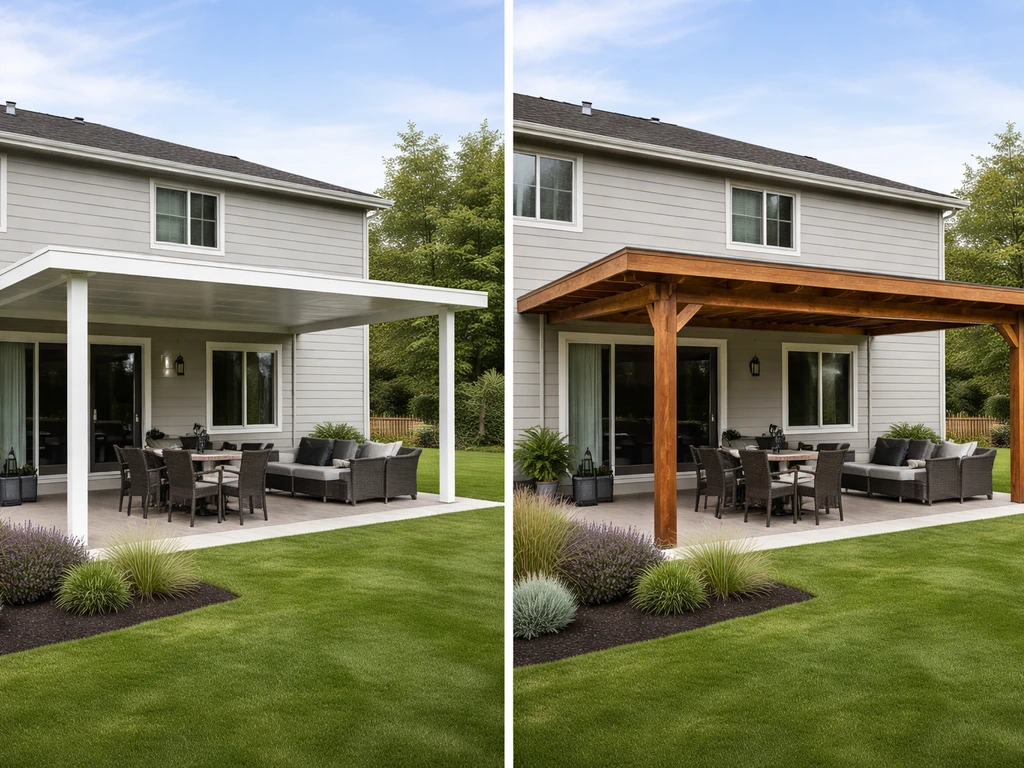
Aluminum Patio Covers vs Wood: Cost, Durability, Maintenance
Compare aluminum vs wood patio covers on cost, durability, maintenance, weather performance, installation, and resale va
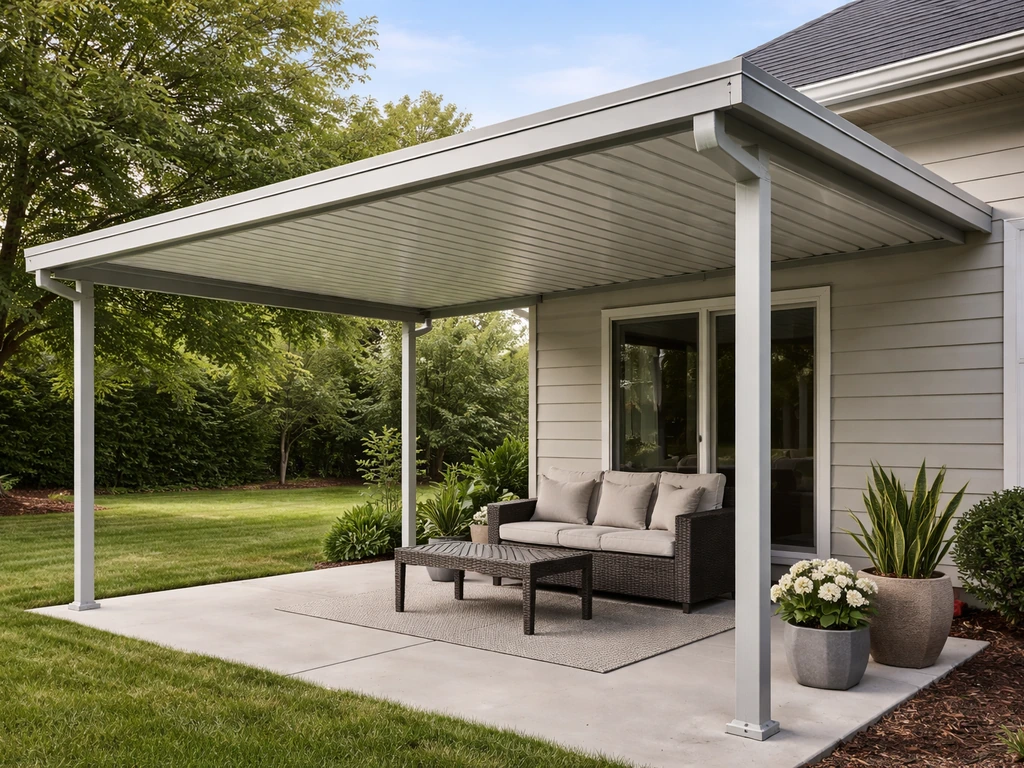
How Much Do Aluminum Patio Covers Cost? 2026 Pricing
2026 pricing for aluminum and Alumawood patio covers, with cost ranges, what affects totals, and key quote questions.
Alternative to Patio Cushions: Durable, Stylish Options and DIY
Alternative to patio cushions: durable, weatherproof seating options, pros, DIY tips & buying guide.