
Yes, aluminum patio covers do get hot in direct sun, but whether that heat makes the space underneath uncomfortable depends heavily on finish color, ventilation, roof pitch, and how much of the sky the cover actually blocks. A bare, dark-colored solid aluminum panel sitting in full sun can reach surface temperatures of 140°F or higher, while a white powder-coated or reflective panel in the same conditions might run 30–50°F cooler. The aluminum itself isn't the problem. The bigger issue is what happens to all that absorbed heat and whether it radiates down onto you.
Are Aluminum Patio Covers Hot? Comfort Factors and Fixes

Lark Perry
17 Jun 2026
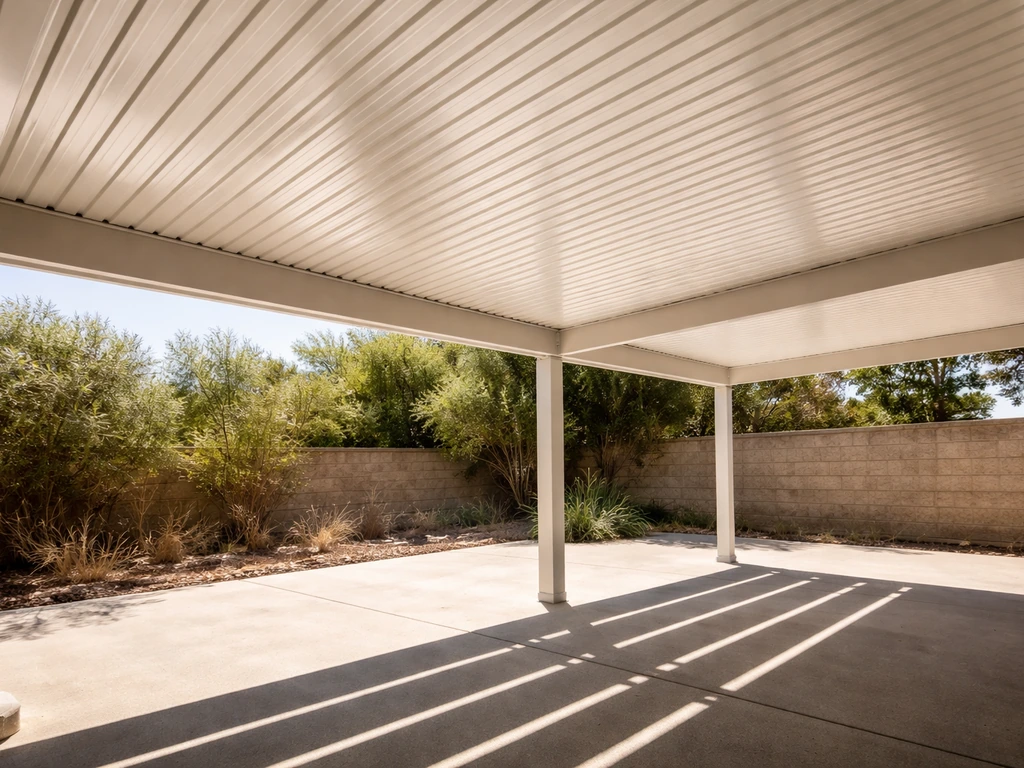
Why aluminum covers feel hot (and when they don't)
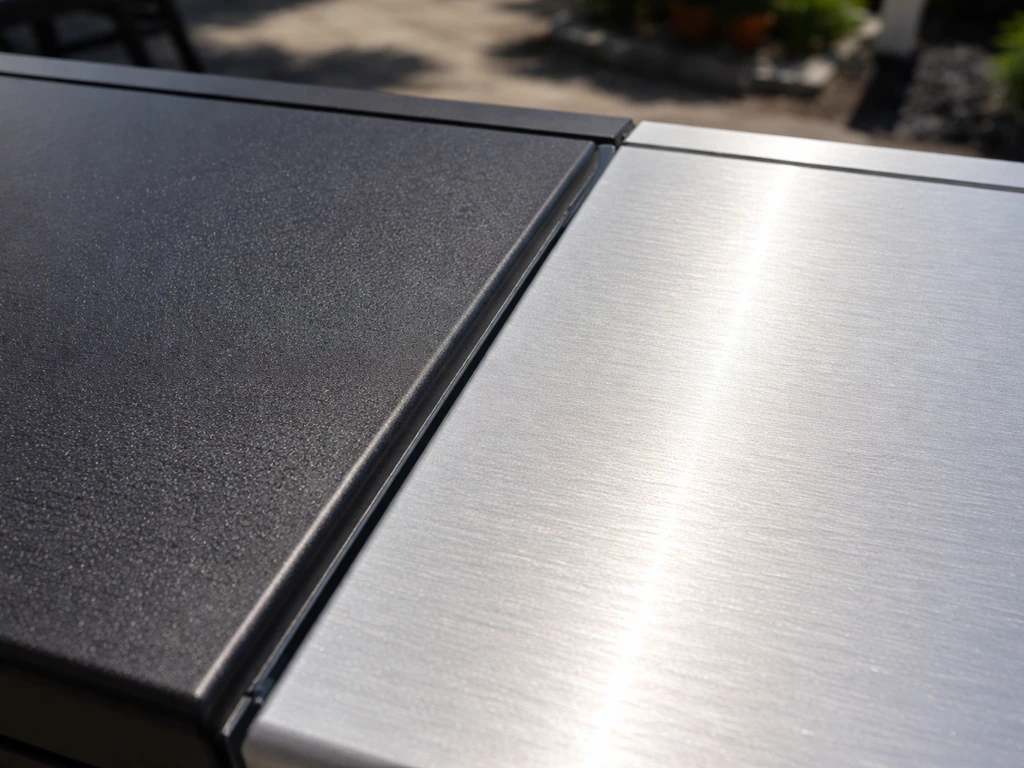
Aluminum is a metal, and metals conduct heat fast. When the sun hammers a solid aluminum panel, that energy has to go somewhere. Some bounces off (that's solar reflectance), and the rest gets absorbed into the material and re-radiated as heat. Here's the part most people miss: even if you're not touching the panel, you can feel that radiated heat from below. This is called radiant heat transfer, and ASHRAE's thermal comfort research confirms that warm overhead surfaces contribute directly to human discomfort even when the air temperature under the cover is reasonable.
Surface color and finish drive most of this. A dark or bare aluminum panel has a solar absorptance close to 0.8 or higher, meaning it soaks up most incoming solar energy. A white or highly reflective coating can push solar reflectance above 0.7, which translates to a dramatically cooler surface. Research from Oak Ridge National Laboratory found that increasing solar reflectance from 0.2 to 0.96 on a roof surface drops mean rooftop temperature by roughly 10°C (about 18°F). That's a meaningful difference you'll actually feel sitting underneath.
Airflow is the other major variable. A solid, sealed cover with no ventilation gaps traps warm air between the panel and the space below, creating a convective oven effect. An open lattice cover or louvered design lets air circulate freely, carrying that heat away before it has a chance to build up. Even a modest 10–15°F temperature reduction from ventilation is consistent with what building science research reports for vented versus unvented roof assemblies.
How hot can it actually get under there?
This is where I want to give you real numbers instead of vague warnings. Building science research shows that roof surfaces in summer routinely run 30–50°C (54–90°F) above the surrounding air temperature. If your local temperature is 95°F, that solid dark aluminum cover could be sitting at 150°F or more. Under the cover, air temperatures won't match that surface number, but the radiant heat coming off the underside will still push your perceived comfort well beyond what the thermometer says. blank" rel="noopener noreferrer">ASHRAE flagged 95°F as a ceiling surface temperature threshold where overhead radiant heat starts causing noticeable discomfort, and a baking aluminum panel can blow right past that.
That said, conditions vary a lot. Here are the factors that have the biggest swing on how hot your specific setup gets:
- Finish color: White or light-colored baked enamel finishes (like those offered by brands such as Alumawood) reflect significantly more solar energy than dark or bare aluminum panels
- Sun angle and orientation: South- and west-facing covers take the most direct sun in the afternoon heat peak, and lower sun angles in winter mean the panel stays much cooler
- Roof pitch: A flatter cover lets heat linger longer and pools more radiant energy downward; a steeper pitch sheds heat more efficiently and improves natural convection along the underside
- Coverage type: A solid panel traps more heat than a louvered or lattice design, which allows air movement between the slats
- Local climate: In Phoenix or Las Vegas, even a reflective cover will still run warmer than the same cover in Portland because ambient air temperatures and solar intensity are both higher
- Full versus partial coverage: A cover that shades only part of a large patio leaves surrounding hot surfaces (concrete, pavers) exposed to absorb and re-radiate heat back into the shaded zone
- Surrounding patio materials: Dark concrete or stone pavers can reach surface temperatures well above ambient, and that radiated ground heat adds to discomfort even under a shade structure
Practical ways to reduce heat under an aluminum cover
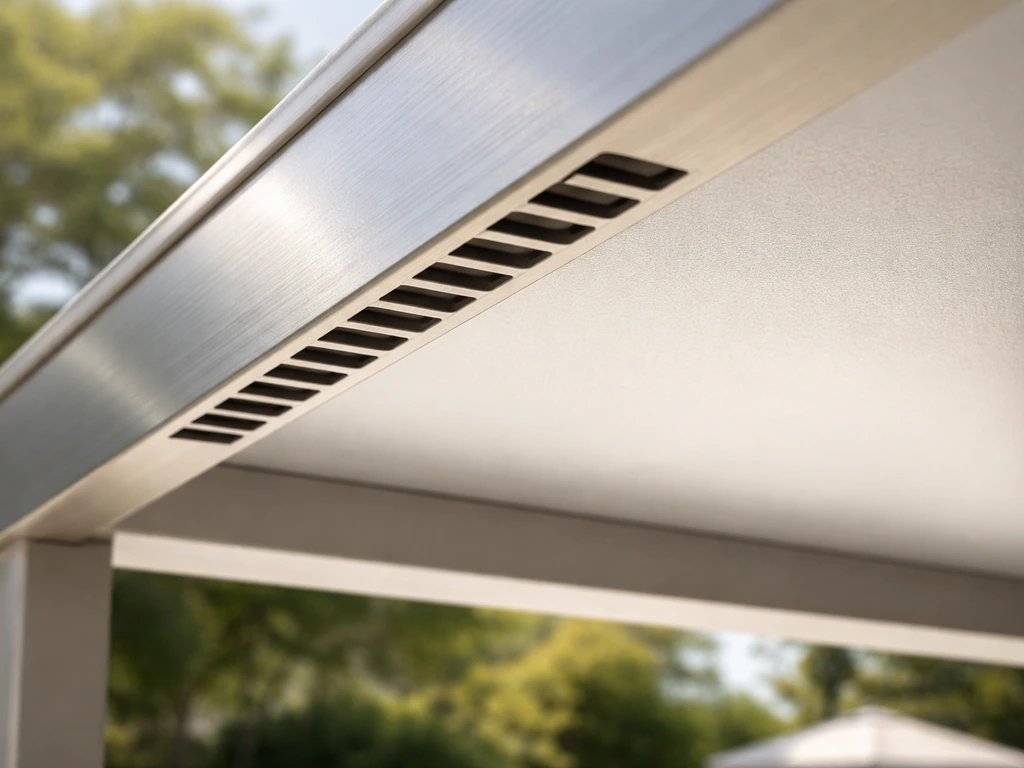
If you're shopping for a new cover, the single most impactful choice is finish color. Go white or the lightest color available. Some products specifically call out their white top-and-bottom finish as offering maximum reflectivity, and that's not just marketing. The top surface reflectance reduces how much heat the panel absorbs; the white underside reduces downward radiant emission. Both matter.
For ventilation, look for patio covers with a built-in vented design, meaning small gaps or perforations that allow airflow through the panel assembly. Even without a purpose-built vented panel, maintaining an open perimeter (leaving the sides of the cover open rather than screening them in) helps convective airflow flush out the hot air trapped between the panel and the living space below. Research modeling sealed versus vented roof assemblies found that cooling load under a sealed assembly can be roughly three times higher than under a vented one.
Insulated or dual-layer panels are worth the upgrade if you live somewhere hot and plan to spend real time under the cover. These typically use two aluminum skins with foam or an air gap in between, which dramatically reduces the radiant heat making it through to the underside. A foil-faced radiant barrier under a roof assembly can block around 95% of radiant heat transfer according to LSU AgCenter research, and insulated aluminum panels work on the same principle. Just know that insulated panels add cost, and if your main concern is budget, a light-colored single-skin panel with good ventilation gets you most of the benefit at a fraction of the price.
Powder coat and baked enamel finishes also matter beyond just appearance. These coatings hold their reflective properties over time, and cool roof research from the Heat Island Group shows that surface reflectance values stabilize within about one to three years after installation. Choosing a quality factory-applied finish means you're not just getting initial reflectance, you're getting durable reflectance.
Where heat actually builds up: the ceiling surface versus the air below
People often focus on the air temperature under their cover, but the underside panel surface is where the real heat story plays out. ASHRAE's radiant heating and cooling research confirms that ceiling panel surface temperature affects comfort primarily through thermal radiation, not air temperature. So even if a thermometer under your cover reads a tolerable 90°F, a dark underside at 130°F is radiating heat directly at you the same way a heat lamp would. That's why you can stand under some solid covers on a hot day and still feel like you're being roasted, even in shade.
The fix on the ceiling surface side: light or reflective finishes on the underside of the panel, and where budget allows, insulated panel systems. If you already have a cover with a dark underside and can't replace it, applying a reflective or light-colored paint to the underside is a meaningful upgrade. It won't match a purpose-built reflective panel, but it will reduce downward radiant output.
One thing to watch if you add insulation or close up the underside: condensation risk. When warm, moist air contacts a cooler metal surface, you can get moisture buildup on the underside of panels. This is more of a fall and winter issue than a summer one, but it's worth designing for. Proper ventilation gaps serve double duty here: they reduce summer heat AND reduce winter condensation by preventing still, humid air from sitting against the metal surface.
Comfort upgrades that actually make a difference
Even a well-designed aluminum cover in a hot climate is going to have limits. Here's what works and what to be realistic about:
Outdoor ceiling fans
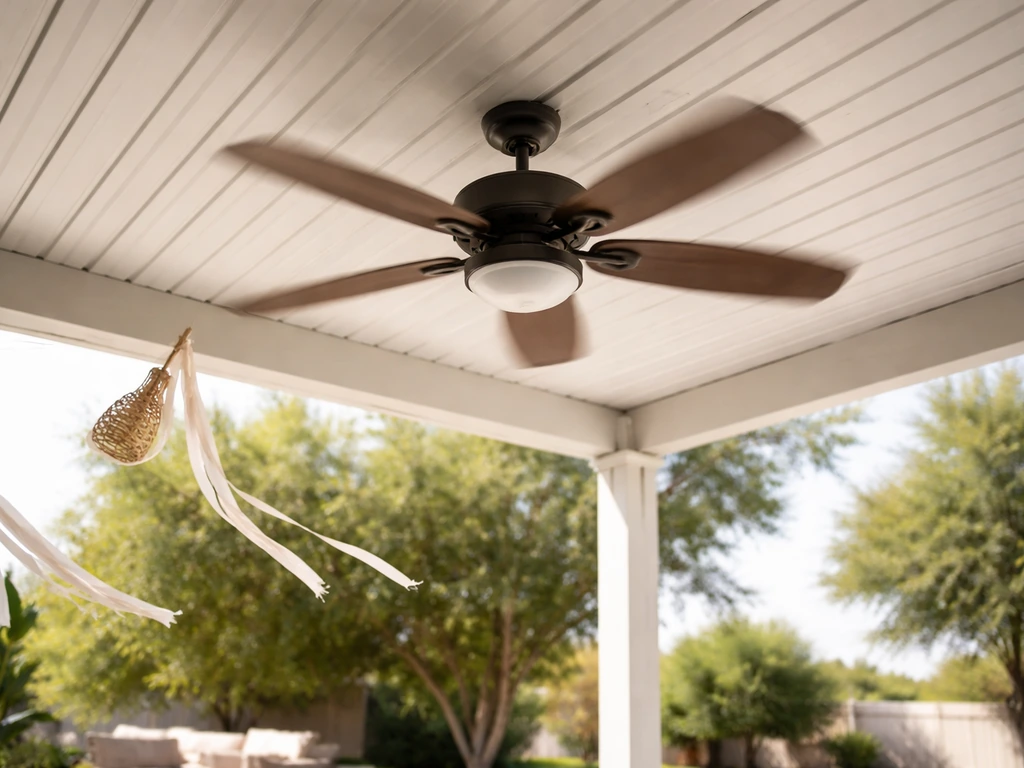
This is the highest-impact comfort upgrade you can add to an existing patio cover. A ceiling fan doesn't cool the air, but it moves it, and moving air dramatically improves perceived comfort through evaporative cooling on your skin. Mount the fan close enough to the cover that you're not losing too much blade clearance, and use a damp-rated or wet-rated fan if it's exposed to any moisture. This upgrade is also relatively affordable and doesn't require structural changes to the cover itself.
Misting systems
Misting can work well in dry climates like Arizona or Nevada, where the evaporation rate is high enough that the fine water droplets cool the air before they reach you. In humid climates, the story is different. Research published in the MDPI journal on outdoor cooling found that misting systems can be less effective or even uncomfortable in high-humidity conditions because the air is already saturated and evaporation slows down. Pairing a misting system with a fan (fan-and-atomization setups) tends to outperform mist alone. If you're in the Southeast or Gulf Coast and thinking about misting, manage expectations and test before you commit to a permanent installation.
Outdoor curtains and shade screens
Hanging shade fabric or drop curtains from the perimeter of your cover does two things: it blocks low-angle afternoon sun that sneaks under the cover from the west, and it partially traps cooler air inside the shaded zone. The trade-off is airflow. Heavy screens on all sides will reduce the ventilation benefit of an open cover design. The sweet spot is usually blocking the west and south exposures while leaving north or prevailing-wind sides more open. Solar screen fabric rated for outdoor use (look for 90% or higher shade factor) will cut radiant heat coming in from those exposed angles.
Patio surface materials and furniture choices
If your cover shades a dark concrete or blacktop surface, that ground material is radiating stored heat back up even after the sun has moved. Lighter-colored pavers, composite decking, or outdoor rugs under the cover reduce ground-level radiant heat contribution. It's a less obvious source of discomfort, but in a detailed heat budget it matters, especially in the late afternoon when the concrete is fully heat-saturated.
| Upgrade | Best for | Effectiveness in dry heat | Effectiveness in humid heat | Approximate cost range |
|---|---|---|---|---|
| Ceiling fan | All climates | High | High | $100–$400 installed |
| Misting system | Dry climates | High | Low to moderate | $200–$800 installed |
| Solar shade screens | Sun angle control | Moderate | Moderate | $150–$600 per panel |
| White/reflective finish | New cover selection | High | High | Minimal upcharge on new cover |
| Insulated dual-layer panel | Hot climates, full replacement | Very high | Very high | $30–$60+ per sq ft installed |
| Reflective underside paint | Existing cover upgrade | Moderate | Moderate | $50–$150 DIY |
How to assess your specific setup today
If you already have an aluminum cover and want to figure out what's actually driving discomfort, here's how to think through it. If you're wondering are aluminum patio covers good, start by assessing the finish color and the ventilation under your specific setup aluminum cover. Step one: put your hand within a few inches of the underside of the panel on a hot afternoon without touching it.
If you can feel radiant warmth radiating down, the underside surface is too hot and a finish or insulation upgrade is your priority. Step two: stand at the edge of the covered area versus the center and notice if the center feels significantly stuffier. That's a ventilation problem, and a ceiling fan or perimeter openings will help more than any coating will. Step three: check how much ground and surrounding patio is still in direct sun.
If the cover only shades a portion of the area, the exposed hot surfaces are part of your comfort problem.
If you're still deciding what to buy, prioritize in this order: first, choose the lightest finish color available (white is almost always the best choice for heat); second, opt for a vented or louvered design over a solid unvented one if your area gets intense afternoon sun; third, consider insulated panels if you're in a climate where highs regularly exceed 95°F. The aluminum patio covers vs wood comparison is worth reviewing if you're weighing materials, and the full cost breakdown by cover type can help you understand where insulated panels fit in the budget. If you want an accurate estimate, the easiest way is to compare prices by size, roof style, and finish, since those choices strongly affect performance and cost how much do aluminum patio covers cost. Getting the cover design right from the start is much easier than retrofitting comfort upgrades later.
The bottom line: aluminum covers are a solid shade solution, but they're not passive. If you're weighing aluminum patio covers versus wood, the same heat-transfer principles apply, but materials and insulation choices can shift how noticeable that radiant heat feels aluminum covers. The choices you make around color, ventilation, and layering determine whether the space underneath is a cool retreat or a radiant oven. Get those basics right, add a ceiling fan, and most hot-climate patios become genuinely comfortable even on tough summer afternoons.
FAQ
If the patio feels cool in the shade, will an aluminum cover still be a problem later in the day?
You can have a cover that blocks sunlight well but still feels hot because the underside surface temperature drives radiant discomfort. If you can feel heat “glowing” down from the panel, the issue is likely finish color, lack of underside reflectance, or insufficient ventilation, not just the air temperature under the cover.
Do white or reflective aluminum patio covers stay comfortable even in extreme heat?
Lighter finishes keep the panel cooler, but they do not make it temperature-proof. On very bright afternoons, even white reflective panels can get warm overhead, so the real goal is reducing both heat absorbed and heat radiated downward, then improving airflow (fan or vented/louvered design).
What’s the most effective upgrade if my aluminum cover is hot but I cannot change the roof?
A ceiling fan helps most because it increases skin evaporative cooling and reduces the “stagnant warm air” feel. Use a damp-rated or wet-rated fan if any moisture exposure occurs, and keep clearance so airflow reaches people directly, otherwise the fan may mainly cool the upper air layer rather than the breathing zone.
Can my discomfort be caused by poor ventilation even if my aluminum cover has a good finish?
Yes, if a solid cover traps warm air between the panel and the underside of nearby structures. Start by checking whether the center of the space becomes significantly warmer and whether breezes disappear, then address with perimeter openings or a vented/louvered panel. Insulation can help, but it should be paired with ventilation to avoid creating a hotter, stagnant plenum.
Will misting always cool an aluminum patio cover area?
Not always. In humid climates, misting may feel sticky or uncomfortable because evaporation is limited. If you try it, plan to pair it with a fan or use a mist system with control so it can run briefly rather than continuously, then evaluate under real conditions (late afternoon is usually the worst case).
If I add insulation to reduce summer heat, will condensation become a problem?
Yes. The same heat mechanisms that make summers uncomfortable can contribute to condensation in cooler months if you close too many gaps or add insulation incorrectly. To reduce risk, keep intentional airflow paths and avoid sealing all edges tightly, especially where moist indoor air can reach the underside.
Can I repaint the underside of an aluminum patio cover to reduce radiant heat?
You can improve comfort without replacing the entire cover by treating the underside, but results depend on how reflective the final surface becomes. Use a reflective/light-colored exterior-rated coating, and make sure it is designed for outdoor metal to maintain reflectance over time.
How can I tell whether my aluminum cover problem is radiant heat or trapped hot air?
Measuring air temperature alone is misleading. The quick check is to stand a few inches away and feel for radiant warmth from the underside, then compare how it feels at the center versus near openings. If both spots feel evenly hot, underside surface heating is likely dominating over trapped-air effects.
What can I do if I want to improve comfort but do not want a permanent vented or insulated cover?
The best “cheap” change is usually adding air movement and reducing exposure of your body to radiant angles, for example by using solar screen fabric for the west and south sides while leaving other sides more open. Avoid fully enclosing every side because you lose the ventilation benefit.
For someone shopping for a new cover, what order of priorities should I follow for heat comfort?
The design matters, but the biggest practical win is still the combo of light finish plus airflow. If your existing cover is solid and dark, you will likely feel radiant heat more than you expect. If you are buying new, a vented or louvered design with the lightest underside finish gives the highest chance of comfort across long summer afternoons.
Next Articles
Are Aluminum Patio Covers Good? Pros, Cons, and Costs
Aluminum patio covers rated: durability, weather and noise, maintenance, design options, costs, and when they beat other
Best Aluminum Patio Cover: How to Choose the Right One
Choose the best aluminum patio cover by fit, roof style, weather loads, drainage, corrosion resistance, insulation, and
Aluminum Patio Covers vs Wood: Cost, Durability, Maintenance
Compare aluminum vs wood patio covers on cost, durability, maintenance, weather performance, installation, and resale va