
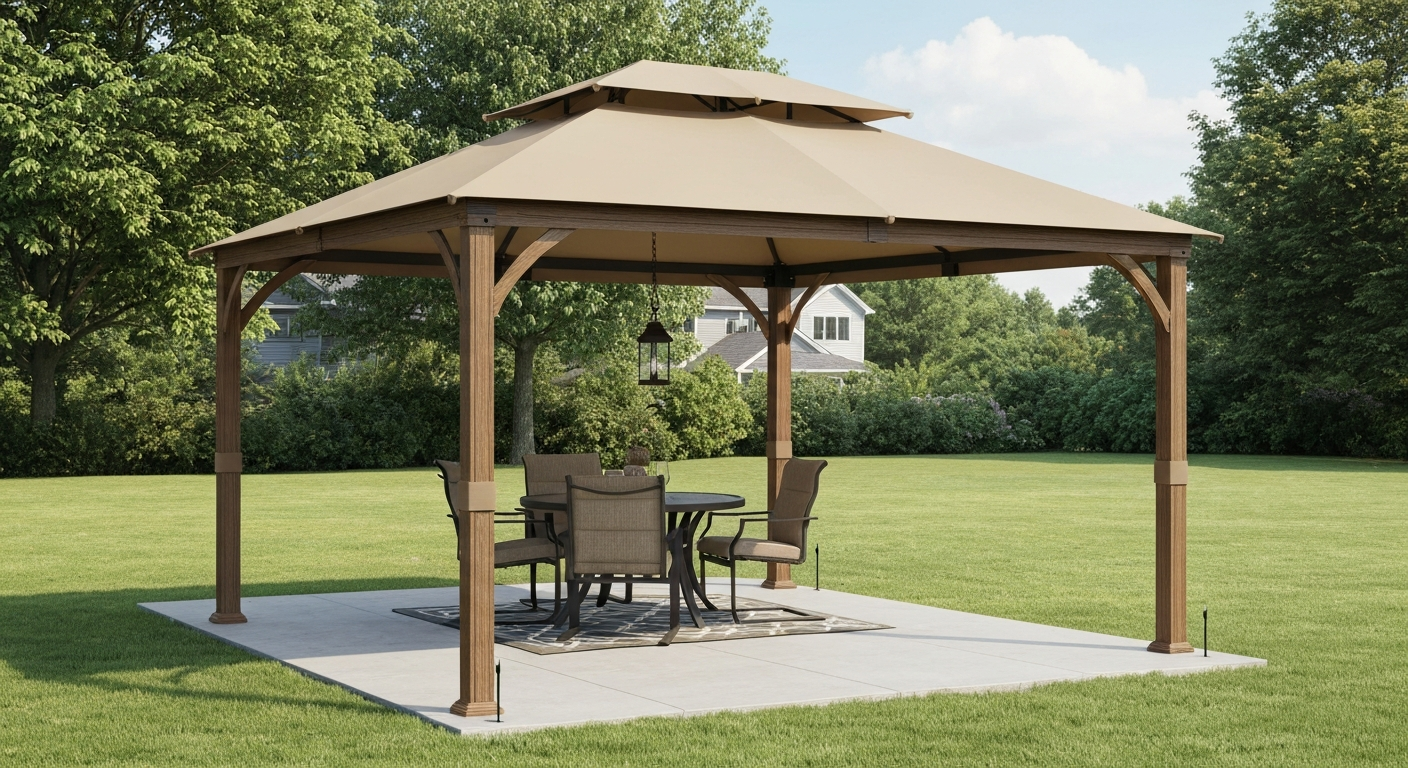
The Laurel Canyon beige soft-top steel/metal outdoor patio gazebo is a 10x10-foot powder-coated steel frame structure with a two-tier 300D polyester canopy rated UPF 50+ and CPAI-84 fire-retardant. It weighs about 73 pounds, ships with 12 ground stakes, and comes with a 1-year limited warranty. It works well as a backyard shade canopy for casual outdoor dining or lounging, but it has no published wind-load rating, and the canopy is water-resistant rather than waterproof. If you go in with those expectations set, it delivers solid value for the price.
Laurel Canyon Beige Soft-Top Steel Patio Gazebo Buying Guide

Lark Perry
9 Aug 2026
Who this guide is for and what to expect
This guide is written for homeowners and renters who are researching the Laurel Canyon beige soft-top gazebo before buying and want more than a retailer product page can tell them. If you're trying to figure out whether this specific model fits your patio footprint, how hard it is to put together, whether the canopy will hold up to an afternoon rainstorm, or how to pair it with outdoor speakers and lighting, you're in the right place. I'll walk through verified specs, real-world performance caveats, assembly expectations, anchoring, accessory compatibility, and where to shop. I'll also compare it to pop-up gazebo alternatives and the black hard-top galvanized-steel category so you can make a confident call on which direction suits your setup.
Laurel Canyon beige soft-top gazebo at a glance
| Spec | Detail |
|---|---|
| Model numbers | OV-79GAZ02 / HD-GAZ2137 / HD-GAZ9701 (variant-dependent) |
| Item/SKU | 36497078 (Bed Bath & Beyond listing) |
| Canopy footprint | 10 ft x 10 ft |
| Leg footprint | 9 ft 2 in x 9 ft 2 in |
| Peak height | 9 ft 2 in |
| Eaves height | 6 ft 7 in |
| Product weight | 72.75 lb |
| Frame material | Powder-coated steel (wood-grain finish) |
| Canopy material | 2-tier 300D polyester |
| UV protection | UPF 50+ (blocks up to 99% of UV rays) |
| Fire rating | CPAI-84 US Standard fire-retardant |
| Water performance | Water-resistant (not waterproof) |
| Supporting ribs | 8 |
| Ground stakes included | 12 |
| Built-in hanging hook | Yes — 50 lb max load |
| Wind-load rating | None published (0 listed in manual) |
| Warranty | 1-year limited manufacturer warranty |
Full specifications checklist before you buy
Retailer listings are not always consistent across platforms, and product pages get updated or deprecated. Before placing an order, run through this checklist to confirm you're getting what you expect. I've pulled these items directly from official product data and installation manuals.
- Frame material: Confirm the listing explicitly states powder-coated steel with a rust, corrosion, and chipping-resistant finish. Some listings describe a wood-grain aesthetic finish on the coating, which is cosmetic only.
- Canopy fabric weight: Look for 300D polyester. Replacement canopies from third parties (like Garden Winds) are sometimes 350D (RipLock 350) or heavier (RipLock 500), which is actually an upgrade over the original.
- Canopy dimensions: The canopy covers a 10x10 ft area but the leg footprint is 9 ft 2 in x 9 ft 2 in. Make sure you have clearance for both the canopy overhang and the legs.
- UV and fire ratings: Confirm UPF 50+ and CPAI-84 fire-retardant certification are listed. These are consumer safety benchmarks, not just marketing language.
- Water resistance disclosure: The canopy is described as water-resistant, not waterproof. If the listing says waterproof, ask the retailer to confirm — that would be inconsistent with the manufacturer's own spec sheet.
- Wind-load rating: The manufacturer's manual lists maximum wind resistance as 0, meaning no formal wind-load rating has been published. Any listing claiming a specific MPH wind rating for this model should be treated with skepticism.
- Anchoring hardware: Confirm 12 ground stakes are included. These are the only anchoring hardware in the box. If you're placing on a hard surface (concrete, pavers), you'll need separate anchoring hardware.
- Hanging hook load limit: The built-in hook is rated to 50 lb max. Do not exceed this for speaker mounts, planters, or pendant lighting.
- Warranty terms: The 1-year limited warranty covers manufacturing defects. It excludes damage from wind, weather events, commercial use, and improper assembly. Keep your receipt and record the model number.
- Assembly recommendation: The manufacturer recommends 3 people for assembly. Two-person assembly is possible but will add time and increase the risk of dropping or misaligning frame components.
Evidence-based pros and cons
What works well
- Solid UV protection: UPF 50+ is a verified, standardized rating. The canopy does what it claims for sun blocking during peak afternoon hours.
- CPAI-84 fire-retardant certification adds a meaningful safety baseline if you plan to use the space near a grill or fire pit (though never place an active flame directly under the canopy).
- The two-tier vented design helps with heat buildup. Hot air escapes through the upper gap rather than trapping under the canopy, which makes the space noticeably more comfortable on still, hot days.
- At roughly 73 lb, the frame is heavy enough to feel stable but light enough that two or three people can move and reposition it without equipment.
- Replacement canopies are readily available. Garden Winds makes model-specific replacements (RipLock 350 and RipLock 500) sold through Home Depot, Walmart, and Wayfair, so you're not locked into buying a whole new gazebo if the canopy degrades.
- The 50 lb hanging hook is a genuinely useful feature for a pendant light or a small Bluetooth outdoor speaker.
- The powder-coated wood-grain finish looks more finished than bare steel and resists surface rust under normal conditions.
Honest limitations
- No wind-load rating: The manufacturer's own manual lists maximum wind resistance as 0. This isn't a paperwork gap — it reflects a real design reality. The canopy must be removed before storms or high-wind events.
- Water-resistant, not waterproof: 300D polyester without a high hydrostatic head rating will let water through at seams and under sustained rain. If you need waterproof protection, you need either a hard-top alternative or an aftermarket canopy with a higher hydrostatic rating (look for AATCC 127 test data when comparing replacement canopies).
- Fit variability in replacement canopies: Customer review data from Home Depot and Wayfair shows that some buyers experience dimensional mismatches when ordering replacements — for example, a canopy listed as 120 inches fitting a frame closer to 118 inches. Always match by model number, not just dimensions.
- Ground stakes on hard surfaces: The included stakes work in grass and soft soil. On concrete or pavers you'll need to buy separate surface anchors or weighted foot bags.
- Warranty exclusions are broad: Wind, acts of nature, and improper installation are all excluded, which covers most of the failure scenarios customers actually experience.
- Availability is inconsistent: Listings have appeared as out of stock on Bed Bath & Beyond and rotate through other retailers. Price and availability vary significantly by platform.
Real-world performance and inspection steps you can do yourself
Before relying on any soft-top gazebo for a season, it's worth putting it through a few simple checks rather than waiting for the first storm to tell you what's wrong. These aren't lab tests, but they'll catch the most common failure points.
Canopy water resistance check
The manufacturer says water-resistant, not waterproof. To see how your canopy actually performs, use a garden hose at medium pressure and hold it over a section of fabric for 60 seconds. If water beads and rolls off, the DWR (durable water repellent) coating is intact. If you see the fabric darken and feel wet on the underside, the coating is worn or was never sufficient for your use case. You can reapply a spray-on DWR treatment (available at outdoor gear retailers for under $15) to restore some repellency. For a more rigorous benchmark, the AATCC Test Method 127 hydrostatic pressure test is the lab standard for canopy fabrics, you can ask a replacement canopy vendor for this data when comparing options like RipLock 350 versus RipLock 500.
Frame and coating inspection
After the first season, inspect each leg and crossbar at the joints for paint bubbling, surface rust, or scratches that expose bare metal. Powder-coating is durable but not indestructible. Chips at connection points are the most common entry points for rust. A small can of rust-inhibiting touch-up paint (match to the finish color) can extend frame life significantly. While you're at it, check that all locking pins and bolts are still snug, vibration from wind can work fasteners loose over a few months.
Wind behavior observation
Because there is no published wind-load rating for this model, you have to use your own judgment calibrated to local conditions. The ASCE 7 standard is the engineering reference used in U.S. building codes for wind design loads on structures, if you live in a coastal or high-wind zone, look up your area's design wind speed using ASCE 7 maps and treat any sustained wind approaching or exceeding 20-25 mph as the threshold to remove or roll up the canopy. Refer to ASCE 7, Minimum Design Loads and Associated Criteria for Buildings and Other Structures (ASCE/SEI 7), ASCE.org for official design wind speed maps and guidance on wind loads for buildings and accessory structures ASCE 7 — Minimum Design Loads and Associated Criteria for Buildings and Other Structures (ASCE/SEI 7) — ASCE.org. Observe how the frame responds to normal afternoon breezes in your first week of use. If you see the frame flexing noticeably or hear the canopy snapping hard against the ribs, that's your signal to reinforce anchoring and establish a pre-storm removal routine.
Seam and rib check after heavy rain
After the first significant rain, lift the canopy edges and check the underside of the seams. Visible water staining or drips concentrated at seam lines indicates the seams are not sealed. This is a common point of failure on 300D polyester canopies without taped seams. If leakage is minor, seam-sealer spray is an inexpensive fix. If the canopy is saturated uniformly, the fabric itself has lost its water repellency and a replacement canopy (RipLock 500 is the better long-term choice) is worth considering.
Assembly: what to expect, tools, and time
Tools and people you'll need
- 3 adults (the manufacturer's own manual specifies this recommendation — two people can manage it, but it adds risk at the roof-frame stage)
- Flathead and Phillips screwdrivers
- A rubber mallet for driving ground stakes into firm soil
- A level (to verify leg height on uneven ground)
- Work gloves (cut edges on steel crossbars are the most common minor injury during assembly)
- A step ladder (needed to attach the upper canopy tier — the peak is 9 ft 2 in)
Step-by-step assembly overview
- Lay out all parts on a flat surface and match them against the parts list in the manual before you start. Identify the four corner leg sections, the four side crossbars, the top-frame ring, the 8 roof ribs, and all hardware bags.
- Assemble the four legs and connect the lower crossbars to form the base rectangle at ground level. Use the level to check that the frame sits flat before locking any pins.
- Connect the upper crossbars and assemble the roof frame ring. This is where a third person becomes genuinely valuable — someone needs to hold the ring elevated while two others connect the ribs.
- Attach the 8 roof ribs to the center hub and outer ring. Most Laurel Canyon models use push-button locking pins at these joints.
- Drape the lower canopy tier over the roof frame, pulling each corner tight and securing it to the frame corners. The lower canopy should sit taut without sagging.
- Attach the upper (second-tier) canopy vent cap over the center hub. This piece creates the ventilation gap between the two tiers.
- Drive the 12 ground stakes through the foot brackets into the ground at a slight outward angle to maximize hold. On soft soil, drive them fully flush.
- Do a final walk-around: check that all locking pins are seated, the canopy fabric is evenly tensioned, and no crossbars are bowing under canopy tension.
Realistic time estimate
The manufacturer's manual references approximately 1 hour for a 10x10 model with 3 people and all parts pre-identified. In practice, first-time assemblers with no prior gazebo experience should budget 90 minutes to 2 hours, including time spent checking the manual at each stage. If you've assembled a similar steel frame gazebo before, an hour is achievable. Don't rush the leg-leveling step, a slightly unlevel base will cause the roof frame to rack and make the canopy fit poorly.
Anchoring, placement, and patio integration
Anchoring options by surface type
| Surface Type | Anchoring Method | Notes |
|---|---|---|
| Grass / soft soil | Included 12 ground stakes | Drive at a slight outward angle; check tension after first rain when soil softens |
| Gravel or decomposed granite | Screw-in earth anchors (sold separately) | Better hold than flat stakes; use with tie-down straps through the foot brackets |
| Concrete or pavers | Weighted foot bags or concrete anchor bolts | Foot bags (sandbag style) are renter-friendly; concrete bolts are permanent but most secure |
| Wood deck | Lag bolts through foot brackets into joists | Verify joist location before drilling; use stainless steel hardware to prevent deck staining |
Because the Laurel Canyon soft-top has no published wind-load rating, anchoring isn't optional, it's the primary safety layer between a gusty afternoon and a gazebo rolling across your yard. Even with all 12 stakes driven, the manufacturer's manuals explicitly state you should remove the canopy before strong winds or storms. Good anchoring prevents the frame from shifting or tipping; it does not make the canopy storm-safe.
Placement tips for wind, drainage, and safety
- Orient the structure so the prevailing wind direction hits the corner of the gazebo rather than a flat side panel — this reduces the effective surface area catching wind.
- Avoid placement under overhanging tree limbs. Falling branches are a disproportionate cause of canopy damage and are excluded from warranty coverage.
- Ensure the ground slopes at least 1-2% away from the center of the gazebo for drainage. A low spot directly under the frame will pool water and accelerate leg-base rust.
- Leave a minimum 18-24 inches of clearance on all sides from fences, walls, or structures to allow canopy tension and prevent abrasion wear on the fabric edges.
- If your local jurisdiction requires permits for accessory structures over a certain square footage (often 100-200 sq ft depending on municipality), check before installing — a 10x10 ft gazebo is exactly at many permit thresholds.
Pairing with patio speakers and furniture layout
The built-in 50 lb hanging hook at the center peak is the most useful integration point for outdoor audio. A compact all-weather Bluetooth speaker in the 1-3 lb range hangs easily from this hook and delivers 360-degree sound coverage within the gazebo footprint. If you're running wired or more powerful outdoor speakers on the perimeter, the steel crossbars at eaves height (6 ft 7 in) make natural mounting points, use saddle clamps designed for pipe or conduit rather than screwing directly into the coating. Speaker placement along the inside of the perimeter beams, angled inward and downward at about 15-20 degrees, keeps sound within the seating area without directing it at neighbors. For a full walkthrough on outdoor speaker positioning strategies that work under a shade structure like this one, the site's outdoor speaker placement content is a natural companion read.
For furniture layout, the usable interior dimension is approximately 9 ft 2 in x 9 ft 2 in between legs. A standard 48-inch round dining table with four chairs fits comfortably in the center with about 18 inches of clearance on each side for movement. A rectangular 6-person dining set is tight, measure carefully before committing. If you're using the space as a lounge rather than a dining area, two deep-seat chairs with a side table and a small outdoor rug define the zone nicely without crowding the entryways. Run any low-voltage lighting or speaker wire along the crossbar channels using outdoor-rated cable clips before placing furniture, so you're not routing cords across walkways after the fact.
Accessories and compatibility
Curtains, sidewalls, and screens
Many Laurel Canyon model listings include or offer optional curtains and mosquito netting as accessories. If privacy panels or bug screens are a priority, confirm at time of purchase whether they're included or sold separately for your specific SKU. Universal-fit outdoor curtain panels (designed for 1-inch curtain rods) can also be hung from the crossbars using ring clips if the included hardware doesn't suit your style. Any sidewall or screen adds wind-catching surface area, which makes the no-wind-rating limitation more relevant, always remove sidewalls in advance of storms.
Lighting
String lights are the most popular lighting choice for soft-top gazebos and work exceptionally well here. Run them along the perimeter crossbars at eaves height, draping inward toward the center hook. Solar-powered string lights avoid wire routing entirely and are a practical choice for renters. For a more permanent setup, low-voltage LED strip lights adhered to the inner face of the crossbars create ambient uplighting that doesn't compete with the canopy fabric. Whatever you choose, verify the total wattage stays well under the 50 lb load limit if any hardware is suspended from the center hook.
Replacement canopies
When the original canopy eventually degrades, Garden Winds is the most established source for model-specific replacements. Their RipLock 350 (350D polyester) is a comparable upgrade over the original 300D fabric. The RipLock 500 is approximately 50% thicker than the 350 grade and carries better long-term durability reviews, particularly at seams and stress points around the ribs. Pricing as last observed: RipLock 500 models around $110-$170 depending on the retailer (Home Depot, Walmart, Wayfair). Always order by model number (HD-GAZ2137, GAZ2137, HD-GAZ9701, or GAZ9701 depending on your frame) rather than just the 10x10 size, because dimensional mismatches at the pocket and vent openings are a documented issue when ordering by dimension alone.
How it compares to pop-up and hard-top options
The Laurel Canyon soft-top sits in the middle of the gazebo category. It's more permanent and polished than a pop-up gazebo, but less weather-resilient than a hard-top galvanized-steel model. Here's a direct comparison across the features that matter most for backyard use.
| Feature | Laurel Canyon Soft-Top (Beige) | Pop-Up Canopy Gazebo | Hard-Top Galvanized Steel Gazebo |
|---|---|---|---|
| Setup time | 60-120 minutes (permanent) | 5-15 minutes (portable) | 2-4+ hours (permanent) |
| Portability | Low (semi-permanent) | High (designed for events/travel) | Very low (heaviest category) |
| Canopy material | 300D polyester (water-resistant) | Usually 150D-300D polyester (water-resistant) | Aluminum, steel, or polycarbonate (varies — often waterproof) |
| Wind resistance | No published rating; canopy removal required | No published rating; very low wind tolerance | Often rated; hard top withstands moderate wind |
| UV protection | UPF 50+ | Varies (many UPF 50+) | Depends on roof panel material |
| Rust resistance | Powder-coated steel (resistant) | Powder-coated or anodized aluminum (varies) | Galvanized steel (superior corrosion resistance) |
| Replacement canopy market | Yes (Garden Winds RipLock options) | Limited; often brand-specific | Not applicable (hard roof) |
| Price range (structure) | Mid-range ($200-$400 typical) | Budget ($80-$200 typical) | Premium ($400-$1,200+) |
| Best for | Semi-permanent patio shade with style | Events, camping, temporary shade | Year-round all-weather coverage |
If your main concern is surviving coastal storms or New England winters without seasonal disassembly, the black hard-top galvanized-steel category is worth a serious look. For a direct comparison, see our guide to choosing an outdoor patio black hard top galvanized steel gazebo to understand trade-offs in wind resistance and corrosion protection. The structural and corrosion-resistance differences are real and significant. If you're primarily after a lightweight, budget-first option you can set up for a weekend gathering and store in a garage, a pop-up canopy gazebo makes more sense. The Laurel Canyon soft-top is the right choice when you want something that looks intentional and stays put through normal seasonal use, and you're willing to take it down or roll up the canopy ahead of severe weather.
Pricing, availability, and where to get the best deal
The Laurel Canyon 10x10 soft-top has been listed through Home Depot, Bed Bath & Beyond, Walmart, and Wayfair at various points, with frame prices typically in the $200-$400 range depending on the retailer and whether optional accessories (curtains, netting) are bundled. For broader comparisons and head-to-head testing, see our best patio gazebo reviews for buying guidance and model rankings. Availability shifts frequently, some listings show as out of stock while others have active inventory. The Bed Bath & Beyond listing (item 36497078) has shown out-of-stock status, so cross-check current availability on Walmart and Wayfair if you're shopping now. Replacement canopies from Garden Winds (the most reliable aftermarket source) run $110-$170 depending on the RipLock grade and retailer. Home Depot typically has the widest in-stock selection of RipLock replacement options for Laurel Canyon models. For broader deal-hunting across the gazebo category, the site's coverage of the best deals on patio gazebos covers current pricing trends and seasonal discount patterns worth reviewing before you commit to a specific retailer.
Recommended use cases and when to consider something else
This gazebo works best when
- You want a semi-permanent shade structure on a residential patio or lawn in a low-to-moderate wind climate.
- Your primary concern is UV protection for daytime use, not storm shelter.
- You're building an outdoor living zone that includes speakers, string lights, and furniture, and you want a structure that looks designed rather than temporary.
- You're comfortable with a seasonal maintenance routine: DWR reapplication, frame inspection, and canopy removal before storms.
- You want the flexibility to replace just the canopy over time rather than buying a new structure every few years.
Consider a different option if
- You live in a region with frequent high-wind events, coastal storms, or heavy snow loads — a hard-top galvanized-steel gazebo offers meaningfully better structural resilience.
- You need a truly waterproof overhead cover (for outdoor electronics, cushioned furniture you'd rather not move, or a covered cooking station).
- You want a temporary, portable structure you can move between a backyard and a campsite or event space — a pop-up gazebo is a better fit.
- Your patio surface is entirely concrete or pavers and you're not willing to use weighted foot bags or drill anchor bolts — the standard stakes won't work and anchoring is non-negotiable for safety.
Maintenance, troubleshooting, and replacement parts
Seasonal maintenance checklist
- Spring setup: inspect all frame joints for rust or bent sections before assembling; reapply DWR spray to the canopy fabric; check that all locking pins are present and functional.
- Mid-season: check stake tension after prolonged rain (wet soil loosens stakes); re-tighten any fasteners that have worked loose.
- Fall teardown: clean the canopy with mild soap and water before storing; allow it to dry completely before folding to prevent mold; store the folded canopy in a breathable bag, not sealed plastic.
- Frame storage: if storing the frame disassembled, wrap steel sections in moving blankets or foam padding to prevent coating chips in storage.
Common problems and fixes
| Problem | Likely Cause | Fix |
|---|---|---|
| Canopy leaks at seams | DWR coating worn or seams unsealed | Apply DWR spray; use seam-sealer on leak points; replace canopy if fabric is saturated |
| Replacement canopy doesn't fit | Wrong model number or dimension mismatch | Order by model number (HD-GAZ2137, HD-GAZ9701); contact Garden Winds with frame measurements |
| Frame rocking or uneven | Uneven ground or loose locking pins | Re-level legs; re-seat all push-button locking pins; use shims on hard surfaces |
| Surface rust at joints | Powder-coat chip at connection point | Sand lightly, apply rust-inhibiting primer, touch up with exterior metal paint |
| Stakes pulling out in wind | Soil too soft or stakes driven vertically | Re-drive at outward angle; upgrade to screw-in earth anchors in soft soil |
| Canopy sagging between ribs | Fabric stretched or ribs not fully extended | Check that all 8 ribs are locked at full extension; consider replacement canopy if fabric has stretched permanently |
Getting replacement parts and warranty service
The 1-year limited warranty covers manufacturing defects only. To make a warranty claim, you'll need proof of purchase and the model number (OV-79GAZ02 / HD-GAZ2137 / HD-GAZ9701 depending on your specific unit). Contact the retailer you bought from first, many retailers have their own return or exchange processes that are faster than going through the manufacturer directly. For replacement canopies after the warranty period, Garden Winds is the primary aftermarket source with model-specific RipLock options. For frame hardware (locking pins, connectors, bolts), check the parts diagram in your installation manual and contact the manufacturer's customer service with the specific part number. Some retailers' customer service lines can also source replacement hardware for models they've sold. If your model number falls in the GAZ2137 or GAZ9701 family, the manuals are available on mans.io and manualzz as a reference for parts diagrams.
FAQ
What primary product specifications should be collected to accurately describe the Laurel Canyon beige soft-top steel/metal outdoor patio gazebo?
Collect model/SKU (e.g., OV-79GAZ02, HD-GAZ2137, HD-GAZ9701), nominal footprint (10'x10' or 10'x12'), canopy top dimensions vs leg footprint (top 10'x10', leg footprint ~9'2" x 9'2"), overall and eave heights (top height ~9'2", eave ~6'7"), product weight (~72.75 lb), frame material and finish (powder-coated steel, wood-grain finish), canopy fabric composition and weave (300D polyester 2-tier vented top, CPAI-84 fire-retardant, UPF 50+), number of ribs/supports (8 ribs), included anchoring hardware (12 ground stakes typically included), built-in features (hanging hook and rated load ~50 lb), and warranty length (1-year limited). Record any manufacturer load limits, number of assembly people recommended (usually 3), and recommended tools and estimated assembly time.
Which performance and durability data or tests should be requested or performed to avoid unsupported claims?
Request or test lab/retailer data for canopy hydrostatic head or AATCC 127 water-resistance results (to distinguish water-resistant vs waterproof). Ask for UV and colorfastness testing, or rely on UPF 50+ labeling for sun protection. For wind performance, note that manufacturer manuals commonly list no published wind-rating; consult ASCE 7 for design-wind guidance and recommend users remove canopy/sidewalls in strong winds. Field checks readers can perform: visual inspection of welds and powder-coating for corrosion protection, measure seam stitching and pocket dimensions for canopy fit, and a simple water test (hose at roof seams to detect leakage). Document any independent reviewer data or consistent customer review patterns (fit variability, canopy leakage, wind damage).
What assembly, anchoring and placement information must be included and how should readers test their installation?
Include step-by-step assembly summary (3 people recommended, basic tools: screwdriver, ladder, level, gloves; estimated time ~1 hour for 10'x10'). Explain anchoring options: supplied ground stakes for soft ground, auger anchors or bolt-down base plates with masonry anchors for concrete decks, and through-bolt or lag-screw methods for wood decks. Advise following manufacturer manual; anchor anchors at each leg and cross-braces where provided. Testing/inspection steps: check level and plumb legs, tug test each anchor and storm-tie after installation, inspect canopy pockets/attachment points for tension fit, and simulate uplift by applying steady upward force to the frame (safely) to validate anchor engagement. Advise removal of canopy/curtains in forecast wind gusts and storing the soft top when not in use for extended weather exposure.
What exact canopy and frame characteristics should buyers verify before purchase?
Verify frame material (powder-coated steel vs galvanized steel), coating type and claimed rust resistance, canopy fabric denier and treatment (300D polyester; if replacement use RipLock 350 or RipLock 500 options), two-tier vented top presence, fire-retardant standard (CPAI-84), UPF rating, number of support ribs, canopy attachment method (pocket/Velcro/strap), compatible model numbers for replacement parts (GAZ2137, GAZ9701, OV-79GAZ02), and included hardware (stakes, hooks). Confirm hanging hook load limit (~50 lb) if you plan to hang lighting or speakers.
How should the article present evidence-based pros and cons and real-world performance considerations?
List pros/cons grounded in documented specs and common user reports. Example pros: affordable soft-top shade, UPF 50+ canopy, powder-coated steel frame and wood-grain finish, included stakes and hanging hook, replacement canopies available (Garden Winds RipLock series). Example cons: no published wind-load rating (manuals advise removing canopy for strong winds), canopy is water-resistant not fully waterproof (reports of seam leakage), fit variability for third-party canopies, limited 1-year warranty excluding weather/acts of nature. For performance, cite customer review trends (fit issues, multiple canopy replacements) and manual advisories (remove canopy in storms). Avoid absolute durability claims; recommend inspection and conservative use during inclement weather.
What comparisons must be included to fairly position the Laurel Canyon soft-top steel gazebo against pop-up and hard-top galvanized-steel models?
Compare on frame strength, permanence, wind resistance, setup complexity, price, and maintenance. Soft-top steel (Laurel Canyon): lower cost, lighter, easier to assemble, replaceable canopy, no published wind rating. Pop-up canopies: fastest setup, designed for portability, typically have lighter frames (aluminum), not intended for long-term permanent installation. Black hard-top galvanized-steel gazebos: higher upfront cost, rigid roof offers better rain shedding and often higher wind tolerance, more permanent installation, typically longer warranties. Provide a model-level comparison table covering dimensions, roof type, average price ranges, anchoring needs, canopy replacement availability, typical warranty, and ideal use cases (seasonal patio shade vs permanent covered living space).
Next Articles
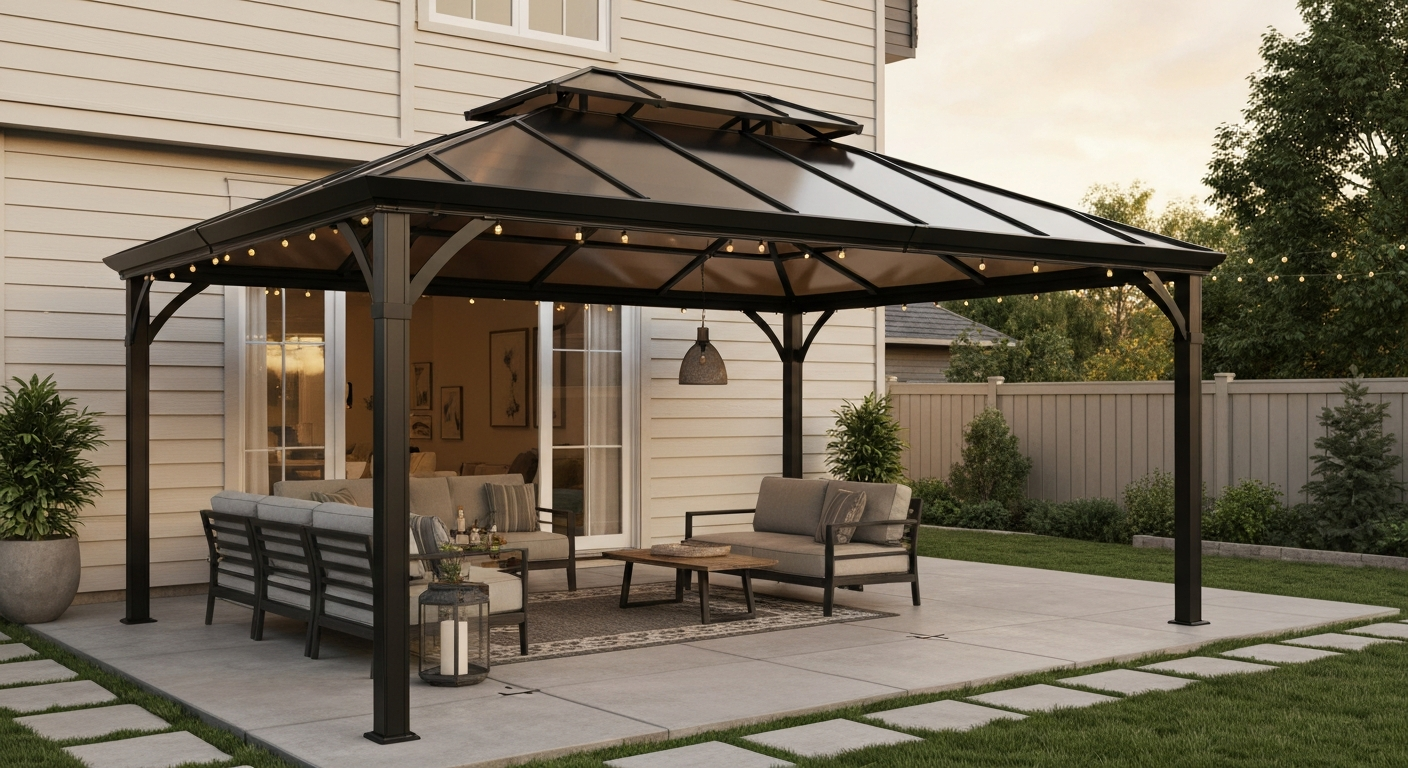
Outdoor Patio Black Hard Top Galvanized Steel Gazebo Guide
Black hard-top galvanized steel patio gazebos: top picks, installation, anchors, rust prevention, speaker setup
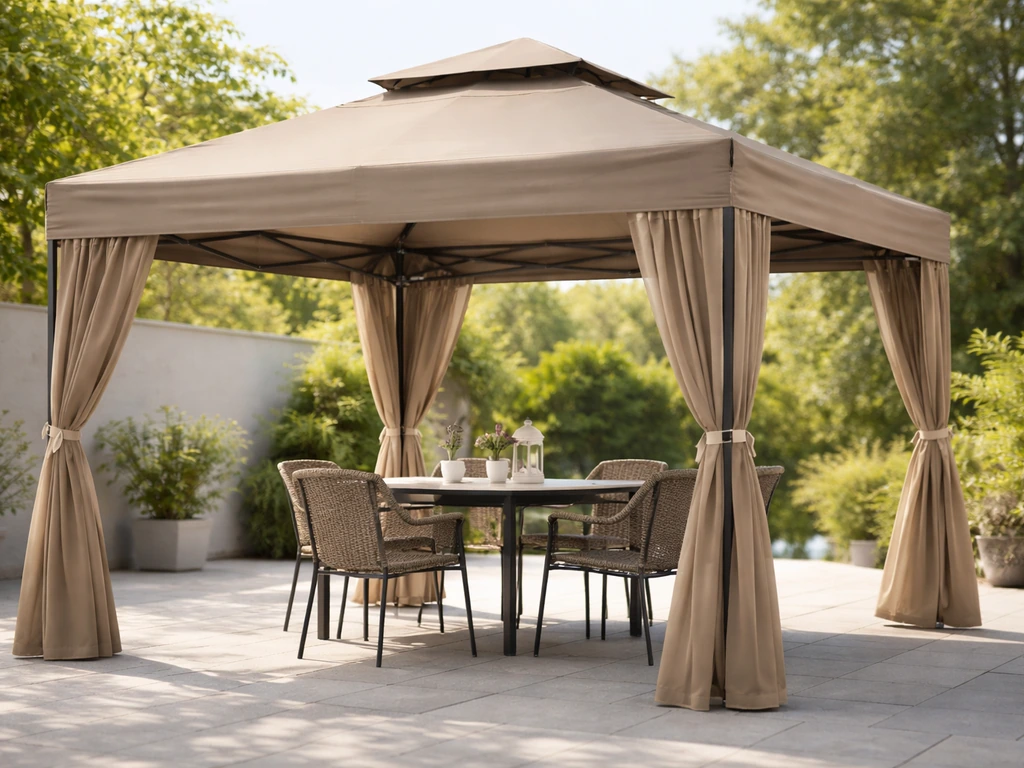
Best Pop Up Gazebo for Patio: Buyer Guide and Picks
Find the best pop up gazebo for patio with size, materials, stability, ventilation, setup tips, and top picks by budget.
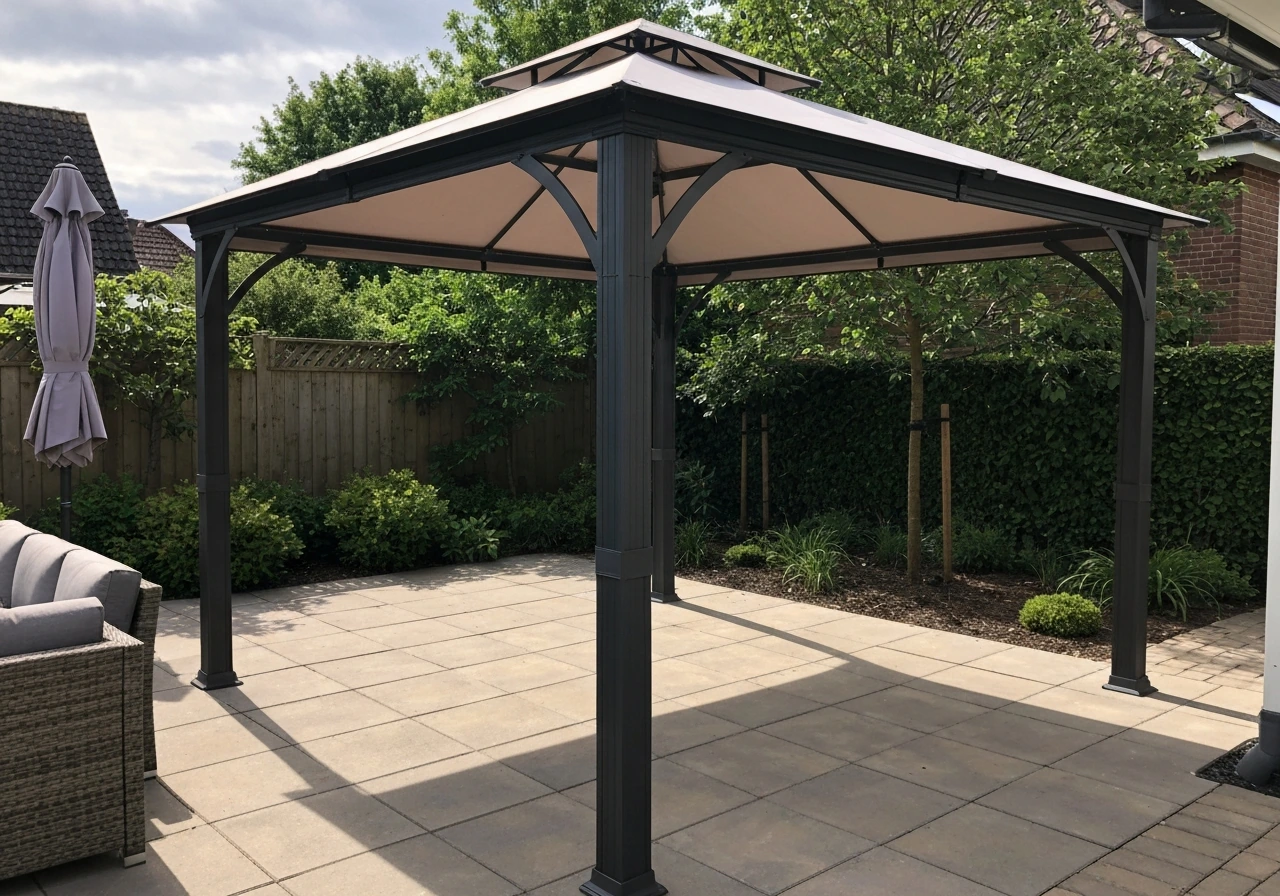
Best Deals on Patio Gazebos: How to Buy Smart Today
Find top deals on patio gazebos with smart criteria, pricing, materials, total costs, and timing to avoid cheap mistakes