
Duralum makes solid aluminum patio covers that hold up well in sun-heavy climates, but they are not a plug-and-play purchase. You buy through a dealer network, pricing is entirely quote-based, and the warranty's lifetime labor coverage is only as good as the installer who registers it. If you want a durable, aluminum-framed shade structure built for long-term outdoor use and you are comfortable getting multiple local quotes, Duralum is a legitimate contender. If you want transparent pricing or an easy DIY project, it is a harder fit.
Duralum Patio Cover Reviews: Models, Costs, Pros & Cons

Lark Perry
15 Jul 2026
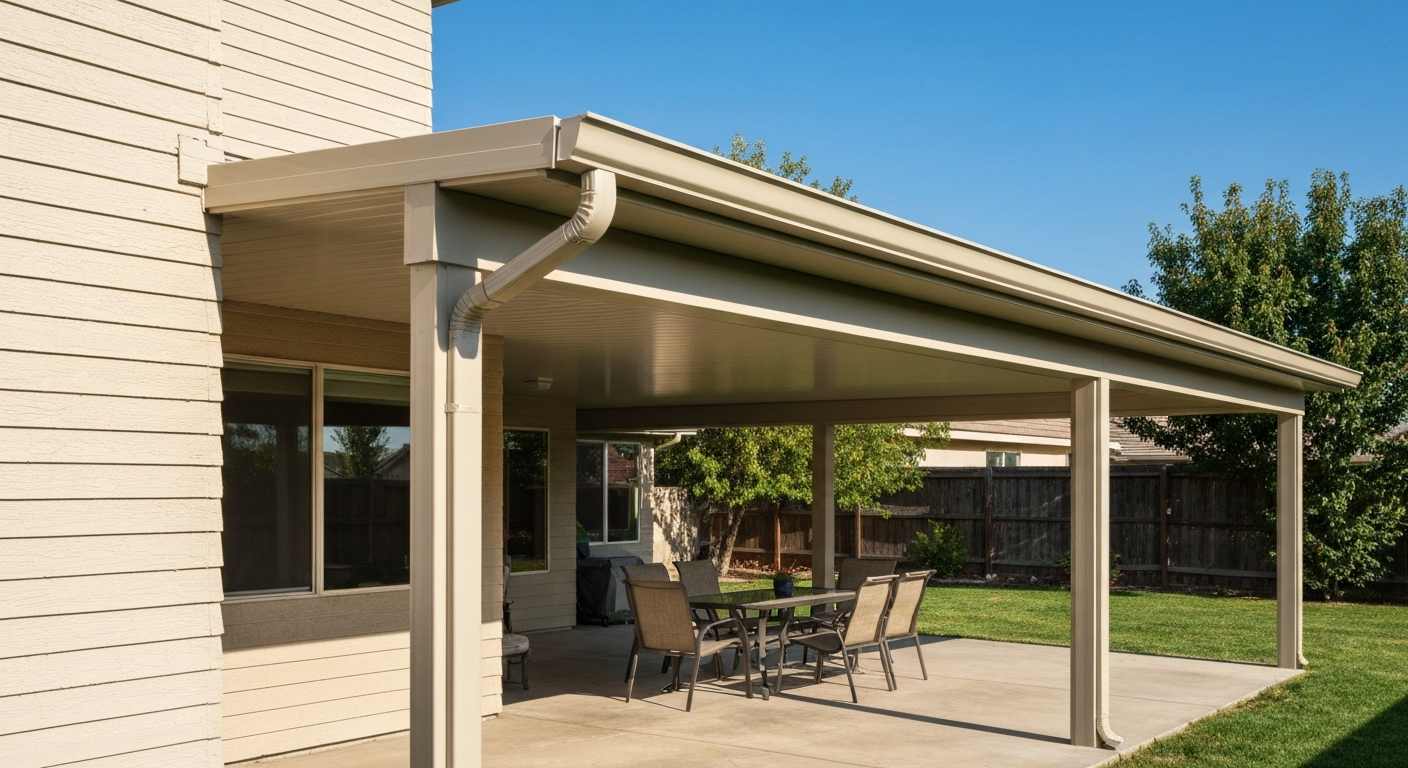
Quick verdict
Overall rating: 3.8 out of 5. Duralum earns its reputation for build quality and longevity, particularly with its insulated panel systems that genuinely reduce heat beneath the cover. The product line has been around since 1962, which counts for something. The friction points are almost entirely on the service side: quote-only pricing with no published MSRP, warranty claims that depend on licensed-contractor registration, and a BBB profile showing unresolved complaints around leaks and subcontractor responsiveness. This review is for homeowners who are seriously shopping for a permanent aluminum patio cover and want to know exactly what they are getting into before calling a dealer.
What is Duralum?
Duralum has been manufacturing aluminum patio products in the United States since 1962, which puts them in a category of shade-cover brands with genuine manufacturing tenure. The company does not sell at big-box retailers. Instead, they operate through a network of factory-authorized dealers and installers, mostly concentrated in the Sun Belt states where patio cover demand is highest year-round. Their product scope goes well beyond a simple shade panel: the lineup includes open-lattice covers, insulated solid roof systems, screened enclosures, and full sunrooms, so a homeowner can technically expand from a basic patio cover into a fully enclosed living space using Duralum components. That modularity is a legitimate selling point, though most buyers are just shopping for a cover and nothing more.
The Duralum product lineup
Duralum organizes its patio covers into several named product families, each targeting a different use case and budget tier. Here is what each line actually delivers in practical terms.
Weatherwood lattice covers
The Weatherwood line is Duralum's open-lattice aluminum cover. It filters sunlight rather than blocking it entirely, making it a good fit for patios where you want shade without total darkness underneath. Because there is no solid panel, it does not provide rain protection. Think of it as an aluminum pergola substitute: it looks clean, needs almost no maintenance, and costs less than the insulated systems.
Phoenix lattice
The Phoenix is another lattice-style option with a slightly different aesthetic profile from the Weatherwood. Like all lattice covers, it is a shade solution rather than a weather barrier. It shares the same aluminum framing system as the rest of the lineup, so structural integrity is comparable.
Monterey insulated covers
The Monterey is where Duralum's lineup gets genuinely interesting. These are solid, insulated roof panels available in multiple thicknesses: 3-inch, 4.25-inch, and 6-inch insulated roof systems are referenced in the company's technical materials. The thicker the panel, the more heat is blocked from transferring into the space below. On a 95-degree afternoon, this difference is noticeable. The Monterey panels also provide full rain protection, which the lattice options do not. If you are in a climate with both intense sun and seasonal rain, this is the version worth budgeting for.
DuraScreen screened rooms and Duralife sunrooms
DuraScreen enclosures add screened walls to a covered structure, keeping insects out while maintaining airflow. Duralife is Duralum's sunroom product, which crosses into full four-season living-space territory. Both use the same extruded aluminum framing system as the patio covers but involve significantly more material, permit complexity, and cost. Most homeowners reading a patio cover review are not shopping for a sunroom addition, but it is worth knowing the upgrade path exists.
How Duralum builds its covers
Duralum's framing is heavy-duty extruded aluminum. The company markets it as precision-engineered, and from what I have seen in installed examples, the extrusion quality is consistent. One caveat: Duralum does not publicly specify the aluminum alloy grade (such as 6061 or 6005) in its consumer-facing brochures or product pages. If the exact alloy matters to you for a specific structural or coastal-environment reason, you need to ask the dealer directly and get that confirmed in writing.
Panel options span the full range from open lattice to the thicker insulated systems. The insulated panels use a foam-core construction sandwiched between aluminum skin layers, which is the standard approach for this product category. Finish options include several painted colors, typically baked-on powder coatings that resist fading and chalking better than wet-applied paint. Customization happens at the dealer level: beam sizes, post placements, trim colors, and attachment configurations are all specified during the quote and design process, not picked off a shelf.
Real-world performance: what holds up and what to watch
Durability and UV resistance
Aluminum as a structural material does not rot, warp, or attract termites. That baseline advantage over wood is real and meaningful over a 15 to 20-year ownership horizon. The powder-coated finish on Duralum covers resists UV degradation better than vinyl alternatives, and you will not be repainting every five years the way you would with wood. In direct sun climates like Arizona, California, and Texas, this is a genuine long-term cost-saver.
Weather resistance and drainage
The insulated Monterey panels are the water-tight option. Lattice covers, by their open nature, are not. Drainage on the solid panel systems is handled through built-in gutters and downspouts, and this is one area where installation quality matters enormously. Poorly sloped panels or inadequately sealed joints are the root cause of the leak complaints that show up repeatedly in customer reviews on aggregator sites. The product itself can handle rain; an improperly installed product will leak. This distinction is important when evaluating online complaints.
Wind and snow loads
Duralum patio covers are primarily designed for Sun Belt markets where wind is the primary structural concern. Most installations in California and Arizona go through a permitting process that requires the structure to meet local wind-load codes. Snow load is less of a design focus for this brand. If you are in a climate with meaningful annual snowfall, you should ask the dealer specifically about snow-load ratings before committing. An aluminum flat-panel cover in a heavy-snow region can accumulate dangerous loads if not engineered for that environment.
User review patterns
Aggregated reviews across platforms put Duralum at around 3. Public review aggregators, for example, the Birdeye / Google listing for Duralum (3.8/5 across dozens of local reviews), show mixed customer satisfaction with recurring praise for appearance and recurring complaints about leaks and service responsiveness. 8 out of 5 stars. The positive reviews consistently praise the finished appearance and the product's durability over time. The negative reviews cluster around two themes: leaks (almost always traced back to installation issues rather than material failure) and difficulty getting warranty service resolved promptly. The BBB profile for Duralum is not accredited and includes unresolved or disputed complaints, with recurring patterns around subcontractor responsiveness and claim handling. This does not mean Duralum products are bad. It does mean your experience is likely to hinge significantly on which authorized dealer installs your cover.
Installation: DIY vs. hiring a pro
Duralum's own blog is unusually candid about this: they publish guidance on DIY versus professional installation and their recommendation leans heavily toward hiring a licensed contractor. There are practical reasons for this beyond the manufacturer covering itself. The warranty registration form requires a contractor license number and, where applicable, a permit number. If you install the cover yourself without a licensed contractor, you may not be able to register the warranty at all, which strips you of the lifetime labor coverage that Duralum markets as a key benefit. That alone makes DIY a risky choice for most buyers.
The installation process for a typical attached patio cover involves attaching a ledger board to the house, setting posts, assembling the beam and framing system, installing panels, running gutters and downspouts, and sealing all wall and roof transitions. Pulling a building permit is required in most jurisdictions. A professional crew with Duralum experience can complete a standard 300 to 400 square foot cover in one to two days. The structural attachment to the house is the step where errors are most consequential, so this is not the place to cut corners.
What does a Duralum patio cover actually cost?
Duralum does not publish pricing. Every quote comes from an authorized local dealer after a site visit or measurement. That said, permit records from California municipalities and independent cost-estimate aggregators provide useful ballpark figures. Permit valuations for attached Duralum patio cover projects in Elk Grove, California ranged from a few thousand dollars up to tens of thousands depending on size and configuration. Independent cost guides place typical total installed Duralum projects in the $4,000 to $25,000-plus range, with the biggest variables being square footage, insulated versus lattice panels, site complexity, and regional labor rates. Independent online cost-estimate summaries (aggregators) place typical total installed Duralum patio-cover projects in wide ranges (examples: ~$4,000–$25,000+ depending on size, insulated vs. lattice, site complexity); these estimates should be used only as ballpark guidance and verified with local dealer quotes and permit valuations. (LatestCost cost guide example.) Independent cost-aggregators place typical total installed Duralum patio-cover projects in a wide range (about $4,000–$25,000+), and these should be used only as ballpark guidance to verify with local dealer quotes and permit valuations (Duralum Patio Cover Cost Guide 2026 — LatestCost)..
| Configuration | Approximate installed cost range | Notes |
|---|---|---|
| Small lattice cover (~150 sq ft) | $4,000 – $8,000 | Basic shade, no rain protection |
| Mid-size lattice cover (~300 sq ft) | $7,000 – $13,000 | More material, permit typically required |
| Small insulated cover (~150 sq ft) | $6,000 – $12,000 | Solid panel, rain protection, better heat blocking |
| Mid-size insulated cover (~300 sq ft) | $12,000 – $20,000+ | Thicker panel options add cost |
| Large insulated or complex project (~400+ sq ft) | $18,000 – $25,000+ | Site complexity, permit fees, framing scale |
These ranges are estimates based on available public data and should be treated as a starting point for budgeting, not a quote. Get at least two or three competing bids from local authorized dealers before committing.
Warranty, returns, and customer service
Duralum markets a full lifetime warranty that is transferable and, per their brochure, includes labor. That is an aggressive warranty claim and genuinely stands out from most competitors. However, a few important conditions apply. First, the warranty must be registered through Duralum's online form, which requires the contractor license number and permit number from the installation. Second, the warranty covers the product as installed by an authorized contractor. Third, the practical experience of claiming against this warranty, based on BBB complaint data and user reviews, has been inconsistent. Some customers report smooth resolution; others describe difficulty reaching Duralum's service team and slow subcontractor response for repairs.
Before buying, ask your dealer specifically: who handles warranty claims in your area, what is the typical response time for a service call, and whether the dealer themselves perform warranty repairs or subcontract them. Get those answers in writing. Duralum's warranty is transferable, which adds real resale value if you sell the home, but only if the original registration was completed correctly.
Maintenance and keeping your cover in shape
One of the genuine advantages of aluminum patio covers is how little routine maintenance they need compared to wood. There is no staining, no painting, and no rot to worry about. That said, low maintenance is not the same as zero maintenance, and ignoring the cover entirely is how small issues become expensive ones.
- Clean the panels twice a year with mild soap and water. Avoid abrasive cleaners that scratch the powder coat.
- Inspect gutter channels and downspouts each spring and fall. Debris buildup causes water to pool and can work its way under panel seams.
- Check all caulked joints and sealant at the house attachment point annually. Reapply exterior caulk anywhere you see cracking or separation.
- Inspect post bases where they contact concrete for any sign of standing water or corrosion. Aluminum does not rust, but fasteners and base plates may.
- After significant wind events, walk the perimeter and check that panels have not shifted or that any fasteners have not loosened.
- In high-pollen seasons, hose down the panels to prevent organic buildup that can stain the finish over time.
With basic seasonal attention, a well-installed Duralum cover should look presentable and function correctly for 20 or more years. The covers that develop problems early almost always have an installation issue at the root, not a material failure.
Duralum vs. the competition
Duralum is not the only aluminum patio cover brand worth considering. Check Four Seasons Patio Covers reviews for a direct comparison of louvered versus fixed insulated systems and dealer service experiences. Empire, Four Seasons, and Heritage all compete in similar market positions, and the differences matter depending on your priorities.
| Brand | Primary market | Warranty claim | Pricing model | Notable strength | Common complaint |
|---|---|---|---|---|---|
| Duralum | Sun Belt, dealer network | Lifetime including labor, transferable | Quote-only via dealer | Build quality, product range depth | Service responsiveness, subcontractor variability |
| Empire | Western US, dealer network | Lifetime limited | Quote-only via dealer | Competitive pricing, broad dealer base | Customer service inconsistency |
| Four Seasons | National, dealer/franchise | Lifetime limited | Quote-only via dealer | Sunroom and enclosure depth | Premium pricing, sales pressure reports |
| Heritage | Regional, dealer-based | Lifetime limited | Quote-only via dealer | Local dealer relationships | Smaller national footprint |
| Generic louvered covers | Varies | Typically 10–25 years | Retail or installer | Adjustable shade control | Higher cost, motor maintenance |
| Polycarbonate panel covers | DIY to mid-range | Varies by brand (5–15 yrs) | Retail and installer | Lower entry cost, DIY-friendly | UV yellowing over time on lower-grade panels |
If your priority is adjustable shade control, louvered patio cover systems offer functionality that no fixed aluminum panel can match. The trade-off is higher cost and motorized components that require periodic maintenance. If budget is the primary constraint and you are comfortable with some DIY work, polycarbonate panel covers are worth examining as an entry-level alternative, though the long-term UV performance of lower-grade polycarbonate panels is a real limitation to factor in.
My recommendation by buyer type
For a homeowner wanting a permanent, low-maintenance, professional-grade patio cover in a warm-weather climate, Duralum's insulated Monterey system is the version I would spend money on. It delivers real heat reduction, handles rain, and carries the strongest warranty in the lineup. For buyers primarily focused on aesthetics and partial shade without rain protection, the Weatherwood lattice is a clean, cost-effective option. For anyone who wants to compare closely before deciding, Empire and Heritage are worth getting competing quotes on before signing anything with a Duralum dealer. For a direct comparison, consult heritage patio cover reviews to see how Heritage's offerings stack up.
Pros and cons at a glance
- PRO: Heavy-duty extruded aluminum framing that resists rot, warping, and insect damage
- PRO: Multiple panel options from open lattice to thick insulated systems for heat control
- PRO: Lifetime transferable warranty including labor is one of the strongest claims in the category
- PRO: Broad product range allows upgrade path from cover to screened room or sunroom
- PRO: Established brand with over 60 years of manufacturing history
- CON: No published pricing; quote-only model makes early budget planning difficult
- CON: Warranty registration requires licensed contractor, limiting viable DIY options
- CON: Customer service and warranty claim experience varies significantly by dealer and region
- CON: Alloy grade specs not publicly disclosed, requiring direct inquiry for technical verification
- CON: BBB profile is not accredited and shows unresolved consumer complaints
Buying checklist before you sign
- Confirm the dealer is factory-authorized by Duralum and ask for proof of contractor license.
- Request a written quote that itemizes panel type, thickness, framing dimensions, finish color, and all hardware.
- Ask specifically who will handle warranty claims and repairs, and get a written response time commitment.
- Verify that the installation includes permit pulling in your municipality.
- Get at least two competing bids from other Duralum dealers or competing brands before committing.
- Read the full warranty document, not just the brochure summary, before signing a contract.
- Confirm the warranty registration will be completed with your permit number after installation.
- Ask the dealer for local references of installs at least three to five years old so you can ask about long-term performance.
Where to buy Duralum covers
Duralum products are only available through factory-authorized dealers. The Duralum website provides a dealer locator and a quote request form, which is the correct starting point. There is no direct-to-consumer purchase option and no big-box retail availability. Because dealers set their own pricing and install quality varies, the dealer you choose matters as much as the product itself. Use the Duralum website to locate dealers in your area, then do independent research on each dealer's local reviews before booking a site visit.
FAQ
What primary product data should I collect about Duralum patio covers?
Collect official product family names and model lists (Weatherwood, Monterey Insulated, Phoenix Lattice, Monterrey Insulated, DuraScreen, Duralife sunrooms), technical specs (frame dimensions, available spans, post sizes, roof pitch limits), panel types (solid, polycarbonate, insulated thicknesses such as 3", 4¼", 6"), finish options and colors, available accessories (gutters, screens, lighting), and published installation diagrams and PDFs. Source: Duralum product pages, downloadable brochures and installation guides on duralum.com.
Which manufacturer-supplied documents and pages are essential to cite and verify?
Downloadable product brochures (PDFs) for each product line, the official warranty page and warranty-registration form, installation and technical guides (e.g., flat-pan install PDF), dealer/quote pages, and the contact/dealer-locator page. These provide canonical claims (warranty language, installation requirements, required permit/contractor info) and are necessary for accurate quoting and legal claims.
What independent data points should I gather to verify performance claims (durability, weather resistance, UV protection, drainage)?
Collect third-party sources: municipal permit records for installed valuations and job descriptions (for evidence of real installs), independent lab or third‑party test reports if available (wind-load, snow-load, UV transmission for polycarbonate), local dealer case studies with before/after photos, and user reviews reporting leaks, durability or wind/snow performance. Use climate-specific examples (e.g., California permit records) to show regional performance variance.
How do I verify the warranty and service claims made in Duralum marketing?
Obtain the full warranty text (PDF/webpage) and capture exact wording (lifetime warranty, transferability, labor coverage). Cross-check warranty registration requirements (contractor license, permit number) on the registration form. Then verify real-world execution: search BBB complaint records, aggregated review sites (Google/Birdeye), and public complaint outcomes for service response examples. Contact Duralum customer-service channels and a few authorized dealers to confirm typical claim workflows and any limitations not prominent in marketing copy.
What pricing and installation-cost data are needed and how should I verify them?
Collect: local installed quotes from multiple Duralum authorized dealers across representative regions, municipal permit valuations for completed Duralum jobs, price-estimator aggregator ranges, and dealer sample job invoices if available. Verify by requesting on-site estimates (or phone quotes) from 3–5 authorized dealers, cross-checking with permit-record valuations and at least one independent cost guide. Report ranges and note factors: size, insulated vs. lattice panels, site complexity, local labor rates, and permit costs.
How should DIY vs. professional installation options be researched and presented?
Cite Duralum’s own DIY vs. professional guidance (blog/installation guides) and list which product lines require professional installation or permits. Gather installer manuals and difficulty levels (tools, number of helpers, anchoring to structure). Supplement with dealer input about whether they allow DIY install and how warranty registration is affected. Include timeline and labor-hour estimates from dealer interviews and a checklist of permits/inspections required in sample jurisdictions.
Next Articles
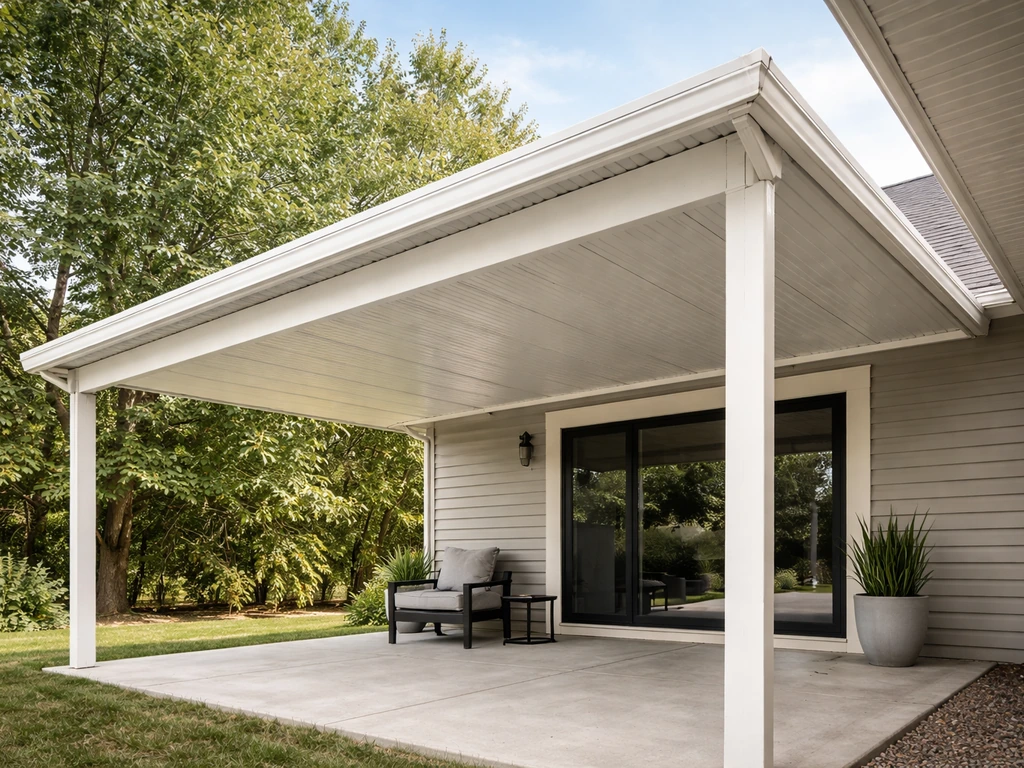
Heritage Patio Cover Reviews: What to Know Before You Buy
Heritage patio cover reviews guide: types, key performance factors, costs, warranty, and how to choose the right model.
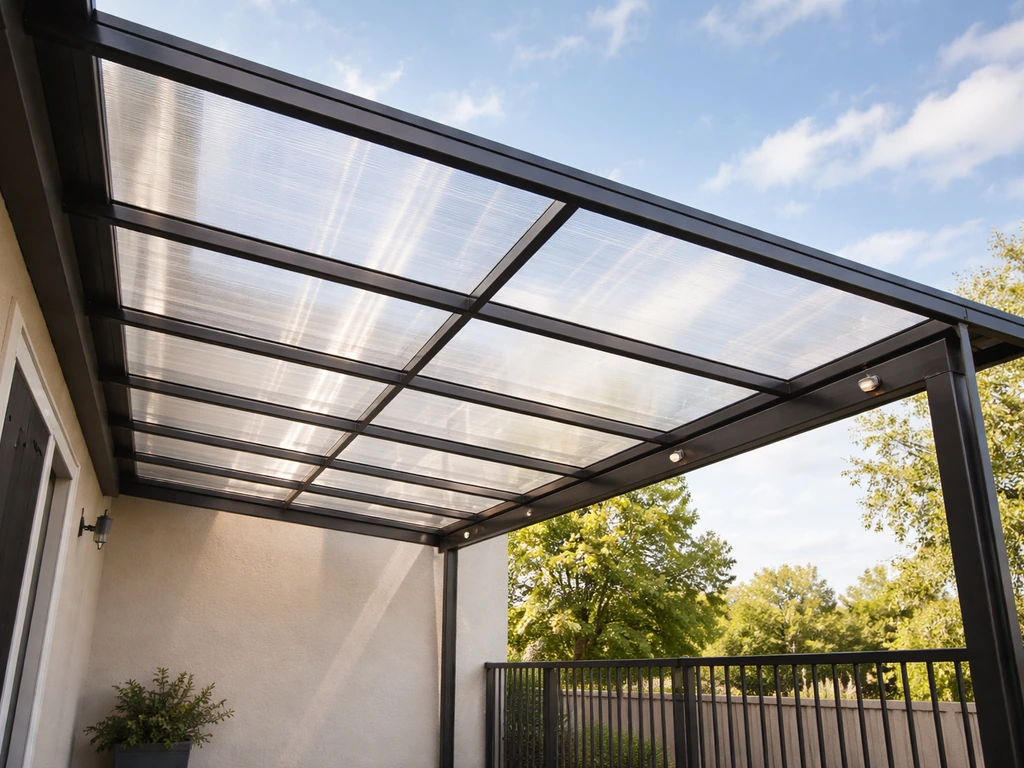
Polycarbonate Patio Cover Reviews: Buyer Guide and Best Picks
Real polycarbonate patio cover reviews: types, performance in sun heat rain wind, pros cons, and best picks for your cli
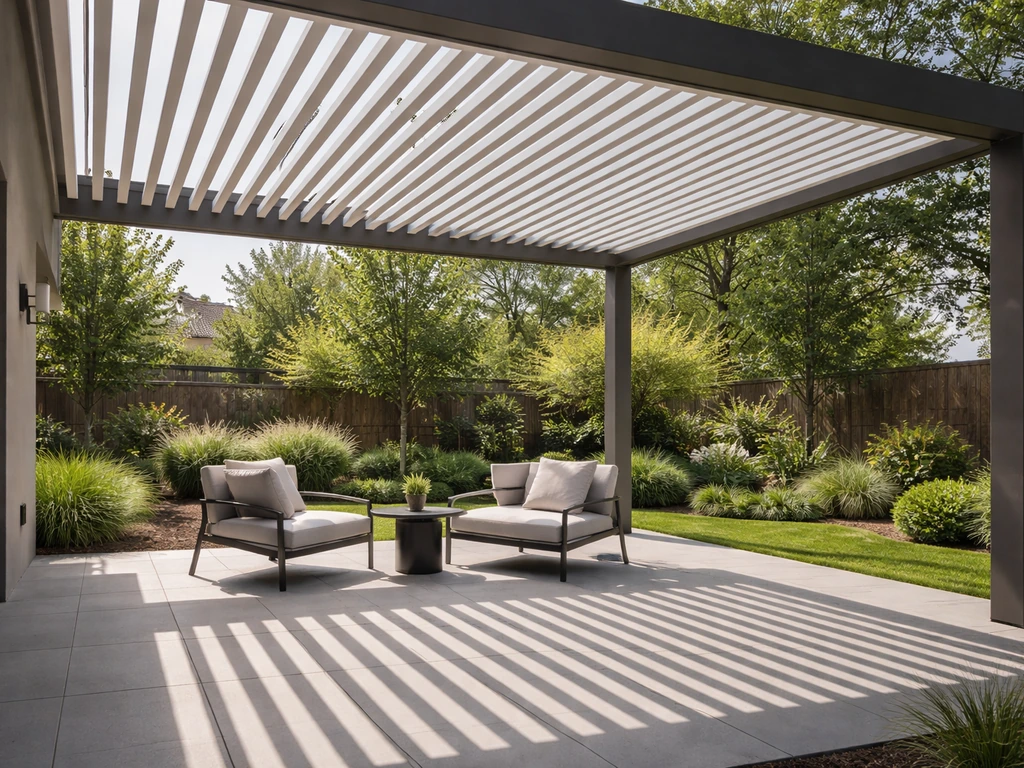
Louvered Patio Covers Reviews: How to Choose the Best
Reviews guide to louvered patio covers, comparing materials, drainage, wind, sealing, heat control, noise, and costs.