
SEO Title: Best Type of Rug for an Outdoor Patio: Materials, Weather & Use-Case Guide (2026) Meta Description: Find the best type of rug for your outdoor patio by material, climate, and use-case. Practical picks, comparison table, and maintenance tips included.
Best Type of Rug for Outdoor Patio: Durable Picks by Climate
Lark Perry
26 Jul 2026
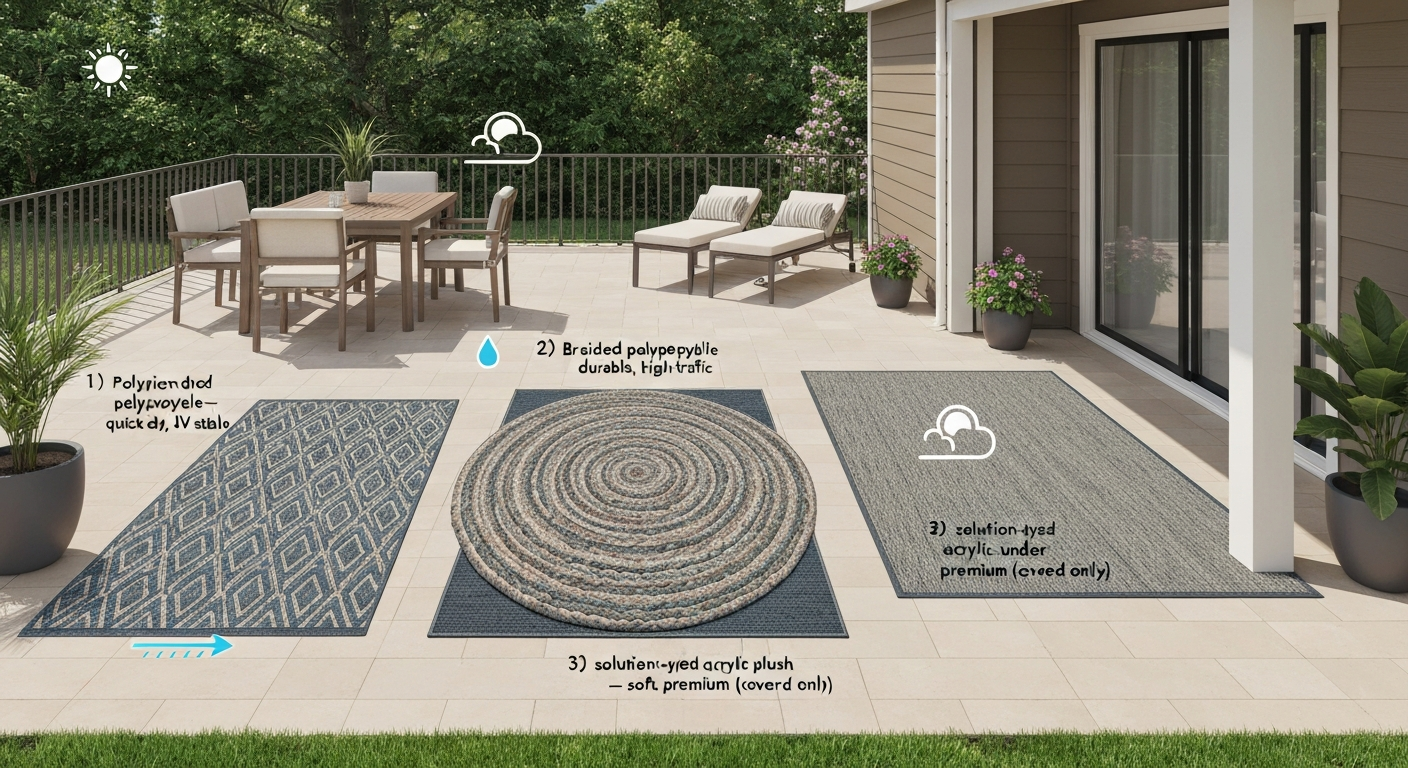
Polypropylene (olefin) is the best all-around type of rug for most outdoor patios. It does not absorb water, resists UV fading, handles foot traffic well, and costs far less than premium alternatives. That said, the right choice does shift depending on your climate, whether your patio is covered or fully exposed, and how much you want to spend. A covered porch in a dry climate gives you more options than a fully exposed deck in the Pacific Northwest.
Quick winners by use-case and climate
If you just want a fast answer before diving into the details, here are the picks that consistently perform best in specific situations. These are based on material properties, construction standards, and real-world use rather than brand marketing.
- Fully exposed patio, any climate: UV-stabilized, solution-dyed polypropylene flatweave
- Rainy or humid climate: polypropylene or recycled PET flatweave with open-grid backing (no latex)
- High-traffic patio (kids, pets, entertaining): braided or flatweave polypropylene, bleach-tolerant
- Covered patio or dry climate: solution-dyed acrylic or high-quality recycled PET for a softer feel
- Balcony or small space: thin flatweave polypropylene or a perforated outdoor mat (easier to dry)
- Style-first, dry covered area: natural fiber blends (coir border, seagrass look) — with important caveats
Decision table: best rug by patio type
Use this table as a starting filter before reading the material sections. The recommendations assume year-round outdoor placement unless noted.
| Patio situation | Best rug type | Construction to look for | What to avoid |
|---|---|---|---|
| Covered patio, mild climate | Solution-dyed acrylic or polypropylene | Flatweave or low-pile tufted, breathable backing | Heavy latex backing, natural fibers in humid areas |
| Fully exposed, sunny climate | UV-stabilized polypropylene | Solution-dyed flatweave or braided | Polyester (fades faster), natural fibers |
| Rainy / high-moisture climate | Polypropylene or recycled PET | Open flatweave, perforated or no backing | Latex-backed tufted, jute, coir, wool |
| High traffic (kids, pets, events) | Polypropylene (bleach-tolerant) | Braided or tight flatweave | Loosely woven naturals, high-pile tufted |
| Balcony / small space | Thin flatweave polypropylene or PET mat | Lightweight, easy to hang-dry | Heavy tufted rugs, natural fibers |
| Covered dry porch, style priority | Solution-dyed acrylic or coir blend (covered only) | Hand-woven, low-pile | Jute or sisal in humid or wet exposure |
Materials and construction: what actually matters
When a rug is marketed as 'outdoor,' the claim can mean anything from genuinely weatherproof to merely stain-treated. The fiber type, weave construction, backing material, and edge finishing all affect how long it will actually last outside. Here is what each of those elements does in practice.
Yarn type and solution dyeing
The most important distinction is whether the color is solution-dyed or surface-dyed. Solution-dyed fibers have the pigment locked into the yarn during manufacturing, not applied to the surface afterward. This dramatically improves colorfastness under UV exposure. Accelerated UV testing under standards like ISO 105-B02 (xenon-arc light) and ASTM D4329 (fluorescent UV lamp) show solution-dyed fibers holding color far longer than surface-dyed alternatives. ISO 105‑B02 specifies xenon‑arc artificial‑light exposure (accelerated fading) to evaluate colour fastness of textiles to daylight ISO 105‑B02 — Textiles — Tests for colour fastness — Colour fastness to artificial light (xenon). In practical terms, a solution-dyed polypropylene rug on a sunny patio can still look good after three or four seasons; a surface-dyed polyester rug in the same spot often goes chalky or faded within one summer.
Weave and construction
Flatweave and braided constructions dry significantly faster than tufted rugs because there is no thick pile to trap water and the open structure allows airflow through and under the rug. Tube-woven and hand-woven flatweaves go even further, using a construction that lets water pass through rather than pool on top. Tufted rugs are not automatically disqualified for outdoor use, but they need to be lightweight with minimal backing and should only be used in covered or low-moisture situations. Abrasion resistance, commonly tested using the ASTM D4966 Martindale method, is also worth checking for tufted constructions in high-traffic areas, flatweave and braided rugs tend to wear differently but more predictably outdoors.
Backing and drainage
The backing is where many 'outdoor' rugs fail. A heavy latex or glued backing traps moisture between the rug and the patio surface, creating exactly the warm, wet, dark environment that mold and mildew need to grow. The best outdoor rug constructions either have no backing at all, use a minimal fiber-locking system (some brands use a heat-set or chemical fiber anchor instead of latex), or use a perforated or open-grid backing that allows drainage. If you are using an underlay, choose a breathable perforated PVC grid pad or an open-weave natural rubber pad rather than a solid foam mat, both allow airflow and help prevent moisture from being trapped.
Edge finishing
Edge binding and serging affect how a rug holds up over time outdoors. Tightly bound or heat-sealed edges resist unraveling better than loosely finished or hand-knotted edges when repeatedly wet and dried. For fully exposed patios, look for rugs with machine-serged, heat-bound, or polypropylene-tape-bound edges, they tolerate hosing down and repeated moisture cycling without coming apart.
Polypropylene and recycled plastic rugs: the reliable workhorse
Polypropylene (also sold as olefin) is the industry standard for outdoor rugs, and for good reason. It is hydrophobic at the fiber level, meaning it does not absorb water, rain and spills bead on the surface or pass through rather than soaking in. It is commonly solution-dyed, UV-stabilized, and bleach-tolerant, which means you can clean it aggressively without worrying about damage. Mass-market polypropylene outdoor rugs start around $25 to $50 for small sizes and typically stay under $200 for a 6x9, making them accessible for most budgets.
Pros
- Does not absorb water — drains and dries quickly after rain
- Resists mold and mildew at the fiber level
- UV-stabilized and solution-dyed versions hold color well through multiple seasons
- Bleach-tolerant: heavy cleaning and mildew treatment won't destroy the fibers
- Wide price range: affordable mass-market options up through well-constructed mid-range picks
- Durable under foot traffic and furniture weight
Cons
- Can feel rough or plasticky underfoot, especially in cheaper flatweave constructions
- Lower-end polypropylene can still fade if it is surface-dyed rather than solution-dyed — always check
- Not as soft or premium-feeling as solution-dyed acrylic
- Some constructions have a slight sheen that looks less natural than woven alternatives
Recycled PET (plastic bottle-derived polyester) occupies similar territory. Manufacturers market these as waterproof, UV-resistant, and bleach-tolerant, and many mass-market indoor/outdoor lines at Home Depot and similar retailers use solution-dyed recycled PET. The environmental story is a genuine plus, and the performance is close to polypropylene for most outdoor applications. The one area where polypropylene still has a slight edge is long-term UV stability on fully exposed patios, PET can be more prone to fading without high-quality UV stabilizers. For covered patios and moderate climates, recycled PET is a solid, often more texturally appealing choice.
Compatibility note: polypropylene and recycled PET flatweave rugs are easy to move around a patio, which makes furniture rearrangement and speaker placement adjustments straightforward. Their flat, stable surface also means outdoor furniture legs sit evenly, which matters if you are trying to keep a patio layout consistent or level.
Polyester and acrylic outdoor rugs: acceptable with conditions
Standard polyester and acrylic are not the same thing outdoors, even though both are synthetic fibers. The distinction that matters most is whether the product uses solution-dyed acrylic (specifically engineered for outdoor exposure) or standard polyester, which is primarily an indoor fiber that happens to be marketed for patios.
Solution-dyed acrylic: the premium option
Solution-dyed acrylic is what brands like Sunbrella use for their outdoor fabric lines, and premium outdoor rug makers like Perennials and Couristan apply the same approach to rugs. The pigment is locked into the acrylic fiber during manufacturing, and the resulting material has excellent UV colorfastness, documented across multiple industry standards including ISO 105-B02. Sunbrella's technical data shows multi-year color stability and documents bleach tolerance, recommending a mildew treatment of 1 cup bleach and 1/4 cup mild soap per gallon of water with a 15-minute dwell time for heavy contamination. These rugs feel noticeably softer and more luxurious underfoot than polypropylene. The trade-off is cost, premium solution-dyed acrylic outdoor rugs through design retailers and specialty brands can run from several hundred to several thousand dollars depending on size and construction.
Standard polyester: use carefully
Standard (non-solution-dyed) polyester outdoor rugs are a different story. Polyester absorbs more moisture than polypropylene, and without proper UV stabilizers, it fades faster in direct sun. It is acceptable for covered patios, screened porches, or low-exposure situations where you want a softer feel at a lower price than solution-dyed acrylic. On a fully exposed south-facing patio, standard polyester is not a great long-term investment. If a product simply says 'polyester' without specifying solution-dyed or recycled PET with UV treatment, treat it as a covered-patio-only option.
Natural fibers outdoors: when they work and when to walk away
Coir, jute, seagrass, sisal, and wool have obvious visual appeal, they look warm, natural, and high-end in patio photos. The problem is that most of them are genuinely unsuited for wet or humid outdoor conditions. Natural fibers absorb water readily, which causes swelling, warping, staining, and eventually mold or mildew. Standard rug care guidance for jute is blunt: never wet-clean it. For outdoor use, that is a real problem. These materials are best kept inside or on a fully covered, dry porch in a climate that rarely sees humidity above 50 to 60 percent.
When natural fibers are worth considering
- Coir (coconut fiber): the most durable of the natural options outdoors — works well as a doormat or border rug on a covered porch in a dry climate, handles some foot scraping without breaking down
- Seagrass: slightly more moisture-tolerant than jute, but still not appropriate for exposed or rainy conditions
- Jute: avoid entirely for any outdoor use — absorbs water, discolors, and molds quickly
- Sisal: similar to jute; fine for dry interior-adjacent covered spaces but degrades rapidly with moisture exposure
- Wool blends: some wool-synthetic blend rugs are promoted for outdoor use, but pure wool is moisture-absorbing and prone to mildew — blends with synthetic backing can work on covered patios in dry climates, but require careful vetting
The honest summary: if someone is asking about the best material for outdoor patio rugs and they are drawn to natural fibers, the right answer is usually a synthetic rug that mimics the look of natural materials rather than the natural fiber itself. Manufacturers have gotten very good at producing polypropylene and PET rugs that look like jute or seagrass at a fraction of the weather-related risk.
Weather-specific concerns and how to handle them
Rain, standing water, and drainage
The biggest rug killer on an exposed patio is not rain itself, it is moisture that cannot escape. A polypropylene flatweave on a slightly sloped patio surface with a perforated pad underneath will shed water and dry out in a few hours of sun. The same rug on a flat concrete slab with a solid foam underlay traps water underneath and creates mold conditions within days. If you live in a rainy climate, construction choices matter as much as fiber type: open flatweave, no heavy backing, and a breathable pad are the combination that actually prevents problems. For the worst wet climates, some homeowners choose rugs specifically designed for drainage, or they simply roll up and store the rug during extended rainy seasons. For more detailed picks in these situations, the rainy-climate considerations around best patio rugs for rain are worth exploring separately.
Sun and UV exposure
A south-facing, fully exposed patio in a high-UV climate (think Arizona, Florida, Southern California) is one of the most demanding environments for any textile. Standard surface-dyed fibers can fade visibly within a single summer season under direct midday sun. Solution-dyed polypropylene and solution-dyed acrylic are the only fiber types that have the colorfastness data to support long-term outdoor placement in these conditions. Accelerated UV exposure testing under ASTM D4329 and color-fastness testing under ISO 105-B02 are the standards that manufacturers use, if a product claims UV resistance, these are the benchmarks behind the claim. In sunny climates, always confirm solution-dyed construction before buying.
Mold, mildew, and humidity
Mold does not grow on clean, dry polypropylene or acrylic fibers, it grows on the organic matter (dirt, pollen, food residue) that accumulates on them. The EPA advises against routine use of biocides for mold cleanup on porous materials and recommends physical removal, drying, and cleaning as the primary approach. For synthetic outdoor rugs with mildew visible from accumulated debris, a diluted bleach solution works well: both Sunbrella's technical guidance (1 cup bleach + 1/4 cup mild soap per gallon) and CDC household mold guidance (approximately 1 cup bleach per gallon for heavy contamination) point to similar concentrations. Always rinse thoroughly after bleach treatment and allow both sides of the rug to dry completely before putting it back in place. The EPA cautions that bleach is not appropriate for all materials, this applies specifically to bleach-tolerant synthetics like polypropylene and solution-dyed acrylic, not natural fibers.
Quick-dry options and after-rain care
The fastest-drying outdoor rugs are thin, flatweave, unbacked polypropylene or PET on a breathable pad. After heavy rain, the standard recommendation from multiple manufacturers is to hang the rug over a railing or lean it against a wall in the sun so both sides get airflow and dry fully before it goes back flat on the patio. Skipping this step, leaving a soaked rug flat on a non-porous surface for extended periods, is the most common cause of mold problems even with synthetic fibers. For balconies and small spaces, the lighter weight of thin flatweave rugs makes this step genuinely easy rather than a chore.
Climate trade-offs at a glance
| Climate type | Primary concern | Best fiber choice | Construction priority |
|---|---|---|---|
| Hot, high UV (desert/SW US) | Fading and fiber breakdown | Solution-dyed polypropylene or acrylic | UV stabilizers, solution-dyed only |
| Humid subtropical (SE US, Gulf Coast) | Mold, mildew, slow drying | Polypropylene flatweave | No latex backing, perforated pad |
| Rainy temperate (Pacific NW, UK) | Standing water, constant moisture | Polypropylene flatweave, no backing | Open weave, hang-dry after rain |
| Cold winters (Midwest, Northeast) | Freeze-thaw cycling, salt/sand | Polypropylene or recycled PET | Store in winter or use durable braided |
| Mild, dry (Mediterranean, CA coast) | Light UV, low rain | Polypropylene, acrylic, or PET | Most constructions work; style can drive choice |
Sizing, placement, and slip resistance
Getting the size right makes a bigger difference to how a patio looks and feels than most people expect. The most common mistake is going too small. A good rule of thumb: all key furniture legs should sit on the rug, or at minimum the front legs of seating. For a standard outdoor dining set, an 8x10 or 9x12 rug usually works better than a 5x8. On a balcony, measure the usable floor area first and go as large as the space allows without blocking drainage.
Slip resistance matters especially on smooth concrete, tile, or composite decking. A breathable perforated PVC grid pad or open-weave rubber pad under the rug solves both the grip problem and the drainage problem at the same time. Avoid solid foam pads outdoors, they hold moisture. If you are placing the rug on a wood deck, check that the pad material is compatible with the deck finish to avoid staining.
For patios that double as entertainment spaces with outdoor speakers, a flat, low-pile rug is easier to navigate around speaker cable runs and is less likely to create trip hazards near speaker stands or floor-mounted units. Rugs with significant pile height can also muffle the reflected sound from the patio surface, which may slightly affect how the audio sounds in an outdoor setup, this is rarely a primary concern but worth noting if you are doing a careful speaker placement.
Maintenance and cleaning step by step
Most synthetic outdoor rugs are genuinely easy to maintain if you build a simple routine. Here is what actually works for polypropylene and solution-dyed acrylic rugs, which cover the vast majority of outdoor purchases.
- Shake or sweep the rug weekly to remove loose debris, pollen, and dirt before it accumulates and becomes a mold food source
- Hose down monthly (or after dusty/pollen-heavy periods): lay the rug flat, wet thoroughly, scrub with a soft brush and mild dish soap or detergent, then rinse until the water runs clear
- For mildew or heavy staining on polypropylene or solution-dyed acrylic: mix 1 cup chlorine bleach and 1/4 cup mild liquid soap per gallon of water, spray or apply evenly, allow a 15-minute dwell, scrub lightly, and rinse thoroughly
- Hang or prop the rug vertically after any wet cleaning or heavy rain so both sides dry fully in the air — do not lay it back flat on the patio surface while still wet
- At the end of the outdoor season or before extended periods of rain/snow, roll the rug (dry) and store it indoors or in a dry shed — prolonged winter exposure accelerates wear on any fiber type
- Inspect the backing and edges annually for signs of delamination, fraying, or mold — catching these early prevents them from becoming structural problems
Cost and quality: what your budget actually buys
Outdoor rug pricing spans a wide range and the price difference is mostly real. A $40 polypropylene flatweave from a mass-market retailer will do the job on a covered porch or low-stakes patio, it will probably fade within two seasons on a fully exposed patio but is easy to replace. Mid-range polypropylene or recycled PET rugs from established brands in the $100 to $250 range for a 6x9 typically use better UV stabilizers, tighter construction, and more durable edge finishing. Premium solution-dyed acrylic or hand-woven PET rugs from design-oriented brands start around $300 to $500 for the same size and can run well into the thousands for large formats from specialty outdoor rug makers. Those higher-end rugs genuinely do last longer outdoors and they look and feel better underfoot, but the cost-benefit math only works if the rug is in a setting where you will notice the quality difference and it will not be left soaking in a rainy climate without any care.
| Price tier | Typical range (6x9 approx.) | Fiber/construction | Best for |
|---|---|---|---|
| Budget | $25–$80 | Surface or solution-dyed polypropylene, basic flatweave | Covered patio, seasonal use, easy replacement |
| Mid-range | $80–$250 | Solution-dyed polypropylene or recycled PET, better construction | Exposed or semi-exposed patio, 2–4 year lifespan |
| Premium | $300–$800+ | Solution-dyed acrylic or hand-woven PET | Design-forward covered or exposed patio, long-term investment |
| Luxury/designer | $800–$3,000+ | Hand-woven solution-dyed acrylic (Perennials, etc.) | High-end outdoor spaces, full UV and moisture performance |
Outdoor mats and patio blankets: related products worth knowing
Outdoor mats, smaller, thinner, often perforated or rubber-backed, fill a different role than a full patio rug. They work best at entry points, beside outdoor showers, or under high-traffic spots near grill areas where a full rug would be impractical to clean. Coir is a legitimate material choice specifically for entry mats and doormats because the coarse fiber does a good job scraping debris off shoes without absorbing as much moisture as it would lying flat on a patio. The considerations around the best outdoor mat for a patio are somewhat different from full rug selection, particularly around drainage and underfoot feel.
Patio blankets and outdoor throws are separate from rugs but sometimes overlap in how people use them on lounge-heavy patios. Waterproof or water-resistant patio blankets designed for outdoor use are made from different materials entirely, typically laminated fleece or treated polyester, and serve as seating and lap covers rather than floor coverings. If you are outfitting a full outdoor living space, a good rug and a set of patio blankets work together rather than competing. For recommendations on top-rated options, see our guide to the best patio blankets.
Buying checklist before you purchase
Run through these questions before committing to any outdoor rug. They cover the factors that separate good long-term choices from ones you will regret by the end of the first rainy season.
- Is the fiber solution-dyed? (Look for explicit 'solution-dyed' language — not just 'UV resistant' without specification)
- What is the backing? (Avoid heavy latex; prefer no backing, minimal fiber-lock, or perforated construction)
- What construction type? (Flatweave or braided for exposed/wet conditions; low-pile tufted is acceptable only for covered dry spots)
- What does the care label say? (If it says 'dry clean only' or 'do not wet clean,' it is not a real outdoor rug)
- Is the fiber type appropriate for your climate? (Polypropylene for wet/sunny; solution-dyed acrylic for premium covered; no natural fibers unless fully covered and dry)
- Does the size cover the furniture zone properly? (Measure your furniture footprint first)
- Do you have a breathable outdoor rug pad? (Essential for slip resistance and moisture management)
- Do you have a realistic maintenance and storage plan? (Even the best outdoor rug needs periodic drying and off-season storage)
FAQ
Search‑oriented title
Best Type of Rug for an Outdoor Patio: Durable, Weather‑Resistant Picks by Use‑Case & Climate
Meta description (<=160 characters)
Find the best outdoor patio rug for your climate and use: durable materials, quick‑dry constructions, care tips, buying checklist and decision table.
Quick answer: What is the best type of rug for an outdoor patio?
For most exposed patios and high‑traffic outdoor use, a flat‑weave polypropylene (olefin) or solution‑dyed recycled PET/polyester rug is the best balance of durability, water resistance, UV stability and value. For covered patios or dry climates, solution‑dyed acrylic (Sunbrella‑style) or tightly woven natural look recycled PET gives better colorfastness and a higher‑end look. Avoid natural fibers (coir, jute, sisal) on wet or humid patios; use them only in fully covered, dry locations.
Quick winners by use‑case and climate (one‑line recommendations)
Exposed, rainy/high‑humidity climate: UV‑stabilized polypropylene flatweave. Sunny, high‑UV but dry: solution‑dyed acrylic (premium). Balcony/small space: thin, low‑pile polypropylene mat or recycled PET runner (easy to roll/store). Covered patio with outdoor furnishings: solution‑dyed acrylic or premium recycled PET flatweave. High‑traffic/entertaining: tightly woven polypropylene or recycled PET with an open‑grid rug pad for slip resistance and drainage.
Materials explained — what to choose and why
Polypropylene/olefin: hydrophobic, low cost, quick‑drying, often solution‑dyed and UV‑stabilized; industry standard for exposed patios. Recycled PET/polyester (bottle‑derived): good stain resistance, can be solution‑dyed, offers softer hand and eco angle; many mass‑market outdoor rugs use this. Solution‑dyed acrylic: premium option with excellent UV/colorfastness and bleach tolerance; used in higher‑end outdoor rugs and cushions. Natural fibers (coir, jute, sisal, seagrass): absorbent and prone to mildew and warping — acceptable only in dry, covered areas or indoors. Trade‑offs: polypropylene is cheaper but can feel plasticky; acrylic is more colorfast and soft but pricier; recycled PET sits between on look and price.
Construction and why it matters (flatweave vs tufted/backed)
Flatweave or braided (open, low‑pile) constructions ventilate and drain faster and are preferred outdoors. Tufted rugs with heavy latex or glued backings trap moisture between rug and patio surface, increasing mildew risk; use only if backing is perforated or specifically rated for outdoor use. Look for tube‑woven/flatweave or machine‑woven constructions labeled 'outdoor' or 'all‑weather' and avoid heavy, non‑breathable backings on exposed patios.
Next Articles
Best Patio Blankets: Guide to Warm, Waterproof, Packable Picks
Find the best patio blankets for chilly, damp, decorative, and picnic use, tested picks, buying guide, care tips.
Best Material for Outdoor Patio Rugs: Top Picks
Compare polypropylene, PET, outdoor acrylic, olefin for patio rugs. Pick by sun, rain, mildew, stains, and easy cleaning
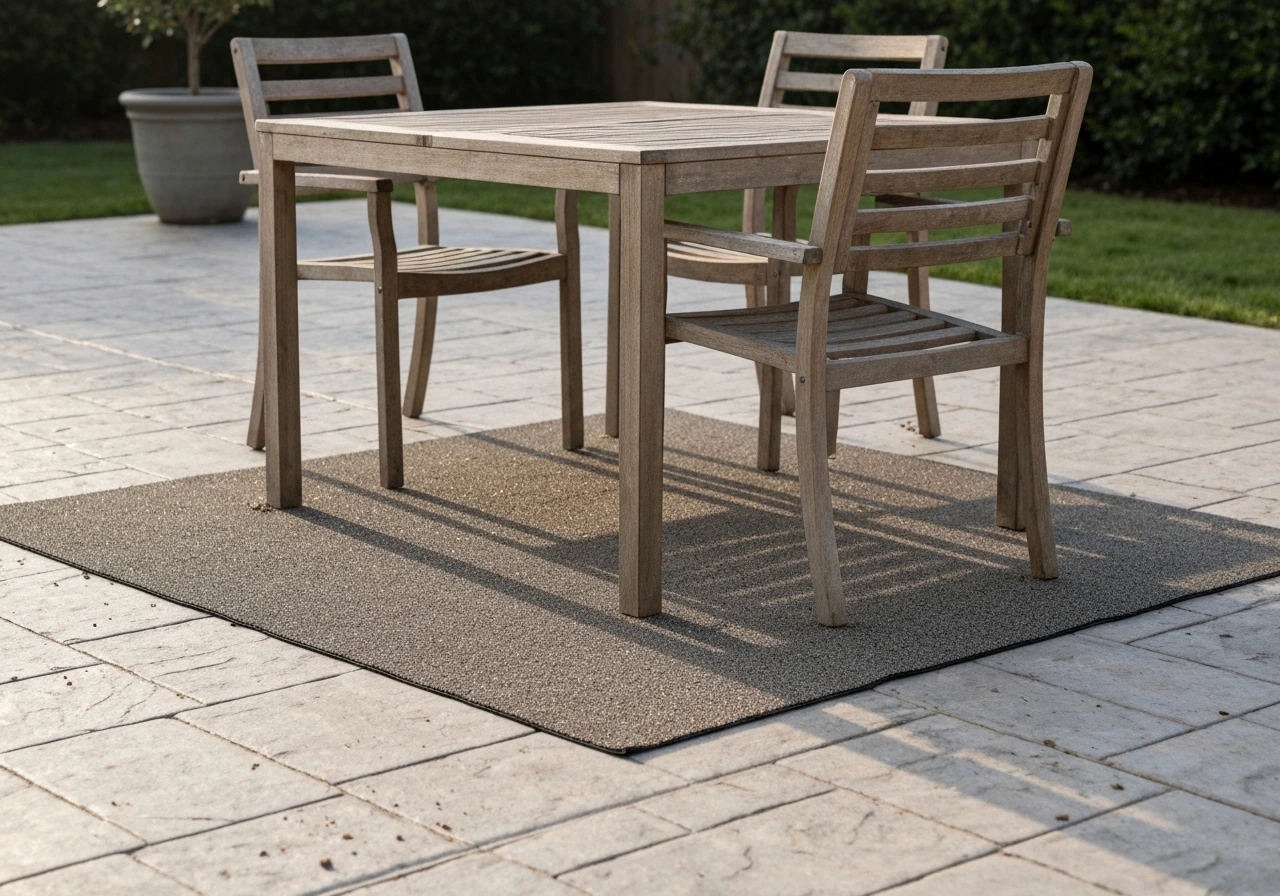
Best Outdoor Mat for Patio: Buy Guide by Use Case
Actionable guide to choose the best outdoor patio mat by material, grip, drainage, cleaning, size and use-case scenarios