
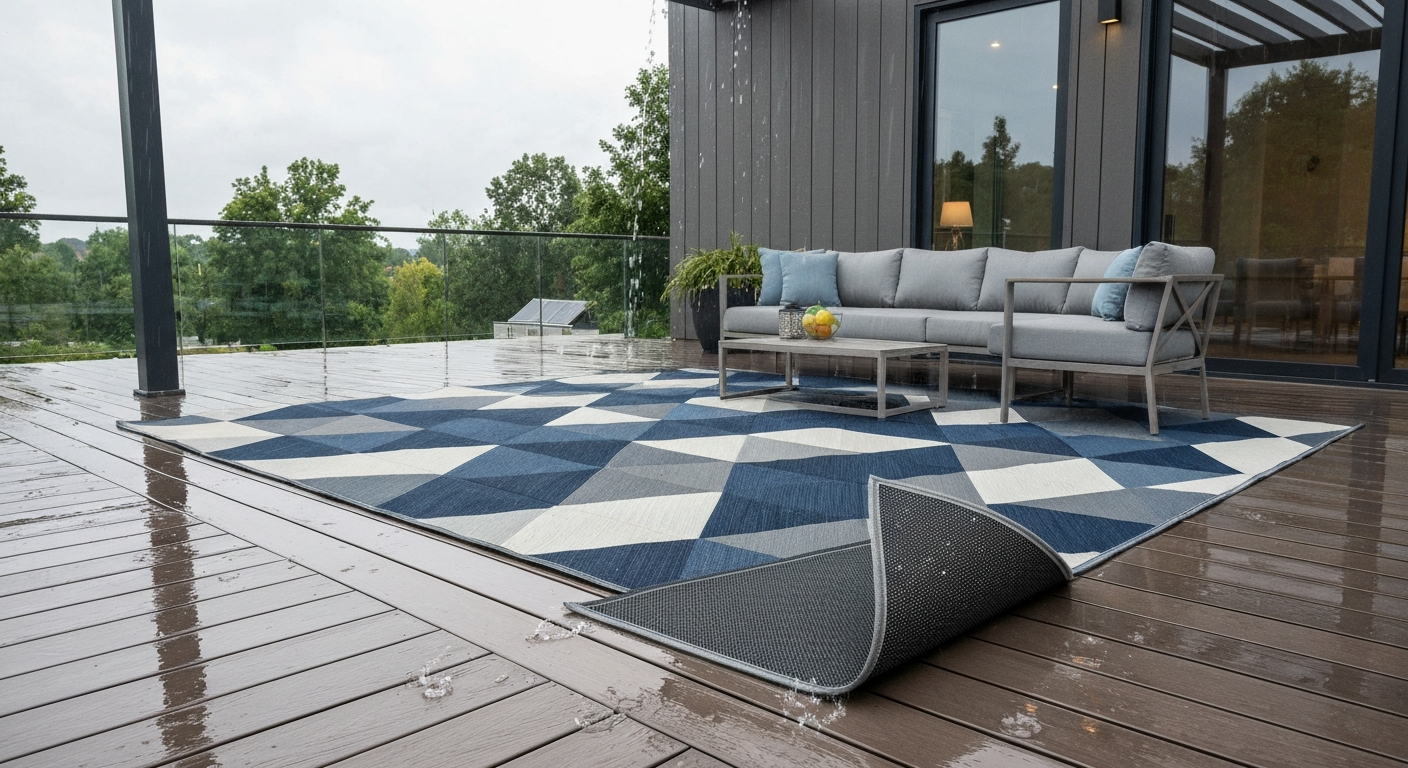
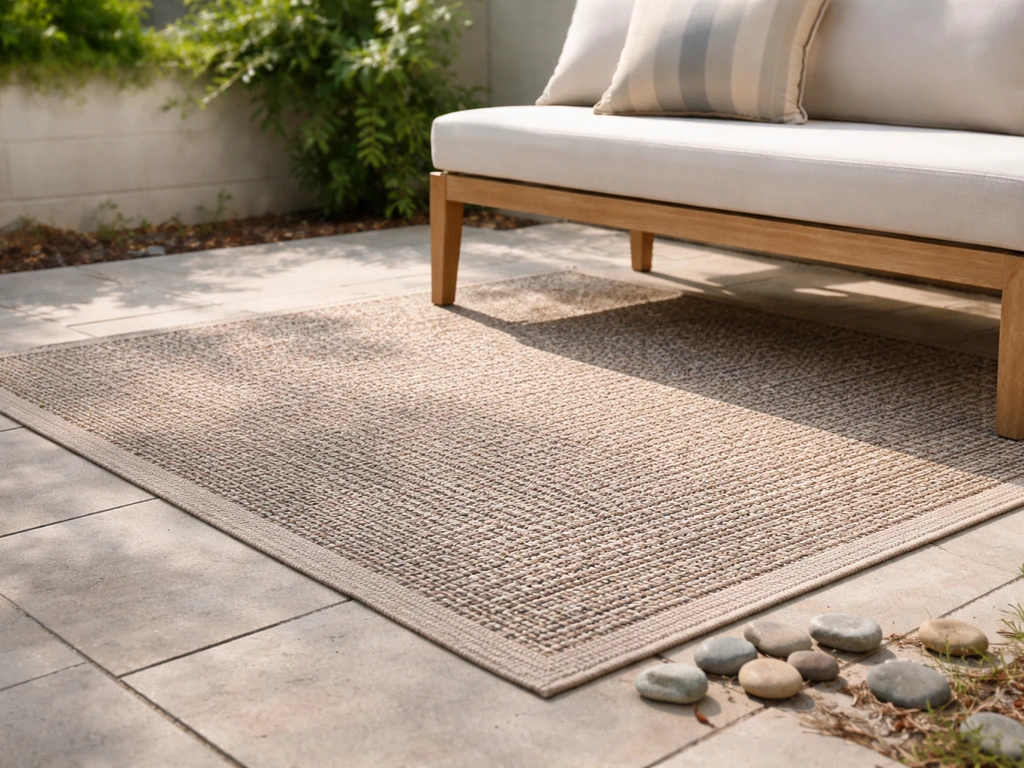
For rain-prone patios, flat-woven or loop-pile polypropylene rugs are your best bet. They shed water fast, resist mold and mildew without special treatment, and hold up to UV exposure far better than natural-fiber alternatives. If you want a specific starting point: a solution-dyed polypropylene flat-weave in a geometric or multi-tone pattern, sized to leave a 2–3 inch border around your furniture grouping, will handle most rainy climates without looking wrecked after a season. This guide walks through the best picks across budgets, what actually matters for wet-weather performance, how to check it quickly before you buy, and how to keep your rug looking good year after year. For a quick primer on the best type of rug for outdoor patio situations, see our dedicated guide.
Best Patio Rugs for Rain: Durable, Quick-Dry Picks by Budget & Style
Who this guide is for
Whether you have a fully exposed deck that gets hammered by afternoon thunderstorms, a semi-covered patio where the edges still collect rain, or a balcony where puddles form every time it drizzles, this guide covers you. It's aimed at homeowners and renters who want a rug that looks good, stays safe underfoot when wet, and doesn't become a mold farm by mid-summer. Budget range here runs from around $30 for a small entry-level option up to $300-plus for a larger premium pick. I've organized the picks by use case rather than just price, because the right choice for a shaded covered patio is genuinely different from what you need on a fully open deck.
Top picks at a glance
| Category | Material | Best For | Approx. Price (5x8) | Verdict | Main Pro | Main Con |
|---|---|---|---|---|---|---|
| Best Overall | Solution-dyed polypropylene flat-weave | Open, rain-exposed patios | $80–$130 | Dries in hours, mold-resistant, widely available | Fastest dry time; excellent UV stability | Limited cushion underfoot |
| Best Budget | Woven polypropylene (mass-merchant) | Budget-conscious open patios | $30–$60 | Solid rain performance at a low entry price | Inexpensive and easy to replace | Thinner construction; may curl at edges |
| Best Washable | Polypropylene cover with removable/washable top layer | Patios where deep cleaning is needed | $100–$180 | Machine-washable top layer makes post-storm cleanup simple | Full machine wash removes embedded dirt and organic matter | Two-layer system adds cost; cover must be fully dried before reattaching |
| Best for Covered Patios | Loop-pile or tufted polypropylene with felt-free synthetic backing | Shaded or partially covered patios | $90–$160 | More texture and comfort; fine where standing water is less of an issue | Softer feel; more decorative options | Slower to drain than flat-weave; not ideal for full rain exposure |
| Best for Open/Rainy Patios | PVC/vinyl flatweave or recycled-plastic woven | Fully exposed decks and open patios | $60–$140 | Water passes straight through; virtually zero moisture retention | Near-zero dry time; no mold risk from the rug itself | Hard underfoot; limited style range; can get hot in direct sun |
| Best Premium/Stylish | Solution-dyed polypropylene, high-pile or textured construction, designer colorways | Style-forward patios where looks matter as much as performance | $180–$320 | Combines rain-ready materials with elevated aesthetics | Best appearance; holds color for multiple seasons | Higher cost; thicker pile means slower drying than flat-weave |
A closer look at each category
Best overall: solution-dyed polypropylene flat-weave
This is the category I keep coming back to for most open patios. Solution-dyed polypropylene means the color is locked into the fiber during the manufacturing process, not applied as a surface dye, so UV and rain exposure have very little effect on how it looks over time. Polypropylene itself is highly hydrophobic, meaning the fiber doesn't absorb water the way cotton or jute does. In practice that translates to rugs that feel dry again within a few hours after rain, not the next day. Brands like Fab Habitat and the Home Decorators Collection at Home Depot sit in this category. Look for explicit 'solution-dyed' or 'UV stabilized' language in the product specs, not just 'fade resistant,' which can mean almost anything.
Best budget: woven polypropylene from mass merchants
The Safavieh Courtyard collection and similar Home Depot and Amazon basics-tier polypropylene rugs offer the same core material advantages (mold-resistant, quick-dry, UV-stable) at a price point where you won't lose sleep if you have to replace one after a rough season. The trade-off is usually thinner construction that can curl at the edges and slightly less refined patterns. For a balcony or a smaller seating area where you're not trying to make a design statement, these are genuinely hard to beat for the money.
Best washable: removable-cover outdoor rugs
Ruggable's outdoor line is the clearest example here. The concept is a thin polypropylene-blend cover that detaches from a non-slip pad so you can throw the cover in a standard washing machine. For patios that collect a lot of debris after storms, including leaves, mud, and pollen, the ability to machine-wash the rug rather than hosing it off outside is genuinely convenient. The rug cover also dries quickly in a dryer or on a line. The limitation is that you need to make sure both layers are fully dry before reassembling, and the two-piece system costs more than a comparable single-layer rug. Ruggable advertises mold and fade resistance and backs it with a returns guarantee, which is worth noting.
Best for covered patios: loop-pile polypropylene
If your patio has a pergola, awning, or roof that blocks most direct rain, you have a bit more flexibility. A loop-pile or lightly tufted polypropylene rug gives you more cushion underfoot and a softer visual texture without the drainage urgency of a fully exposed deck. The pile traps a bit more moisture than a flat-weave, so you want a synthetic (not felt or latex) open-grid backing that lets air circulate underneath. Frontgate's Resort collection sits in this space, using fine-spun polypropylene with explicit mold, mildew, and UV-resistance claims. These rugs hose clean and dry in the sun well, but I wouldn't put them in a spot that sits in standing water after storms.
Best for fully open or very rainy patios: PVC/vinyl or recycled-plastic woven
If you're in the Pacific Northwest, the Gulf Coast, or anywhere that gets sustained heavy rain, a PVC flatweave or woven recycled-plastic rug is the most pragmatic choice. Water passes straight through the weave and off the edges. There's nothing to retain moisture so mold has almost nowhere to take hold in the rug itself. The real downside is comfort: these feel hard underfoot and can radiate heat in full sun. They also have a more industrial look, though the category has improved and you can now find decent geometric and stripe patterns. Think of them as the most functional option when weather performance is the only priority.
Best premium/stylish: designer solution-dyed polypropylene
Higher-end brands use the same polypropylene base but invest in more sophisticated dyeing, higher pile heights, more detailed patterns, and better finishing on the edges. You're paying for aesthetics and longevity of appearance, not fundamentally different weather resistance. What you get is a rug that looks as good in year three as it did on delivery, holds richer colors, and comes in the kinds of patterns and colorways (Moroccan tiles, abstract geometrics, classic stripes) that elevate a patio from functional to well-designed. At this price point, look for weight per square yard specs (heavier tends to be more durable) and check that the backing is synthetic, not jute-reinforced.
What actually makes a rug good in rain
Marketers use a lot of the same words on very different products, so it helps to understand what each performance property means and why it matters for a wet patio.
Water resistance vs. drainage
These are different things and both matter. Water resistance means the fiber itself doesn't absorb water. Polypropylene is among the lowest water-absorbing textile fibers available, which is why it dries so fast. Drainage means water can physically move through or off the rug rather than pooling on top or underneath. A water-resistant fiber in a tight, flat construction over a solid backing can still trap a shallow puddle between the rug and the deck. Good outdoor rugs for rain need both: hydrophobic fibers and a construction or backing that lets water escape.
Quick-dry behavior
In a multi-week outdoor test by BobVila, polypropylene and recycled-plastic rugs dried within a day after storms, while indoor/outdoor blend rugs (those with natural fiber components or dense foam-backed constructions) took multiple days and showed mildew underneath by the end of the test period. An independent field report, "I tested 3 outdoor rugs through 6 weeks of spring rain, only polypropylene survived mold (independent test blog)", found polypropylene flat‑weave rugs resisted mold while other constructions developed mold during prolonged wet conditions blank" rel="noopener noreferrer">I tested 3 outdoor rugs through 6 weeks of spring rain — only polypropylene survived mold (independent test blog). That drying speed matters because mold spores are always present outdoors. The CDC is clear that mold grows on fabrics that stay moist and soiled. Protect Yourself from Mold, Centers for Disease Control and Prevention (CDC) notes to launder or discard moldy fabrics because mold spores are ubiquitous outdoors and will regrow on fabrics that remain moist and soiled blank" rel="noopener noreferrer">Protect Yourself from Mold — Centers for Disease Control and Prevention (CDC). A rug that dries in two to four hours after rain gives mold virtually no time to establish. A rug that's still damp the next morning is a liability.
Mildew and mold resistance
True mold and mildew resistance in a rug comes primarily from the fiber type and how fast the rug dries, not from antimicrobial treatments (which can wear off over time). Polypropylene and PVC/vinyl offer inherent resistance because they don't provide a food source or moisture reservoir for mold. When you see 'mildew resistant' on a natural-fiber rug with a surface treatment, that claim will erode. Manufacturers that reference AATCC TM30 antifungal testing or similar test protocols are being more transparent than those who just label the product 'mold resistant' without supporting data.
UV and fade resistance
Outdoor rugs are subjected to full solar UV exposure for months at a time. The most rigorous way manufacturers quantify this is with xenon-arc lamp testing per ISO 105-B02 or AATCC TM16. Solution-dyed fibers perform best because the pigment is embedded in the polymer matrix rather than applied to the surface. If a product just says 'fade resistant' without specifying solution-dyed construction or referencing a test standard, take the claim with some skepticism.
Slip resistance when wet
A wet patio rug that slides underfoot is a fall hazard, especially on smooth decking or tile. The hard-surface flooring industry uses a wet dynamic coefficient of friction (DCOF) metric under ANSI A326.3, with a minimum of 0.42 for level wet areas. Rugs don't have an equivalent standardized test, but the same principle applies: you want a rug that stays in place when wet and has a surface texture that's grippy rather than slick when damp. Practical checks include a non-slip or open-grid backing, rug-to-deck anchoring (clips, outdoor rug tape, or furniture weight), and a pile or weave surface that doesn't compress into a slick sheet when saturated.
How to evaluate a rug before you buy: real-world performance checks
When I'm assessing a rug for a rainy patio, I run through a short checklist before committing. It takes about five minutes and catches most of the common failure points.
- Check the fiber content label: polypropylene (also listed as olefin), PVC, vinyl, or recycled PET plastic are the safe choices for open rain exposure. 'Indoor/outdoor' on a cotton, jute, or seagrass rug is a red flag.
- Look for 'solution-dyed' in the product description, not just 'UV resistant' or 'fade resistant.' Solution-dyed is a manufacturing process; the other terms are performance claims that vary widely.
- Check the backing description: open-grid polypropylene or vinyl mesh is good; jute backing, felt padding, or latex foam backing retains moisture and will grow mold.
- Look for mold/mildew resistance language tied to a test standard (AATCC TM30 or equivalent) rather than just marketing copy.
- Check the care instructions: 'hose off and allow to dry in the sun' is the gold standard for rain-exposed rugs. If the instructions say 'dry cleaning only' or 'do not wet,' that rug does not belong outdoors in rain.
- If possible, feel the texture of the rug surface when slightly damp. A tightly woven flat-weave that feels rough stays safer underfoot than a smooth, shiny-surfaced vinyl that becomes slick.
- Weigh the rug or check the weight-per-square-yard spec if listed. Heavier rugs tend to stay flatter and resist wind lift better, though they also take slightly longer to dry.
- Read recent reviews specifically filtering for comments about mold, smell after rain, or buckling/curling. User reports from rainy climates are more useful than lab specs for predicting real-world behavior.
Best materials for rainy patios, compared
The material is the single biggest driver of rain performance. For a focused rundown on the best material for outdoor patio rugs, see this guide on best material for outdoor patio rugs. Here's how the main options stack up.
| Material | Water Absorption | Dry Time | Mold Risk | UV Stability | Comfort | Price Range | Best Use |
|---|---|---|---|---|---|---|---|
| Polypropylene (olefin) | Very low (hydrophobic fiber) | 2–6 hours | Very low | High (solution-dyed) | Moderate | $ to $$$ | Open patios, decks, high-rain climates |
| Recycled plastic / PET woven | Very low | 1–4 hours | Very low | Good to high | Low to moderate | $ to $$ | Fully exposed, high-rain patios |
| PVC / vinyl flatweave | Near zero | Under 1 hour | Near zero | Moderate to good | Low (hard underfoot) | $ to $$ | Wet decks, pool surrounds, high-drainage priority |
| Outdoor polyester with coatings | Low (coating-dependent) | 4–12 hours | Low to moderate | Moderate (coating-dependent) | Moderate to good | $$ to $$$ | Covered or semi-covered patios |
| Coated jute / 'weathered' natural fibers | Moderate to high (jute core absorbs) | 12–48+ hours | Moderate to high | Low to moderate | Good | $$ to $$$ | Covered, dry climates only — not suitable for rain exposure |
Coated jute deserves a specific caution. You'll see it marketed as 'outdoor' or 'weather-resistant' and it can look beautiful, but the coating only protects the surface. The jute core fiber absorbs moisture and, once wet, takes a very long time to fully dry. University extension guidance on mold prevention is consistent: fabrics that stay damp for more than 24–48 hours are high-risk for mold growth. In my experience, a coated jute rug on an open patio in a rainy climate will smell musty by midsummer and show mold by fall. Keep it on a completely covered, well-ventilated porch in a dry climate if you want the natural look.
Construction and backing: what to choose and what to avoid
Backing materials
The backing is where most outdoor rugs fail in wet conditions, even when the face fiber is fine. Jute backing (common as a secondary backing on machine-made rugs) wicks moisture, stays wet, and rots. Latex foam backing seals the underside of the rug, preventing airflow and trapping moisture between the rug and the deck. Felt pad attached to the rug backing acts like a sponge. What you want is an open-mesh polypropylene or vinyl grid backing that allows water and air to move freely. When buying, check the product photos for the underside or ask the retailer explicitly what the backing material is.
Underlay and drainage solutions
Even with a good open-grid backing, a rug lying flat on a non-porous deck surface (sealed concrete, composite decking with tight board spacing) will trap a thin layer of water underneath after heavy rain. The fix is simple: use an outdoor rug pad made from open-weave recycled plastic or rubber grid that creates a small air gap between the rug and the deck surface. This speeds drying dramatically and reduces the risk of mold forming on the deck surface as well. Avoid any rug pad marketed for indoor use, since these typically use felt or PVC foam that holds moisture. If your deck has good drainage gaps between boards, you may not need a pad at all, but I'd still recommend one on concrete or sealed tile.
Anchoring and wind resistance
A wet, heavy rug is actually harder to move by wind than a dry one, but lighter rugs and smaller sizes on open balconies can shift or flip in gusts. Options include outdoor rug anchor clips that attach to deck boards, double-sided outdoor carpet tape for hard surfaces, or simply placing furniture legs on the rug edges. If you use tape, choose a version rated for outdoor and wet surfaces and check it periodically, since heat cycling degrades adhesive over time.
Sizing and placement for different patio setups
Open decks and fully exposed patios
For an open seating area, the standard guidance is to size the rug so all four legs of your main furniture grouping sit on it, or at least the front two legs. This typically means a 5x8 for a loveseat and two chairs, or an 8x10 for a full sofa-and-chairs setup. More importantly for rain performance: leave at least 6 inches between the edge of the rug and any wall, fence, or planter to allow water to run off the edges freely. On a sloped deck, orient the rug so its shorter dimension runs in the direction of slope, which helps water drain off the edge rather than pooling under the center.
Covered patios and pergolas
A covered patio offers more flexibility on material, but drainage still matters because rain blows in from the sides and humidity keeps covered spaces damp longer than you'd expect. Size up slightly here since the rug can extend closer to the covered perimeter walls. Use a slightly thicker construction or loop-pile rug if you want more comfort, but still keep the backing clear of any fixed wall or structure to allow airflow underneath.
Balconies
Balconies present a drainage challenge because the floor often has a deliberate slope toward a drain. Placing a rug that covers the drain is a guaranteed mold and standing-water problem. Size your rug to clear the drain by at least 8–12 inches. On narrow balconies, a runner (2x8 or 2.5x10) often works better than a rectangle. Open-weave or flat-weave construction is especially important here since you want rain to pass through to the drain below.
Walkways and entryways
Entry runners and path rugs get the heaviest foot traffic when wet, so slip resistance is the top priority. A tight, flat-weave polypropylene runner with a rubber or open-grid backing, or a thick outdoor doormat-style woven vinyl, handles this combination of high traffic and constant wet exposure better than any other option. For a focused roundup of heavy-traffic, wet-weather entrance solutions, see our guide to the best outdoor mat for patio. Keep these narrow (24–36 inches wide) and long enough that guests take two or three steps on the rug before reaching a threshold.
Styling and color choices that hide water marks and wear
Rainy patios are hard on rug appearance in ways that go beyond fading. Water marks, damp-dark patches, pollen staining, and leaf debris all show up more on solid colors and light tones. The styling choices that work best in wet climates are the same ones that work for busy household spaces: busy patterns, mid-tones, and textured surfaces.
- Choose geometric, tribal, or botanical patterns over solid colors. Patterns break up the visual field so temporary water marks and minor staining blend in rather than standing out.
- Mid-tone blues, greens, grays, and terracotta tones hide water darkening better than light beige, white, or cream. They also look better after years of rain than very dark charcoals or blacks, which tend to show white water-mineral deposits.
- Heathered or variegated colorways (two or more tones woven together) are especially forgiving because the tonal variation naturally obscures any uneven drying patterns.
- Textured weaves, low-pile constructions, or ribbed flatweaves scatter light differently when damp versus dry, which reduces the visual contrast between wet and dry sections of the rug.
- If you want a light, airy look, go for a light-ground pattern with a bold repeat rather than a solid pale color. The pattern interrupts the eye and makes seasonal marks much less noticeable.
- Avoid rugs with a shiny or glossy surface finish. These look great in showrooms but emphasize water marks and surface imperfections much more than a matte or slightly rough surface finish does.
Care, cleaning, and storm prep
Routine cleaning
For polypropylene and PVC rugs, the standard care routine is simple: shake or sweep off dry debris, hose off with water, scrub any stained areas with a soft brush and mild dish detergent, then rinse thoroughly and allow to dry fully in the sun before placing back on the deck. University extension guidance on mold prevention stresses that textiles must be completely dry after cleaning, not just surface-dry. Flip the rug to dry both sides if you have the space to do it.
After a major storm
After heavy rain, especially if debris has accumulated, lift the rug off the deck to check the underside and the deck surface below. Rinse both and let them dry before replacing the rug. If mold is already present on either surface, scrub with a diluted white vinegar solution (1 cup vinegar per gallon of water) or a mild outdoor cleaner, then rinse and dry completely. The CDC recommends discarding fabrics with significant mold growth that cannot be thoroughly cleaned and dried. For synthetic rugs, a good scrub and complete drying usually handles early mold. For any rug with a natural-fiber backing or fill that has developed a persistent musty smell, replacement is the more practical call.
Seasonal storage
Consumer Reports recommends stowing outdoor rugs during extended heavy rain events or off-season storage. Before rolling a rug for storage, make sure it is completely dry, both face and backing. Roll it face-side out to avoid crease marks in the pile, wrap it in a breathable cover (not plastic, which traps moisture), and store it in a dry, ventilated space. Storing a slightly damp rug in a sealed bin or plastic bag for even a few weeks is a reliable way to ruin it.
Alternatives worth knowing about
Patio rugs are not the only option for covering an outdoor floor. Depending on your setup, one of these alternatives might actually serve you better.
- Outdoor mats: Thicker, shorter, and more durable than rugs for high-traffic entry zones. Woven vinyl or rubber-backed polypropylene mats handle constant wet foot traffic and heavy use better than most rug constructions. Good for doorways, grill areas, and anywhere a rug's aesthetics aren't the priority.
- Roll-up water-resistant mats: A practical choice for balconies or compact patios where you want to clear the floor for rain events or seasonal changeover. These store easily and some double as comfortable surface for barefoot outdoor use.
- Outdoor patio blankets: Not a floor covering, but if you're furnishing a smaller outdoor sitting area and want to add warmth and texture, a weather-resistant patio blanket layered over a chair or ottoman can reduce how much rug area you actually need. Worth considering alongside a smaller rug for a more complete outdoor room look.
Where to buy and what to expect to pay
The widest selection of rain-suitable outdoor rugs is at home improvement retailers (Home Depot, Lowe's), mass merchants (Wayfair, Amazon, Target), and specialty outdoor brands (Fab Habitat, Ruggable, Frontgate). For chilly evenings, consider also browsing our roundup of best patio blankets to layer for warmth and comfort. Home improvement stores are strong for budget and mid-range polypropylene options in practical colorways. Wayfair and Amazon offer the broadest size and style range, but photo accuracy varies so read reviews carefully. Direct-to-consumer brands like Fab Habitat and Ruggable offer more consistent quality control and clearer material disclosure. Premium outdoor brands and design-focused retailers carry higher-end options but often require longer lead times.
| Size | Budget (polypropylene) | Mid-Range (solution-dyed PP or recycled plastic) | Premium (designer/high-pile) |
|---|---|---|---|
| 2x3 / doormat size | $15–$30 | $35–$60 | $70–$120 |
| 4x6 | $30–$55 | $60–$100 | $120–$200 |
| 5x8 | $45–$80 | $90–$150 | $180–$320 |
| 8x10 | $80–$140 | $150–$250 | $300–$550 |
| 9x12 | $120–$180 | $220–$380 | $450–$800+ |
Quick buying checklist
- Fiber: polypropylene, recycled PET, or PVC/vinyl for open rain exposure. Avoid jute, cotton, and natural sisal on any exposed surface.
- Dye method: solution-dyed preferred for UV stability. Confirm this in the spec sheet, not just marketing copy.
- Backing: open-mesh synthetic (polypropylene or vinyl grid). Reject jute backing, latex foam, or attached felt pad.
- Care instructions: must include hose-off or machine-washable options. No dry-clean-only, no 'do not wet.'
- Mold/mildew claim: look for test standard references (AATCC TM30 or equivalent) when available.
- Underlay: match with an open-weave outdoor rug pad if placing on non-porous decking (sealed concrete, tile).
- Sizing: allow 6-inch margins from walls; clear floor drains by at least 8 inches.
- Color and pattern: mid-tone, patterned, or heathered colorways for the best concealment of water marks and wear.
- Return policy: for larger rugs, confirm the retailer accepts outdoor rug returns in case of unexpected performance issues.
FAQ
What are the top patio rugs for rain-prone outdoor spaces (quick, across budgets and styles)?
Budget: Home Decorators Collection / Safavieh polypropylene flatweave rugs — inexpensive, widely available, DIY-cleanable, $30–$150. Midrange: Fab Habitat / Frontgate polypropylene or recycled-plastic flatweaves — better weave density, UV stabilization, $120–$400. Premium: Ruggable Outdoor (removable, washable covers over water-resistant pads) and high-end woven polypropylene or recycled PET rugs from Frontgate or Dash & Albert — best durability, warranties, $300–$1000+. Natural-look alternative (covered areas): coated jute lookalikes (polypropylene-backed) — avoid for open rain. Note: price ranges approximate and vary by size and retailer.
What exactly makes a patio rug “good in rain”?
Key attributes: water resistance (low water uptake fibers), quick‑dry construction (flat/low pile, open weave), drainage capability (loose weave or backing with channels), mildew/mold resistance (material and antimicrobial treatments tested to AATCC/ASTM where provided), UV/fade resistance (vendor data referencing AATCC TM16 or ISO 105‑B02 is best), and slip resistance (textured surface or non‑slip backing/underlay; field wet‑slip testing or referencing wet DCOF-like metrics helpful). Also consider ease of cleaning and ability to be stowed or elevated during heavy storms.
How do common outdoor rug materials compare for rainy patios?
Polypropylene / recycled plastic: Best overall for rain — hydrophobic, quick‑dry, resists mildew, affordable, common in flat‑woven. Pros: low water uptake, hose‑cleanable, UV‑stabilized options. Cons: can feel synthetic, lower-end prints may fade if not solution‑dyed. PVC / vinyl: Very water resistant and easy to wipe or hose off; heavier and can trap heat; some designs look less natural. Outdoor polyester (solution‑dyed): Good colorfastness if solution‑dyed; can be quick‑dry but slightly more water retention than PP. Woven polypropylene (power‑loomed): Standard outdoor choice — durable, quick‑dry. Coated jute or natural fibers: Attractive in covered patios only — natural fibers absorb water, can mold; coated versions may still retain moisture at backing seams — use only under cover. Note: check vendor claims and test data (AATCC/ISO) for UV/mildew claims.
What should I know about construction and backing choices?
Construction: flat‑woven/low‑pile weaves dry faster and shed water; tufted/pile rugs retain moisture longer. Backing: PVC or latex‑backed rugs may block drainage and trap moisture — risky in open rain. Preferred: unbacked flatweave or rugs with perforated/mesh backing that allow drainage. If a rug has a solid backing, pair it with an elevated or draining underlay to prevent trapped moisture and mold.
What underlay and drainage solutions do you recommend?
Use breathable, perforated rug pads or raised lattice/plastic grid pads that lift the rug off the substrate and allow airflow and runoff. For concrete or sloped patios, ensure surface slope toward drainage and consider slotted drain mats. For balcony applications, choose low‑profile, nonmarring pads that comply with building rules and avoid trapping water over balcony subflooring. For heavy rain zones, use rubber/pvc grid risers or plastic deck tiles under the rug to create an air gap.
How should I size and place a patio rug differently for covered vs. open patios?
Covered patios: You can use more delicate-looking materials (coated jute lookalikes) and larger sizes; focus on style and UV resistance. Open patios: Choose flat‑woven polypropylene or vinyl, small to medium sizes for ease of moving/storing. In both cases, leave a 6–12 inch border from edges to prevent tripping and allow water to run off; don't place rugs over drains. For high‑traffic seating groups, pick rugs that fit under front legs of furniture to anchor the set.
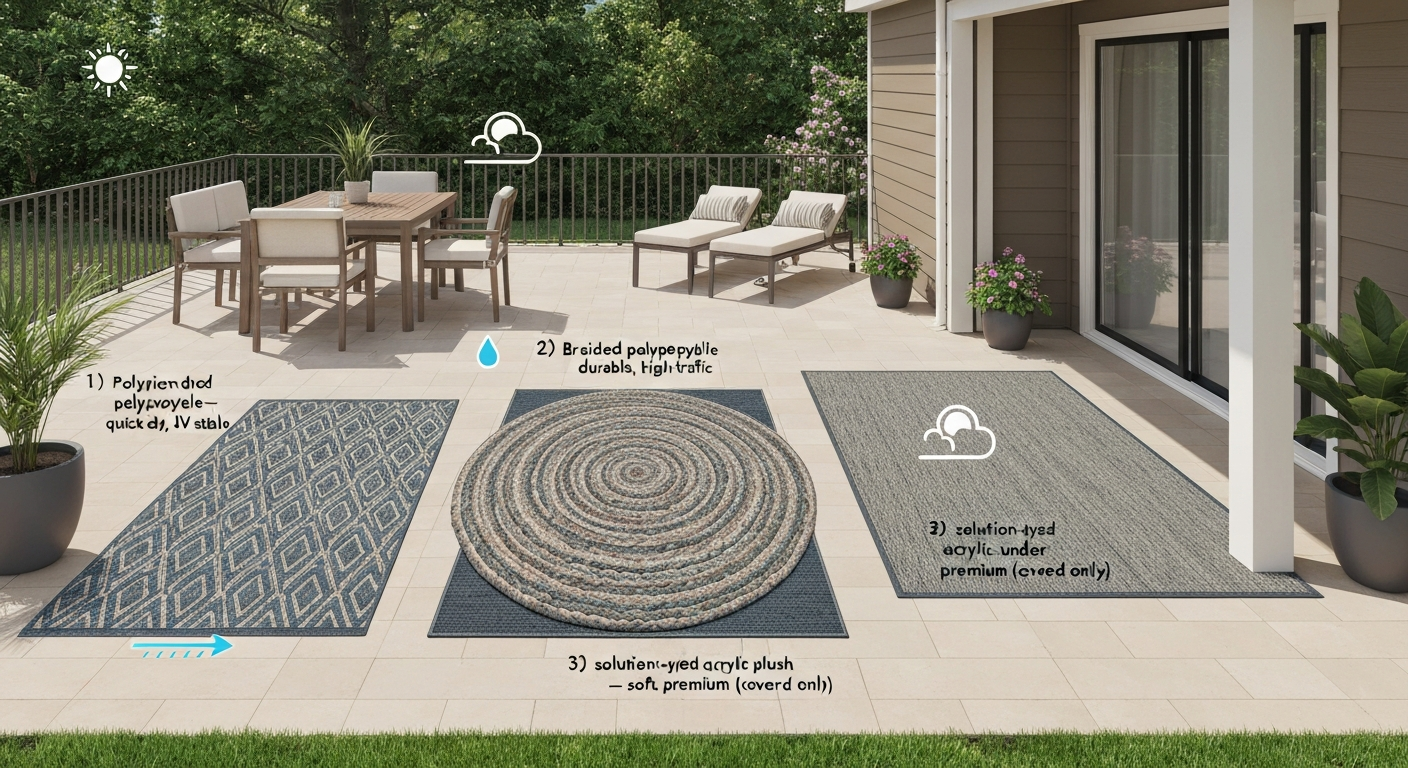
Find the best rug for your outdoor patio, durable, weatherproof materials, quick buying checklist and care tips for every
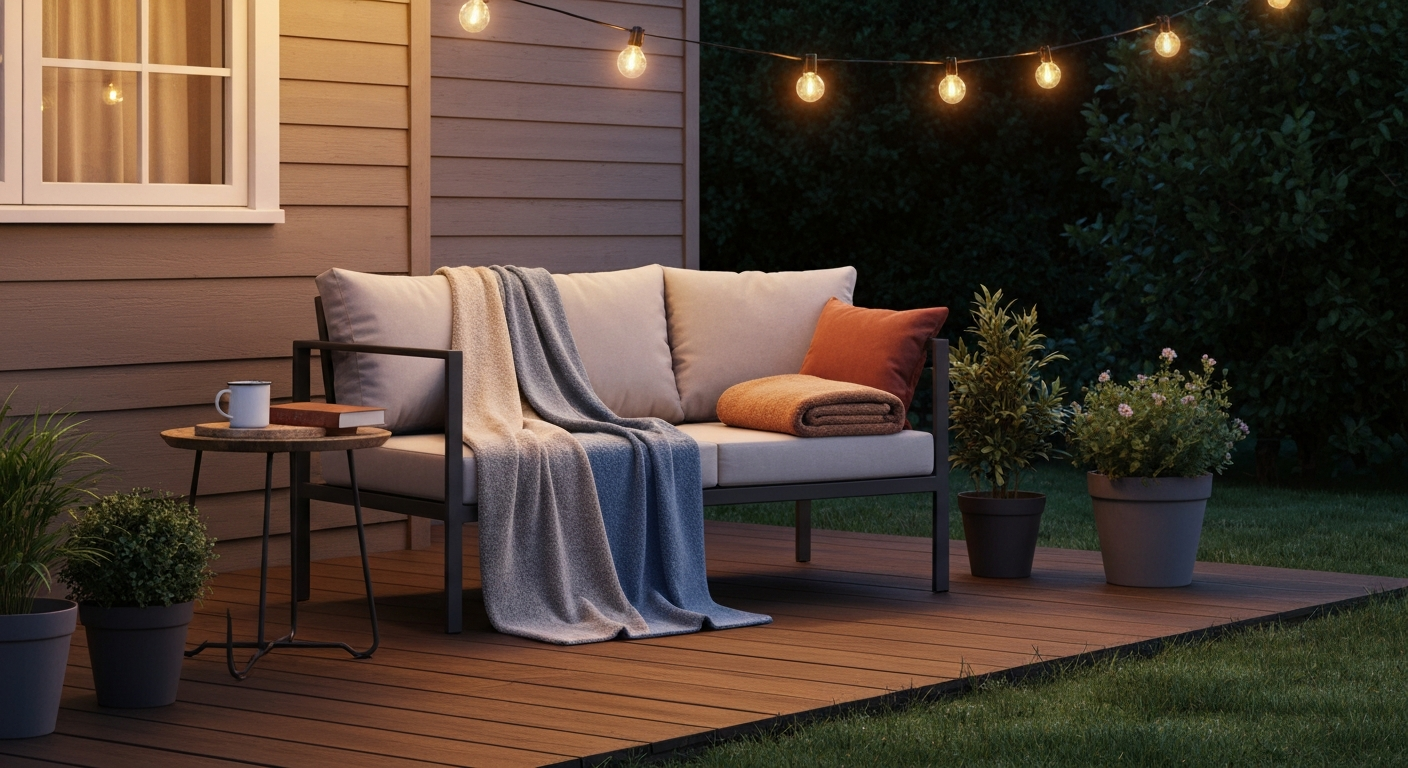
Find the best patio blankets for chilly, damp, decorative, and picnic use, tested picks, buying guide, care tips.
Compare polypropylene, PET, outdoor acrylic, olefin for patio rugs. Pick by sun, rain, mildew, stains, and easy cleaning