
For most covered or semi-covered patios, the SANUS VODLT1 outdoor tilt mount is the best starting point. It handles TVs from 37 to 95 inches, uses a corrosion-resistant coating with stainless steel hardware, and gives you the tilt adjustment you need to kill glare without overcomplicating things. If your patio is exposed, high-wind, or coastal, step up to a Peerless-AV wind-rated mount (the EWMU series is rated to 110 mph) or the Kanto PDX650SG full-motion stainless steel mount for maximum corrosion resistance and aiming flexibility. The key rule: never use an indoor mount outside, no matter how sheltered the spot looks.
Best TV Mount for Outdoor Patio: Types, Specs, Install Guide

Lark Perry
28 Apr 2026
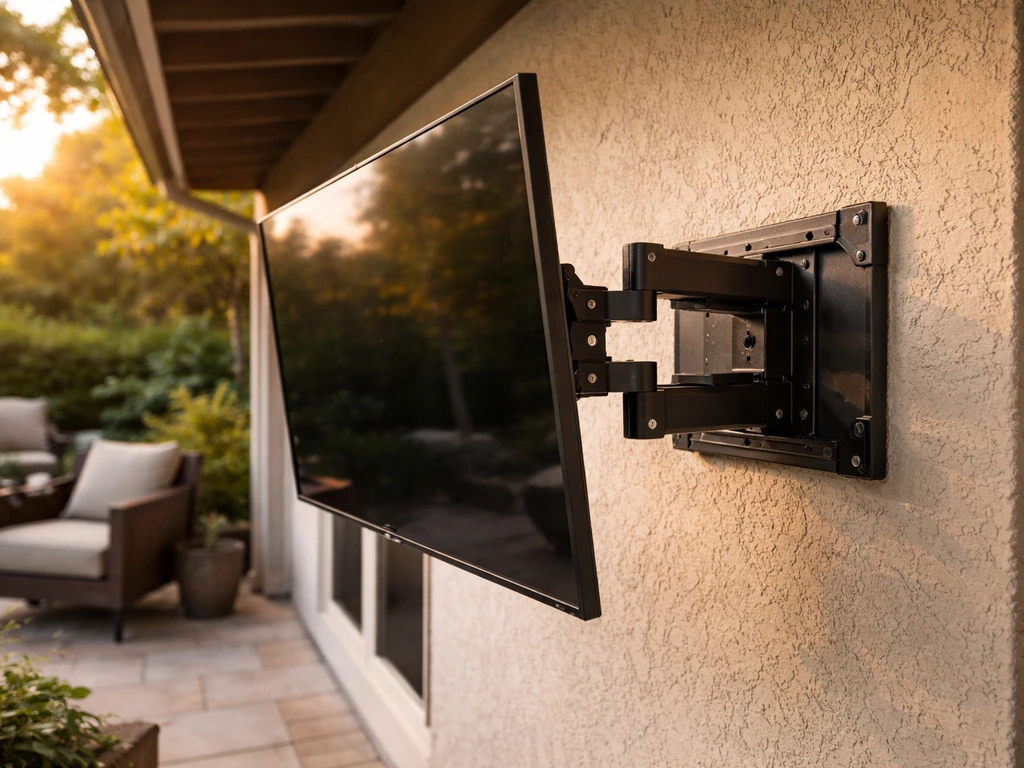
What an outdoor patio TV mount actually has to handle
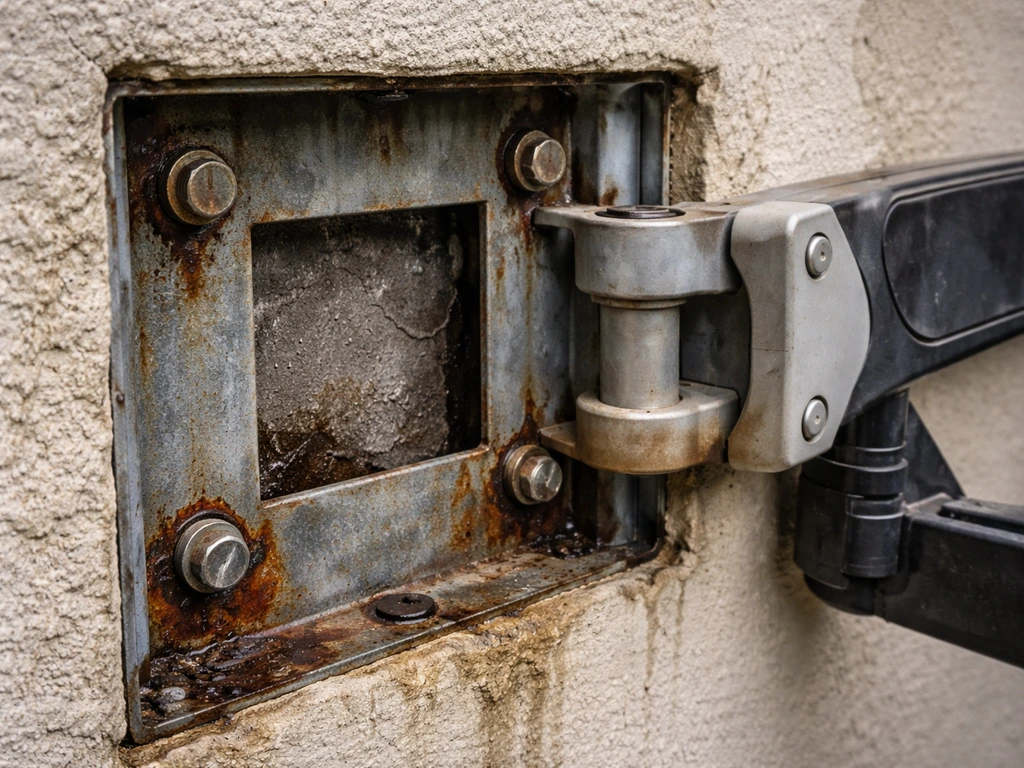
Indoor mounts fail outside for a predictable set of reasons. Moisture works into any uncoated steel and starts rusting the hardware within a season. UV breaks down plastic components and non-outdoor paint. Wind puts continuous lateral stress on the mount arms and the anchor points in your wall. On a windy night, a TV mounted on an undersized or indoor-rated bracket can flex, vibrate, or in a worst case, pull anchors out of the wall.
Legrand AV (the company behind the Chief brand) engineers their outdoor mounts with galvanized steel, an outdoor primer, and outdoor-rated paint specifically to resist oxidation, UV damage, and moisture. All fasteners are stainless steel. That combination is the minimum bar for an outdoor-rated mount, and it is why you cannot just grab any tilting bracket off a shelf and call it done.
Wind load is the spec most buyers ignore. A 65-inch TV mounted on an articulating arm acts like a sail in a strong gust. Peerless-AV's ECMU wind-rated series is documented to handle up to 90 mph winds with a 200-pound max load. Their EWMU series pushes that to 110 mph. Those numbers matter in coastal areas, elevated decks, or anywhere storms roll through. If you are also choosing the TV itself, the sibling topic on the best TV for an outdoor patio covers which screens are actually built for that kind of exposure.
Choose the right mount type for your patio layout
There are three main types, and the right one depends more on your patio layout than on personal preference.
Fixed mounts
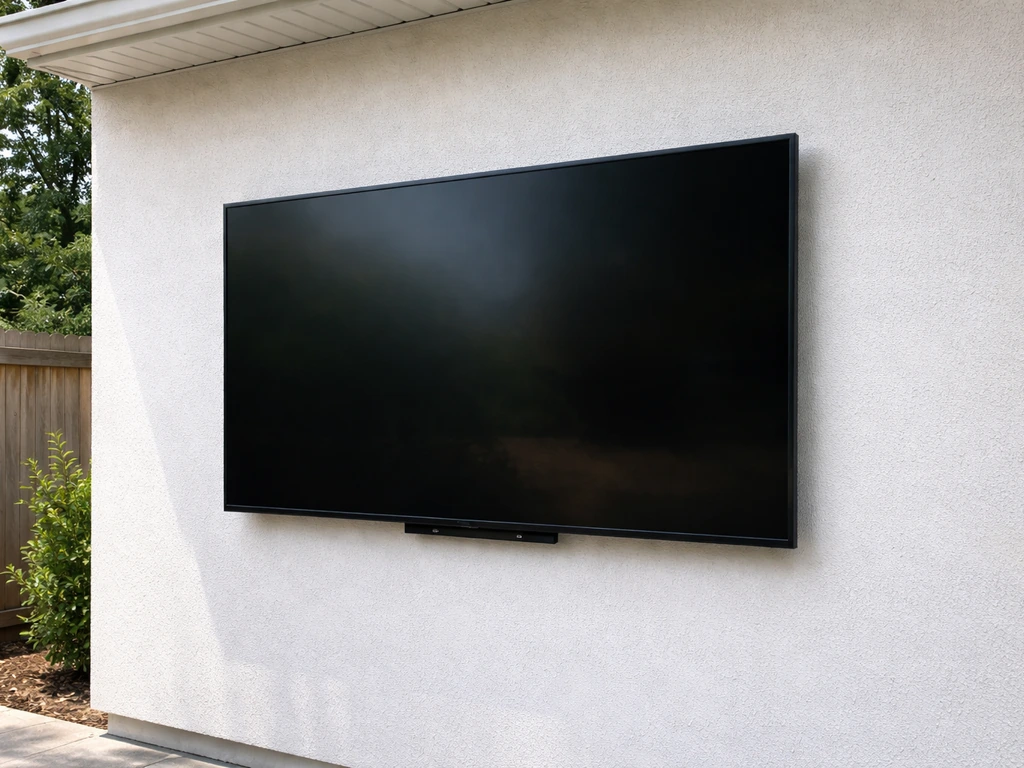
Fixed mounts hold the TV flush against the wall at one permanent angle. They are the most rigid and have the least wind-stress surface area because there are no moving arms. The trade-off is zero adjustability. If the sun angle shifts in the afternoon, you are stuck with glare. Fixed mounts work best in covered spots where the viewing position never changes and the sun never hits the screen directly, like a TV mounted inside a covered outdoor bar area or under a deep soffit.
Tilting mounts
A tilting mount lets you angle the screen down (or slightly up) from the wall, typically somewhere between 5 and 15 degrees. This is the sweet spot for most patios. You get glare control as the sun moves, better viewing angles when the TV is mounted higher on a wall, and a simpler mechanical design that holds up better over time than articulating arms. The SANUS VODLT1, for example, is purpose-built as an outdoor tilting mount for screens up to 95 inches. If you have a standard covered patio with a single seating area, a tilt mount is almost certainly all you need.
Full-motion (articulating) mounts
Full-motion mounts add swivel and extension to the tilt capability. The Kanto PDX650SG, for instance, swivels up to 80 degrees left or right and tilts from -3 to +15 degrees, letting you aim the screen at multiple seating zones around the patio or swing it away from afternoon sun entirely. The trade-off is real: more moving parts means more potential points of corrosion and fatigue, and the extended arm creates much more leverage in wind. Reserve full-motion for patios with multiple seating areas that genuinely need different viewing angles, covered pergola setups where wind exposure is limited, or situations where you want to retract the TV flat against the wall when not in use.
| Mount Type | Best For | Main Drawback | Example Product |
|---|---|---|---|
| Fixed | Covered, single-seating, no direct sun | Zero angle adjustment | Chief / Legrand AV outdoor fixed series |
| Tilting | Most covered and semi-exposed patios | No left/right swivel | SANUS VODLT1 (37"–95") |
| Full-Motion | Multi-seating, pergola, corner setups | More parts, higher wind stress | Kanto PDX650SG (stainless, UL 2442 Part 2) |
The specs that actually matter when you are shopping
Load capacity
Check the mount's rated weight capacity and then multiply your TV's weight by five. That five-times figure is the minimum load the wall structure should be able to handle, per Kanto's own installation guidelines. Most patio TVs weigh between 40 and 80 pounds, so a mount rated to 150 or 200 pounds gives you comfortable headroom. Never buy a mount that is barely rated above your TV's actual weight.
VESA compatibility
VESA is the bolt pattern on the back of your TV, measured in millimeters (for example, 400x400 or 600x400). Every mount lists the VESA patterns it supports. The Kanto PDX650SG covers 100x100 through 600x400, which handles most TVs up to 75 inches. Before you order anything, look up your specific TV model's VESA pattern and confirm it falls within the mount's supported range.
Hardware materials
This is the biggest difference between outdoor-rated and indoor mounts. Look for stainless steel fasteners (not zinc-plated), galvanized steel body construction, and either a UV-resistant powder coat or an outdoor-rated paint finish. The Kanto PDX650SG uses stainless steel arms with a galvanized and UV-resistant powder coat. SANUS uses a corrosion-resistant coating with stainless hardware. Chief uses galvanized steel with outdoor primer and outdoor-rated paint. Any mount missing these details should not go outside.
Outdoor certification
UL 2442 Part 2 is the certification specifically for outdoor TV mounting hardware. Kanto's PDX650SG carries this certification. When a product has it, you know it has been tested against defined outdoor conditions rather than just marketed as 'weather resistant.' If a mount you are considering does not mention UL 2442 Part 2 or an equivalent outdoor rating, dig deeper before buying.
Wind rating
Only mounts specifically engineered for outdoor use publish wind ratings. The Peerless-AV ECMU series is rated to 90 mph (Category D at 200 ft elevation). The EWMU series handles up to 110 mph. If you live in a hurricane zone, a coastal area, or on an elevated deck, do not skip this spec. An unrated mount in a 70 mph gust is a wall-damage event waiting to happen.
Installation plan: surfaces, anchors, cabling, and height
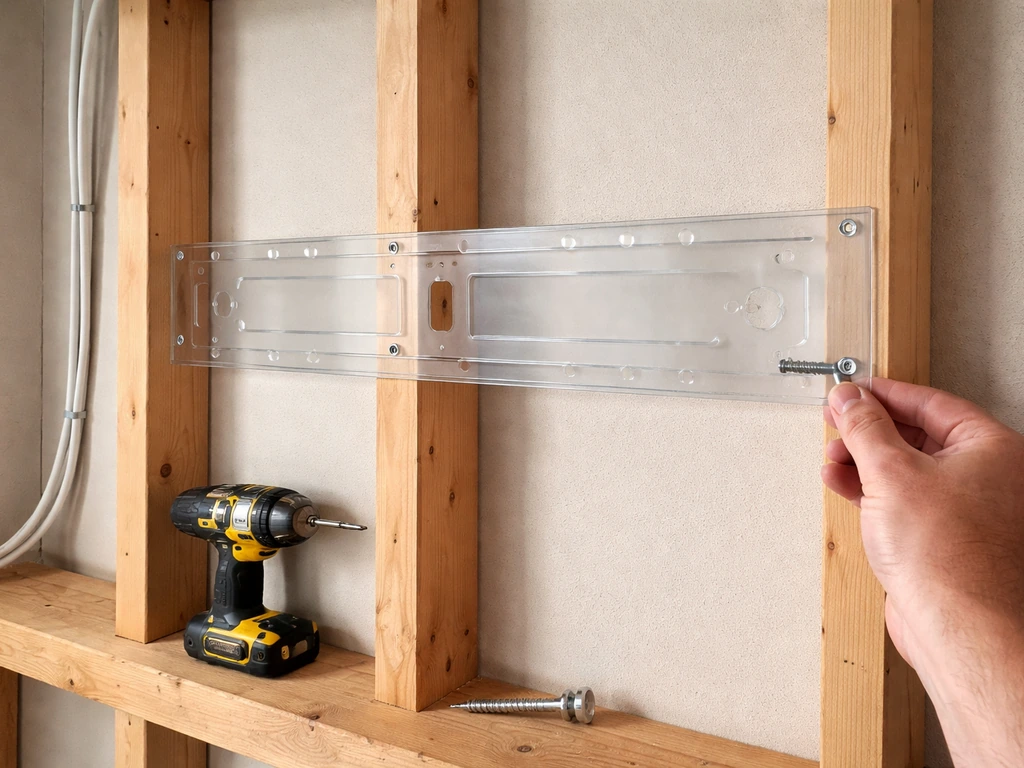
Know your mounting surface before you buy
Wood stud walls are the easiest scenario. Find the studs, use lag bolts long enough to bite at least 1.5 inches into the stud, and follow the mount's template. Concrete block, brick, and stucco require masonry anchors, typically sleeve anchors or wedge anchors sized to match the mount's bolt holes. Chief's installation documentation includes specific anchor guidance for concrete, concrete block, and clay brick surfaces. Do not improvise with drywall anchors on a masonry surface or with small toggle bolts on a wall that will see wind load. On stucco over wood framing, you must still find the studs behind the stucco rather than just anchoring into the stucco layer itself.
Weatherproof cabling
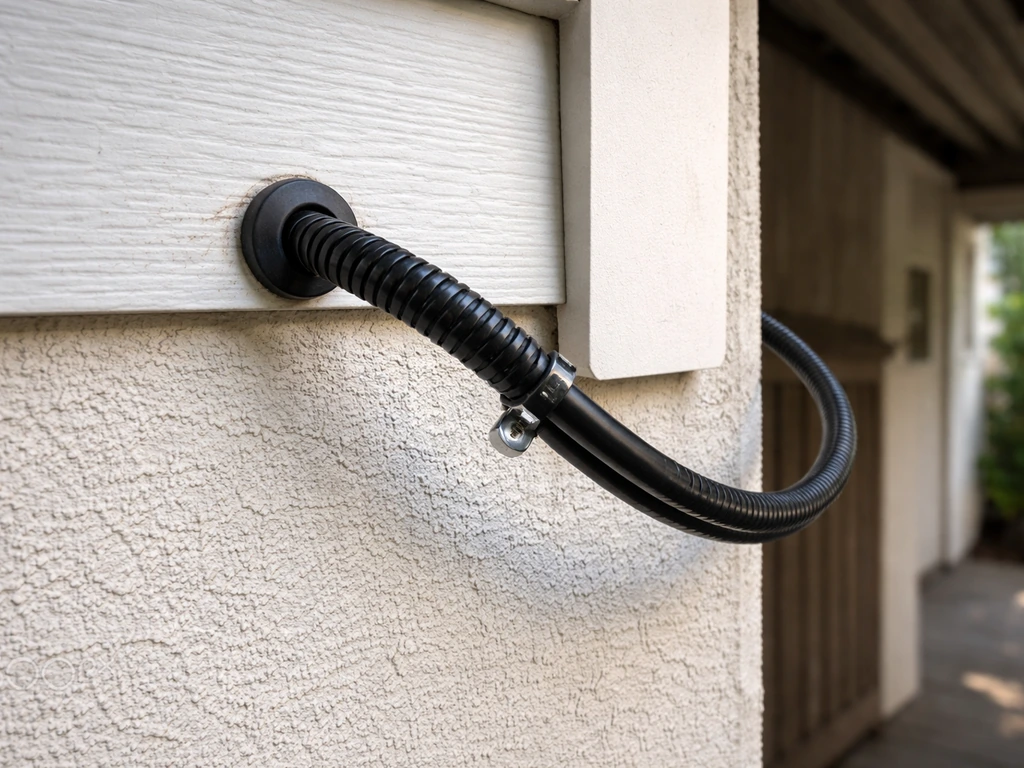
Cables are where most DIY outdoor TV setups eventually fail. Every cable run that exits a wall or transitions from indoors to outdoors needs a drip loop, meaning a downward arc in the cable before it enters the connector or box, so water runs off rather than into the connection. Use weatherproof sealed connectors at both the TV and the wall plate. Power and signal cables entering the wall should go through a weatherproof recessed media box, not an open hole stuffed with foam. Any outdoor splice or junction point must be in a rated weatherproof box with a rain-tight cover. If you are running power through conduit along the wall, use outdoor-rated conduit and fittings.
Mounting height
For seated outdoor viewing, aim to put the center of the TV screen between 42 and 52 inches from the ground. That range keeps the screen near eye level when you are sitting, which reduces neck strain and makes viewing comfortable over a long game or movie. If your seating is bar height (around 28 to 30 inches seat height), raise the center point a bit, closer to the 52-inch end. Use a tilt mount to angle the screen downward if you end up mounting it higher than ideal, but do not mount it so high that tilting becomes a band-aid for a fundamentally awkward position.
Weather protection and long-term durability
The mount itself is only part of the durability equation. Even the best outdoor-rated mount attached to an indoor TV will result in a dead screen within a season in a wet climate. If you are using a standard indoor TV, you need an outdoor TV enclosure. Quality enclosures are sealed to NEMA 4 standards, which protects against rain, dust, hose-directed water, and most weather conditions. Just note that a boxy enclosure adds surface area that catches wind, creating what some describe as a sail effect. If you go the enclosure route and you are in a high-wind area, that wind stress transfers directly to the mount and wall anchors, so your mount and anchor specs need to account for the increased load.
For the mount hardware itself, do a visual inspection once a year. Look for any surface rust forming at cut edges, loosened fasteners (wind vibration works bolts loose over time), and any cracking or peeling in the paint or powder coat. Re-torque bolts annually using the spec from your mount's installation manual. In coastal environments, rinse the mount with fresh water a few times a year to wash off salt deposits before they work into joints and threads. If you are pairing your TV setup with outdoor speakers, the same inspection routine applies to those mounting brackets. If you are planning to go beyond TV audio, the best wireless patio speakers can keep your setup clean and cable-free around the seating area sound. For the audio part, you can pair your patio TV setup with the best outdoor radio for patio entertaining when you do not want to rely on a TV for sound. For speakers, look for the outdoor patio speakers best buy picks that deliver enough volume while staying weather-rated. The best Sonos for an outdoor patio will depend on your coverage area and whether you need speakers rated for direct weather exposure best wireless patio speakers. If you are pairing the patio TV with sound, the best patio speakers bluetooth options can help you keep audio wire-free around the seating area outdoor speakers.
Getting the viewing angle right
Glare is the biggest enemy of an outdoor TV experience, and mount angle is your main tool against it. Position the screen so it faces away from the direction of the strongest sun exposure, typically west-facing screens deal with the worst afternoon glare. A tilt mount lets you angle the screen down slightly to avoid sky reflection. A full-motion mount lets you swing the screen to a better angle as the sun moves.
Viewing distance matters more outdoors than indoors because patio seating often ends up further from the screen. A rough guide based on THX viewing angle recommendations: for a comfortable 40-degree view angle, a 55-inch TV works best at around 6.5 to 7 feet, a 65-inch TV at around 8 feet, and a 75-inch TV at roughly 9 to 10 feet. If your patio seating is 12 or more feet from the wall, consider sizing up. This ties into the related question of what screen size actually makes sense for your space, which is worth thinking through alongside your mount choice. If you are comparing screen options too, the best size TV for an outdoor patio depends on how far your seating sits from the wall.
One positioning tip that gets skipped: test the view from every seat, not just the primary one. Walk the seating area while holding a phone or tablet at the planned screen height and simulate the angle. It takes five minutes and saves you from realizing after install that half your guests are looking at a screen edge-on.
The right mount for your patio scenario and budget
Here is how to match the decision to your specific situation. If you are also shopping for the TV itself, use the best tv for outdoors patio guide as your related screen-picking checklist. If you are also picking the screen, browsing the best tv for outdoor patio reddit threads can help you compare real-world outdoor TV recommendations before you commit.
| Patio Scenario | Mount Type to Get | Best Pick | Notes |
|---|---|---|---|
| Covered patio, single seating zone, moderate climate | Outdoor tilt | SANUS VODLT1 | 37"–95" TVs; corrosion-resistant coating + stainless hardware; good all-rounder |
| Exposed patio or deck, coastal or storm-prone area | Wind-rated tilt | Peerless-AV EWMU series | Up to 110 mph wind rating; 200 lb max load; built exclusively for outdoor |
| Multi-seating patio, pergola, corner setup needing full aiming | Full-motion outdoor | Kanto PDX650SG | Stainless arms; galvanized + UV powder coat; UL 2442 Part 2 certified; swivels to 80° |
| High-wind exposed install (90 mph storms) | Wind-rated tilt | Peerless-AV ECMU-01-I | 200 lb max load; 90 mph wind rating; documented outdoor installation spec |
| Budget-conscious covered patio (lower risk environment) | Outdoor tilt (entry-level) | SANUS VODLT1 or equivalent outdoor-certified tilt | Do not go indoor-rated; spend here before spending on a bigger TV |
If you are trying to keep costs down, the right call is to spend on an outdoor-rated tilt mount and choose a smaller TV over buying a budget indoor mount for a larger screen. The mount is the piece that is expensive to fix if it fails, because the repair cost includes labor, possible wall damage, and replacing the TV it takes down with it.
Quick installation checklist before you start
- Confirm your TV's VESA pattern and weight, then verify the mount supports both.
- Check the mount's load rating is at least five times the combined weight of the TV and mount.
- Identify your wall surface (wood stud, concrete, brick, stucco) and get the correct anchor hardware before you start drilling.
- If you are in a wind-prone area, confirm the mount has a published wind rating (mph) that exceeds your area's design wind speed.
- Plan your cable route before mounting: weatherproof media box, drip loops on every cable, sealed connectors at TV and wall.
- Mark the mounting height so the screen center lands between 42 and 52 inches from the floor for standard seated viewing.
- Use a level during installation. Outdoor mounts on masonry especially tend to drift when drilling.
- After install, test all adjustments (tilt, swivel) fully loaded with the TV before leaving the mount unattended.
- Re-torque all bolts after the first 30 days of use, then annually after that.
FAQ
If my patio is covered, do I still need a fully outdoor-rated TV mount?
Not necessarily. The right approach is to match both the TV and the mount to the exposure level. If your TV is installed under a roof but the patio sees regular rain, humidity, or salt air, you still want an outdoor-rated mount because wind-driven moisture and condensation can reach the wall and hardware. If you are unsure, treat the setup like an exposed location and choose a UL 2442 Part 2 or wind-rated outdoor mount.
Can I reuse the same outdoor mount if I upgrade to a different TV?
If you must swap the TV later, confirm the mount’s supported VESA patterns and max load before you buy. Also re-check that the new TV’s center-of-mass still sits within the mount’s leverage limits, especially on full-motion arms. A bigger or heavier TV with the same screen size can shift stress on the wall more than you expect.
Can I replace missing mount bolts with standard hardware to save money?
For outdoor use, avoid anything with zinc-plated fasteners or hardware that was clearly intended for indoor drywall installation. Even if the mount body looks weather resistant, indoor-grade bolts, washers, or spacers can corrode at the threads and cause loosening. Use stainless fasteners where the mount kit specifies them, and do not substitute random “hardware store” bolts.
What if I cannot find studs, or I’m mounting on stucco or brick?
Do a quick wall-structure check. If you cannot hit solid studs in wood framing, your anchors and wall type become the limiting factor. For concrete block, brick, and stucco over framing, the correct anchor depends on the substrate and the mount’s hole size. If you cannot install anchors exactly as documented, consider a different mount or a pro install, because wind load failures often start at the anchors.
Is “multiply TV weight by five” enough, or should I add more margin?
The five-times load rule helps with wall capacity, but you still need to respect the mount’s own max weight and the TV weight distribution. A heavy TV plus a long articulating arm increases bending moment, so even within rating, full-motion mounts generally feel more sensitive in wind than tilt mounts.
Can I run power and HDMI through the wall myself for an outdoor patio TV?
Yes, but only within the cable and power safety requirements. Outdoor cable runs should include a drip loop and weatherproof, properly rated connectors, but the power feed also needs an appropriate exterior-rated method, such as an outdoor-rated recessed media box or conduit as the installation calls for. If you are not comfortable verifying grounding and outdoor electrical codes, hire an electrician.
What should I do if the glare is still bad after installation?
If the mount is a tilt model, “repositioning” after install can be limited to angle adjustments, not moving the wall plate. For glare issues, the correct fix is usually changing viewing geometry by adjusting tilt or selecting a different screen height. If you need a large change in aim across seats, plan for full-motion or relocate the mount before you permanently anchor it.
Can I leave a full-motion outdoor TV pulled out during storms or wind?
If your mount supports multiple tilting or positioning modes, follow the manual for setting limits, do not force beyond the rated travel, and lock the mechanism fully. For full-motion mounts, leaving the TV partly extended increases leverage in wind, so always retract to the intended stowed or near-wall position when not in use if the mount is designed for it.
Should I always use an outdoor enclosure, or can I skip it if my TV is outdoor-rated?
Most outdoor-rated enclosures are designed for rain and dust protection, but their size and location still matter for wind. Place the enclosure so it is not directly exposed as a broad surface catching the gust direction, and ensure the mount and anchors are rated for the added load. If you live in a high-wind area, prioritize a true outdoor TV that can tolerate moisture and skip enclosure height that increases sail effect.
Where exactly should I inspect annually, and when is re-torquing not enough?
Inspect the highest-stress points first, mainly the interface where arms meet the mount plate and the anchors where the hardware meets the wall. Look for movement marks, widening gaps around washers, and any thread corrosion at fasteners. Re-torque is useful, but if you find stripped threads or recurring loosening, stop and correct the underlying installation issue.
How do I choose the screen direction if my sun path is complicated or I have reflective surfaces?
Aiming “away from the sun” works best as a starting point, but the final angle should be based on the actual strongest glare direction at your seating times. Walk all seating areas and verify the view, because glare can reflect off nearby windows, railings, or glossy walls. Adjust tilt to reduce sky reflection, then fine-tune using small angle changes.
Why do outdoor TV setups sometimes fail even with a good mount?
Cable routing, drip loops, and weatherproof boxes are often more critical than the mount choice for long-term reliability. The mount can be perfect and still fail if water enters the connector or runs along the cable into the wall. If you see condensation, bubbling paint near the penetrations, or corroded connectors during inspection, address the cable path and junction boxes immediately.
Next Articles
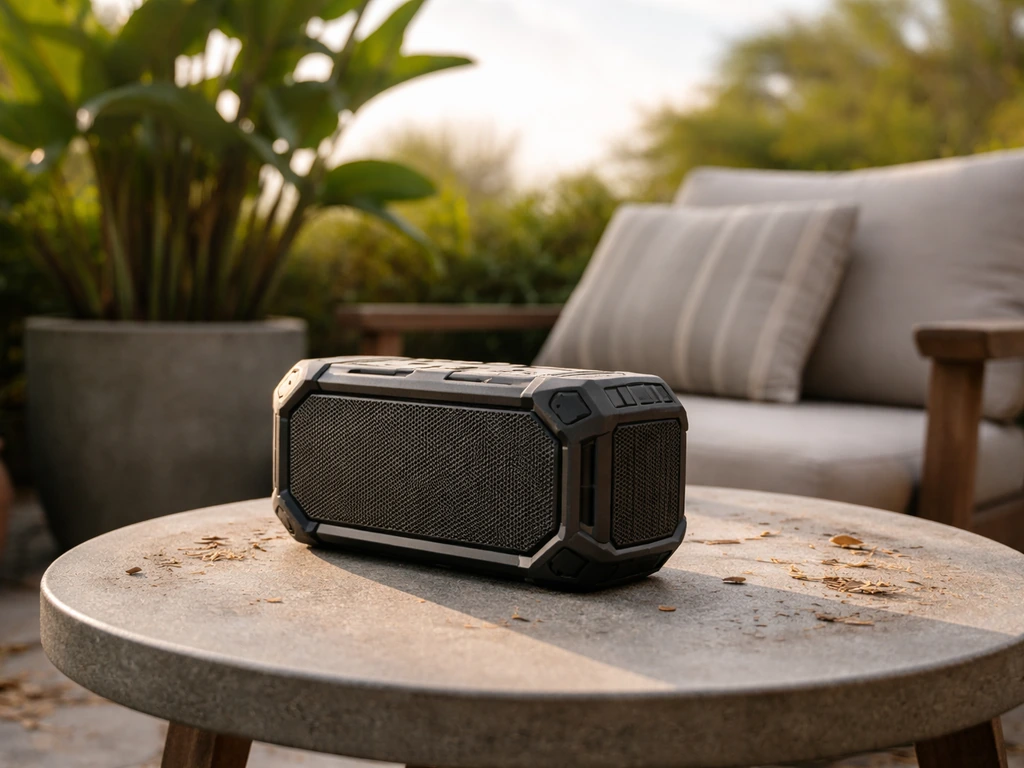
Best Patio Speakers Bluetooth: Buyer’s Guide by Patio Size
Compare the best Bluetooth patio speakers by patio size, weather ratings, battery power, range, bass, and multi-speaker
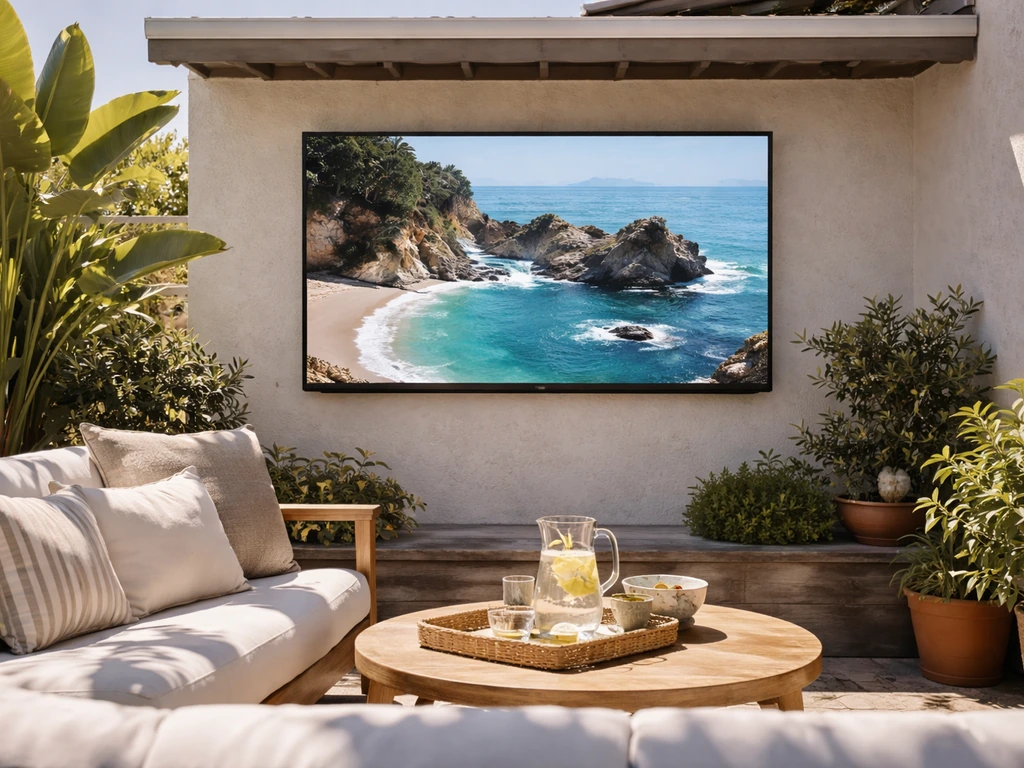
Best TV for Outdoors Patio: Buy Guide for Covered or Sun
Choose the best outdoor patio TV for sun or covered spaces, with brightness, glare, smart features, size and setup check
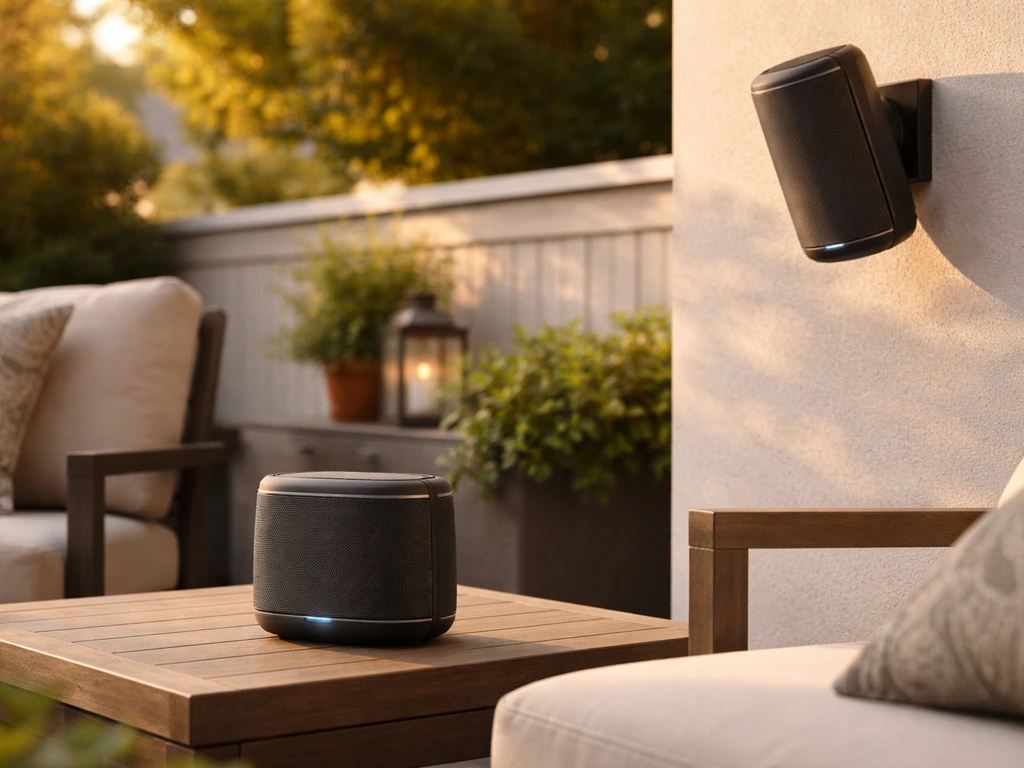
Best Wireless Patio Speakers: Top Outdoor Picks and Buying Guide
Top wireless patio speakers for outdoor use, with Bluetooth range, weatherproofing, setup tips, and category picks.