
For most patios, the Bose SoundLink Max or the JBL Xtreme 4 are the best all-around Bluetooth speakers you can buy right now. The Bose wins on sound quality and balanced tuning, while the JBL punches harder at high volume and handles a larger outdoor space. If you have a small balcony or covered patio and just want reliable background music, the JBL Charge 5 or UE Hyperboom cover that need at a lower price. But the right choice really comes down to four things: how big your patio is, whether you have an outlet nearby, how much rain or sun it gets, and how loud you actually need to go. This guide walks you through all of it.
Best Patio Speakers Bluetooth: Buyer’s Guide by Patio Size
Lark Perry
28 Apr 2026
How to choose the best Bluetooth patio speaker (quick checklist)
Before you spend money, run through these six questions. They cut out most of the noise and point you toward the right category of speaker almost immediately.
- How large is your patio? Under 150 sq ft, you can get away with a mid-size portable. Over 300 sq ft or an open yard, you need something louder with 360-degree dispersion or multiple speakers.
- Is there an outlet nearby? If yes, a plug-in or hybrid speaker gives you unlimited playtime. If not, battery life becomes a primary spec to check.
- How exposed is the location? A covered porch needs IPX4 minimum. A poolside or fully exposed deck in a rainy climate needs IPX7 or IP67.
- Do you want to use it for gatherings or just background music? Casual listening needs 15–20 watts RMS. Outdoor parties benefit from 40W+ with bass output that doesn't disappear in open air.
- Do you want voice control or just a speaker? Built-in Alexa or Google Assistant adds convenience but isn't necessary if your phone is always nearby.
- Will you want two speakers for stereo or wider coverage? Check if the model supports a dedicated party/stereo pairing mode before buying two units.
Outdoor sound performance: volume, clarity, and coverage
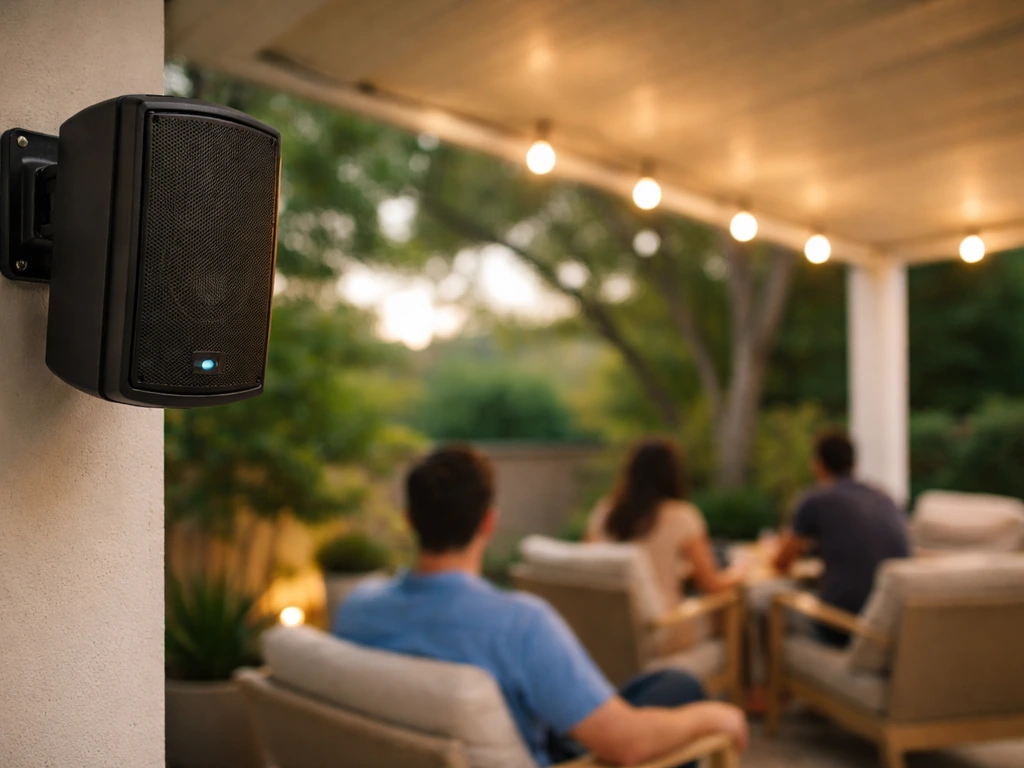
This is where outdoor speakers differ most from indoor ones, and it's the thing most buyers underestimate. Outside, there are no walls to reflect sound back at you. Bass frequencies disperse fast in open air, mids get swallowed by ambient noise, and anything that sounds loud indoors can feel thin and distant on a patio. The practical result: you almost always need more speaker than you think.
For a small covered patio of around 100–150 square feet, a speaker rated at 20–30 watts RMS with a wide passive radiator for bass reinforcement will handle background music and casual conversation just fine. Think JBL Charge 5 (30W) or Bose SoundLink Flex. Once you move to an open deck over 200 square feet, or you want music loud enough to talk over, you want 40 watts or more. The JBL Xtreme 4 puts out around 90 watts peak and handles a 300–400 sq ft space well at moderate volume. For genuinely large patios or backyard gatherings, look at the UE Hyperboom (150W), the Bose SoundLink Max, or consider a pair of smaller speakers linked in stereo mode.
Clarity matters as much as raw volume. Look for speakers that mention 360-degree or omnidirectional sound if your seating wraps around the speaker. Directional speakers sound great directly in front but fall off quickly to the sides, which is frustrating on a wraparound porch or a patio with seating on multiple sides. The UE Boom 3 and Hyperboom are designed for 360-degree dispersion, which makes them particularly well-suited to patio use compared to, say, a forward-firing soundbar-style speaker.
Weather resistance and placement considerations for patios
IP ratings are the standard you need to know, and they're more nuanced than "waterproof" marketing language suggests. The rating follows the IEC 60529 standard: the first digit (0–6) covers dust and solid particle protection, the second digit (0–9) covers water. When you see an "X" in either position, like IPX5, it means that protection level wasn't tested or claimed for that axis. So IPX5 doesn't mean it's dustproof, it just means dust resistance wasn't rated.
Here's how to map the numbers to your actual patio situation. IPX4 means the speaker handles splashes from any direction, which is the baseline for a covered porch or light-rain exposure. IPX5 and IPX6 step up to water jets of increasing intensity, useful if your speaker might get hit by a hose or experience wind-driven rain. IPX7 is immersion protection, meaning the speaker can survive being submerged up to 1 meter for 30 minutes. That's the right rating for a poolside speaker or anywhere water might pool around the unit. IP67 adds full dust-tightness to that same immersion protection, making it the most robust option for harsh outdoor environments.
| IP Rating | What it means | Best patio scenario |
|---|---|---|
| IPX4 | Splash-proof from any direction | Covered porch, occasional light rain |
| IPX5 | Low-pressure water jets from any direction | Uncovered deck, heavier rain |
| IPX6 | High-pressure water jets | Exposed areas, windy rainstorms |
| IPX7 | Immersion up to 1m for 30 min | Poolside, humid environments, puddle risk |
| IP67 | Dust-tight + immersion up to 1m for 30 min | Fully exposed patio, beach, dusty yards |
One practical note on placement: even an IP67-rated speaker will degrade faster if it sits in direct UV exposure day after day. Heat and UV break down rubber gaskets and plastic housing over time, regardless of water rating. If your patio gets full afternoon sun, store the speaker inside between uses or keep it under shade. Mounting or placing a speaker under a pergola overhang or on a shaded table extends its lifespan significantly compared to leaving it baking in direct sun year-round.
Battery life vs plug-in power for outdoor use
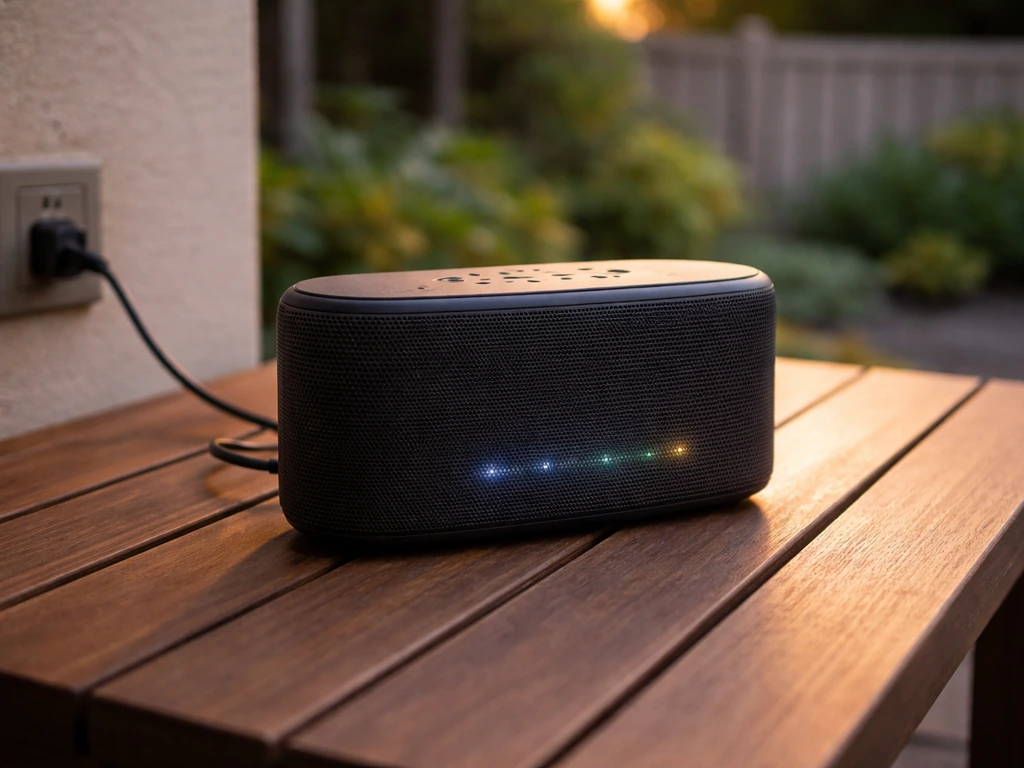
Most Bluetooth patio speakers are portable and battery-powered, which gives you flexibility to move them around the patio, bring them to the yard, or take them to a friend's place. That flexibility is genuinely useful. But battery life is the real-world constraint. Most mid-range speakers claim 12–20 hours of playback, but those numbers are measured at low volume. Crank a JBL Xtreme 4 to 70% outdoors and you'll see that rated battery life drop meaningfully. For a full afternoon and evening gathering, you want at least 20 hours rated life, or a speaker that can charge via USB-C while playing.
If your patio has an outdoor outlet and you're not planning to move the speaker much, a plug-in Bluetooth speaker or a hybrid model that can run tethered removes the battery concern entirely. The Bose SoundLink Max supports USB-C charging while playing, so you can keep it plugged in on the patio table and treat it as a semi-permanent setup. Some higher-end options like the Klipsch The One or dedicated outdoor speaker systems from Sonos (the Sonos Era 100 and 300 work outdoors in moderate climates) are fully plug-in and offer superior audio quality as a trade-off for portability. If you prefer a Sonos setup over portable Bluetooth, focus on Sonos options designed for outdoor listening and pair them with weather-rated hardware Sonos Era 100 and 300. If you're building a more permanent patio audio setup, it's worth considering those options alongside purely portable Bluetooth speakers.
Connectivity and controls: Bluetooth range, multi-device, and speaker pairing
Modern Bluetooth patio speakers use Bluetooth 5.0 or 5.3, which gives you a rated range of around 30–33 feet in open air under ideal conditions. In practice, you should expect reliable connection up to about 25–30 feet with clear line of sight between your phone and the speaker. Walls, furniture, and human bodies all reduce range. If you plan to leave your phone inside while the speaker is on the patio, test the range first before committing to a mounting location. The JBL Xtreme 4 and Bose SoundLink Max both perform well at 30 feet with occasional brief interference, which is enough for most patio layouts.
Multi-device pairing is worth understanding before you buy. Most speakers now support connecting to two devices simultaneously (or quickly switching between them), which is handy when multiple people want to queue music from different phones. JBL's Connect+ and PartyBoost protocols let you link multiple JBL speakers together for synchronized or stereo playback. UE's PartyUp does the same across UE speakers and supports pairing 150+ speakers at once, though realistically most people link two or three. Bose's Party Mode syncs two SoundLink Max speakers for synchronized sound or true stereo. These protocols are brand-specific, meaning you can't pair a JBL with a UE Boom using their party mode features. If you already own a speaker from one brand, it makes sense to stick with that ecosystem when adding a second unit.
One thing that often gets overlooked is the onboard controls. Outdoor use means your phone may be in your pocket or inside, so physical buttons for volume, track skip, and playback control matter more than they do for desktop speakers. The best patio speakers have large, tactile buttons that work easily with wet or sun-screened hands. Capacitive touch surfaces look sleek but are frustrating in direct sunlight or with damp fingers.
Feature trade-offs: waterproof rating, mic/Alexa, party mode, and bass tuning
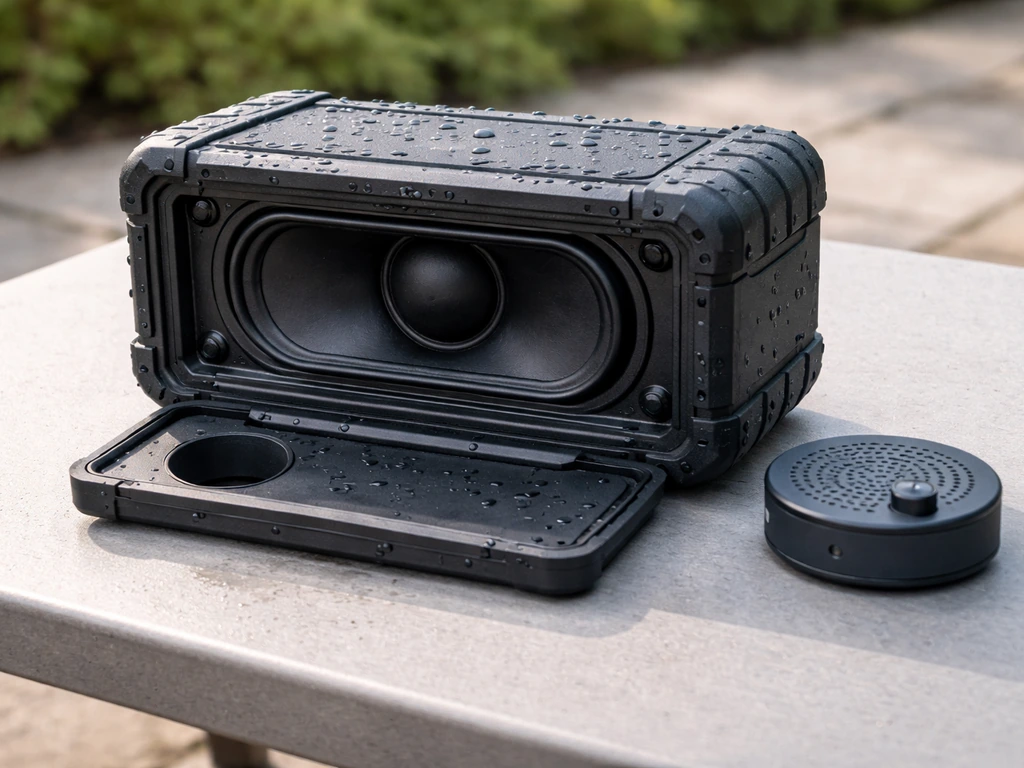
Higher IP ratings generally cost more and can sometimes come at the cost of sound quality, because sealed enclosures limit acoustic design options. A speaker engineered purely for submersion survival may have less bass extension than a comparable model with a slightly lower IP rating that allows a better acoustic design. That said, the gap has narrowed at the mid-to-premium tier. The JBL Charge 5 (IP67, $180) sounds excellent despite being fully sealed, and the UE Boom 3 (IP67, $150) punches above its weight for 360-degree outdoor sound.
Built-in microphones and voice assistant support (Alexa, Google Assistant) are convenient if you actually use voice commands, but they add cost and introduce a privacy consideration some people dislike. Outdoors, the mic performance for voice commands is worse than indoors anyway, because wind noise and ambient sound interfere with wake-word detection. If you want smart speaker functionality on the patio, an Amazon Echo or Google Nest pointed outside from a window is often more reliable than relying on an outdoor speaker's built-in mic. Skip the voice assistant feature if you're trying to stay under a budget ceiling.
Party mode and stereo pairing are genuinely useful features for patio use. Running two speakers in stereo gives you directional audio and wider sound staging, which is a real upgrade over a single mono or pseudo-stereo speaker for a larger space. Running two in party mode (synced mono) covers more ground with less drop-off in volume as you move around. Bass tuning modes, like JBL's "Bass Boost" or UE's app-based EQ, can help compensate for the bass rolloff that happens in open air, so look for speakers that offer at least some EQ control through their companion app.
Top picks by patio size and use case
Small patio or balcony (under 150 sq ft, casual listening)
The Bose SoundLink Flex is the top pick here. It's compact, has excellent sound quality relative to its size, an IP67 rating, and 12 hours of battery life. It floats if dropped in water, which is a nice bonus near a hot tub or plunge pool. At around $149, it's great value for apartment balconies and small covered patios. The JBL Charge 5 is a close second at a similar price, adds IP67 protection, and includes a USB-A port to charge other devices. If budget is tight, the JBL Flip 6 ($100, IP67) covers a small patio adequately at moderate volume.
Medium patio (150–300 sq ft, mixed use)
This is where the JBL Xtreme 4 earns its popularity. It's loud enough for a proper gathering, rated IP67, supports JBL PartyBoost to link a second speaker, and runs 24 hours on a charge. The handle makes it easy to move around. At around $280–300, it's not cheap, but it genuinely fills a 200–300 sq ft deck without straining. The UE Hyperboom ($350–400) is the premium alternative here, offering bigger bass and 360-degree coverage that suits wraparound seating better than the more directional Xtreme 4.
Large patio or open backyard (300+ sq ft, entertaining)
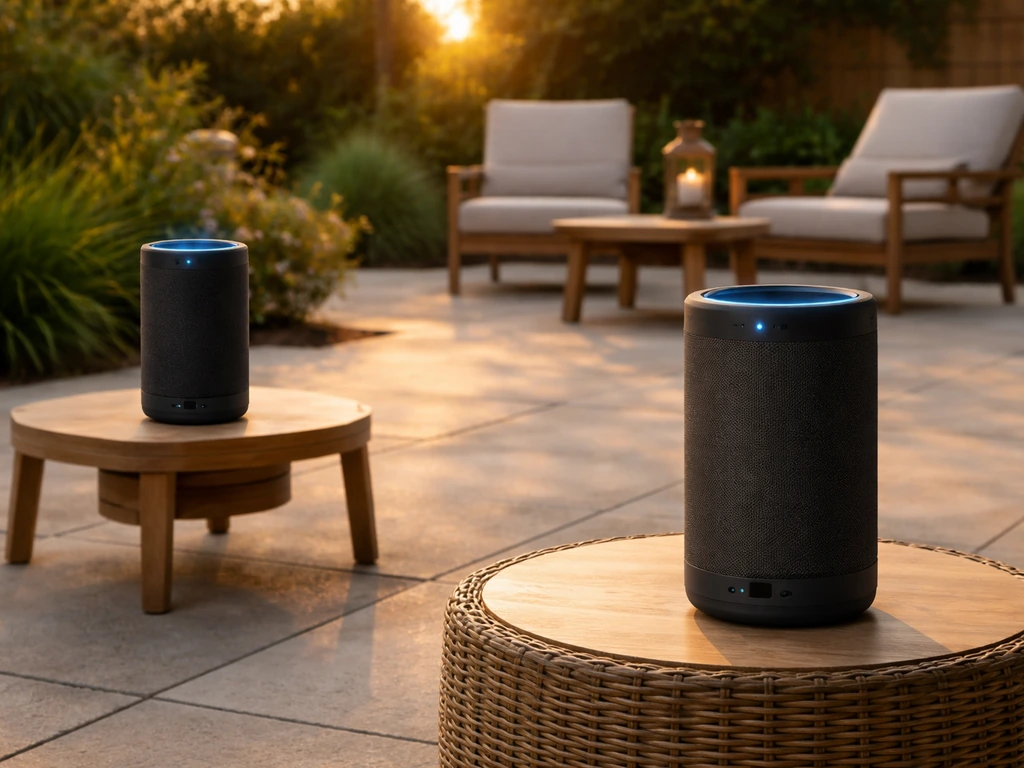
For large outdoor spaces, one portable speaker often isn't enough. The best approach is two speakers in stereo or party mode, or stepping up to a more powerful standalone unit. The Bose SoundLink Max ($399) is the best single-speaker option for this category: 30W of balanced, clear audio with Bose's spatial audio tuning, IP67, and a handle for portability. Paired with a second SoundLink Max in party mode, it covers a large backyard well. For those who want to go more permanent, a Sonos-based outdoor audio system (the Era 300 or a dedicated outdoor in-ceiling/on-wall setup) offers a superior listening experience, though it moves beyond portable Bluetooth territory.
Quick comparison: top Bluetooth patio speaker picks
| Speaker | Best for | IP Rating | Approx. Wattage | Battery Life | Price (approx.) |
|---|---|---|---|---|---|
| Bose SoundLink Flex | Small patio, sound quality focus | IP67 | ~12W | 12 hrs | $149 |
| JBL Flip 6 | Budget small patio | IP67 | ~20W | 12 hrs | $100 |
| JBL Charge 5 | Small-medium patio, device charging | IP67 | ~30W | 20 hrs | $180 |
| JBL Xtreme 4 | Medium patio, gatherings | IP67 | ~90W peak | 24 hrs | $280–300 |
| UE Hyperboom | Medium-large patio, 360-degree sound | IPX4 | ~150W peak | 24 hrs | $350–400 |
| Bose SoundLink Max | Large patio, premium sound | IP67 | ~30W RMS | 20 hrs | $399 |
What to do next
Measure your patio space before you buy, or at least estimate it. That single step eliminates about half the decision. If you're under 150 sq ft and mostly listen to music while relaxing, the Bose SoundLink Flex is the easiest recommendation. If you entertain regularly on a mid-to-large deck, start with the JBL Xtreme 4 and consider a second unit later if coverage feels thin. For permanently placed patio audio that you want to sound truly excellent, look into the wireless outdoor speaker options that connect to a home audio ecosystem rather than treating a portable Bluetooth speaker as a permanent install. If you want the simplest answer to what to buy, start with our picks for the best outdoor radio for patio and match it to your typical space and weather. If you want a quick starting point, check a Best Buy listing for outdoor patio speakers to compare top models and current deals Best Buy outdoor patio speakers. For more guidance, see our picks for the best wireless patio speakers by size and use case. And if you're pairing audio with an outdoor TV setup, matching your speaker's Bluetooth ecosystem with your display can simplify the whole experience significantly. If you're comparing options like people do in threads, you can also browse discussions on the best TV for outdoor patio using Reddit search and recommendations outdoor patio TV setup. A solid TV mount that handles wind, sun, and safe viewing angles can make that outdoor setup feel polished and practical outdoor TV setup. When shopping for a patio TV, size matters, but so do brightness and viewing angles so the screen stays usable in daylight outdoor TV setup.
FAQ
How far can I realistically place my phone from the best patio speakers bluetooth and still stay connected?
No, “Bluetooth range” is not a guarantee. If you routinely lose connection, the fix is usually repositioning the speaker for a clearer line of sight, keeping the phone’s Bluetooth antenna uncovered (not in a thick metal case), and reducing interference sources like crowded Wi-Fi channels. Test with your actual phone at the farthest seating spot before you mount or place the speaker permanently.
Will the battery life numbers on Bluetooth speakers be enough for an all-evening patio session?
For patios, aim for a speaker that can maintain loudness without needing to run volume near max all the time. If a model’s battery life claims are at low volume, your real usage may drop closer to the lower end once you hit 60 to 70% outdoors. If you expect long gatherings, prioritize USB-C charging while playing or plan to keep the speaker tethered to an outlet when possible.
What’s the best speaker type for patios with seating on multiple sides?
If you want audio on both sides of a wraparound porch, avoid forward-only designs unless you will place the speaker centrally and directly face it from most seating. Omnidirectional or 360-degree dispersion models usually hold up better when people sit around corners, and stereo pairing two smaller speakers can outperform a single unit if your seating is spread out.
Is IPX5 really waterproof enough for a patio, or should I buy IP67?
It depends on your water exposure type. If the speaker might sit near standing water or get splashed heavily from different angles, you generally want at least IPX5 or IPX6, and for poolside or near hoses, IP67 or IP67-class protection is safer. Also remember that sun damage can shorten lifespan even when the water rating is high, so shade matters.
Can I pair two different brands of Bluetooth patio speakers for stereo or party mode?
Often yes, but not always in the way you expect. Stereo mode and party mode are brand ecosystem features, so two speakers from different brands will usually not sync as intended. Even within the same brand, confirm whether stereo uses true separate channels or a linked mono setup, and check if both speakers must be the exact same model.
Are built-in microphones and voice assistants actually useful outdoors?
If you mostly want background music and occasional voice control, an onboard mic can be a convenience, but wind and outdoor noise can make voice commands unreliable. A practical alternative is to place an indoor smart speaker or an outdoor smart hub near a window and use it for voice, while letting your Bluetooth speaker handle music playback.
Which control style works best for patio use, touch or physical buttons?
Capacitive touch controls can be hard when hands are wet, covered in sunscreen, or in direct sun glare. Physical buttons or large tactile controls tend to work more consistently in patio conditions. If you are choosing between touch and buttons, prioritize button feel and legibility, especially for volume changes mid-party.
What can I do to make my patio speaker sound louder or fuller without changing models?
For a patio setup, “sound upgrade” is usually about placement and direction first, not only speaker wattage. Try pointing the speaker slightly toward the main seating area, raising it off the ground to reduce bass loss, and avoiding corners where vibrations can muddy low end. If coverage still feels thin, adding a second matching speaker in stereo or party mode is often the fastest improvement.
Is it smarter to buy one very powerful speaker or two that I can expand with later?
If you entertain frequently, yes, but plan for simple expansion. Buy a speaker that supports linking within its own ecosystem (party mode, stereo, or multi-speaker sync) so you can add a second unit later. Before buying, verify your future addition option matches the same app and protocols, since different ecosystems cannot sync together.
Can I use a portable Bluetooth patio speaker as a semi-permanent outdoor unit instead of a fully battery-based one?
Maybe, but check the charging strategy. If your speaker supports USB-C charging while playing, it can work like a semi-permanent outdoor unit and solve the battery planning problem. If it only charges when off, a plug-in strategy becomes more important, especially during hot afternoons when battery performance can feel worse.
Next Articles
Best TV Mount for Outdoor Patio: Types, Specs, Install Guide
Best outdoor patio TV mount guide with mount types, must-have specs, weatherproof install steps, and viewing setup check
Best TV for Outdoors Patio: Buy Guide for Covered or Sun
Choose the best outdoor patio TV for sun or covered spaces, with brightness, glare, smart features, size and setup check
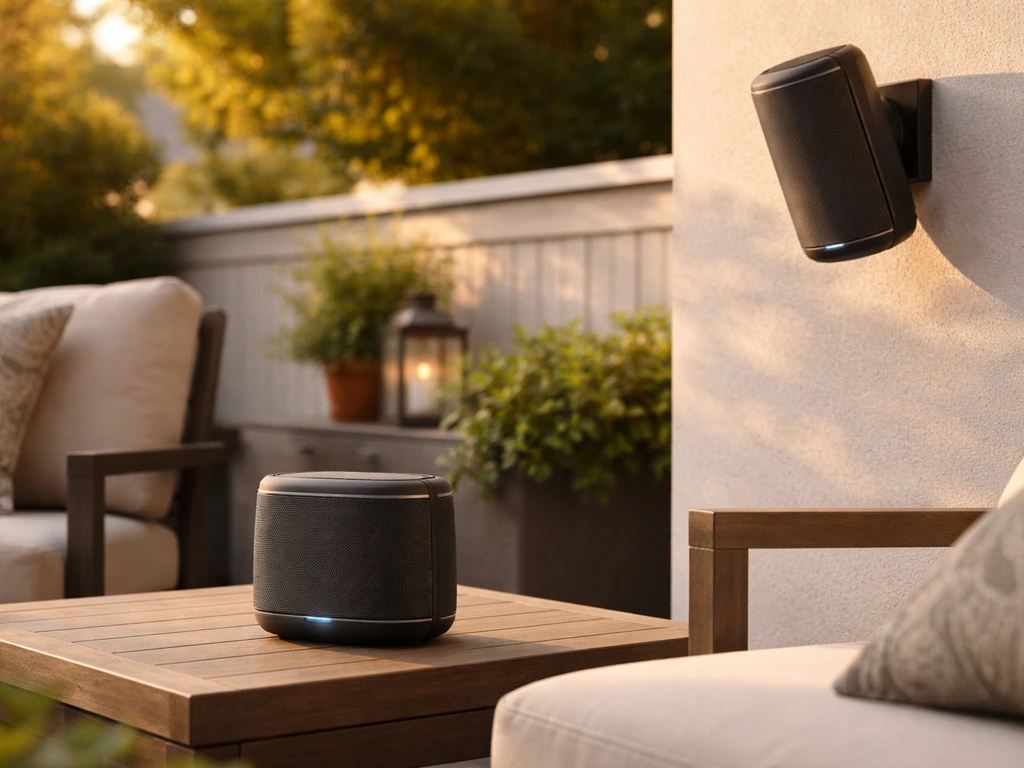
Best Wireless Patio Speakers: Top Outdoor Picks and Buying Guide
Top wireless patio speakers for outdoor use, with Bluetooth range, weatherproofing, setup tips, and category picks.