
For most patios, a portable evaporative cooler with 800 to 5,300 CFM of airflow is the right call, and two models cover the widest range of real-world needs: [the Portacool APEX 500 for smaller patios and targeted cooling (up to 500 sq ft, 800 CFM, 53 dB)](https://www. portacool. com/wp-content/uploads/2025/01/PortacoolAPEX500SellSheet. pdf?
Best Swamp Cooler for Outdoor Patio: Buyer Guide and Picks

Lark Perry
27 May 2026
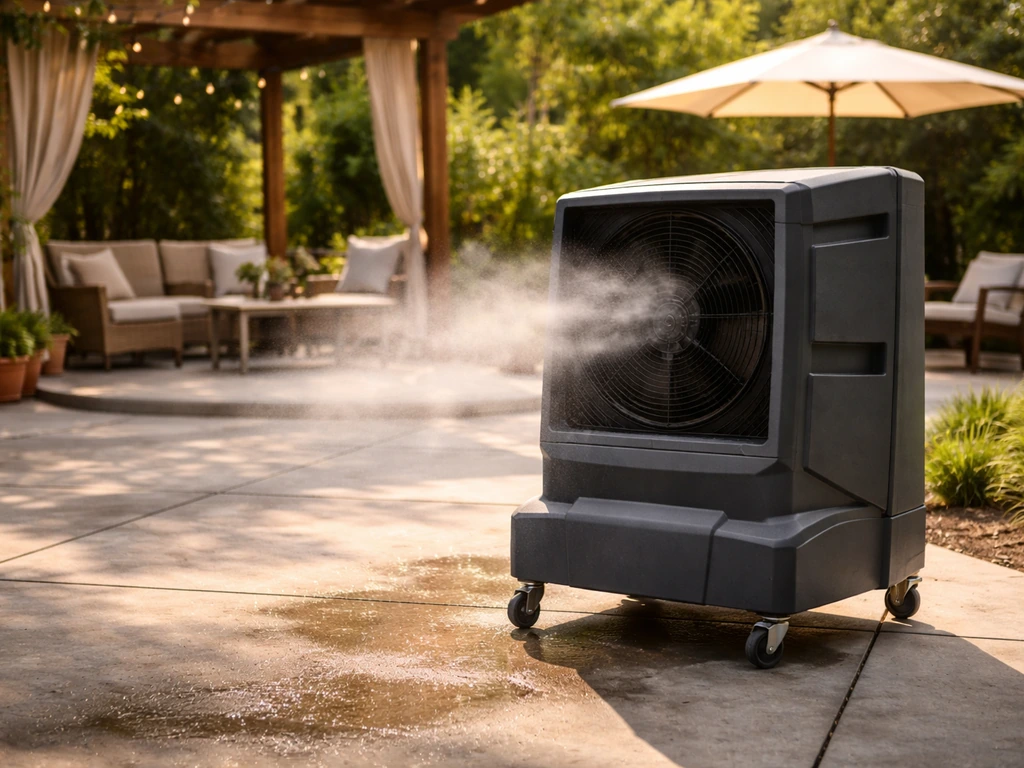
x55256=), and the Hessaire MC61V for larger open-air spaces (up to 1,600 sq ft, 5,300 CFM, 430W). If you live in a dry climate where humidity stays below 50 percent on hot afternoons, a swamp cooler will drop the felt temperature noticeably and cost a fraction of what a patio air conditioner would. If your summers are humid, this type of cooling loses effectiveness fast and a fan or a patio AC unit is the more honest answer.
Best swamp cooler picks at a glance
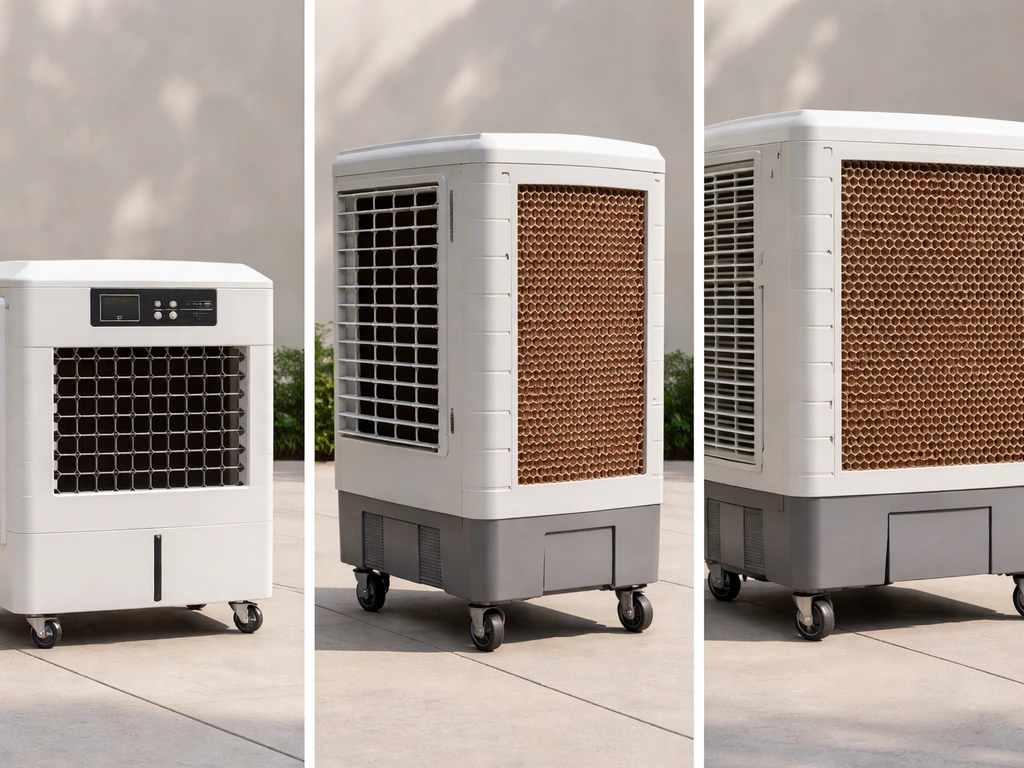
There is no single best model for every patio, but there are clear winners for specific situations. Here is how I would point different buyers toward the right cooler without overthinking it.
| Best For | Recommended Pick | Coverage / CFM | Key Stat |
|---|---|---|---|
| Small patio (under 300 sq ft) | Portacool APEX 500 | Up to 500 sq ft / 800 CFM | 53 dB, 13-gal tank, 55 ft air reach |
| Large open patio (up to 1,600 sq ft) | Hessaire MC61V | Up to 1,600 sq ft / 5,300 CFM | 63 dB, 14.6-gal tank, 430W |
| Quietest option | Portacool APEX 1200 | Large spaces / 4,000 CFM | 51 dB, lowest noise in the APEX line |
| Budget portable pick | Hessaire MC61 series | Up to 1,600 sq ft / 5,300 CFM | 4.3A / 430W, mobile design with wheels |
| Premium directed airflow | Portacool APEX 500 or 700 | 500–700 sq ft / 800–higher CFM | 55–60 ft direct air reach, quiet motor |
| Low-maintenance preference | Portacool APEX 500 | Up to 500 sq ft | Smart water management, auto shutoff |
If you are between sizes, go up. An oversized swamp cooler on a patio just means more airflow and a slightly larger water tank. An undersized one means you sit outside sweating while a machine hums in the corner. Always size up for open, partially covered patios because you lose cooled air to the sides constantly.
How swamp coolers actually cool you outdoors
A swamp cooler works by pulling warm, dry air through a wet pad. As the air passes through, water evaporates and absorbs heat from the air, dropping the dry-bulb temperature before the cooler blows it back out toward you. The physics are real and the cooling is real, but there is a catch: evaporation only happens efficiently when the incoming air is dry. The drier the air, the more water it can absorb, and the bigger the temperature drop you get out the other side.
For outdoor patios specifically, this means the cooler works best when it has a steady supply of fresh, warm, dry air to pull through. Unlike an indoor setup, you are not fighting a closed room filling up with humid air, which actually helps. The constant air exchange outdoors is one reason swamp coolers often perform better on patios than in enclosed spaces in dry climates. But in humid climates, the air coming in is already carrying a lot of moisture, leaving little room for more evaporation, and the cooler ends up mostly moving warm wet air.
The rule of thumb that consistently holds up: evaporative cooling works well below 50 percent relative humidity, starts losing effectiveness above 50 percent, and is nearly useless above 60 percent RH. If your outdoor humidity regularly hits 65 or 70 percent on summer afternoons, no swamp cooler will rescue that patio. You would be better served by looking at patio fans or an outdoor patio air conditioner for serious cooling.
In that case, a patio air conditioner is often the best way to keep your outdoor space cool and comfortable. In humid weather, you can shop for the best outdoor standing fan for patio comfort when evaporative cooling will not work. If you need airflow in muggy weather, the best patio fans can help keep people cool without fighting evaporation limits.
Patio fit: coverage, placement, and climate
Open vs. covered patios
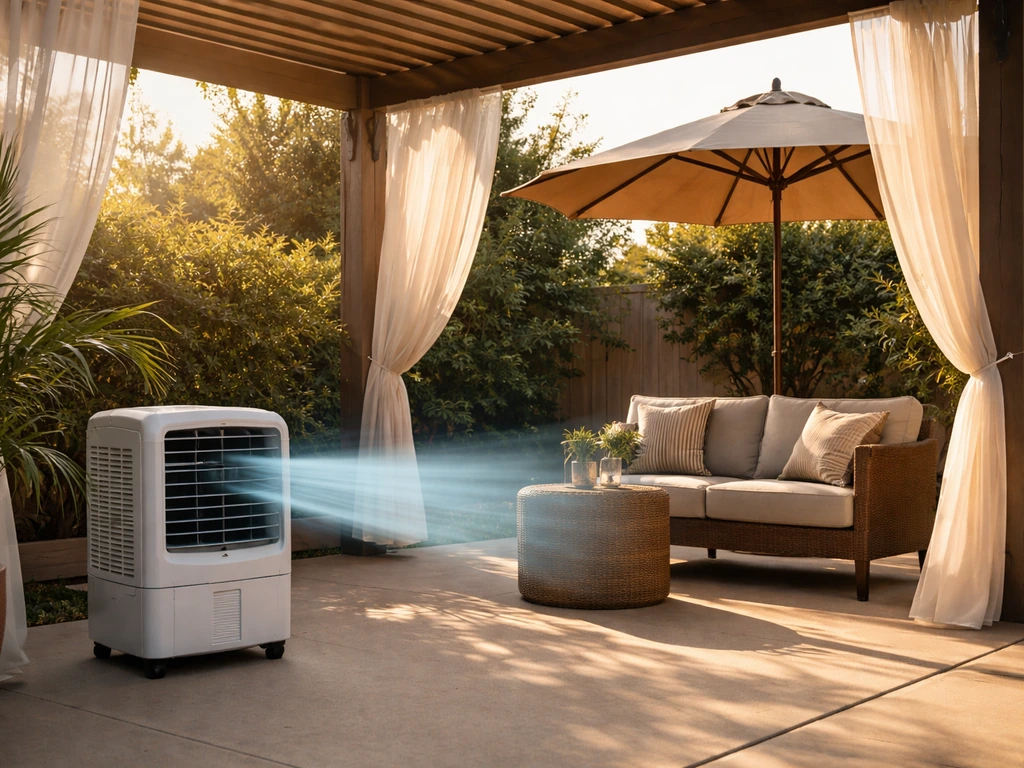
Covered or partially covered patios are the sweet spot for swamp coolers outdoors. A pergola, patio cover, or even a large umbrella traps the cooled air above your seating area long enough to actually reach you. Fully open, exposed patios with no overhead cover lose cooled air upward almost immediately. If your patio is completely open to the sky, position the cooler close and aim the airflow low and direct toward where people are sitting.
Placement for best airflow
Think of the cooler as blowing a stream of cold air, not filling a room with cold air the way an AC would. The Portacool APEX 500 can push that stream 55 feet; the APEX 700 pushes it 60 feet. That means placement matters more than it does with a fan. Set the cooler upwind of your seating so natural breeze and the cooler are working in the same direction. Avoid placing it in a corner where it is pulling already-warm stagnant air. Also avoid pointing it directly against a wall, which bounces the air back as turbulence rather than a clean stream.
One more thing: swamp coolers need a steady flow of fresh air to function well. Unlike running a cooler indoors where you open windows on the far side to exhaust warm air, on a patio you need to make sure the intake side of the cooler has clear, unobstructed access to fresh ambient air. Do not back it against a fence or wall on the intake side.
Climate check before you buy
The best climates for patio swamp coolers are the arid and semi-arid regions: the American Southwest (Arizona, Nevada, New Mexico, inland California, Utah, Colorado), parts of Texas, and similar dry climates. If you are in the Southeast, Gulf Coast, Florida, or the humid Mid-Atlantic during peak summer, a swamp cooler is not a practical patio cooling tool. Check your local afternoon humidity in July and August on a weather app for a week before buying. If you are consistently seeing 60 percent or higher, save your money.
Specs that actually matter for patio use
CFM and coverage area
CFM (cubic feet per minute) is the most important number on the spec sheet. It tells you how much air the cooler moves per minute, which translates directly to how much area it can cool and how strong the airflow stream feels. For a small patio seating area (150 to 300 sq ft), 800 CFM from the APEX 500 is adequate. For a larger entertaining patio (600 to 1,600 sq ft), you want something in the 4,000 to 5,300 CFM range like the Hessaire MC61V or the Portacool APEX 1200. The coverage area numbers on the box assume somewhat controlled conditions, so treat them as a ceiling, not a guarantee.
Water tank size and use
Tank size determines how often you are walking back to refill. The Portacool APEX 500 holds 13 gallons, which depending on temperature and humidity will last several hours before you need to refill. The Hessaire MC61V holds 14.6 gallons. A mid-size unit running in hot, dry conditions can consume 5 gallons of water per hour or more, so a 13-gallon tank could run 2 to 3 hours before running dry in peak conditions. If you want to run the cooler all afternoon without thinking about it, look for a model that supports a direct garden hose connection to keep the tank topped off automatically. That is a game-changer for longer patio sessions.
Noise level
On a patio where you are trying to hold a conversation, noise matters more than it does in a garage or worksite. The Portacool APEX 500 and APEX 700 run at 53 dB, which is roughly the volume of a normal conversation at arm's length. The APEX 1200 is even quieter at 51 dB. The Hessaire MC61V is louder at 63 dB, which is closer to a loud conversation or background restaurant noise.
For a dining patio or an intimate seating area, the Portacool APEX line is noticeably more pleasant to sit next to. For a large open deck where you just want big airflow and noise is less of a concern, the Hessaire's extra CFM is worth the extra decibels.
Pad material
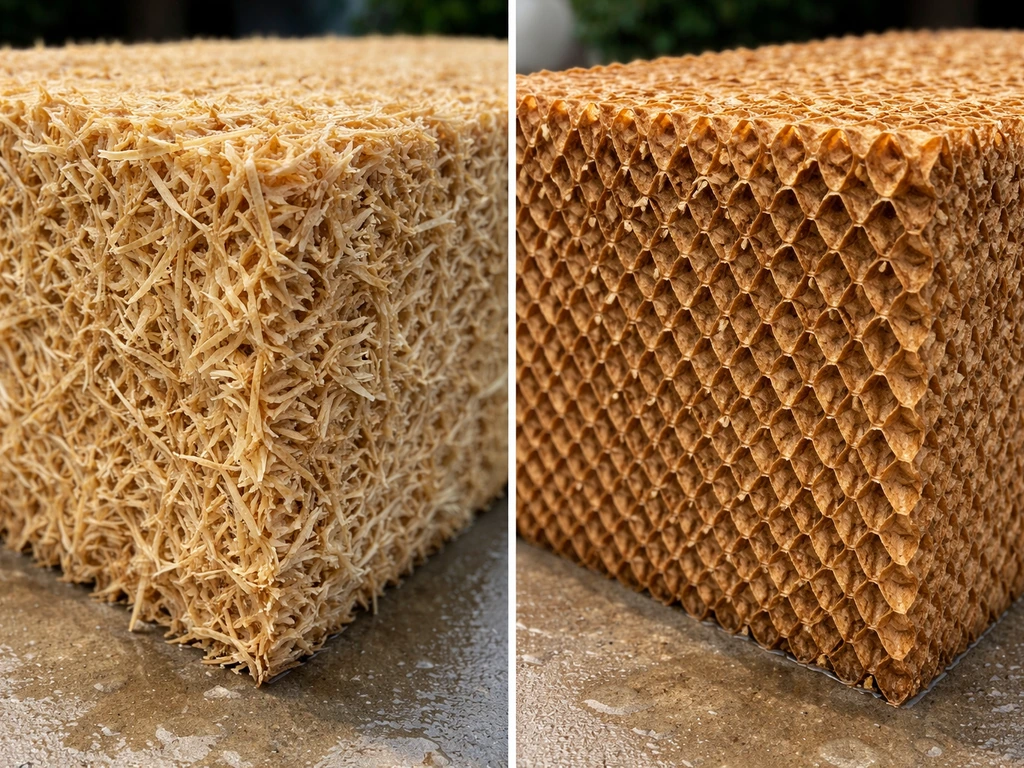
Cooling pads come in two main types: aspen (wood wool) and cellulose (CELdek or GLASdek). Aspen pads are cheaper to replace and widely available, but they are less efficient and can develop odors and mold faster. Cellulose pads are higher efficiency, last longer, and cool better in the same conditions. If you are spending on a premium unit, make sure it uses or supports cellulose media. The efficiency difference is real, not just marketing: cellulose pads consistently deliver better temperature drops for the same airflow.
Power draw and portability
Most residential patio swamp coolers run on standard 115V household current and draw a modest amount of power. The Hessaire MC61V pulls 430W (4.3 amps), which at the US average electricity rate of around $0.16 per kWh works out to roughly $0.07 per hour to run. Compare that to a patio air conditioner drawing 1,000 to 1,500W and the cost difference is obvious. For portability, look for models on wheels. Both the Portacool APEX and Hessaire MC61 series are designed to roll, which matters when you want to reposition for evening use or move the unit indoors for storage.
Portable vs. stationary, budget vs. premium
For most homeowners and renters, portable is the right choice. A portable swamp cooler on wheels can follow the sun, move when guests need more space, and go into storage in winter. Stationary or permanently mounted coolers make more sense for commercial patios or situations where you have a fixed seating layout and a direct water line nearby. If you rent your home, portable is the only sensible answer.
| Type | Best Situation | Pros | Cons |
|---|---|---|---|
| Portable (wheeled) | Most residential patios, renters, flexible layouts | Repositionable, storable, no installation | Must refill tank or run a hose; limited by cord reach |
| Stationary (plumbed) | Permanent patio setups, commercial spaces | Continuous water supply, larger capacity | Requires plumbing, not movable, not renter-friendly |
| Budget pick (Hessaire MC61V) | Large patios, price-conscious buyers | High CFM, big tank, affordable price | Louder (63 dB), basic controls |
| Premium pick (Portacool APEX 500/700) | Smaller patios, noise-sensitive settings, quality build | Quiet (53 dB), smart water management, solid construction | Higher price per CFM, smaller coverage area |
If budget is the main filter, the Hessaire MC61V gives you the most raw cooling power per dollar. If you sit close to the unit, entertain regularly, and want something that feels like a quality appliance rather than a job-site tool, the Portacool APEX line is worth the premium. For low-maintenance preference, the APEX 500's smart water management and auto shutoff reduce the chance of the pump running dry and burning out, which is the most common way to kill a swamp cooler early.
Setup and operating tips for real comfort
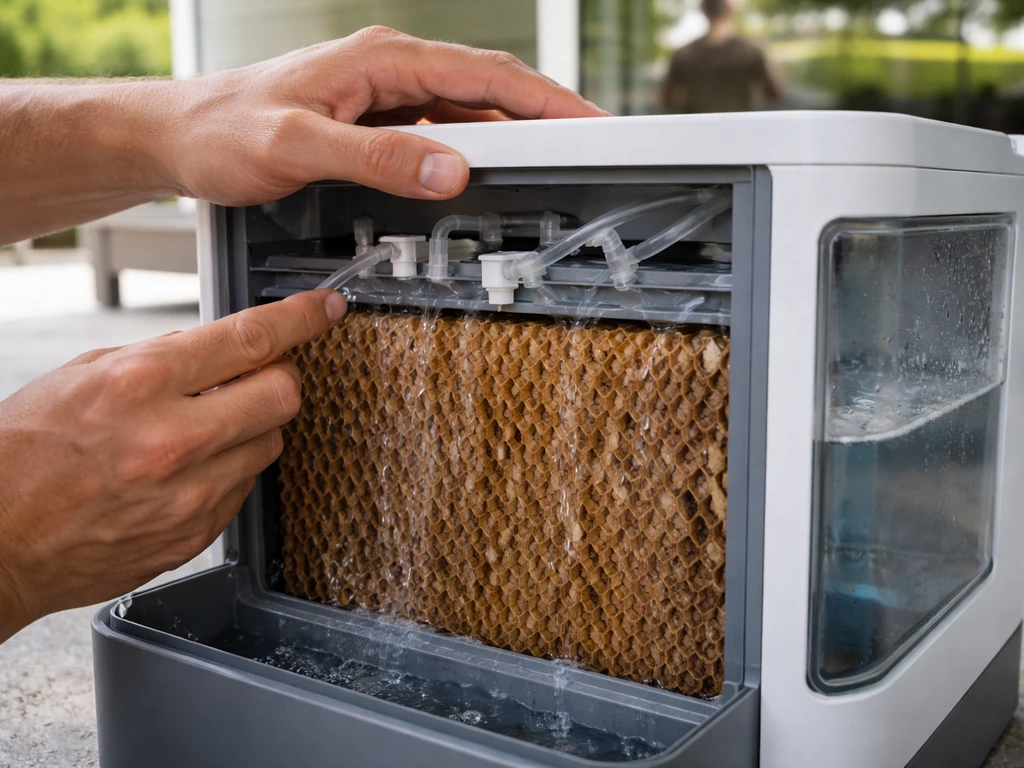
- Prime the pads before turning on the fan. Run the pump for at least five minutes (some manufacturers recommend up to five hours for new or replaced media) before switching on the fan. Dry pads with the fan running waste energy and deliver warm air instead of cool.
- Aim the airflow stream low and toward people, not up into the air. Most of the cooling you feel comes from the direct stream, not ambient temperature drop. Point it at chest and face height from a seating position.
- Position the cooler upwind of your seating area so natural breezes help push the cooled air stream toward you rather than fighting it.
- Keep the intake clear. Make sure there is at least two to three feet of open air on the back and sides of the cooler's intake so it is drawing fresh ambient air, not recirculating air it has already processed.
- Add ice to the water tank on extreme heat days to get an extra few degrees of cooling out of the unit. Most portable coolers allow this. It is not a permanent fix but helps on 105-plus-degree afternoons.
- On days when humidity creeps above 50 percent, switch to max fan speed. You will get less evaporative cooling, but you can still benefit from the wind-chill effect of strong airflow across skin.
- Use the cooler in the driest part of the day. In many dry climates, humidity is lowest between noon and 4 pm. Running the cooler during that window gets you the best performance.
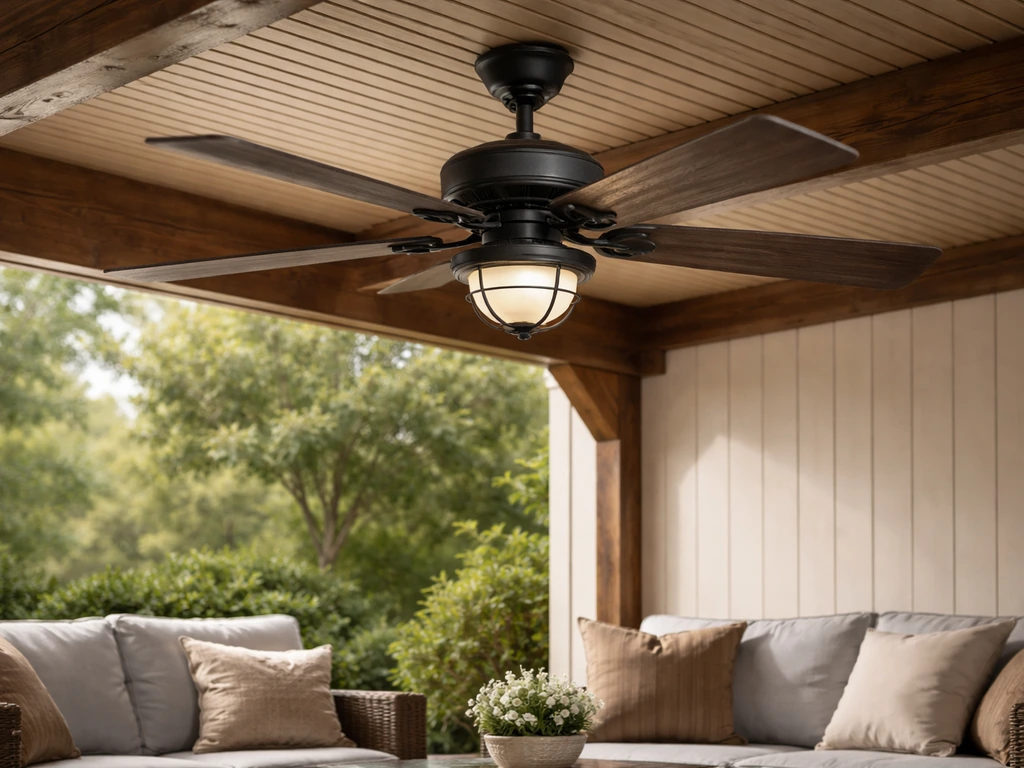
One underrated tip: if you have a covered patio with a ceiling fan, run both simultaneously. The swamp cooler pushes cooled air into the space and the ceiling fan distributes it. That combination creates a noticeably more comfortable zone without any additional power-hungry equipment. If you are comparing ceiling fan options, an outdoor patio ceiling fan paired with a swamp cooler is one of the most efficient patio cooling setups in dry climates.
Maintenance, costs, and keeping it running season to season
Daily and weekly upkeep
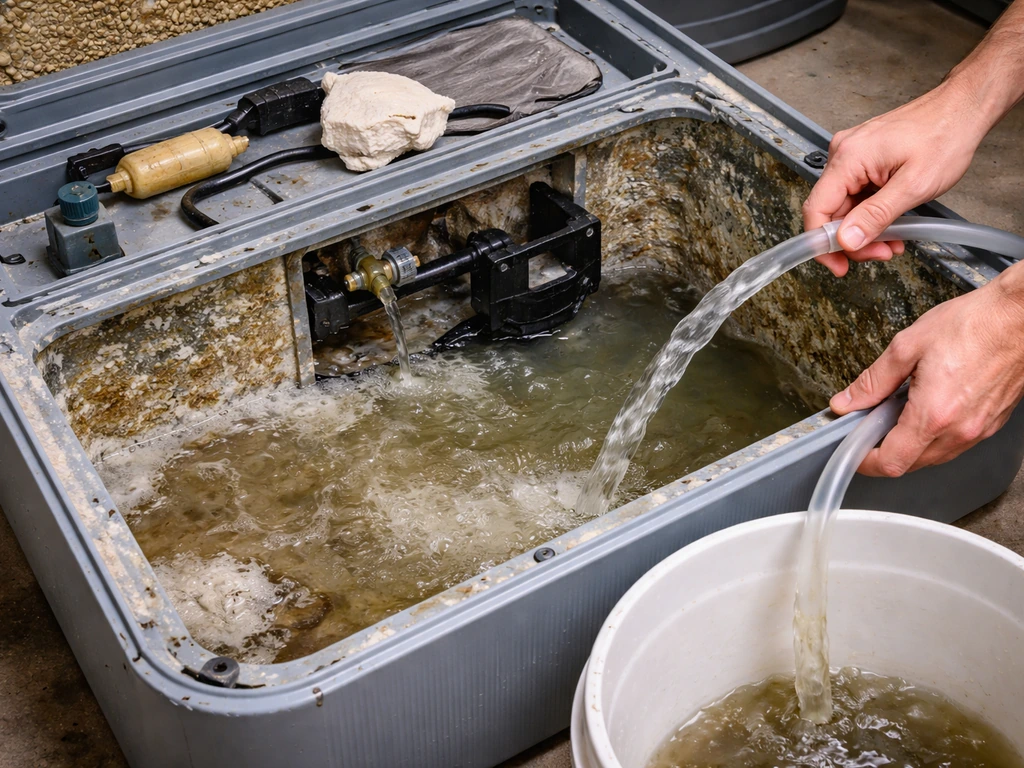
The biggest enemy of a swamp cooler is mineral scale from hard water. As the pump circulates water through the pads, minerals are left behind as the water evaporates. Over time, scale clogs the distribution lines, reduces pad efficiency, and shortens pump life. Running a bleed-off or drain cycle regularly helps flush minerals before they build up. Some systems like the Dial Power-Clean setup do this automatically by flushing the reservoir every eight hours of pump operation, which is worth looking for in a new unit if you want to minimize hands-on maintenance.
Drain and rinse the tank at least once a week during heavy use. A tank sitting with stagnant warm water grows algae and bacteria, and you will notice it quickly as a musty smell blowing out of the unit. Clean the water pump with a mild descaling solution at the start and end of each season. If the cooler is blowing warm air, nine times out of ten the pump has scale buildup, the pads are dry, or the water level is too low.
Pad replacement
Aspen pads typically need replacing every season or even mid-season in areas with hard water. Cellulose pads last longer, often two to five seasons with proper care, but they need to be fully dried before storage to prevent mold. Inspect pads at the start of each season: if they are discolored, smell musty, or show visible mineral buildup that does not clean off, replace them. Running degraded pads is the second fastest way to get poor performance after running with no water.
Seasonal storage
Before storing for winter, fully drain the water tank and reservoir, run the fan only (no pump) for 20 to 30 minutes to dry out the pads, clean the pump and distribution lines, and store in a dry location. Leaving water in the system over winter causes pump corrosion, mold in the pads, and mineral deposits that are much harder to remove in spring. Portable units with wheels make this straightforward since you can just roll them into a garage or shed.
Real operating costs
Running a Hessaire MC61V at 430W for four hours a day over a 90-day summer costs roughly $25 in electricity at $0. 16 per kWh. A comparable patio air conditioner running 1,200W for the same period would cost around $70. Add water consumption: in hot, dry conditions, a mid-size swamp cooler uses approximately 3 to 5 gallons of water per hour.
At $0. 01 per gallon for tap water, even at 5 gallons per hour that is $0. 05 per hour in water cost. Pad replacement for aspen media runs $10 to $30 per season depending on size.
Cellulose pads cost more upfront ($30 to $80) but stretch across multiple seasons. Total seasonal cost of ownership for a portable swamp cooler is typically under $75 to $100 including electricity, water, and consumables, compared to two to three times that for a patio AC unit.
If you are on the fence between a swamp cooler and a patio air conditioner, the honest answer is: in a dry climate under 50 percent humidity, the swamp cooler wins on cost and is genuinely comfortable. In a humid climate, the outdoor patio air conditioner is a better investment even though it costs more to run. If you want the most reliable cooling on a patio, the best outdoor patio air cooler alternatives are worth comparing against a standard patio air conditioner. Buy the right tool for your actual climate and you will not regret either choice.
FAQ
How much clearance do I need around the intake and discharge sides of the best swamp cooler for outdoor patio use?
Most patio evaporative coolers need a dedicated supply of fresh air for the intake side. If you cannot leave clear space on the intake (for example, a tight corner with fences or planters), performance will drop and you can feel more humidity from stagnant air. If your setup is constrained, prioritize a model that has intake that can face open space and use placement with open airflow rather than relying on pointing the discharge only.
Why does my swamp cooler cool near me but not the rest of the patio?
Swamp coolers are not designed to cool a closed room, so you should expect the unit to feel strongest near the airflow stream and at seating height. If the airflow hits walls or furniture too close, it can cause turbulence and uneven cooling. A practical approach is to keep the cooler several feet away from solid surfaces and aim low toward where people sit, then adjust height with the patio layout.
Should I choose cellulose or aspen pads, and what actually causes poor cooling during summer?
Cellulose pads usually outperform aspen, but the bigger day-to-day issue is maintaining water chemistry and pad condition, not just pad type. In hard-water areas, scale can form even with good pads, which reduces evaporation and makes the cooler feel weak or even warm. If you notice reduced cooling mid-season, check for mineral buildup first, then confirm water level and pad saturation.
What are the most common reasons a swamp cooler blows warm air on a patio?
If the pads are wet and the unit is running correctly but air feels warm, common causes are mineral scale on the pump/distribution lines, a low water level, or dry pads from inadequate water distribution. Also confirm the unit is getting true fresh outside air and not pulling in already-humid air from a covered but enclosed nook. A quick check is to open the water reservoir, verify the pump is flowing, and inspect pad wetness at the intake side.
How should I use humidity readings to decide whether a swamp cooler is worth buying for my patio?
Evaporative cooling effectiveness depends on outdoor relative humidity, but you should still verify conditions at the time you use it, not just the peak afternoon forecast. Look at a humidity trend for your typical patio hours, and if you regularly see 60 percent RH or higher, plan for fans or a patio air conditioner instead. Also remember that shade from a pergola can make the surface temperature feel lower, which makes the cooler seem better than it is on exposed areas.
How do I choose the right swamp cooler if noise matters for an outdoor dining patio?
Noise is often underestimated. If you are hosting dinners or want conversational comfort, prioritize models in the low-50s dB range and keep the unit positioned so you are not seated directly down the discharge path at ear level. For larger, high-CFM units that run louder, place the cooler farther from seating zones and use ceiling fans to spread airflow so you can turn the fan level lower.
Can I run the best swamp cooler for outdoor patio all afternoon without refilling?
Yes, but it depends on water access. If your unit supports a garden hose hookup with continuous fill, you can run longer without manual refills and maintain consistent pad wetness, which improves steady cooling. If it only has a manual tank, you need to budget for refill cycles, especially in very hot, dry conditions where water use can be high.
What maintenance prevents mineral scale buildup and protects cooling performance?
Hard-water scale is a real performance killer because it restricts flow through pad distribution. A practical maintenance cadence is to run a drain-and-rinse at least weekly during heavy use, and perform descaling at the start and end of the season. If you see white dust, uneven wetting across pads, or weaker airflow after initial cooling, scale removal should be your first troubleshooting step.
What is the correct way to winterize a portable swamp cooler?
You generally should not store the unit with water in the system. Drain the tank and reservoir, run the fan only to dry pads, clean pump and distribution lines, and store in a dry place. Leaving moisture over winter increases mold risk inside pads and corrosion risk in the pump, and spring startup often performs poorly if you skip the full dry-out.
If my summers are humid, can I still use a swamp cooler effectively?
In humid weather, you can still improve comfort using the cooler differently. If you are in a marginal humidity range, using the cooler as an airflow enhancer, not as primary cooling, can be helpful when paired with ceiling fans or patio fans. However, if humidity is consistently very high, the unit may feel muggy because it adds moisture, and it is better to switch to a patio AC or a fan-first strategy.
Next Articles
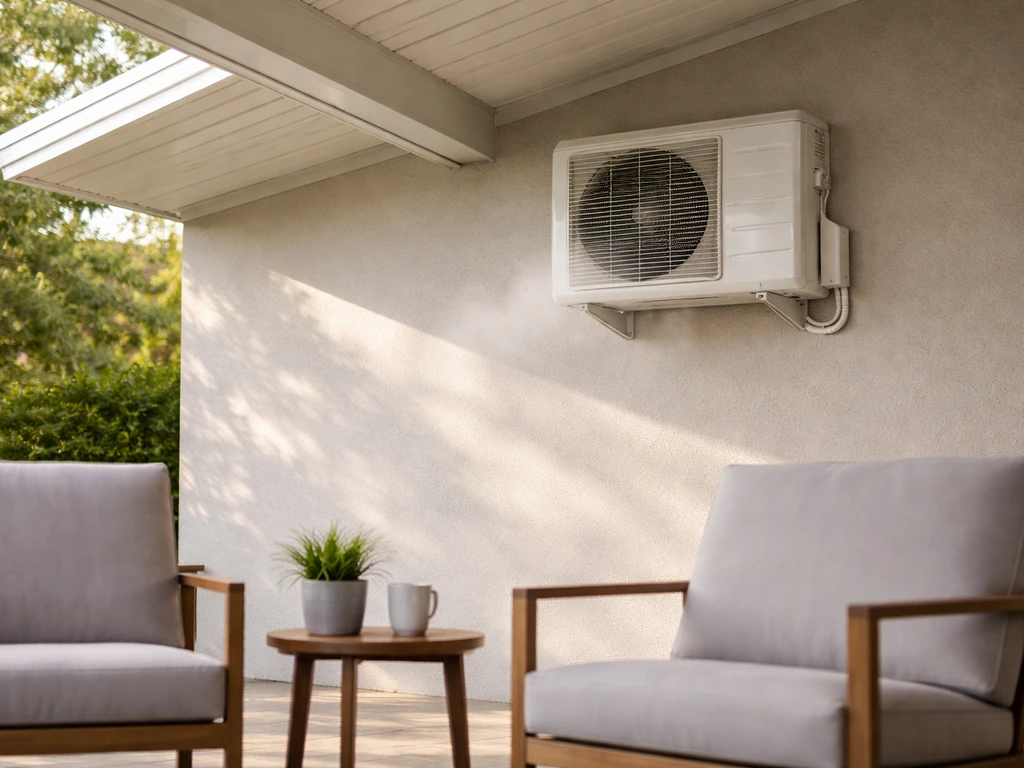
Best Outdoor Patio Air Conditioner: Buying Guide and BTU Match
Choose the best outdoor patio AC with BTU sizing, type comparisons, weatherproofing, costs, and setup tips for your spac
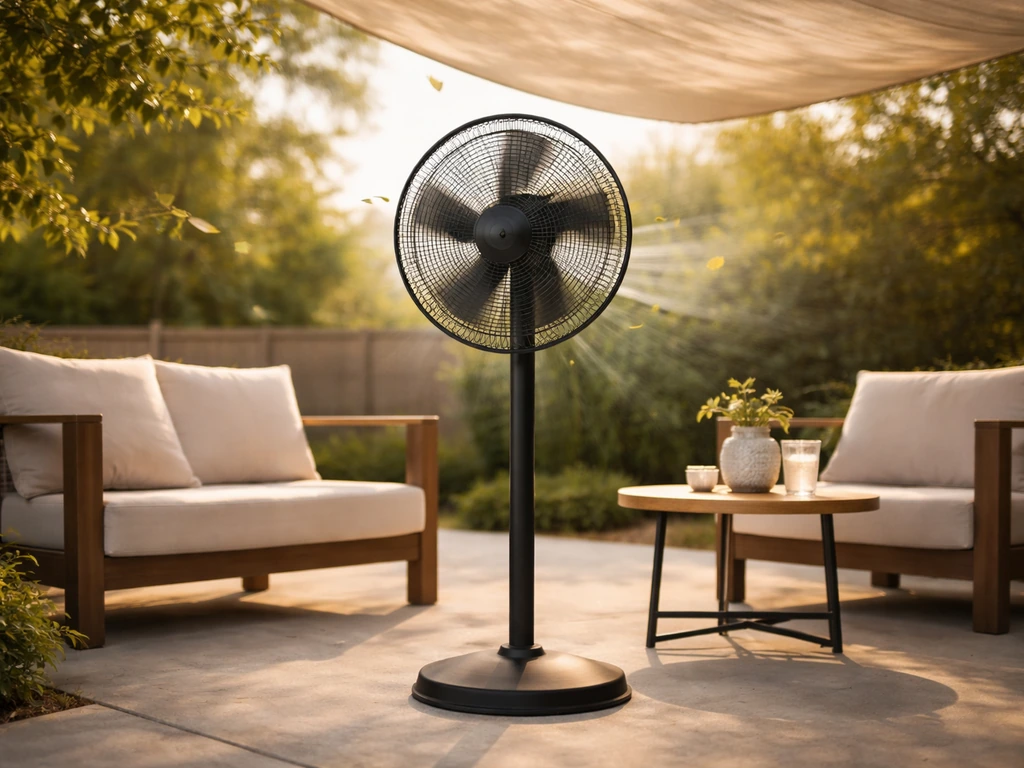
Best Outdoor Standing Fan for Patio: Buying Guide
Choose the best outdoor standing fan for your patio with type, coverage, airflow, weather ratings, placement, and safety
Best Outdoor Patio Ceiling Fans: Top Picks and Buying Guide
Top-rated best outdoor patio ceiling fans with wet or damp ratings, size tips, placement, noise, and installation guidan