
For a covered patio, a mini-split or a properly vented portable AC will give you real cooling. For a dry-climate open patio, a swamp cooler or evaporative cooler can work well and costs far less to run. For humid climates above 50% relative humidity, evaporative options basically stop working, and you need a refrigerant-based AC with an exhaust path. The right choice comes down to four things: whether your patio is covered or open-air, how hot and humid your summers actually get, how much space you're cooling, and how much you're willing to spend on installation versus just plugging something in.
Best Outdoor Patio Air Conditioner: Buying Guide and BTU Match

Lark Perry
16 May 2026
How outdoor patio AC actually works (and what you can realistically expect)
A standard air conditioner works by pulling heat out of the air and dumping it somewhere else. Inside the unit, refrigerant absorbs heat from the room-side air, then carries that heat to a compressor and condenser where it gets released outside. That's the core loop, and the key word is 'outside.' Every type of AC, whether it's a portable unit, a window unit, or a mini-split, needs somewhere to dump that heat. If you block that path, you're not cooling anything.
On a patio, that heat-dump problem gets complicated. GE's own guidance is blunt about it: running a portable AC without the exhaust hose 'will not allow heat and humidity to be removed.' You can't just set a portable unit on your deck, turn it on, and expect it to work. The hot exhaust has to go somewhere, and on an open patio there's nowhere to send it. This is the single biggest mistake people make when shopping for patio cooling.
What you can realistically expect from outdoor patio cooling depends a lot on enclosure. A well-covered, enclosed patio (think three walls and a solid roof) can be cooled almost like an indoor room with the right equipment. A partially covered pergola-style space with open sides loses cool air as fast as you make it, so you're really just creating a cool zone around one spot rather than chilling the whole area. A fully open deck or patio is the hardest case: refrigerant-based AC is basically impractical, and your best option shifts toward high-airflow fans or swamp coolers in dry climates.
Choosing the right type for your patio
There are four main categories to consider. Each one has a different set of tradeoffs around installation effort, cooling power, cost, and how well it actually works outdoors.
Portable AC units
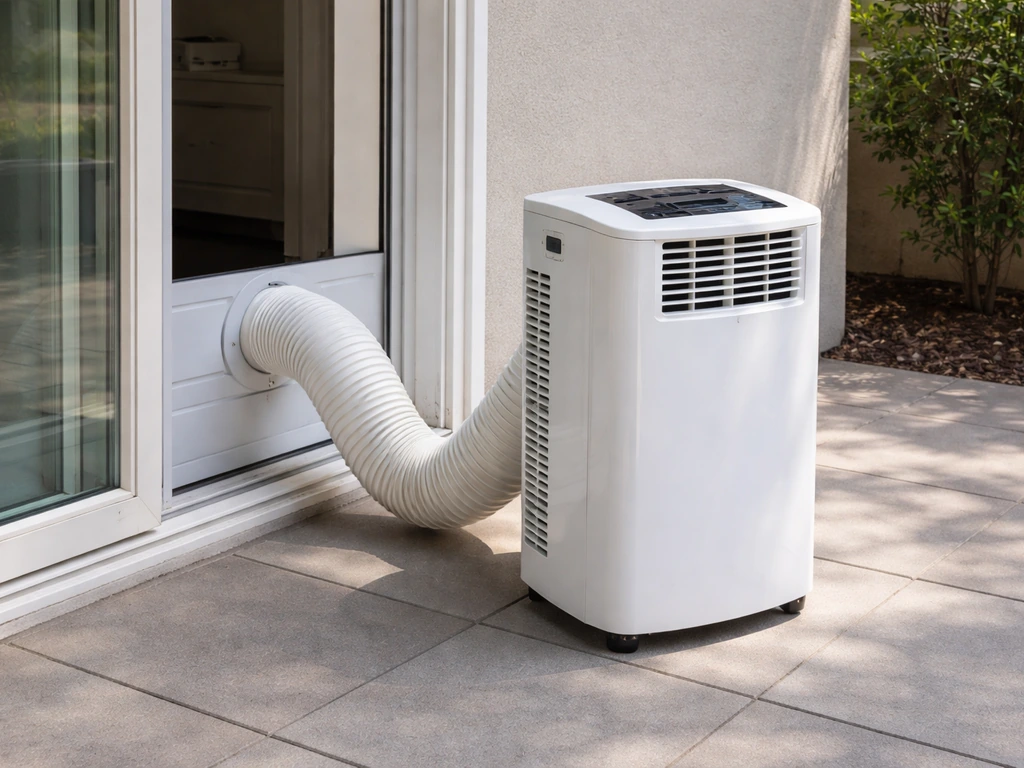
Portable ACs are the most tempting option because they're cheap upfront and easy to move. The problem is that almost every portable AC manual says specifically not to use the unit outdoors, and the exhaust hose surface temperature can reach 104°F to 122°F according to LG's own support documentation. On a patio, that hose needs to route somewhere safe, away from flammable furniture cushions, pets, and kids.
If your covered patio has a wall or window-like opening you can route the hose through, a portable unit can work in a pinch. Without that, it's the wrong tool. Also worth knowing: single-hose portables draw replacement air through gaps and cracks, which actually reduces efficiency. Dual-hose models handle intake and exhaust separately and cool much more effectively in tight spaces.
Window AC units
Window units are designed to sit in a window opening with the compressor side facing outside and the evaporator side facing in. On an enclosed patio with a window-like opening or a framed wall, this setup can work really well and costs less than a mini-split. The limitation is that you need a structural opening that matches the unit's size and a way to seal around it. Window units are also not weather-rated for full outdoor exposure on the outdoor side, so they need some protection from direct rain.
Mini-split systems
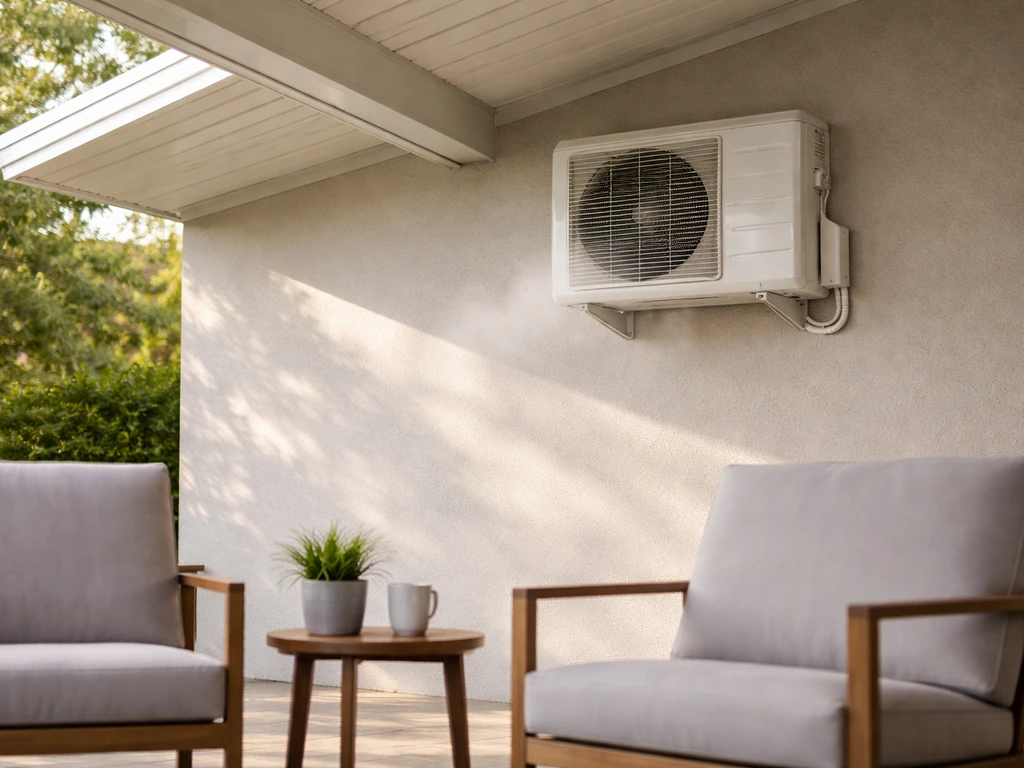
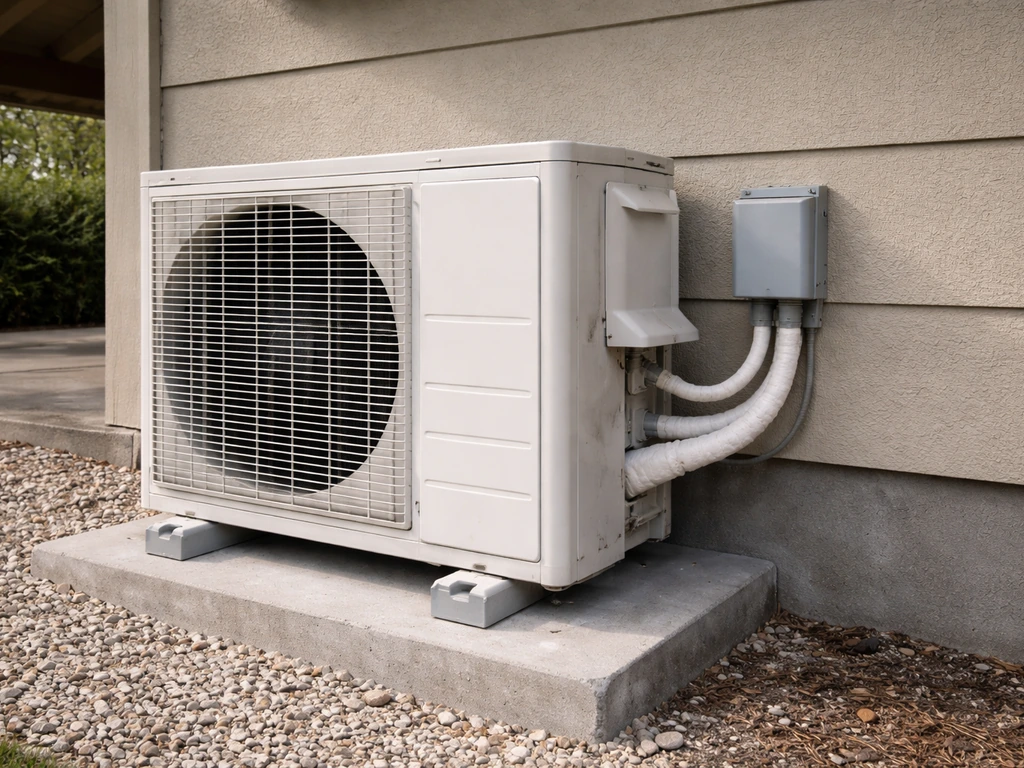
A mini-split is the gold standard for covered patio cooling if you want it done right. The system has two components: an indoor air handler mounted on the wall or ceiling inside your covered space, and an outdoor compressor unit that can be placed 15 to 50 feet away. There's no hose venting through a window, no hot exhaust near your furniture, and the indoor unit is sleek and quiet.
Outdoor mini-split compressors are built to sit outside in real weather. The BlueRidge low-wall mini-split, for example, blank" rel="noopener noreferrer">lists a cooling-mode outdoor operating range up to 50°C (122°F), making it practical even in extreme summer heat. The catch is installation: you need an HVAC technician to run refrigerant lines and handle the electrical work, which typically adds $1,000 to $3,500 in labor on top of the unit cost.
But for a covered patio you actually use all summer, it pays for itself in comfort.
Evaporative coolers (swamp coolers)
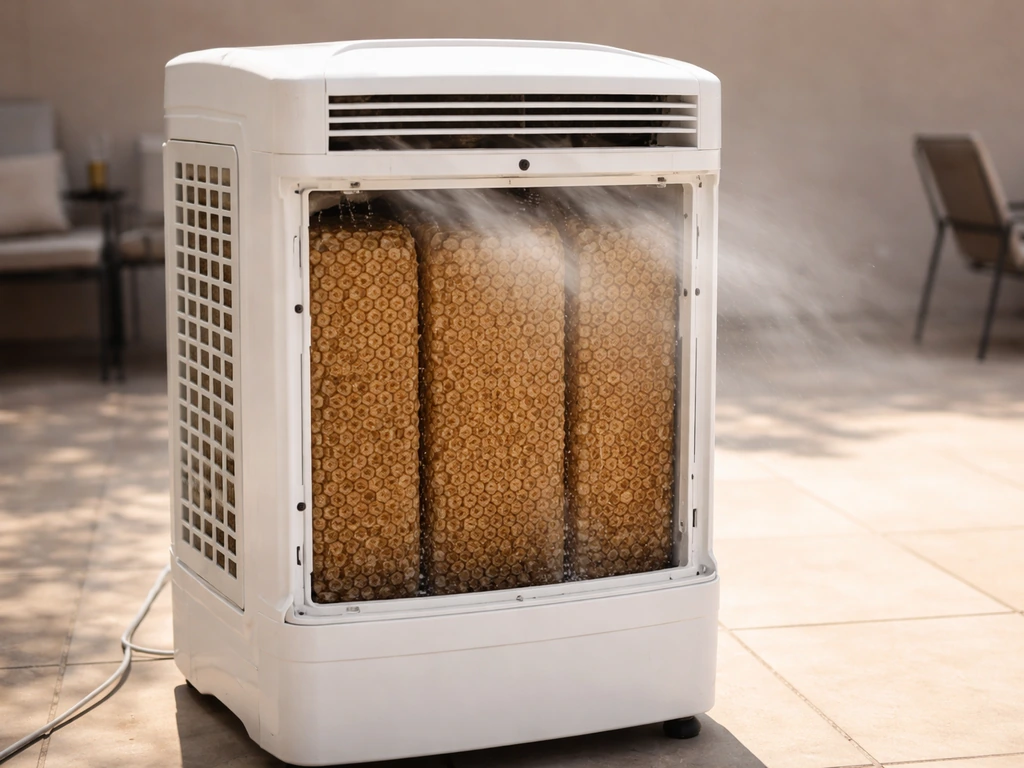
Evaporative coolers work by pushing air through water-soaked pads. Water evaporates, absorbs heat, and the air that comes out is cooler. They're inexpensive, use a fraction of the electricity a refrigerant AC uses, and work great on open patios in dry climates. If you want the best swamp cooler for an outdoor patio, look for strong airflow and make sure it fits your local humidity levels best swamp cooler for outdoor patio.
The hard limit is humidity. Once ambient humidity climbs above about 50%, there's not enough room for more moisture in the air, and the cooling effect drops dramatically.
Evaporative coolers can also push supplied air out at 80 to 90% relative humidity, which raises indoor humidity levels. In a closed or semi-enclosed space, that can make conditions feel muggy and uncomfortable rather than cool. If you're in Phoenix or Albuquerque, a swamp cooler is a legitimate patio cooling option. If you're in Houston or Miami, it's going to disappoint you.
| Type | Best for | Upfront cost | Installation | Works in humidity? | Works outdoors? |
|---|---|---|---|---|---|
| Portable AC | Enclosed covered patio with hose routing | $300–$700 | Plug-in, needs hose path | Yes | Only with hose vent; not rated for weather |
| Window AC | Enclosed patio with framed wall opening | $200–$600 | Moderate DIY | Yes | Outdoor side needs rain protection |
| Mini-split | Covered/enclosed patio, long-term use | $700–$2,500+ unit | Professional required ($1,000–$3,500) | Yes | Outdoor compressor is weather-rated |
| Evaporative cooler | Dry-climate open or covered patio | $100–$600 | Plug-in or hose connection | No (above 50% RH) | Yes, most are built for outdoor use |
Best picks by patio setup and climate
Small covered patio (under 200 sq ft) in any climate
A 9,000 to 12,000 BTU mini-split is the cleanest solution if you want consistent cooling. If budget is the constraint, a 8,000 to 10,000 BTU window unit mounted in a framed opening will do the job at a fraction of the installation cost. For a semi-enclosed small patio with open sides, a dual-hose portable routed through a gap in a screen wall can work as a cheaper entry point, but manage your expectations: you're cooling a zone around the unit, not the whole patio.
Large covered patio (200–500 sq ft) in hot/humid regions
This is mini-split territory. Plan on a 12,000 to 18,000 BTU system. Consumer Reports notes that real-world cooling performance testing simulates 95°F outdoor conditions with high humidity, which is exactly what you're dealing with in the Southeast, Gulf Coast, or mid-Atlantic in July. A single mini-split in that BTU range will handle a 300 to 400 sq ft enclosed patio comfortably under those conditions. For spaces closer to 500 sq ft with high ceilings, go to 18,000 BTU or look at a multi-zone system.
Open-air patio or pergola in dry climates
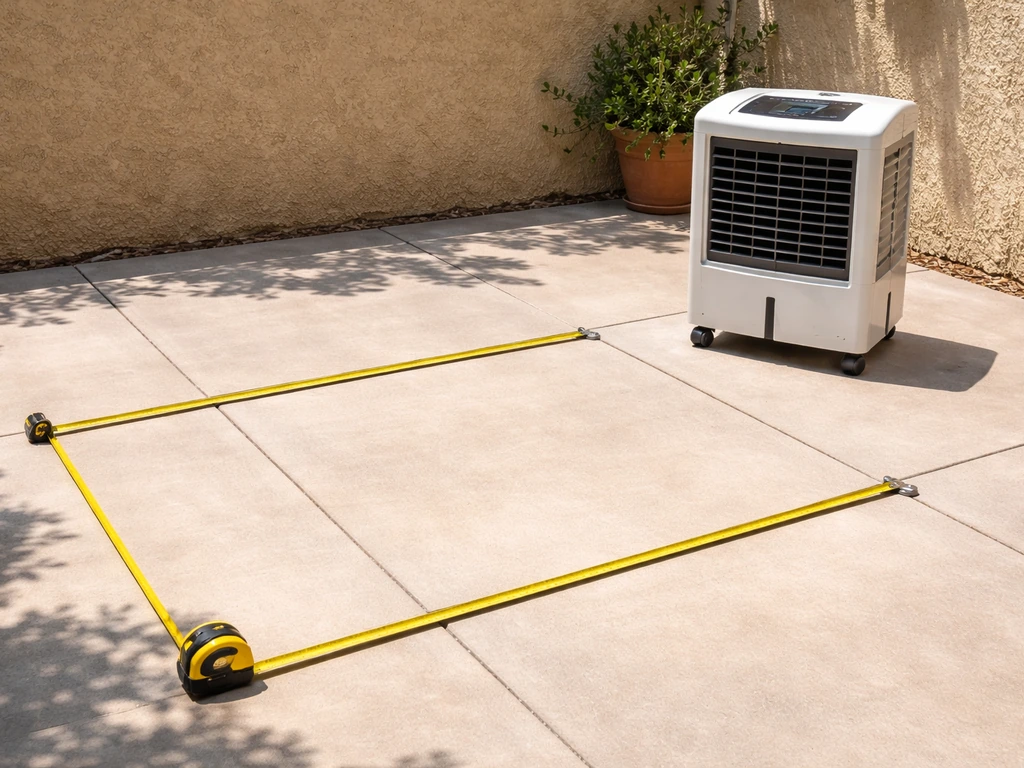
An evaporative or outdoor air cooler is your practical option here. If you want the best outdoor patio air cooler for dry climates, an evaporative cooler with strong airflow is usually the most practical choice. You don't have walls to contain cool air, so a refrigerant AC will just cool the neighborhood. A good evaporative cooler with 1,000 to 3,000 CFM airflow will create a noticeably cooler zone around your seating area. Position it upwind of where people sit and let it push cool air toward you rather than trying to cool the whole open space.
Covered patio in hot-dry climates (Southwest)
You have more options here than someone in a humid region. A high-quality evaporative cooler works well for partially open covered spaces. If your patio is more enclosed, a mini-split gives you more consistent control, especially during monsoon season when humidity spikes temporarily and your swamp cooler stops performing. Many Southwest homeowners keep a mini-split as the primary system and use the swamp cooler on dry days to save on electricity.
Sizing guide: BTU needs, coverage, and airflow placement
For refrigerant-based AC on a covered patio, the general rule is 20 BTUs per square foot as your starting point. For a 150 sq ft enclosed porch, that's about 3,000 BTU, but in practice you want to size up because outdoor spaces have more heat load from sun exposure, poor insulation, and frequent door/opening use. Apply a 1.25x to 1.5x multiplier for outdoor covered spaces. So that 150 sq ft patio realistically needs 4,500 to 6,000 BTU, not 3,000. For larger spaces, don't just multiply linearly without also accounting for ceiling height: higher ceilings mean more air volume to cool.
| Patio Size | Base BTU estimate | Outdoor-adjusted BTU | Recommended type |
|---|---|---|---|
| Up to 150 sq ft | 3,000 BTU | 5,000–6,000 BTU | Window unit or small portable |
| 150–250 sq ft | 5,000 BTU | 8,000–10,000 BTU | Window unit or 9,000 BTU mini-split |
| 250–400 sq ft | 8,000 BTU | 12,000–15,000 BTU | 12,000 BTU mini-split |
| 400–600 sq ft | 12,000 BTU | 18,000–24,000 BTU | 18,000 BTU mini-split or multi-zone |
For airflow placement, the indoor air handler on a mini-split should be mounted high on the wall facing the longest open area, so cool air can fall and circulate across the space. On a portable or window unit, position it near the center of the enclosed area if possible, not shoved into a corner. If you're using an evaporative cooler, place it on the upwind side of your seating area and make sure there's an exit path for the humid air (a gap, a vent, an open side). Trapping evaporative cooler output in a closed space just raises humidity without improving comfort much.
Power, installation, and what it's actually going to cost you
Electricity costs
A 12,000 BTU mini-split running at full load draws roughly 1,000 to 1,200 watts. At the national average of around $0.16 per kWh, that's about $0.16 to $0.19 per hour of full-load operation. Run it 8 hours a day for 90 summer days, and you're looking at roughly $115 to $140 for the season. Evaporative coolers use dramatically less power, typically 100 to 400 watts for a decent portable unit, cutting that seasonal cost to $15 to $50. Portable ACs and window units generally fall between those two extremes, with efficiency varying a lot by model and SEER rating.
Installation realities
Portable AC units and evaporative coolers are true plug-and-play. A standard 115V outlet handles most models up to about 14,000 BTU. Larger portable units (above 14,000 BTU) and most mini-splits require a dedicated 240V circuit, which means an electrician visit even before the HVAC tech shows up for refrigerant work. Budget $150 to $400 for the electrical circuit alone if you don't already have one. Full mini-split installation including refrigerant line set, electrical, mounting hardware, and labor typically runs $1,000 to $3,500 depending on your region and how difficult the line routing is.
Condensate and drainage
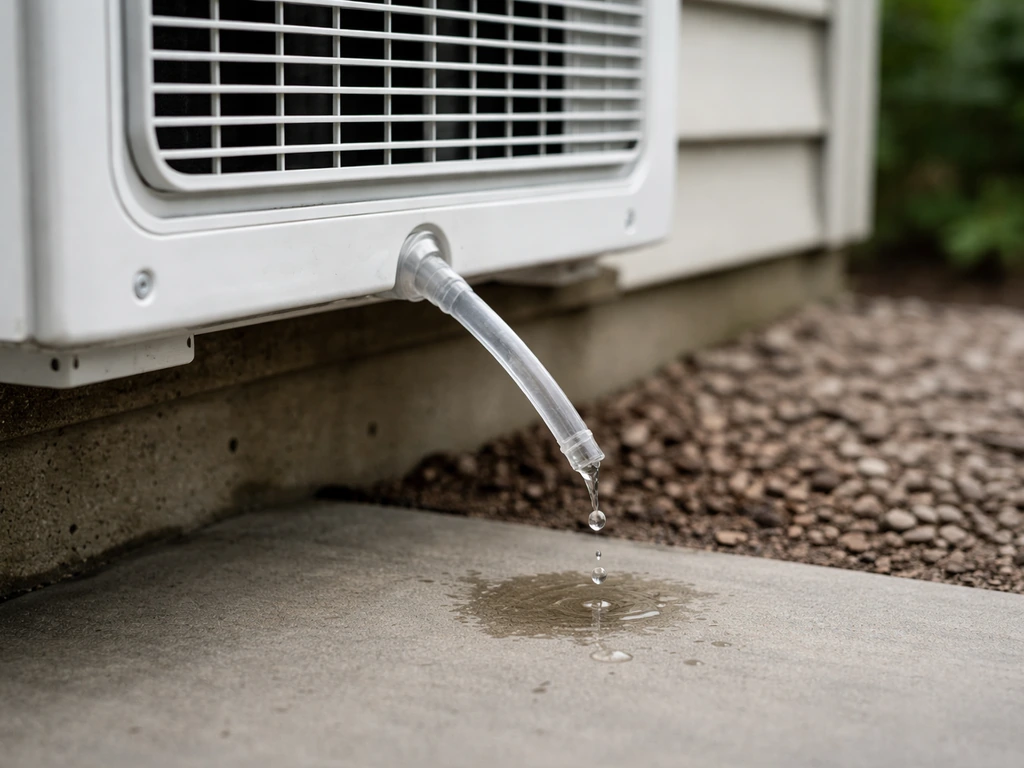
Refrigerant-based ACs pull moisture out of the air and that moisture has to go somewhere. Mini-splits and window units typically drain continuously to the outside, which is easy to manage on a patio. Portable ACs collect condensate in an internal tank that needs to be emptied every 6 to 12 hours depending on humidity levels. Some newer portables have a continuous drain option with a hose routed to a floor drain or bucket. If you're in a humid climate using a portable unit on a covered patio all summer, plan around that drainage routine or you'll be emptying buckets constantly.
Weatherproofing
Mini-split outdoor compressors are weatherproof by design. They sit outside year-round and are built for it. Portable ACs and window units are not. Most portable AC manuals explicitly say 'do not use outdoors,' and that's partly a weather exposure issue. If you're using a portable or window unit on a covered patio, make sure it's protected from rain splash and direct moisture, and bring it inside or cover it when not in use during storms. For long-term patio use through a full season, a mini-split is simply the more durable choice.
Noise, comfort, and safety on the patio
Noise levels
Mini-splits are the quietest option by a significant margin. The noisy compressor lives outside, and the indoor air handler typically runs at 19 to 35 dB on low settings, which is barely audible. Window units and portable ACs run 50 to 60+ dB, which is conversation-level noise. On a patio where you're talking with friends or watching TV, that matters. If quiet outdoor living is a priority, that's another point in the mini-split column.
Safety around kids, pets, and patio materials
The hot exhaust hose on a portable AC is a real hazard to be aware of. The outer surface can hit 104°F to 122°F in operation. Keep it away from cushions, curtains, upholstered furniture, and anywhere a pet or child might press against it. Route the hose with enough clearance around flammable materials and use a hose cover if it runs through a high-traffic area. Mini-splits eliminate this problem entirely since the hot components are outside.
Timers, smart controls, and seasonal use
Most mini-splits sold today include remote controls and many support Wi-Fi and app control. That's genuinely useful on a patio: you can pre-cool the space 20 minutes before you go outside, set it to shut off automatically, or monitor runtime without going back inside. Portable and window units vary widely on smart features at lower price points. If you're spending $1,500+ on a mini-split system, prioritize one with a programmable timer and ideally app control. It makes the whole system more practical for intermittent patio use.
What about fans alongside your AC?
Running a ceiling fan or standing fan alongside your patio AC makes a measurable difference. If you're looking for airflow that blends in with cooling, the best outdoor patio ceiling fan can make the space feel cooler without cranking your AC as much. Moving air feels cooler at the same temperature, so you can set your AC a couple of degrees warmer and get the same comfort level while using less electricity.
On a large covered patio, a ceiling fan helps distribute the cool air the AC is producing so you don't end up with one cold spot near the unit and warm air on the far end. Patio ceiling fans and outdoor standing fans pair naturally with a mini-split setup and add relatively little to the overall cost. If you need help picking the best patio fans to complement your setup, focus on airflow, blade size, and outdoor-rated construction for your climate.
If you want the easiest way to add comfort, look for the best outdoor standing fan for patio use to improve airflow where you sit outdoor standing fans. If you're looking for the best patio fans, choose models built for outdoor use and good airflow so they complement your cooling setup Patio ceiling fans.
Your pre-purchase checklist and next steps
Before you buy anything, take 10 minutes to answer these questions. Your answers will steer you directly to the right type and the right size.
- Is your patio fully enclosed (walls and roof), partially enclosed, or open-air? Fully enclosed: mini-split or window unit. Partially enclosed: portable with hose routing or mini-split. Open-air: evaporative cooler in dry climates, fans otherwise.
- What is your average summer humidity? Check weather data for your city in July. Above 50% consistently: you need refrigerant-based AC, not an evaporative cooler. Below 50% on most days: evaporative cooling is a viable, cheaper option.
- Measure your patio square footage (length x width). Use the sizing table in this article to get your BTU target, then apply the 1.25x outdoor multiplier.
- Check your electrical situation. Do you have a 240V outlet near the patio? If not, factor in $150 to $400 for an electrician before the AC install.
- What's your total budget (unit + installation)? Under $500 with minimal install: portable AC (if you have a hose routing path) or evaporative cooler. $500 to $1,000: window unit in a framed opening. $1,500 to $5,000+: mini-split with professional installation.
- How often will you actually use the patio? For daily summer use, a mini-split is worth the upfront cost. For occasional use, a portable or window unit makes more financial sense.
- Do you have kids, pets, or mobility concerns? If yes, rule out portable ACs with exposed hot exhaust hoses in high-traffic areas.
If you check off 'enclosed patio + humid climate + regular summer use,' stop overthinking it and get a mini-split. It's the only option that works reliably in those conditions without the workarounds and limitations of portable units. If you check off 'dry climate + open or partially open patio + budget-conscious,' an evaporative cooler is genuinely the smarter buy and will cool you off without a complicated install.
For most covered patios in humid regions, a 12,000 BTU ductless mini-split is the recommendation to land on. It's quiet, weather-durable, doesn't require a hose or drainage bucket, and cools a 250 to 350 sq ft enclosed patio reliably even on 95°F+ days. The upfront cost is higher, but you'll use it for 10 to 15 years and actually enjoy your patio all summer instead of fighting equipment limitations. If that budget isn't there yet, a window unit in a proper opening is the next best step, not a portable unit struggling with an improvised exhaust solution.
FAQ
Can I use a portable AC on an open patio if I just vent the hose outside?
Yes, but only in the right setting. If your “open” patio is mostly uncovered and has no practical place to vent hot exhaust air away from the seating area, a portable AC will struggle or can become unsafe. If you have a covered space with a screen-wall gap or a framed opening where you can route the exhaust hose to open air, that’s the scenario where a portable unit can work as a temporary cooling solution.
How do I prevent a portable patio AC from constantly filling the condensate tank?
Look for a model that allows continuous drainage (hose-to-drain) and plan to match your local water disposal method (floor drain, exterior drain, or approved bucket setup). If you plan to run it all afternoon in high humidity, emptying a condensate tank every 6 to 12 hours is often the real limiting factor, not the cooling BTU rating.
What matters besides patio size when choosing BTUs for an outdoor patio AC?
Don’t size only by patio square footage. Ceiling height, sun exposure, wind through open sides, and how often doors are opened can add load that makes the “standard” BTU number too small. A common practical approach is to size for the outdoor heat load and then add a multiplier for covered outdoor spaces, especially if you expect frequent use during peak sun hours.
Will a mini-split outdoor unit work in areas with heavy rain or extreme temperatures?
Mini-splits can still be installed and operated in areas with heavy rain, but you must ensure the outdoor unit has proper clearance for airflow and that the electrical disconnect and line set are installed to local code. Also confirm the outdoor operating range on the model you’re considering, since very cold snaps and very hot summers can fall outside some units’ rated limits.
Do I always need new electrical work for a best outdoor patio air conditioner?
Often, the limiting factor is electrical capacity and routing, not the unit itself. Many setups need a 240V circuit for larger portables or for most mini-splits, plus weather-rated outdoor disconnects and conduit where required. If your panel is far away or you need new breaker work, your total cost can rise more than the equipment price difference.
Can I mount a window AC in a patio opening and leave it out there all summer?
Yes, provided the unit is designed for outdoor use and the installation matches the intended environment. Window units specifically need protection from direct rain and should have proper sealing around the opening, because repeated water intrusion can damage components and degrade efficiency over time.
Where should I place an evaporative cooler relative to where people sit?
Upwind placement is often more important for evaporative coolers than for refrigerant AC, because you’re relying on airflow direction to push cooled air across seating. If the breeze is inconsistent, use fans to stabilize airflow toward people and ensure the humid air has an exit path, otherwise the patio can feel muggy rather than cooler.
Is a refrigerant AC ever practical on a fully open deck?
Not usually for a “fully open deck.” With little enclosure, refrigerant systems end up cooling air that immediately mixes with the surrounding hot air, so comfort gains can be disappointing. For fully open spaces, high-airflow fans or evaporative cooling in dry climates tend to feel more effective than trying to treat the entire deck like an indoor room.
Which option is actually quietest for patio use, mini-split versus portable or window?
Noise expectations depend on where the indoor air handler is mounted and which mode you use. If quiet is your priority, choose a mini-split with a low-noise indoor fan curve and mount the air handler to minimize vibration transfer. For portable or window units, even if the compressor noise is tolerable, the fan and higher overall sound levels can still be noticeable during conversations and TV time.
Should I use a ceiling fan or standing fan with my patio AC to cut costs?
Yes, and it can reduce energy use without sacrificing comfort. Add outdoor-rated fans to improve air circulation, then raise your thermostat setpoint slightly (for example, 1 to 2 degrees) to maintain perceived comfort. This works best on covered patios where the cooled air can actually circulate instead of immediately escaping.
What smart features matter most for patio cooling, Wi-Fi or remote timer?
Don’t assume all “Wi-Fi capable” features are equally useful outdoors. Prioritize controls that let you run a timer, set temperature schedules, and verify status (like “on/off” and current mode) reliably on your home network. App control is most valuable for intermittent use because you can pre-cool before you go outside.
Next Articles
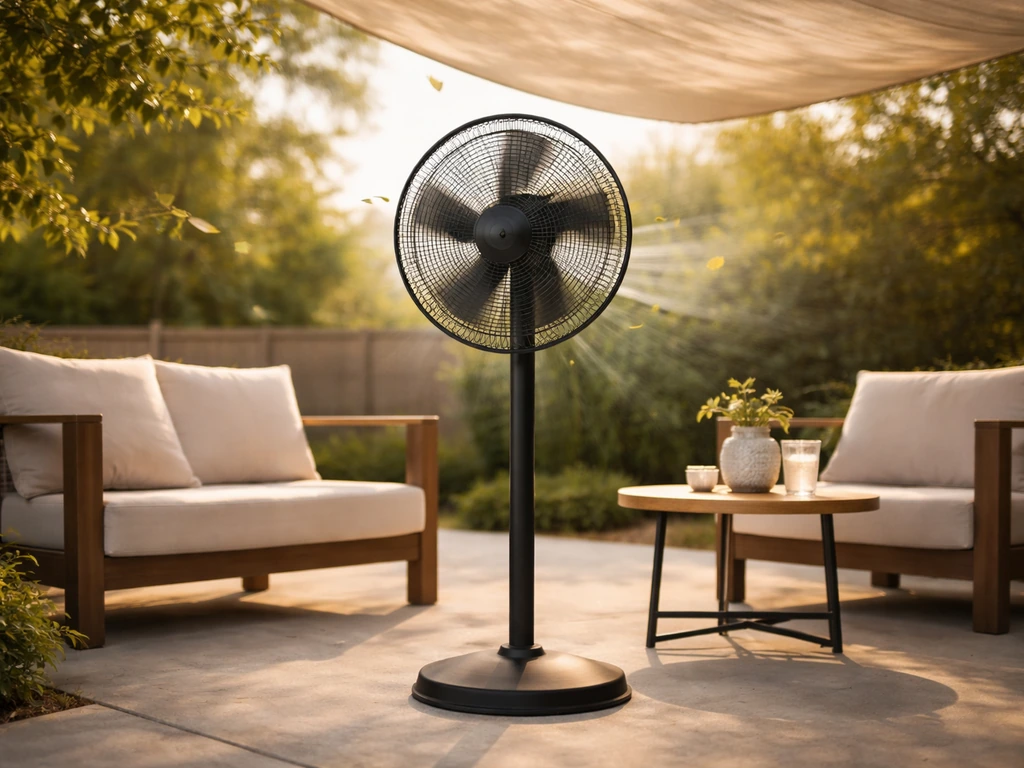
Best Outdoor Standing Fan for Patio: Buying Guide
Choose the best outdoor standing fan for your patio with type, coverage, airflow, weather ratings, placement, and safety
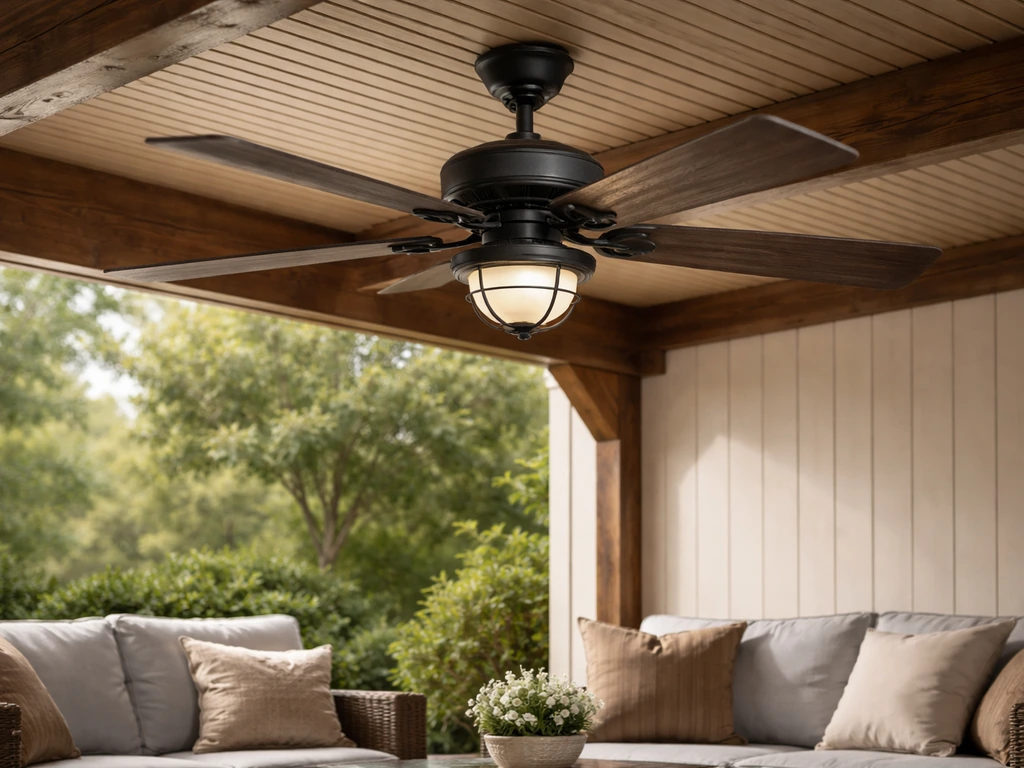
Best Outdoor Patio Ceiling Fans: Top Picks and Buying Guide
Top-rated best outdoor patio ceiling fans with wet or damp ratings, size tips, placement, noise, and installation guidan
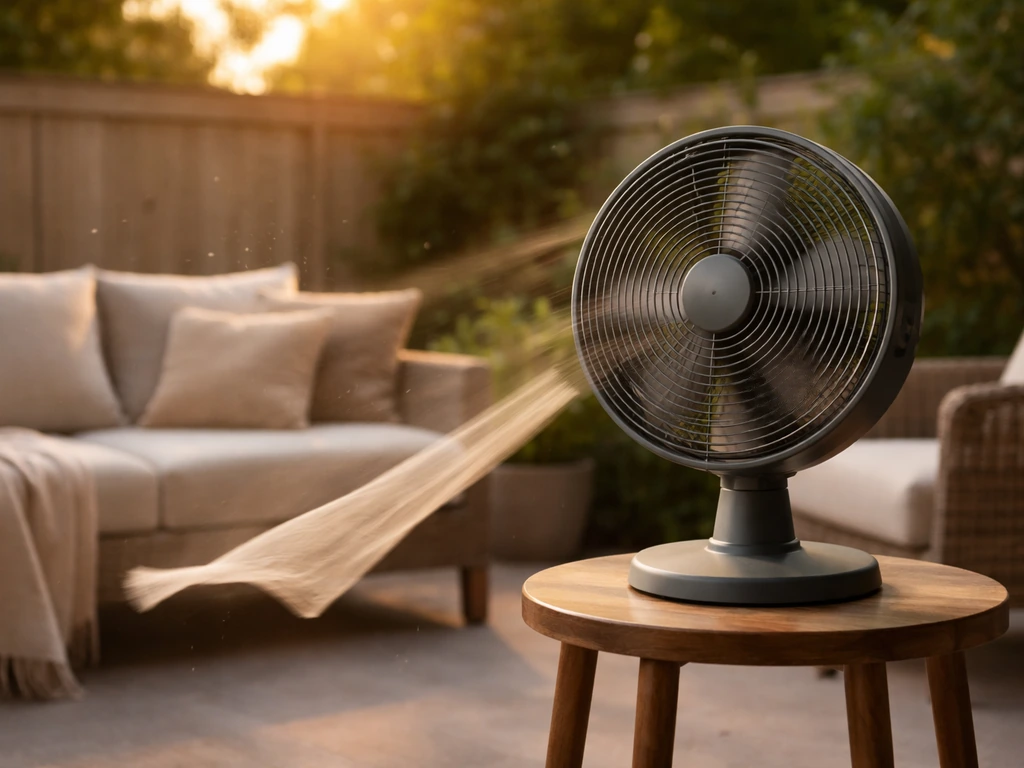
Best Patio Fans: How to Choose and Best Picks by Size
Choose the best patio fans by CFM, oscillation, and weatherproofing, with top picks by patio size and setup tips.