
The best outdoor patio air cooler for most people is a portable evaporative cooler (also called a swamp cooler) with at least 1,500 to 3,000 CFM of airflow, a large water tank (10+ gallons), wheels for repositioning, and an IPX4 or better weather-resistance rating. In dry climates, these units can drop the air temperature hitting your skin by 15°F to 40°F, making a shaded patio genuinely comfortable on a hot afternoon. In humid climates like Florida or coastal Georgia, though, an evaporative cooler is the wrong tool entirely, and you should look at misting fans, shade sails, or a portable outdoor AC instead.
Best Outdoor Patio Air Cooler: How to Choose and Size

Lark Perry
28 May 2026
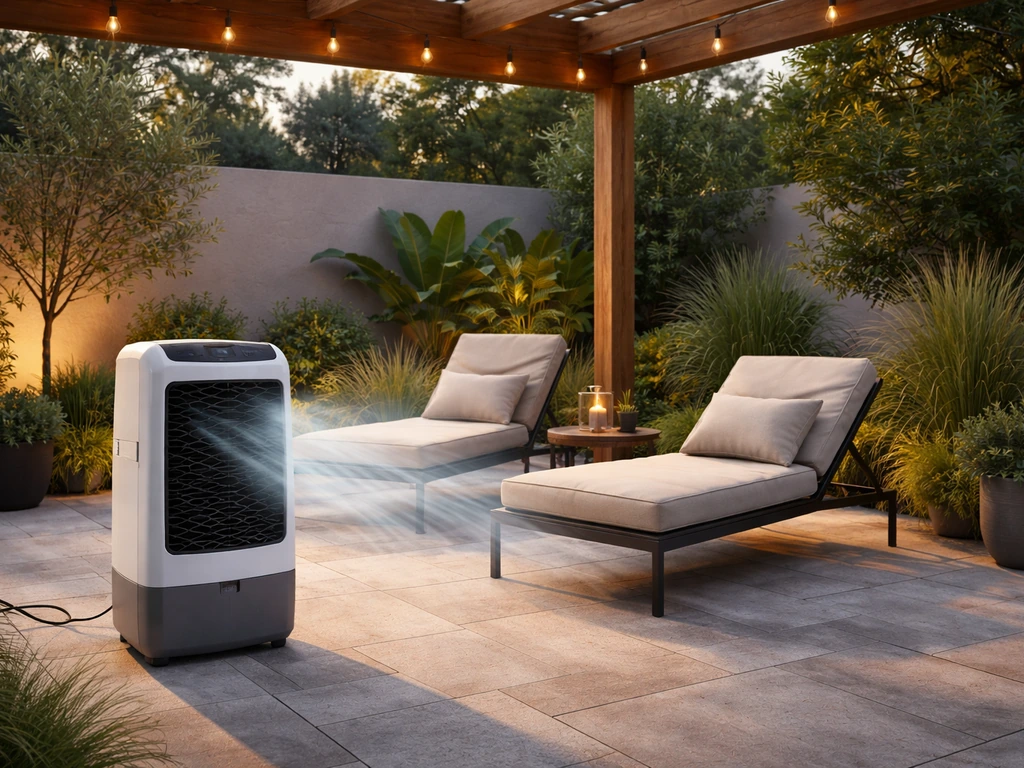
What an outdoor patio air cooler can (and can't) do
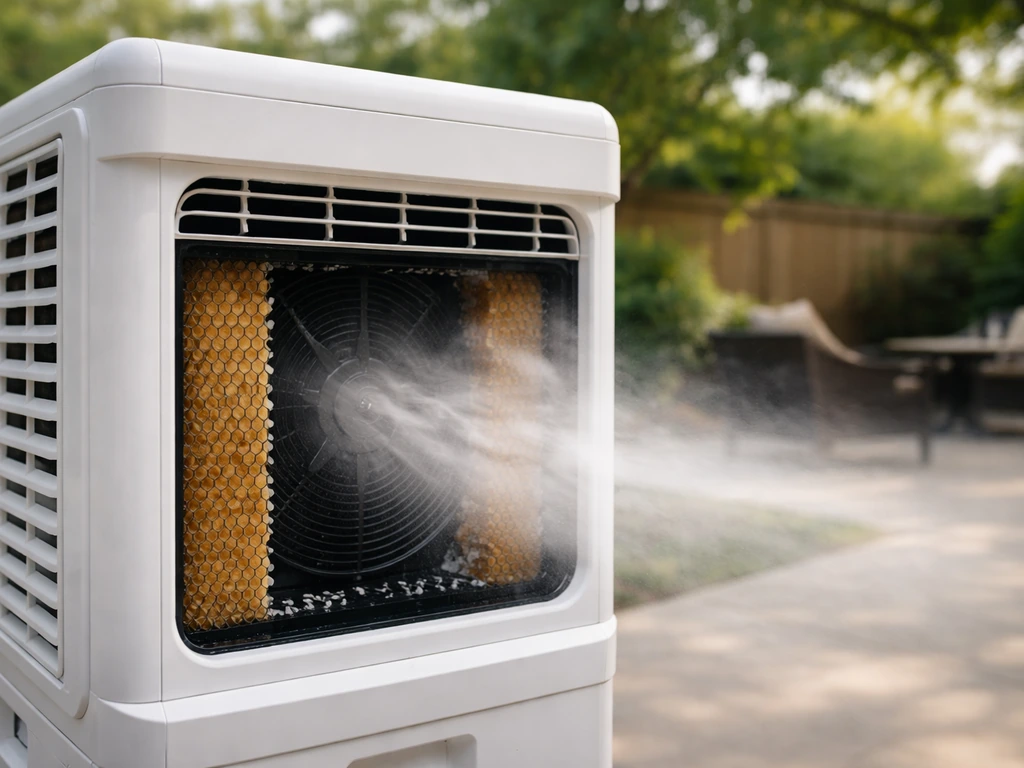
An evaporative cooler pulls warm outdoor air through water-saturated cooling pads. As that air passes through, water evaporates and pulls heat out of the airstream. The result is a steady flow of cooler, slightly humid air that can feel dramatically refreshing when the ambient humidity is low. The U.S. Department of Energy confirms that the temperature drop across a well-running evaporative cooler is roughly 15°F to 40°F depending on conditions.
Here is the hard limit you need to understand before buying: physics caps what evaporative cooling can achieve at the blank" rel="noopener noreferrer">wet-bulb temperature of the incoming air.
The wet-bulb temperature is a measure of how much moisture the air is already carrying. In a dry climate like Phoenix or Albuquerque on a sunny day, the wet-bulb temperature might be 55°F to 65°F even when the dry-bulb (thermometer) temperature is 105°F, which gives you enormous cooling potential. In Sarasota, Florida at 92°F, the wet-bulb temperature is already around 79°F, leaving only about 13°F of possible cooling headroom.
In practice that means the air coming out of the cooler would be warm, muggy, and miserable. The DOE specifically cautions against using evaporative coolers in humid climates because they make the problem worse by adding more moisture to an already saturated environment.
On the positive side, evaporative coolers are remarkably cheap to run, use no refrigerants, and work well in open or semi-open spaces where a traditional AC would simply dump cooled air into the outdoor void. They are genuinely useful on patios in arid and semi-arid climates, and they pair well with other shade solutions to extend your usable outdoor hours. Just go in with honest expectations: they make you more comfortable, they don't air-condition your patio to 72°F.
Choose the right type and features for patios
Not every evaporative cooler is built for outdoor use. Many residential swamp coolers on the market are designed for garages or workshops with partial shade, not for a patio that gets rained on or left outside overnight. When you are shopping for a patio cooler specifically, there are five things that matter more than anything else.
Weather resistance
Look for an IPX4 rating at a minimum. That means the unit can handle splashing water from any direction, which covers most patio scenarios including light rain and sprinkler drift. If your patio is exposed and you expect heavy weather, IPX5 or IPX6 is better. Units rated IPX0 or with no weather rating at all are indoor-only products regardless of what the marketing says.
Tank size and run time
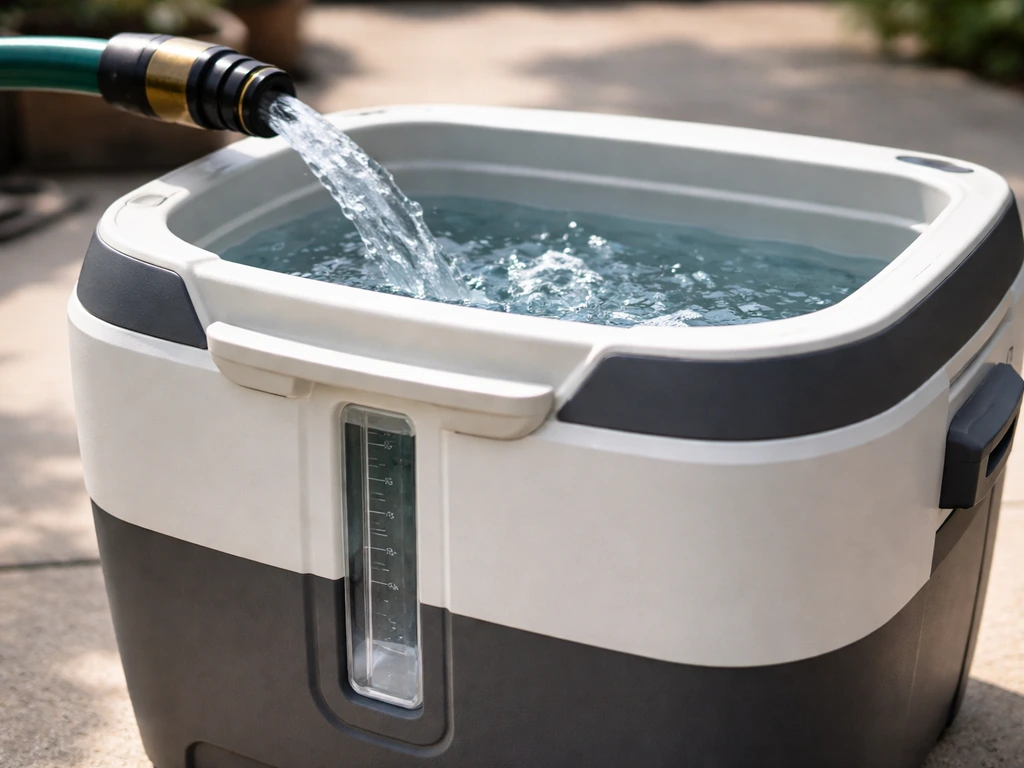
Outdoor use burns through water faster than indoor use because the incoming air is drier and hotter. A 5-gallon tank on a warm dry afternoon might last 3 to 4 hours on a high setting. A 10-gallon to 15-gallon tank gets you through a full outdoor gathering without mid-party refills. Look for units with a garden hose connection if continuous run time is important to you, since that eliminates the tank entirely.
Airflow (CFM) and fan speeds
CFM (cubic feet per minute) is the primary performance metric for any evaporative cooler, and the DOE specifically calls it out as the standard rating. For outdoor patios you need higher CFM than you would for the same square footage indoors because the cooled air dissipates into the open environment. Three fan speed settings (low, medium, high) is a practical minimum. Models with a sleep or natural breeze mode are a nice bonus for evenings.
Portability and power
Wheels are non-negotiable for patio use. You will reposition a cooler several times as the sun moves, as guests arrive, and as wind direction shifts. Most patio-rated coolers plug into a standard 120V outlet, which means a standard outdoor-rated extension cord gets you coverage across most patios. A few larger models require 240V, which is usually impractical unless you have a dedicated outdoor circuit. Battery-powered models exist but their run times (typically 4 to 8 hours on medium) and CFM ratings are lower, making them better for camping than for a serious patio setup.
Cooling pad quality and oscillation
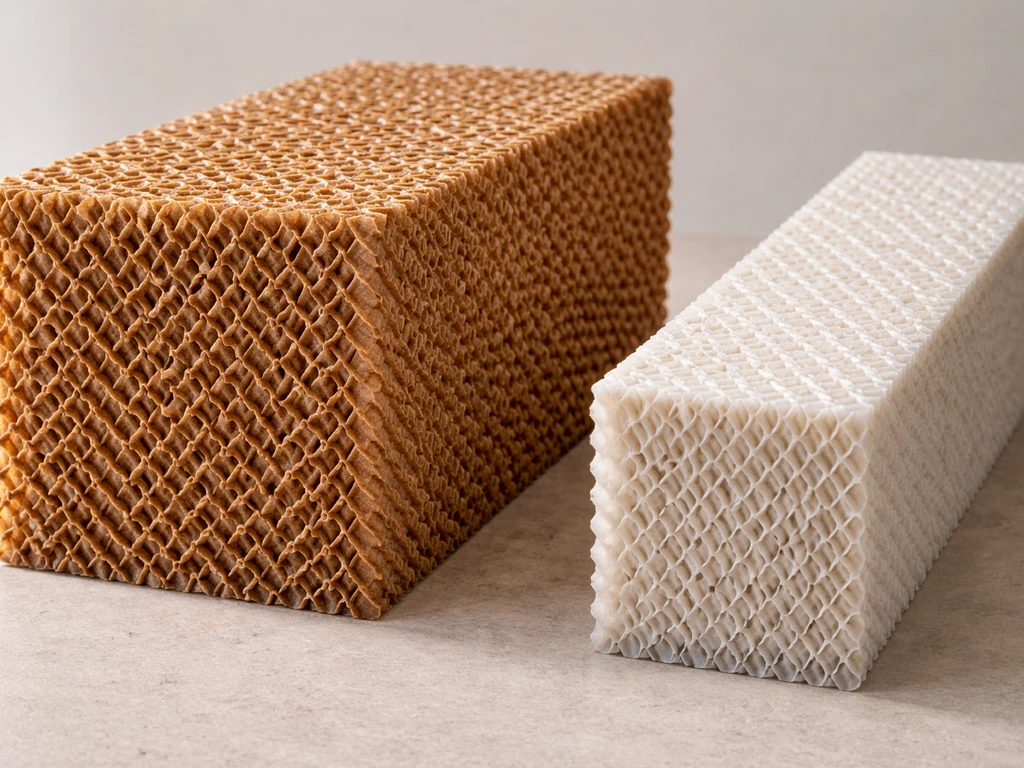
Thick cellulose or rigid media pads (4 inches to 8 inches deep) deliver better cooling efficiency than thin synthetic pads. Look for pads you can replace independently without buying a whole new unit. Oscillating louvers that swing side-to-side distribute cooled air across a wider seating area rather than blasting one spot, which is a feature worth paying for in a patio context where people are spread out.
Sizing: match airflow and coverage to your patio and climate
Evaporative cooler manufacturers publish coverage estimates in square feet, but those numbers assume indoor conditions with average insulation. For outdoor patios, use the CFM rating as your primary guide and treat manufacturer square footage claims as rough benchmarks, not guarantees. Here is a practical sizing framework based on typical patio setups.
| Patio Size | Recommended CFM (outdoor) | Typical Tank Size | Best Climate Match |
|---|---|---|---|
| Small (up to 150 sq ft) | 800 to 1,500 CFM | 5 to 7 gallons | Low humidity (under 40% RH) |
| Medium (150 to 350 sq ft) | 1,500 to 3,000 CFM | 10 to 12 gallons | Low to moderate humidity (under 50% RH) |
| Large (350 to 600 sq ft) | 3,000 to 5,000 CFM | 12 to 18 gallons | Low humidity (under 40% RH) |
| XL / open entertaining space | 5,000+ CFM or multiple units | Hose-fed preferred | Arid climates only |
Climate is the other half of the sizing equation. If you live in the Southwest, Great Plains, or inland Mountain West, you can confidently size up and expect real performance. If you live in the Southeast, Mid-Atlantic coast, or anywhere along the Gulf, an evaporative cooler is going to underperform badly during peak summer humidity. Check your local average afternoon relative humidity for July and August.
If it consistently sits above 50 to 55 percent, you are in the wrong territory for evaporative cooling, and a misting fan or outdoor patio ceiling fan will serve you better. In humid climates, the best outdoor patio ceiling fan can help you feel cooler by increasing airflow across your skin. Swamp coolers also have their own dedicated guide if you want to go deeper on evaporative-only models.
How to compare top models (quick checklist)
When you are looking at specific products side by side, run through this checklist in order. Skipping any of these in favor of price alone is where most people end up disappointed.
- Weather resistance rating: IPX4 minimum for covered patios, IPX5 or higher for exposed locations.
- CFM output: Verify the rated airflow matches your patio size using the table above, not just the square footage marketing claim.
- Tank capacity and refill options: Check whether it supports a continuous hose hookup if you plan to run it for more than 4 hours.
- Cooling pad depth and replaceability: 4-inch pads are acceptable, 8-inch pads are meaningfully better. Make sure replacement pads are available and affordable.
- Noise level: Below 65 dB on high is reasonable for a patio. Above 70 dB will interrupt conversation. Check measured decibel ratings in reviews, not just manufacturer specs.
- Power draw: Most patio coolers run between 100W and 300W. This costs roughly $0.02 to $0.04 per hour at average U.S. electricity rates, which is far less than a portable AC.
- Portability: Confirm the unit has wheels and that it's under 60 to 70 lbs when empty. Heavier units with water added can easily exceed 150 lbs.
- Oscillating louvers: Side-to-side swing dramatically improves comfort for groups. Fixed louvers are fine for solo use only.
- Warranty and support: Look for at least a 1-year warranty with accessible parts. Brands that sell replacement pads and pump parts separately are worth the premium.
Placement and setup for maximum cooling outdoors
Where you put the cooler matters almost as much as which cooler you buy. Getting placement right is what separates a unit that feels like a luxury from one that feels like a waste of money.
Position it upwind of your seating area
Evaporative coolers push cooled air forward, so you want that airflow traveling toward where people are sitting, not away from it. On a breezy day, position the cooler so its output direction aligns with the prevailing wind rather than fighting against it. If wind direction varies, use the oscillation setting and accept slightly reduced direct airflow.
Keep the cooler in shade
A cooler sitting in direct sun has to work harder because the incoming air around the unit is hotter and the unit's housing heats up. Positioning the cooler in shade, or at the shaded edge of your patio, improves efficiency noticeably. If you don't have shade yet, a patio umbrella over the cooler itself is a worthwhile addition.
Allow fresh air intake
Evaporative coolers pull air in from the sides or back through the cooling pads. Make sure there is at least 2 to 3 feet of clearance around the intake sides. If you push it into a corner or against a wall, you starve it of fresh intake air and it recirculates increasingly humid air, which kills performance fast.
Use it in semi-enclosed spaces for best effect
A completely open patio with no walls or roof is the hardest environment for any air cooler. A covered pergola, a patio with a roof and two or three partial walls, or an enclosed outdoor kitchen area all trap the cooled air long enough to matter. If your patio is fully open, the cooler will still make the people directly in front of it comfortable, but the cooling effect won't carry far.
Safe electrical setup
Use a heavy-duty outdoor-rated extension cord (12-gauge minimum for runs over 25 feet) plugged into a GFCI outlet. Never daisy-chain extension cords for a cooler. Keep the power cord away from standing water and off the ground where it can be tripped over or submerged if water spills.
Maintenance, safety, and seasonal storage
Evaporative coolers are low maintenance compared to AC units, but ignoring upkeep leads to mineral buildup, mold in the pads, and a unit that smells musty and performs poorly. Here is what regular maintenance actually looks like in practice.
During the season
- Refill the tank with clean water every time it runs low. Don't let it run dry, which can burn out the pump.
- Empty and rinse the tank if the unit sits unused for more than 3 to 4 days. Stagnant water breeds bacteria and algae.
- Wipe down the exterior and clean the water tray every 2 to 4 weeks depending on how hard your water is. Hard water deposits scale quickly and reduces pad efficiency.
- Inspect the cooling pads every 4 to 6 weeks. Rigid media pads last 3 to 5 years with good care; synthetic fiber pads may need replacing every season.
- Check the water distribution system (the pump and the distributor bar at the top of the pads) to ensure water is flowing evenly across the full pad face. Uneven wetting means uneven cooling.
End-of-season storage
- Drain the tank and pump completely. Run the fan (without water) for 10 to 15 minutes to dry out the pads and internal surfaces.
- Remove and inspect the cooling pads. If they smell or show significant mineral encrustation, replace them before storage so you start fresh in spring.
- Clean the tank interior with a diluted white vinegar solution (1 part vinegar to 3 parts water) to dissolve mineral scale.
- Cover the unit with a fitted cover or store it indoors. Outdoor storage through winter is possible with a quality cover but indoor storage extends the life of pump seals and pads significantly.
- Do not store with water in the tank, especially in climates where freezing temperatures are possible.
Budget vs performance and when alternatives make more sense
Portable patio evaporative coolers run from about $80 for small, low-CFM units up to $700 to $900 for large, well-built models with hose connections and weather-resistant housings. The operating cost is remarkably low: running a 200W cooler for 6 hours a day costs roughly $0.15 to $0.20 per day at average U.S. electricity rates, plus the cost of water (a few gallons per hour at most). Compare that to a portable outdoor AC unit, which might draw 1,000 to 1,400W for the same cooling period, costing $0.75 to $1.20 per day and requiring a refrigerant-based system that adds complexity and purchase price.
That said, spending $150 on an underpowered cooler with a cheap pump and thin pads is false economy. In the mid-range ($300 to $500), you get meaningful jumps in CFM, tank size, pad quality, and weather resistance that translate directly into real-world performance. If you are seriously considering a patio cooler for regular summer use, spend at least $250 to $350 to get a unit that will last more than one season.
Here is how patio air coolers stack up against the main alternatives so you can decide which direction makes sense for your situation.
| Option | Best Climate | Upfront Cost | Operating Cost | Cooling Power | Best For |
|---|---|---|---|---|---|
| Evaporative cooler | Arid/dry (under 50% RH) | $150 to $900 | Very low ($0.15 to $0.25/day) | Moderate (15°F to 40°F drop) | Dry climates, semi-enclosed patios |
| Misting fan | Dry to moderate humidity | $80 to $600 | Low (water + fan motor) | Light to moderate | Open patios, any dry-ish climate |
| Outdoor standing fan | Any climate | $50 to $400 | Very low | Air movement only (no temp drop) | All climates, budget-friendly |
| Patio ceiling fan | Any climate | $150 to $800 installed | Very low | Air movement only | Covered patios with overhead structure |
| Portable outdoor AC | Any climate including humid | $400 to $1,500 | High ($0.75 to $1.20/day) | High (true cooling) | Humid climates, enclosed spaces |
If you are in a humid climate, an outdoor patio air conditioner or a quality misting fan will outperform any evaporative cooler every time. Outdoor standing fans and patio ceiling fans work in any climate and cost almost nothing to run, but they move air rather than cool it, so their benefit depends on the ambient temperature.
If you want a straightforward upgrade, choosing the best outdoor standing fan for patio use can keep air moving when cooling is not feasible Outdoor standing fans. If misting fans are on your shortlist, compare airflow, fan blade size, and water coverage to find the best patio fans for your space. If your climate is the right fit for evaporative cooling, though, a well-chosen cooler will outperform everything else in that price range by a significant margin.
The bottom line: check your local summer relative humidity before you buy anything. If you are consistently under 50 percent in the afternoons during peak summer, an evaporative cooler is one of the smartest patio investments you can make. If you are regularly above 55 to 60 percent, skip it and look at the alternatives above. Getting that climate match right is the single most important decision in this whole category.
FAQ
Can an evaporative patio cooler be used in light rain or during sprinkler drift without ruining it?
Yes, but choose the rating deliberately. An IPX4 unit handles splashing from any direction, while patios exposed to heavier weather benefit from IPX5 or IPX6. Also confirm the power inlet and pump area are covered or sealed, and keep the intake clear so wet air does not overwhelm the pads.
How do I estimate how long the water will last besides using the tank size?
Tank size is only part of the equation, fan speed and pad saturation matter too. Higher CFM typically increases water consumption, and warm, dry afternoons burn through water faster than mild evenings. If you want predictable runtime, prioritize units with a garden hose connection (or plan to top off before peak hosting time).
What is the best way to size the cooler for a patio that is semi-covered or enclosed?
For patios with a roof and partial walls, you can often treat the space more like “semi-indoor” airflow. Still, prioritize CFM and airflow direction, but you can be slightly less aggressive than you would for a fully open patio. If your seating is close to the unit, oscillation can let you cover a wider area with fewer “direct blast” requirements.
Why do some evaporative coolers feel underpowered even when the CFM looks high?
Common causes are restricted intake, incorrect placement, and poor pad efficiency. Make sure there is 2 to 3 feet clearance around intakes, place the output toward people (and toward prevailing wind), and look for thicker pads (4 to 8 inches) that cool well and replace independently. Thin pads and weak pumps can look fine on paper but perform poorly outdoors.
Should I run the cooler on high all the time?
Not always. High speed boosts airflow but can raise water usage and sometimes reduces how saturated the pads get, which can lower perceived cooling. A practical approach is medium during the hottest hours, then low or medium at night. If your model has a natural breeze or sleep mode, test it in real patio conditions rather than assuming it will match high performance.
Is it safe to use an extension cord for a patio cooler, and what should I avoid?
Use an outdoor-rated, heavy-duty cord and plug into a GFCI outlet. Avoid daisy-chaining multiple cords, and keep the cable off the ground where it can wick water or be stepped on. If the run is long, down-sizing can cause voltage drop and lower performance, so follow the heavier gauge guidance for longer distances.
How do I prevent mineral buildup and mold smell during and after use?
Use clean water when possible, drain the tank when you are done, and let the pads dry before storing. Plan a routine pad inspection, rinse or flush according to the manufacturer, and clean the pump area if it smells. If you run it frequently during hot months, expect to replace pads more often than you would in dry climates alone.
Do I need a separate patio fan if I already buy the best outdoor patio air cooler?
Often yes for comfort, even when the climate is a good match. The cooler reduces temperature at the skin level, but a fan helps distribute air across the seating area and reduces the “hot body still feels hot” effect when you are not directly in the airflow. In humid areas, the fan is the better tool, not a supplement to the cooler.
What signs tell me I picked the wrong cooler for my humidity level?
If the air leaving the unit feels warm and muggy, or the patio feels heavier rather than refreshed, that is a strong indicator your wet-bulb headroom is too small. You may also see faster-than-expected water usage with limited comfort improvement. Before buying, check typical July and August afternoon relative humidity, and if it stays above roughly 50 to 55 percent, expect poor results.
Are battery-powered evaporative coolers worth it for patios?
They can be convenient for short sessions, but they usually deliver lower CFM and shorter runtime than plug-in models. If you want a serious patio setup, prioritize AC-powered units with hose connection or a larger tank. Battery units are better treated as portable spot-cooling, not full patio comfort solutions.
Can I improve performance without changing the cooler, like changing patio setup?
Yes. Shade the unit and the intake area to reduce how hard it must work, keep it out of corners with full intake clearance, and align output toward where people sit. For fully open patios, consider adding a pergola, partial wall, or windbreak to hold cooled air near the seating long enough to matter.
Next Articles
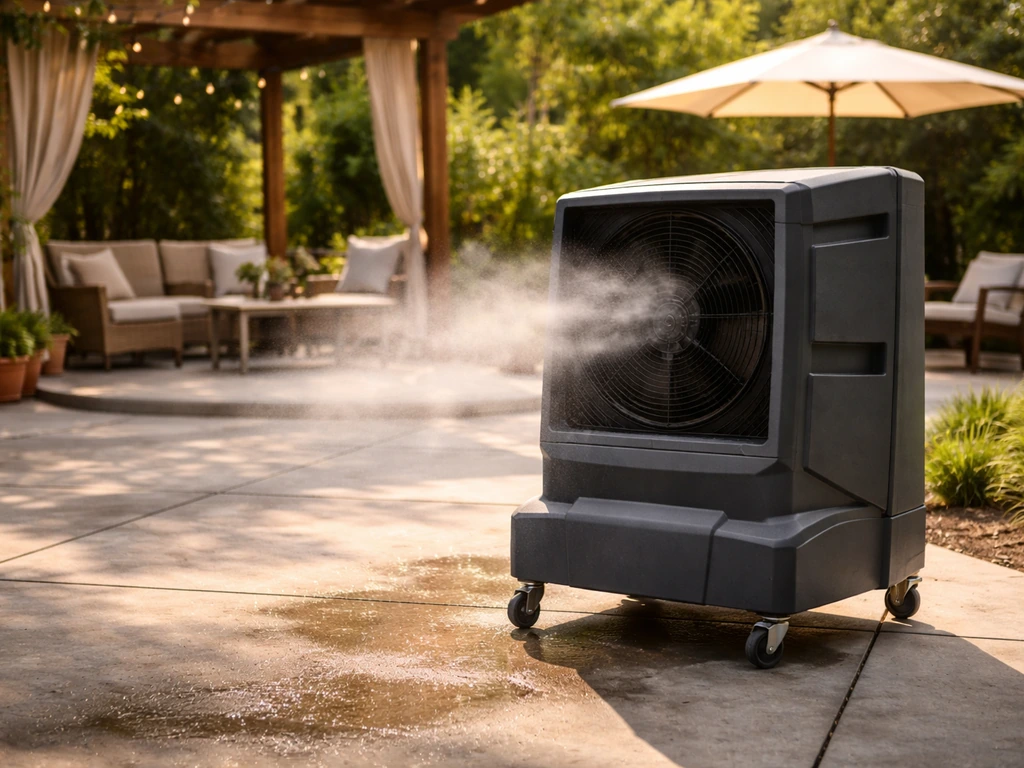
Best Swamp Cooler for Outdoor Patio: Buyer Guide and Picks
Find the best swamp cooler for an outdoor patio with specs, climate fit, best picks, setup tips, and upkeep costs.
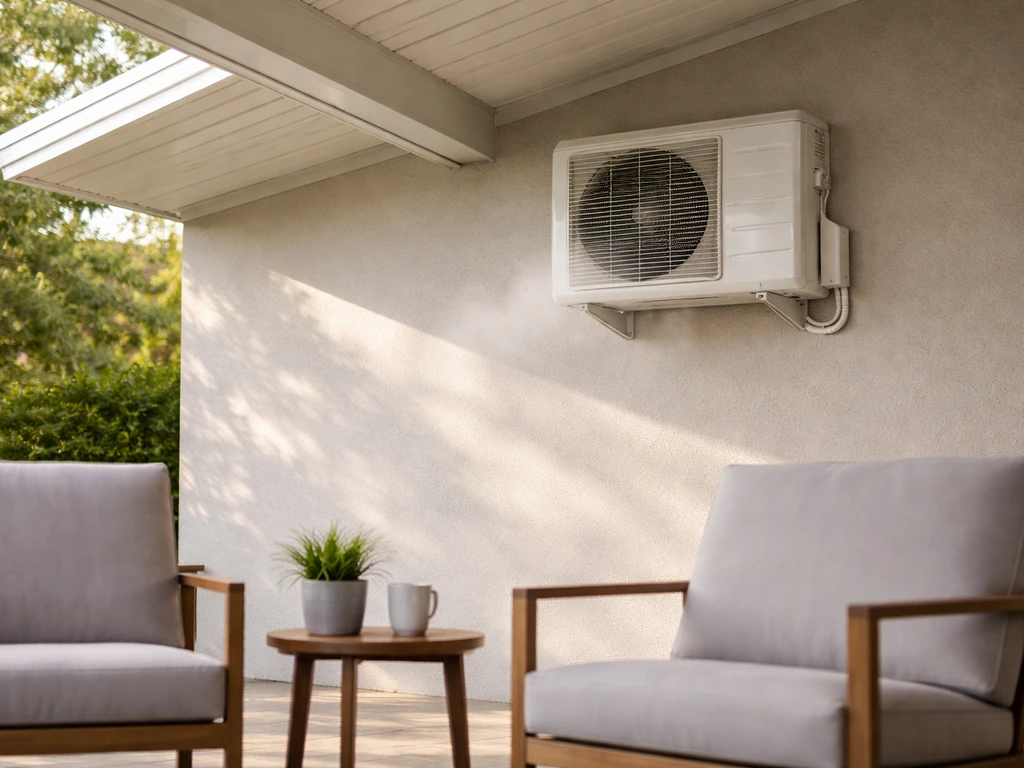
Best Outdoor Patio Air Conditioner: Buying Guide and BTU Match
Choose the best outdoor patio AC with BTU sizing, type comparisons, weatherproofing, costs, and setup tips for your spac
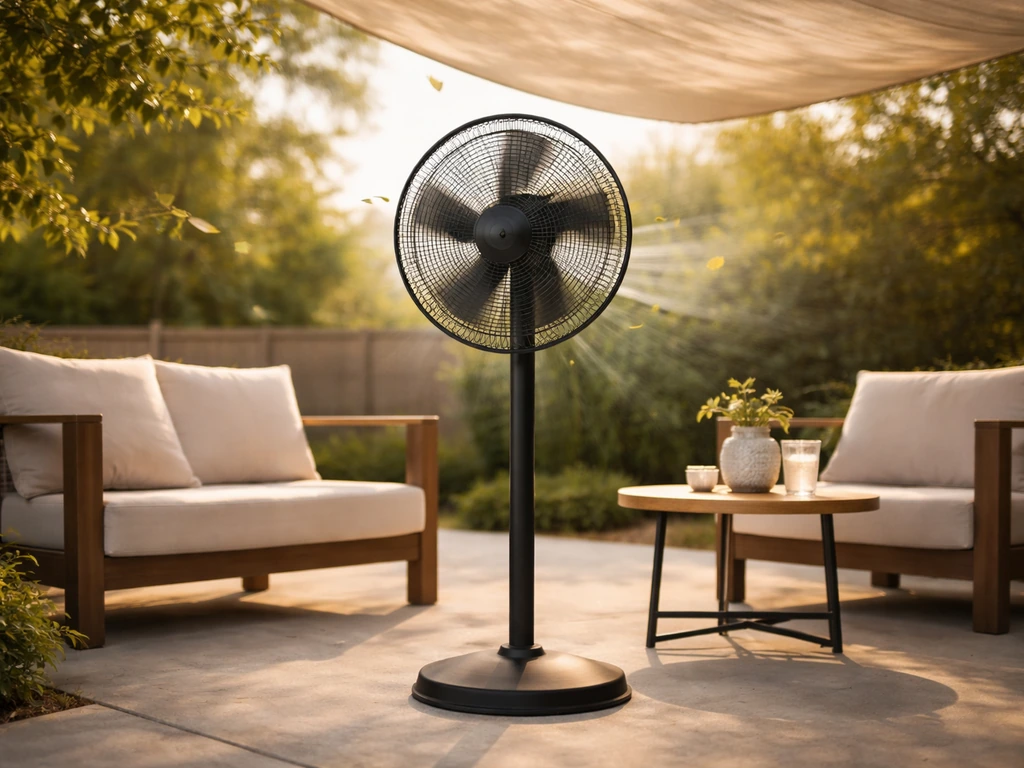
Best Outdoor Standing Fan for Patio: Buying Guide
Choose the best outdoor standing fan for your patio with type, coverage, airflow, weather ratings, placement, and safety