
The best outdoor standing fan for most patios is a pedestal fan rated at least IPX4 (splash-resistant), with a motor output that moves 2,500 CFM or more, full oscillation, and a height-adjustable pole that lets you aim airflow directly at seated guests. If your patio is covered and near an outlet, a pedestal fan in the $80–$180 range covers most needs well. If you're working with a smaller space, no overhead cover, or limited outlet access, a portable battery-powered fan or a wall-mounted unit will serve you better. The right choice comes down to your patio's size, layout, and how exposed it is to the elements.
Best Outdoor Standing Fan for Patio: Buying Guide

Lark Perry
7 May 2026
How to match a fan to your actual patio setup
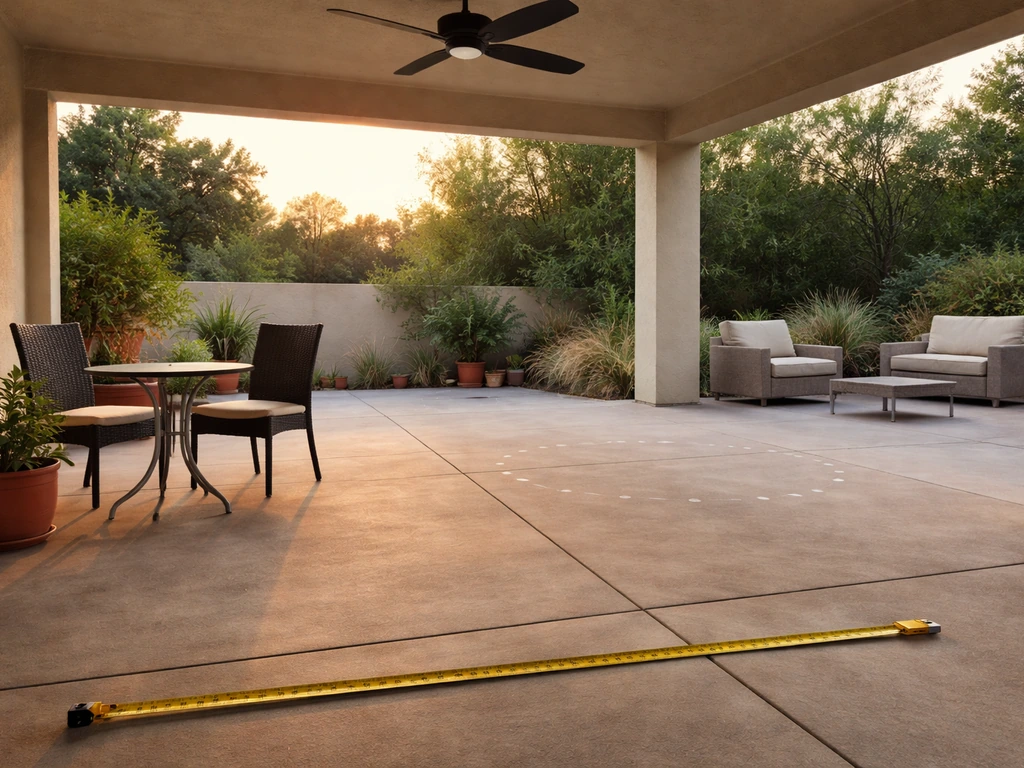
Before you look at a single model, spend two minutes thinking about your specific space. The fan that works perfectly on a 200-square-foot screened porch will be underpowered and weather-damaged in six months on a fully exposed deck. Here are the four questions that will narrow your choices faster than any spec sheet.
- How big is your seating area? A small bistro table for two needs very different coverage than a 12-person dining setup. Fans with good oscillation cover roughly a 90–180 degree arc at 10–15 feet; large patios need multiple units or a fan rated for high CFM output.
- Is your patio covered, partially covered, or fully exposed? A covered patio with walls nearby lets you use a wider range of fans. A fully open deck in a rainy climate needs at minimum an IPX4-rated unit, and ideally IP65 or a wet-rated (not just damp-rated) fan.
- Where are your outlets? Most standing fans need a standard 120V outlet within cord reach (cords are typically 6–10 feet). If you're far from power, you're looking at a battery-powered portable fan or running an outdoor-rated extension cord.
- Do you need to move the fan around? If you want to push it inside during a storm, use it poolside on weekends, and then bring it back to the patio, a lightweight portable or pedestal fan with a carry handle beats a wall-mounted unit every time.
Once you've answered those four questions, you'll already know whether you're shopping for a portable fan, a pedestal fan, or a fixed wall mount. The sections below explain exactly how those three types perform in outdoor conditions.
Portable standing, pedestal, and wall-mounted: how they really compare outdoors
These three fan types aren't just different shapes. They solve different problems, and using the wrong type for your setup means wasted money and a fan that spends most of its time in the garage.
Pedestal fans (the most popular choice)
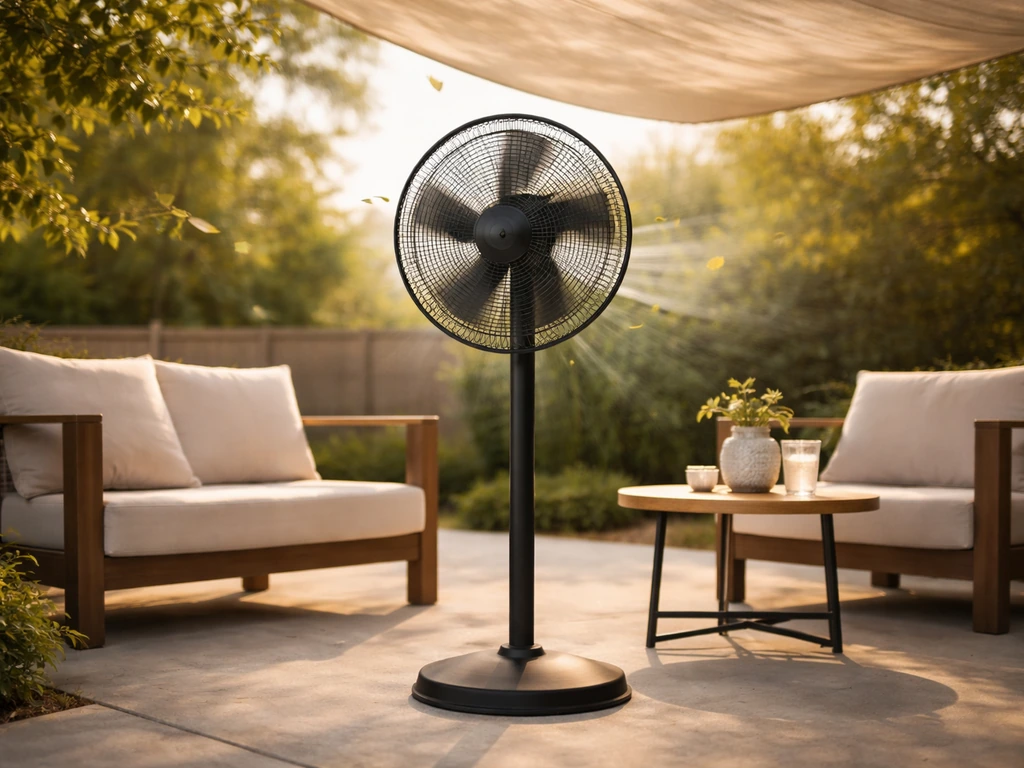
A pedestal fan sits on a pole-mounted base, usually adjustable from about 40 to 55 inches tall, with an 18–24 inch fan head. This is the most versatile option for a patio. You can reposition it, adjust the height to aim above furniture backs, and tilt the head down toward seated guests. Oscillation is standard on most models, so one fan can sweep a wide seating area. The tradeoff: they take up floor space, can tip in strong winds (especially lightweight consumer models), and the base can corrode if left out in rain without weather protection.
Portable tower and box fans
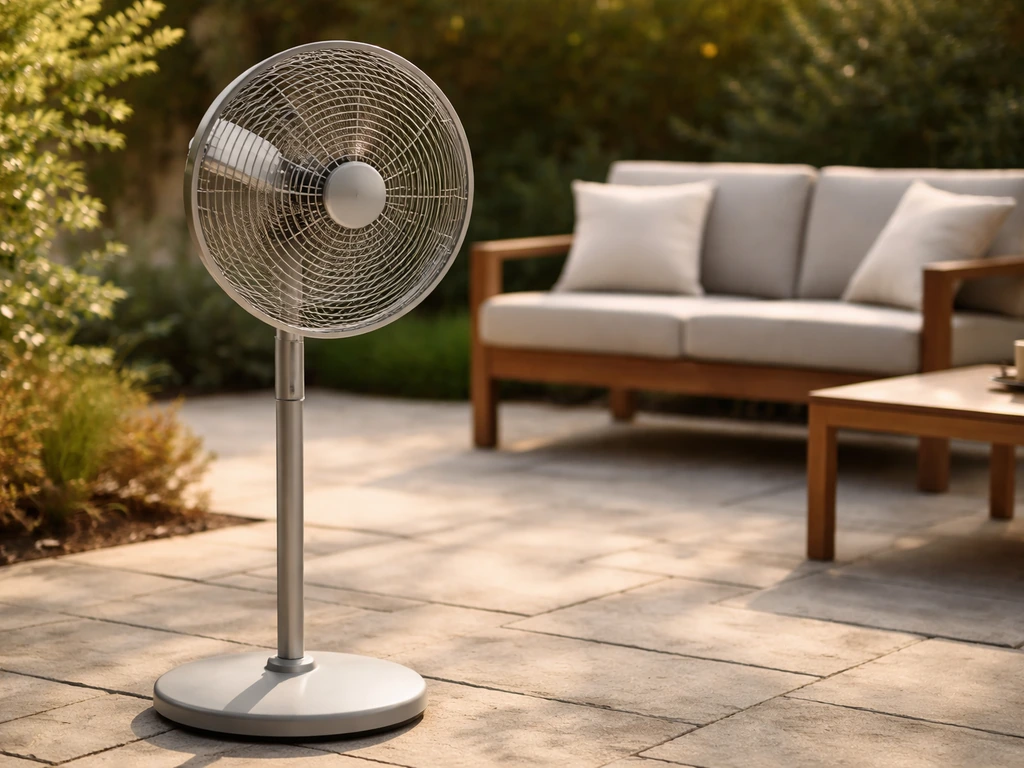
Portable outdoor fans range from compact battery-powered units to full-size tower fans on casters. The advantage is pure flexibility. You can wheel a caster-mounted tower fan between the patio and indoors in seconds, or grab a rechargeable fan and use it anywhere with no cord at all. The downside is airflow: portable fans, especially battery-powered ones, typically move less air (often under 1,500 CFM) than a similarly priced pedestal fan. They're best for personal cooling at close range rather than cooling a whole seating area. For covered patios and smaller spaces, they work well. For a 15-foot-wide open deck on a 95-degree day, they'll disappoint.
Wall-mounted fans
Wall-mounted outdoor fans free up floor space entirely and are ideal for smaller patios, outdoor kitchens, or any spot where a standing fan would be a tripping hazard. They're fixed in position, but many models pivot and oscillate. The catch is installation: you need a wall, a nearby outlet or hardwired connection, and you won't be moving it around. If your outdoor space is permanent and well-defined, a wall mount delivers clean airflow without clutter. If your layout changes seasonally, it's the least flexible option.
| Type | Best for | Airflow strength | Portability | Weather risk | Typical price range |
|---|---|---|---|---|---|
| Pedestal fan | Most patios, flexible positioning | High (2,000–4,000+ CFM) | Easy to move | Moderate (base can corrode) | $60–$250 |
| Portable/tower fan | Small spaces, no-cord setups, flexibility | Low to moderate (under 1,500 CFM) | Very easy | Lower if stored properly | $40–$200 |
| Wall-mounted fan | Permanent setups, tight spaces, kitchens | High (2,000–3,500+ CFM) | Fixed | Low if properly rated | $80–$300 |
The specs that actually matter for outdoor cooling
Fan specs can feel like alphabet soup, but a few numbers tell you almost everything you need to know about real-world performance outdoors.
CFM: the number that matters most
CFM stands for cubic feet per minute, and it measures how much air a fan moves. Indoors, even a modest fan feels powerful because walls bounce airflow back. Outside, air disperses immediately, so you need more of it. For a small covered patio (under 100 sq ft), aim for at least 1,500–2,000 CFM. For a mid-size open deck (150–300 sq ft), look for 2,500–3,500 CFM. Large patios or open areas benefit from 4,000 CFM and above, or multiple fans. Don't be fooled by blade diameter alone. A 20-inch fan with a weak motor can underperform an 18-inch fan with a stronger one.
Blade design and motor power
More blades don't automatically mean more airflow. In outdoor fans, blade pitch (the angle of the blade) and motor power (measured in watts or horsepower) matter more. Look for fans with pitched blades (typically 12–15 degrees) and a motor rated at 1/20 HP or higher for consumer pedestal models. Industrial-style outdoor fans (often used in commercial patios and restaurants) can run 1/4 HP or more, which is serious airflow but also more noise and cost.
Speed settings and airflow range
Three speed settings is the minimum you want outdoors. Low speeds let the fan run quietly during cooler evenings without blowing napkins off the table; high speed gives you the real airflow punch when temperatures climb. Some models offer 5–12 speed settings, which is genuinely useful for fine-tuning comfort as conditions change throughout the day. The effective airflow range (how far the fan moves enough air to feel meaningful on skin) drops significantly outdoors. A fan rated at 20 feet indoors realistically covers about 10–12 feet outside on a calm day, less in a breeze.
Weather readiness: what you actually need to keep a fan safe outside
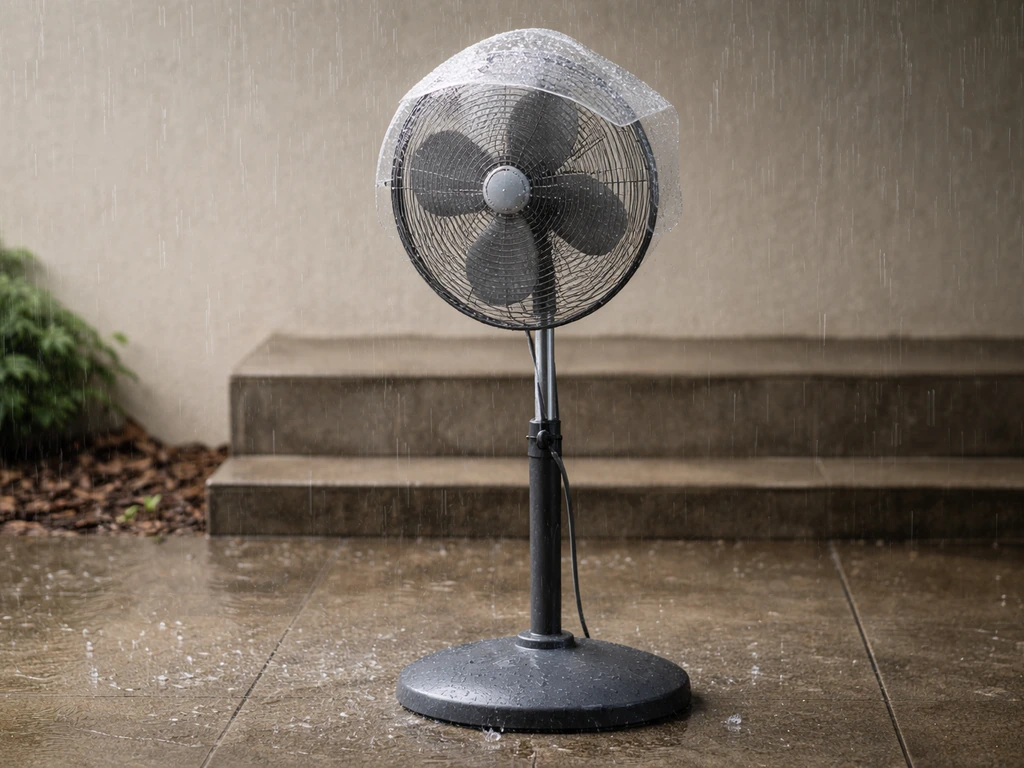
This is where most buyers make expensive mistakes. An indoor fan left outside for one summer will rust, seize, or short out. Outdoor fans need specific protections, and the rating system can be confusing if you're seeing it for the first time.
IP ratings explained simply
IP stands for Ingress Protection. The rating uses two digits: the first covers protection from solids and dust, and the second covers protection from water. When you see an 'X' in place of a digit (like IPX4), it just means that particular category wasn't tested or published. IPX4 means the fan is splash-resistant from any direction, which is adequate for a covered patio where rain doesn't hit directly. IP65 means the fan is fully dust-tight and can handle water jets from any direction, making it a much better choice for exposed patios in rainy climates. For most residential patios, IPX4 is the minimum and IP65 is the target if your space gets direct rain exposure.
Damp-rated vs. wet-rated (the North American version)
In the U.S., fans are often listed as 'damp-rated' or 'wet-rated' instead of using IP codes. Damp-rated fans are designed for protected areas where moisture is present but water doesn't directly hit the fan (a covered porch, for example). Wet-rated fans can handle direct water exposure and are the right choice for open decks, poolside use, or any spot that gets rained on. This language comes from UL listing standards. Many outdoor fans also meet UL 507, the safety standard for electric fans, and quality commercial models often specify totally enclosed motors that keep water and dust out of the motor housing entirely.
Rust-proofing and material durability
Even a water-resistant fan will corrode if its housing, base, or blade guards are made of untreated steel. Look for fans with ABS plastic housings, powder-coated aluminum, or stainless steel hardware. Check the blade guards and base specifically. These are the first places rust appears and they're often made of cheaper materials than the housing. If you're leaving a fan out for an entire season, a rust-resistant or rust-proof frame is non-negotiable.
Cords, plugs, and outdoor electrical safety
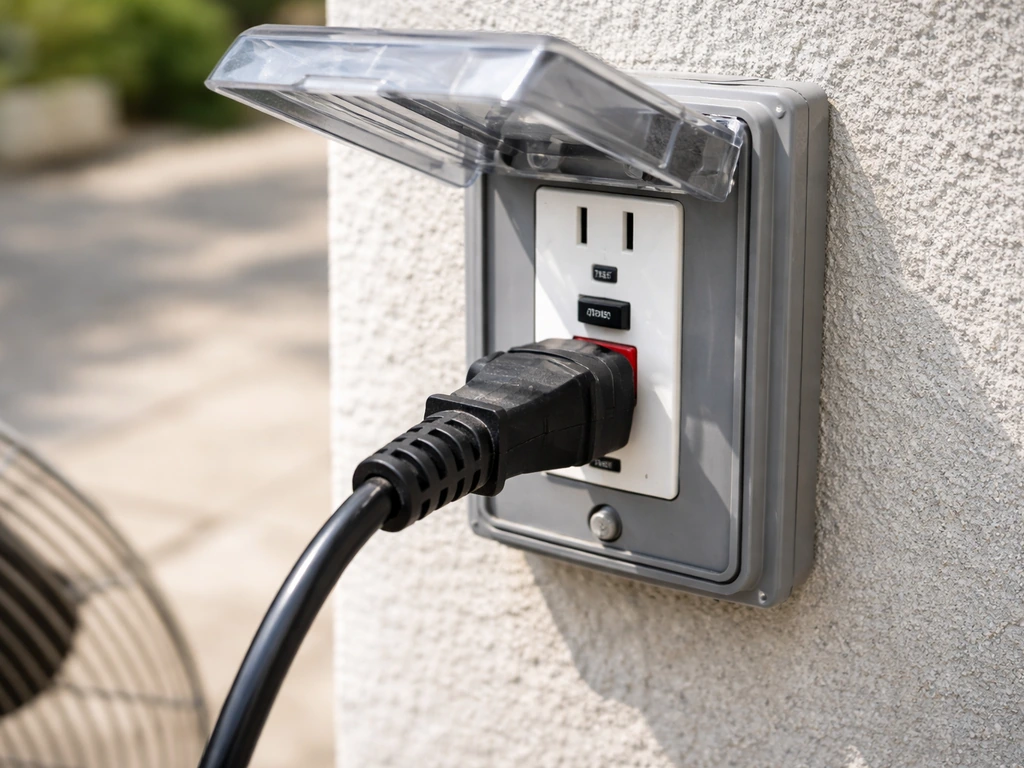
Any fan used outdoors needs to be plugged into a GFCI (Ground Fault Circuit Interrupter) outlet. These are the outlets with the [test and reset buttons](https://www. ocwr. gov/wp-content/uploads/2009/12/fastfactsgroundfaultcircuitinterrupters.
pdf), required by code for outdoor use. OSHA training guidance also describes using the GFCI TEST and RESET buttons to restore power and to take the outlet out of service if it fails testing [These are the outlets with the test and reset buttons, required by code for outdoor use. ](https://www. osha.
gov/sites/default/files/electr_ig. pdf). If your patio outlet isn't GFCI-protected, add a GFCI outlet adapter or have one installed before using any fan outdoors. If you need an extension cord, use one rated for outdoor use (look for 'W' in the wire designation, like SJTW or SOW), and choose a cord rated for the fan's amperage draw.
Never daisy-chain extension cords or run them under rugs or through water.
Placement tips that actually make a difference in comfort
Buying the right fan and placing it wrong means you'll feel less airflow than a cheaper fan placed correctly. These placement principles are simple but consistently overlooked.
Height and tilt
For seated guests, set a pedestal fan's head at about 4–5 feet off the ground and tilt it slightly downward toward the seating area. This puts airflow directly at torso level, which is where it does the most good for cooling. For standing guests (think outdoor parties or a bar setup), raise the head to 5–6 feet and aim slightly down. Don't set the fan too low (blowing at knee level) or too high (going above everyone's head). Both are common mistakes that waste most of the airflow.
Distance and coverage angles
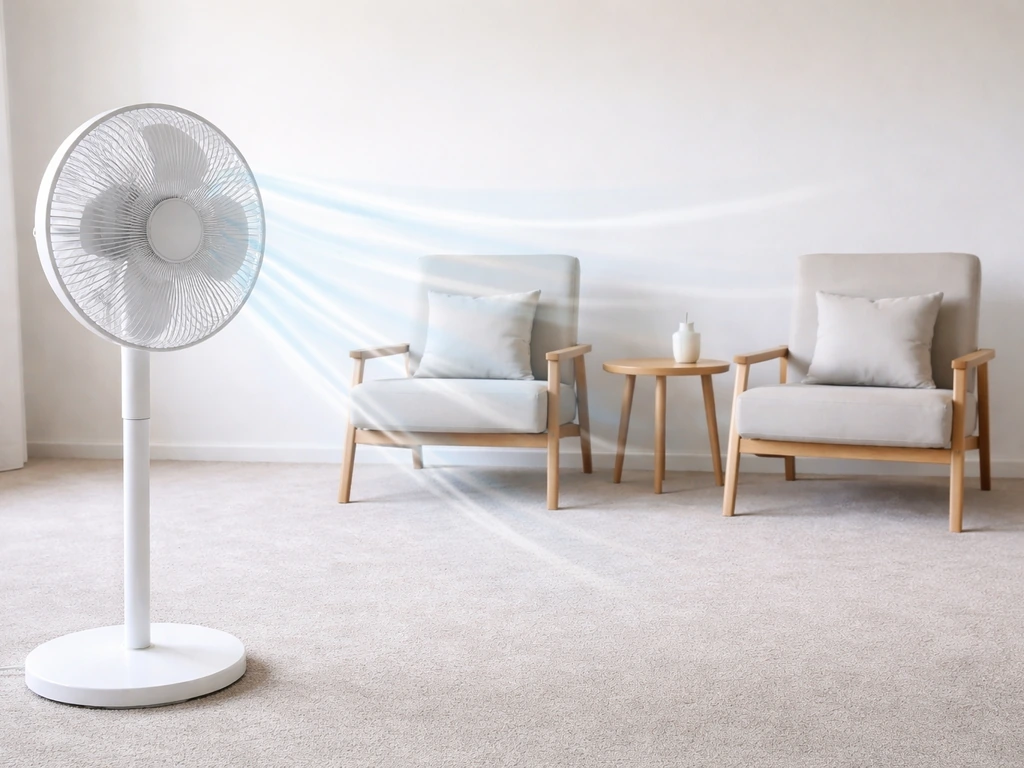
A good rule of thumb: position a pedestal fan 6–10 feet from the main seating area for the best balance of airflow strength and coverage width. Too close and the airflow is uncomfortably concentrated on one spot; too far and it disperses before it reaches anyone. For oscillating coverage, fans with 90-degree oscillation work well for linear seating (a dining table). If you have a wrap-around or L-shaped seating layout, look for models with 120–180 degree oscillation, or use two fans placed at angles to each other.
When to use oscillation vs. fixed direction
Oscillation is great when you have multiple people spread across a wide seating area and the goal is general air movement. Fixed direction is better when you want to push hot air away from a specific zone (like an outdoor kitchen or grill area), create a cross-breeze by pointing one fan toward an opening, or concentrate airflow on one or two people seated in a defined spot. Many fans let you lock the head mid-oscillation, so you can switch modes without changing the setup.
Using natural airflow to your advantage
If there's a prevailing breeze on your property, position the fan so it supplements the natural wind direction rather than fighting against it. Aim the fan to push hot air out of the patio space rather than just circulating the same hot air around. On covered patios with a low ceiling, angling a fan upward slightly can help pull cooler air from lower to higher levels, reducing the trapped heat effect that makes covered patios stuffy in summer.
Noise, convenience features, and portability: the day-to-day stuff
A fan you can hear over every conversation stops being used pretty quickly. Here's how to evaluate the features that determine whether a fan actually gets used day after day.
Noise levels
Outdoor fans are generally a bit louder than indoor equivalents because they have more powerful motors. A reasonable target is under 60 dB on high speed for a patio fan (roughly equivalent to a normal conversation at 3 feet). At low speed, most decent pedestal fans run 45–52 dB, which is background-noise level. Industrial or commercial-grade fans often run 65–75 dB, which is fine for a large open commercial patio but intrusive on a small residential deck. If noise is a concern, prioritize fans with DC motors rather than AC motors. DC motors are significantly quieter and more energy-efficient, though they typically cost $30–$60 more.
Timers, remotes, and smart controls
A programmable timer lets you set the fan to shut off after 1, 2, 4, or 8 hours, which is genuinely useful if you forget to turn it off or want it running while you're setting up and stopping when guests arrive. Remote controls are a nice-to-have, especially for wall-mounted fans where reaching the controls means leaning around furniture. A few premium models now offer app or voice control (via Alexa or Google Home), which is convenient but rarely a reason to choose one fan over another. Prioritize weather rating and airflow first.
Portability and storage
Even if you plan to leave a fan outside most of the season, you'll want to bring it in for severe weather. Check the weight (most consumer pedestal fans are 10–18 lbs) and whether the pole collapses or disassembles easily. Fans with carry handles or integrated grips are much easier to move. If you're storing a fan for the off-season, wipe down the motor housing and blades, store it in a dry location, and cover it to prevent dust buildup in the motor vents.
Cleaning
Outdoor fans collect pollen, dust, and grime faster than indoor fans. Choose a model where the blade guard snaps off easily (tool-free is best) so you can wipe down the blades and housing regularly. Buildup on blades reduces efficiency and puts extra strain on the motor over time.
How to compare models and pick the right one fast
Rather than recommending specific model names that change from year to year, here's a reliable framework for comparing any two fans side by side. Use these criteria in order of priority when you're reading product listings or reviews.
- Weather rating first: Is it rated IPX4 or higher, wet-rated, or does it specify a totally enclosed motor? If none of those, it's not a true outdoor fan.
- CFM for your patio size: Match the CFM rating to your actual square footage using the ranges above. Don't buy underpowered.
- Motor type: DC motor for quieter, more energy-efficient operation. AC motor if budget is the priority and noise isn't a concern.
- Height range and tilt: Adjustable height (at least 40–55 inches) and a head that tilts downward. Fixed-height fans are limiting.
- Oscillation range: 90 degrees minimum; 120–180 degrees preferred for larger or wrap-around seating areas.
- Convenience features: Does it have the timer, remote, or speed options you actually want? Don't pay for smart features you won't use.
- Weight and portability: Under 15 lbs with a carry handle if you plan to move it. Heavier is fine for fixed placements.
- Price vs. durability: A $60 fan that rusts and fails in one season costs more than a $130 fan that lasts five years.
Quick shortlist by scenario
| Your situation | Best fan type | Key specs to prioritize | Budget range |
|---|---|---|---|
| Small covered patio, 1–2 people | Portable tower or compact pedestal | 1,500+ CFM, IPX4, quiet DC motor | $50–$120 |
| Mid-size covered deck, 4–8 people | 18–20 inch pedestal fan | 2,500+ CFM, IPX4 or wet-rated, 90° oscillation, 3+ speeds | $80–$180 |
| Large open patio or backyard, 8+ people | 20–24 inch industrial pedestal or multiple fans | 3,500+ CFM, IP65 or wet-rated, 120–180° oscillation | $150–$350+ |
| Outdoor kitchen or tight covered space | Wall-mounted fan | 2,000+ CFM, wet-rated, pivoting head, GFCI-compatible | $100–$300 |
| No outlet access, portable use | Battery-powered portable fan | Runtime 4+ hours on high, lightweight, handle or carry strap | $60–$200 |
A note on related cooling options
A standing fan moves air but doesn't lower the ambient temperature. On days above 100°F or in humid climates, you may want to pair a fan with a swamp cooler or outdoor air cooler, which adds evaporative cooling to the airflow. If you want real relief in dry heat, compare the best outdoor patio air cooler options for airflow, water efficiency, and weather protection before you buy swamp cooler or outdoor air cooler.
Ceiling fans are another strong option for covered patios with structural support overhead. If you're leaning toward an overhead solution, a best outdoor patio ceiling fan can combine stronger airflow with safer, more even coverage under a covered patio ceiling fans.
If you're still weighing whether a standing fan is the right solution for your space versus ceiling fans, evaporative coolers, or a full outdoor air conditioning setup, those alternatives each come with their own tradeoffs in terms of cost, installation, and effectiveness in different humidity levels.
For most people reading this, a pedestal fan with solid weather ratings and good CFM output is the fastest, most affordable path to a more comfortable patio. If you are after extra evaporative cooling, choosing the best swamp cooler for an outdoor patio can help lower the feel of the air in humid versus dry conditions best swamp cooler for outdoor patio.
If you're specifically shopping for the best outdoor patio air conditioner, look for models designed for your patio size, humidity, and weather exposure. Use the framework above to filter your options, check the weather rating first, match the CFM to your space, and don't leave any outdoor fan plugged in without a GFCI outlet. That combination will get you through summer without regrets.
FAQ
Can I use a patio standing fan during rain or after it starts raining?
Yes, but only if the unit is specifically rated for outdoor use and the electrical setup is safe. If you run it on an uncovered balcony, target at least IP65 or a wet-rated listing, and always plug into a GFCI outlet (or install a GFCI). For rain exposure, also check that the motor housing and base materials are corrosion-resistant, not just “outdoor” marketed.
Is a battery-powered portable fan the best choice for a large patio?
Battery fans are usually better for personal comfort, not whole-area cooling. If you want to cool multiple seated guests on a patio, a pedestal fan typically delivers higher airflow for the money and maintains performance without worrying about charging cycles.
Why does an outdoor fan feel weaker than expected compared with the same fan indoors?
Use “effective coverage” as your real guide, not blade size. Outdoors, airflow dissipates quickly, so a fan that performs well indoors may feel weak outside. Compare CFM and noise at the speed you will actually run (low or medium), then sanity-check the patio size, with open decks usually needing more airflow than covered porches.
What should I do if my patio outlet is not GFCI?
If your outlet is not GFCI-protected, don’t rely on a regular power strip or an unprotected receptacle. Use an outdoor-rated GFCI outlet adapter (or have a GFCI receptacle installed) and avoid daisy-chaining extension cords. Also ensure the extension cord wire rating matches the fan’s amperage draw to prevent overheating.
How high should I set an outdoor pedestal fan for seated versus standing guests?
Choose the head height based on who you want to cool, then tilt to aim airflow through the seating zone. For seated guests, typical setup is around 4 to 5 feet with a slight downward tilt, for standing guests around 5 to 6 feet. Avoid aiming at the back wall or ceiling, where airflow can feel strong but won’t reach people.
Should I use oscillation on all patios?
Yes, and it can make a big difference in comfort. Pair oscillation with your seating geometry, for example 90 degrees for linear layouts like a dining table, and 120 to 180 degrees or multiple fans angled toward each other for L-shaped or wrap-around seating. Locking the head mid-oscillation can also help when you want consistent cooling on one zone.
How do I place a fan if my patio already has a prevailing breeze?
If you need to supplement a natural breeze, position the fan so it pushes hotter air out of the patio area rather than simply mixing the same air around. When there is a consistent wind, angle the airflow so it works with the breeze, which usually reduces the “stale air” feeling on covered patios.
Are quieter fans necessarily better for outdoor comfort?
Not necessarily. Quiet operation matters, but you also need to run the fan at a speed that delivers noticeable airflow outdoors. If you prioritize noise, consider DC-motor models and evaluate dB at the setting you will use most, rather than only the lowest or only the highest speed.
What’s the safest way to store an outdoor standing fan between seasons?
For season-long outdoor storage, wipe the fan down, keep it dry, and cover it in a way that prevents moisture from trapping against the motor vents. It also helps to store the fan indoors if possible during storms, and to check the tilt mechanism and base for corrosion before bringing it back.
How should I adjust my fan choice for an open deck versus a screened porch?
Match the airflow to your patio’s exposure level. A fan that works on a screened porch can underperform on an uncovered deck because wind and sun increase how fast heat disperses and reduces “useful” airflow on skin. In open, exposed areas, lean toward higher CFM, possibly multiple fans, and higher water protection.
Next Articles
Best Outdoor Patio Ceiling Fans: Top Picks and Buying Guide
Top-rated best outdoor patio ceiling fans with wet or damp ratings, size tips, placement, noise, and installation guidan
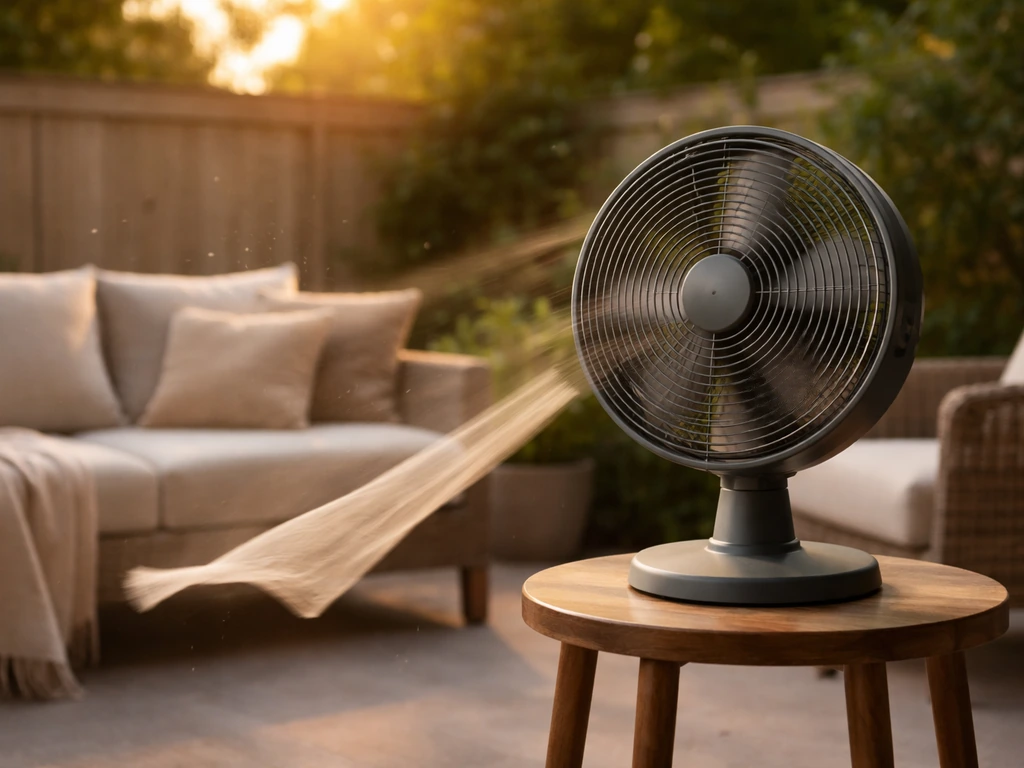
Best Patio Fans: How to Choose and Best Picks by Size
Choose the best patio fans by CFM, oscillation, and weatherproofing, with top picks by patio size and setup tips.
Alternative to Patio Cushions: Durable, Stylish Options and DIY
Alternative to patio cushions: durable, weatherproof seating options, pros, DIY tips & buying guide.