
The best outdoor patio ceiling fans in 2026 are the Hunter Bayou Breeze (wet-rated, excellent for fully exposed patios), the Minka-Aire Light Wave (damp-rated, perfect for covered patios and quiet enough to hold a conversation under), and the Big Ass Fans Haiku Outdoor (premium pick for serious airflow and smart-home control). Which one is right for you comes down to three things: how exposed your patio is to rain, how large your space is, and whether you need whisper-quiet operation or maximum airflow. This guide walks you through all of it so you can buy with confidence today. If you are shopping for one specifically to use outside on your patio, compare outdoor standing fan models too for targeted airflow.
Best Outdoor Patio Ceiling Fans: Top Picks and Buying Guide

Lark Perry
5 May 2026
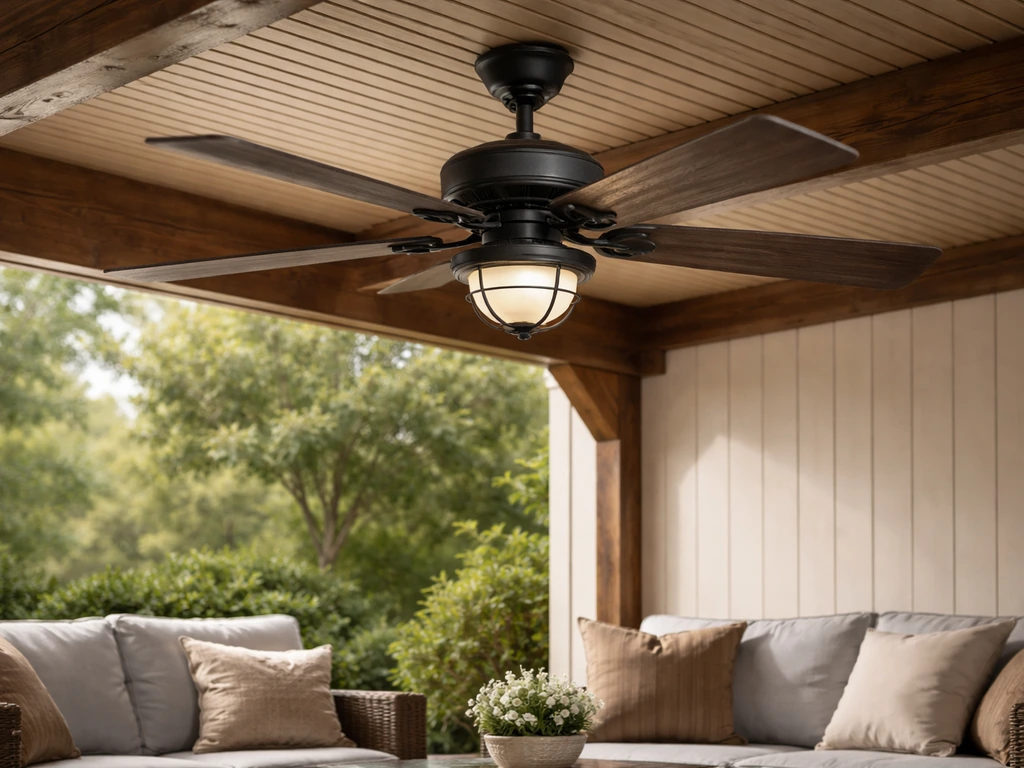
What 'best' actually means for an outdoor patio ceiling fan
The best outdoor ceiling fan is not just the prettiest or the most powerful one on the shelf. It is the one that is built to survive your specific outdoor conditions while moving enough air to make the space actually comfortable. Indoors, almost any ceiling fan will work. Outdoors, you have moisture, UV exposure, insects, temperature swings, and sometimes direct rain. A fan that is not built for those conditions will corrode, wobble, and fail within a season or two. So 'best' starts with the right weather rating, then layers in airflow performance, noise level, mounting compatibility, and long-term durability.
Beyond weather survival, a great outdoor ceiling fan should move a meaningful volume of air efficiently. ENERGY STAR measures ceiling fan performance in CFM per watt, which tells you how much airflow you are getting for every watt of electricity used. A fan with a high CFM/watt ratio gives you real comfort without a high electricity bill. Cheap fans often have poor blade pitch, weak motors, and low CFM/watt ratios, which means you pay to run them and still feel warm. Quality picks land above 75 CFM per watt, with premium models hitting well above 100.
Outdoor safety ratings: wet vs. damp and why it matters
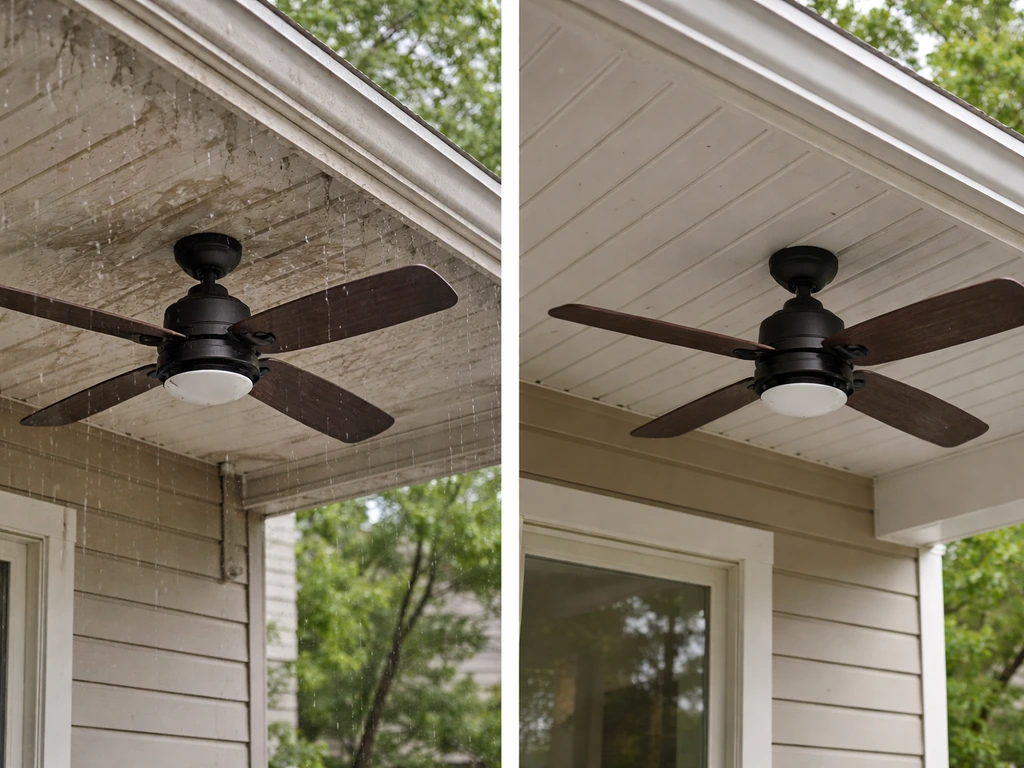
This is the single most important thing to get right before you buy anything. UL (Underwriters Laboratories) rates ceiling fans and lighting for two types of outdoor exposure: damp locations and wet locations. A damp location is a covered or sheltered area where moisture from condensation or humidity can reach the fixture, but water does not flow directly onto it. A wet location is any interior or exterior spot where water, rain, or liquids can drip, splash, or flow directly on or against the electrical components. Get this wrong and you are looking at a fire hazard or a fan that fails in months.
According to Hunter Fan, damp-rated fans are designed for covered outdoor spaces that may be subject to condensation and moisture. Wet-rated fans are for outdoor spaces where direct water contact can occur. The key phrase is 'direct contact.' If your patio has a solid roof overhead and the fan sits well under the overhang, a damp-rated fan is fine. If wind-driven rain can reach the fan, or if you have an open pergola with gaps, or if you are mounting the fan in a spot that gets wet when it rains, you need a wet-rated fan.
| Patio Type | Exposure Level | Rating You Need | Example Setup |
|---|---|---|---|
| Fully covered, enclosed patio | Humidity and condensation only | Damp-rated | Screened porch, solid-roof covered patio |
| Covered patio with open sides | Humidity plus occasional wind-driven moisture | Damp-rated (wet-rated preferred) | Pergola with solid roof, covered deck |
| Open pergola or lattice roof | Direct rain exposure possible | Wet-rated | Wood or vinyl pergola with gaps overhead |
| Fully exposed patio or deck | Direct rain and sun | Wet-rated only | Open deck, no overhead cover |
One practical tip: when in doubt, go wet-rated. A wet-rated fan works perfectly fine in a covered space, but a damp-rated fan will deteriorate quickly with direct water exposure. The price difference between the two is often small, and the peace of mind is worth it.
How to pick the right fan size, CFM, and mounting style
Fan size and airflow for your patio footprint
Ceiling fan blade span is measured in inches across the full diameter. Getting the right size for your patio is important because an undersized fan will barely move the air, while an oversized fan in a small space creates an uncomfortable wind-tunnel effect. Use this as your starting guide:
| Patio Size (sq ft) | Recommended Blade Span | Minimum CFM Target |
|---|---|---|
| Up to 75 sq ft | 36–42 inches | 1,500–3,000 CFM |
| 75–150 sq ft | 44–52 inches | 3,000–5,000 CFM |
| 150–300 sq ft | 52–60 inches | 5,000–7,000 CFM |
| 300+ sq ft | 60–72 inches or multiple fans | 7,000+ CFM |
CFM stands for cubic feet per minute, the volume of air the fan moves in one minute. Outdoors, you need more CFM than indoors because air dissipates into open space rather than recirculating in a closed room. For a 200 sq ft covered patio, aim for at least 5,000–6,000 CFM. For a fully exposed deck where heat builds intensely, push toward the higher end of that range or plan on two fans.
Mounting style and ceiling height
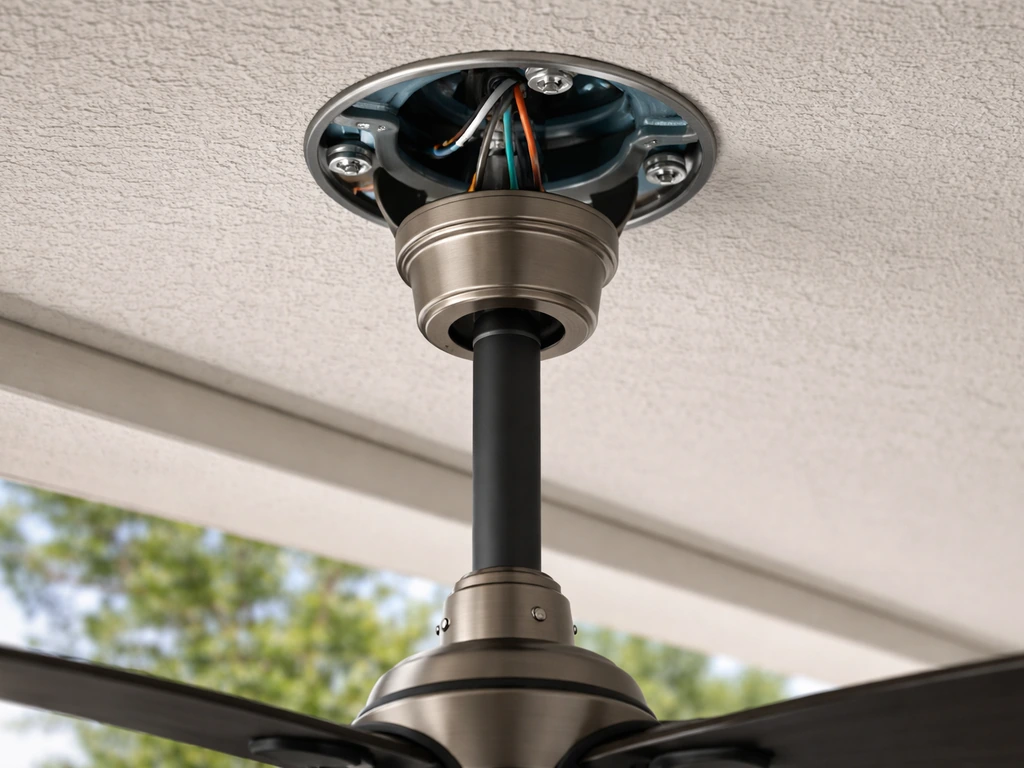
Most outdoor ceiling fans come with a standard downrod mount. The goal is to hang the blades between 8 and 9 feet above the floor, which maximizes airflow to the people sitting or standing below. If your covered patio ceiling is 8 feet, use a short downrod of 3–6 inches or a flush-mount (hugger) fan. For ceilings above 9 feet, use a longer downrod to bring the fan blades down into the effective airflow zone. On a vaulted or angled ceiling, you will need an angled mounting kit, which most quality fans include or sell as an accessory. Never use an extension downrod on a vaulted ceiling without the proper angled canopy adapter, since a fan hanging at an angle without proper hardware will wobble and can loosen over time.
If you do not have a ceiling box on your patio already, you will need a fan-rated electrical box before installation. Standard light fixture boxes are not built to handle the weight and constant motion of a ceiling fan, and using one is both a code violation and a real safety risk. Fan-rated boxes are marked clearly and are widely available at hardware stores for under $20.
Top picks for outdoor patio ceiling fans in 2026
These are the fans that consistently stand out for outdoor patio use based on build quality, airflow performance, weather resistance, and real-world durability. They span a range of budgets and patio types.
Best overall: Hunter Bayou Breeze 52-inch
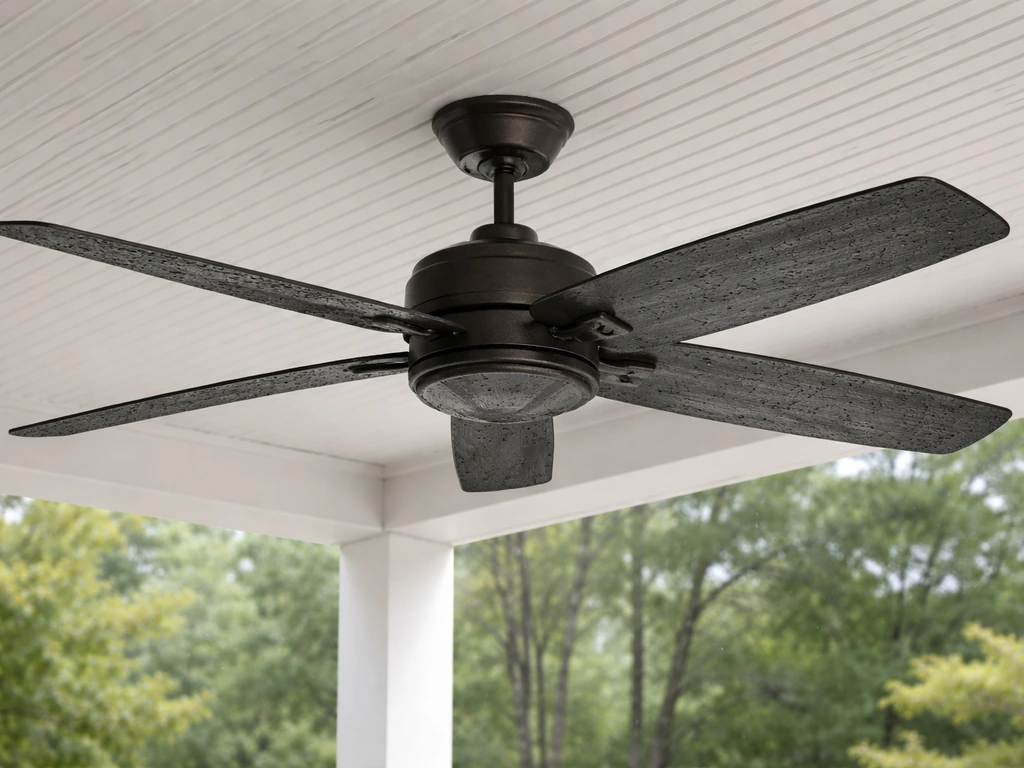
The Hunter Bayou Breeze is wet-rated, so it works for both covered and fully exposed patios. It has a rugged ABS composite blade set that resists moisture, UV fading, and warping better than real wood blades. The WhisperWind motor is legitimately quiet at lower speeds and moves around 4,700 CFM at high speed, which handles a 150 sq ft covered patio comfortably. It comes with a remote control and runs around $180–$220. For most homeowners who want a dependable, weather-ready fan without spending premium money, this is the one to start with.
Best for covered patios: Minka-Aire Light Wave 52-inch
The Minka-Aire Light Wave is damp-rated and built for aesthetics as much as performance. It has a distinctive sculpted blade design and a DC motor that runs almost silently, even at higher speeds. DC motors use significantly less electricity than traditional AC motors, typically 70% less, which matters if the fan runs several hours a day through a long summer. It moves about 5,200 CFM at max speed and works beautifully on covered patios up to 200 sq ft. Price sits around $350–$400. If you have a covered patio and want something that looks great and runs quietly, this is the premium-value pick.
Best premium pick: Big Ass Fans Haiku Outdoor
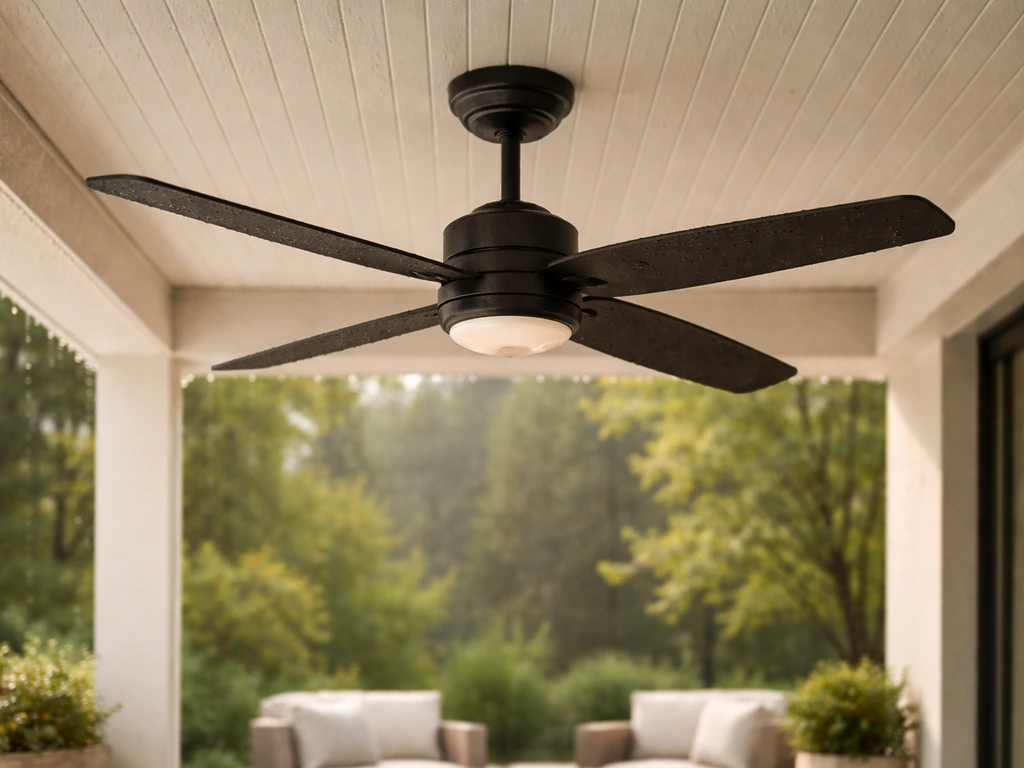
Big Ass Fans makes the Haiku Outdoor in wet-rated and damp-rated versions, and it is the best-engineered outdoor ceiling fan you can buy for a residential patio. The SenseME technology lets the fan automatically adjust speed based on occupancy and temperature. It integrates with Apple HomeKit, Amazon Alexa, and Google Home. Airflow is exceptional, with the 60-inch version moving over 8,500 CFM. Build quality is aircraft-grade aluminum with a corrosion-resistant coating. The catch is the price: expect $700–$1,000 depending on size and finish. It is worth it if you run your patio heavily and want the best comfort and the lowest energy draw long-term.
Best budget pick: Harbor Breeze Mazon 44-inch
The Harbor Breeze Mazon is a wet-rated fan that regularly sells for under $100 at Lowe's. It is not the most powerful or the quietest, but it handles small covered patios and screened porches well, moving around 3,200 CFM. The ABS blades and sealed motor hold up reasonably well outdoors for the price. If you have a small patio, a tight budget, or you just want to test a ceiling fan setup before committing to a premium model, the Mazon is a solid starting point.
Best for large or open patios: Craftmade Minka Aire Seawind 52-inch
For large covered patios or semi-exposed decks, the Craftmade Minka Aire Seawind is a wet-rated, high-airflow fan with a tropical aesthetic that works especially well in coastal or warm climates. The woven synthetic blades resist salt air and humidity particularly well. It moves around 5,500 CFM at high speed and includes a three-speed wall control. Pricing sits around $280–$320. If you have a large covered patio in a humid or coastal environment and want a fan that will hold up for years, this one punches above its price.
| Fan | Rating | CFM (high speed) | Motor Type | Price Range | Best For |
|---|---|---|---|---|---|
| Hunter Bayou Breeze 52" | Wet | ~4,700 | AC | $180–$220 | Most patios, overall value |
| Minka-Aire Light Wave 52" | Damp | ~5,200 | DC | $350–$400 | Covered patios, quiet operation |
| Big Ass Fans Haiku Outdoor 60" | Wet/Damp | 8,500+ | DC | $700–$1,000 | Large patios, smart home, premium |
| Harbor Breeze Mazon 44" | Wet | ~3,200 | AC | Under $100 | Small patios, tight budgets |
| Minka Aire Seawind 52" | Wet | ~5,500 | AC | $280–$320 | Large or coastal patios |
Installation basics and mistakes to avoid
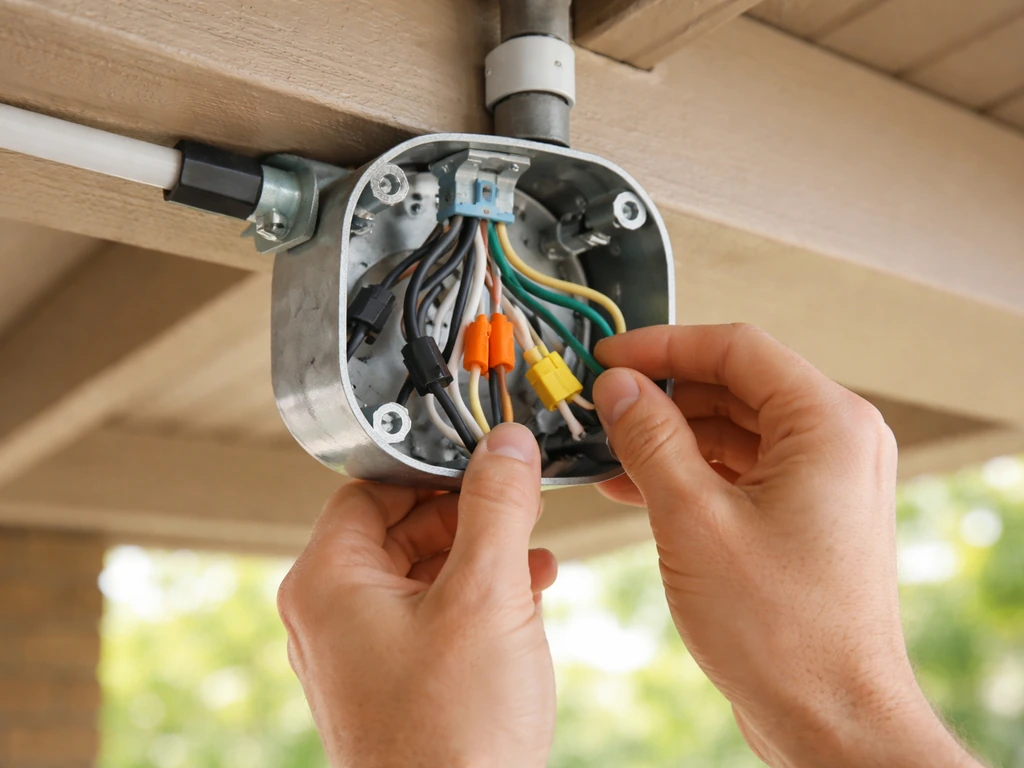
Installing an outdoor ceiling fan is a manageable DIY project for most homeowners, but the outdoor context adds a few extra steps compared to an indoor install. Here is what the process looks like and where people most often go wrong.
- Turn off power at the breaker before touching any wiring. Outdoor circuits can carry the same voltage as indoor ones, and water nearby makes any mistake much more dangerous.
- Verify you have a fan-rated electrical box in the ceiling. If the existing box wiggles or is a standard light fixture box, replace it with a fan-rated brace box before mounting the fan.
- Check your ceiling for water intrusion before installing. If moisture is getting through the ceiling, fix that first, or you will ruin the fan and create an electrical hazard.
- Match the downrod length to your ceiling height so the blades land between 8 and 9 feet above the floor.
- For vaulted or angled ceilings, use the angled canopy adapter that comes with the fan or purchase one separately. Do not force a flat mount on an angled ceiling.
- Seal all outdoor wire connections with weatherproof wire connectors or silicone-rated wire nuts. Standard indoor wire nuts can allow moisture intrusion over time.
- Test the fan at all speeds before sealing the canopy. It is much easier to fix a wiring issue before the canopy is closed than after.
- If the fan wobbles after installation, use the balancing kit (usually included) to add small clip-on weights to blades before assuming anything is defective.
The most common mistake I see is people buying a damp-rated fan for a spot that actually gets direct rain. The second most common is using a non-fan-rated electrical box, which causes wobble, noise, and eventually a dangerous drop risk. Both are easy to avoid if you check before you buy and before you install.
Noise, speed control, and realistic comfort expectations
Outdoor ceiling fans are not air conditioners. They create a wind-chill effect that makes you feel cooler by evaporating moisture from your skin, but they do not lower the actual air temperature. On a 95-degree afternoon, a ceiling fan can make it feel 8–10 degrees cooler, which is meaningful comfort but not cold. If your patio needs actual cooling, you are looking at a different category of product. Patio air conditioners, swamp coolers, and outdoor air coolers are all worth exploring for heat-extreme situations where a fan alone will not cut it. If you want stronger heat relief than a fan can provide, compare patio air coolers and swamp coolers to find the best outdoor patio air cooler for your setup. If you are dealing with very dry heat and want more humidity-free cooling, a swamp cooler or outdoor air cooler may be a better fit than a ceiling fan swamp coolers. If you need actual cooling in intense heat, the best outdoor patio air conditioner options are designed to lower the air temperature instead of just creating a breeze.
For noise, DC motor fans are noticeably quieter than AC motor fans, especially at lower speeds. The Minka-Aire Light Wave and Big Ass Fans Haiku are genuinely near-silent at speeds 1 and 2, which matters if you use your patio for conversation, relaxation, or watching TV outside. AC motor fans like the Hunter Bayou Breeze are quiet enough for most people but will have a low hum at higher speeds. Blade wobble causes most of the noise complaints people post about online, and it is almost always caused by a loose mounting or unbalanced blades, not a defective motor.
Speed control options have improved a lot. Most fans in the $150-and-up range now include a handheld remote. DC motor fans typically offer more speed steps (6 or more) compared to AC fans (usually 3), which gives you finer control over airflow and noise. Smart fans like the Haiku integrate with voice assistants and phone apps, which is genuinely convenient for a patio where you do not want to get up to adjust the fan. If you want wall-switch control, check that the fan is compatible with a wall-speed control before buying, since not all remotes work with wall dimmers.
Maintenance and weatherproofing to keep it running for years
Even a wet-rated fan needs some basic maintenance to reach its full lifespan outdoors. Wet-rated means it can survive rain, not that you can ignore it entirely. Here is a practical maintenance routine that works:
- Wipe down the blades and motor housing every 4–6 weeks during the use season. Pollen, dust, and grime build up quickly outdoors and can throw blade balance off while also trapping moisture against the housing.
- At the start and end of each season, inspect all mounting hardware including the downrod set screw, canopy screws, and blade bracket screws. Outdoor temperature swings expand and contract metal, loosening connections over time.
- Apply a thin coat of car wax or outdoor metal protectant to the motor housing and blade arms once a year if the fan is in a humid or coastal environment. This adds a layer of corrosion protection beyond the factory coating.
- If your fan has a light kit, check that the globe or cover seal is intact each season. A cracked seal lets moisture into the socket, which is the most common cause of outdoor fan light failures.
- For fans in coastal or high-humidity climates, spray exposed metal screws and brackets with a marine-grade anti-corrosion spray like Corrosion-X once a year to prevent rust and seizing.
- If you live somewhere with freezing winters, consider either covering the fan with a weatherproof fan cover or removing the blades and storing them indoors during the off-season. Even wet-rated fans last longer when they are not exposed to freeze-thaw cycling for months at a time.
One thing worth knowing: most outdoor ceiling fan warranties only cover manufacturer defects, not weather damage. If you install a damp-rated fan in a wet-location spot and it fails, that is on you. Keep your receipt, note your installation setup, and register the fan with the manufacturer if they offer it, so any legitimate warranty claim is documented.
With the right fan installed correctly and maintained seasonally, a quality outdoor ceiling fan will run reliably for 8–15 years. The Hunter Bayou Breeze is a great starting point for most patios. If you have a premium covered patio and noise matters, move to the Minka-Aire Light Wave. If you want the absolute best performance and smart features and budget is not the constraint, the Big Ass Fans Haiku is the clear choice. Pick based on your actual patio setup, not just the specs on the box.
FAQ
Can I install a best outdoor patio ceiling fan on a porch or patio that is partially covered but still gets rain from the sides?
Yes, but only if the fan and wiring are rated for outdoor use (damp or wet location) and your patio has an exterior-rated power setup. Use a GFCI-protected circuit, and keep the receiver or junction box components under cover if the model is weather-sensitive. If you are unsure, choose a model that is explicitly listed for the same wet/damp category as the spot where it will be installed.
Do outdoor-rated ceiling fans also have outdoor-rated light kits?
Avoid ceiling fans with light kits unless you are sure the light assembly is also outdoor rated for your exposure zone. Damp-rated fans can be fine for moisture, but many problems show up when water gets into the light module or switch wiring. If your patio is fully exposed or you have wind-driven rain, prioritize a wet-rated fan and confirm the light kit, if included, is rated for wet locations too.
How do I choose the right downrod height for a patio ceiling fan when my seating is lower or higher than average?
It depends on how much of the air you want to “feel.” For conversations, watching TV, or dining, keep the blades around 8 to 9 feet above the seating area as a baseline. If your patio is tall or your seating is lower, you may need a longer downrod to maintain airflow across people, not just at the far edges. Measure from the floor to the blade tips after installation so you are not guessing.
My ceiling is vaulted, can I just use a longer downrod instead of an angled mounting kit?
Not always. Many outdoor fans are shipped with a standard downrod and ceiling canopy, but vaulted or angled ceilings usually require a specific angled mounting kit for stability. If you can see wobble from day one, do not “tune it” with extra brackets, instead confirm you have the correct sloped-ceiling adapter and that the fan is tight at the fan-rated electrical box.
What maintenance should I do after heavy rain or storms to keep a wet-rated patio ceiling fan working long-term?
If the fan is wet-rated, it will tolerate rain exposure, but the warranty typically does not cover weather damage or installation mistakes. Replace any missing gaskets, keep the receiver connections sealed as instructed, and avoid high-pressure washing near the fan. After storms, visually check for looseness, blade alignment, and any gaps around the canopy.
What should I do if my patio is larger than the fan’s recommended coverage area?
For ceiling fans, the “right” CFM target is about comfort, not brute-force cooling. If you are in a very hot climate or your patio has intense sun, the wind-chill effect can still help, but you may need a higher CFM rating or even two fans for better coverage, especially if furniture is spread out. As a rule of thumb, if the area is longer than it is wide, you often get better results splitting airflow rather than oversizing one fan.
Can I mount an outdoor ceiling fan on a wall or under a soffit?
Most outdoor patio ceiling fans are designed for ceiling-mount use, not full outdoor wall mounting. If you want wall-style circulation, you usually need a different category of outdoor fan. If you must use a ceiling fan near a soffit, verify the model’s required clearances, confirm the canopy can fully seat, and ensure the blades never strike the structure at maximum wobble.
How do I get reliable wall-switch control with a remote or smart outdoor patio ceiling fan?
Wind and insects can make remote or smart features feel inconsistent, but the bigger issue is usually electrical control. If you want wall-switch control, confirm the fan is compatible with your wall control type and that the dimmer you plan to use matches the manufacturer’s requirements. Also check if the fan’s remote receiver is already included and where it will be installed, because it can affect wireless range.
My outdoor ceiling fan makes noise, is it usually a motor problem?
Yes, and it’s a common fix for noise complaints. Blade wobble usually comes from installation issues (uneven mounting surface, loose connections, or incorrect downrod seating) or unbalanced blades, not the motor. Start by tightening the mounting bracket, re-checking the downrod alignment, then use any manufacturer balancing kit or blade alignment adjustment instructions if included.
How can I troubleshoot weak airflow from a best outdoor patio ceiling fan even if it spins normally?
If the fan runs but airflow feels weak, confirm you did not undersize the blade span for the space and that the pitch direction is correct (some models have specific blade orientation marks). Also check that the fan is at the right height for your seating, because being too high can make the breeze miss people even if CFM is adequate. Finally, verify the speed setting and make sure you are not accidentally limiting it through a wall control that is not compatible with the fan.
Next Articles
Best Patio Fans: How to Choose and Best Picks by Size
Choose the best patio fans by CFM, oscillation, and weatherproofing, with top picks by patio size and setup tips.
Alternative to Patio Cushions: Durable, Stylish Options and DIY
Alternative to patio cushions: durable, weatherproof seating options, pros, DIY tips & buying guide.

Best Color for Outdoor Patio Cushions in 2026
Choose the best cushion color for sun, heat, and fading in 2026, with pairing tips for patio furniture and durability.