
The best-price patio awning is not the cheapest one you can find, it is the one that gives you the most usable shade, holds up to your local weather, and does not fall apart after two seasons. For most homeowners, that sweet spot lands somewhere between $200 and $800 for a manual retractable unit, or $600 to $2,500 for a motorized setup, depending on size and frame quality. This guide is written for value-driven shoppers: people who want to spend confidently without overpaying for features they will never use, and without underspending on something that will need replacing in a year.
Best Price Patio Awnings: Value Picks, Comparisons & Tips
Lark Perry
4 Aug 2026
What 'best price' actually means for patio awnings
I want to be clear about what this guide is chasing. 'Best price' does not mean the lowest sticker on the shelf. A $150 awning that fades, sags, and pulls its wall bracket loose after one summer is not a deal, it is a replacement purchase waiting to happen. Best price means best value: the most durable, most functional awning you can buy at a given budget without paying for premium features that only matter in specific situations. If you have a small apartment balcony and mild weather, you do not need a Sunesta with Miami-Dade wind certification. But if you live in a windy coastal area and have a large deck, spending a little more upfront genuinely pays off.
This guide helps three types of shoppers: renters or first-time buyers who want a solid starter awning under $300, homeowners looking for a mid-range unit in the $400 to $1,500 range that will last five-plus years, and deck-focused buyers ready to invest in a motorized or premium retractable system. Each section is written with all three in mind, and I flag clearly when a recommendation applies to one group more than the others.
Best-value picks at a glance
Here are my top recommendations across budget tiers, based on published specs, verified materials, and aggregated real-world user feedback. Full details on each appear throughout the article. For buyers prioritizing the best quality patio awnings, see the premium recommendations below.
| Pick | Type | Approx. Size | Price Range | Best For |
|---|---|---|---|---|
| Outsunny 10' x 8' Manual Retractable | Manual crank | 10 ft x 8 ft | $150–$250 | Renters, small patios, tight budgets |
| Best Choice Products 98 x 80 in. Retractable | Manual crank | ~8.2 ft x 6.7 ft | $180–$280 | Medium decks, DIY-friendly install |
| Outsunny 13' x 8' Manual Retractable | Manual crank | 13 ft x 8 ft | $250–$380 | Larger patios, good mid-budget stretch |
| Somfy-Motorized Mid-Range Retractable | Motorized (RTS remote) | 10–16 ft wide | $800–$2,000 | Hands-free operation, frequent users |
| Sunesta or Eclipse Premium System | Motorized + sensors | Custom widths | $2,500–$5,000+ | Permanent install, high-wind areas, full warranty |
Six factors to evaluate before you buy
Every awning purchase should run through the same checklist. I have evaluated dozens of models and the same six factors separate the good buys from the regrets every single time.
1. Price and total cost of ownership
Sticker price is only part of the equation. A manual awning under $300 typically ships as a flat-pack and takes a couple of hours to install yourself, so your total outlay stays close to the purchase price. A motorized unit adds $200 to $600 in professional installation labor, and if it needs an electrical circuit, you are looking at an additional $100 to $300 for an electrician. Premium installed systems from brands like Sunesta or Eclipse can run $5,000 to $10,000 fully installed once you factor in custom sizing, motorization, wind sensors, and professional mounting. Factor all of that in before comparing options at different tiers.
2. Frame materials
Aluminum frames are the standard for retractable awnings because they resist rust, stay lightweight, and handle heat without warping. Steel frames cost less but corrode faster in humid or coastal climates unless they are powder-coated thoroughly. In the budget category, you will often see thinner-gauge aluminum arms, these flex more and are more prone to bending in wind, which is why retraction habits matter more on cheaper units. At the mid-range and premium tiers, extruded aluminum arms with thicker walls hold their shape over years of use.
3. Fabric type and UV protection
Most entry-level and mid-range awnings use solution-dyed polyester or acrylic-coated polyester. Solution-dyed fabric has color locked into the fiber, which means it resists fading significantly longer than surface-printed fabric. Acrylic fabric (Sunbrella and its equivalents) is the gold standard: it is mold-resistant, colorfast for 10-plus years, and holds up to ASTM D4847 woven awning fabric standards. At the budget end, fabrics are typically polyester with a UV-resistant coating, functional but expect noticeable fading after three to four seasons of direct sun. If you are buying in the $300-and-under range, accept this and plan on eventual fabric replacement rather than full unit replacement.
4. Wind and UV ratings
Wind ratings are one of the most misrepresented specs in the awning market. Many budget listings claim 'wind resistant' without publishing any tested speed. A genuinely rated awning will cite a tested wind load in mph or km/h, or reference a Miami-Dade NOA (Notice of Acceptance) for the highest-wind-zone assurance. UV ratings are more standardized, look for UPF 50+ on the fabric spec, which blocks 98% of UV radiation. At the budget tier, UV coating is often present but not certified, so take those claims with reasonable skepticism.
5. Installation type
Manual retractable awnings in the 8- to 13-foot range are generally DIY-installable if you are comfortable drilling into masonry or a solid wood ledger board. The key is hitting structural material, stud, masonry, or beam, not just drywall or siding. Motorized awnings need a power source, which means either running wiring or using a solar or battery-powered motor option like those in the Somfy WireFree Solar Pack range. Premium systems almost always require professional installation because anchor points must meet structural requirements, and some carry wind-certification that voids if improperly mounted. See the SunSetter, Motorized Awning Owner & Installation Manual (PDF mirror) for manufacturer installation requirements, bracket spacing, recommended fasteners, and warnings about when a professional installer or structural engineer is needed SunSetter — Motorized Awning Owner & Installation Manual (PDF mirror).
6. Warranty
Budget awnings typically carry a 1-year limited warranty covering manufacturing defects. Mid-range units often extend to 2 to 3 years on the frame and 1 year on fabric. Premium brands like Sunesta publish multi-year warranties covering fabric, frame, and motor separately, their documentation specifies what voids coverage, including improper installation and failure to retract in high winds. Always check whether the warranty is on parts only or parts and labor, and whether it transfers if you sell the home.
Materials and durability: what actually lasts
From my testing and the aggregated feedback from thousands of retailer reviews, the single biggest differentiator in awning longevity is not the frame, it is the fabric and how the owner treats it. Frames on even mid-budget aluminum units tend to survive 5 to 10 years without significant structural failure. Fabrics fade, stretch, tear at the hem, or develop mildew much sooner, especially on polyester units left extended during rain or humidity spikes.
Outsunny's manual retractable awnings use a UV-resistant and water-resistant polyester canopy stretched over an aluminum frame. This is a solid combination for the price point, the aluminum arms resist corrosion well, and the fabric holds its shape adequately for light rain and direct sun if retracted when not in use. The coating is not waterproof in a sustained downpour; water will pool and stress the fabric if left extended in heavy rain. Outsunny's own installation instructions note this clearly, and it is consistent with how most budget-tier fabrics perform.
The Best Choice Products 98 x 80 inch model pairs a powder-coated aluminum frame with a polyester canopy operated by a crank handle. The footprint covers roughly 8.2 by 6.7 feet of patio, enough for a modest seating area. Retail listings and buyer reviews consistently note that the crank mechanism is smooth out of the box but can stiffen after a season or two if not lubricated. Spraying the pivot points with a silicone lubricant every spring takes about 30 seconds and extends the mechanical life noticeably.
At the premium end, acrylic woven fabrics (Sunbrella is the most widely available) are spec'd under ASTM D4847 for woven awning and canopy fabrics, which covers breaking strength, tear resistance, and color fastness. These fabrics genuinely do last 10-plus years with basic cleaning, a mild soap solution and a soft brush once or twice a season is all they need. The trade-off is cost: replacing a budget polyester canopy runs $50 to $150 for a basic unit, while a replacement Sunbrella panel for a wider premium frame can cost $300 to $700.
Wind and UV ratings explained
The words 'wind resistant' on a product listing mean almost nothing without a tested speed attached. What you are actually looking for is a tested wind load rating, usually expressed in mph. Many budget and mid-range awnings are not rated for sustained wind above 20 to 25 mph, which sounds low until you realize that a typical summer thunderstorm gust regularly exceeds that. The practical rule: retract any awning when wind picks up above 20 mph, regardless of what the listing says.
For permanent or semi-permanent installs in wind-prone areas, look for Miami-Dade County NOA (Notice of Acceptance) approval. This is the most rigorous U.S. wind-resistance certification for building products and requires third-party laboratory testing at verified wind speeds. Brands like Sunesta and Eclipse have pursued these certifications for some product lines. If you live in Florida, coastal Texas, or any hurricane-prone zone, an NOA is worth prioritizing even if it adds $500 to $1,000 to the system cost.
UV ratings work on the UPF (Ultraviolet Protection Factor) scale. UPF 50+ is the target for meaningful skin protection, at that rating, the fabric blocks 98% of UVA and UVB radiation. Most mid-range and premium awning fabrics hit UPF 50+. Budget polyester fabrics often claim UV resistance but do not publish a UPF number; they will still block a significant portion of UV and dramatically reduce surface temperatures underneath (typically by 10 to 15 degrees Fahrenheit in direct sun), but do not treat them as certified sun-protection fabric.
Sizing and placement: getting the coverage right
Measuring for an awning is straightforward if you follow a clear sequence. First, measure the wall mounting width, the horizontal distance between the outer edge of your door or window frame and any obstruction (trim, corner, downspout). This gives you your maximum awning width. Then measure the projection you need: how far out from the wall the awning needs to extend to shade your seating area. A typical patio table and four chairs needs 8 to 10 feet of projection to keep the entire surface shaded at mid-afternoon.
- Measure the clear wall width between any fixed obstructions (pipes, trim, lights). Your awning width must fit within this span.
- Measure from the wall to the outer edge of the area you want shaded. Add 2 feet to account for the sun's angle in the afternoon — the awning casts a shorter shadow than its projection length at low sun angles.
- Check mounting height. Most retractable awnings need to mount at least 7 feet above the ground for comfortable clearance when extended at a pitch. If your eave or wall height is lower, look for a low-pitch or flat-pitch model.
- Confirm the wall material. Solid masonry and wood stud framing are ideal. Vinyl or EIFS (exterior foam) siding cannot support the load without additional backing plates or structural brackets.
- For motorized units, note the distance from your planned mount location to the nearest outdoor outlet or planned electrical run — this affects installation cost.
One placement mistake I see repeatedly: people mount awnings directly above sliding glass doors, then discover the awning pitch drips rainwater directly onto the door threshold. A simple fix is to set the pitch slightly steeper than default, or position the awning 6 to 8 inches higher on the wall to create more drip clearance. Most manual models let you adjust pitch during installation, read the bracket section of the instruction manual before committing to a mounting height.
Manual vs motorized vs premium: which type fits your situation
This is the decision that has the biggest impact on both price and daily satisfaction. The right answer depends on how often you use your patio, your mobility, your wall structure, and your budget. Here is a direct comparison of the three main categories.
| Feature | Manual Retractable | Motorized Retractable | Premium Installed System |
|---|---|---|---|
| Price range (unit only) | $150–$500 | $500–$2,500 | $2,500–$5,000+ |
| Typical installation cost | $0 (DIY) | $200–$600 (pro recommended) | $500–$2,000+ (pro required) |
| Operation | Crank handle | Remote, wall switch, or app | Remote, app, smart home, auto sensors |
| Wind sensors available | No | Yes (add-on, e.g. Somfy wind sensor) | Yes (often included or bundled) |
| Fabric quality typical | Coated polyester | Coated polyester to acrylic | Acrylic (Sunbrella or equivalent) |
| Frame gauge | Light to medium aluminum | Medium aluminum | Heavy extruded aluminum or steel |
| Typical warranty | 1 year | 1–3 years frame, 1 year fabric/motor | 5–10 years frame, 5 years fabric, 2–5 years motor |
| Wind certification (NOA) | Rare | Available on select models | Available on premium lines |
| Best for | Occasional use, renters, small patios | Frequent use, larger decks, convenience | Permanent installs, wind zones, resale value |
Manual awnings from brands like Outsunny and Best Choice Products are genuinely good value for occasional or seasonal use. The crank mechanism requires about 15 to 20 turns to extend or retract a 10-foot unit, which is not a hardship for most people. Where manual becomes frustrating is if you are extending and retracting multiple times a day, or if limited hand or arm mobility makes cranking uncomfortable. In those cases, the jump to a motorized unit is worth the extra cost even at the lower end of the motorized range.
Motorized awnings in the $800 to $2,000 range typically use Somfy tubular motors, which are the industry standard for reliability. Somfy's RTS radio protocol lets you control the awning from a handheld remote, wall switch, or compatible smart home hub like the Somfy TaHoma. Power options include hardwired (most reliable), plug-in where an outdoor outlet is accessible, or Somfy's WireFree Solar Pack (a solar-charged battery module that mounts on the awning and eliminates wiring entirely). The WireFree option is particularly useful for walls where running conduit is expensive or disruptive, though it requires adequate sun exposure on the solar panel itself.
Premium systems from Sunesta, Eclipse, and similar manufacturers occupy a different category entirely. These are custom-sized, professionally measured and installed, and often include wind and sun sensors that retract the awning automatically when conditions become unsafe. Sunesta publishes multi-year warranty documentation that covers fabric, frame, and motor under separate terms, and some of their product lines carry Miami-Dade NOA certification for high-wind performance. If you are planning a permanent outdoor living space or adding to a home you intend to sell, this tier delivers clear return on investment. For everyone else, it is a premium that is hard to justify purely on shade value.
Price ranges and what you actually get
The U.S. retractable awning market breaks into three meaningful price bands. Here is what each tier realistically delivers, based on actual retail listings and user feedback, not manufacturer marketing copy.
Budget tier: $150 to $400
This tier covers basic manual retractable awnings in the 8- to 13-foot width range. You get a light-to-medium gauge aluminum frame, a UV-resistant polyester canopy, a crank handle mechanism, and wall mounting brackets. Installation is DIY-friendly and most models ship with all necessary hardware except concrete anchors (needed for masonry walls). The Outsunny 10 x 8 and the Best Choice Products 98 x 80 inch model both sit in this tier. Realistic lifespan with basic care is 4 to 7 years on the frame, 3 to 5 years on the fabric before noticeable fading. The main trade-offs are fabric durability, light frame gauge (prone to arm flex in wind above 20 mph), and 1-year warranties. These are solid choices for renters, starter patios, or spaces where you want shade without a long-term commitment.
Mid-range tier: $400 to $1,500
Mid-range covers both higher-quality manual models (wider spans, heavier frame, better fabric options) and entry-level motorized units. At $400 to $700, you start seeing thicker aluminum arms, improved crank quality, and occasionally acrylic or blended fabrics. At $700 to $1,500, motorized units with Somfy or equivalent motors enter the picture. These units offer genuine convenience improvements, better build quality, and 2- to 3-year warranties. A key note: many units in the $700 to $1,000 range are motorized but do not include wind or sun sensors, those are add-ons that typically run $100 to $200 each. Adding a wind sensor is worth it in any area with unpredictable afternoon thunderstorms, since the motor can retract the awning automatically when wind exceeds a set threshold.
Premium tier: $1,500 to $5,000+
Premium awnings are professional products in every sense: custom-measured, professionally installed, and built to last 15-plus years. Fabric is almost always acrylic (Sunbrella or equivalent), frames are heavy extruded aluminum, and motors are high-torque units with manual override. Warranties are meaningfully longer and cover more: expect 5 to 10 years on the frame, 5 years on fabric, and 2 to 5 years on the motor. Some product lines carry Miami-Dade NOA certification for wind performance. The installed price including labor typically runs $3,000 to $7,000 for a 12- to 16-foot system with sensors. This tier makes sense for permanent outdoor living spaces, resale value improvements, and high-wind or high-UV climates where cheaper options simply will not hold up.
| Budget Tier | Price Range | Frame | Fabric | Motor | Warranty | Typical Lifespan |
|---|---|---|---|---|---|---|
| Budget | $150–$400 | Light aluminum | Coated polyester | None (manual crank) | 1 year | 4–7 years (frame), 3–5 years (fabric) |
| Mid-Range | $400–$1,500 | Medium aluminum | Polyester to acrylic blend | Optional Somfy/equivalent | 2–3 years | 7–12 years (frame), 5–8 years (fabric) |
| Premium | $1,500–$5,000+ | Heavy extruded aluminum | Acrylic (Sunbrella) | Included, high-torque with override | 5–10 years (frame) | 15+ years (frame), 10+ years (fabric) |
Installation: DIY or call a pro?
Manual awnings up to about 13 feet wide are realistically DIY-installable for anyone comfortable using a drill and reading a technical diagram. Outsunny's installation manual (available via third-party manual archives for their 13 x 8 model) walks through bracket spacing, fastener types, and load anchoring clearly. The critical step is anchoring into structural material: a wood ledger board, masonry, or exposed stud. If you are mounting to a wall with vinyl siding or EIFS over foam, you need to locate the studs or add a structural backing plate, skipping this is the most common cause of bracket pull-out failures reported in retailer reviews.
For motorized units, I recommend professional installation even if you are technically capable. The mounting requirements are more demanding (heavier unit weight, tighter torque specs for brackets), and incorrect wiring voids most warranties. Professional installation for a mid-range motorized unit typically runs $200 to $600 in labor, per trade cost guides from sources like HomeAdvisor and HomeGuide. If an electrical circuit needs to be run, budget an additional $100 to $300 for an electrician.
Permits are another variable. Most U.S. cities do not require a permit for a freestanding or wall-mounted retractable awning on a private residential property. However, permits are often required when the awning projects over a public right-of-way (sidewalk, alley), when it includes electrical work, or when it is attached to a permitted structure in a municipality with stricter residential codes. Los Angeles, Portland, and other cities with detailed building codes specifically address awning projections in their permit manuals. The safest approach: call your local building department before ordering a motorized or permanent-mount unit, and confirm in writing if no permit is needed.
Maintenance and what goes wrong
The most common failure modes, drawn from retailer review aggregations and community forum threads, fall into four categories. Knowing these upfront helps you buy better and maintain smarter.
- Bracket pull-out: mounting into non-structural material is the leading cause of catastrophic failure, especially in wind. Always hit studs, joists, or masonry. Use lag bolts (not screws) with appropriate anchors.
- Fabric fading and tearing: budget polyester fades in 3 to 5 seasons of heavy sun. Tearing typically starts at the hem or roller attachment point where tension concentrates. Lubricate the roller and arms each spring to reduce fabric stress.
- Crank stiffening: pivot points on manual cranks oxidize over time, especially in humid climates. A silicone-based lubricant spray on all moving joints annually prevents most stiffening.
- Motor and remote pairing issues: Somfy-based motors can lose remote pairing after a power outage or battery swap. The re-pairing process is described in the Somfy programming guide and takes about 2 minutes once you know the steps — but many buyers do not discover this until it happens.
- Water pooling: awnings pitched at too shallow an angle accumulate standing water during rain, stretching the fabric and stressing the roller mechanism. Increase pitch to at least 15 to 20 degrees if rain is common in your area.
- Mildew: polyester fabrics in humid climates develop mildew if stored or rolled while damp. Let the awning air dry fully before retracting after rain — even 20 to 30 minutes of air dry time makes a significant difference.
Where to buy and how to save money
Home Depot and Amazon carry the widest selection of budget and mid-range awnings with meaningful return windows (90 days at Home Depot for most patio items). For mid-range motorized units, direct-to-consumer brands and specialty outdoor retailers often have better warranties and more knowledgeable customer support than general big-box stores. For premium systems, buy through an authorized dealer or installer, the installation is part of the product, and some warranty terms require professional installation documentation.
A few concrete ways to reduce cost without compromising quality: shop end-of-season sales (August through October) when patio inventory goes to clearance, discounts of 20 to 40% on mid-range manual units are common. Buy the motor and awning together from the same brand rather than mixing brands, since compatibility issues with aftermarket motors are a recurring complaint in installer forums. If you are considering a Somfy-motored unit, the WireFree Solar Pack option can eliminate electrician costs entirely if your mounting wall receives direct sun for a few hours a day, that single upgrade saves the $100 to $300 electrician fee and the conduit hassle. Finally, check whether your local utility offers rebates for shade solutions that reduce cooling load, some programs in high-heat states cover 10 to 20% of awning costs.
Your pre-purchase checklist
Run through this before you hit 'add to cart.' It takes 10 minutes and prevents the most common buyer regrets.
- Measure your wall width and confirm mounting surface material (wood stud, masonry, or EIFS siding).
- Measure required projection depth and add 2 feet for sun-angle compensation.
- Confirm overhead clearance — the awning needs at least 7 feet from ground to mount for comfortable clearance when extended.
- Decide: manual or motorized? If motorized, identify your power source (outlet, new circuit, or solar/battery option).
- Check local permit requirements for your specific install type (wall-mounted, electrical, projection over walkway).
- Verify the return policy — 30 days minimum, ideally 90 days, in case the size or mounting position does not work as expected.
- Read the warranty terms: does it cover fabric separately from the frame? Is professional installation required to maintain coverage?
- If wind is a concern, confirm whether the model carries a tested wind load rating or an NOA certification.
- Budget for installation hardware beyond what ships with the unit: additional lag bolts for masonry, a silicone lubricant, and (for motorized) any electrical supplies.
FAQ
What primary types of source material are essential to research the ‘best price patio awnings’ article?
Gather manufacturer product pages and spec sheets (dimensions, materials, UV/wind claims, operation type); official installation and user manuals; warranty and certification documents (Miami‑Dade NOAs, manufacturer warranty PDFs); authoritative standards (ASTM, Intertek/third‑party test reports); motor supplier technical catalogs (Somfy) for motorized features; major retailer category pages (Home Depot, Lowe’s, Amazon) for current price bands and customer review aggregates; and consumer testing/review outlets (Consumer Reports, Wirecutter) for methodology and consumer-centric evaluation.
Which sources should be treated as highest priority (tier‑1) for technical claims and certifications?
Use manufacturer warranty PDFs and Miami‑Dade/Florida NOA product‑approval documents, Somfy technical catalogs for motor specs, and ASTM standards documentation for fabric/assembly standards. These are authoritative for wind ratings, electrical options, motor behavior, and expected warranty coverage.
How do I verify manufacturer claims (wind rating, UV/resistance, ‘hurricane‑rated’) before publication?
Locate the manufacturer NOA or third‑party lab report (Miami‑Dade or Intertek) that specifically covers the model. If none exists, flag the claim and report it as manufacturer‑stated only. Cross‑check installation manuals for required mounting conditions and disclaimers that limit ratings (e.g., only when mounted per instructions).
What retailer and market sources are needed to define realistic price bands and expected features at each budget level?
Collect current listing prices and SKU examples from major retailers (Home Depot, Lowe’s, Amazon) and use trade price guides (HomeAdvisor, Fixr) for pro‑install cost estimates. Sample price bands: basic manual box awnings (~$150–$400), midrange motorized units and larger manual retractables (~$500–$2,500), and premium integrated systems with professional install (~$2,500–$5,000+). Document date‑stamped prices and note regional cost variance.
How should I research and summarize model‑specific notes for Outsunny manual retractable shades and the Best Choice Products 98×80 model?
Use the manufacturer product pages (Outsunny product listings and downloadable manuals) for exact dimensions, materials, crank details, and mounting specs. For Best Choice Products 98×80, locate an official manufacturer/retailer product page or archived retail listing to confirm specs; supplement with retailer review aggregates and independent roundups that reference the 98×80 listing. Where official spec sheets are unavailable, clearly label information as compiled from retailer/archived sources and corroborate with installation manual details if possible.
What consumer feedback and real‑world failure modes should I source and how?
Aggregate verified customer reviews from retailer pages (Home Depot, Amazon) and identify recurring issues (bracket/failure points, fabric fading/tears, motor/remote problems). Supplement with smarthome/homeimprovement forum threads (Reddit) and independent review sites for qualitative context. Cross‑validate common complaints by checking multiple retailers and, when possible, repair/service‑call reports or installer anecdotes.
Next Articles
Best Motorized Patio Awnings: Top Picks & Buyer's Guide 2026
Buyer's guide to the best motorized patio awnings: top picks, comparison, costs, installation, and smart‑home tips.
best choice products 98 x80 retractable patio awning review
Best Choice Products 98x80 retractable patio awning review, specs, pros/cons, install, cost & alternatives.
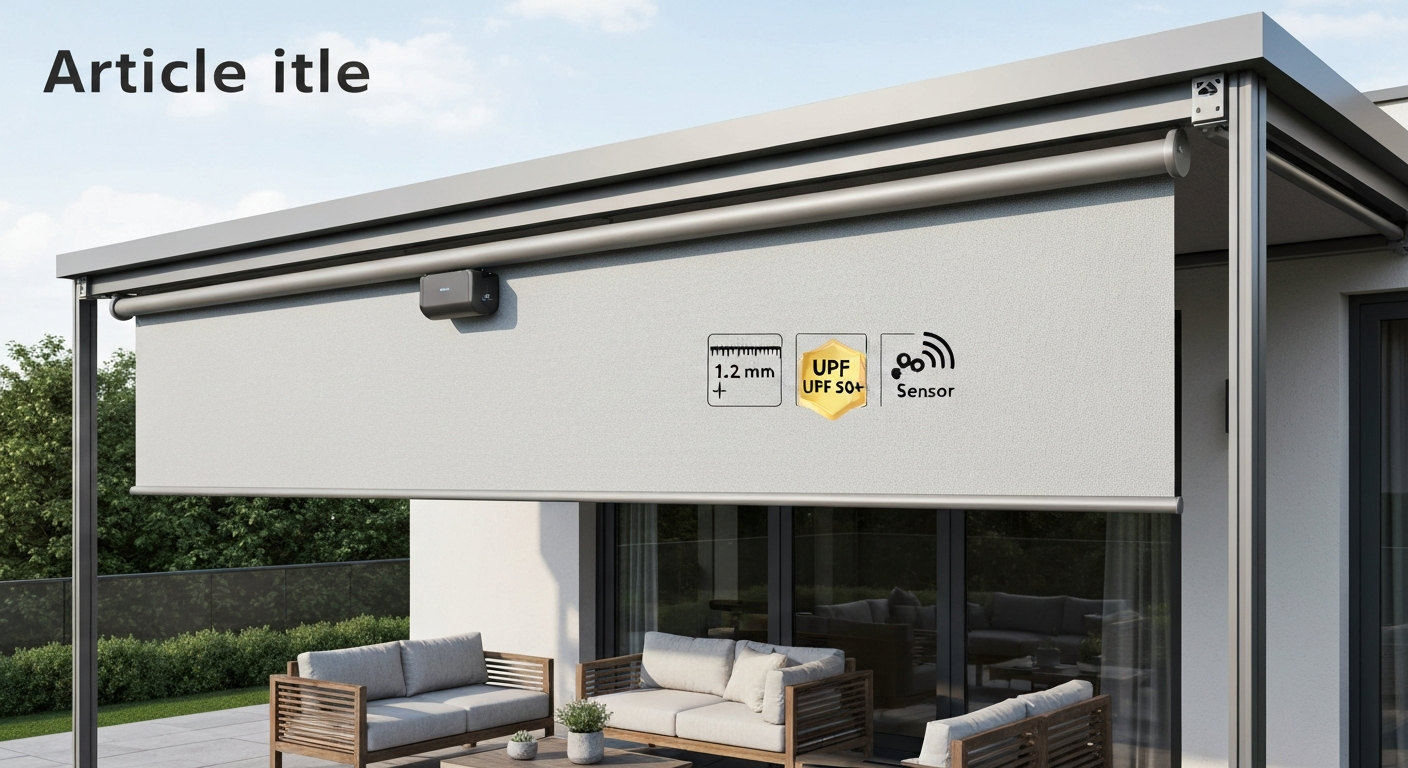
Best Quality Patio Awnings: Ultimate Buyer's Guide 2026
Buyer's guide to the best quality patio awnings: materials, sizes, motorized vs manual, price tiers & top picks.