
The best patio gazebo for wind is a hard-top model with a powder-coated steel or aluminum frame, cross-bracing, a vented roof, and a solid anchoring system matched to your patio surface. Soft-top canopy gazebos can work in moderate breezes, but if you regularly get gusts above 20-25 mph, a permanent or semi-permanent hard-top is the only type worth buying. The engineering details matter more than the brand name, so this guide breaks down exactly what to look for and what to buy based on your specific situation.
Best Patio Gazebo for Wind: Buying, Features, and Setup

Lark Perry
10 Jun 2026
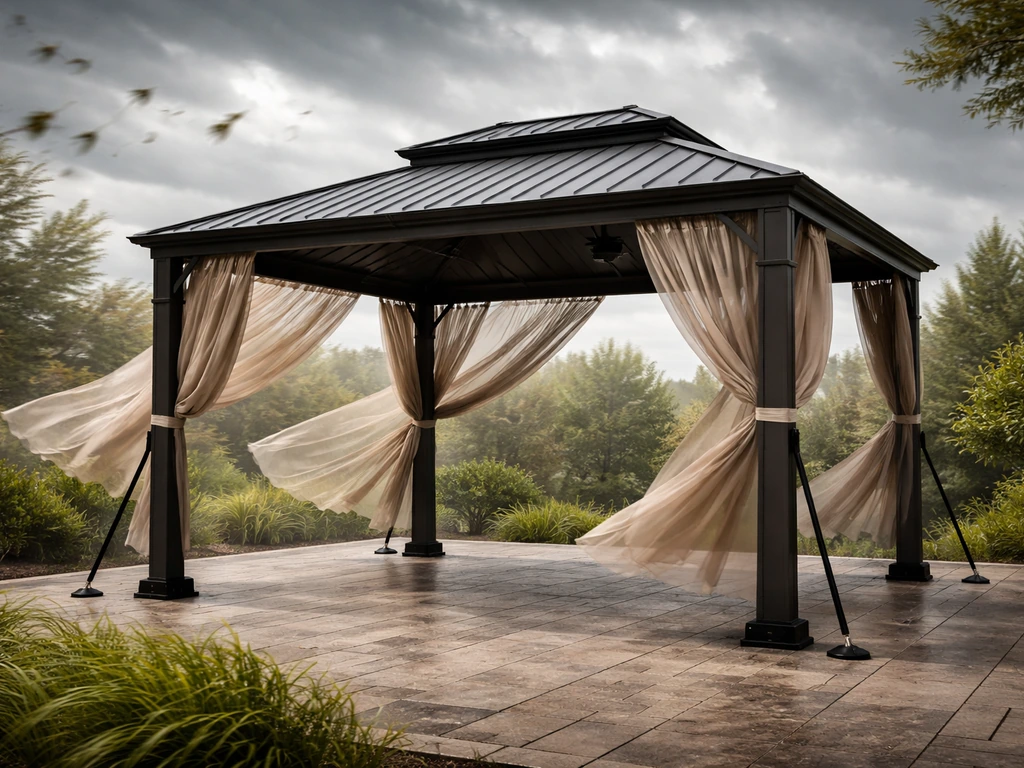
What 'best for wind' actually means
Wind resistance and stability are two different problems, and most buyers confuse them. Stability means the gazebo doesn't wobble, rock, or shift during gusts. Wind resistance means the structure doesn't collect uplift force that peels it off the ground or collapses it inward. You need both, and they're solved by different design choices.
Uplift is the bigger danger. When wind hits a flat or low-pitched roof at speed, it creates a pressure differential that tries to lift the roof straight up, pulling legs and anchors with it. A gazebo that feels solid at 10 mph can become airborne at 35 mph if the roof design and anchoring don't account for uplift. That's why manufacturer wind ratings only apply when the gazebo is anchored exactly as directed. Backyard Discovery's PRO-TECT line, for example, claims testing up to 100 mph, but that number assumes correct anchoring. Skip the anchoring and you're working with a very different structure.
Wobble, on the other hand, comes from frame geometry and joint quality. A frame with cross-bracing and tight connection points won't flex and rack during gusts. One with loose bolts and no diagonal supports will feel unstable at 15 mph and eventually fatigue at the joints. When you're shopping, you're looking for a gazebo that handles both problems: a roof design that sheds or relieves wind pressure, and a frame that doesn't flex under load.
Gazebo types that handle wind better
Not all gazebo types are created equal in the wind. Here's the honest breakdown of how each category performs.
Hard-top gazebos
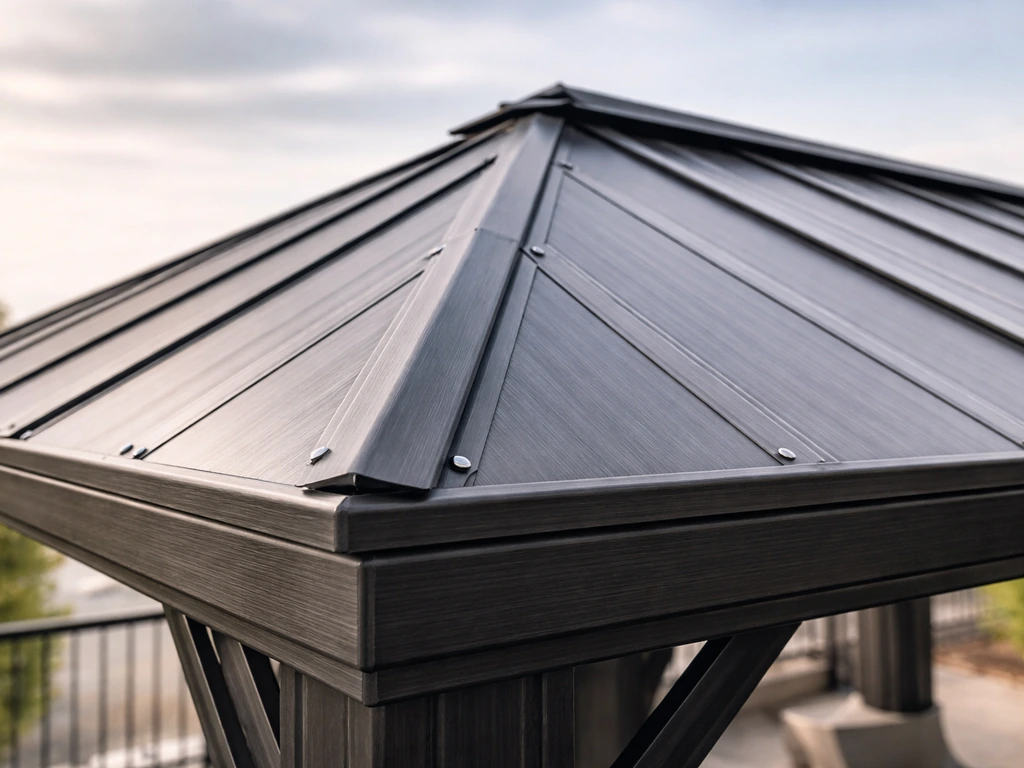
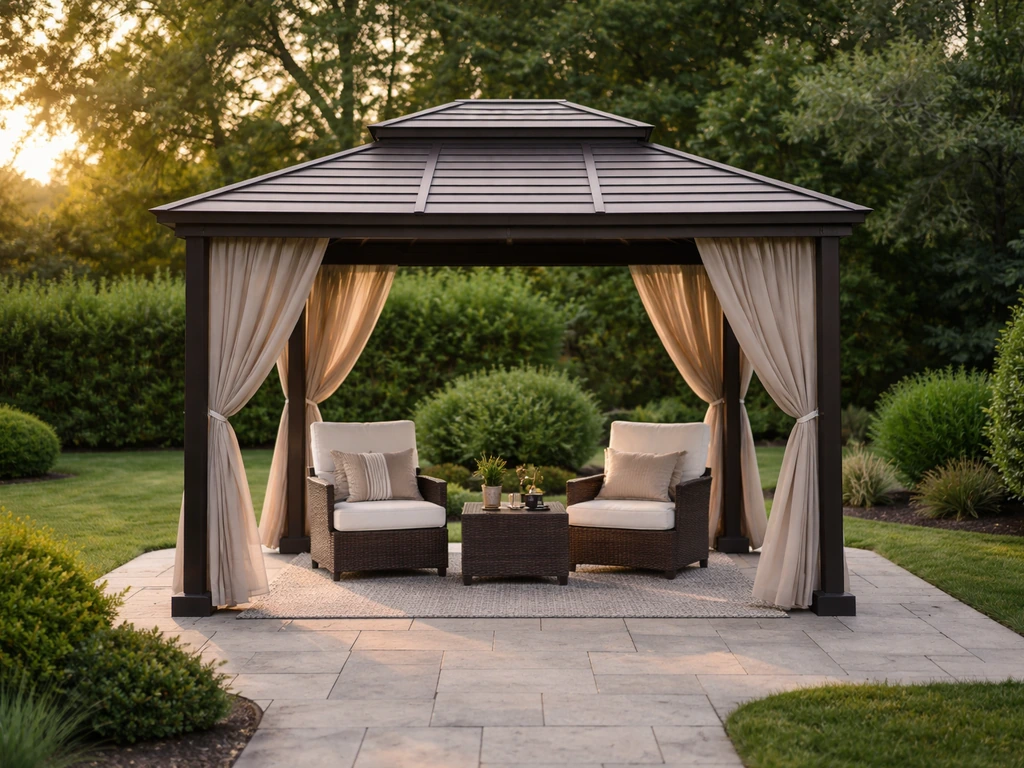
Hard-top gazebos with aluminum or steel roofs are the clear winner for wind performance. The rigid roof doesn't catch air the way fabric does, and when it's pitched at a proper angle (usually 20-30 degrees), wind flows over it rather than lifting it. The frames on quality hard-tops are typically thick-walled aluminum extrusions or powder-coated steel, with cross-bracing built into the leg-to-roof connections. If you're in a consistently windy area or you plan to leave the gazebo up year-round, start here and don't look at anything else.
Soft-top and pop-up canopy gazebos
Soft-top gazebos use polyester or polyethylene canopies stretched over a steel or fiberglass frame. They're lighter, cheaper, and easier to move, which makes them appealing for renters or anyone who reconfigures their patio seasonally. The problem is that fabric roofs create a sail effect in gusts. Even with tie-down points, the canopy billows, pulls on the frame, and eventually either tears or lifts the whole structure. Most soft-top manufacturers recommend taking the canopy off or staking everything down firmly when winds exceed 20-25 mph. Sojag’s instruction manual says installers should post when it is incoming over 20 mph wind winds exceed 20-25 mph. That's a real operational limitation you need to factor in.
Louvered and vented roof gazebos
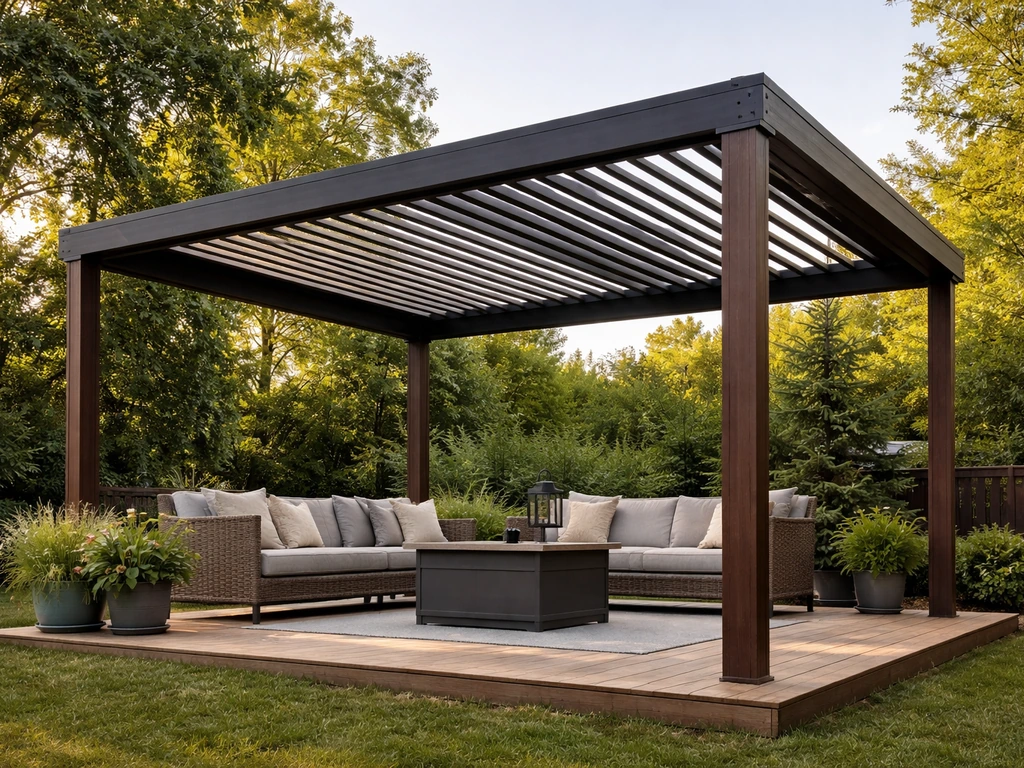
Louvered-roof gazebos, where the roof panels are adjustable aluminum slats, offer excellent wind performance because wind passes through the gaps rather than loading up against a solid surface. When the louvers are fully open, the structure has very little wind resistance. Fully closed, they perform similarly to a hard-top. These tend to be premium options, but they're worth the price if you want maximum versatility. Vented ridge designs on traditional hard-tops work on the same principle: a vent cap at the peak releases pressure that would otherwise build under the roof.
Wooden gazebos
Permanent wooden gazebos (cedar, pressure-treated pine) anchored to concrete footings are extremely stable in wind because of their mass and rigid connections. They're the most labor-intensive and expensive option, and they're not practical for renters or anyone who wants flexibility. But if you own your home and want a permanent structure, a properly built wooden gazebo bolted to footings can outlast any metal kit gazebo.
Specs that actually matter for wind performance
Size and footprint
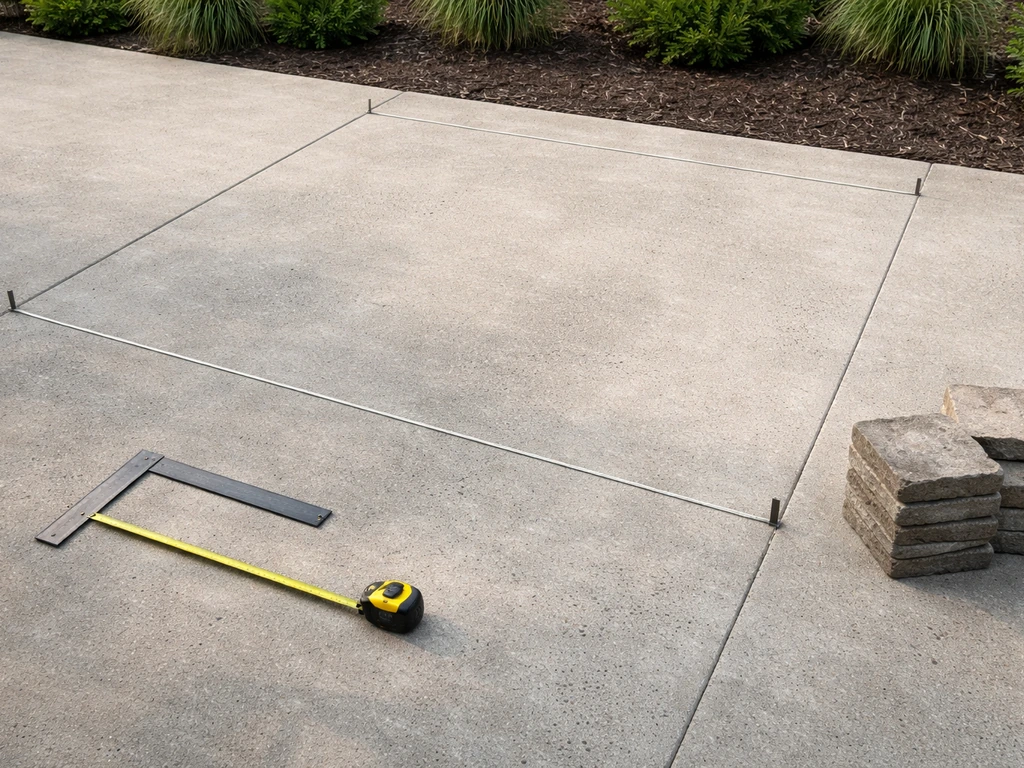
Bigger isn't better in wind. A larger roof surface catches more wind and creates more uplift load. For windy patios, a 10x10 or 10x12 footprint is the sweet spot. It's large enough for a seating area but small enough that the wind load stays manageable for typical consumer anchoring systems. If you go to a 12x16 or larger, you need more substantial anchoring and ideally a permanently mounted frame. Also worth noting: Sojag specifies that a 10x10 gazebo requires at least a 14x14 foot clear area (196 square feet) around the structure. That clearance isn't just for safety, it also allows proper airflow around the base so the structure doesn't channel and amplify wind pressure.
Frame construction
For aluminum frames, look for wall thickness of at least 1.5mm on the main posts and crossbeams, with 2mm or thicker on leg posts being much better. Thin-walled aluminum looks sturdy but flexes and dents under sustained wind load. Steel frames are heavier but inherently stiffer; powder-coated or galvanized steel resists rust and is the right choice if you don't mind the extra weight. Cross-bracing, the diagonal supports you see running between vertical posts, is the single biggest indicator of wind-resistance in a frame design. If a gazebo has no cross-bracing or uses thin plastic clips where there should be metal brackets, walk away.
Roof design and venting
Pitched roofs shed wind better than flat ones. A steep pitch (30 degrees or more) is noticeably better than a shallow pitch in gusty conditions. A double-tier roof, where there's a small raised second roof tier on top of the main roof, acts as a continuous vent and dramatically reduces uplift pressure. This is one of the most practical features you can look for on a soft-top or budget hard-top. If a gazebo only offers a flat single-panel canopy with no venting, it'll behave like a kite in 30+ mph winds.
Canopy and roof material
For soft-tops, canopy fabric rated at 180g/m2 or higher with a UV-resistant coating holds up better to wind stress than thin budget canopies. Polyester with a PU coating is common and adequate; solution-dyed acrylic (like Sunbrella) is more expensive but significantly more durable and colorfast. For hard-tops, powder-coated aluminum or galvanized steel roofing panels are the standard. Polycarbonate panels are lighter and let light through, but they're more vulnerable to cracking under repeated wind flex stress over multiple seasons.
Best materials for windy patios at a glance
| Material | Wind Performance | Durability | Weight | Best For |
|---|---|---|---|---|
| Powder-coated aluminum frame | Excellent | High (won't rust) | Light-medium | Most patios, especially coastal |
| Galvanized/coated steel frame | Excellent | High with coating intact | Heavy | Permanent setups, max stability |
| Fiberglass frame | Good | Medium-high | Light | Pop-ups, portability priority |
| Cedar/hardwood frame | Excellent (with footings) | Very high | Very heavy | Permanent owner installations |
| Polycarbonate roof panels | Good | Medium (can crack) | Light | Light coverage, mild wind areas |
| Aluminum roof panels | Excellent | Very high | Medium | Year-round hard-top gazebos |
| Polyester canopy (180g+) | Fair (needs venting) | Medium | Very light | Seasonal/renter use, mild gusts |
| Solution-dyed acrylic canopy | Fair-good (with venting) | High | Light | Premium soft-top builds |
Anchoring, setup, and keeping it standing all season
Choosing your anchoring method
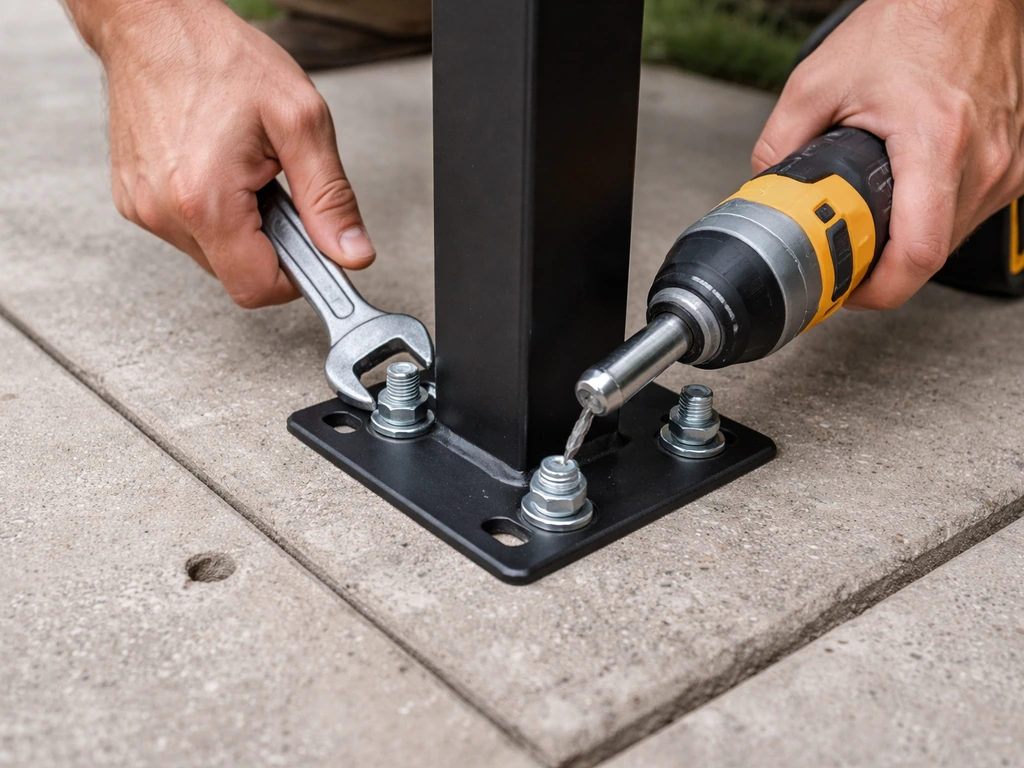
The anchoring system is where most people cut corners, and it's where most wind failures happen. Your patio surface determines what you can use. Here's how to match anchoring method to surface type:
- Concrete patio or pavers: Use concrete anchor bolts (sleeve anchors or wedge anchors) drilled into the slab. This is the strongest option and the only one I'd trust for a permanent hard-top in regularly windy conditions. A 3/8-inch anchor bolt into 2 inches of concrete holds dramatically more than any stake or weight system.
- Grass or bare ground: Auger-style ground anchors are far better than simple stakes. Twist-in auger stakes resist pull-out forces much better than straight spikes. Drive them at a slight outward angle for better resistance. Use at least one per leg post.
- Deck or wood surface: Use lag screws directly into joists below the decking, or use post base brackets bolted through the deck. Never just screw into decking boards alone, they'll pull out. Check joist location before you start.
- Apartment balcony or patio you can't drill into: Weighted plate feet and water-fillable base weights are your only option. Fill them completely (most hold 40-60 lbs of water per leg when full). This works for small 10x10 soft-tops in mild wind, but accept that you'll need to take the canopy down when storms are forecast.
Installation steps that prevent wind problems later
- Read the manual fully before starting. Anchor hardware is often at the bottom of the parts list and easy to miss.
- Assemble the frame before attaching the roof or canopy. A partial structure is more vulnerable to being tipped by a gust mid-build.
- Don't assemble in wind above 20 mph. Sojag's own installation manuals explicitly warn against continuing assembly when winds exceed 20 mph. That's a real safety threshold, not fine print.
- Tighten every bolt and connection point to spec. Loose joints flex, fatigue, and fail. Go back over every connection after the first week as bolts settle.
- Anchor all four legs before attaching the canopy or roof panels. The roof creates sail area immediately and will fight you in any breeze if the frame isn't secured first.
- Check anchor depth and integrity after rain. Ground anchors can loosen in saturated soil. Retighten or replace as needed each spring.
Seasonal maintenance
A gazebo that performs well in wind at installation can degrade quickly without basic maintenance. Check bolts and connection hardware every season. Powder coating and galvanizing protect steel until they're scratched, so touch up any chips with rust-inhibiting paint before winter. For soft-top canopies, clean with mild soap and let them dry completely before storing for winter. A damp canopy stored folded will mildew and weaken the fabric. If you leave a hard-top up year-round, clear snow loads promptly since heavy snow accumulation adds static load that works against the same connection points wind attacks.
Best picks by situation
Small patio (under 150 sq ft), moderate wind
A 10x10 hard-top aluminum gazebo anchored with concrete bolts or heavy auger stakes is the right call here. Look for a model with a double-tier vented roof and at least 1.5mm aluminum wall thickness. Budget in the $400-700 range will get you a solid mid-tier option. At this size the structure is manageable to anchor well, and the smaller footprint means less wind load overall.
Larger patio (150-300 sq ft), frequent high winds
Step up to a 10x12 or 10x14 hard-top with a steel frame and concrete anchor bolts. This is where Backyard Discovery's PRO-TECT line earns its place. Their 14x10 Barrington, for example, is rated to withstand 100 mph winds when anchored as directed and carries a 7,600-pound load rating. That's the kind of testing documentation you want to see for a large structure in an exposed location. Expect to spend $800-1,500 for this tier.
Renters and no-drill situations
If you can't anchor into your patio surface, go smaller and accept realistic limits. A 10x10 soft-top with a vented double-tier canopy, heavy base weights (fully filled), and guy-wire tie-downs to nearby fixed points (fence posts, wall anchors with landlord permission) is the practical ceiling for no-drill setups. Take the canopy off before any storm with forecast winds above 25 mph. This isn't a compromise recommendation, it's an honest assessment of what physics allows without permanent anchoring. If you want something that competes with a hard-top in wind protection, you need to anchor it like one. Soft-top patio gazebo options are a better starting point for researching renter-friendly designs.
Budget pick (under $400)
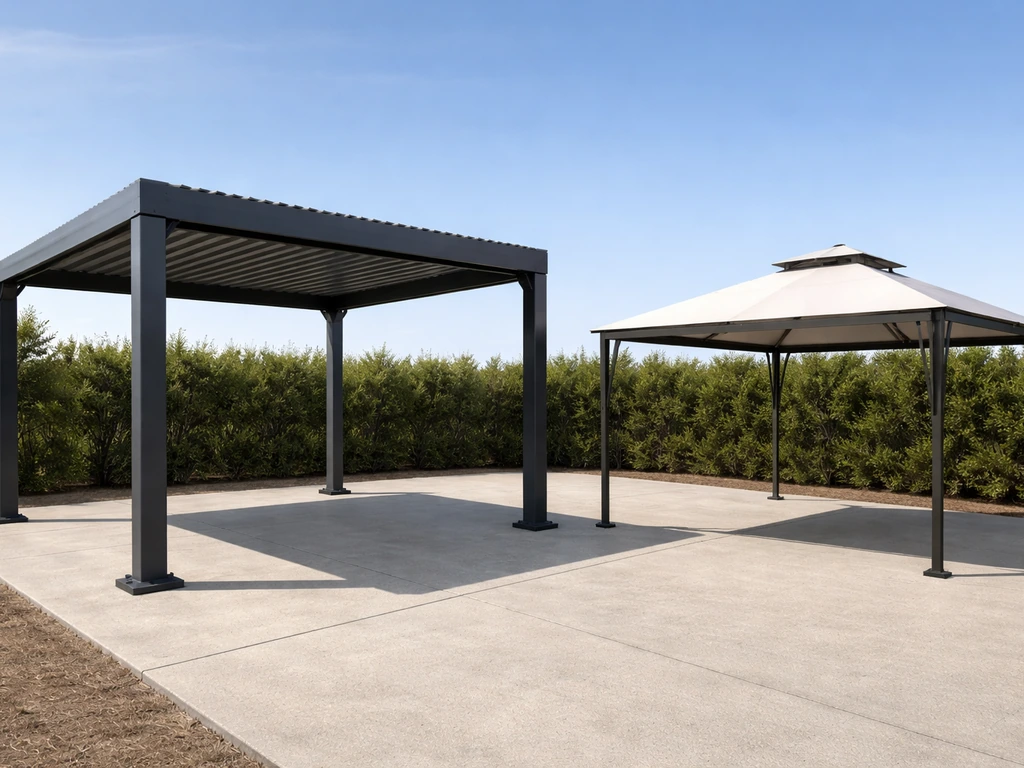
At under $400, you're in soft-top territory for anything large enough to be useful. Pick a model with a steel frame (not fiberglass), a vented double-layer canopy, and included anchor stakes. Reinforce the anchoring with aftermarket auger stakes, which cost $15-25 and make a real difference. Keep it to a 10x10 footprint. Accept that you'll need to take it partially down before severe weather. This tier works fine for patios in areas with mostly mild wind and occasional gusts.
Premium pick ($1,200 and up)
Premium means a louvered-roof aluminum gazebo or a fully tested hard-top like the Backyard Discovery PRO-TECT models, permanently anchored to a concrete slab. You're paying for thick-wall aluminum construction, integrated anchoring hardware, engineered load ratings, and usually better warranty coverage. These structures are genuinely designed to stay up year-round. If your patio is a primary living space and you want to stop thinking about wind, this is where to spend. Compare top-rated patio gazebo reviews when you're in this price range, since build quality varies significantly even at $1,500+. Compare top-rated patio gazebo reviews when you're in this price range, since build quality varies significantly even at $1,500+ best gazebo for patio.
Buyer checklist and do's/don'ts
Pre-purchase checklist
- What is your typical wind speed? Check your local weather averages. Above 20 mph regularly = hard-top only.
- What surface are you anchoring to? Concrete, wood deck, grass, or no-drill? This determines your anchoring method before you buy.
- What footprint fits your patio with 2 feet of clearance on all sides? Don't buy a 12x12 for a 12x14 patio.
- Does the frame have cross-bracing and thick-wall posts? Ask for wall thickness specs if not listed.
- Is the roof vented or pitched? Look for double-tier vents or a 20-degree-plus pitch.
- Does the model include anchor hardware, or do you need to buy it separately?
- What is the manufacturer's wind rating, and does it require specific anchoring to be valid?
Do's
- Do anchor every single leg post, not just the corners you can easily reach.
- Do check all bolts and joints after the first windstorm and retighten as needed.
- Do remove soft-top canopies before storms forecasting 30+ mph winds.
- Do choose a vented roof design whenever possible, even on budget models.
- Do read the full installation manual before buying anchor hardware so you get the right type for your surface.
- Do size down if you're between sizes and your area gets regular gusty wind.
Don'ts
- Don't assume a gazebo is wind-resistant just because it has a high weight rating. Uplift resistance and static weight capacity are different things.
- Don't use water-weight bases as your only anchoring on a large or hard-top gazebo. They're a renter workaround, not a substitute for ground anchors.
- Don't place the gazebo in a wind tunnel between two structures or at the exposed corner of a fence line without extra anchoring.
- Don't add solid side panels permanently on a soft-top gazebo. They dramatically increase wind load and can cause the whole frame to fail.
- Don't skip the clearance zone. A gazebo placed too close to walls or fences channels and amplifies wind pressure.
- Don't assemble or leave a soft-top canopy up when winds are forecast above 20 mph during installation or any gusty day.
The bottom line is that any gazebo can handle wind if it's the right type, properly sized, and correctly anchored for your specific surface. The mistakes that lead to wind failures are almost always the same: wrong type for the wind exposure, skipped or underbuilt anchoring, and oversized footprints on small patios. Get those three things right and you'll have a structure that genuinely stands up through multiple seasons. If you're still deciding between a gazebo and a canopy setup, comparing the best patio canopy options is worth a look since some canopy designs are more wind-practical for renters than a full gazebo frame.
FAQ
Can I rely on a wind rating printed on the gazebo box if I anchor it slightly differently than the manual says?
Yes, but only if the roof design and anchoring are engineered for gusts, not just average wind. If the canopy billows even slightly at moderate breezes, treat it as a sail and plan to remove or fully secure it when forecasts exceed 20 to 25 mph. Also verify the anchoring is compatible with your patio surface, concrete anchors and auger stakes are not interchangeable.
What should I check first if my weather app shows gusts that are higher than the gazebo’s typical “weather” claims?
Start by estimating the peak gusts, not the average wind. If you routinely see gusts over 20 to 25 mph, prioritize a pitched hard-top (or louvered/vented roof) with cross-bracing and real anchoring into your surface. If you cannot meet the anchoring method, reduce the footprint and treat the gazebo as seasonal, plan for partial takedown before storms.
What’s the safest way to anchor a gazebo on pavers or a wood deck, and when should I avoid it?
If your patio is on pavers, you usually cannot achieve the same holding power as concrete bolts unless you can anchor into a structural slab or use an approved system that spreads load without shifting. On deck boards, anchoring through framing is often required, tying into railing alone is usually not adequate. If you cannot anchor into solid material, the safest choice is a smaller footprint and a system that uses guy wires to nearby structural points.
Do I need open clearance around the gazebo, or is anchoring alone enough to handle wind?
A vented double-tier roof or louvered roof reduces uplift compared with a flat single-panel roof, but clearance and airflow around the base still matter. Follow the manufacturer’s stated “clear area” guidance, keep the area free of high planters or fence sections that can create wind channels, and avoid placing the legs right against walls where turbulence can increase side loading.
Can I upgrade parts later (roof panels, ties, or base hardware) to improve wind performance, or will it reduce safety?
Never assume a gazebo will be equally strong once pieces are swapped, even if the replacement looks compatible. Different roof weights, panel flex, and hardware tolerances change load paths and bolt tension. If you replace roof panels, make sure they match the original material thickness and fastening pattern, and recheck bolt torque after installation.
How do I tell if my gazebo’s frame is degrading after repeated windy seasons?
Signs include visible wobble at the roof peak, bolts loosening, cross-bracing not contacting tightly at joints, and frame paint cracking or fastener heads showing fretting. After a strong event, inspect for bent legs, elongated bolt holes, and roof panel warping. If any joint has deformation or repeated looseness, stop using it until the manufacturer or a qualified installer verifies the cause.
What’s the correct way to store a soft-top canopy after windy weather to prevent weakness later?
For soft-tops, drying matters as much as cleaning. Store the canopy only when fully dry, damp fabric can mildew and weaken fibers, making wind tearing more likely in the next season. Use mild soap only, avoid aggressive cleaners that degrade coatings, and keep the canopy folded the same way each time to limit stress points.
Can I add curtains or sidewalls for privacy, and will that usually make wind risk worse?
Use the gazebo footprint as your first sizing rule, but check wind stability by layout. Keep the long dimension oriented so the roof sheds wind effectively, avoid crowding the structure with hanging curtains, and do not mount heavy side panels unless the gazebo is specifically rated for them. Side “walls” convert a vented roof into a sail unless the system includes a designed venting strategy.
My gazebo has a hard roof but no vents, how does that change what I should look for in wind?
If you have a hard-top but it includes no venting, treat uplift as higher risk especially with low or shallow pitch. A single flat panel roof behaves like a kite compared with a pitched or vented design, and you may need to be more conservative with footprint and anchoring. If your model is shallow-pitched, prioritize thicker frame walls, metal cross-bracing, and anchoring that matches the installation instructions exactly.
Next Articles
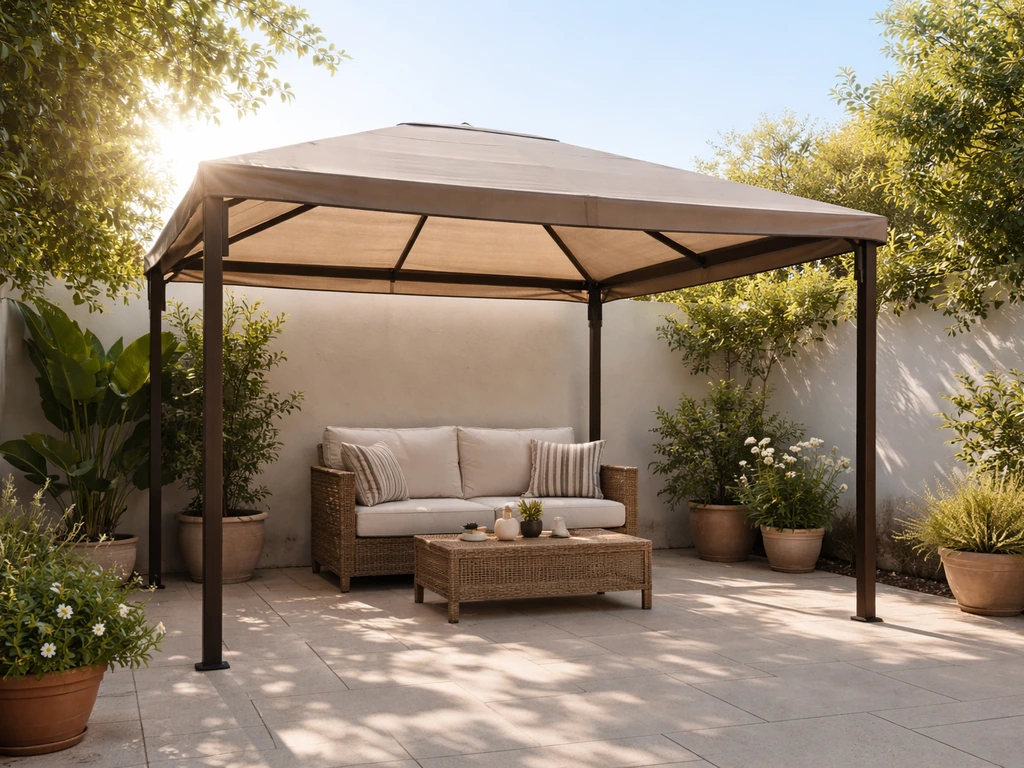
Best Patio Canopy: Buyer Guide, Types, Installation Tips
Find the best patio canopy with types, sizing, materials, mounting, wind ratings, installation tips, and cost vs value.
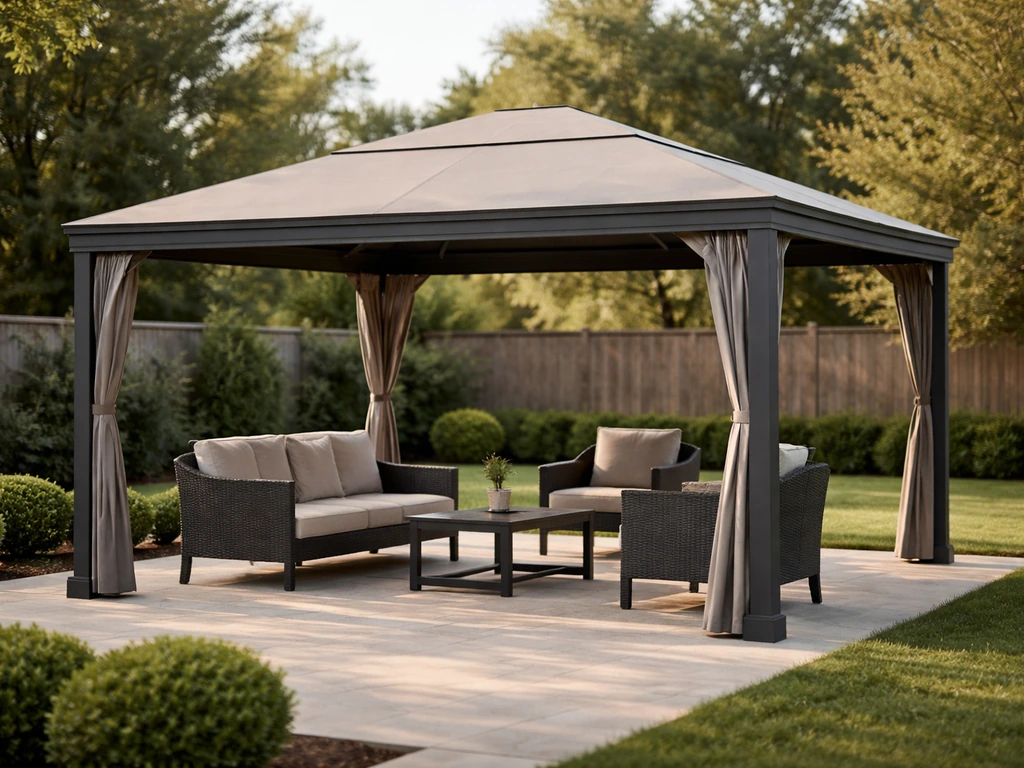
Top Rated Patio Gazebos Buyer Guide: Choose Best Fit
Buyer guide to pick top rated patio gazebos by size, materials, weatherproofing, stability, anchoring, and add-ons.
Best Gazebo for Patio: How to Choose Size, Style, and Features
Shop the best gazebo for patio with size, style, materials, wind and privacy features, plus budget to premium picks.