
The best patio canopy for most homeowners is a motorized retractable awning mounted to the house wall, sized about 2 feet wider than your door or seating area and with enough projection to actually shade the furniture below. If you rent, can't mount to the wall, or want shade in the middle of an open yard, a freestanding canopy or pergola-style shade sail is the move instead. The right pick comes down to four things: how much coverage you need, whether you can mount to a wall, how rough your weather gets, and how much you want to spend.
Best Patio Canopy: Buyer Guide, Types, Installation Tips
Lark Perry
18 May 2026
How to choose the best patio canopy for your space
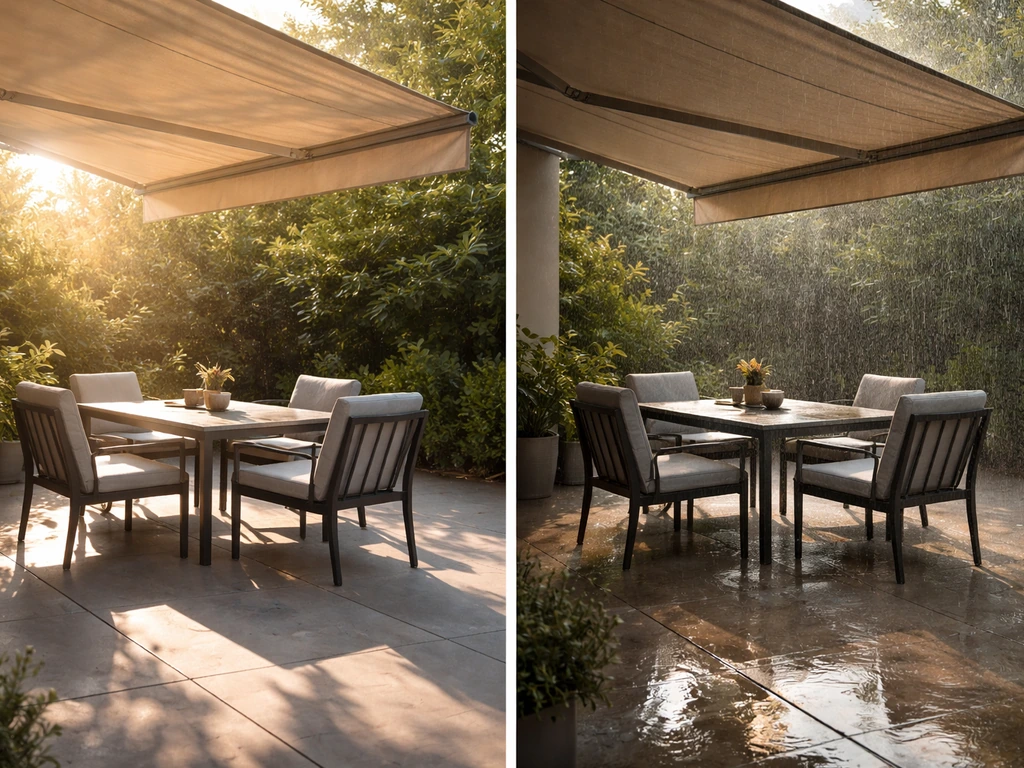
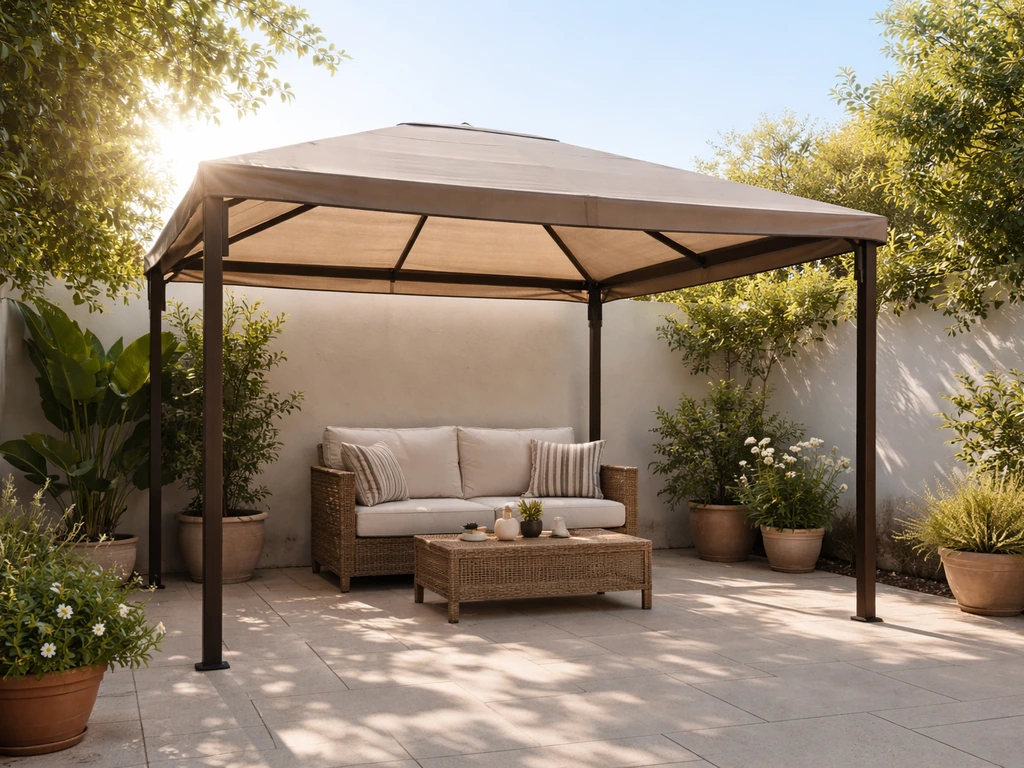
Start by thinking about what's actually making your patio uncomfortable. Is it direct overhead sun during afternoon hours? Is it light rain that cuts your time outside short? Is it both? A wall-mounted retractable awning handles both beautifully if you have a wall to mount to. A shade sail or pergola-style canopy handles sun well but won't do much against rain. A freestanding model splits the difference but takes up footprint.
The next question is permanence. Renters and people with brick, stucco, or concrete walls often can't or won't drill in for a fixed mount. Freestanding canopies solve that entirely. Homeowners with wood-frame exteriors have the most options and typically get the best value from a wall-mounted retractable because the projection arms give you flexible shade on demand without permanently blocking light or views.
Think through your wind situation honestly. If you live somewhere gusty, a canopy that can retract (or fold away) when a storm rolls in is worth the extra cost. Retractable awnings from brands like SunSetter and Sunesta have been lab-tested to withstand 55 to 90 mph extended, but the same brands recommend retracting before winds exceed 45 mph in real-world use. SunSetter also recommends retracting their awnings before winds exceed about 45 mph during gusty or strong wind conditions recommend retracting before winds exceed 45 mph. A fixed canopy or shade sail in a consistently windy area is asking for torn fabric or a broken frame within a couple of seasons.
Top canopy styles: which one fits your setup
Retractable awnings
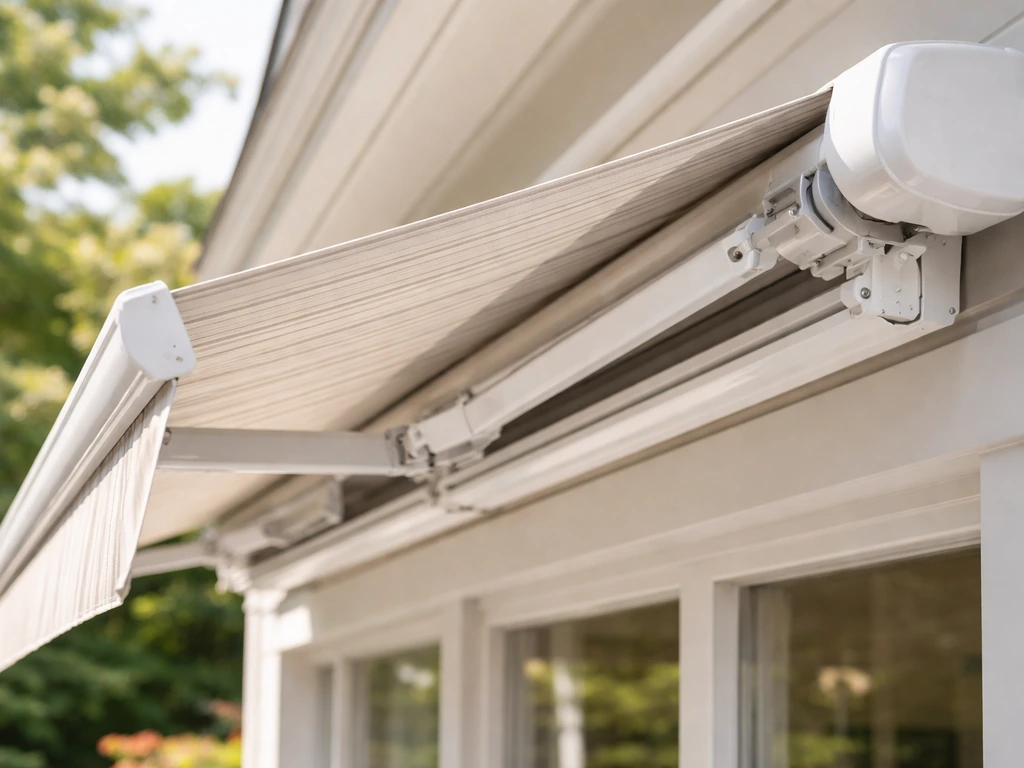
These are the gold standard for flexibility. You extend them when you want shade and retract them when you don't, which means you're not stuck with a dark patio on a cool sunny morning. Wall-mounted retractable awnings pitch slightly downward when extended, which channels rain runoff and helps shade the area in front of a door or seating zone. The tradeoff is they do require a solid wall mount at the right height. SunSetter's install guidance calls for a minimum mounting height of 7 feet 6 inches from the patio floor to the bottom of the eave or roof overhang, with the front bar at full extension sitting no lower than about 6 feet 6 inches for safe clearance.
Motorized versions are genuinely worth the upgrade. Wind-sensor add-ons auto-retract the awning before it takes damage, which matters if you're at work when a storm rolls in. Brands like Carefree of Colorado and Sunesta offer adjustable wind-sensitivity settings so you can dial in exactly when the awning pulls back.
Freestanding canopies
If you can't mount to a wall, a freestanding canopy is your best bet. The SunSetter Oasis freestanding awning is a good example: it assembles without wall attachment, needs a flat level surface, and requires about 9 feet of unobstructed overhead clearance. These are great for apartments, rental patios, or any open slab where the house wall is too far away to reach with projection arms. The limitation is you give up some of the seamless shade coverage you get from a properly sized wall mount, and you need to weight or stake the base firmly so wind doesn't tip it.
Pergola-style canopies
Pergola canopies fit over an existing pergola frame or can come as a complete kit with posts and a shade roof. They give you a defined outdoor room feel and can support thicker fabric or polycarbonate panels that actually block rain. If you're already considering a full pergola setup, the shade solution and structure come bundled together, which saves planning headaches. The downside is cost and permanence: a quality pergola canopy system is a longer-term installation. If you're researching this route, it's worth looking into dedicated gazebo and pergola options alongside canopy shopping.
Shade sails and fixed awnings
Shade sails are the budget-friendly option for sun coverage over a seating area, and they look great when tensioned properly. The catch is they need multiple attachment points (walls, posts, or trees) and offer zero rain protection. Fixed awnings are more durable than shade sails but less flexible than retractable ones. They work well on south or west-facing walls where you always want that side shaded, but you lose the ability to let light in on cooler days.
Material and durability: what actually holds up outside
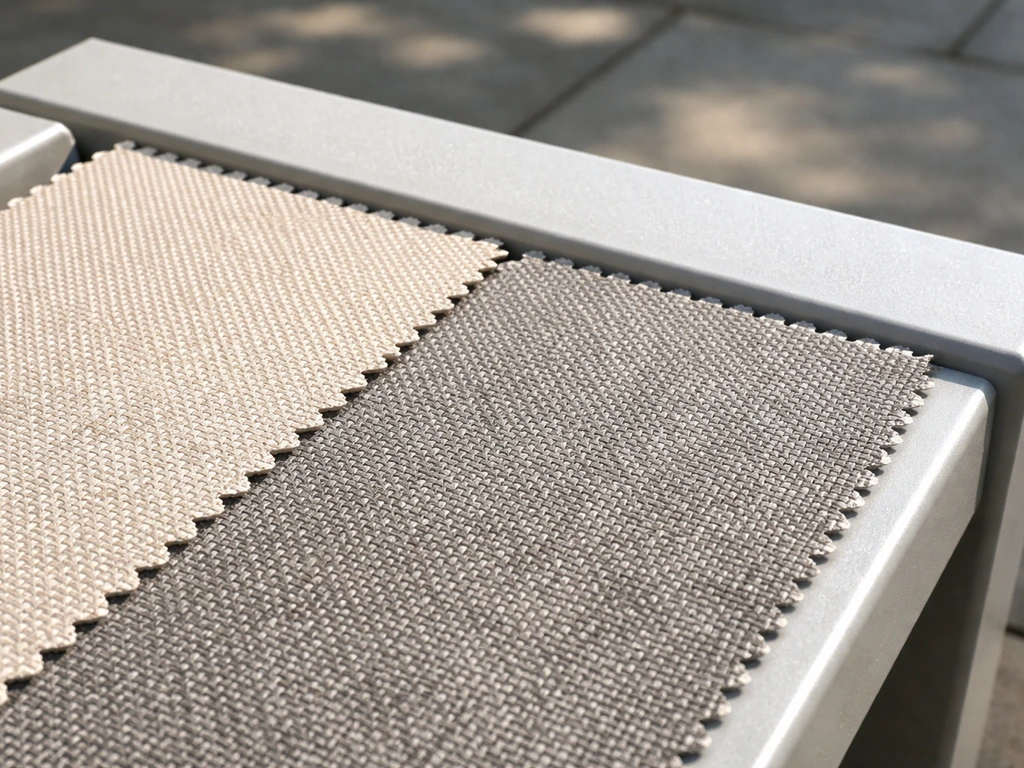
Fabric choice matters more than almost anything else for long-term satisfaction. The industry benchmark is Sunbrella fabric, which blocks over 98% of UVA and UVB rays and resists mold and mildew. The enhanced version, Sunbrella Plus, adds a higher level of water repellency on top of that UV protection, which is worth it if you want the canopy to handle light rain without soaking through. Most mid-to-premium retractable awnings use Sunbrella or a comparable acrylic fabric. Budget canopies typically use polyester, which fades and weakens faster, especially in intense UV climates like the Southwest or Southeast.
For the frame and hardware, powder-coated aluminum is the standard for good reason. It won't rust, it's lighter than steel, and it doesn't need seasonal painting. Steel frames are heavier and can rust at the joints if the coating chips, which is a common problem in coastal or high-humidity climates. Avoid canopy frames that are just raw painted steel at any price point if you're near salt air.
Cassette housing on a retractable awning is a real upgrade, not just a cosmetic one. A semi-cassette or full cassette wraps around the fabric when retracted, protecting it from UV exposure, rain, bird droppings, and debris during off-season months. Over a 10-year lifespan, fabric stored in a cassette housing will outlast exposed fabric by years.
Size, fit, mounting, and layout: measure before you buy
The biggest mistake people make is ordering a canopy that's the same width as their patio door or seating area. Awning sizing guidance from Solera by Lippert is clear: if your patio door or opening is 10 feet wide, you want at least a 12-foot-wide awning to actually shade both sides of it without sun cutting in at the edges. Add that same buffer on each side, and you're covered.
Projection, which is how far the awning arm extends outward from the wall, determines how deep into your patio the shade reaches. A 10-foot projection shades about 8 feet of actual patio surface when you account for pitch angle. Solera recommends a 12-foot projection for meaningful deep shade coverage. Measure your seating layout from the wall outward and size the projection to at least match it.
For wall-mounted awnings, check what's behind the mounting surface. You need to hit solid framing (studs or a ledger board) with lag bolts, not just drywall or siding. The mount has to hold the canopy's weight plus wind load, and a loose mount is a safety issue. For freestanding models, make sure the base footprint fits your patio and that you can stake, sandbag, or bolt it without damaging your surface.
| Canopy type | Best for | Mounting | Rain protection | Renter-friendly |
|---|---|---|---|---|
| Wall-mounted retractable | Most homeowners with a usable wall | Wall mount required | Yes (with good fabric) | No |
| Freestanding retractable | Renters, open slabs, no wall access | Free-standing base | Yes | Yes |
| Pergola canopy system | Defined outdoor rooms, larger coverage | Posts or existing pergola | Yes (with solid top) | Depends on setup |
| Shade sail | Budget sun coverage, flexible shape | Posts, walls, or trees | No | Yes |
| Fixed awning | Always-shaded walls, south/west exposure | Wall mount required | Yes | No |
Installation and maintenance: what you actually need to know
Installation basics
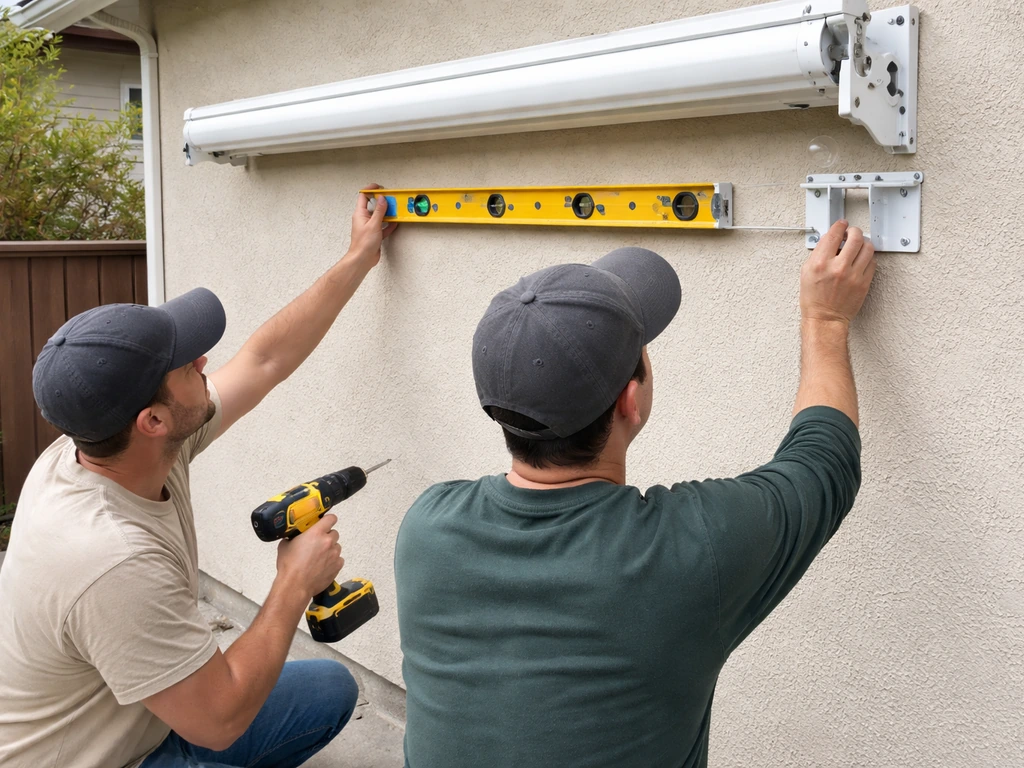
Wall-mounted retractable awnings are manageable as a two-person DIY install if you're comfortable with a drill and a level. The critical steps are finding the right mounting height (minimum 7 feet 6 inches per SunSetter's guidelines), locating studs or solid backing for the lag bolts, and setting the pitch angle correctly so water drains off rather than pooling. Pooled water is a real problem: SunSetter explicitly warns that their Essentials awning is not designed to hold the weight of pooling rainwater, and most fabric awnings share that limitation. A slight downward pitch (typically 5 to 15 degrees) handles runoff and improves shade angle.
- Measure wall height and confirm minimum 7 ft 6 in from patio floor to mounting point
- Mark stud or ledger board locations with a stud finder before drilling
- Pre-assemble the awning hardware on the ground before lifting it up
- Mount the bracket rail level using a long level or laser level
- Set the pitch angle per manufacturer spec (typically 5 to 15 degrees downward)
- Test operation manually before connecting power or motor wiring
- Confirm the front bar clears 6 ft 6 in at full extension before finishing
Maintenance that actually extends canopy life
Clean the fabric with mild soap and water two to three times per season. Brush off loose dirt first, then scrub with a soft brush and rinse thoroughly. The most important rule: let the fabric dry completely before retracting it. Rolling up damp fabric is how mildew starts, and once mildew sets into acrylic weave it's tough to fully remove. After deep cleaning, treat the fabric with a product like 303 Fabric Guard to restore water repellency, which Sunbrella specifically endorses for their fabrics.
Once a year, do a hardware inspection. Check every mounting bracket bolt for looseness, look at the arm hinges for wear or corrosion, and if you have a wind sensor, test it by mimicking wind with a fan or manual trigger to confirm it still commands retraction properly. Catching a loose bracket early is a five-minute fix. Catching it after a wind event tears the mount out of the wall is a much bigger job.
Cost vs value: what your budget actually gets you
Budget canopies (under $200) are mostly shade sails or basic pop-up canopy frames with polyester fabric. They work for occasional use but fade fast and rarely last more than two or three seasons in direct sun. Fine for a rental apartment or a temporary setup, but not a long-term investment.
Mid-range retractable awnings ($600 to $1,500 for the unit, DIY installed) get you into real acrylic or Sunbrella fabric, aluminum arms, and manual or basic motorized operation. This is the sweet spot for most homeowners. You get weather-resistant performance, reasonable durability, and enough features to make daily use easy. Some models include a basic cassette housing at this tier.
Premium retractable awnings ($1,500 to $4,000+ installed) add full cassette housing, motorization with wind and sun sensors, wider and longer projection options, and warranties that run 5 to 10 years on fabric and frame. If you're outfitting a large deck, adding an outdoor living space that you use heavily, or building in automation so the awning manages itself when you're away, the premium tier pays for itself in fabric longevity and convenience. Brands like SunSetter, Sunesta, and Carefree of Colorado all play in this space.
| Budget tier | Typical price range | Fabric type | Frame | Wind protection | Best for |
|---|---|---|---|---|---|
| Budget | Under $200 | Polyester | Steel or lightweight aluminum | Low, minimal retraction | Renters, temporary use |
| Mid-range | $600–$1,500 (DIY) | Acrylic or Sunbrella | Aluminum | Moderate, manual retract | Most homeowners, primary shade solution |
| Premium | $1,500–$4,000+ installed | Sunbrella Plus or equivalent | Heavy-gauge aluminum | High, auto wind sensor | Large decks, high-use outdoor rooms |
How to pick the winner: quick recommendations and a decision checklist
For most homeowners with a usable wall and a standard deck or patio: a motorized retractable awning in the mid-to-premium range, sized 2 feet wider than your main opening with at least a 10-foot projection, with Sunbrella or acrylic fabric and a cassette housing. That setup handles sun, light rain, and gusty days with minimal effort on your part.
For renters or patios without a mountable wall: the SunSetter Oasis freestanding model or a comparable freestanding retractable is the cleanest solution. No drilling, portable if you move, and functional shade on demand. Just make sure your surface is flat and you secure the base well.
If you want a more permanent outdoor room feel with full coverage, it's worth looking at pergola-style canopy systems or a full gazebo setup rather than an awning. If you are specifically shopping for a patio gazebo that holds up in windy conditions, look for designs that can close securely and use sturdy anchoring hardware patio gazebo for wind. If you are shopping for top rated patio gazebos, focus on materials, wind resilience, and how much shade coverage you need for your seating area. If you're specifically searching for the best gazebo for patio coverage, compare materials, size, and how the roof handles rain where you live. If a traditional canopy or pergola is too limiting, a soft top patio gazebo can provide the same sheltered feel while staying flexible for different weather patterns a full gazebo setup. Those open up more design flexibility and can handle heavier rain loads with the right top panel material.
Quick decision checklist
- Do you have a solid wall to mount to at 7 ft 6 in or higher? If yes, wall-mounted retractable. If no, go freestanding.
- Is your patio in a consistently windy location? Prioritize motorized retractable with a wind sensor over any fixed canopy.
- Are you covering a 10-foot opening? Buy at least a 12-foot-wide canopy.
- Do you want shade that reaches 8+ feet into the patio? Choose a 10 to 12-foot projection model.
- Will this get heavy use in hot sun? Spend up for Sunbrella or acrylic fabric over polyester.
- Are you a renter or need no-drill installation? Freestanding canopy or shade sail with post anchors.
- Do you want rain coverage too? Retractable awning with proper pitch, or a pergola canopy with a solid or polycarbonate roof.
- Will you be away when weather hits? Add a wind sensor and motorized operation to auto-retract.
- Budget under $300? Shade sail for sun only. Budget $600 to $1,500? Mid-range retractable. Budget $1,500 and up? Go premium with cassette housing and automation.
The bottom line: measure your space carefully, match the canopy type to your mounting situation, don't undersize the width or projection, and spend what you can on fabric quality. A well-chosen patio canopy that gets cleaned a few times a season and retracted before storms should last a decade or more and genuinely transform how much time you spend outside.
FAQ
If my patio canopy is meant to cover a door, how do I avoid ending up with shade that only covers the door itself?
Start by checking whether your patio door track or step area needs clearance when the awning is fully extended. Then size for coverage beyond the door opening, typically at least an extra 1 foot on each side, so you shade the adjacent seating or circulation path instead of only the doorway.
Will a retractable patio awning hold up if it rains for hours and water pools on the fabric?
No. A retractable awning is meant to shed light rain, not hold standing water. If your setup causes water to pool, you risk fabric and joint strain, so confirm the pitch angle and choose models with drainage performance suitable for your rainfall pattern.
Do motorized retractable awnings automatically retract in storms, and how do wind-sensor settings change performance?
Look for a design that can automatically retract on high-wind signals, or plan to retract manually as soon as wind advisories hit. Also verify the exact retract threshold settings (wind sensitivity range), because higher sensitivity can trigger earlier than you expect.
How should I measure projection depth so I actually shade my seating area, not just the edge of it?
Measure from the wall outward to the far edge of where people sit, not from the centerline of the door. Use that distance to select projection depth, and remember that pitch angle reduces the usable shaded area compared with the listed projection length.
Can I install a wall-mounted canopy on brick or stucco if I cannot find studs?
If the mounting surface is brick, stucco, or concrete, wall-mounted awnings can still be possible but depend on whether you can hit solid structural backing (like a ledger board) without compromising the finish. If you cannot reliably anchor into framing or a proper backing, a freestanding unit is usually safer and simpler.
What’s the biggest red flag when choosing a canopy for a consistently windy patio?
For windy locations, prioritize retractable systems, secure anchoring, and flexible deployment. Fixed shade sails or non-retractable canopies are more likely to flap and stress fabric, and even pergola systems may need rated anchoring and closure features to reduce sail-like behavior.
Is it bad to leave a patio canopy extended all day, every day?
If you plan to leave the canopy extended in mild weather, choose acrylic or Sunbrella-class fabrics and consider a cassette housing to reduce UV exposure. Leaving any awning deployed for long periods without retracting, even with good fabric, accelerates fading and edge wear.
What parts of a patio canopy warranty matter most, and what should I watch for in fine print?
Start with the fabric and frame warranty terms, then check the coverage for wind events, motor/electronics (for motorized models), and replacement policies for fabric color fading. Also confirm whether the warranty requires annual hardware inspections or specific cleaning products.
Should I choose a shade sail or an awning if I mostly want afternoon sun relief?
If your main goal is sun control in the afternoon, awnings and retractables are usually more effective than shade sails because they can be positioned and extended to cover the hottest hours. If you need partial coverage with a decorative look and accept no rain protection, shade sails can still work well for certain layouts.
How do I confirm the installed height and pitch are correct, especially near a door or step?
Use a level and verify the front bar height after installation, not just the wall mounting height. Slight pitch helps runoff, but the setup must still maintain safe clearance over steps and doorways while avoiding water retention.
What should I do if my canopy fabric smells musty or shows mildew even though I try to keep it clean?
If you see mildew starting, resist retracting while damp. For prevention, clean and fully dry before retracting, then apply a fabric guard product after deep cleaning. If mildew is already set and persists after drying, you may need targeted mildew removal appropriate for acrylic fabrics.
Are motorized patio canopies easy to power, and what happens if the power goes out?
Power use is usually modest, but confirm the control method (hardwired versus plug-in) and whether you need outdoor-rated wiring and a switch or smart controller. Also check for backup behavior during power loss if you rely on wind-sensor automation.
What’s the best way to test a motorized retractable awning right before storm season?
Do a dry run before the first storm. Make sure the retract travel is unobstructed, test the sensor trigger safely, and verify the fabric fully rolls up without snagging at the ends or guides.
If I choose a freestanding canopy, how do I keep it from tipping or shifting in wind?
For freestanding models, the key is base stability and surface condition. Use the anchoring method the manufacturer specifies (staking, bolting, sandbagging), and don’t place it on uneven pavers where the frame twists.
Next Articles
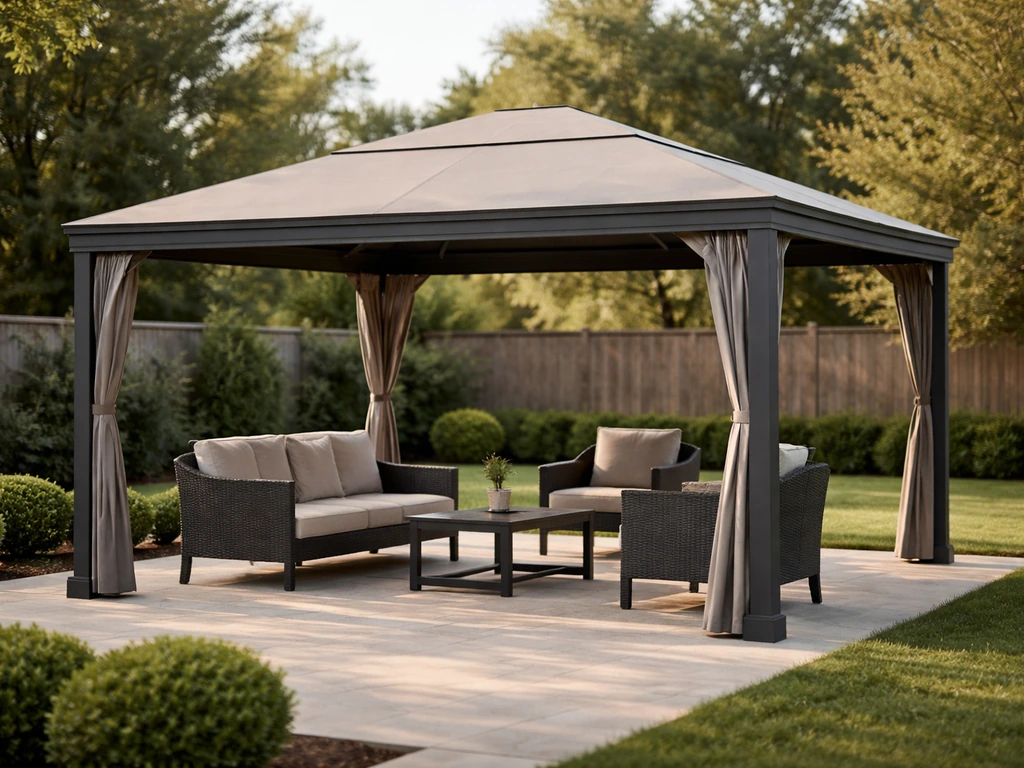
Top Rated Patio Gazebos Buyer Guide: Choose Best Fit
Buyer guide to pick top rated patio gazebos by size, materials, weatherproofing, stability, anchoring, and add-ons.
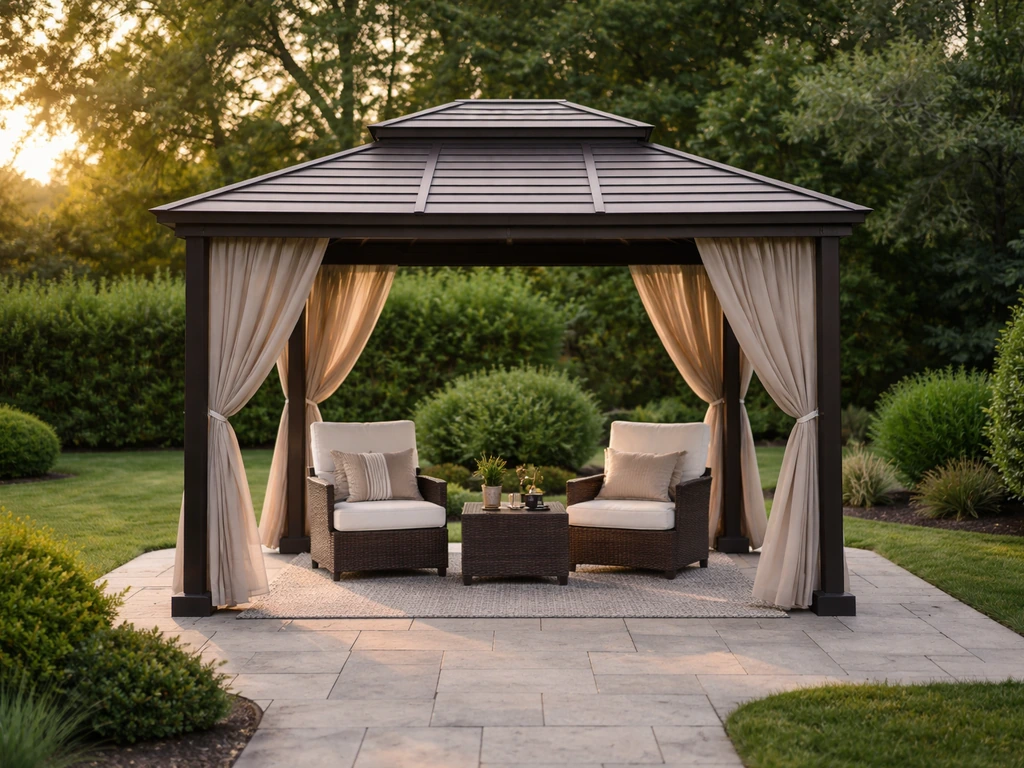
Best Gazebo for Patio: How to Choose Size, Style, and Features
Shop the best gazebo for patio with size, style, materials, wind and privacy features, plus budget to premium picks.
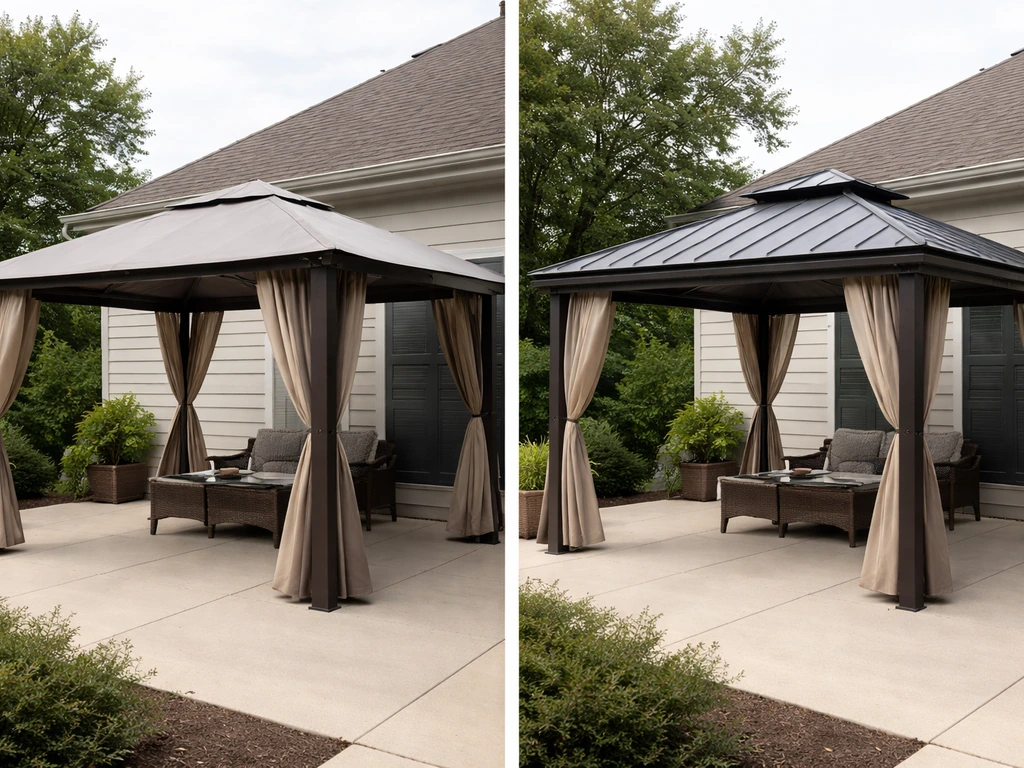
Soft Top Patio Gazebo vs Hard Top: Buying Guide
Compare soft vs hard top patio gazebos: climate fit, sizing, anchoring, maintenance, and buying checklist to avoid costl