
For most patios, a set of rechargeable LED lanterns in the 200-600 lumen range hits the sweet spot between real usable light and warm ambiance. The Coleman Classic Recharge 800 is my top pick for larger patios and dining areas, the Black Diamond Apollo is the go-to for compact spaces and tabletop use, and solar hanging lanterns work well for accent lighting where you don't need to read a menu. Which one is right for you depends on your patio size, how you use the space, and how much effort you want to put into charging or maintenance.
Best Outdoor Lanterns for Patio: Buying Guide and Picks

Lark Perry
5 Jun 2026
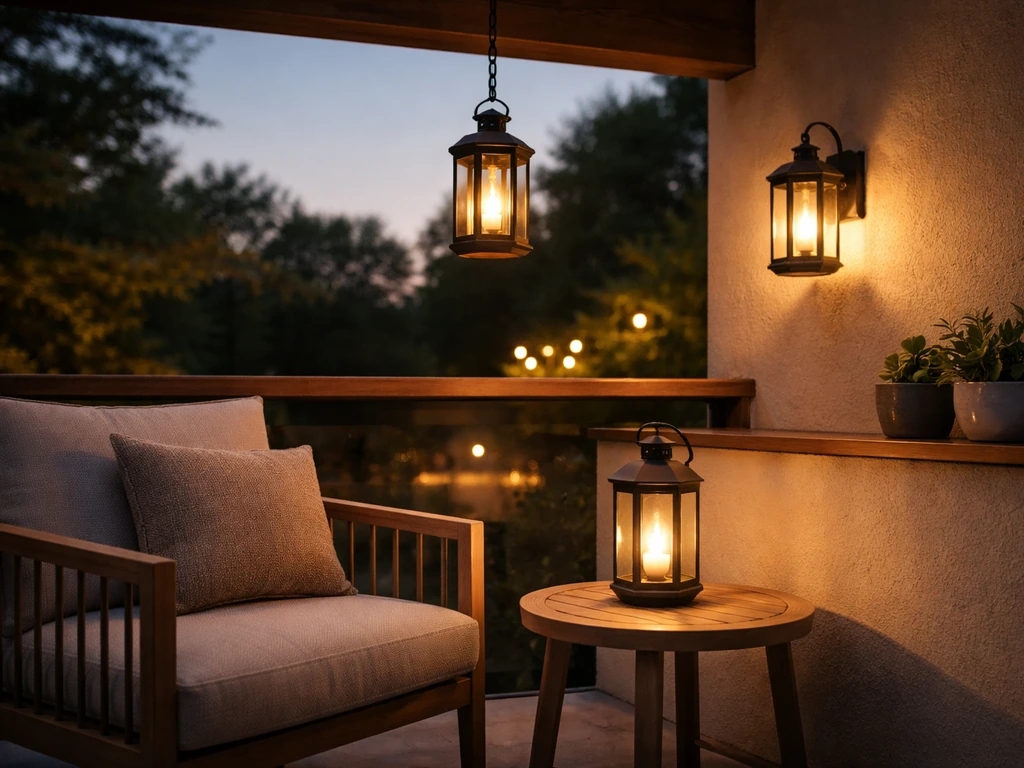
What actually makes a patio lantern the best
A lot of lantern guides focus on lumens and price, but those two numbers alone will leave you disappointed. The criteria that actually matter for a patio are a bit more specific.
- Weather resistance: Your lantern will get rained on, maybe blown over, and left out longer than you planned. An IPX4 rating means it can handle rain and splashing from any direction, which is the minimum you should accept for an outdoor patio.
- Light quality and ambiance: Brightness is only part of the picture. Color temperature (warm vs. cool white) and whether the light is diffused or glaring matters just as much for how your patio feels at night.
- Runtime that matches how you actually use the space: A lantern that dies after two hours is useless for a dinner party. Look for runtimes on medium or low settings, not just peak brightness specs.
- Ease of use: Charging, dimming, and turning on/off should be simple. If it takes three steps to turn on, it won't get used.
- Stability and mounting options: A tabletop lantern that tips over in a breeze, or a hanging lantern with a flimsy hook, is a safety hazard. Build quality matters.
- Honest flame/heat safety: If you're using real candle lanterns near fabric furniture or on a windy patio, that's a different risk profile than LED. This is worth thinking through before you buy.
The main types of outdoor patio lanterns
There are four main categories worth knowing about, and they're not interchangeable. Each fits a different part of your patio setup.
Tabletop lanterns (LED and faux-flame candle)
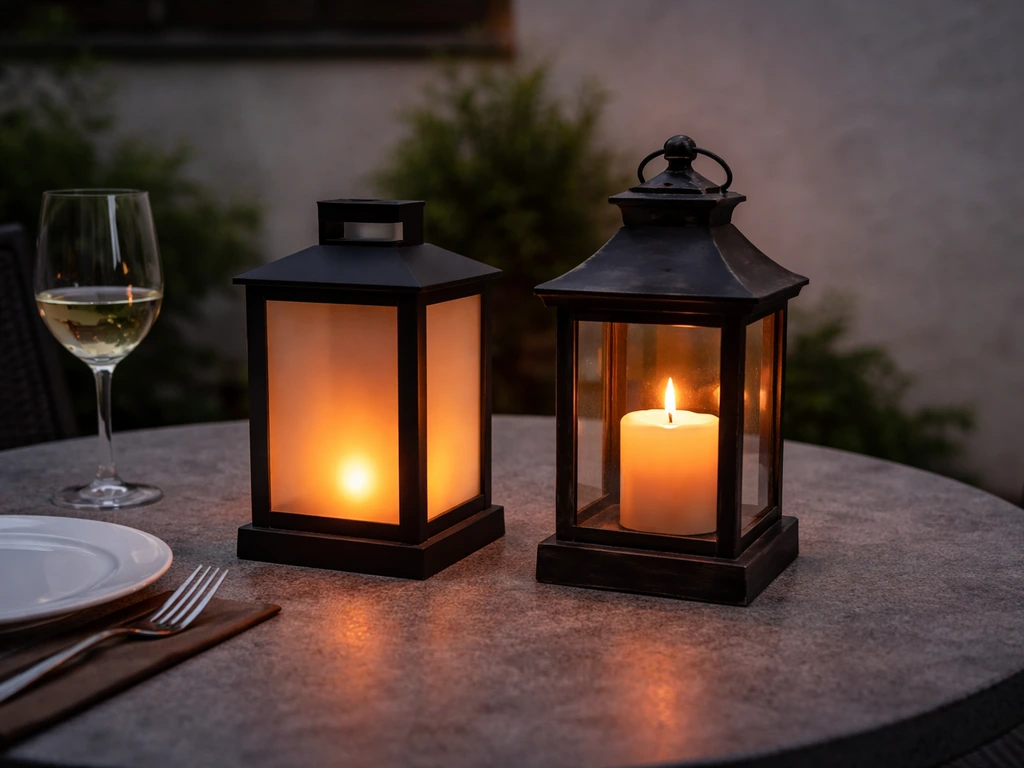
These are the workhorse of patio lighting. A good tabletop LED lantern like the Black Diamond Apollo (250 lumens, IPX4 rated) gives you adjustable, glare-free light that's bright enough for a dining table without washing out the ambiance. Faux-flame candle lanterns mimic a flickering candle effect using LED, which looks surprisingly good for a cocktail table or side surface. Real candle lanterns belong here too, but more on safety in a later section. The advantage of tabletop lanterns is total portability: you move them where you need them, no installation required.
Hanging lanterns
Hung from a pergola beam, patio umbrella hook, or shepherd's crook stake, hanging lanterns do the heavy lifting for overhead ambient light. Solar-powered hanging lanterns work well here because the hook placement naturally gets good sun exposure during the day. They're not bright enough to replace a dedicated task light over a dining table, but for general ambiance and pathway marking, they're hard to beat for zero-effort operation. Look for models with a sturdy hanging loop and a weighted base so they don't spin in the wind.
Wall-mounted lanterns
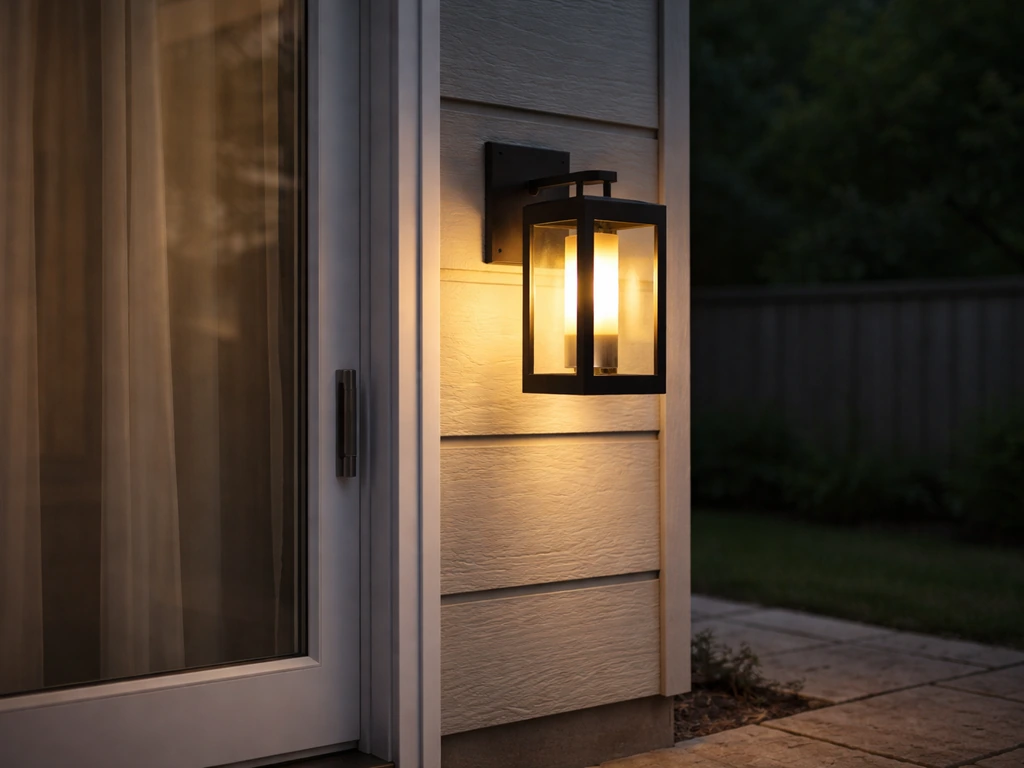
Wall-mounted patio lanterns are the most permanent option and typically hardwired or plug-in. They provide consistent, reliable light near doors, along fence lines, and beside seating areas. Because they're fixed, they're best for locations where you always want light, not for flexible setups. If you rent or don't want to do electrical work, plug-in wall sconces with a long outdoor-rated cord are a practical middle ground. Hardwired options give the cleanest look and the most reliable performance in all weather.
Large freestanding and multi-purpose lanterns
Larger rechargeable lanterns like the Coleman Classic Recharge 800 (up to 800 lumens) or the Nitecore NWL30 (18,000 mAh battery, up to 130 hours on low) blur the line between camping and patio lighting, but they're genuinely excellent for patios. They put out enough light to illuminate a 10-12 foot seating area, they're portable, and their battery life on lower settings is long enough that you don't think about charging for weeks. The Coleman's 4,800 mAh battery gives you 45 hours on low, 15 hours on medium, and 5 hours on high, which covers almost any patio scenario.
Weatherproofing and safety: what the specs actually mean
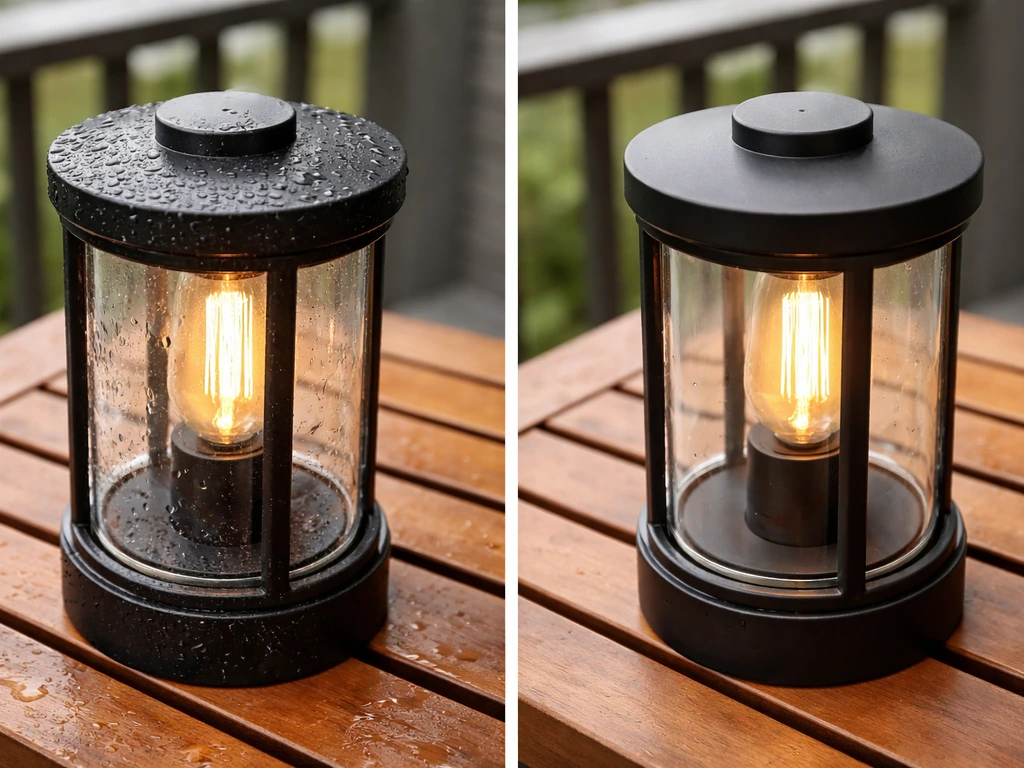
IPX4 is the minimum rating you should look for in any outdoor patio lantern. It means the lantern can handle water splashing from any direction, which covers rain and the occasional accidental splash. IPX6 and above adds resistance to powerful water jets, and IP67 or IP68 means full submersion protection, which is more than most patios require but doesn't hurt. The first number in an IP rating (like IP65) refers to dust resistance, which matters if your patio is in a dusty or sandy environment.
Materials are just as important as ratings. Powder-coated steel and anodized aluminum hold up to UV exposure and humidity without rusting or fading. Cheap plastic lanterns can crack, warp, or yellow after one summer in direct sun. For hanging and wall-mounted lanterns that stay outside year-round, look for marine-grade or rust-proof hardware on the hooks and mounting brackets.
For real candle lanterns, wind is the actual safety concern more than rain. A glass-enclosed lantern with a secure latch keeps the flame contained, but on a breezy patio you still need to keep them away from fabric cushions, overhead shade sails, and anything that hangs low. If you want the visual effect of a candle without the risk, the faux-flame LED options have gotten genuinely good. If you're drawn to citronella candles for bug control alongside ambiance, that's a different product category worth exploring separately.
Power options: battery, solar, and plug-in compared
| Power Type | Best For | Runtime Expectation | Charging Effort | Limitations |
|---|---|---|---|---|
| Rechargeable Battery (USB/USB-C) | Tabletop and portable lanterns, dining and entertaining | 5-130 hours depending on brightness (e.g., Coleman: 45 hrs low, 5 hrs high) | Plug in via USB-C every few days to weeks | Needs charging; no light if you forget |
| Solar | Hanging and accent lanterns, low-brightness ambient use | 4-8 hours per night from a full day's charge | Zero effort if placed in direct sun | Dim in low sun; not reliable in shaded patios |
| Plug-In (corded) | Permanent installs, wall-mounted, high-brightness needs | Unlimited as long as plugged in | None, always ready | Cord management; limited placement flexibility |
| Disposable Battery (AA/D-cell) | Backup or occasional-use lanterns | Varies; often 8-20 hours on high | Buy new batteries; ongoing cost | Environmental waste; higher long-term cost |
The rechargeable battery category has improved a lot. The Goal Zero Lighthouse 600 (up to 600 lumens) charges via USB and also accepts input from Goal Zero solar panels or its built-in hand crank, giving you options when you're away from an outlet. For a patio, the USB charging alone is plenty. The hand crank is more of a camping feature you'll probably never use at home.
Solar is tempting because it sounds maintenance-free, but it only works well if your patio gets at least 6 hours of direct sun on the panel. Covered patios, pergolas with dense shade, or north-facing setups will consistently underperform. If your patio is partially shaded, go rechargeable and save yourself the frustration.
Brightness and color temperature for different patio setups
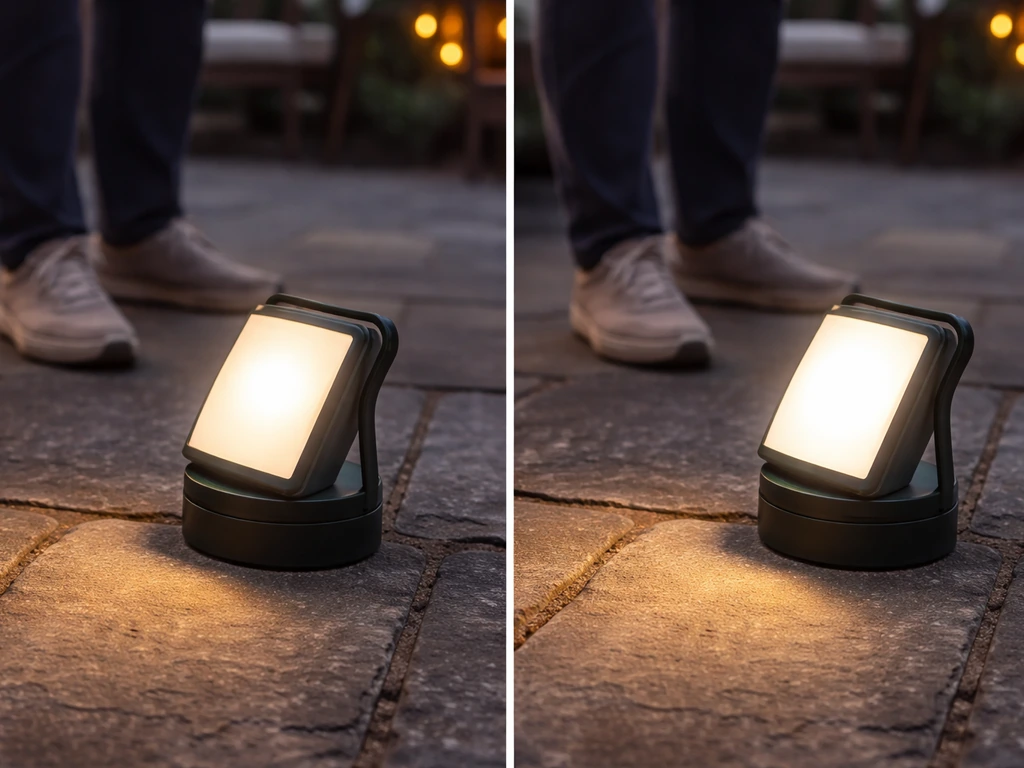
Lumens tell you how much total light a lantern produces, but they don't tell you how it feels. Color temperature, measured in Kelvins, is the other half of the equation. For patios, you almost always want warm white (2700K-3000K). It reads as inviting and relaxed rather than clinical. Cool white (5000K+) is fine for work lighting but kills the mood on a patio at night.
| Patio Use Case | Recommended Lumens | Color Temperature | Good Lantern Type |
|---|---|---|---|
| Intimate dining (2-4 people) | 150-300 lumens per lantern | 2700K-3000K warm white | Tabletop LED or faux-flame lantern |
| Larger patio entertaining (6+ people) | 500-800 lumens total, spread across 2-3 sources | 2700K-3000K warm white | Large rechargeable lantern + hanging accents |
| Lounging/reading area | 200-400 lumens, dimmable preferred | 2700K warm white | Tabletop with dimmer (e.g., Black Diamond Apollo) |
| Pathway and edge marking | 50-100 lumens per fixture | 2700K-3000K | Solar stake lanterns or solar hanging lanterns |
| General ambient/decorative | Under 100 lumens per lantern | Warm white or warm amber | Faux-flame candle lanterns, solar string lanterns |
Dimmability is underrated. The Black Diamond Apollo's adjustable output (up to 250 lumens, with a 100-hour runtime on low) means you can run it bright for dinner and dial it back for after-dinner conversation without swapping lanterns. If a lantern only has one output level, you'll either have too much light or not enough depending on the occasion.
Best picks by patio size and use case
Small patio or balcony (under 100 sq ft)
You don't need high-output lanterns here. One or two tabletop lanterns in the 150-250 lumen range with a warm tone will do more for the space than a single bright lantern. The Black Diamond Apollo is excellent here: 250 lumens dimmable, IPX4 rated, compact enough to fit on a side table without dominating it, and with up to 100 hours of runtime on low. A solar hanging lantern on the balcony railing adds a second layer of light without taking up surface space.
Medium patio (100-300 sq ft), dining-focused
This is the most common patio scenario and where the Coleman Classic Recharge 800 earns its recommendation. Put it in the center of a dining table at medium brightness (it has three output settings) and it throws enough light to eat comfortably without feeling like a construction site. The 4,800 mAh battery gives you 15 hours on medium and 45 on low. Pair it with a couple of faux-flame lanterns at the edges for warmth. If you want to explore candle-based alternatives for this size patio, dedicated patio candle options are worth comparing alongside LED lanterns. If you're specifically looking at Skeeter Screen patio candle options, the reviews can help you gauge scent throw, burn behavior, and how well the light holds up outdoors Skeeter Screen patio candle reviews.
Large patio or outdoor entertaining space (300+ sq ft)
At this scale, one lantern won't cut it. Think in zones: task lighting over the dining area (600-800 lumens), ambient lighting along seating areas (200-300 lumens each), and pathway/edge markers (50-100 lumens). The Goal Zero Lighthouse 600 handles the dining zone well and recharges via USB or a compatible solar panel. Solar hanging lanterns work for the ambient zones. Wall-mounted plug-in fixtures near the house give you reliable entry lighting. Budget for at least three to five light sources to cover a large patio properly.
Patio without an outlet
Rechargeable lanterns are the answer here, not solar alone. The Nitecore NWL30 with its 18,000 mAh battery (up to 130 hours on low, 7.5 hours on maximum) is worth serious consideration if you want long intervals between charges. Charge it once, and on low settings it can run for weeks of typical nightly patio use. Solar can supplement but shouldn't be your only source unless your patio is fully exposed to direct sun all day.
Where to put them and how to keep them working
Placement that actually works
The most common mistake with patio lanterns is putting all the light at eye level, which creates glare. Vary the height: one lantern on the table, one hanging above, and one on a lower surface or ground level. This creates depth and makes the space feel larger and more intentional. Keep tabletop lanterns at or below seated eye level (roughly 28-34 inches from the ground) so they illuminate faces without shining directly into eyes. Hanging lanterns work best at 7-8 feet overhead so they clear standing head height and cast a wide pool of light.
For solar lanterns, panel orientation matters more than people expect. Even a 15-degree tilt toward the south can meaningfully improve charging on a partially shaded patio. If your hanging lantern has a detachable solar panel, positioning the panel away from overhead shade while keeping the lantern in a shaded spot is a good workaround.
Cleaning and seasonal maintenance
- Wipe down lantern bodies with a damp cloth and mild soap every 4-6 weeks during the season. Avoid abrasive cleaners on powder-coated or anodized finishes.
- Clean solar panels with a damp cloth if they're dusty or have pollen buildup. A dirty panel can reduce charging efficiency by 20-30%.
- Check battery terminals and USB charging ports for corrosion or debris at the start and end of each season. A soft brush or compressed air clears most buildup.
- For real candle lanterns, clean the glass panels and wax drips before each use so you get clean light output and reduce fire risk.
- At the end of the season (or before extended periods of disuse), charge rechargeable lanterns to about 50-70% before storage. Storing lithium-ion batteries at full charge shortens their lifespan.
- Bring decorative and tabletop lanterns inside for winter if you're in a climate with freezing temperatures, especially if they have glass panels or exposed electronics.
Budget vs. premium: where the money actually makes a difference
Under $30, you're getting solar accent lanterns and basic battery-powered decorative options. These work fine for low-stakes ambient lighting: pathway markers, decorative faux-flame lanterns on a shelf, or string-style solar hanging lanterns. Don't expect reliable brightness or long battery life from this tier.
The $30-$80 range is where most people should spend their money. The Coleman Classic Recharge 800 and Black Diamond Apollo both land in this range, and you get real build quality, weatherproofing, dimmability, and battery life that matches how you'll actually use them. These are the lanterns you'll still have in five years.
Above $80-$100, you're paying for higher battery capacity (like the Nitecore NWL30), premium materials, multi-function features (charging other devices via USB output), or brand aesthetics that fit a high-end patio design. The Goal Zero Lighthouse 600 in this range adds the hand crank and solar input compatibility that most patio users won't need but some will love. The light quality and durability are excellent across this tier.
The honest advice: buy one good rechargeable lantern in the $40-$70 range first, use it for a season, and then fill in accent lighting with lower-cost solar options once you know where you actually want more light. Most people overbuy lighting upfront and end up with half of it sitting in a drawer.
If you're still deciding between lanterns and other patio lighting formats like candles, it's worth browsing dedicated comparisons for patio candles and patio lanterns side by side. If you're specifically shopping for best patio candles, it helps to compare candle-style effects, burn time, and how they handle wind and weather. The use cases overlap more than you'd expect, and the right mix often includes both.
FAQ
Do solar hanging lanterns work on a covered patio or pergola?
If your patio is covered or faces north, assume solar-only lanterns will charge poorly. A practical approach is to use rechargeable (tabletop or hanging) for the main zones, then add solar only where the lantern panel gets direct sun for most of the day.
What color temperature should I choose for the best patio ambiance?
Aim for warm-white output, 2700K to 3000K, and use dimming or multiple settings if the model has them. If a lantern is fixed to high brightness, you can quickly end up with washed-out mood lighting after sunset.
How do I estimate how long a rechargeable lantern will last for my typical patio evenings?
Do a quick runtime reality check: read the manufacturer’s hours on low, then compare to how many nights you host. For example, a lantern rated for about 45 hours on low means you should expect roughly 2 to 3 nights of heavy use before recharging, depending on actual setting.
Are rechargeable lanterns safe to charge outdoors in light rain?
Check whether the lantern’s charge port is sealed or recessed, and avoid models with exposed ports that sit directly under open rain. Also verify the stated IP rating applies to the charging area, not only the light housing.
Can I use plug-in wall lanterns without hardwiring if my patio is outdoors?
Yes, but treat cords as a separate weatherproofing project. Use an outdoor-rated extension cord that matches the plug type, keep connections off the ground, and avoid routing the cord where guests will trip or where it can be pinched by door hardware.
What’s the best placement height for tabletop lanterns to prevent glare?
Place tabletop lanterns so the light is aimed across the seating, not straight toward faces. A simple rule is keep them at or below seated eye level (about 28 to 34 inches high) and use a second light at a different height to reduce glare.
If I want real candle lanterns, what wind-related precautions matter most?
For wind safety, prioritize lanterns with a stable weighted base and enclosed optics (or a real-candle style with a secure latch). Avoid using real-candle lanterns near fabric cushions, shade sails, or anything that hangs low, and never rely on a lantern to block gusts.
Should I buy one super-bright lantern or several lower-output lanterns?
Rather than buying only “brighter,” build a zone plan: one lantern for the dining or activity area, smaller outputs for edges, and lower-level accents for pathways. This reduces the chance that one high-lumen lantern dominates and creates glare.
How should I store rechargeable outdoor lanterns between seasons?
Before storing for the off-season, let the lantern dry completely after any rain exposure, then recharge it to roughly mid level if the battery will sit for months. Storing fully depleted batteries can shorten long-term capacity in many rechargeable packs.
How can I improve solar charging when the lantern is in shade but the panel can be moved?
If your solar lantern has a detachable panel, you can separate the panel from the shaded lantern body. Position the panel toward the sun while keeping the lantern in the decorative spot, just make sure the cabling is rated for outdoor use and won’t be stressed when you hang it.
Next Articles
Best Citronella Candles for Patio: Top Picks and How to Choose
Top citronella patio candle picks by patio size and candle type, plus placement and wind tips to deter mosquitoes safely
Best Sunbrella Patio Cushions: Top Picks, Guide & Maintenance
Find the best Sunbrella patio cushions: durable, fade‑resistant picks, buying tips, care, and top recommendations.
Alternative to Patio Cushions: Durable, Stylish Options and DIY
Alternative to patio cushions: durable, weatherproof seating options, pros, DIY tips & buying guide.