
Skeeter Screen patio candles can take the edge off mosquito pressure on a calm evening, but they won't eliminate biting on a busy outdoor patio by themselves. The 15 oz candle (model 90400) claims an 80-hour burn time and coverage up to 200 square feet using a DEET-free essential oil formula built around geraniol (9.75%) and lemongrass oil (5.45%). That formula has real science behind it, geraniol in particular outperforms citronella in lab and field comparisons, but real-world results hinge almost entirely on wind, placement, and how bad your mosquito situation is to begin with.
Skeeter Screen Patio Candle Reviews: Buyer Guide and Tips

Lark Perry
26 Jun 2026
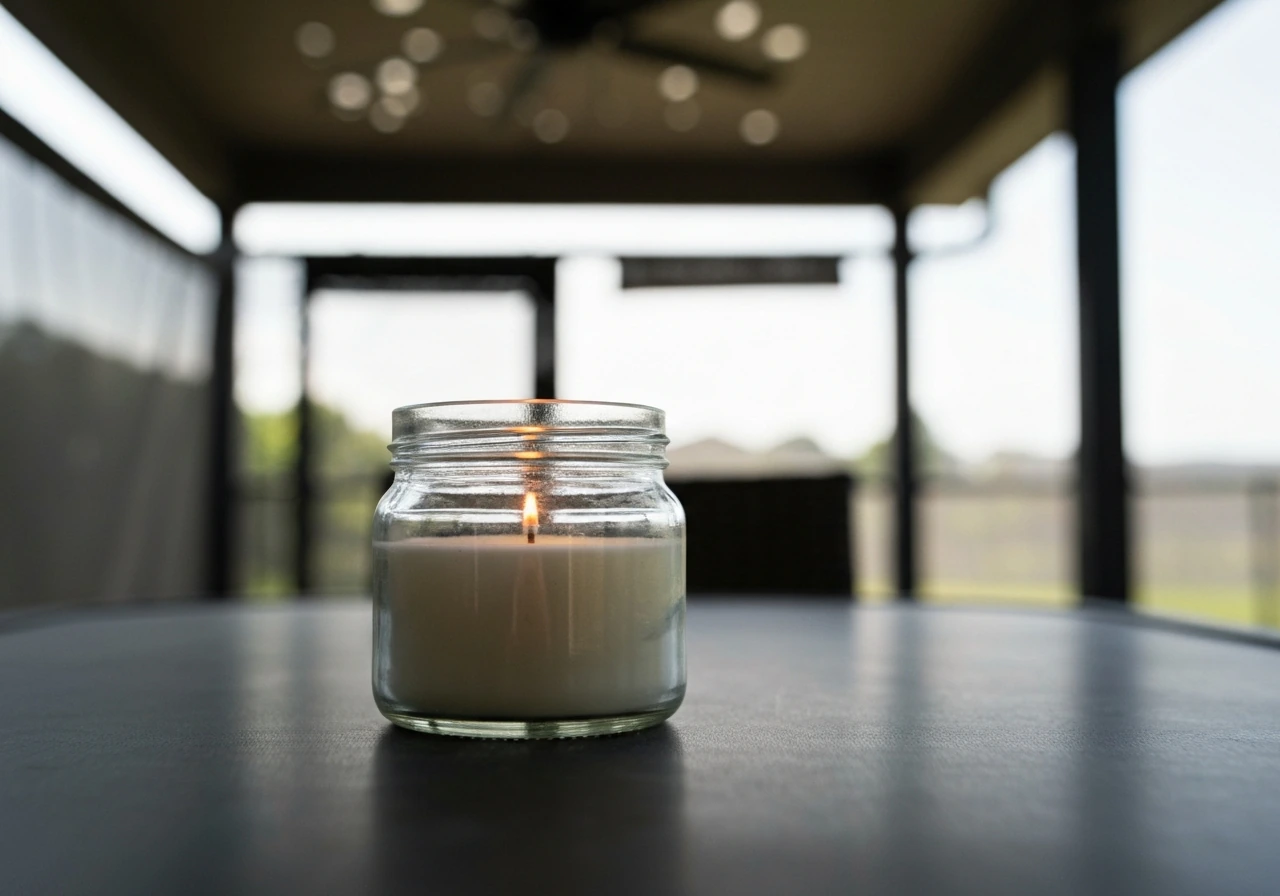
What Skeeter Screen patio candles are and how they're supposed to work
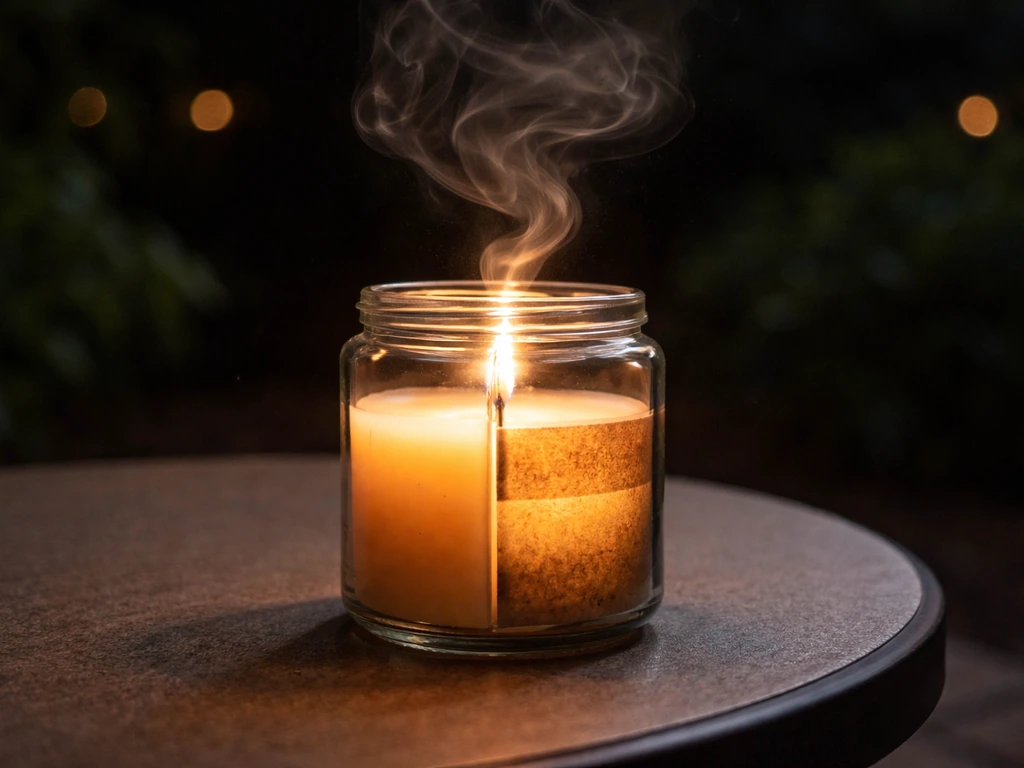
Skeeter Screen markets their patio candle as a spatial repellent: instead of putting something on your skin, you burn a scented candle and the repellent compounds diffuse into the air around your seating area, creating a scent barrier that mosquitoes supposedly want to avoid. The active ingredients, geraniol and lemongrass oil, are plant-derived essential oils that have demonstrated repellent properties in controlled studies. Geraniol in particular showed significantly stronger repellent activity than citronella in a 2009 Journal of Vector Ecology study, so the formula here is a step up from a generic citronella candle.
The candle itself is a 15 oz jar with a cotton core, lead-free wick and is explicitly DEET-free and pyrethrine-free. It's registered as a pesticide-exempt product, appearing on both Vermont's and Connecticut's state exempt pesticide lists. California's CDPR retail survey lists it under "Outdoor Burn" with active ingredient listed as "None," which reflects how exempted botanical repellent products are sometimes classified rather than being a product deficiency. It's worth knowing that exempt status means it hasn't gone through the same EPA efficacy evaluation as a registered insect repellent, so the 200 sq ft coverage claim is a marketing figure, not an EPA-verified number. US EPA’s “Characteristics and Regulatory Status of Spatial Insect Repellents” fact sheet explains that spatial repellent products may be classified differently depending on whether their claims are registered, helping clarify what kind of coverage testing applies exempt status means it hasn't gone through the same EPA efficacy evaluation as a registered insect repellent.
What to look for when comparing skeeter screen patio candle options
If you're comparing this candle against other mosquito-repellent candles on the market, here's the checklist that actually matters for patio performance:
- Active ingredients: Geraniol and lemongrass oil (what Skeeter Screen uses) outperform plain citronella in studies. Look for geraniol concentration above 5% for meaningful effect.
- Coverage area claim vs. real use: 200 sq ft sounds like a lot until you realize that's roughly a 14x14 ft square, and any breeze shrinks the effective zone significantly.
- Burn time: 80 hours on a 15 oz candle is solid and gives you a real cost-per-hour advantage compared to many competitors. A shorter burn time means more frequent replacement costs.
- Wick quality: Cotton core, lead-free wick matters for cleaner burn and reduced soot. Avoid candles that don't specify wick material.
- Scent strength: Essential oil candles can range from barely noticeable to overwhelming. Geraniol and lemongrass have a floral-citrus smell that most people find pleasant but some find strong at close range.
- Smoke output: Heavy smoke is a sign of incomplete combustion and poor formulation. It's also unpleasant for guests and can be a health nuisance in enclosed patios.
- Weather tolerance: No outdoor candle handles wind well. Look for a jar or vessel design that partially shields the flame.
- EPA registration status: Skeeter Screen candles are exempt, not registered. If you want EPA-verified efficacy, you need a different product category entirely.
Skeeter Screen patio candle reviews: what people actually experience vs. what the box says
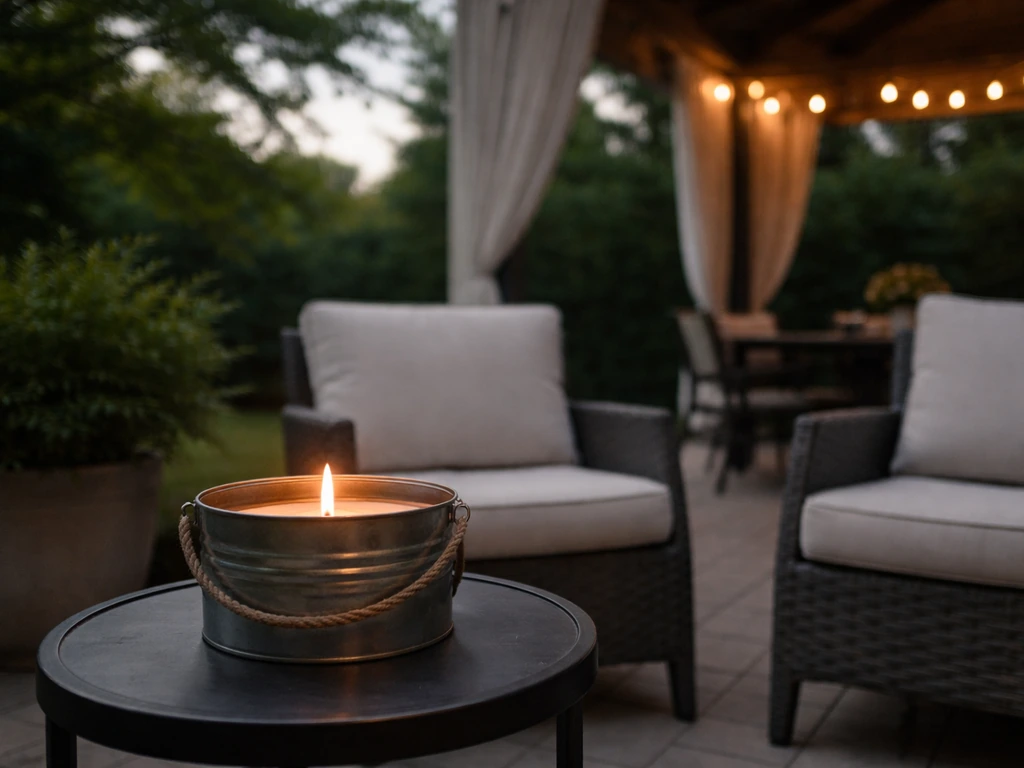
The honest summary from real-world use: results are mixed, and the conditions on your specific patio matter more than the candle itself. Bob Vila's patio mosquito repellent roundup described testing a mosquito-repellent candle over a weekend and getting mixed results, which tracks with what most users report. On still, low-activity evenings, the candles do seem to reduce how often people get bitten in the immediate seating area. On breezy nights or during peak mosquito season in humid climates, the effect is minimal to undetectable.
A New Mexico State University study published in the Journal of Insect Science tested 11 repellent products including a citronella candle and found several didn't perform as expected. Purdue Extension notes that citronella candles (and by extension, similar essential oil candles) have limited effectiveness specifically because outdoor wind movement is so variable. That's the core problem: spatial repellents rely on maintaining a scent concentration in the air around you, and wind breaks that concentration immediately.
Common complaints from buyers center on a few themes: the scent fades faster than expected in open-air conditions, one candle feels inadequate for a standard patio, performance drops sharply in wind, and the 200 sq ft coverage claim feels optimistic on a breezy night. On the positive side, people consistently praise the burn time (80 hours is genuine value), the clean burn from the lead-free wick, and the fact that the scent is pleasant rather than harsh. It's not a polarizing smell the way some heavy citronella products can be.
Coverage, placement, and burn time: how to actually get results
Placement is where most people go wrong. The instinct is to put one candle in the center of the table so everyone benefits equally. That's exactly backwards. The most practical advice I've seen, including from users who've tested this in high-mosquito areas like central Texas, is to place candles around the outer perimeter of your seating area, not in the middle, and to put them at ground level rather than up on a table. Mosquitoes approach from the edges of your space, so you want the scent barrier at the boundary, not the center.
For a 200 sq ft patio, one candle per the manufacturer's claim, but realistically you should plan on two to three candles positioned at the corners or edges of the space for meaningful coverage. For a larger deck, say 300 to 400 sq ft, budget for four candles arranged around the perimeter. Spacing them 8 to 10 feet apart along the edges gives you overlapping scent zones without gaps.
| Patio Size | Candles Needed (Manufacturer Claim) | Candles Recommended (Real-World Use) | Perimeter Placement Spacing |
|---|---|---|---|
| Up to 200 sq ft (14x14 ft) | 1 | 2-3 | Place at corners and entry points |
| 200-300 sq ft | 1-2 | 3-4 | 8-10 ft apart along edges |
| 300-400 sq ft | 2 | 4-5 | 8-10 ft apart, include windward side |
| 400+ sq ft | 2+ | 5+ plus additional mosquito control | Candles alone likely insufficient |
Burn time math: at 80 hours per candle and typical evening patio use of 3 to 4 hours per night, one candle gets you roughly 20 to 26 evenings of use before replacement. If you're running three candles per session, you're burning through three candles over that same period. Factor that into your seasonal budget.
Safety, ventilation, and smart outdoor use
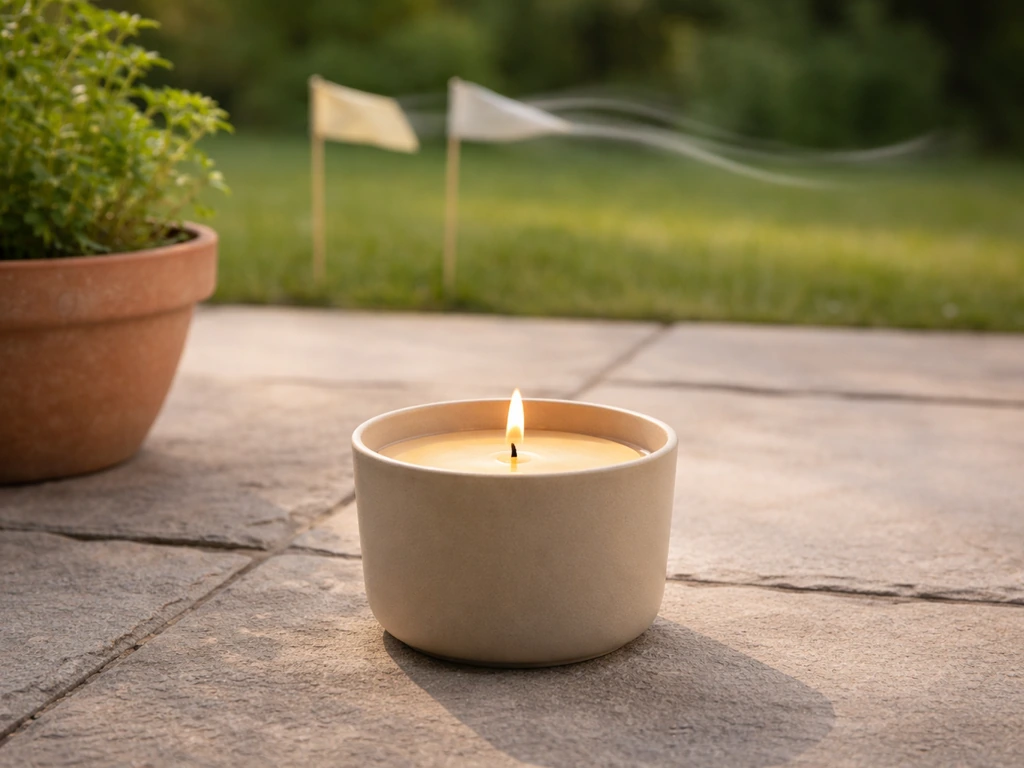
Outdoor candles are generally safer than indoor use because you have natural airflow, but there are still real hazards to manage on a patio. Keep candles at least 12 to 18 inches away from anything flammable: patio furniture cushions, outdoor rugs, umbrella fabric, string lights, and decorative liners are all fire risks. If you're placing candles at ground level (which is the right call for mosquito control), make sure they can't tip over and that pets or children can't reach them. Weighted jar candles like the Skeeter Screen 15 oz are more stable than tapers or torches, but they're not tip-proof.
Wind is a double problem with outdoor candles: it kills the repellent effectiveness and it can also cause uneven, fast burning that shortens your total burn time. If you're in a consistently breezy spot, use a hurricane glass or a low lantern-style holder to partially shield the flame. Trim wicks to about a quarter inch before each burn to keep the flame size controlled and reduce smoke. Never leave outdoor candles unattended, especially if you're moving back and forth between indoors and out.
On enclosed or semi-enclosed patios like screened porches or pergolas with solid roofing, be more cautious about smoke buildup. The same enclosure that makes mosquito repellent scent more effective also concentrates any combustion byproducts. Good airflow in all directions is the goal: you want enough air movement to distribute the scent but not so much that it disperses it too quickly.
Is the value there? Cost per hour, alternatives, and when to upgrade your strategy
At roughly $10 to $15 per candle with an 80-hour burn time, the Skeeter Screen candle costs somewhere between $0.12 and $0.19 per hour of use. That's genuinely competitive for any mosquito-control method. A citronella torch might seem cheaper upfront but burns through fuel much faster. A Thermacell Patio Shield (which uses allethrin and claims a 15-foot zone of protection) runs about $25 to $30 for the device plus ongoing refill costs, making it more expensive over a season but more consistently effective because it's an EPA-registered repellent with verified efficacy.
| Method | Upfront Cost | Ongoing Cost | EPA Registered | Wind Sensitivity | Coverage |
|---|---|---|---|---|---|
| Skeeter Screen Candle | $10-$15/candle | Low (80-hr burn) | No (Exempt) | High | Up to 200 sq ft per candle (claimed) |
| Citronella candles (generic) | $5-$12/candle | Low | No | Very High | Limited, varies by brand |
| Thermacell Patio Shield | $25-$30 device | Refills ~$5-$10 | Yes (allethrin) | Moderate | 15-ft zone (claimed) |
| Oscillating fan | $30-$80 (one-time) | Electricity only | N/A | None (creates airflow) | Directs breeze across seating area |
| DEET/picaridin skin repellent | $8-$15/bottle | Low | Yes | None (applied to skin) | Personal protection only |
Here's the honest assessment: candles, including Skeeter Screen, work best as a supplemental layer rather than a standalone solution. BestViewsReviews shows a large review count on its category page for the Skeeter Screen Patio Egg product line, which can be a useful signal of consumer discussion volume blank" rel="noopener noreferrer">candles, including Skeeter Screen, work best as a supplemental layer rather than a standalone solution.. They're genuinely useful on calm evenings with moderate mosquito pressure. They're not going to make a dent on a humid summer night when mosquitoes are active in large numbers or when you have standing water near your patio driving a local population surge. If you're ready to move beyond candles, the best patio lanterns can add cozy light while also helping you manage outdoor comfort. In those situations, a combination approach works much better: an oscillating fan pointed across the seating area (mosquitoes are weak fliers and even a moderate breeze disrupts them), a Thermacell-style device for the central zone, and skin-applied EPA-registered repellent for anyone particularly sensitive to bites.
The CDC recommends EPA-registered insect repellents as the primary protection against mosquito bites, and the CDC Yellow Book flags non-registered repellents as having unverified effectiveness for primary protection. That doesn't mean Skeeter Screen candles are useless, the geraniol formula has legitimate science behind it, but it does mean you shouldn't rely on them as your only line of defense if mosquito bites are a real problem for you. If you want to find the best patio candles for your setup, focus on real coverage, burn time, and how well the scent holds up in wind Skeeter Screen patio candles.
If you're building out a full patio mosquito strategy, the candles fit naturally alongside other citronella and scent-based options you might already use, and they pair well with lantern-style holders if you're looking for something that doubles as patio ambiance. If you want a decorative setup that still helps with outdoor lighting, the best outdoor lanterns for patio can give you ambiance without relying on candles lantern-style holders. The cost per hour is low enough that using three or four candles around a patio perimeter is still an affordable seasonal investment, especially compared to the cost of professional mosquito spraying or electronic traps. Just go in with realistic expectations: they reduce, not eliminate, and placement and wind management are what separate people who swear by them from people who feel like they don't work at all.
FAQ
How many Skeeter Screen patio candles do I actually need for my patio size?
Start with the manufacturer’s 200 sq ft claim only as a baseline. For realistic bite reduction, plan about 2 to 3 candles per 200 sq ft session, placed along the outer corners and edges (not in the center). If your patio is windy, add one more candle and tighten spacing (closer than 8 to 10 feet) to reduce gaps in the scent barrier.
Do I need multiple candles on a screened porch or pergola?
Often yes, but the strategy changes. Because airflow can be uneven, place candles around the perimeter where air enters and make sure the porch has cross-ventilation. If the area is very enclosed or has solid overhead roofing, consider fewer candles but higher airflow, since smoke and scent both accumulate.
What’s the best way to place a candle for maximum mosquito coverage?
Put them at ground level near the boundary of where people sit, then space them so scent zones overlap. Corner placement usually beats a single center candle, because mosquitoes typically approach from the edges. Avoid setting candles on high tables, since warm air and wind can push the scent upward and away from where people sit.
Will the candle work if there’s a fan or constant breeze?
A moderate breeze can help by disrupting mosquitoes, but it can also blow the candle scent away quickly. If you use an oscillating fan, point it across the seating area, not directly at the candles, and test on one corner first. In consistently windy conditions, you may need more candles or a shielded flame setup to hold the aroma closer to the perimeter.
How do I reduce uneven burning and smoke during longer patio sessions?
Trim the wick to about a quarter inch before each burn and keep the candle in a stable spot where wind can’t slap the flame. If you see rapid flickering or persistent smoke, use a hurricane glass or a low lantern-style holder, but keep enough clearance for safe airflow around the jar.
Are the jar candles safe around children and pets on a patio?
They are generally more stable than tapers, but the jar can still tip. Use a non-slip surface, keep them out of reach, and make sure any holder is weighted and cannot tip if bumped. Also keep them away from decorative fabrics, umbrella edges, and outdoor rugs where heat can transfer or material can ignite.
Is “DEET-free” enough if I still get bitten?
For many people, it’s not a sufficient substitute if mosquitoes are intense. Treat the candle as a supplemental layer, and switch to an EPA-registered skin repellent for anyone getting targeted bites. That way you’re not relying solely on air-diffused scent when mosquito pressure is high or biting starts before the candle is fully diffusing.
Does the 200 sq ft coverage claim mean everyone on the patio will be protected equally?
No. The claim is not an equivalent to an EPA-verified repellent zone, and performance varies with placement, wind, and how dense the local mosquito population is. Expect best results in the immediate seating area near the perimeter candles, while zones farther away or downwind may see less effect.
How long will one 15 oz candle last in real use, and how should I budget for multiple candles?
The burn time claim is 80 hours, so for typical 3 to 4 hour evening use you might get around 20 to 26 nights per candle. If you run 3 candles each session, think in terms of replacing 3 candles per turn, so your seasonal supply scales quickly.
What’s the safest setup if my patio is near flammable materials like string lights or cushions?
Keep at least 12 to 18 inches of clearance from anything that can catch, including cushions, umbrella fabric, outdoor rugs, and string light decorations. Also avoid placing candles where they might be bumped during movement between indoors and outdoors, and never leave them unattended while lit.
Can I use the candle indoors or in a garage with the door cracked?
Candles are riskier indoors because smoke and combustion byproducts can build up even with a door cracked. If you do use candles in any semi-enclosed space, prioritize strong ventilation and monitor smoke. For mosquito control indoors, skin-applied EPA-registered repellents and indoor-rated strategies usually perform more reliably than scent-based candles.
How should I compare Skeeter Screen candles to devices like Thermacell Patio Shield?
Compare by both upfront and ongoing cost, but also by consistency. Candles have low hourly cost and pleasant scent, yet wind and placement can reduce performance. Thermacell-like devices use an EPA-registered repellent and tend to maintain a more dependable treated zone, which can matter if you live in areas with high mosquito pressure.
What should I do if the scent is pleasant but mosquitoes still won’t leave?
First check the basics: correct perimeter placement, ground level positioning, wick trimming, and whether wind is dispersing the aroma. Next, address population drivers, like removing standing water near the patio. Finally, switch to a layered plan by adding a fan across the seating area and using an EPA-registered skin repellent for people who are getting bitten.
Next Articles
Best Outdoor Lanterns for Patio: Buying Guide and Picks
Find the best outdoor patio lanterns with type picks, brightness tips, weatherproofing, power options, and placement adv
Best Citronella Candles for Patio: Top Picks and How to Choose
Top citronella patio candle picks by patio size and candle type, plus placement and wind tips to deter mosquitoes safely
Best Sunbrella Patio Cushions: Top Picks, Guide & Maintenance
Find the best Sunbrella patio cushions: durable, fade‑resistant picks, buying tips, care, and top recommendations.