
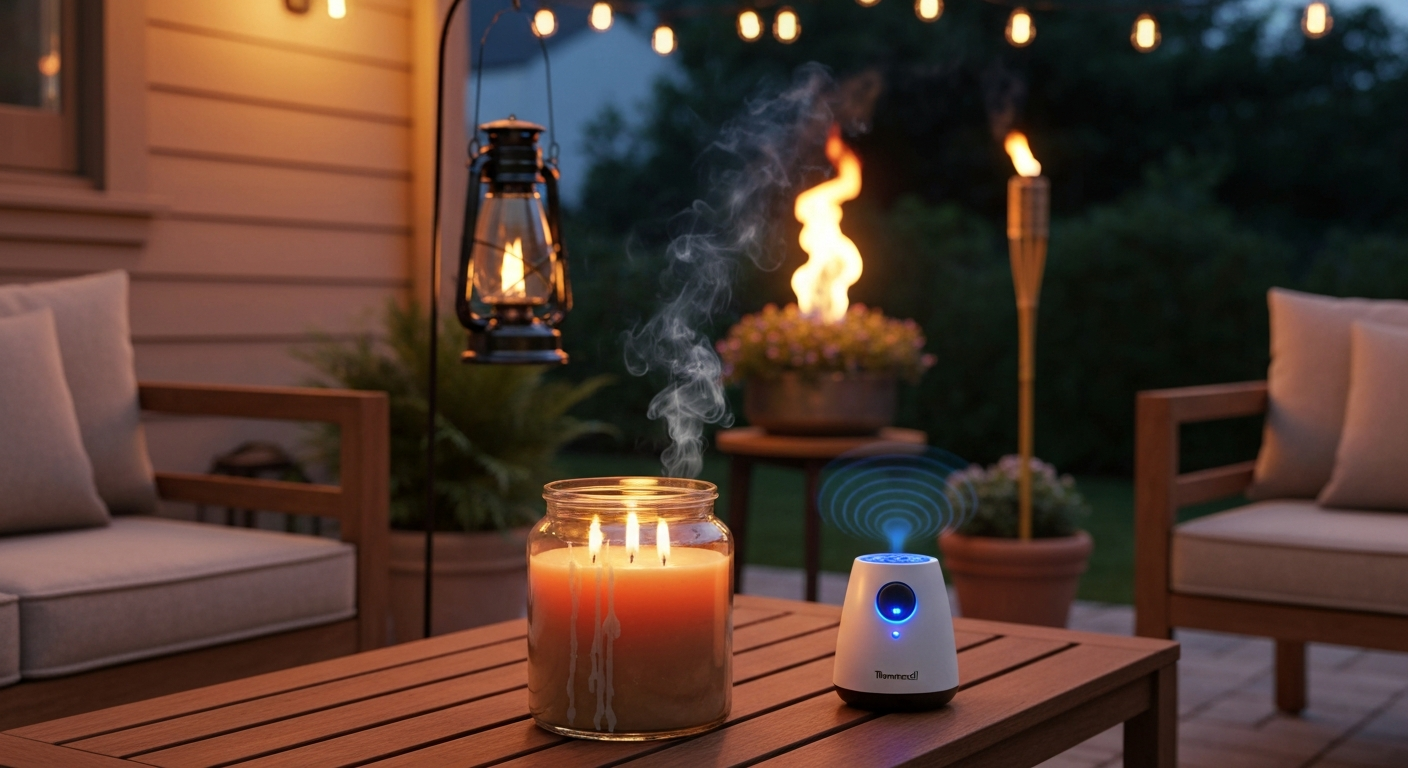
The best patio candles for most people are large, multi-wick citronella jar candles or oil-fueled tiki torches for atmosphere and light, paired with a heat-activated spatial repellent device (like a Thermacell) if bugs are actually a concern. Standard citronella candles look and smell great but controlled studies consistently show they provide minimal measurable mosquito protection outdoors, so leaning on them as your sole insect defense will leave you disappointed. That said, the right candle setup can completely transform an evening on the patio, and knowing which type to buy for which job makes all the difference.
Best Patio Candles: Top Picks, Buyer's Checklist Guide

Lark Perry
24 Jul 2026
Who this guide is for and how to use it
This guide is written for homeowners and renters who want to improve their patio experience through outdoor candles and lighting, whether the goal is evening ambiance, insect control, practical illumination, or some combination of all three. If you are setting up a patio for the first time and just want a quick pick, go straight to the top picks section below. If you want to understand why certain candle types outperform others, or if you have had bad experiences with citronella candles that did not actually keep bugs away, the deeper sections on repellent effectiveness and flameless alternatives will be the most useful. The buying checklist at the end pulls everything together into a quick reference before you hit checkout.
Top picks by use case
Best overall: large multi-wick citronella jar candle
For most patio setups, a large two- or three-wick citronella jar candle (14 to 20 oz range) hits the sweet spot of burn time, scent throw, light output, and price. Look for one rated 60 hours or more, with a glass or ceramic vessel that holds up to dew and light rain. Brands like Murphy's Naturals and Cutter consistently receive strong real-world feedback for scent strength and wax quality. Place one on a central table and you get decent illumination (roughly 30 to 40 lumens from multiple wicks, compared to about 12 lumens from a single dinner candle), a pleasant scent, and a focal point for the space.
Best for bug control: heat-activated spatial repellent + accent candles
If mosquito or no-see-um pressure is your primary concern, do not rely on citronella candles alone. Research from the Journal of Insect Science and field trials published in PMC consistently show that citronella candles provide little to no measurable reduction in mosquito landings under real outdoor conditions. The category winner here is a Thermacell rechargeable device, which uses a metofluthrin-heated mat to create a roughly 15 to 20-foot protective zone in low-wind conditions. Use it alongside accent candles for atmosphere. Runtimes on current rechargeable Thermacell models typically run 5 to 9 hours per charge or cartridge, depending on the model. For a deeper look at citronella-specific options and what actually makes them more or less effective, the citronella candles for patio guide covers that in detail.
Best decorative and lantern style: oil-fueled patio lantern
For a polished, permanent-feeling patio setup, a hanging or tabletop oil lantern with a refillable reservoir beats disposable candles on every metric except simplicity. Bronze or stainless steel frames with a glass chimney protect the flame from wind, give a warm flickering glow, and last years with basic maintenance. More on lantern styles, materials, and placement in the lantern section below. For product recommendations and picks, see our guide to the best outdoor lanterns for patio. For recommendations on durable, weather-resistant models and styling tips, see the guide to the best patio lanterns.
Best long-burn: pillar candles in a hurricane globe
Pillar candles in the 3-inch-diameter range commonly advertise 80 to 150 hours of burn time when kept in a hurricane glass or lantern enclosure that shields the flame from wind. The globe prevents tunneling and dramatically extends the candle's life outdoors. Unscented or lightly scented outdoor-formula pillar candles from brands like Yankee Candle Outdoor or similar hold up better to humidity and temperature swings than standard indoor pillars.
Best budget: tealights in a metal holder or floating bowl
Standard paraffin or soy tealights are available in bulk packs for well under a dollar each, and they look surprisingly elegant floating in a wide, shallow bowl of water or grouped in a galvanized tray. Each tealight typically burns 4 to 6 hours. The downside is the wind sensitivity and the ongoing cost of replacements, but for occasional entertaining they are hard to beat on price. Keep a windbreak nearby or use a votive holder.
Best flameless: rechargeable LED candles with a flicker mode
Battery-operated or USB-rechargeable LED pillar candles with a warm-white flicker mode have improved enormously in the past few years. Brands like Luminara produce candles with a moving-flame effect that is genuinely convincing from a few feet away. Runtime on good rechargeable models runs 8 to 12 hours per charge. For households with kids, pets, or covered patios where open flame is a real safety concern, this is the pick. More detail on flameless options, lumens, and IP ratings is in the flameless section.
Patio candle and outdoor flame types explained
Before narrowing down to a specific product, it helps to understand what you are actually choosing between. The four main outdoor flame categories each have distinct fuel chemistry, burn characteristics, and use cases.
Wax candles (paraffin and soy)
Most consumer candles use either paraffin wax (a petroleum byproduct with a flash point typically above 200°F/93°C) or soy wax (a softer, slower-burning plant-based alternative). Paraffin burns slightly hotter and gives more scent throw; soy tends to burn cooler and longer. A single wick produces roughly 40 to 90 watts of heat but only about 12 lumens of visible light, which means candles are more of an atmosphere tool than a practical light source. Wax candles are also meaningful contributors to particulate emissions when burned indoors, though on an open patio with good airflow this is far less of a concern than in an enclosed room.
Gel candles
Gel candles use a mineral oil and polymer compound that is transparent, allowing decorative elements (shells, stones, botanicals) to be embedded in the wax. They burn cleanly and tend to have long burn times, but they are more sensitive to wick placement and can crack in temperature extremes outdoors. They work well in sheltered spots like a covered porch but are not ideal in full outdoor exposure.
Tiki torch fuel and oil torches
Commercial tiki torch fuels are primarily hydrocarbon-based, typically hydrotreated light distillates or paraffinic solvents with a small percentage of citronella, cedar, or other essential oils added for scent. The TIKI Brand BiteFighter and similar products list these compositions clearly in their Safety Data Sheets. Because the base is a combustible liquid, safe handling matters: always refill torches when the unit is cold and completely extinguished, store fuel in a cool, dry place in a tightly capped container, and keep torches well away from overhanging structures, umbrella canopies, and patio furniture. Torch fuel produces a tall, warm flame that is genuinely more visually dramatic than any candle, but it also produces more heat and carries a higher fire risk than a jar candle.
Oil lamps and fuel lanterns
Oil lamps use liquid paraffin oil (sometimes called lamp oil) fed through a fiber wick, similar in principle to a tiki torch but enclosed in a glass chimney or metal lantern body. The glass chimney dramatically improves wind resistance and produces a steadier flame. Lamp oil is cleaner-burning and less volatile than torch fuel, making oil lanterns a more practical everyday option for tabletop or hanging use. Runtimes depend on reservoir size, but a typical 4 to 6-ounce reservoir burns 4 to 8 hours per fill.
Citronella and insect-repellent candles: what actually works
Citronella is the most marketed ingredient in patio candles, but the research on its effectiveness is consistently underwhelming. A study published in the Journal of Insect Science (2017) found that a burning citronella candle had no statistically meaningful effect on mosquito landings in a controlled outdoor test. Field trials in Mali and other locations show that citronella-based candles and similar botanical spatial repellents deliver inconsistent and generally modest protection compared to EPA-registered alternatives. The CDC explicitly does not recommend botanical candles as a substitute for EPA-registered topical repellents like DEET, picaridin, or oil of lemon eucalyptus in any setting where disease transmission is a real risk.
That said, there is some nuance. A 2008 study in the Journal of the American Mosquito Control Association found that 5% geraniol candles achieved roughly 85% repellency in a controlled indoor environment, compared to about 29% for 5% citronella candles under the same conditions. So not all scented candles are equal, and geraniol-based formulas may offer a meaningful step up. However, these were indoor, low-airflow test conditions. On a breezy patio, even geraniol's advantage shrinks quickly.
One practical check: if a candle label claims to 'repel mosquitoes,' look for an EPA registration number. Under EPA labeling rules, any product making a pesticidal claim must be registered, and that registration number on the label is your confirmation that the claim has been reviewed. Many candles on the market make vague 'keeps bugs away' language that skirts this rule. If there is no EPA number, treat the repellency claim as marketing, not a guarantee.
For real mosquito control on the patio, the most practical approach is to layer methods: a heat-activated spatial repellent device like a Thermacell (which uses metofluthrin and has a documented 15 to 20-foot protection zone in low-wind conditions) plus topical DEET or picaridin for individuals, with citronella candles serving their real purpose, which is ambiance and a modest aromatic deterrent, not a primary defense.
Lantern-style and patio lantern options
Lanterns are one of the most versatile patio lighting options because they can be hung, post-mounted, set on a table, or grouped on steps and ledges. Choosing the right one comes down to three variables: style, material, and fuel type.
Styles and materials
Moroccan-style punched metal lanterns give a decorative patterned-light effect and work well as hanging accents. Traditional lantern forms in black powder-coated steel or antique bronze are more neutral and pair well with most patio furniture styles. Aluminum is the lightest and most rust-resistant option for humid climates. Avoid untreated iron, which will surface-rust within one season unless you maintain it with a protective wax or oil coat regularly.
Fuel lanterns vs. candle-insert lanterns
Fuel lanterns (oil-burning) give a steadier, longer-burning flame that is more wind-resistant than an open candle. Candle-insert lanterns are simpler: drop in a pillar candle or a tealight and you are done, with no liquid fuel to manage. For frequent entertaining, a fuel lantern is worth the minor extra effort. For occasional use, a candle-insert lantern with a pillar is perfectly practical and easier to maintain.
Placement ideas
- Hang two matching lanterns at eye level on either side of a pergola or gate entry for a welcoming effect without glare
- Group three lanterns of different heights on a low table or planter ledge for a layered look
- Line a pathway or deck steps with small candle-insert lanterns at 3- to 4-foot intervals
- Use a single large hanging lantern centered over a dining table as a functional focal point
- Keep lanterns at least 12 inches clear of umbrella canopies, fabric chair backs, and any overhanging wood or wicker
Patio lanterns as a category overlap significantly with broader outdoor lantern options. If you are also considering solar-powered or battery-operated lanterns for permanent fixtures, that comparison is worth exploring in detail alongside these flame-based options.
Flameless LED and solar alternatives
Flameless candles and solar lanterns have genuinely earned a place in the patio lighting toolkit, not just as a safety compromise but as a practical, often better choice for specific scenarios.
LED candles
Modern rechargeable LED pillar candles from quality brands produce a warm (~2700K) flickering light that reads convincingly as flame in low ambient light. Output is modest, typically in the 10 to 20-lumen range per unit, which is fine for accent use but not enough to light a table for dining. Runtimes on lithium-ion charged models commonly run 8 to 12 hours, with some low-mode runtimes stretching much longer. These are an excellent pick for covered patios, around children, near speakers or electronics you do not want subjected to heat and wax drips, and for anyone who wants to set and forget without managing wick trimming or fuel levels.
Solar lanterns
Solar-powered LED lanterns like those in the Goal Zero Lighthouse line produce 150 to 430 lumens depending on the model, which is a substantial step up from real candles (remember, a single candle is about 12 lumens). Manufacturer and retailer datasheets for the blank" rel="noopener noreferrer">Goal Zero Lighthouse micro/core product specs (manufacturer / retailer datasheet) list model outputs from about 150 to 430 lumens. Most quality outdoor solar lanterns specify an IP44 or higher weather-resistance rating, meaning they can handle rain splashes; if your patio is fully exposed to driving rain, look for IP65 or IP67. Best solar lights buyer guide (Expert Reviews, summary of weather/IP rating guidance) recommends checking IP ratings: IP44 for splash resistance on exposed fixtures and IP65–IP67 where units must withstand heavy rain or occasional immersion; always verify the IP rating on the product datasheet blank" rel="noopener noreferrer">Best solar lights buyer guide (Expert Reviews — summary of weather/IP rating guidance). Runtime on low-power mode can reach hundreds of hours; at full brightness, expect 4 to 12 hours per charge depending on battery capacity and panel efficiency.
When to choose flameless
- Covered patios or pergolas with combustible roofing materials (wood, fabric, thatch)
- Homes with young children or pets that move around the patio
- Any setup where candles would be within 12 inches of patio furniture, cushions, or speakers
- Rental properties where landlord rules or building codes restrict open flames
- Areas with frequent high winds that would extinguish real candles repeatedly
- Year-round use where you want a set-and-forget solution without seasonal restocking
Quick comparison: each option for common patio needs
| Type | Ambiance/Light | Bug Control | Wind Resistance | Safety | Ongoing Cost | Best For |
|---|---|---|---|---|---|---|
| Wax jar candle | Warm, moderate | Minimal | Low (needs enclosure) | Good (enclosed jar) | Low–moderate | Casual ambiance, tables |
| Citronella jar candle | Warm, moderate | Marginal at best | Low (needs enclosure) | Good (enclosed jar) | Low–moderate | Atmosphere + mild deterrent |
| Tiki torch (fuel) | High drama, tall flame | Minimal (scent only) | Low–moderate | Moderate (fire risk) | Low per use | Large spaces, visual impact |
| Oil lantern | Steady, warm glow | None | Good (glass chimney) | Good | Low | Frequent entertaining, hanging |
| Geraniol/spatial repellent candle | Warm, moderate | Moderate (indoor/low wind) | Low | Good | Moderate | Enclosed patios, low wind |
| Thermacell device + candle | Candle ambiance | High (metofluthrin zone) | Device: moderate | Good | Moderate (refills) | Serious bug pressure |
| Flameless LED candle | Flicker effect, low lumen | None | Excellent | Excellent | Low (rechargeable) | Covered patios, families |
| Solar LED lantern | Bright, functional | None | Excellent | Excellent | Very low | Permanent fixtures, paths |
How to evaluate patio candle brands and reviews
Patio candles are a category full of marketing hype, especially around insect-repellent claims. Here is how to read reviews and product pages without getting misled.
What to look for in reviews
- Verified purchase reviews that mention specific conditions: outdoor use, wind level, time of year, bug species
- Comments about actual burn time vs. the labeled claim (common complaint is real burn time coming in 20–30% lower than advertised)
- Notes on scent throw outdoors specifically, not just indoors (outdoor scent performance is typically much weaker)
- Mentions of wick quality: mushrooming, excessive soot, or self-extinguishing in light breezes are red flags
- Container quality for jar candles: cracking, heat discoloration, or lid fit issues indicate poor manufacturing
Red flags to watch for
- Repellent claims with no EPA registration number on the label or product page
- Burn time claims over 150 hours for a single-wick candle under 16 oz (physically implausible)
- Ingredient lists that bury citronella at trace levels but lead with it in the product name
- Overly polished five-star reviews with no specific detail about outdoor performance
- Products positioned as both a candle and a primary mosquito repellent with no supporting data
Skeeter Screen and similar niche repellent products
Products like Skeeter Screen patio candles occupy an interesting niche: they often include a mix of essential oils beyond standard citronella (lemongrass, rosemary, peppermint) and are marketed heavily toward outdoor enthusiasts. The real-world verdict is mixed. Some users report a noticeable deterrent effect in still-air evening conditions, which aligns with what the indoor study data on geraniol suggests: in low-wind, semi-enclosed situations a multi-oil blend can provide a modest repellent halo. In open patios with any breeze, that benefit largely disappears. These products are generally not harmful and many users enjoy the scent profile, but their effectiveness should be assessed the same way as any citronella candle: check for an EPA registration number if they make pesticidal claims, read outdoor-specific verified reviews, and do not replace topical repellents with them in high-mosquito conditions.
Buying checklist before you purchase
Run through these eight factors on any candle or outdoor flame product before buying. Most product pages list the relevant specs; if they do not, that itself is a red flag.
- Burn time: Check the labeled hours and divide by price to get a cost-per-hour figure. A $25 candle with 100-hour burn time costs $0.25/hr; a $5 candle at 15 hours costs $0.33/hr and requires more frequent replacement.
- Wind resistance: Does the product come with a lid, glass enclosure, or hurricane shade? For any fully exposed patio, an open pillar or taper candle will self-extinguish in even moderate breezes. Buy accordingly.
- Fuel type and refillability: Tiki torches and oil lanterns require refueling — check that the fuel or oil type is readily available locally (hardware stores, big-box home improvement stores), not just online.
- Scent and ingredient transparency: For citronella or repellent candles, check the concentration of active ingredient (e.g., 5% citronella oil vs. a trace amount), not just whether citronella appears in the name.
- Materials and weather durability: Paraffin in heat can soften and pool; gel can crack in cold snaps. Glass containers need to be thick-walled for outdoor temperature swings. Check for any mention of outdoor-rated formula on the label.
- Safety features: Look for flat-bottomed, stable bases; candle holders that will not tip in wind; glass or ceramic containers rather than plastic (which can warp near flame heat).
- IP rating for flameless/solar options: Minimum IP44 for any exposed outdoor placement; IP65 or higher if the unit will face heavy rain or sprinklers directly.
- Price per burn and restocking convenience: Factor in the full cost of ownership including wicks, fuel refills, and replacement candles over a season, not just the upfront price.
Placement and safety on the patio
Fire safety around outdoor furniture is something that is easy to overlook when you are focused on aesthetics. A few practical rules: keep any open flame at least 12 inches from fabric chair cushions, umbrella canopies, and wicker furniture. Tiki torches should be a minimum of 2 feet from overhanging vegetation and positioned well away from areas where people will be walking with drinks in hand. Always extinguish candles and torches before going inside for the evening rather than letting them burn out unattended. If you run outdoor speakers or audio equipment on the patio, keep wax candles well away from the speaker grilles: wax vapor and soot can coat mesh grilles over time, and direct heat from a nearby torch shortens the life of plastic components.
Maintenance and making your candles last
Trimming the wick to about 1/4 inch before each burn is the single most impactful maintenance step for jar and pillar candles: it prevents mushrooming (the carbon buildup that causes smoking and uneven burning), keeps the flame at a consistent size, and extends the life of the candle noticeably. For the first burn on any jar candle, let the wax melt all the way to the edge of the container before extinguishing. Skipping this step causes tunneling, where the candle burns straight down the center and wastes the majority of the wax on the sides. For tiki torches and oil lanterns, drain or use up fuel before storing for the season rather than leaving it in the reservoir, where it can degrade and gum up the wick mechanism. Store unused wax candles in a cool, dry place away from direct sunlight, which causes fading and can soften the wax.
Where to buy and what to avoid
For everyday wax candles, large-format retailers and home improvement stores (Home Depot, Lowe's, Target) carry a reliable rotating selection, especially in spring and summer. Online marketplaces are fine for branded products from established names, but be cautious with generic listings that show no ingredient transparency or EPA registration for repellency claims. Specialty outdoor and garden retailers sometimes carry higher-concentration geraniol or lemongrass formulas that are genuinely harder to find in general merchandise stores. For tiki torch fuel, buy locally if possible: the MSDS shipping restrictions on combustible liquids sometimes make online purchase impractical, and hardware stores almost universally carry the major fuel brands. Avoid buying candles from discount party supply sites where lot turnover is slow: old stock in wax candles can mean dried-out wicks, scent fade, and sweating on the wax surface that affects burn quality.
FAQ
What candle and fuel types are available for patios and how do they differ?
Main types: wax (paraffin, soy, beeswax) — typical jar/votive candles for ambience; gel candles — thickened mineral/oil bases that burn longer and resist wind; tiki/torch fuels — liquid hydrocarbon fuels (often paraffinic with added essential oils) used in outdoor torches for larger flames; and oil‑lamp fuels — lamp oil (refined hydrocarbons) in wick lamps. Differences: burn profile (wax melts and may soot; gel resists wind), scent/fuel chemistry (essential oils vs fragrance oils vs plain fuel), refillability (torches/lamp systems refillable; many jar candles single use), and safety/ventilation needs (liquid fuels are combustible and require careful handling).
How effective are citronella and other scented candles at repelling mosquitoes?
Evidence shows citronella candles provide limited, short‑range, wind‑sensitive protection and often no measurable reduction in mosquito landings in realistic outdoor settings. Some other botanicals (e.g., geraniol) performed better in controlled indoor tests, but results vary. For reliable personal protection—especially where disease risk exists—use EPA‑registered topical repellents (DEET, picaridin, oil of lemon eucalyptus) and consider spatial repellents with EPA registration for larger coverage. Layering methods (candles plus repellents) is common but expect modest mosquito reduction from candles alone.
What are spatial repellents (like Thermacell) and how do they compare to candles?
Heat‑activated spatial repellents release active ingredients (e.g., metofluthrin) to create a mosquito‑free zone; manufacturer and independent data indicate typical effective radii around 4.5–6 m (15–20 ft) in low wind. They generally outperform citronella candles for consistent outdoor seating protection, but wind reduces effectiveness. They are usually cartridge‑based or rechargeable and list runtimes per cartridge/charge.
What are the top use‑case categories for patio candles and alternatives?
Organize purchases by use: Best overall — balanced ambience and moderate insect deterrence; Best for bug control — spatial repellents or EPA‑registered devices; Best decorative/lantern — designer jar candles or metal/glass lanterns; Best long‑burn — large multi‑wick jars, gel candles, or torch systems with long‑lasting fuel; Best budget — tea lights or basic citronella votives; Best flameless — LED or solar lanterns/strings for safety and longer runtime. Choose by whether priority is insect control, ambience, runtime, safety, or cost.
What should be on a concise buying checklist?
Check: burn time (manufacturer hours for the SKU), wind resistance (gel/covered lanterns or wind guards), fuel/refillability (disposable vs refillable), scent and active ingredients (citronella, geraniol, metofluthrin—note pesticidal claims require EPA registration), materials (glass, metal, wax type), safety labels/MSDS for fuels, flame size and heat output, IP/weather rating for outdoor electronics, and verified user ratings on reliability and soot or leakage. For repellent claims, look for an EPA registration number on the label.
How do I evaluate product and brand reviews (including Skeeter Screen‑style products)?
Look for: independent test data or lab/field studies, verified buyer reviews that note wind and mosquito pressure conditions, manufacturer transparency (active ingredients, runtimes, coverage), presence of EPA registration for pesticidal claims, and safety documentation (MSDS for fuels). Be skeptical of anecdotal-only claims; prefer reviews that describe how products performed in similar outdoor conditions and note whether users combined products (candles plus repellents).
Next Articles
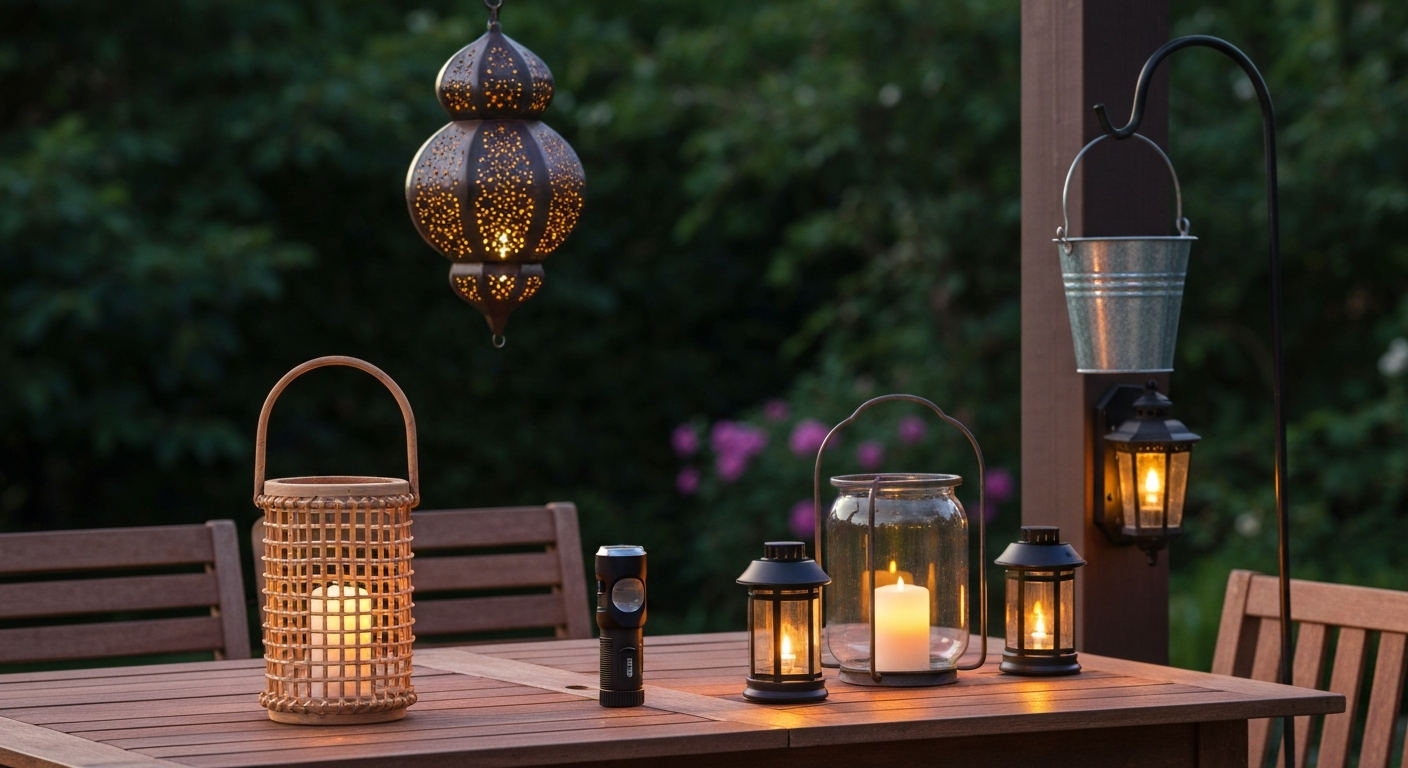
Best Patio Lanterns: Top Tested Picks for Every Outdoor Space
Best patio lanterns: tested top picks, buying tips, brightness, runtime, weatherproofing, and citronella effectiveness.
Skeeter Screen Patio Candle Reviews: Buyer Guide and Tips
Skeeter Screen patio candle reviews with buying checklist, real-world expectations, placement and safety tips to cut mos
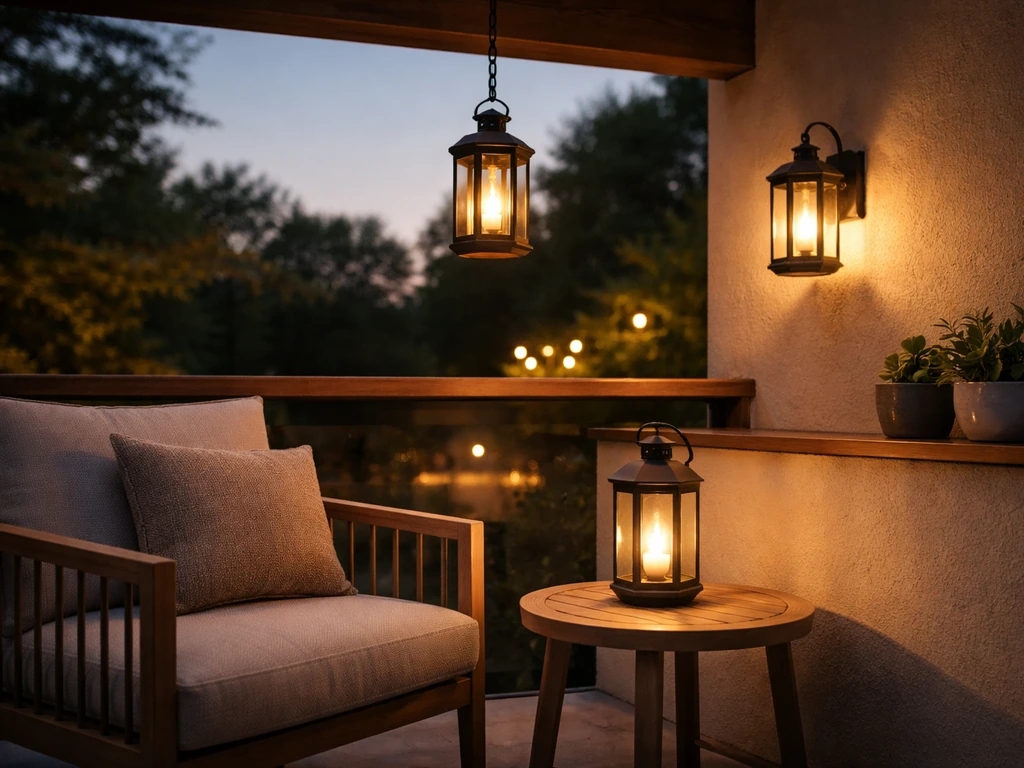
Best Outdoor Lanterns for Patio: Buying Guide and Picks
Find the best outdoor patio lanterns with type picks, brightness tips, weatherproofing, power options, and placement adv