
A high quality patio swing is one built from corrosion-resistant materials, assembled with rated fasteners, covered in UV-stable fabric, and sized to fit your actual space without wobbling under real occupant weight. That rules out a lot of what fills the budget end of the market. If you want something that still looks and feels good after three or four seasons outdoors, you are essentially choosing between powder-coated steel or aluminum frames, solid treated hardwood like cedar, or recycled HDPE composite (the material POLYWOOD uses), each with different trade-offs in weight, maintenance, and upfront cost. This guide walks through every decision you need to make, whether you are a homeowner with a covered porch, a renter working around a no-drill rule, or a Canadian buyer dealing with cross-border shipping and winter storage.
High Quality Patio Swing Buying Guide: Durable Picks

Who This Guide Is For
This is for anyone trying to sort out a patio swing purchase without getting burned by a frame that rusts through in year two or cushions that fade to nothing by midsummer. That includes homeowners who want a permanent porch swing hung from a structural joist, renters who need a freestanding option that does not involve drilling into a ceiling, and buyers in Canada where cross-border shipping costs and seasonal weather both affect what makes sense. By the end you will know what materials and specs to prioritize, how to physically test a swing before committing, what the actual installation requirements are, and how to keep it looking good for the long run.
What "High Quality" Actually Means for a Patio Swing
The word quality gets thrown around in product listings constantly, so it helps to break it into four concrete things you can actually check: durability, materials, finish, and craft. Durability means the swing holds up structurally under rated loads and resists outdoor exposure for multiple seasons, not just one. Materials means the frame, fasteners, fabric, and fill are all selected for outdoor use, not just priced for it. Finish means protective coatings (powder coat on steel, surface treatment on wood, UV-stabilizing additives in composite or plastic) are applied thoroughly and to a standard that handles real sun and moisture. Craft means welds are clean and full-penetration, hardware is tightened to spec, fabric is sewn with double-stitched outdoor thread, and wood pieces are smoothly finished without gaps that trap moisture.
One quick test: flip the swing's cushion over and look at the back of the fabric seam. A quality piece uses outdoor-grade polyester or Sunbrella-style solution-dyed acrylic thread that will not rot or break down from moisture and UV exposure. A cheap piece uses standard sewing thread, which you can usually spot by how loosely or inconsistently the seams run. On the frame side, look for consistent powder coat coverage all the way into joints and under brackets, not just the visible face panels.
Types of Patio Swings and What Each Is Best For
Porch and Yard Swing (Hanging)
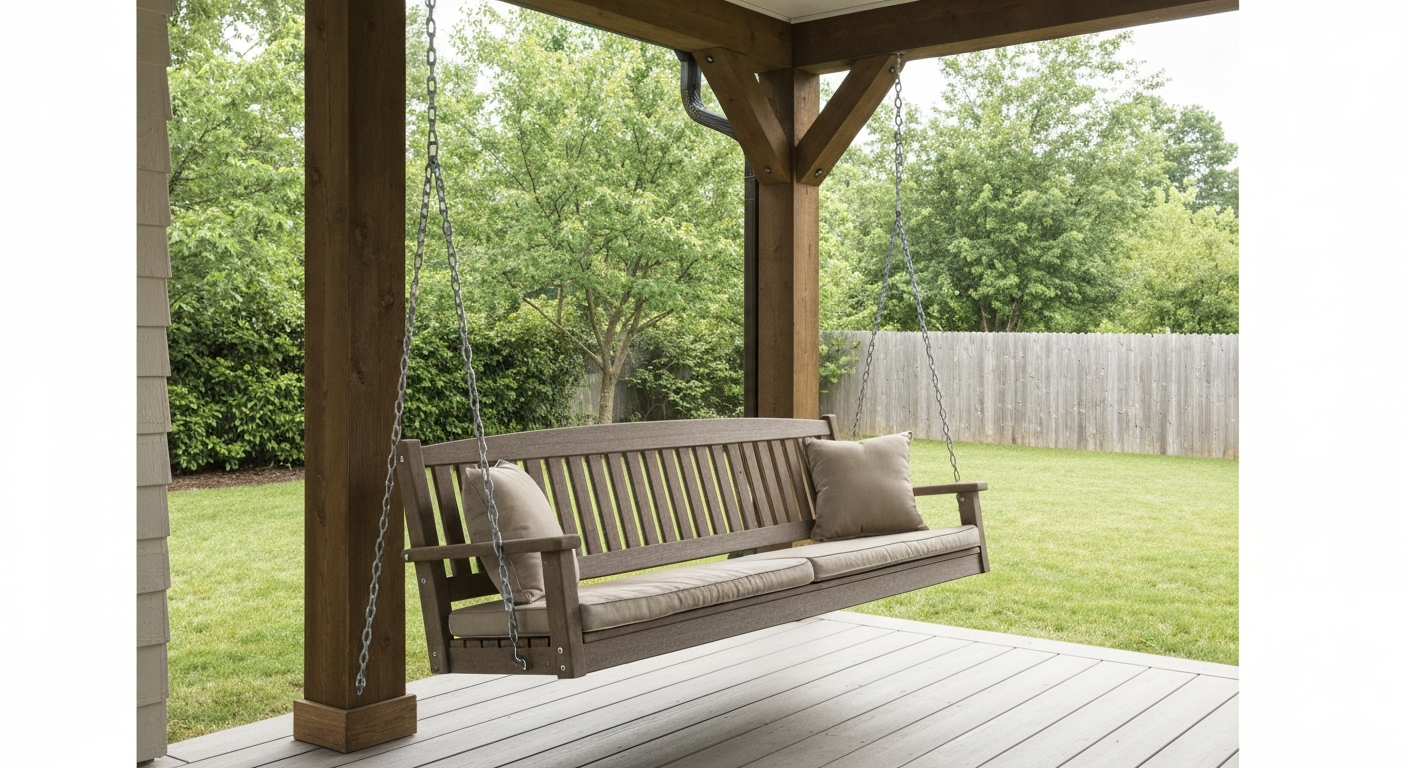
This is the classic: a bench-style seat that hangs from chains attached to a porch ceiling, pergola beam, or dedicated A-frame stand. It produces the most natural, arc-based swing motion and is usually the most space-efficient option if you already have a covered structure to hang it from. The Backyard Discovery Farmhouse cedar model (55 inches wide, about 46 pounds, rated to 600 lb) is a good example at the mid-price point around $170. Backyard Discovery Farmhouse 55 in. 2‑Person All‑Cedar Wood Outdoor Porch/Patio Swing (Home Depot SKU 313380269, model 2006614COM), assembled dimensions W 55" x D 28" x H 93", product weight about 46.2 lb, seats two, rated capacity up to 600 lb, manufacturer warranty 1‑year full + 5‑year pro‑rated, returnable 90 days Backyard Discovery Farmhouse 55 in. 2‑Person All‑Cedar Wood Outdoor Porch/Patio Swing (Home Depot SKU 313380269, model 2006614COM) — assembled dimensions W 55" x D 28" x H 93", product weight about 46.2 lb, seats two, rated capacity up to 600 lb, manufacturer warranty 1‑year full + 5‑year pro‑rated, returnable 90 days.. The POLYWOOD Vineyard 60-inch swing seats three, weighs 66 lb, and carries a 750 lb total capacity with a 20-year warranty, typically priced in the $439 to $519 range. Both are genuine hanging swings, but their installation requirements are meaningfully different from a freestanding unit.
Freestanding Hammock Bed with Stand
The hammock bed format, like the Best Choice Products model (88 inches long by 35 inches wide, powder-coated steel frame, 500 lb capacity, listed around $109.99), sits on its own steel stand and needs no ceiling or overhead structure at all. That makes it genuinely renter-friendly and ideal for open patios, decks, or lawns. The trade-off is footprint: an 88-inch hammock bed on a stand takes up significantly more ground space than a hanging swing, and the stand legs need level ground to sit properly. At this price point the warranty is limited to 60 days, which tells you something about expected longevity, so treat it as a shorter-term or seasonal investment unless you store it carefully off-season.
Patio Glider
A glider moves forward and backward on a track or pivot mechanism rather than swinging in an arc, which means it stays within its own footprint and is easier to use on small or partially enclosed patios. Gliders are typically heavier and more stable than hanging swings, with less wobble, and the motion tends to feel smoother for people who find the arc of a traditional swing uncomfortable. If you are comparing your options and stability is a priority, the top-rated patio glider category is worth exploring separately, because the track mechanism and frame weight are the defining quality factors there.
Must-Have Features Before You Buy
- Frame material: powder-coated steel, aluminum, treated hardwood (cedar or teak), or recycled HDPE composite — each with specific maintenance implications
- Fabric type: solution-dyed acrylic (Sunbrella or equivalent) or UV-stabilized olefin for best fade resistance in full sun; avoid untreated polyester for exposed positions
- Cushion fill: quick-dry polyester fiberfill wrapped in breathable outer fabric; dense foam without drainage channels holds moisture and goes flat faster
- Canopy (if included): UV-protective fabric rated for outdoor use, with adjustable tilt or removable panel so it is functional rather than decorative
- Weight capacity: verify the stated limit covers the total occupant weight you actually plan to use, with some margin; 500 lb is adequate for two adults, 600–750 lb gives more safety buffer
- Size and footprint: measure your space with the swing in motion (you need roughly 30 inches of clearance front and back for a hanging swing, plus about 2 feet at each end)
- Assembly time and hardware: pre-drilled holes, labeled hardware bags, and clear instructions are quality signals; missing or stripped hardware in the box is not
- Fasteners: look for stainless steel (18-8 or 316 grade for coastal areas) or hot-dip galvanized hardware; zinc-plated or uncoated steel fasteners will rust through within one to two seasons in wet climates
- Warranty: a 1-year or longer full warranty is a baseline for a quality swing; POLYWOOD's 20-year warranty is the high-water mark; a 60-day warranty (as on the Best Choice hammock bed) signals budget-grade construction
Materials and Build: How the Main Options Stack Up
| Material | Coating/Finish | Fasteners and Welds | Fabric/Cushion Compatibility | Typical Lifespan (Outdoor) | Approx. Price Range |
|---|---|---|---|---|---|
| Powder-coated steel | Polyester TGIC powder coat; quality varies widely — inspect coverage at joints | Welds should be full-penetration; hardware ideally 18-8 stainless or hot-dip galvanized | Works with most outdoor fabrics; frame rust can stain cushions if coat fails | 3–8 years depending on coat quality and climate; chips accelerate rust | US$100–$350 (freestanding/frame sets) |
| Aluminum | Powder coat or anodized; corrosion-resistant substrate means coating failure is less catastrophic | Welded or riveted; aluminum does not rust but can corrode at dissimilar-metal contact points | Compatible with any outdoor cushion fabric; lightweight frame pairs well with removable cushions | 8–15+ years with minimal maintenance; very good in coastal/humid climates | US$200–$600+ |
| Treated hardwood (cedar/teak) | Stain, sealant, or natural oil; cedar is naturally rot-resistant, teak is premium and self-oiling | Bolted construction with stainless or hot-dip galvanized hardware; check joint gaps | Cushions are separate; bare wood needs annual cleaning and re-oiling or staining | 10–20+ years with proper annual maintenance; cedar is more maintenance-intensive than teak | US$150–$800+ (teak at the high end) |
| Recycled HDPE composite (e.g., POLYWOOD) | UV inhibitors and pigment baked in during manufacture; no painting or staining needed | Marine-grade 18-8 stainless steel screws per POLYWOOD specs; galvanized chain kit included | Cleaned with soap and water; no fabric frame surface to degrade | 20+ years per POLYWOOD warranty; UV inhibitors resist fading without coatings to chip | US$400–$600+ (POLYWOOD Vineyard GNS60 ~$439–$519) |
| Synthetic wicker over steel frame | Wicker resin over powder-coated steel base; quality depends on resin UV stabilization | Frame fasteners vary; check for stainless or galvanized; wicker weave hides corrosion | Cushion required for comfort; wicker retains heat in full sun | 4–10 years; cheaper resin wicker becomes brittle and cracks in prolonged UV exposure | US$150–$500 |
Performance Pros and Cons by Swing Type
Hanging Porch Swing
Comfort is high when the seat depth (front to back) is at least 20 inches and the chains are set at the right angle, typically 35 to 45 degrees from vertical for a relaxed recline. Wobble can be a real issue if the installation hardware is not properly anchored into a structural member. POLYWOOD and Home Depot's hanging guides both stress this: you need rated eye bolts or swing hangers driven into a solid joist or beam, not just drywall or fascia. The arc motion is the most relaxing of the three types for most people but can feel unstable to people with balance concerns. Long-term, cedar holds up well if oiled annually, while POLYWOOD composite genuinely needs almost nothing. Fade resistance depends almost entirely on fabric choice; solution-dyed acrylic (Sunbrella) outperforms olefin in sustained full-sun exposure based on accelerated weathering testing under ASTM G154.
Freestanding Hammock Bed with Stand
The comfort ceiling is high because you can lie fully flat, but the steel frames on budget models like the Best Choice Products unit flex noticeably under dynamic load and the welds at the joint between the stand legs and the main frame bar are the first stress points to watch. At $109.99 it is genuinely functional for a season or two with careful storage, but the 60-day warranty reflects the expected service life honestly. Longevity improves significantly if you use a weatherproof cover when not in use and bring it under cover for winter. The polyester fabric on budget models fades faster than solution-dyed acrylic and will start to go chalky after prolonged UV exposure in year two or three of outdoor use.
Patio Glider
Gliders tend to be the most stable option at rest and in motion because the track mechanism keeps the seat within its footprint. The pivot or track assembly is also the main maintenance point: metal tracks accumulate dirt and need periodic cleaning and occasional lubrication to stay smooth. The back-and-forth motion is gentler than an arc swing, which is a real advantage for older users or anyone who finds the swinging arc disorienting. Fade and weather resistance depends on frame and fabric material the same way as other types, so the same fabric and frame criteria apply.
Real-World Testing: How to Actually Evaluate a Swing
Most people buy patio swings online without ever sitting in them, which is a real problem because comfort is largely dimensional. If you can get to a showroom or a big-box store that has a floor display, the evaluation is straightforward. If you are buying purely online, there are proxy checks you can do. Here is what I look for in both scenarios.
In-Store or At-Home Test Checklist
- Sit and shift your weight side to side: the frame should not creak or flex at the joints. Any audible creak under normal shifting weight suggests a loose weld or hardware that will worsen outdoors.
- Check seat depth (front edge to backrest): 20 to 22 inches is comfortable for most adults. Shallower than 18 inches feels perched; deeper than 24 inches can make it hard to push off and swing.
- Press down on the seat cushion and release: quality quick-dry fill bounces back within a few seconds. If it stays compressed, the density is too low for long-term use.
- Inspect every visible weld under good light: smooth and continuous is good; rough, porous, or interrupted beads suggest a quality-control issue.
- Check cushion fabric seams by tugging lightly at the corner: quality outdoor seams use double-stitched or bound construction that does not pull apart under finger pressure.
- Examine the powder-coat finish at the joints and inside corners: these areas are hardest to coat properly and first to show rust. Thin or uneven coverage here is a red flag.
- For freestanding units: press down on the stand legs unevenly to simulate unlevel ground. Good units have rubber feet or leveling adjusters; units that tip easily will be frustrating on anything but a perfectly flat surface.
- For hanging swings: verify the chain attachment points (the S-hooks or quick links) are load-rated and not just decorative; they should not deform under finger pressure.
- At home after a month: check all hardware for early corrosion signs, re-torque bolts if specified in the manual, and flip or rotate cushions to equalize wear and UV exposure.
Installation: Hanging Swings, Freestanding Units, and Renter Constraints
For a hanging porch swing, the installation anchoring is the single highest-stakes decision. You must attach into a structural joist or beam, not into decking boards, fascia, or ceiling drywall. The standard approach is a half-inch galvanized lag eye bolt or a rated swing hanger driven into a solid structural member, checked with a stud finder and verified by sight if you can access the space above. This Old House's guidance specifies at least 30 inches of front-to-back clearance for the swing's arc, plus about 2 feet of clearance at each end. POLYWOOD's own installation note is blunt: the chain kit is included, but ceiling hardware sized to your specific joist arrangement is not, and they advise consulting a carpenter if you are not certain about the structural members. That is good advice. A fully loaded 750 lb rated swing with two or three real people in it is a dynamic load, not a static one, and the anchor points feel that difference.
For renters who cannot drill into ceilings or walls, the freestanding hammock bed format or a freestanding A-frame swing stand is the practical solution. A-frame stands rated to match the swing's weight capacity are sold separately at most major retailers and are usually more stable than budget combo units. Make sure the stand's rated capacity matches or exceeds the swing's rated capacity, not just the swing's weight. If you are on a balcony, check your building's posted floor load limit before setting up any heavy freestanding unit. A typical residential balcony is engineered for 40 to 60 pounds per square foot, and a steel-frame stand with two adults can concentrate significant load on a small footprint.
Weatherproofing, Cleaning, and Off-Season Care
The single most effective thing you can do to extend any patio swing's life is cover it when it is not in regular use and store it indoors or in a shed through winter. A quality outdoor furniture cover that fits the swing's actual dimensions keeps UV, moisture, and debris off the frame and fabric during off-hours and off-seasons. For cedar and hardwood swings, applying a penetrating wood oil or exterior sealant once a year before the wet season prevents the wood from drying and cracking. Powder-coated steel needs a check every spring: if you see any chips or scratches that have gone through to bare metal, touch them up with a rattle-can powder coat or rust-inhibiting primer before surface rust develops. POLYWOOD composite needs only soap, water, and a soft brush, which is genuinely its biggest practical advantage.
For cushions, the best maintenance habit is removing them during rain or storing them in a waterproof bin when not in use. Sunbrella's published care instructions call for regular brushing to remove dirt before it works into the fiber, and a mild soap-and-water clean for stains. The same approach works for olefin fabrics. What kills outdoor cushions faster than UV is trapped moisture combined with no airflow, so avoid storing damp cushions in sealed plastic bags.
Canada-Specific Buying Considerations
Canadian buyers face a few real friction points that U.S. buyers do not. Cross-border shipping on large, heavy items like patio swings is expensive, and many U.S. retailers either do not ship to Canada or add freight charges that push the landed cost well above the U.S. list price. The POLYWOOD Vineyard, for example, lists at $439 to $519 USD in the U.S.; by the time you add shipping, brokerage, and import duties, a Canadian buyer is often looking at a significantly higher all-in cost. Canadian retailers like Wayfair.ca, Canadian Tire, Home Depot Canada, and Costco Canada carry patio swings domestically and avoid those friction points. Home Depot Canada's online selection is narrower than the U.S. equivalent, but the store-pickup and return policy is practical. Costco Canada runs patio swing and glider sets seasonally, usually with competitive pricing on mid-range freestanding sets.
Winter storage matters more in Canada than in most U.S. markets. Even materials like cedar that handle moisture well are stressed by freeze-thaw cycling when water is trapped in joints or cracks. Powder-coated steel frames with any coating damage are genuinely at risk of accelerated corrosion under snow cover. A fitted cover plus indoor or shed storage from November through March is not optional for a Canadian swing owner who wants the product to last more than two or three seasons.
Budget Tiers and What You Actually Get
| Budget Tier | Typical Price Range (USD) | What You Get | Main Trade-offs |
|---|---|---|---|
| Entry | $100–$200 | Powder-coated steel or basic wood frame; polyester fabric; minimal warranty (30–90 days typical); examples: Best Choice Products hammock bed ~$109, Backyard Discovery cedar swing ~$170 | Shorter service life, faster fabric fade, limited warranty coverage; budget-appropriate for renters or seasonal-only use with good storage habits |
| Mid-range | $200–$400 | Heavier steel or aluminum frame; improved fabric (sometimes olefin or treated polyester); 1-year warranty common; freestanding canopy swing sets often fall here | Better longevity than entry tier; fabric and hardware quality vary significantly by brand; check fastener type carefully |
| Premium | $400–$600+ | Recycled HDPE composite (POLYWOOD), teak, or high-grade aluminum; solution-dyed acrylic fabric options; 5–20 year warranties; example: POLYWOOD Vineyard ~$439–$519 | Higher upfront cost; genuinely lower lifetime cost for long-term owners; POLYWOOD's 20-year warranty is a real differentiator; teak requires more maintenance than composite |
Where to Buy and What to Know About Returns
For U.S. buyers, Home Depot, Wayfair, and the POLYWOOD direct site are the main options covering the full price range. Home Depot's 90-day return window (as listed on the Backyard Discovery cedar swing page) is practical for catching defects early. Wayfair has a large selection but variable assembly quality reporting, so reading the most recent one-star reviews for assembly or hardware issues is worth five minutes before purchasing. For the POLYWOOD Vineyard specifically, buying direct from POLYWOOD's own site is often the most reliable path for warranty claims. Amazon carries a wide range but warranty service can be complicated when the seller is a third-party marketplace vendor rather than the brand directly. In Canada, Wayfair.ca and Home Depot Canada are the most consistent domestic sources, with Canadian Tire offering good mid-range options in season. For a shortlist of domestic options and buying tips tailored to Canadian buyers, see our guide to the best patio swing Canada (internal ref 38c6f9b4-ae63-4c4f-b0f6-ed5c7bd26b41). See our roundup of top rated patio swings for curated picks and comparisons.
Safety Basics That Are Easy to Skip
Weight capacity ratings on swing products are generally tested statically, meaning a steady load, not a dynamic one. Real swing use creates peak forces that exceed the static weight, particularly when people push off hard or children jump. A good rule of thumb is to use no more than 75 to 80 percent of the stated capacity for a hanging swing under regular use. For the hardware side, Simpson Strong-Tie and similar structural connector manufacturers publish rated capacity specifications for their eye bolts and hangers; matching the hardware rating to actual expected loads (swing plus occupants plus dynamic factor) is how you do this correctly rather than guessing. See Simpson Strong‑Tie’s Product Installer’s Guide, Simpson Strong‑Tie (installation/fastener guidance) for manufacturer‑level installation specifications and rated capacities for eye bolts, hangers, and other connector hardware Simpson Strong‑Tie’s Product Installer’s Guide — Simpson Strong‑Tie (installation/fastener guidance). Re-check and re-torque all mounting hardware at the start of each season, especially after a winter where freeze-thaw cycles can work fasteners loose.
One point that trips people up: many swing products ship with chain and S-hooks but do not include the ceiling hardware. POLYWOOD explicitly states this on their Vineyard listing and recommends consulting a hardware professional. If you receive the swing and the only hanging hardware in the box is decorative-grade S-hooks with no listed load rating, do not use them as your primary attachment point. Buy rated swing hangers or properly sized lag eye bolts from a hardware store and install those into your structure instead.
FAQ
Title and Meta description — produce a natural search-oriented title and a concise meta description (≤160 characters) for an article about buying a high quality patio swing.
Title: How to Choose a High‑Quality Patio Swing: Porch Swings, Gliders & Hammock Beds Meta description: Find durable, comfortable patio swings—materials, feature checklist, pricing (including Canada), renter-friendly installs, and care tips.
What does “high quality” mean for a patio swing (definitions and marks to look for)?
High quality = proven durability + good comfort + safe engineering + long finish life. Look for: - Durable frame materials: powder‑coated steel with hot‑dip galvanizing or marine‑grade (316) stainless steel; rot‑resistant hardwoods or solid recycled-poly lumber (e.g., POLYWOOD) with long manufacturer warranties. - Robust fasteners and hang hardware: through‑bolts, galvanized or 18‑8/316 stainless steel chains/eyebolts sized and rated for the load. - Weatherproof finishes: high‑quality polyester or PVDF/architectural powder coats, hot‑dip galvanizing per ASTM A123 for steel. - UV‑stable fabrics: solution‑dyed acrylics (Sunbrella) for best long‑term colorfastness; olefin for lower cost/mildew resistance but less UV resistance. - Structural ratings: advertised weight capacity with clear assembly/hardware guidance and installation instructions; multi‑year warranty or pro‑rated coverage (longer = confidence). - Craft: tight joinery, solid welds, consistent finish thickness and clear service or parts policy.
What product types should I consider and how do they differ (porch/yard swing, patio glider, freestanding hammock bed)?
Porch/yard swing: - Description: bench or loveseat suspended from beams/ceiling by chains/rope. - Pros: classic look, great for porches; small footprint (length x swing arc). - Cons: requires structural overhead anchor; possible wobble if not anchored squarely. - Typical pricing: $150–$600+. Patio glider: - Description: bench that glides on tracks or uses a base to generate rocking motion. - Pros: smoother controlled motion, no overhead anchors needed, good for decks or patios. - Cons: heavier footprint; mechanical wear points. - Typical pricing: $250–$700+. Freestanding hammock bed with stand (e.g., Best Choice Products hammock bed with stand): - Description: suspended fabric/rope bed on its own stand; often portable. - Pros: no ceiling anchors, easy to move, often higher weight capacity and large lying surface. - Cons: larger footprint; less upright seating posture for conversation. - Typical pricing: $100–$400+. Selection tips: choose type by mounting options (ceiling vs freestanding), footprint, desired seating posture, and weather exposure.
Feature checklist — exact items to require when evaluating a high quality patio swing.
Must‑have features checklist: - Frame material: hot‑dip galvanized steel or powder‑coated steel with documented outdoor grade, marine‑grade stainless hardware, cedar/teak/rot‑resistant hardwood, or high‑density recycled plastic (POLYWOOD). - Fabric: solution‑dyed acrylic (Sunbrella) preferred; olefin acceptable if UV exposure is limited. - Cushions: foam rated for outdoor use (quick‑dry foam) with water‑resistant lining. - Canopy/umbrella: adjustable, UV‑rated fabric with corrosion‑resistant frame. - Weight capacity: rated for realistic combined occupant weight (500–750 lb common; check per-seat rating). - Size/footprint: overall dimensions and clearance requirements (swing arc clearance ≈ 24–30" front/back; 2 ft at each end for bench swings). - Assembly time & tools: clear time estimate and included fasteners; pre‑drilled parts preferred. - Fasteners & hardware: include rated chain/kit or specify buyer must source hangers; stainless or galvanized hardware. - Warranty & parts policy: minimum 1‑year; multi‑year or 20‑year (POLYWOOD) is premium. - UV/mildew resistance claims and cleaning instructions. - Shipping/returns: cost and cross‑border availability for Canada.
Materials and build comparisons — which materials perform best for longevity and why?
Material comparison (performance summary): - Recycled poly lumber (e.g., POLYWOOD): excellent rot and insect resistance, low maintenance, long warranties (up to 20 years), stable color retention depending on pigment; heavy but durable. - Cedar/teak/hardwood: natural look, good decay resistance (cedar, teak are best); require periodic sealing/staining to maintain life; may need winter storage in harsh climates. - Steel (powder‑coated): strong and cost‑effective; durability depends on coating: standard polyester powder coat gives years of service, PVDF/architectural coatings give much longer life; use hot‑dip galvanized if parts are exposed untreated. - Aluminum: corrosion‑resistant and lighter than steel; often powder‑coated; good coastal option if properly finished. - Stainless steel hardware (316): best for coastal/salty environments; 304 acceptable inland. Fabric comparison: - Solution‑dyed acrylic (Sunbrella): top-tier UV/colorfastness, mildew resistance, straightforward cleaning. - Olefin/polypropylene: good mildew/water resistance, lower cost, less UV longevity. - Polyester: common, varies widely—look for UV treatments. Choose based on site: coastal or full‑sun exposures favor stainless hardware, PVDF/powder finishes and solution‑dyed acrylic fabrics.
Performance-based pros and cons — what to expect in comfort, wobble, longevity, and fade resistance for each type and material?
Porch swing (wood/metal): - Comfort: good for sitting; add cushions for long sessions. - Wobble: depends on symmetric hang and solid anchors; can be minimized with anti‑sway brackets or stabilized chains. - Longevity: cedar/teak > painted wood; steel lasts if finish intact. - Fade: cushions/fabric will fade without solution‑dyed acrylic; wood finishes weather. Patio glider: - Comfort: smooth motion; good for conversation. - Wobble: less wobble if base is well‑designed; worn bushings can introduce play. - Longevity: mechanical parts (bushings, bearings) dictate service life; metal bases durable if finished. - Fade: similar fabric considerations. Freestanding hammock bed (Best Choice Products example): - Comfort: excellent for reclining; not ideal for upright sitting. - Wobble: stable on wide base but can rock if weight off‑centered. - Longevity: stand life depends on frame finish and connections; fabric life depends on fabric type—Best Choice uses polyester (good value) but less UV‑stable than Sunbrella. - Fade: expected faster fade on standard polyester vs solution‑dyed acrylic. Real‑world note: heavier, better‑finished frames with marine‑grade hardware and solution‑dyed fabrics consistently outlast entry models; multi‑year warranties correlate with better materials/assembly.
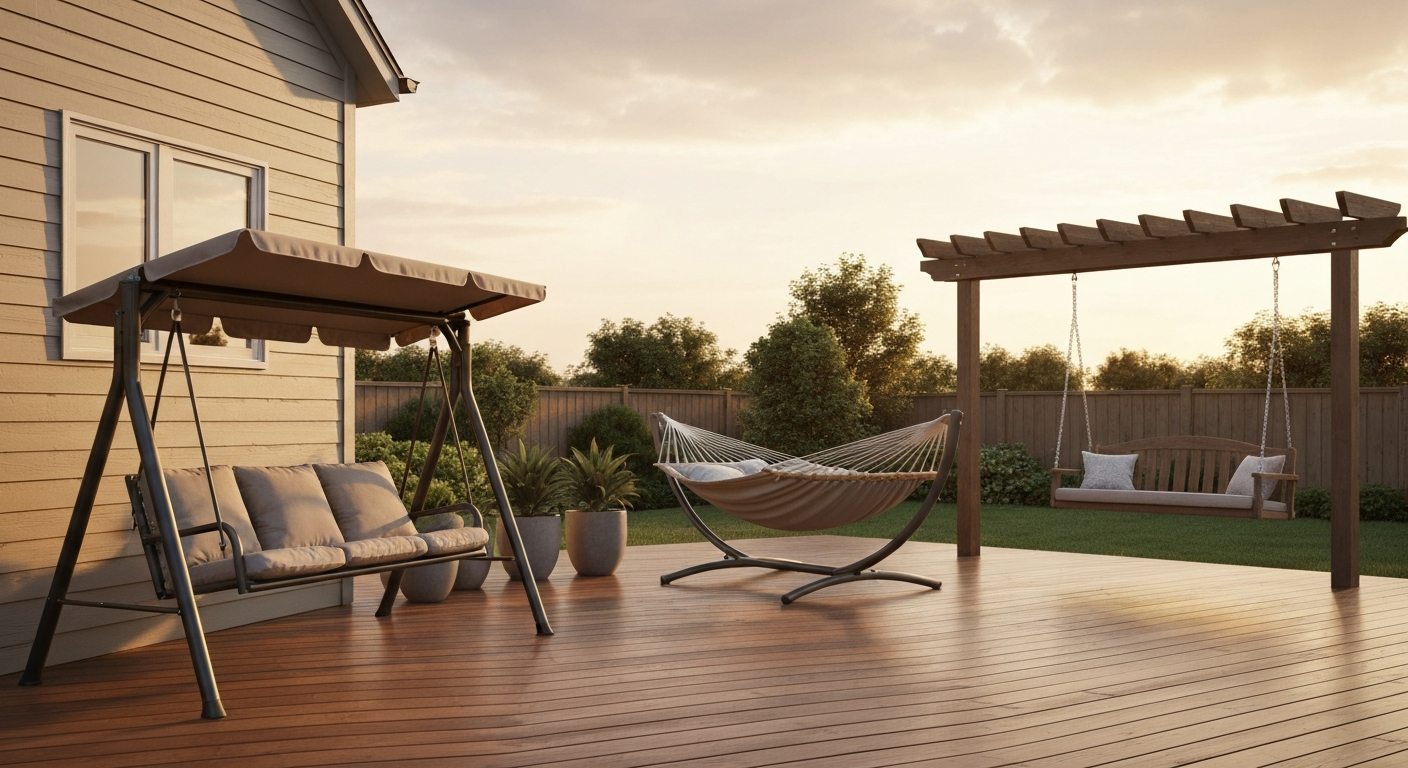
Shop the top rated patio swings: tested picks, pros/cons, buying guide, Canada tips, and installation advice.
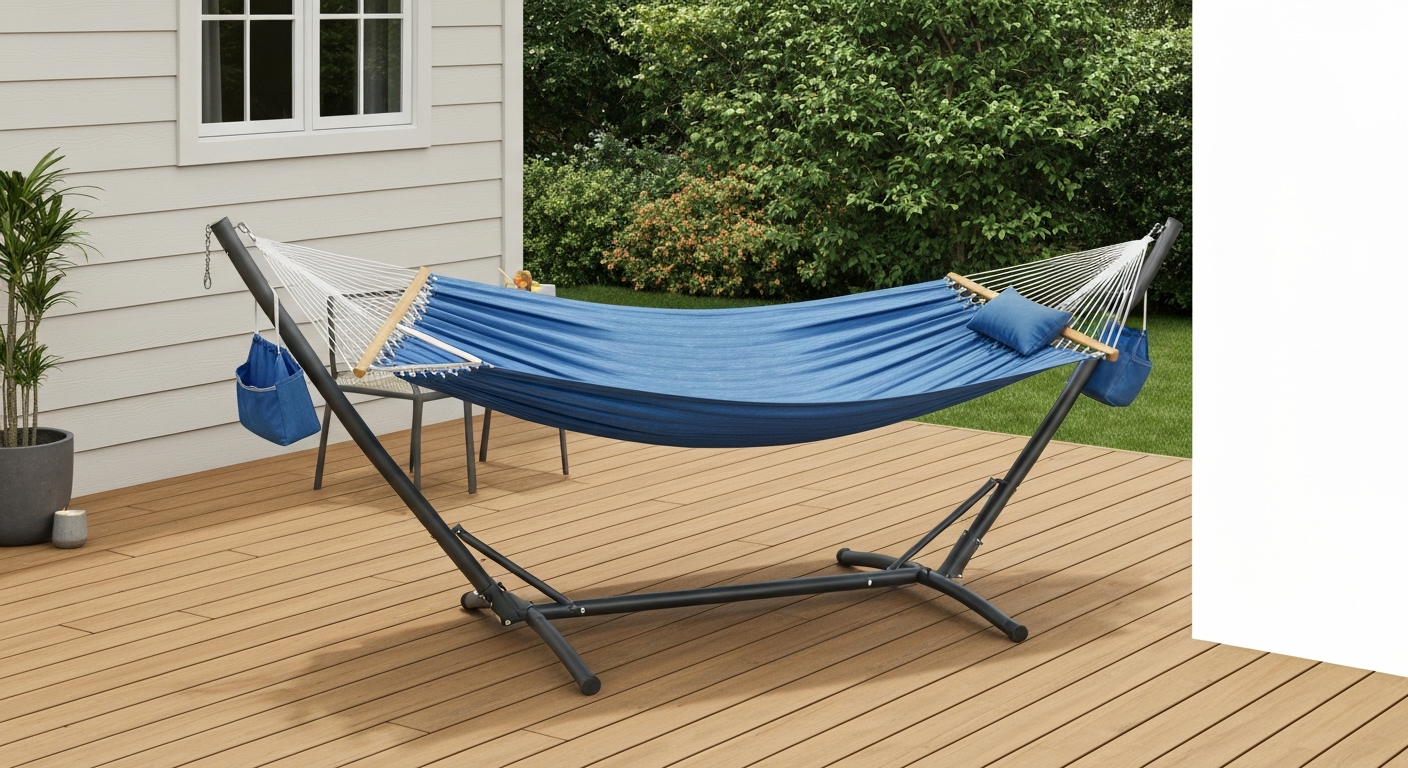
Review & buying guide: Best Choice Products outdoor patio hammock bed with stand, specs, pros/cons, assembly, and top-alt
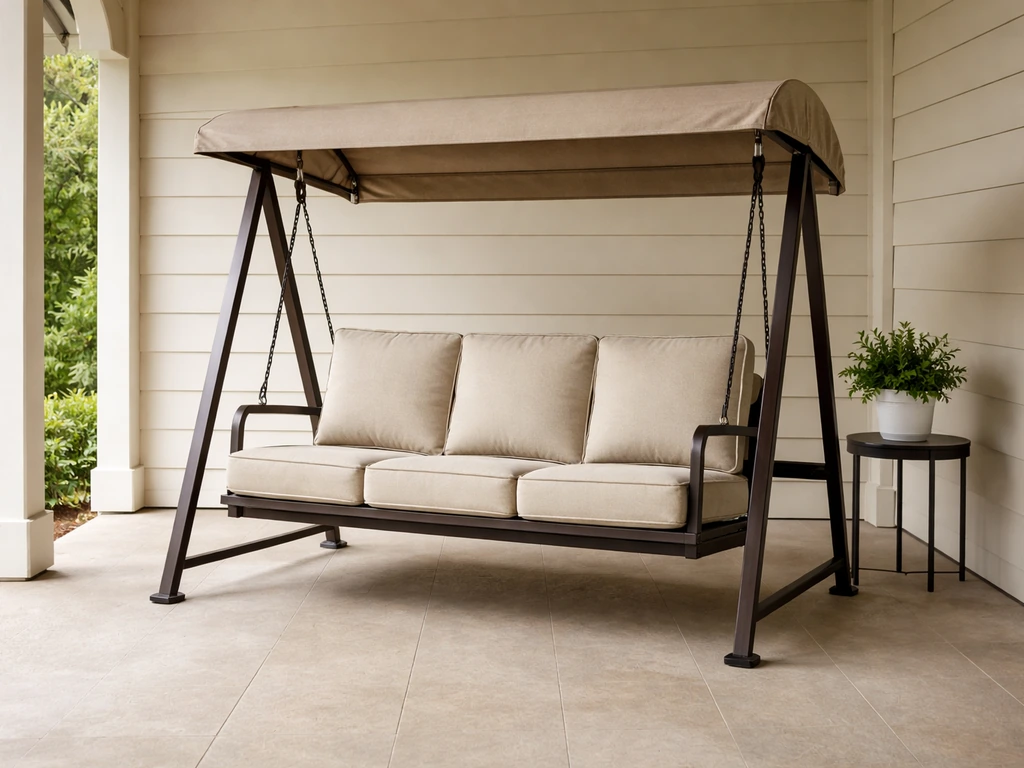
Choose the best choice patio swing by space, materials, comfort, safety, and weather durability with a clear checklist.