
For most patios, a 33-gallon resin wicker-style hideaway bin hits the sweet spot between looks and real-world function. It blends with almost any outdoor decor, handles standard 30-33 gallon trash bags, and is built to resist UV fading and moisture without corroding or rusting. If you have a smaller space or entertain less frequently, a 13-gallon bin tucked under a side table works just as well. The key is matching the size and material to how your patio actually gets used, then placing it where it's easy to reach without being the first thing guests see.
Decorative Outdoor Patio Trash Can Buying and Setup Guide

Lark Perry
16 Jun 2026
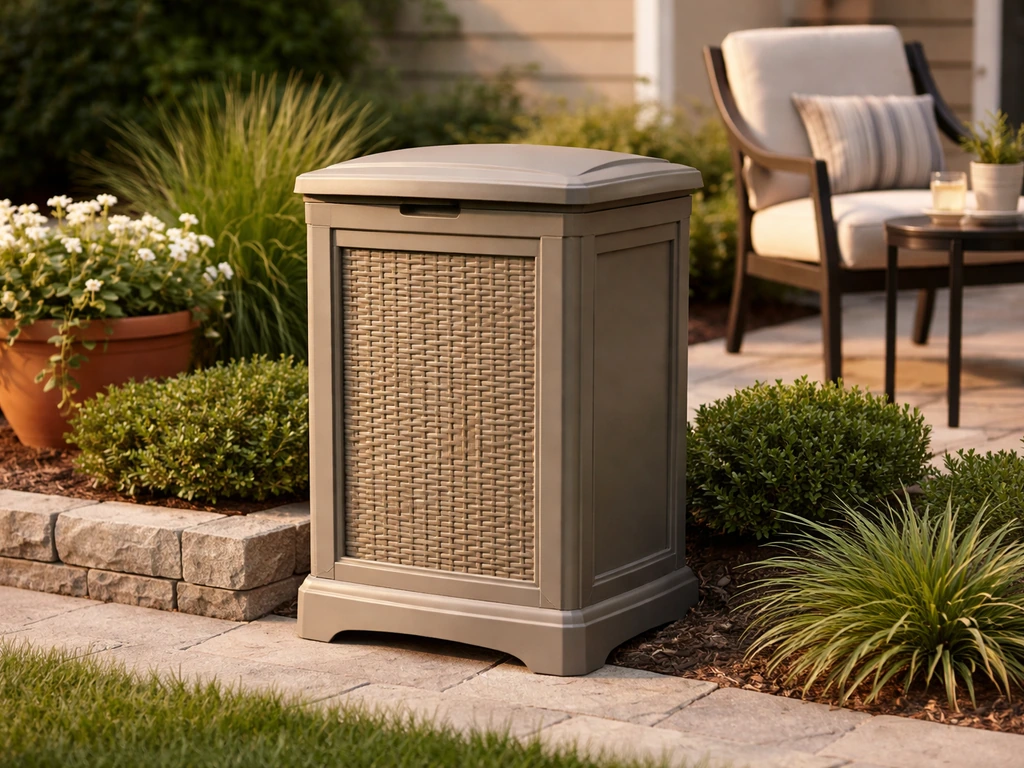
What to look for in a decorative patio trash can
The biggest mistake people make is buying a bin purely on looks and ignoring how it will hold up outdoors six months from now. A decorative patio trash can needs to do several things at once: look intentional and finished, stay closed in wind, resist sun and rain, control odors, and be easy to clean. Before you click buy, think through these priorities.
- Weather resistance: UV-stabilized materials that won't fade, warp, or crack through summer heat and winter temperature swings
- Lid security: a latching or weighted lid that stays shut on windy days and keeps pests out
- Capacity matched to use: enough volume to handle a full day of outdoor entertaining without overflow
- Liner compatibility: accepts standard bag sizes so you're not hunting for specialty bags
- Easy cleaning: smooth or semi-smooth interior surfaces you can hose down or wipe with dish soap
- Visual fit: a finish and silhouette that actually complements your existing furniture and decor
One thing worth calling out early: weather-resistant is not the same as waterproof. Most quality outdoor bins, including popular resin models, are designed to handle rain exposure but are not fully waterproof. That means a heavy downpour won't destroy them, but you don't want standing water pooling inside either. A rain-hood style lid or a latching lid that creates a tight seal helps here more than the material alone.
Materials, weather resistance, and odor control
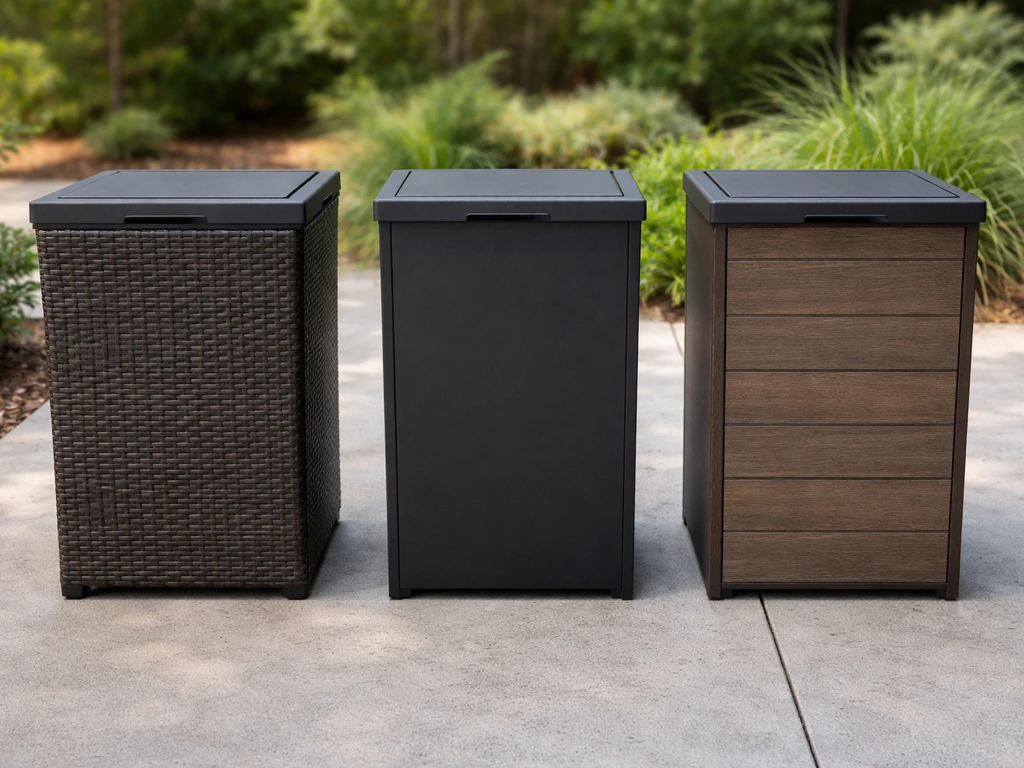
Material choice determines how your bin ages outdoors and how much work it takes to keep clean. Here's how the main options compare in real-world conditions.
| Material | Weather Resistance | Odor Control | Maintenance | Best For |
|---|---|---|---|---|
| Resin (including resin wicker) | UV-protected, water-resistant, won't rust or rot | Smooth interior wipes clean easily; odor-neutral surface | Hose out + mild dish soap; avoid abrasive scrubbers | Most patios; mimics wicker/wood without the upkeep |
| Powder-coated steel | Rust-resistant when coating is intact; rain hoods help deflect water | Metal can hold odors in seams; liners essential | Wipe down regularly; inspect for chips to prevent rust | Modern, industrial, or minimalist patios |
| Galvanized or stainless steel | Excellent corrosion resistance; heavy and stable | Less odor retention than painted steel; easy to sanitize | Soap and water; occasional degreaser for grease stains | High-traffic areas; grills; commercial-style setups |
| Wood composite / faux wood | Varies widely; better options are UV and moisture-treated | Can absorb odors if interior is unsealed | Wipe exterior; keep liner inside at all times | Rustic, farmhouse, or natural-style patios |
| Natural wicker / rattan | Not recommended for year-round outdoor exposure | Fibers trap odors and moisture | Spot clean only; dry thoroughly after rain | Covered patios only; mostly decorative use |
Resin is the practical winner for most homeowners. Brands like Suncast build their bins from injection-molded resin with UV protection built into the material itself, so the color holds up season after season. It's water-resistant (not waterproof), which is honest and actually sufficient for outdoor use when the lid is kept closed. Cleaning is straightforward: wipe it down with all-purpose cleaner or dish soap when you change bags, and hose the interior out once a month. For odors specifically, sprinkle baking soda at the bottom of the bin before inserting a fresh liner. It absorbs smells between cleanings without damaging the material. Activated charcoal works similarly and lasts longer between replacements. If the bin itself starts to smell, a baking soda and water solution scrubbed inside and rinsed with a hose handles it quickly.
Size, capacity, and how to match your bin style
Capacity and footprint need to fit both your patio layout and how often you use the space. A bin that's too small requires constant emptying during parties; one that's too large dominates a small balcony.
| Patio Size / Use Case | Recommended Capacity | Bag Size Needed | Approximate Footprint |
|---|---|---|---|
| Small balcony or apartment patio | 7-13 gallons | 8-13 gallon bags | Compact; fits under a side table |
| Medium patio, light entertaining | 20-30 gallons | 20-30 gallon bags | Moderate; side of grill or corner |
| Large patio or frequent hosting | 33 gallons | 30-33 gallon bags | ~16 x 16 x 32 inches (Suncast Hideaway) |
| Pool deck or outdoor kitchen | 33-45 gallons | 33-45 gallon bags | Larger footprint; consider a wheeled model |
The 33-gallon class is the most popular for a reason: it's large enough for a full day of hosting, accepts standard 30-33 gallon bags you can grab at any grocery store, and the footprint (roughly 16 x 16 x 32 inches for models like the Suncast Trash Hideaway) is narrow enough to tuck into a corner without consuming valuable floor space. If you've been looking at the Suncast 33-gallon hideaway specifically, know that it's blank" rel="noopener noreferrer">designed to accept standard 30-33 gallon liners with excess bag material tucked inside the rim, which keeps the liner from slipping and the exterior looking neat. For smaller setups, a 13-gallon bin fits most compact patios and typically handles a standard kitchen-size bag.
Design styles that blend with outdoor decor
A decorative outdoor trash can should look like it belongs, not like an afterthought shoved into a corner. The good news is that the market has gotten a lot better here. You can find bins that genuinely complement most patio styles without spending a fortune.
Resin wicker and rattan-look
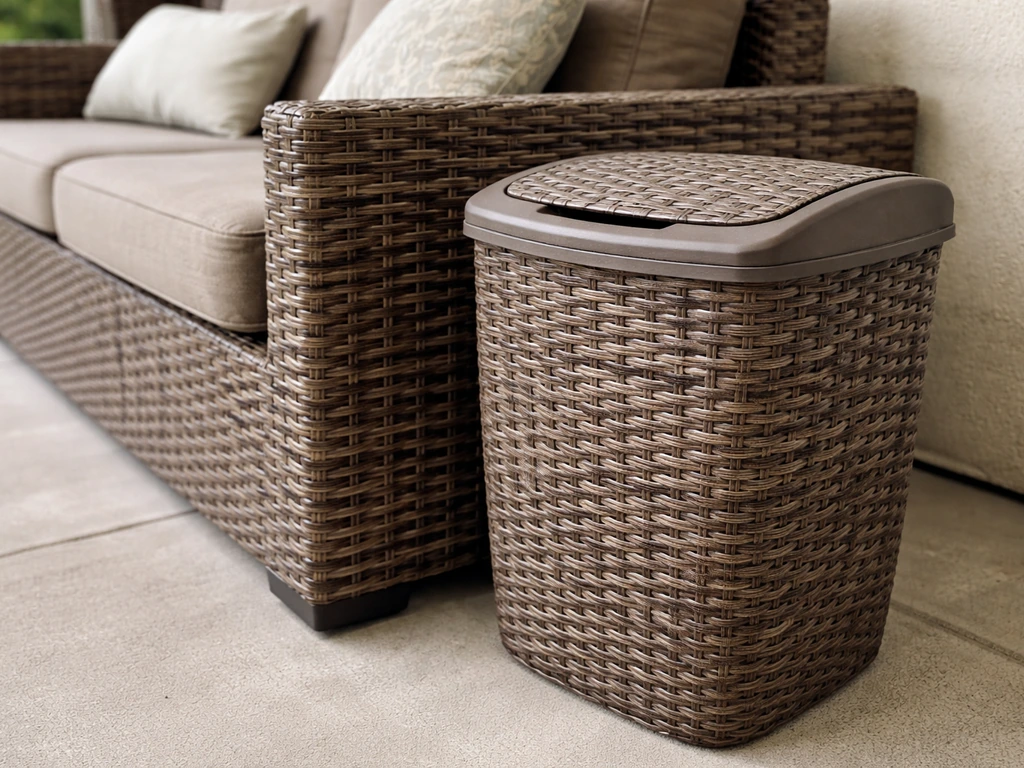
Resin wicker bins are the most versatile because they echo the texture of wicker and rattan furniture that's common on patios, but they're made entirely from molded resin. That means no rotting, no mold in the weave, and no fading (assuming UV protection is built in). They pair well with rattan sectionals, wicker side tables, and coastal or transitional decor. If your patio furniture has that woven look, a matching bin in a neutral color like espresso, taupe, or sandstone will blend right in rather than drawing attention.
Modern metal and steel
Powder-coated steel or stainless bins suit modern, industrial, and Scandinavian-style patios. Look for clean lines, matte finishes, and rain-hood or flip-top lids rather than ornate details. The trade-off is weight and the need to keep the coating intact to prevent rust. These look sharp next to metal furniture, concrete pavers, and string light setups.
Wood-look and stone-inspired finishes
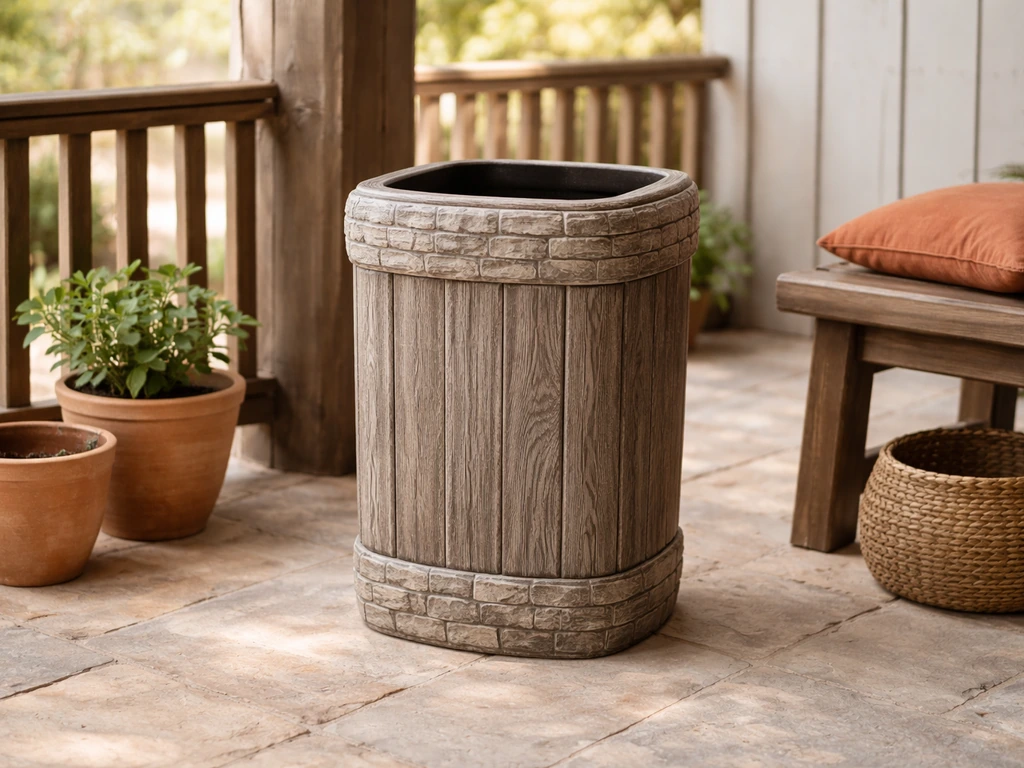
Faux wood composite and stone-textured resin bins work well in rustic, farmhouse, and naturalistic settings. Pair them with teak or cedar furniture, terracotta pots, and warm-toned textiles. Make sure any wood-composite bin you consider has an interior liner or sealed interior surface; raw composite absorbs odors fast if there's no barrier between the material and the trash.
Matching to your existing palette
Color matters as much as texture. If your patio furniture is dark gray or charcoal, a cyberspace or espresso bin disappears into the space in a good way. If you have a lighter, beachier setup with natural tones, sandstone or driftwood finishes blend better. Avoid colors that contrast sharply with everything else around the bin unless it's intentionally an accent piece, which very few people actually want their trash can to be.
Key features: lid types, wheels/handles, liners, and cleanup
Lid types and what they actually do
The lid is the most functionally important part of an outdoor bin. A latching lid, like what the Suncast Trash Hideaway uses, keeps the lid closed in wind and creates enough of a seal to deter raccoons and other small animals. A flip-top or step-open lid is more convenient for high-traffic use but typically doesn't seal as tightly. Rain-hood style openings, common on commercial outdoor receptacles, redirect rain away from the opening so water doesn't accumulate in the liner. For residential use, a latching lid is usually the best balance of pest control and ease of use.
Handles, wheels, and portability
If you need to move the bin to the curb or between areas of the patio, ergonomic side handles and vented channels inside the bin make a real difference. Vented channels reduce the suction that makes a full liner hard to pull out, which anyone who has wrestled with a stuck trash bag will appreciate. Larger bins (33 gallons and up) benefit from integrated wheels or a dolly if you're rolling them any distance regularly. For bins that stay in one spot, wheels are less important than stability.
Liner compatibility and bag cinching
Standard bag sizes matter more than people realize. A 33-gallon bin that fits standard 30-33 gallon bags means you'll never need to hunt for proprietary liners. Look for bins with some kind of bag cinch or rim hook to keep the liner from sliding down into the can, which is both a hygiene issue and an annoyance. Tucking excess bag material inside the rim works fine on models designed for it, like the Suncast Hideaway. Use odor-fighting bags (the kind with baking soda or other deodorizers built in) as a first line of defense between cleanings.
Cleanup in practice
For resin and metal bins, the cleaning routine is simple: wipe down the interior and exterior when you change the bag, hose out the inside monthly, and scrub with dish soap or a mild all-purpose cleaner for anything that sticks. Avoid abrasive scrubbers on resin wicker surfaces since they can scratch the texture. Baking soda or pulverized charcoal at the bottom of the bin between liner changes handles ambient odors well. For a deeper refresh, a diluted vinegar or baking soda solution left in the can for 15 minutes before rinsing out works without damaging the material. Baking soda can also be used by sprinkling some into the can or liner when it is stinky, and The Kitchn recommends periodic cleaning guidance using baking soda solutions Baking soda or pulverized charcoal at the bottom of the bin between liner changes handles ambient odors well..
Placement, maintenance, and managing pests and visual clutter
Smart placement on the patio
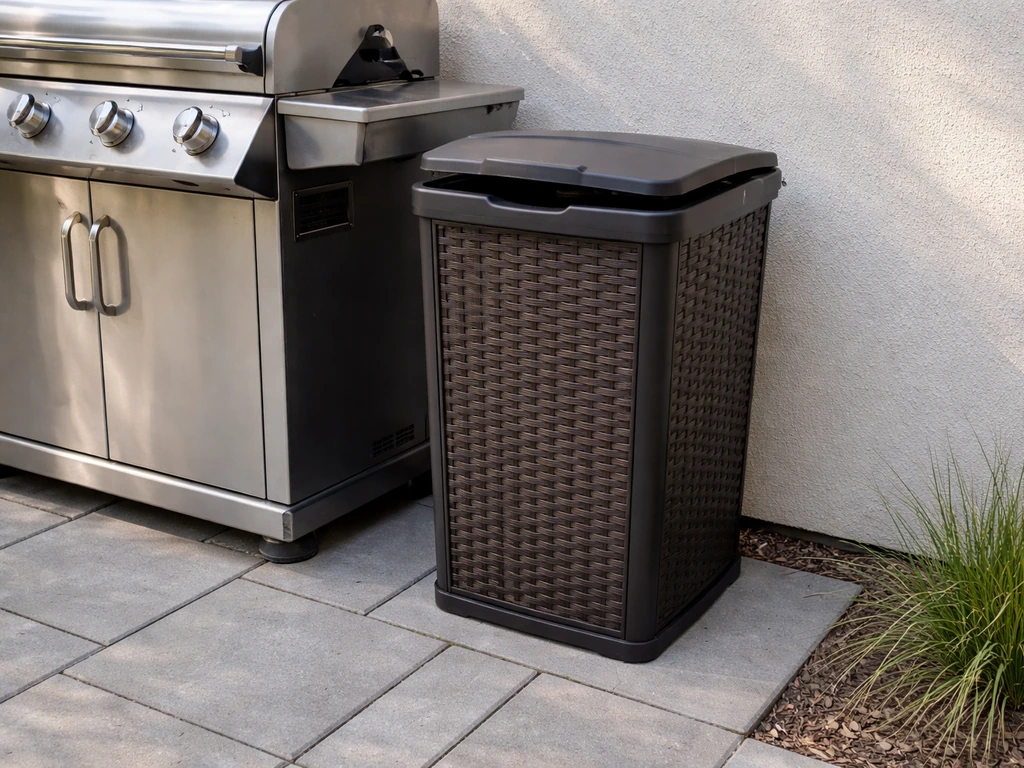
The goal is to put the bin where people will actually use it without making it the focal point of the space. Near the grill is almost always the right call for food-related trash during cookouts. Beside a side table or bar cart works for drink waste. If you have a dedicated outdoor dining area, a bin just outside the seating zone at one end is accessible without being in the sightline of every seat at the table. Keep bins out of the primary visual corridor, meaning the view you first see when stepping outside or looking out the back door.
Reducing visual clutter
A well-designed decorative bin does some of this work on its own, but placement strategy helps more. Privacy screens can reduce visibility from certain angles but won't fully conceal a bin from all sides. Enclosures, whether a purpose-built trash can enclosure or a repurposed wooden screen with a hinged panel, are the most effective way to fully hide bins from multiple angles while still keeping them accessible. For renters or anyone who doesn't want to build anything permanent, simply positioning the bin in a corner or behind an outdoor planter creates a natural visual break without construction.
Pest prevention
A tight-fitting or latching lid is your first defense. The CDC recommends using thick plastic or metal cans with no holes and a secure lid specifically to deter rodents. A latching lid is worth prioritizing if you live anywhere with raccoons, opossums, or squirrels. Empty and replace liners frequently, because leaving trash sitting for multiple days is what actually attracts pests more than the bin itself. If you're in an area with persistent rodent activity, a heavier-gauge metal bin with a locking lid is more effective than any resin model, because rodents can chew through thin plastic over time.
Ongoing maintenance habits
Keeping a decorative bin looking and smelling good outdoors is mostly about consistency, not effort. Wipe the bin down when you change bags. Hose it out once a month. Drop a handful of baking soda in before inserting each new liner. If you use quality trash bags that resist leaks, you'll rarely need to do a deep clean. Elevating the bin slightly off the ground on a small platform or bin stand helps keep moisture from wicking into the base and makes it easier to slide out for cleaning.
Buying guide: best options by patio type and budget
Here's a practical decision framework to get you to the right bin without overthinking it. Match your patio situation to the recommendation below, then look for products that hit those specific specs.
| Patio Type | Best Bin Style | Key Specs to Prioritize | Budget Range |
|---|---|---|---|
| Small balcony / apartment | Compact resin or metal, 7-13 gal | Small footprint, flip-top or step-open lid, neutral color | $25-$60 |
| Mid-size patio, casual use | Resin wicker hideaway, 20-33 gal | Latching lid, UV-protected resin, 30-33 gal bag compatibility | $50-$100 |
| Large patio / frequent hosting | 33-gal resin hideaway or powder-coated steel | Latching lid, vented channels, ergonomic handles, stable base | $80-$150 |
| Pool deck / outdoor kitchen | Heavy-duty steel or large-capacity resin, 33-45 gal | Rain hood or rain-deflecting lid, wheels, corrosion resistance | $100-$200+ |
| HOA community / upscale patio | Decorative enclosure + inner bin | Full concealment from multiple angles, latching enclosure door | $150-$400 |
For the majority of people reading this, the 33-gallon resin wicker hideaway category is the right answer. It covers most patio sizes, handles standard bags, holds up in real weather, and comes in finishes that genuinely blend with outdoor furniture rather than clashing with it. Look for UV protection listed in the product specs, a latching lid (not just a snap-on lid), and a bag size callout of 30-33 gallons. The Suncast Trash Hideaway in the 33-gallon class fits all of those criteria and has dimensions (roughly 15.75 x 16 x 31.63 inches) that slot into corners or beside furniture without occupying much floor space. If you're comparing that to smaller options for a compact setup, a 13-gallon bin with similar construction works on the same principles, just scaled down.
If your priority is full concealment and you have the budget, an enclosure that completely hides the bin from multiple angles is the upgrade worth making. A screen or privacy panel alone won't do the job as completely as an enclosure with a hinged door. For high-traffic areas like pool decks or outdoor kitchens, lean toward steel with a rain hood or rain-deflecting lid design because grease and heavy use will wear through a resin surface faster there than in a standard seating area. Whatever you choose, buy it, place it well, use a good liner, and keep up with a basic monthly cleaning routine. A decorative bin that's actually maintained looks good indefinitely; one that's neglected makes the whole patio look worse regardless of how nice it looked in the product photo.
FAQ
How can I tell if a decorative outdoor patio trash can will truly handle rain without pooling water inside?
Check whether the lid has a real latch or seal, and look for a rain-hood or rain-deflecting opening. Even UV-protected resin is typically rain-resistant, not waterproof, so prioritize lid design plus an interior that stays closed most of the time. If your yard collects runoff, consider placing the bin slightly higher (platform or stand) to reduce pooling at the base.
What’s the best way to prevent the trash bag from slipping down into the decorative patio trash can?
Use liners that match the stated bag size range (for most 33-gallon bins, standard 30 to 33 gallon liners). Look for a rim hook, bag cinch, or a design that lets you tuck excess material inside the rim. If the bag still sags, switch to an odor-resistant bag with a sturdier bottom film and re-tuck it after each bag change.
Do I need a special deodorizing liner, or is baking soda at the bottom enough?
You can do either, and many people use both. Baking soda works well between cleanings, but odor-prone waste (fish, grease, wet food scraps) benefits from deodorizing liners because they reduce smells faster and more consistently. If you use baking soda, let the bin dry after hosing so moisture doesn’t turn residue into paste.
Can I use a pressure washer or harsh chemicals on resin wicker decorative outdoor patio trash cans?
Avoid abrasive scrubbers and very aggressive cleaning methods that scratch the molded resin texture. Stick to a mild all-purpose cleaner or dish soap, wipe first, then hose. For deeper refresh, use a diluted vinegar or baking soda soak for a short window, then rinse thoroughly and air-dry before inserting the next liner.
What should I do if my decorative patio trash can starts smelling even though I’m changing bags regularly?
First, check whether food waste is leaking or creating liquid contact with the bin walls. Add odor control by using odor-fighting liners, and scrub the interior with a baking soda and water solution, then rinse and dry. Also confirm the lid closes fully, since heat and trapped moisture can intensify odors quickly even when the bag appears mostly empty.
Are vented channels and side handles worth paying extra for on a 33-gallon decorative bin?
They are often worth it. Vented channels reduce suction so a full liner is easier to lift out without tearing or squeezing, which is common with tight-fitting lids and larger liners. Side handles help when moving from a patio corner to the curb, especially if you regularly roll or reposition the bin during weekends or events.
How do I choose between a latching lid, flip-top lid, and rain-hood style for pest control?
For raccoons and other small animals, prioritize a lid that latches or locks and fully covers the opening. Flip-top lids can be convenient but usually don’t seal as tightly. Rain-hood openings help redirect water, which supports odor control and reduces wet liner conditions that attract other pests, but they should be paired with a strong latch for best results.
What capacity should I choose for entertaining, and how do I avoid constant emptying?
Estimate based on event frequency and waste type. For most daily-use patios and typical hosting, a 33-gallon class bin that accepts standard 30 to 33 gallon liners prevents frequent bag runs. If you entertain lightly or have a tight footprint, a 13-gallon bin is manageable, but expect more frequent changes during grill parties or pool days.
Should I use an outdoor trash can stand to elevate a decorative outdoor patio trash can?
Yes in areas with frequent rain, sprinkler overspray, or low spots. Elevating the bin slightly reduces moisture wicking into the base and makes it easier to slide and clean under and around the can. Use a stable platform so the bin doesn’t rock when you open the lid.
What’s the best placement strategy if I want it hidden but still easy to access?
Place it near the activity source, like by the grill for cooking waste or beside a side table for drink-related trash, then keep it out of the main sightline from the back door or the first step outside. If you need full concealment from multiple angles, use an enclosure with a hinged door rather than relying only on a single privacy screen or planter placement.
Can a decorative outdoor patio trash can enclosure reduce pests and improve odor control, or will it trap smells?
An enclosure can improve visibility and access control, and it can help keep lids closed and out of reach. To avoid trapped odors, select an enclosure that allows airflow and ensures the bin lid still latches fully. Keep the enclosure clean and avoid blocking drainage paths so rain does not create standing moisture inside the hiding spot.
Is resin wicker actually more resistant to rot and mold than traditional wicker, and how do I keep it from getting scratched?
Yes, molded resin wicker doesn’t rot and doesn’t support mold growth the way natural wicker can, and it typically holds up to outdoor moisture better. To maintain the finish, avoid rough scrubbing and metal tools that can scratch the texture. If you do need deep cleaning, use soft brushes or microfiber cloths rather than abrasive pads.
Next Articles
Suncast Patio Garbage Can: Size, Lid, and Setup Guide
Choose the right Suncast patio garbage can size, lid type, and fit, plus durable care and placement tips for outdoor use
Outdoor Patio Trash Can 13 Gallon: Buying Guide & Setup
Choose an outdoor patio trash can 13 gallon with weatherproof lid, odor control, pest resistance, and easy setup and mai
Alternative to Patio Cushions: Durable, Stylish Options and DIY
Alternative to patio cushions: durable, weatherproof seating options, pros, DIY tips & buying guide.