
For snow, you want a cover made from 420D or 600D polyester with a waterproof or water-resistant coating, reinforced seams, a drawcord or elastic hem that cinches tight under the furniture frame, and at least one built-in air vent. That combination handles the three real threats snow throws at patio furniture: water penetration from melting snow, condensation buildup trapped under an airtight cover, and wind pulling the cover off before the next storm arrives.
Best Patio Furniture Covers for Snow: Buying Guide

Lark Perry
12 Jun 2026
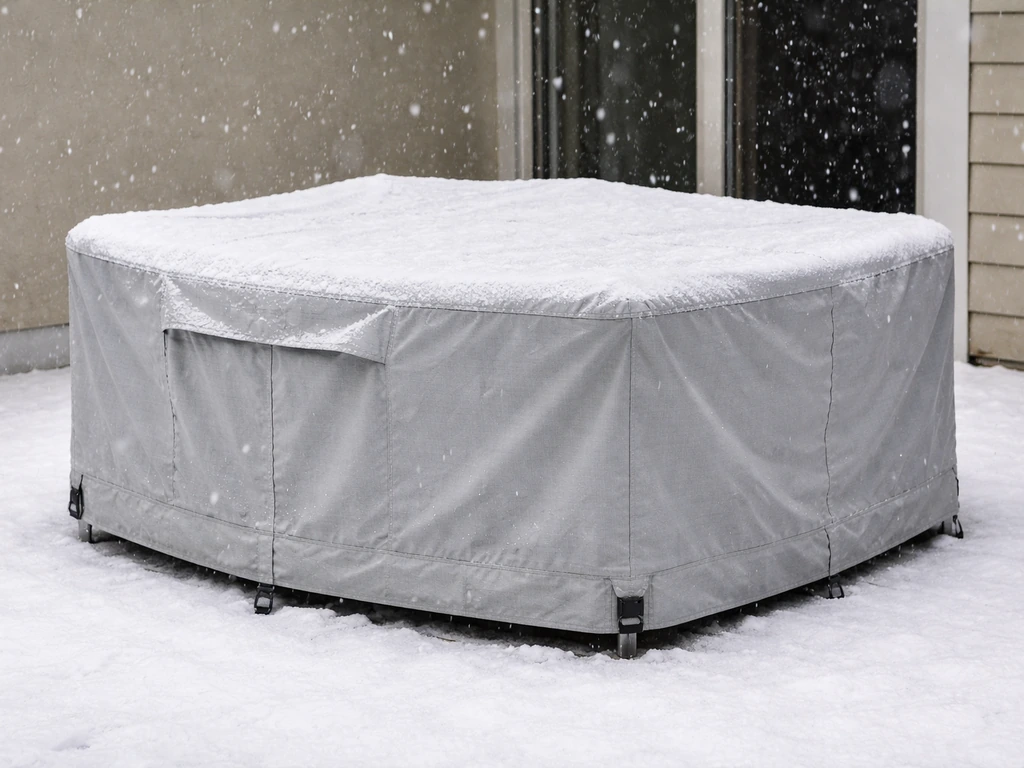
How to choose a snow-rated cover (fit, material, weather rating)
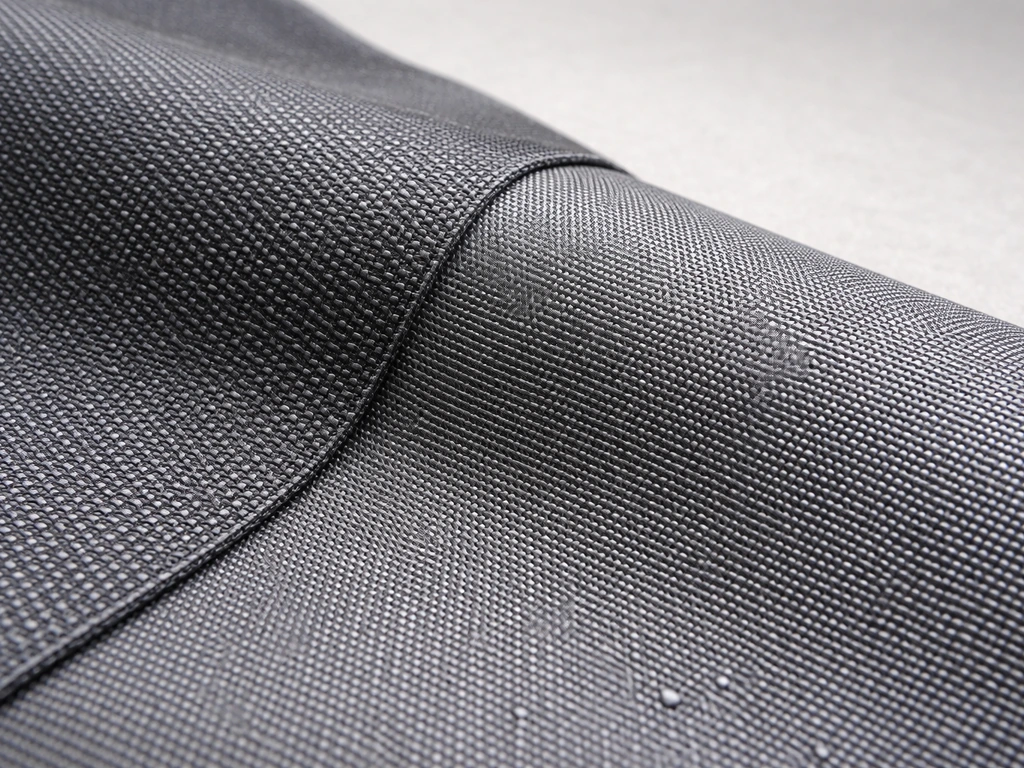
Start with material and denier rating. Denier is just a measure of fabric thread thickness. A 420D polyester cover is solid for moderate winters. If you get frequent heavy snow or your furniture sits fully exposed, step up to 600D. ULTCOVER, for example, explicitly positions its 600D PVC-coated covers as the better choice for regions with frequent heavy precipitation. The coating matters as much as the denier: look for PVC or PU coating on the underside, which is what actually blocks water from soaking through the woven fabric.
Next, think about breathability. This is where a lot of buyers go wrong. Fully sealed, 100% waterproof covers trap moisture under the cover, which leads to mildew on your furniture over a long winter. A breathable cover with a TPU membrane (like Shield Outdoor Covers uses) or a cover with mesh vents (like Classic Accessories' Veranda line) lets moisture vapor escape while still blocking rain and snow. Shield rates its breathable fabric at 6,000 to 10,000 mm water resistance, which is more than enough for snow exposure. The ideal setup: water-resistant fabric plus at least one vent, not a perfectly sealed plastic bag.
For fit, measure your furniture's full footprint, not just the tabletop. For a dining set, measure from the back of one chair across to the back of the chair directly opposite. Coverstore recommends ordering a cover 1 to 2 inches shorter than your furniture measurement so air can circulate rather than the cover hugging every surface. KoverRoos suggests choosing a cover that matches or goes slightly wider than the furniture width, but keeping the skirt length shorter than the tallest chair back so it clears the ground and doesn't collect standing water at the hem. The goal is snug enough to resist wind but not so tight that airflow is choked off.
For a cold-weather rating, check whether the cover material stays flexible in freezing temps. Shield Outdoor Covers tests its fabric down to -35°F. That matters more than you'd think: stiff, cracked fabric at low temperatures splits at seams and tears when you try to fold or adjust the cover mid-winter.
Best cover types for snow
Not every cover type handles snow equally well. Here's how the main options stack up and when to use each one.
Heavy-duty tarps
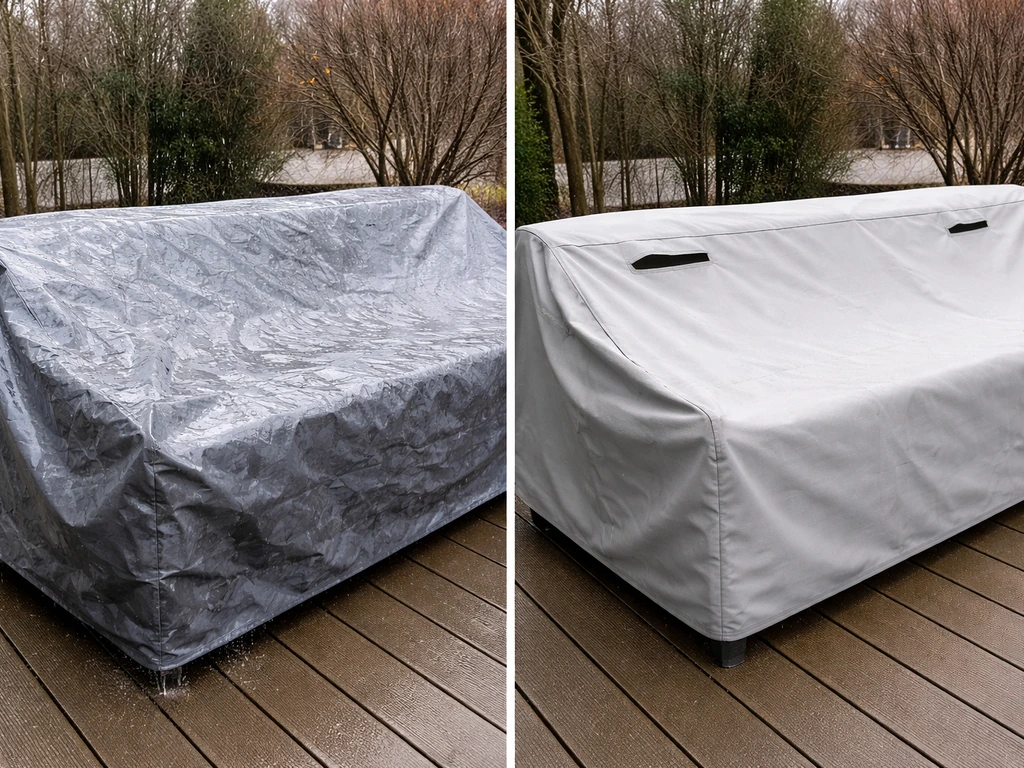
Tarps are cheap and genuinely waterproof, but they're also the worst option for anything longer than a single storm. They don't breathe at all, which means weeks of trapped condensation and a mildew problem when spring arrives. They also don't fit furniture shapes, so wind gets underneath easily. Use a tarp as a temporary emergency cover only, not as a seasonal solution.
Breathable polyester covers with vents
This is the best all-around choice for winter and snow. A 420D or 600D polyester cover with a PU or PVC backing blocks water penetration while the built-in vents let moisture vapor out. Brands like Classic Accessories and Shield Outdoor Covers are well-known in this category. Classic Accessories' Veranda covers include an elastic hem cord for a fitted bottom edge plus click-close straps that anchor to furniture legs. The combination of a tight hem and leg straps is what separates these from covers that blow off in the first serious windstorm.
Waterproof covers with taped seams and buckle straps
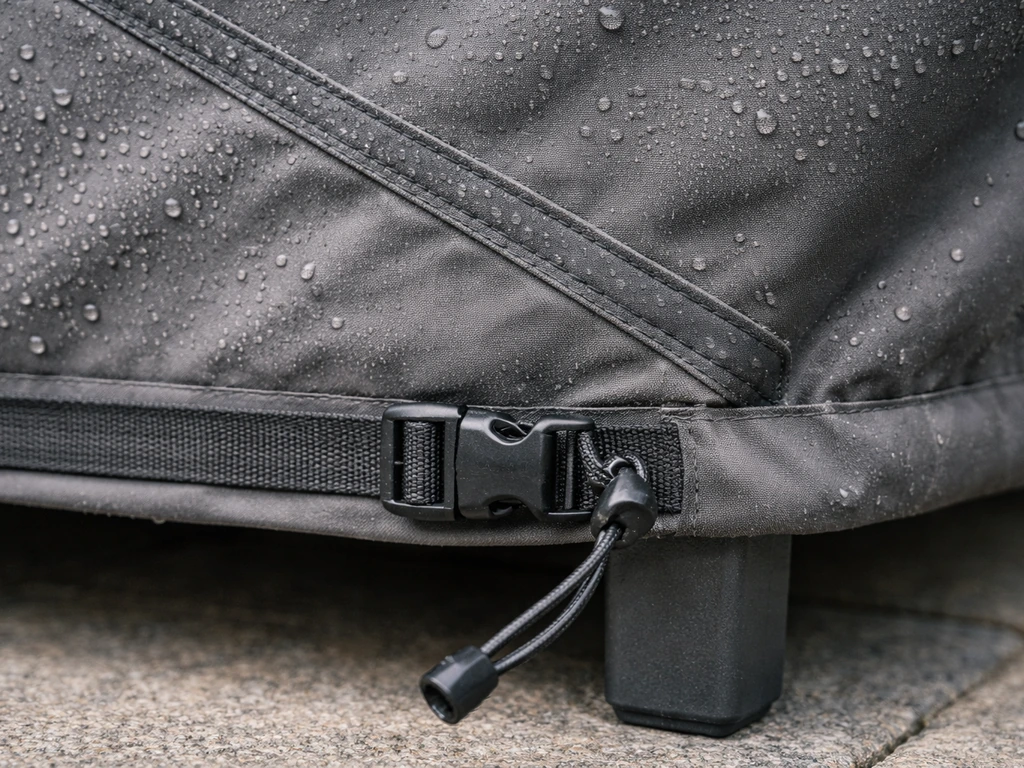
ULTCOVER's 600D line takes a different approach: fully waterproof tape on seams, high-density sewing, and a cord-lock plus buckle closure system. These are excellent for climates with heavy rain and moderate snow, where the priority is zero water penetration. The trade-off is that seam-taped waterproof covers need at least one vent to avoid moisture buildup, which ULTCOVER addresses with a directional airflow vent. If your area sees lots of wet, heavy snow (the kind that melts and refreezes), this is the category to shop in.
Furniture-specific fitted sets
Custom or semi-custom sets come with individual covers for each piece rather than one large cover draped over the whole arrangement. This is the right move for sectionals, L-shaped configurations, or any setup where a single large cover would create too many low spots for snow and water to pool. Individual piece covers also make it easier to check and re-secure specific covers after a storm without disturbing the whole setup.
Top picks by furniture style and size
| Furniture Type | Cover Type to Buy | Key Features to Prioritize | Size Tip |
|---|---|---|---|
| Dining set (4-6 chairs + table) | Single fitted dining set cover or individual piece covers | 600D fabric, elastic hem, buckle leg straps, air vent | Measure chair-back to opposite chair-back; buy 1-2 inches under measurement |
| Individual chairs (Adirondack, dining, papasan) | Chair-specific fitted covers | Elastic hem cord, air vents, click-close straps | Match exact chair height; avoid extra-long skirts that pool water |
| Dining table (without chairs) | Rectangular or round table cover | Taped seams, elastic hem, at least one vent | Measure table width and length at widest points |
| Lounge set / deep seating | Sectional or sofa cover with adjustable straps | Reinforced corners, multiple tie-down points, breathable membrane | Measure full sofa or sectional footprint including cushions |
| Sectional / L-shape | Individual piece covers per section | Drawcord hem on each piece, modular approach | Cover each section separately to avoid low-point pooling |
| Fire pit or accent table | Furniture-specific fire pit or round table cover | Cold-flexible fabric, drawcord, vent | Size to exact diameter; avoid oversized covers that flap |
For most homeowners with a standard 4-6 person dining set, a single large fitted dining cover in 600D polyester with an elastic hem and two leg straps is the simplest and most wind-secure setup. For deep-seating sectionals, individual piece covers are worth the extra cost because you avoid the sagging, pooling problem that a single large cover creates when snow accumulates in the middle.
Snow performance checklist
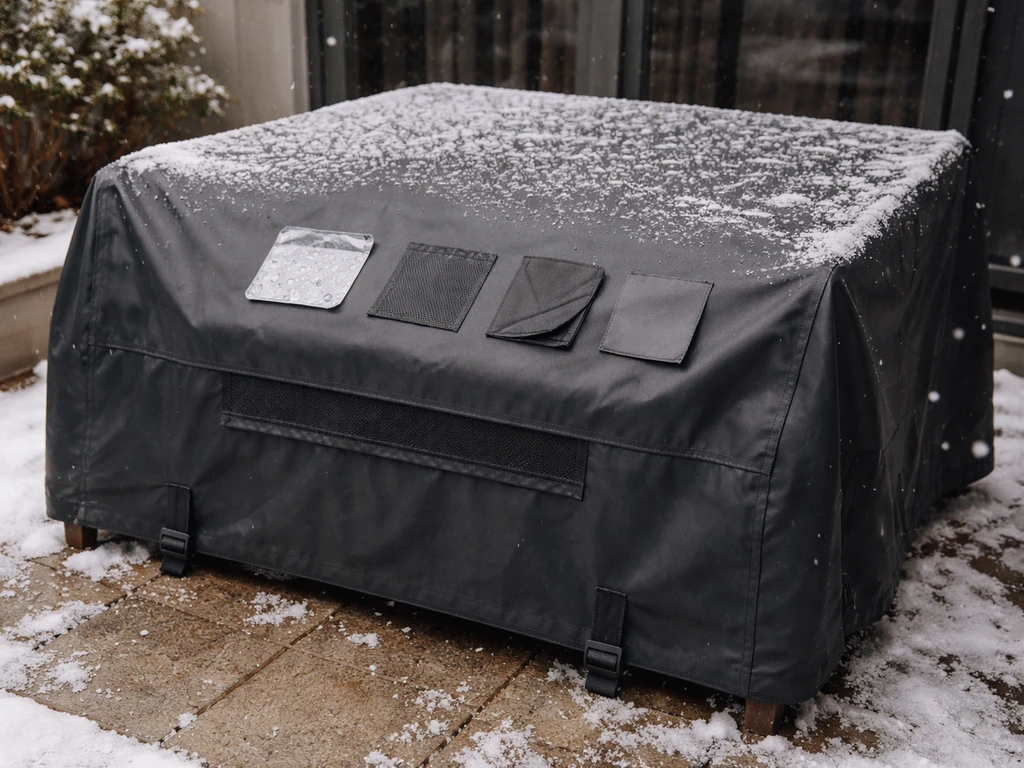
Before you buy any cover, run it through this checklist. A cover that checks all five boxes is genuinely ready for winter.
- Waterproofing or water resistance: Fabric should have a PU or PVC coating with a stated water-resistance rating (minimum 600 mm hydrostatic head; 3,000 mm or higher is better for snow climates). Taped seams are a bonus.
- Seam quality: Look for double-stitched or reinforced seams. Seams are where water gets in first, especially as snow melts and refreezes along the cover edges.
- Tie-downs and hem security: Elastic hem cord plus at least two buckle straps that anchor to furniture legs. The elastic hem closes the gap at the bottom; the straps keep the cover from lifting when wind gets underneath.
- Wind resistance: A cinching drawcord or elastic hem that tightens around the furniture base reduces the opening wind can exploit. Covers that just drape loose at the bottom are a liability in any significant wind.
- Ventilation: One or more built-in vents, ideally directional so they allow vapor out without letting rain or snow blow in. This is non-negotiable for covers staying on through a full winter season.
How to install the cover and build a seasonal routine
Fitting the cover correctly
Before covering your furniture for the season, wipe everything down and let it dry completely. Gloster's care documentation specifically flags this: covering damp furniture traps moisture from day one and creates a mildew problem no cover can fix. Stack or push chairs in toward the table to reduce the overall footprint and create a more uniform shape under the cover. This reduces low spots where water and snow can pool.
Drape the cover over the furniture starting from the top and work it down evenly on all sides. Then tighten the elastic hem cord or drawcord so the bottom edge cinches snugly around the furniture base. FrenchCovers explains that tightening the cord shrinks the opening at the bottom, which directly reduces the amount of wind that can get underneath and inflate the cover.
Fastening the straps
Once the hem is secured, attach buckle straps to the furniture legs. California Umbrella's cover guide recommends securing straps to the feet of the furniture piece specifically, then tucking any remaining cord underneath so it doesn't create a tripping hazard. Route straps around sturdy frame points and avoid running them across thin or decorative edges that could be scratched or bent over time. If your cover has click-close straps like Classic Accessories' Veranda line, these are easier to re-tighten after a storm than traditional drawcord-only systems.
Checking the cover after storms
After any significant snowfall, go out and brush accumulated snow off the cover before it compresses and creates a heavy load on the fabric and furniture underneath. Pooled, heavy snow is one of the main causes of cover sagging and frame stress. Check that the hem cord is still tight and the straps haven't been loosened by wind movement. If the cover has shifted and exposed a corner or leg, re-center it before the next storm. This is a 5-minute check that prevents most of the cover failures people complain about mid-winter.
At the end of winter, remove the cover, let it air dry fully, clean off any debris or mildew spots, and store it in a dry location. Covers that are folded and stored while still damp develop mildew in storage and deteriorate faster than their rated lifespan.
Common mistakes and how to fix them
Buying the wrong size
The most common mistake is measuring only the tabletop and ignoring the chairs. That same idea of choosing the right size also applies when you're shopping for the best patio table cover, since an ill-fitting option leaves gaps where wind can lift it. The cover needs to fit the entire furniture arrangement, including chairs pushed out to their normal positions. Measure the full footprint including chairs, then size accordingly. A cover that's too large creates excess fabric that catches wind and creates low points for snow and water to pool. A cover that's too small leaves furniture edges exposed and strains the hem seam.
Using a non-breathable cover through winter
A fully sealed plastic or vinyl cover seems like the most protective choice, but it's actually a mildew incubator. Temperature swings throughout winter cause condensation to form under the cover, and with nowhere to go, that moisture sits on cushions, frames, and fabric. Coverstore's editorial guidance on this is clear: good air circulation beats 100% waterproof for reducing mold and mildew risk over a full season.
Coverstore’s material differences page explains that woven polyester can let water pass through if it is not properly treated, and it notes that good air circulation helps reduce mold and mildew risk compared with relying on a claim of being fully waterproof, while its Elite covers use an elastic pull cord and locking system to improve fit good air circulation beats 100% waterproof for reducing mold and mildew risk over a full season. .
If your current cover has no vents, drill or cut a small vent hole protected by mesh, or replace it with a vented option.
Weak tie-downs leading to wind damage
A cover that blows off is worse than no cover at all because it can take objects with it or wrap around nearby plants and fixtures. If your cover keeps lifting in wind, the problem is almost always that the hem isn't cinched tight enough or the straps aren't anchored to the furniture legs. Tighten the drawcord until there's minimal gap at the bottom, then add leg straps if the cover doesn't already have them. Some people run a bungee cord around the full circumference of the cover at leg height as a backup anchor layer.
Expecting the cover to handle excessive snow load
No residential patio furniture cover is designed to function as a snow load barrier indefinitely. Heavy, wet snow compresses the cover against the furniture and can crack frames, break welds, or stress fabric seams beyond their rated strength. The fix is simple: brush the cover off after each significant snowfall rather than letting it accumulate. This also prevents the melt-and-refreeze cycle where water seeps into seam edges during the day and freezes at night, slowly degrading seam integrity.
Sagging and tearing at seams
Sagging usually happens when a cover is sized too large or when snow accumulates faster than expected. If you notice a consistent sag spot, place a lightweight prop (like a foam pool noodle or a plastic stool) under the cover at that point to redirect water and snow off the edge rather than letting it pool. For tears at seams, use waterproof seam sealer tape as a temporary fix, but treat it as a sign that the cover needs replacement before next winter since seam failures tend to propagate quickly under freeze-thaw stress.
How these covers compare to rain and sun covers
Snow covers share a lot of DNA with covers built for rain and sun, but the differences matter. The best waterproof patio furniture covers and the best patio covers for rain prioritize water penetration resistance above everything else, which sometimes means sacrificing breathability. A best patio table cover for winter should balance water protection with breathability and secure tie-downs so it stays in place and prevents moisture buildup.
Snow covers need that same water resistance but also need cold-flexible fabric that won't crack at -20°F and more robust tie-down systems because winter wind is typically stronger and more sustained than summer storm gusts. Covers optimized for sun protection, on the other hand, are built around UV resistance and heat management, not water or cold performance. Covers optimized for sun protection tend to be designed with UV-resistant materials and ventilation that helps the fabric manage heat.
If you're only buying one cover for year-round use, choose a snow-rated cover: it handles rain and moderate sun fine, while a sun or rain cover won't hold up through a serious winter.
FAQ
Are 420D covers enough for snow, or should I always buy 600D?
420D is usually fine for moderate winters, but if you get frequent heavy, wet snow or your furniture stays fully exposed, 600D polyester (with a real water-blocking backing) is a safer upgrade because it resists abrasion and stretching when the cover gets wet and heavy.
What “waterproof” should I look for, fabric-only or coated backing?
Don’t rely on the word waterproof alone. Prioritize PVC or PU coated backing (often on the underside) and reinforced seams. A high denier fabric without an effective backing can still wet through once melt-refreeze cycles start.
If I have a breathable cover, do I still need to brush snow off it?
Yes. Breathability helps with condensation, it does not make the cover a snow-load barrier. Brush off after significant snowfall so the cover does not compress and transfer weight to frames or seams.
Will a breathable cover actually prevent mildew, or just reduce it?
It reduces mildew risk by letting moisture vapor escape, but it cannot fix covering damp furniture. Wipe and fully dry your furniture first, and keep vents unobstructed so airflow can happen underneath over time.
Is it better to buy one large cover or individual covers for a set?
Use individual covers for deep seating, sectionals, or L-shaped layouts because a single large cover tends to sag in the middle and creates low spots where snow pools. For standard dining sets, a well-fitting single cover with a cinched hem and leg straps is usually the simplest and most secure.
How tight should the hem cord or drawcord be in winter?
Snug, not warped. Tighten until there is minimal gap at the bottom, so wind can’t get underneath, but avoid over-tensioning that twists the cover or pulls stress into seam lines.
My cover keeps lifting at one corner, what’s the likely cause?
Most often it’s insufficient bottom cinch or a strap anchored to the wrong frame point. Re-center the cover, confirm the hem cord is even around the perimeter, then re-attach straps to sturdier leg or frame areas (and avoid fastening to thin decorative edges).
Can I cut a vent hole in a cover that has no vents?
It can work as a retrofit if you protect the opening with mesh so insects and debris stay out. However, it can also affect water resistance and seam integrity, so it’s best when done carefully and only for covers that otherwise meet snow durability requirements.
What should I do if seams start leaking during winter?
First, reseal only as a short-term fix using waterproof seam sealer tape. Then plan to replace the cover before next season, because freeze-thaw stress usually causes small seam failures to spread quickly.
How do I handle snow melt and refreeze on the seams?
The goal is to prevent prolonged wetness at seam edges. Brush off snow promptly after storms, and after the season let the cover fully air dry and clean off any mildew spots so you don’t store trapped moisture.
Should I store covers folded or hanging at the end of winter?
Store them only when completely dry. If you hang them, avoid sharp points that crease fabric, and if you fold, make lighter folds rather than tight creases to reduce stress on seams and coatings.
Can I use a tarp instead of a snow-rated cover?
Only as an emergency, short-duration solution. Tarps trap condensation and don’t vent, which increases mildew risk. If you must use one temporarily, ventilate when conditions allow and replace it with a vented, snow-ready cover as soon as possible.
What’s the best way to prevent pooling if I sized the cover slightly wrong?
If you have consistent sag in one area, use a lightweight prop under the cover at that point to redirect water and snow off the edge. If you regularly see exposed furniture edges or excessive looseness, sizing is likely off and replacement may be the real fix.
How do I know whether my cover is cold-flexible enough?
Look for an explicit low-temperature rating from the manufacturer and treat it as a minimum. If the cover stiffens or cracks when you adjust it mid-winter, it may be too stiff for your conditions and can split at seams.
Next Articles
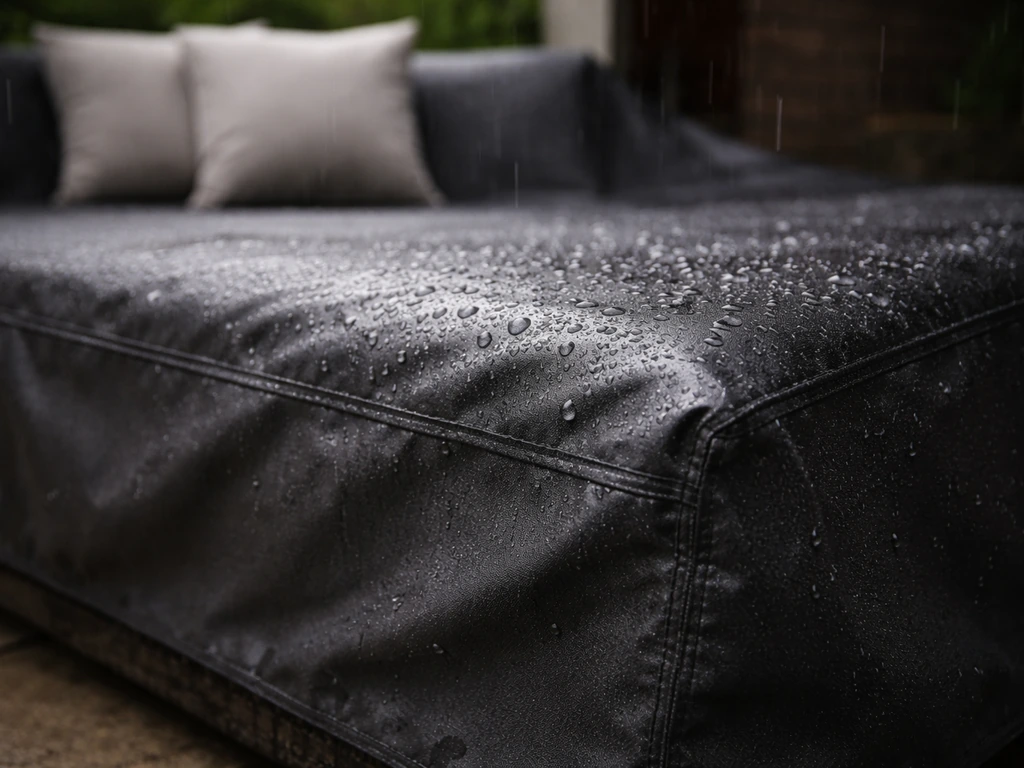
Best Waterproof Patio Furniture Covers: Buying Guide
Choose the best waterproof patio furniture covers with fit measuring tips, key features, and top rated picks.
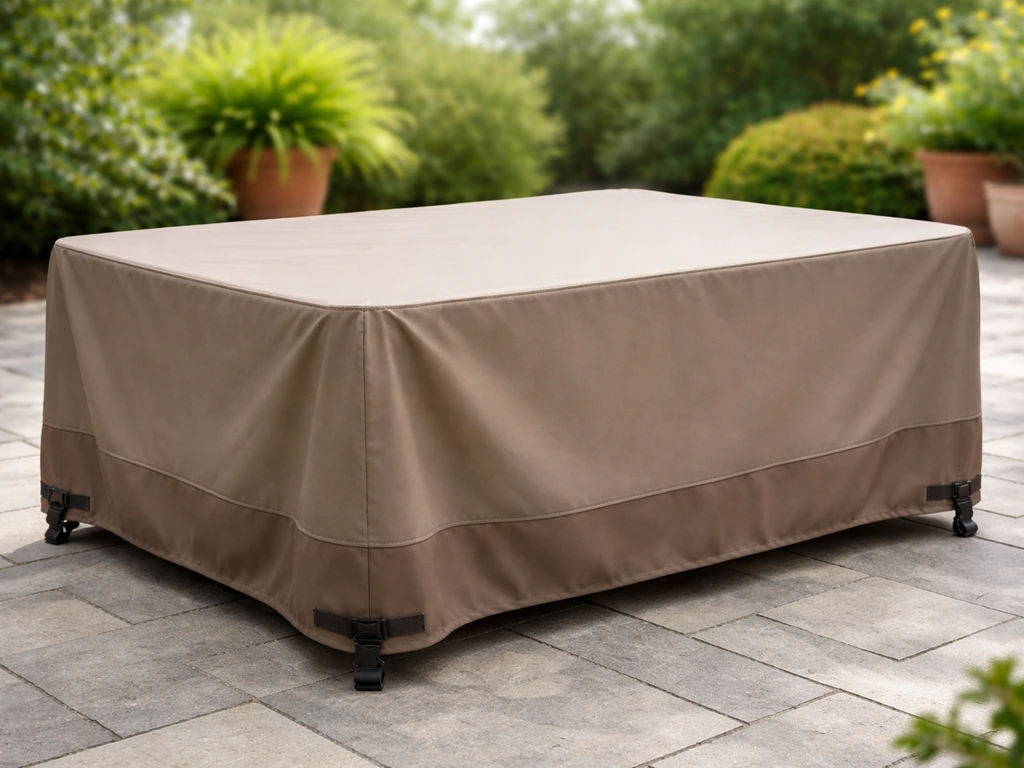
Best Patio Table Cover Guide: Fit, Materials, and Top Picks
Choose the best patio table cover with the right fit, waterproof materials, wind straps, and care tips for any table siz
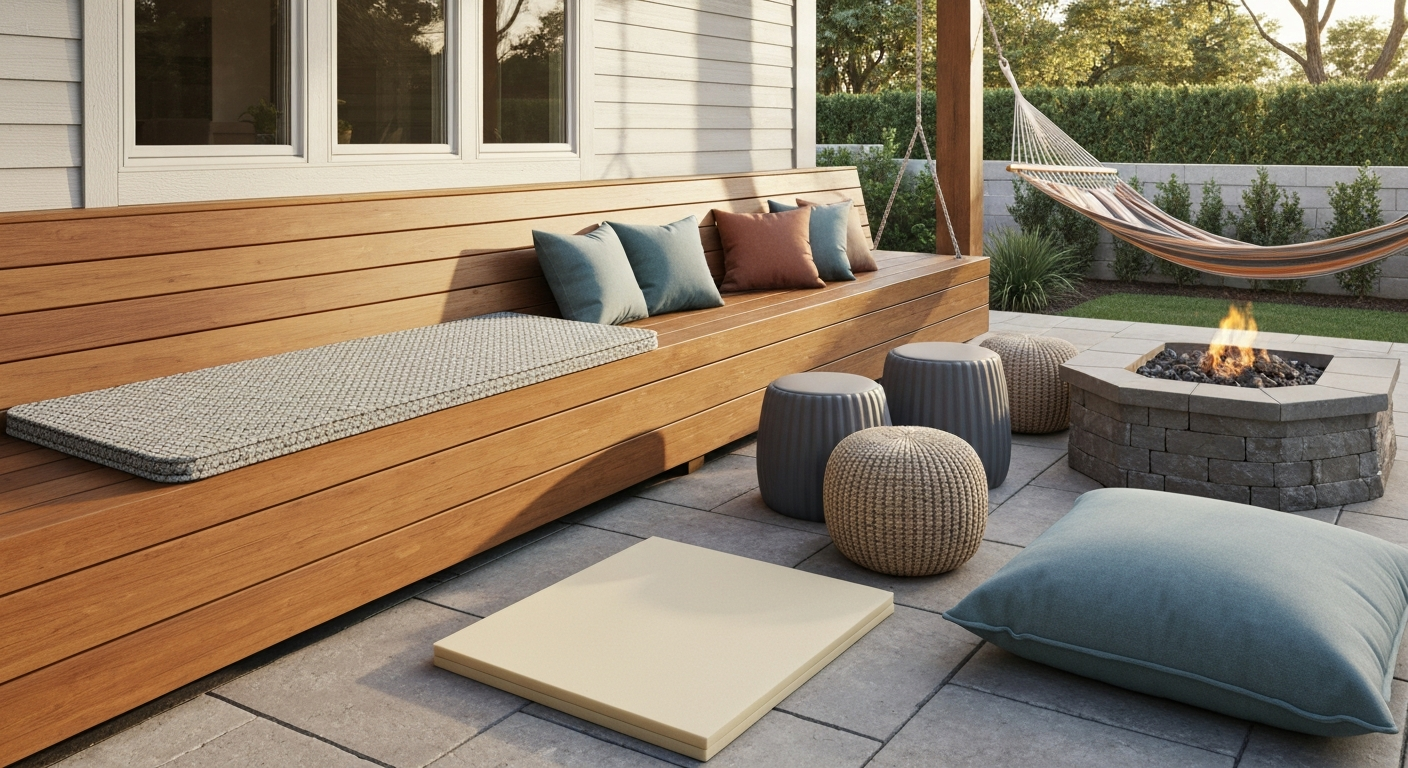
Alternative to Patio Cushions: Durable, Stylish Options and DIY
Alternative to patio cushions: durable, weatherproof seating options, pros, DIY tips & buying guide.