
For heavy or frequent rain, a solid aluminum patio cover (sometimes called an Alumawood-style cover) or a polycarbonate-panel pergola gives you the most reliable, hands-off protection. If you rent or want something removable, a retractable awning or a heavy-duty canopy shelter is your best realistic option. And if what you actually need is to keep your furniture dry rather than cover the whole patio, a properly fitted waterproof furniture cover does the job for a fraction of the price. The right answer depends on how much rain you get, whether you own or rent, and how much of your patio you need to keep usable in a downpour.
Best Patio Covers for Rain: Buyer Guide and Top Picks

Lark Perry
28 Jun 2026
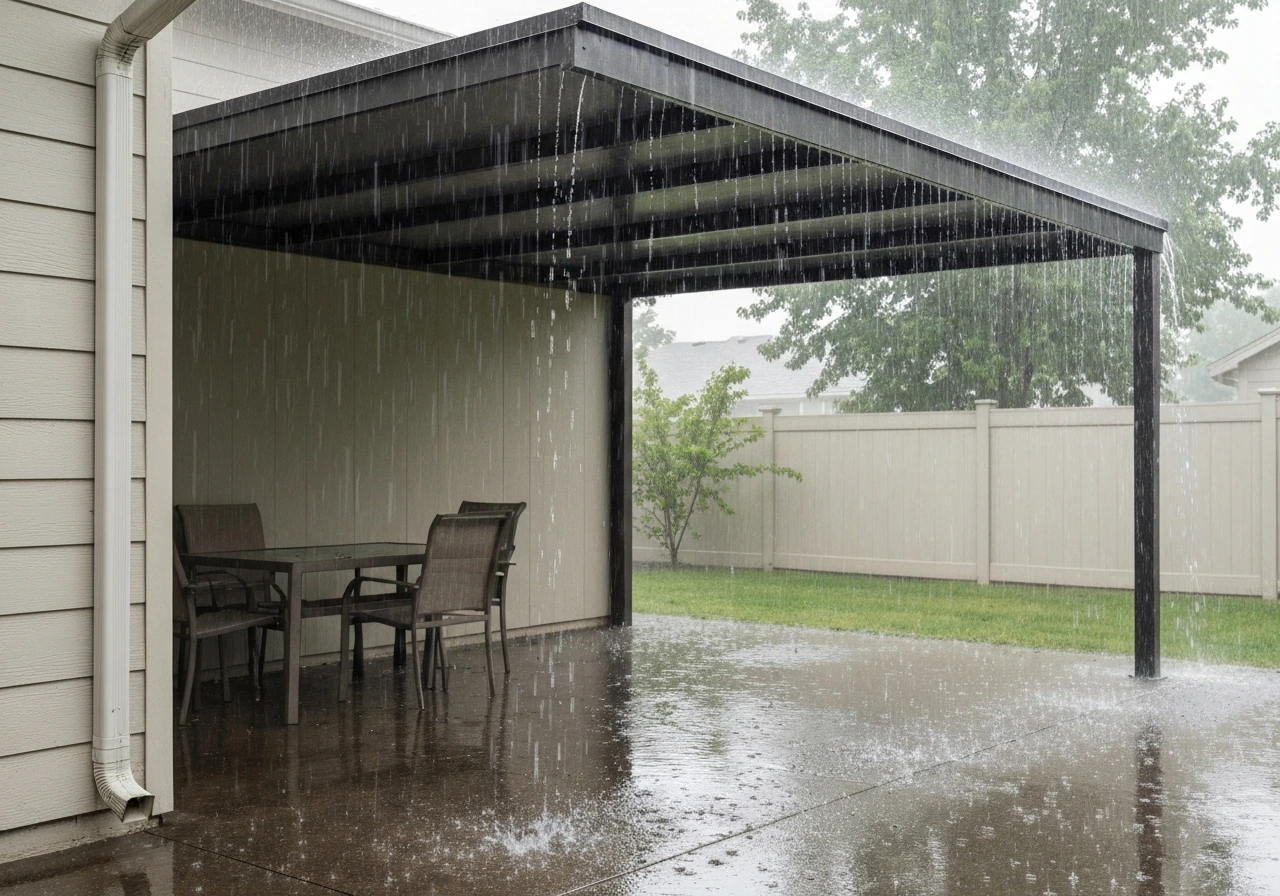
Best patio cover type for your rain situation
Not every rain problem calls for the same solution. Here is how to match the cover type to your actual situation.
| Your situation | Best cover type |
|---|---|
| Heavy rain, you own the home, want a permanent solution | Solid aluminum or polycarbonate fixed roof cover |
| Moderate rain, want natural light or a semi-open feel | Pergola with corrugated polycarbonate or louvered roof panels |
| Renter or want flexibility, moderate rain | Retractable awning or freestanding canopy shelter |
| Light to moderate rain, mainly protecting furniture | Waterproof patio furniture covers |
| Heavy wind + rain, coastal or storm-prone area | Fixed aluminum cover with downspouts and wind-rated anchoring |
| Occasional rain, tight budget | Breathable water-resistant furniture covers + a pop-up canopy for wet days |
Fixed roof vs. awning vs. pergola vs. retractable canopy in the rain
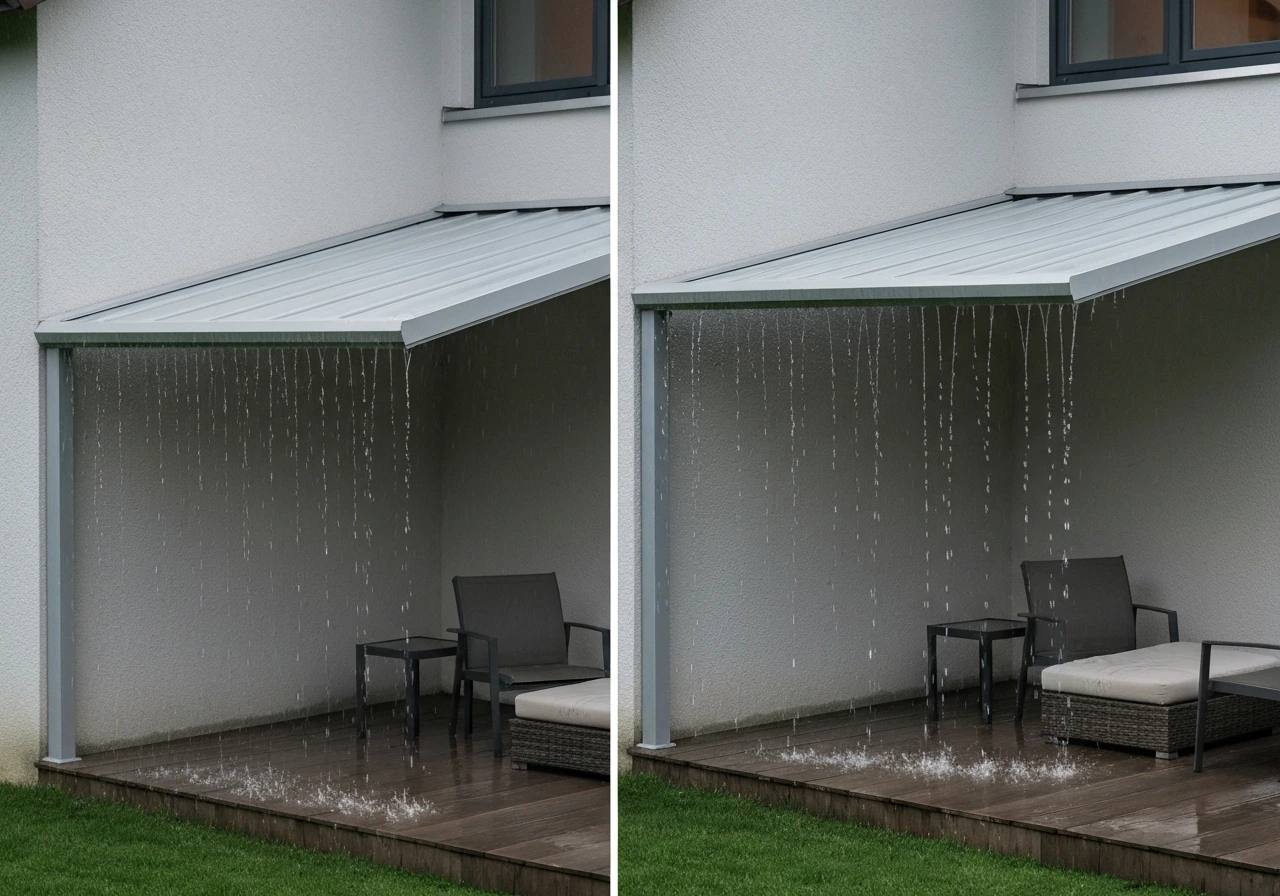
Fixed solid roof cover (aluminum or polycarbonate)
This is the gold standard for rain protection. A properly installed solid aluminum cover with a pitch of at least 1/4 inch per foot (and no more than 1 inch per foot) will shed water completely and keep the area underneath bone dry. Aluminum covers are lightweight, rust-proof, and can last 20 to 30 years with almost no maintenance. Polycarbonate panels do the same job and let light through, which is a real advantage if your patio would otherwise feel like a cave. The trade-off is cost and commitment: expect $3,000 to $15,000 or more installed depending on size, material, and whether you need permits. Almost every municipality requires a permit for a permanent attached patio cover, and many cities (like Wilsonville, OR) require the covered structure to sit at least 3 feet from any property line. You also need to plan drainage. The rule of thumb is one downspout for every 15 to 20 feet of cover length, and if you skip this step, rainwater that pours off the leading edge can cause staining or moisture damage to the wall behind it. Good installers also check for wind exposure conditions and match the engineering to local wind requirements, so do not skip that step either. For example, the Alumawood engineering packet discusses factors like rain accumulation and how the design should be matched to local wind requirements and city permitting guidance.
- Pros: Complete rain protection, permanent, durable, adds home value
- Cons: Expensive, requires permits, not renter-friendly, needs proper drainage planning
- Best for: Homeowners in rainy climates who want a fully usable outdoor space year-round
Pergola with rain-control options (louvered roof or polycarbonate panels)
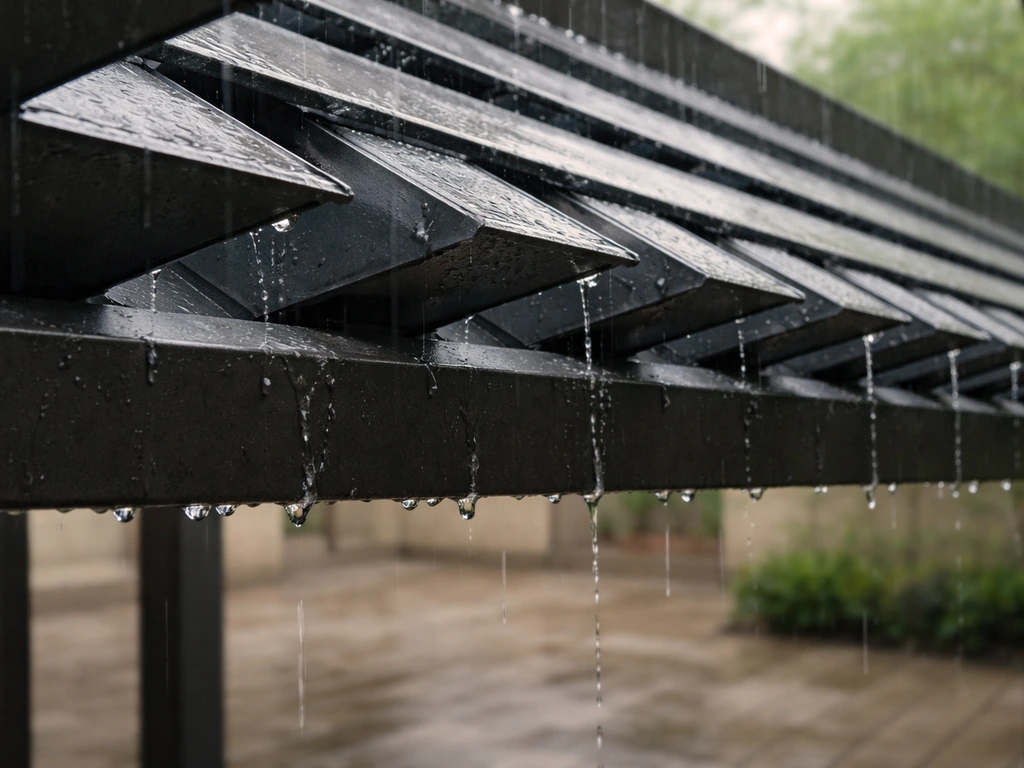
A standard open-lattice pergola does almost nothing in the rain, but a pergola fitted with adjustable louvered roof panels or corrugated polycarbonate sheeting is a genuinely useful rain cover. Louvered pergolas (motorized or manual) let you close the roof when rain hits and open it when the sun comes out. They look great and feel less heavy than a solid cover. The downside: louvered systems are expensive, starting around $5,000 for a basic kit and running well above $15,000 for motorized versions with full enclosure options. Polycarbonate panel inserts are a much cheaper retrofit option for existing pergolas and will shed rain reasonably well if the panels are installed with enough pitch. One watch-out: flat or near-flat polycarbonate panels pool water and eventually leak at the seams, so make sure there is enough slope built in.
- Pros: Flexible (open or closed), attractive, good light transmission with polycarbonate
- Cons: Expensive for motorized versions, open lattice alone is useless in rain, drainage still needed
- Best for: Homeowners who want rain protection but also want to enjoy sunny days fully open
Retractable awning
A retractable awning attached to the house wall is the best option for renters who can get landlord approval for a wall mount, or for homeowners who want rain coverage they can roll away. Most quality retractable awnings use solution-dyed acrylic fabric that is highly water-resistant but not technically waterproof under heavy downpours. The bigger problem is pitch: a retractable awning typically pitches between 5 and 15 degrees, which is enough to shed light rain but can sag and pool water in a heavy storm if the fabric stretches. Always retract an awning in strong wind. Most manufacturers rate their awnings for wind up to 25 to 35 mph and recommend retracting below that threshold. For rain coverage alone, a retractable awning works well for most of the year in temperate climates. Budget around $700 to $2,500 for a quality manual or motorized unit.
- Pros: Renter-compatible (usually just wall screws), retractable, moderate cost, good for light to moderate rain
- Cons: Not waterproof under sustained heavy rain, must retract in high wind, fabric needs periodic reproofing
- Best for: Renters or homeowners who want flexible coverage and do not need storm-level rain protection
Freestanding canopy shelter
A freestanding steel or aluminum canopy shelter (the kind with four legs, a fabric or polycarbonate roof, and optional side walls) is the most accessible and budget-friendly structural option. You can get a decent 10x10 or 10x20 unit for $150 to $800. The main limitations in rain are wind resistance and roof material. Cheap pop-up canopies with thin polyester roofs will leak in heavy rain and can collapse in moderate wind. For serious rain use, look for canopies with a 500D polyester or heavier roof fabric, a steel or reinforced aluminum frame, and anchor points you can actually use. Weight bags or ground stakes are not optional in wind. A polycarbonate-roof gazebo shelter is more rigid and handles rain better than fabric, and some models are semi-permanent enough to feel like a real outdoor room.
- Pros: No permits required (usually), no permanent installation, affordable, renter-friendly
- Cons: Lower wind rating than fixed structures, fabric versions may leak in heavy rain, looks less polished
- Best for: Renters, budget-conscious buyers, or anyone who wants a portable rain shelter
What to actually look for when buying a rain cover
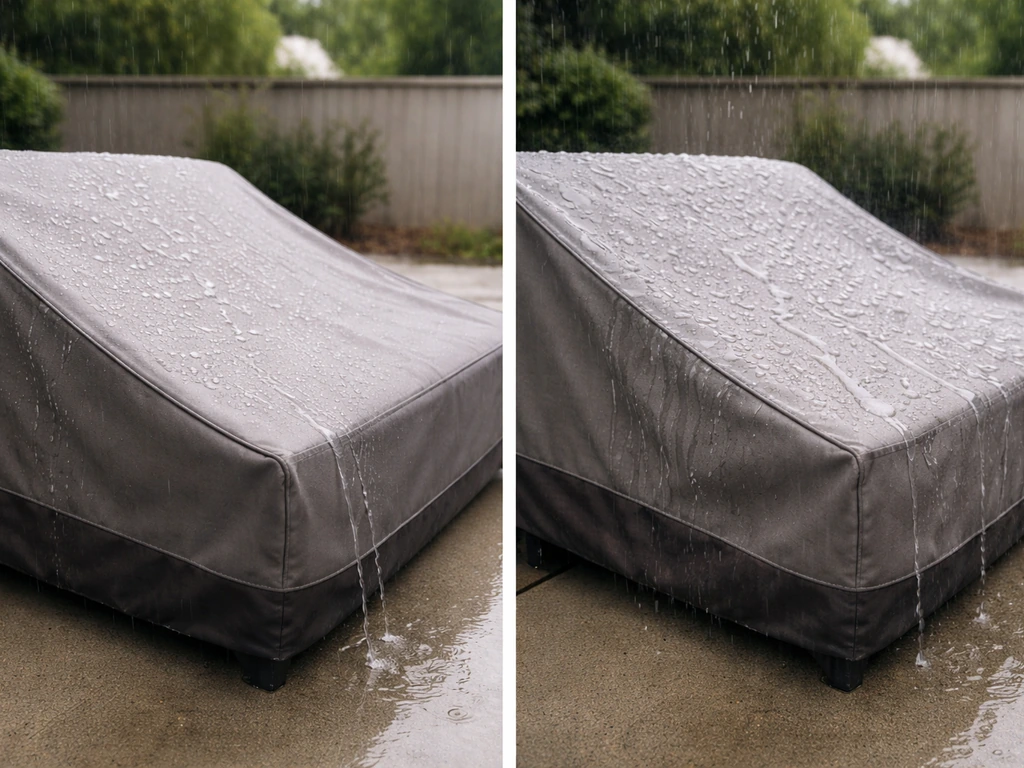
Pitch and water runoff direction
This is where most DIY buyers go wrong. Any solid cover needs enough slope to move water off the surface and away from the house. For aluminum patio covers, the recommended minimum pitch is 1/4 inch per foot, with a maximum of 1 inch per foot. Less than that and water sits on the surface; more than that and it looks awkward and can create clearance problems at the wall. Just as important is where the water goes when it runs off. If the cover drains toward your house wall, you will get staining and long-term moisture damage. Always design or position your cover so water runs toward the yard, not the structure.
Drainage: downspouts and scuppers
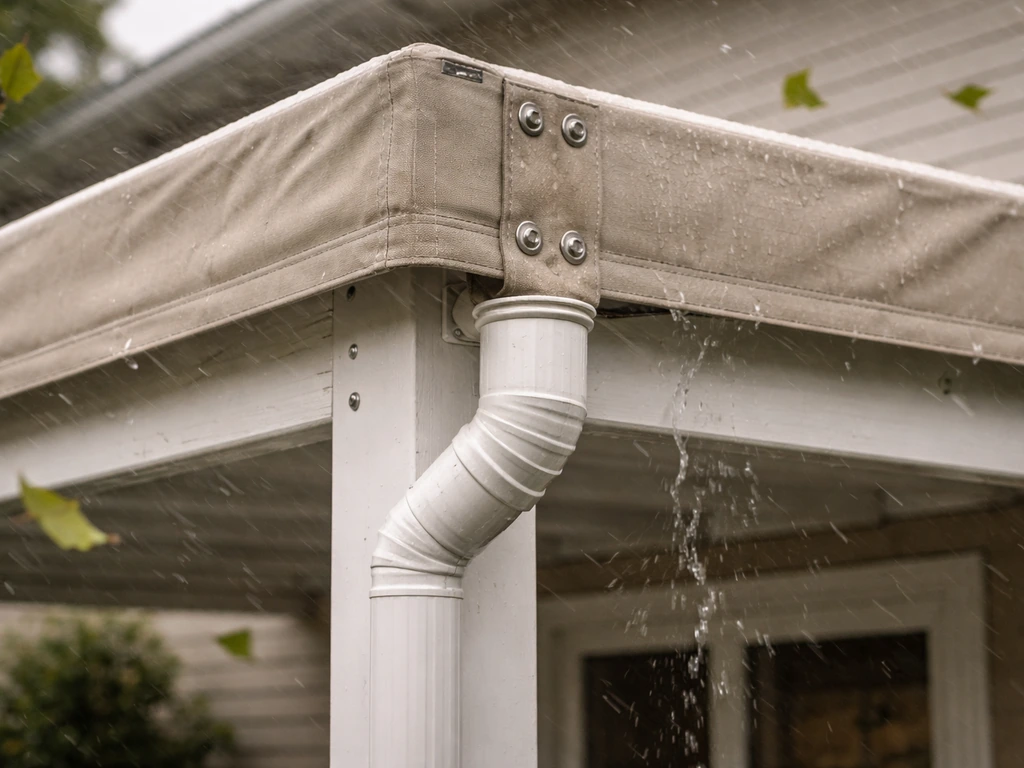
For any solid cover larger than about 10 feet wide, you need to think about gutters and downspouts. The practical rule is one downspout for every 15 to 20 feet of cover length. Scuppers (open slots in the fascia) are a simpler alternative but can splash on windy days. If your home already has gutters, make sure your patio cover connects to them or at least does not route water onto the roof above. Missed drainage is the number one cause of wet wall staining under patio covers. Aluma Covers’ precautions also warn that “wet wall” staining can happen under a solid patio cover during moderate-to-heavy rainfall if there is no independent gutter system to redirect roof water away from the stucco and fascia below the cover “wet wall” staining under patio covers during moderate-to-heavy rainfall without an independent gutter system.
Wind rating
Rain and wind almost always show up together. A cover that handles 2 inches of rain but fails in a 40 mph gust is useless in a real storm. For fixed structures, look for engineering documentation that matches your local wind zone requirements. Your city's building department can tell you what wind speed the structure needs to be rated for. For retractable awnings, check the manufacturer's wind rating and retract before it is reached. For canopy shelters, treat any rating above 30 mph with skepticism unless the unit has heavy-gauge steel poles and serious anchor points.
Materials at a glance
| Material | Rain performance | Durability | Maintenance | Cost range |
|---|---|---|---|---|
| Aluminum (solid cover) | Excellent | 20-30+ years | Low | $$-$$$ |
| Polycarbonate panels | Very good (needs slope) | 10-20 years | Low-medium | $-$$ |
| Acrylic fabric (awning) | Good (light-moderate rain) | 7-15 years | Medium | $-$$ |
| Steel-frame canopy fabric | Fair (depends on fabric weight) | 3-10 years | Medium | $ |
| Wood pergola (open) | Poor (no rain protection) | 10-20 years treated | High | $$-$$$ |
| Louvered aluminum pergola | Excellent when closed | 15-25 years | Low-medium | $$$-$$$$ |
What to choose based on your setup and budget
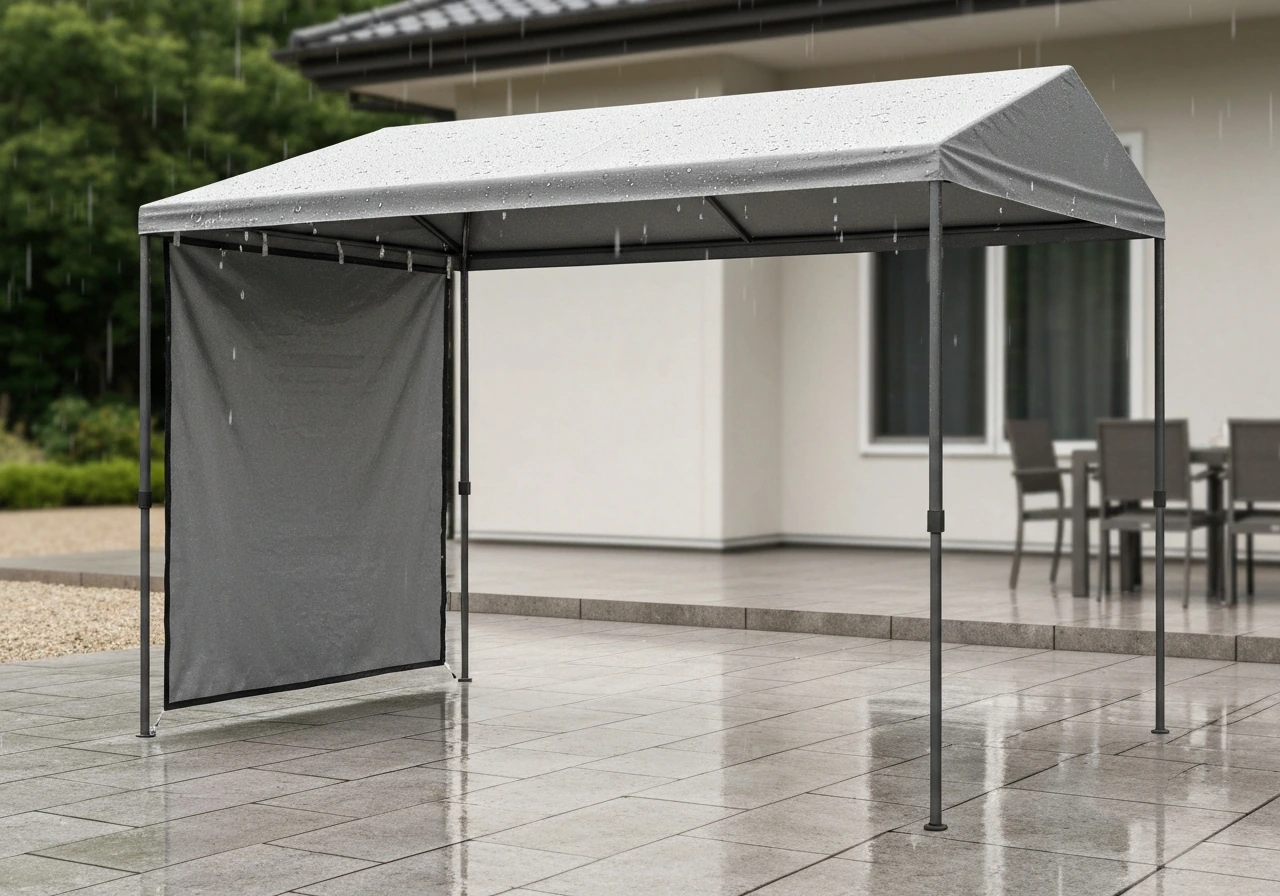
Here is how to match the right cover to your actual situation without overcomplicating it.
Renters or under $500
A freestanding canopy shelter with a 500D or heavier roof and steel frame is your best bet. Look for a 10x10 or 10x20 model with at least four anchor points and optional sidewall panels for blowing rain. Pair it with waterproof furniture covers (more on those below) to protect what is not under the canopy. Waterproof patio furniture covers are a budget-friendly way to keep cushions and seating dry when rain drifts off the edges of your cover waterproof furniture covers. A retractable awning wall-mounted to the building is also possible with landlord approval, and a quality manual unit runs $700 to $1,000.
Homeowners spending $1,000 to $5,000
A DIY aluminum solid patio cover kit is the best value in this range. Brands like Alumawood sell direct-to-homeowner kits that you can assemble with basic tools, and a 12x16 ft solid cover with posts, gutters, and downspouts lands around $2,000 to $4,000 in materials. Factor in permit costs (usually $150 to $500 depending on your city) and a weekend or two of work. A retractable awning also fits this budget and gives you more flexibility.
Homeowners spending $5,000 and up
A professionally installed aluminum solid cover, a polycarbonate-panel pergola, or a motorized louvered pergola all become realistic options. If you want the most livable outdoor space in wet weather, a solid roof cover with proper gutters and optional screened or curtained sides is genuinely transformative. A motorized louvered pergola gives you the most flexibility but commands a premium. At this budget, get two or three quotes and ask each contractor specifically about drainage planning and wind engineering for your area.
Patio furniture covers for rain: waterproof vs. water-resistant vs. breathable
Structural patio covers and furniture covers solve two different problems, and it is worth being clear about which one you actually need. A structural cover keeps the patio usable in rain. A furniture cover protects chairs, sofas, and tables when you are not using them. If you are trying to protect your dining set or outdoor table in wet weather, you will also want to choose the best patio table cover for your climate and how the cover will be secured. Most people need both, but if budget is tight, furniture covers alone are a reasonable starting point.
Waterproof covers
True waterproof furniture covers use materials like heavy PVC, thick polyester with a waterproof coating (600D polyester or higher), or oxford fabric with taped seams. Water beads off and does not penetrate, even in sustained rain. The trade-off is breathability: waterproof covers trap moisture underneath, which can cause mildew on furniture cushions if the cover goes on before the furniture is fully dry. If you live somewhere with frequent rain and high humidity, look for waterproof covers that have air vents built into the seams.
Water-resistant covers
Water-resistant covers handle light to moderate rain but will eventually wet through in a prolonged downpour. They are typically more breathable and less likely to trap condensation underneath. For climates where rain is occasional or light, a quality water-resistant cover is usually enough and often more comfortable for the furniture. Many covers start as water-resistant and can be reproofed with a spray-on DWR (Durable Water Repellent) treatment once the factory coating fades.
Breathable covers
Breathable covers are designed primarily to prevent mildew and moisture buildup under the cover, and are best suited for furniture stored in covered areas (like under a solid patio cover or in a garage). They are not rain covers on their own. If you are relying on them outdoors in a rainy climate, you will be disappointed. That said, if you have already solved the rain problem with a structural cover and your main concern is keeping furniture clean and mold-free, breathable covers are actually the better long-term choice. This choice overlaps with considerations for sun covers and all-season furniture protection, which is worth thinking about if you are buying covers for year-round use.
How to choose, size, and maintain furniture covers
Getting the right fit
A cover that is too large will balloon in wind, collect standing water, and eventually blow off. One that is too small leaves parts of the furniture exposed. Measure each piece of furniture at its widest point (including armrests and any cushion overhang) and its height with cushions in place. Add about 2 to 4 inches to each dimension for clearance. Most manufacturers sell covers by furniture category (sofa, loveseat, dining set, lounge chair) and provide dimension ranges, so compare your measurements to their size guide before buying. If a piece is between sizes, go larger and rely on the tie-down system to keep it snug.
Tie-downs and wind straps
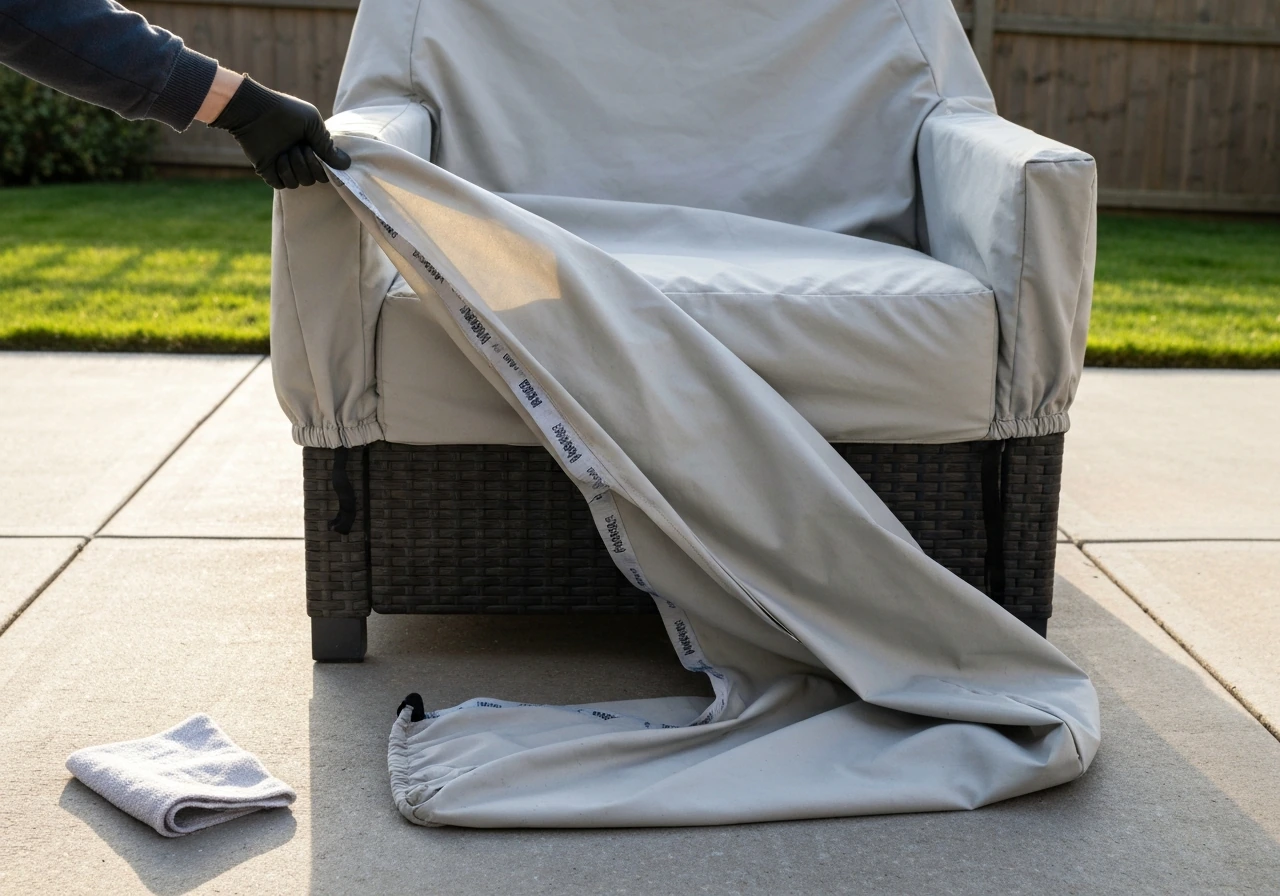
Any furniture cover used outdoors needs a way to stay put in wind. Look for covers with elastic hems at the base, drawstring closures, or buckle straps that cinch under the furniture legs. Elastic hem alone is fine for calm conditions, but in areas with gusty weather you really want straps or a drawstring you can tighten. Some covers use a combination of all three. Do not skip this feature: a cover that lifts and fills with air in a storm is useless and can actually damage the furniture as it flaps around.
Mildew prevention and maintenance
Mildew under furniture covers is almost always caused by one of two things: covering wet furniture, or leaving covers on too long in warm and humid conditions. Let furniture dry completely before putting covers on after rain. During long stretches of warm weather with no rain forecast, pull the covers off and let everything air out. Clean covers at least twice a year with mild soap, a soft brush, and water. Avoid bleach on fabric covers as it degrades the waterproof coating. When the cover starts to let water through instead of beading it off, it is time to reapply a DWR spray. Most covers need reproofing every one to two seasons depending on how much UV and rain exposure they get.
Installation, sizing, and next steps
Measuring your space
For a structural cover, measure the width of the patio area you want covered and the depth from the house wall (or from post to post if freestanding). Note any obstructions like doors, windows, or exterior lights that will affect attachment points. Check your property lines: most cities require any covered patio structure to sit at least 3 feet from the property line, and permits are typically required for anything permanently attached to the house. Pull that requirement before you design anything, because finding out after installation is painful.
Renter-specific options
If you rent, your best structural options are freestanding canopy shelters (no wall attachment needed) and retractable awnings mounted with your landlord's written permission. Freestanding options leave no permanent marks and can move with you. For furniture, waterproof covers are a no-brainer since they require zero installation. If you are in a particularly rainy climate, a combination of a freestanding polycarbonate-roof gazebo plus waterproof furniture covers gets you surprisingly close to a permanent solution at a fraction of the cost.
Common mistakes to avoid
- Installing a cover with no slope: water pools, seams leak, and the cover fails early
- Forgetting drainage: no downspouts or gutters means water pours off the edge and damages your wall or creates a moat around your patio
- Underestimating wind: a cover rated only for rain can become a sail in a storm. Always check the wind rating
- Wrong furniture cover size: too big means pooling water and wind lift; too small means exposed furniture edges
- Covering wet furniture: the fastest way to grow mildew under a cover
- Skipping permits: an unpermitted permanent structure can cause insurance and resale problems
Maintenance checklist
- Inspect the cover pitch and drainage every spring: clear any debris from gutters and downspouts
- Check all fasteners, screws, and anchor points after any major wind event
- Clean fabric awnings and canopy covers twice a year with mild soap and a soft brush
- Reapply DWR waterproofing spray to fabric covers when water stops beading off
- Let furniture dry completely before covering after rain
- Lift furniture covers and air out furniture during extended warm, humid periods
- Check for mildew or rust on metal cover frames once a year and treat immediately
The bottom line is that solving the rain problem on your patio is not one-size-fits-all, but it is also not that complicated once you know which category of problem you are solving. If you want a dry, usable patio during rain, invest in a structural cover sized and sloped correctly with proper drainage. If you mainly want to protect furniture between uses, quality waterproof furniture covers do the job well. For winter weather, prioritize covers labeled for snow and use proper tie-downs so ice and gusts do not shift the fabric. Many people end up using both, and that combination gives you the most complete protection for the least ongoing hassle. Start by measuring your space, checking your local permit requirements, and deciding whether you are a homeowner making a permanent investment or a renter who needs a portable solution. That single decision narrows down your options faster than anything else.
FAQ
Will polycarbonate patio cover panels leak if they are close to flat?
Yes, but only if the pitch is built in and the edges drain away from the house. A flat top or near-flat panels can trap water, which increases seam leaks and staining. If you have an existing pergola, confirm the manufacturer’s required slope, then plan downspouts or runoff paths so water does not discharge at the wall or near soffits.
Are retractable awnings actually waterproof in heavy rain?
Look beyond the fabric label, check the actual waterproofing method (taped seams or sealed/laminated panels) and the enclosure design. “Water-resistant” awnings are meant to shed light rain, but without adequate pitch and sealed valances, wind-driven rain can blow under the edge and onto the furniture.
How do I make sure my patio cover drains in the right direction?
For structural covers, you want water to run to gutters or directly into a controlled discharge point (yard drainage or a properly routed downspout). If runoff will fall toward the foundation, you can create long-term moisture problems even when the patio stays dry. A simple way to test is to simulate rain with a garden hose and watch where the water lands during the flow.
What happens if my solid patio cover is pitched correctly, but the gutters are undersized?
Use the pitch range as a guide, then verify with your installer that guttering and fascia design maintain that slope from the leading edge to the downspouts. Even if the roof has correct pitch, a missing or undersized gutter can cause overflow at the corners, which then stains the wall.
Do I need a permit or HOA approval for patio covers, and what changes if I rent?
In many areas, permits and setbacks apply to attached structures, and HOA rules can add additional limits. For renters, even retractable awnings can be restricted, so get landlord written approval before mounting brackets to siding or fascia, and confirm what happens at move-out (patching, removal, or restoration).
How can I tell whether a patio cover will fail in wind even if it handles rain well?
Wind is usually the failure point, not roof wetness. Check the structural rating for your wind zone and ensure the posts are engineered for soil conditions or concrete footings, not just surface stakes. For canopies, prioritize models with metal corner braces and multiple usable anchor points, and treat high wind ratings as meaningful only if anchoring is specified.
Can furniture covers replace a structural rain cover for all-weather storms?
Often no for removable furniture-only protection. A “rain-rated” furniture cover may still let water in during long storms if seams are not sealed or the fabric is not truly waterproof. If your goal is rain protection, choose covers that state waterproof construction and then use straps or drawstrings so the cover does not lift and create gaps.
Why do I get mildew under waterproof furniture covers after rain?
Let cushions and fabric dry fully, then cover. In warm humid conditions, covering too soon can trap moisture and lead to mildew even with waterproof covers. Also plan to periodically remove covers on dry days, especially after multi-day rainy stretches.
Should I buy a furniture cover that is exact size or slightly larger?
It is usually better to size up. A too-tight cover can pull seams open or prevent tensioning, while a too-loose cover can balloon and expose corners in gusts. Measure the furniture with cushions in place, then add the clearance your cover brand recommends, and confirm the tie-down system fits your furniture legs.
What tie-down features are most important for keeping covers secure in storms?
It matters. Elastic hems help, but in gusty weather you usually need straps, buckles, or a drawstring you can tighten under the frame. If your cover is only held down at one point or relies on friction, expect shifting during storms, which defeats the purpose of rain protection.
My patio cover keeps the patio dry, but my wall gets stained anyway. Why?
If the cover is attached to the house, the roof edge runoff can stain siding if it continuously drips onto the same path. If you see streaking after installing, add or adjust a gutter/downspout, consider splash blocks that break up the flow, and re-check that the discharge is not landing on walls, ledges, or near entryways.
How do I choose between waterproof, water-resistant, and breathable furniture covers for my climate?
If it is for wet-season use, choose a cover material and coating that matches your moisture pattern. If you have frequent rain and high humidity, waterproof construction with sealed seams can be preferable, but you will still need ventilation practices (air out when dry). For occasional rain, water-resistant breathier covers may be more comfortable and less likely to trap condensation.
Do I need different patio or furniture covers for winter rain and snow?
If you are planning winter use, prioritize covers labeled for snow load and use proper tie-downs so ice does not shift fabric. Also remove or shake off accumulated snow when feasible, because extra weight and freeze-thaw can stress tie-downs and seams over time.
Next Articles
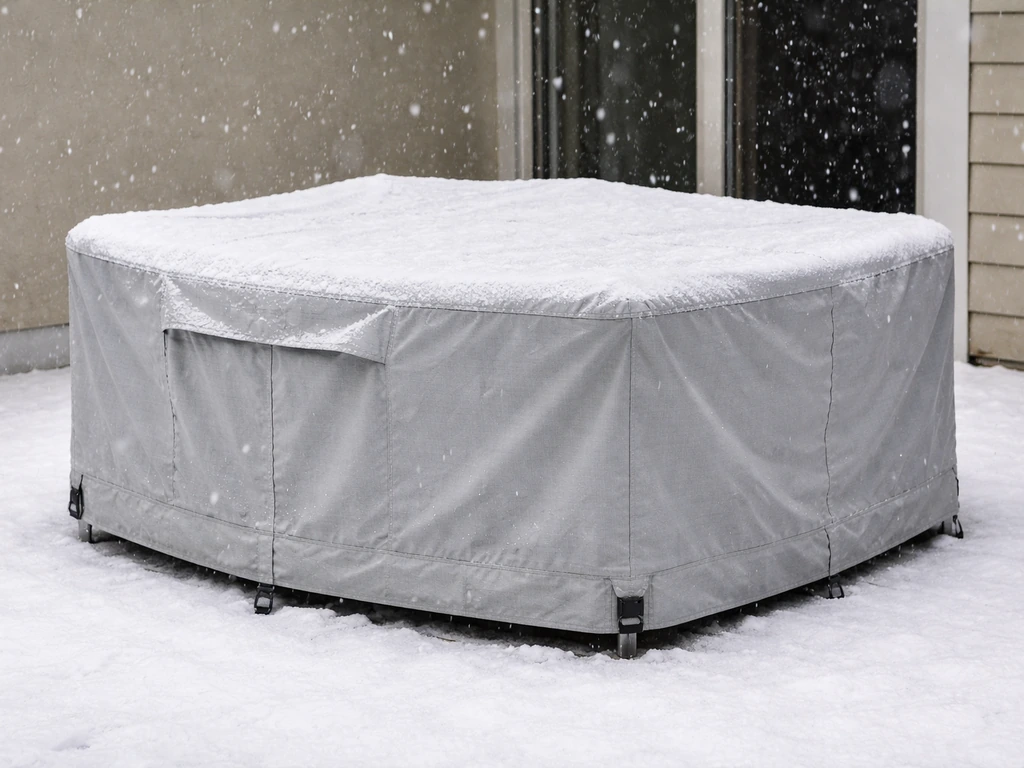
Best Patio Furniture Covers for Snow: Buying Guide
Pick the best snow-ready patio furniture covers: sizing, breathable waterproof materials, windproof fit, and care tips.
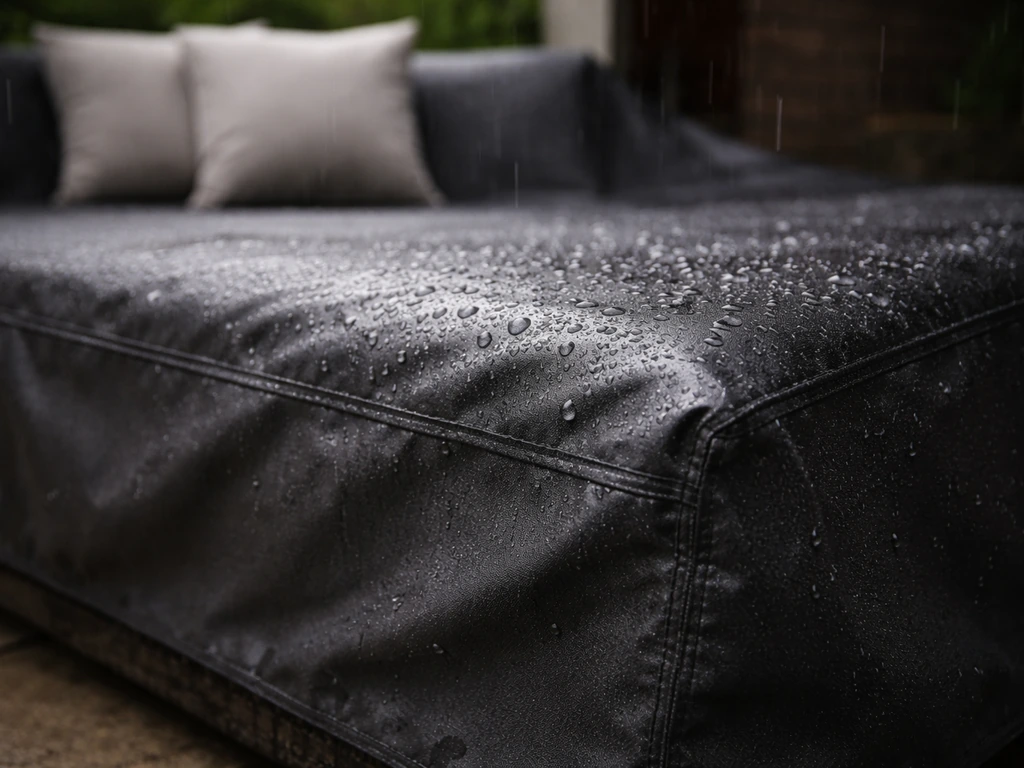
Best Waterproof Patio Furniture Covers: Buying Guide
Choose the best waterproof patio furniture covers with fit measuring tips, key features, and top rated picks.
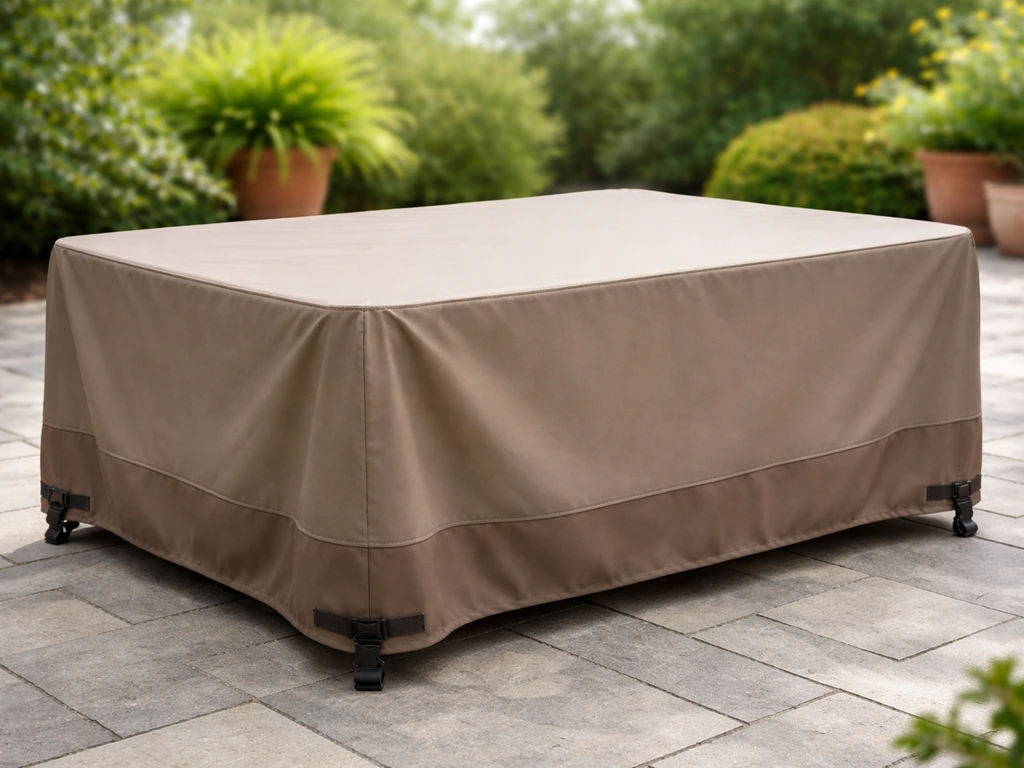
Best Patio Table Cover Guide: Fit, Materials, and Top Picks
Choose the best patio table cover with the right fit, waterproof materials, wind straps, and care tips for any table siz