
For sun protection specifically, you want a cover made from either solution-dyed acrylic or a heavy-duty polyester with a UV-inhibiting coating, sized to fit snugly with vented side panels, an elastic or drawstring hem, and at least one strap or buckle to keep it from lifting in wind. For snow specifically, prioritize covers that are rated for cold-weather storage, have secure straps, and shed melt and sleet so water doesn't pool. Those features together will stop the sun from destroying your furniture finish, prevent moisture from getting trapped underneath, and keep the cover itself from fading and cracking within a season or two.
Best Patio Furniture Covers for Sun: Buyer Guide to UV
Lark Perry
11 Jul 2026
Why sun is actually harder on covers than rain
Most people think rain is the main enemy of patio furniture. If you want the best patio covers for rain, focus on materials and fits that shed water quickly and do not trap moisture underneath. Sun is worse. UV radiation breaks polymer chains in fabric through a process called blank" rel="noopener noreferrer">photo-oxidation: the UV energy essentially attacks the molecular structure of the material, causing chain scission that makes fibers brittle, weak, and eventually crumbly.
You've seen this in action when a cheap black tarp left on the patio for a summer suddenly tears apart in your hands the following spring. That's photo-oxidative degradation, and it happens to every synthetic fabric at different rates depending on what the material is, how it was dyed, and whether it has any UV-inhibiting chemistry built into it.
UV also attacks the pigments and dyes in fabric. Fading isn't just cosmetic: when a cover fades heavily, it's a sign that the dye molecules have been photochemically broken down, which almost always tracks with structural weakening in the fabric itself. A cover that looks pale and washed out after one season is also a cover that's lost tensile strength and is close to failing. This is why buying a cheap, thin, poorly-rated cover to protect expensive furniture is a bad trade. The furniture survives; the cover doesn't, and you're shopping again the next spring.
Heat compounds the problem. In a sunny climate, a dark cover sitting on furniture on a hot afternoon can easily reach internal temperatures well above 130°F. That heat accelerates the chemical reactions that UV initiates, meaning degradation that might take two seasons in a mild climate can happen in one season in Phoenix, Miami, or the California Central Valley.
This isn't theoretical: accelerated weathering testing standards like ASTM G154 simulate exactly this combination of UV lamp exposure and heat cycling to predict how materials will perform outdoors over years of real use. ASTM G154/QUV testing is used to evaluate accelerated weathering effects by simulating light, heat, and moisture exposure conditions relevant to UV-driven deterioration of materials accelerated weathering testing standards like ASTM G154 simulate exactly this combination of UV lamp exposure and heat cycling.
AATCC publishes and maintains standardized test methods for evaluating textile performance, including colorfastness to light and related accelerated aging and fastness measurements AATCC standardized test methods for colorfastness to light and accelerated aging. When a brand says a cover is ASTM-tested or references QUV testing, that's what they mean.
Cover materials and how they handle UV
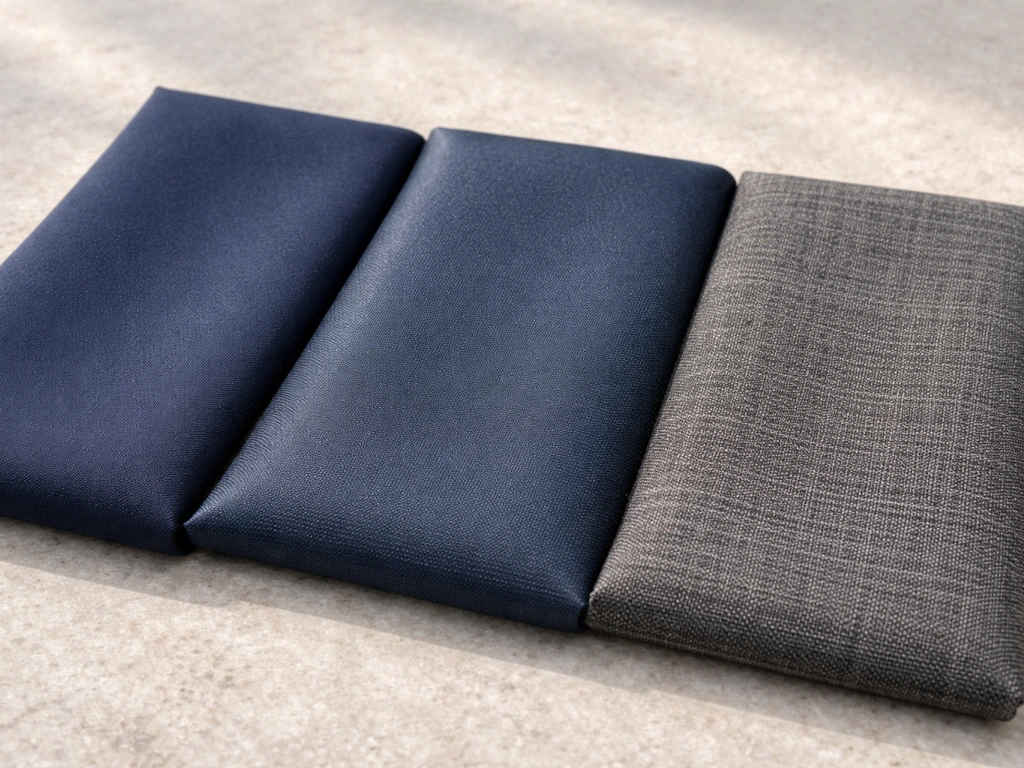
Not all cover materials are equal when it comes to sun resistance, and the differences are significant enough to drive the entire purchase decision. Here's how the main options stack up.
Solution-dyed acrylic
This is the gold standard for outdoor UV resistance. Solution-dyed means the color is added to the polymer before the fiber is extruded, so the pigment is locked into the structure of the fiber itself rather than applied to the surface afterward. There's essentially no pigment sitting on top to fade off. Brands like Sunbrella built their reputation on this chemistry.
The result is a fabric that holds color for years under direct sun and maintains structural integrity far longer than surface-dyed alternatives. The trade-off is cost: covers made from solution-dyed acrylic are typically more expensive, often $60 to $150 or more for full furniture set covers. If your furniture is worth protecting for the long haul, this is where I'd put the money.
Polyester with UV coating
This is the most common material in the mid-range cover market, and it works well if the UV inhibitor chemistry is good. The issue is that UV coatings are surface treatments: they absorb or reflect UV rays and protect the fabric underneath, but they don't last forever. After sustained sun exposure and washing, the coating degrades.
Most quality coated polyester covers hold up for two to four seasons with reasonable care, which is a fine return for a $30 to $60 cover. Look for products that specify UV-resistant coating or include a UV rating (like UPF 50+) rather than vague language like 'weather-resistant. ' Heavier fabric weight (measured in grams per square meter or denier) generally signals better durability: aim for at least 600D polyester, with 900D being better for high-sun climates.
Polyester blends and woven composites
Some covers use blended fabrics that combine polyester with polypropylene or polyethylene in a woven structure, sometimes laminated with a backing layer. These can offer good durability and are often lighter than solid polyester. Performance varies a lot by brand and construction quality. Seam and edge finishing matters here: in a woven or blended cover, the edges are where UV and moisture damage starts first. Rolled hems, heat-sealed edges, or reinforced stitching at corners dramatically extend the life of these covers versus raw-cut edges that unravel after one season.
| Material | UV Resistance | Lifespan (Avg) | Typical Price Range | Best For |
|---|---|---|---|---|
| Solution-dyed acrylic | Excellent (color locked into fiber) | 5-10+ years | $60-$150+ | High-value furniture, long-term use |
| Coated polyester (600D-900D) | Good (surface coating degrades over time) | 2-4 seasons | $25-$65 | Mid-range furniture, budget-conscious buyers |
| Woven polyester/poly blend | Moderate to good (varies by construction) | 2-3 seasons | $20-$50 | Light furniture, occasional use climates |
| Thin polypropylene/PE tarp-style | Poor (degrades rapidly under UV) | 1 season or less | $10-$25 | Temporary or emergency use only |
Fit, sizing, ventilation, and straps
A well-made cover that fits badly is almost as useless as a bad cover. Wind gets underneath it, it flaps and abrades the furniture it's supposed to protect, and water pools in the sags rather than running off. Getting fit right starts before you buy: measure your furniture at its widest, tallest, and deepest points, and add a couple of inches to each dimension to allow for coverage without pulling tight. Most product listings show exterior dimensions of the cover, not the furniture it fits, so compare carefully. If you're buying your first cover, you can compare these same factors against the best patio table cover options for sun, fit, and ventilation.
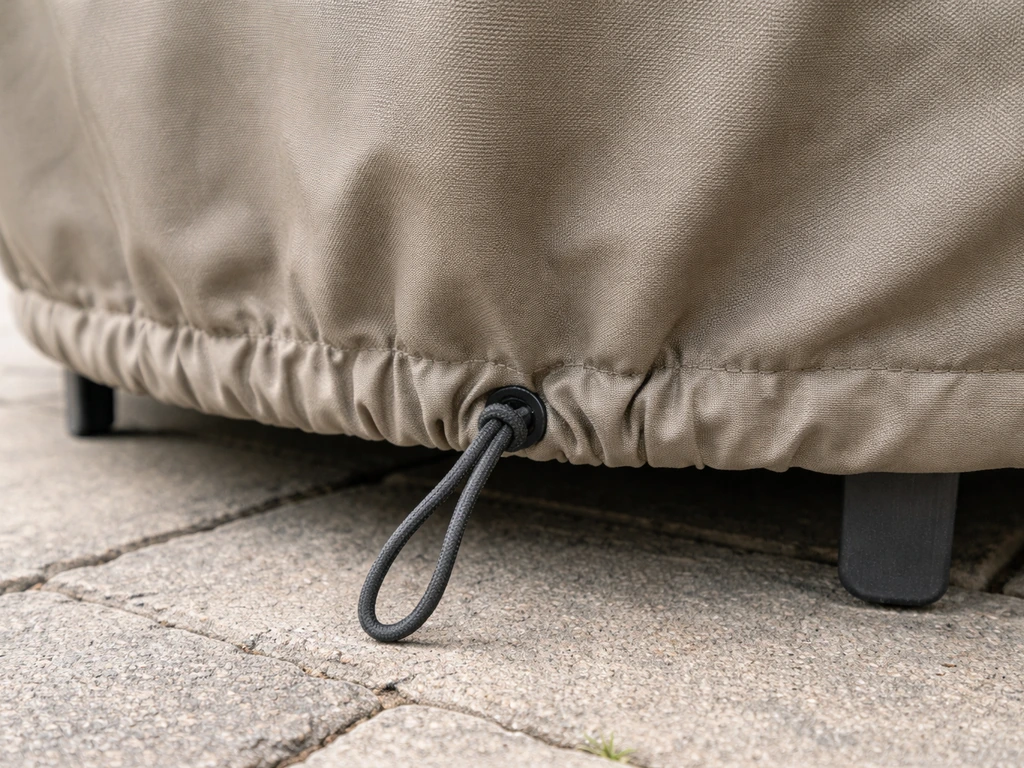
Elastic hems and drawstring closures are both effective at sealing the bottom edge against wind and rain. Elastic is convenient; drawstrings give you more adjustability if your furniture is an unusual shape. Buckle straps (usually a strap that passes under the furniture and clips to itself) are the most secure option in windy locations and are worth the slight extra cost. For dining sets with table umbrellas, look for covers with a zipper or tie-off point at the top center to accommodate the umbrella pole without leaving a gap.
Ventilation is non-negotiable in warm, sunny climates. Covers without vents trap heat and moisture, and that combination accelerates both furniture damage and mildew growth on the fabric itself. Look for covers with built-in air vents, typically mesh-backed openings at the sides or corners that allow airflow while keeping insects and debris out. Some covers achieve similar results with a slightly looser weave on the lower panels. Either approach works; what you want to avoid is a fully sealed, unventilated cover sitting on furniture in a humid or warm climate.
Water resistance and keeping mildew out in sunny climates
Here's a counterintuitive fact about covers in sunny climates: mildew is still a serious risk, even if it almost never rains where you live. The reason is condensation. When temperatures drop overnight, moisture in the air condenses on cool surfaces under your cover. If the cover traps that moisture rather than letting it evaporate, you get persistent dampness even in a desert climate. Add some organic debris (dust, pollen, bird droppings) and you have a perfect mildew environment. Mold and mildew will not grow without moisture, so controlling moisture under the cover is the core prevention strategy.
Water resistance and breathability aren't opposites, but you do need to think about them together. A fully waterproof cover (like a PVC-backed tarp) repels liquid water but also traps condensation with no escape route. A breathable water-resistant cover (like coated woven polyester or acrylic) lets water vapor move out while still shedding liquid rain from the top. For most climates, breathable water-resistant is the right call. Fully waterproof covers make more sense if you're dealing with heavy, sustained rain, which is a different use case covered in more detail in guides focused on rain and snow protection.
One habit that matters more than the cover spec is what you do before covering: always make sure your furniture is clean and completely dry before putting the cover on. Covering wet furniture is the single biggest contributor to mildew under covers. Even a cover with great ventilation can't handle furniture that goes in soaking wet from a rainstorm. Wait for things to dry, or towel off the worst of it, before covering.
Matching your cover to your furniture layout
Cover shopping is much easier once you know which furniture configuration you're dealing with. Here's how to think through the most common setups.
Dining sets
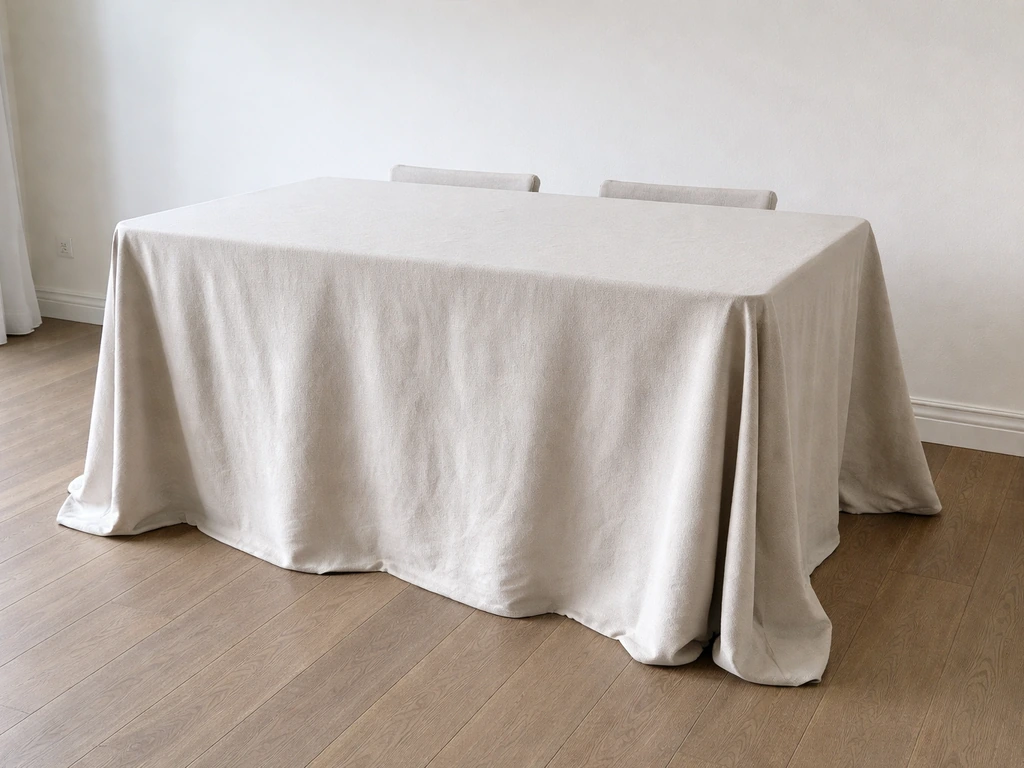
A single large cover that goes over the whole set (table plus chairs pushed in) is the most common approach and the most convenient. Measure with chairs pushed under the table to get the smallest footprint, and confirm that the cover height clears the backs of the chairs. If your set includes a market umbrella, check whether the cover accommodates the pole or whether you need to remove the umbrella canopy before covering.
Conversation sets and sectionals
These are the trickiest to cover because they're often large and L-shaped or modular. Some brands sell covers specifically sized for sectionals; others offer individual piece covers that you use on each section separately. Individual covers give you more flexibility if the set gets rearranged, but they take more time to put on and remove. A single large fitted cover is faster but only works well if your layout is consistent. For conversation sets with a central coffee table, a cover that includes the table and seating in one unit is usually the tidiest solution.
Lounge chairs and chaise lounges
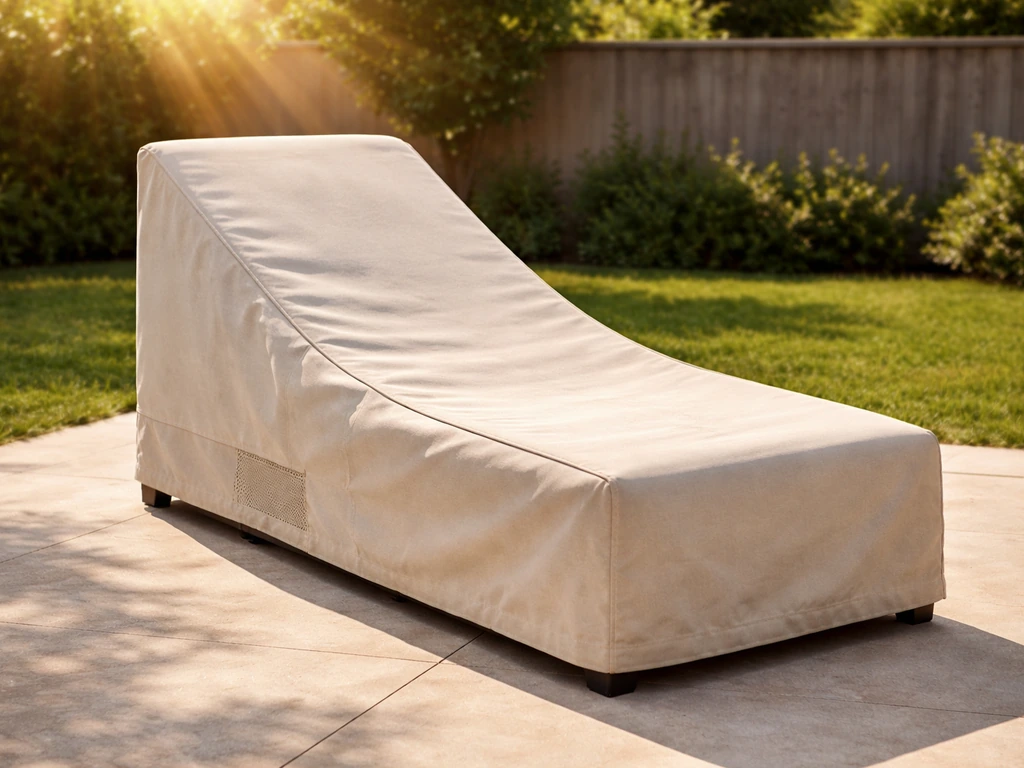
Individual chaise covers are widely available and sized in standard lengths (typically 72 to 84 inches). These are worth using because chaise cushions are expensive to replace and particularly vulnerable to UV fading. Look for covers with a full-length zipper or wide elastic opening so they're not a wrestling match to put on. If you have multiple loungers, some brands sell covers with a single envelope that fits two chairs stacked together, which is convenient for storage.
Individual chairs and bar stools
Individual chair covers are useful when you want to protect chairs stored separately from the main set, or when your furniture layout doesn't allow a single all-in-one cover. Standard sizes exist for armchairs, dining chairs, and bar stools, but the fit varies a lot between brands. Pay attention to back height in the product specs, as this is the most common mismatch.
Choosing the right cover for your climate and budget
Your climate should drive your material choice as much as your budget does. Here's a practical breakdown by condition type.
- Hot and dry (desert Southwest, inland California): UV resistance is your top priority. Go for solution-dyed acrylic or high-denier coated polyester. Ventilation matters for condensation management even without much rain. Light colors help keep heat buildup lower under the cover.
- Hot and humid (Florida, Gulf Coast, Southeast): UV resistance plus breathability is critical. Mildew is a real threat year-round. Solution-dyed acrylic is ideal here. Make sure vents are adequate and avoid non-breathable waterproof coatings unless you're protecting against heavy storm seasons specifically.
- Sun-primary with occasional rain (much of the Southwest, Southern California, parts of Texas): A quality coated polyester cover works well here. Water-resistant rather than fully waterproof is fine. Focus on UV rating and fabric weight.
- Coastal and sunny (beach areas, ocean-facing): Add salt and wind resistance to your criteria. Look for corrosion-resistant buckles and zippers (stainless steel or coated metal), and check that the hem fastening system is solid enough to hold in regular wind.
- Mild but sunny (Pacific Northwest in summer, high-altitude climates): UV protection still matters but you can get away with lighter-weight covers. A good 600D polyester cover with UV treatment is usually sufficient.
On budget: spending more upfront on a better cover genuinely pays off if your furniture is worth more than about $400 to $500. A $120 solution-dyed acrylic cover that lasts eight years on a $2,000 sectional is a much better deal than replacing $40 covers every two years while also watching the sectional fade. For cheaper furniture or furniture you expect to replace in a few years anyway, a solid mid-range coated polyester cover makes total sense.
What to look for on the product page
- Fabric weight or denier (aim for 600D or higher in polyester, or look for solution-dyed acrylic).
- UV protection rating or claim (UPF 50+, UV-resistant coating, ASTM G154 tested).
- Ventilation: at least one vented panel or air vent described in the specs.
- Closure type: elastic hem, drawstring, buckle straps, or some combination.
- Seam and edge construction: double-stitched seams, reinforced corners, or heat-sealed edges.
- Warranty length: a brand offering a 3-year or longer warranty on a cover is standing behind the UV resistance claim in a meaningful way.
- Exact dimensions and which furniture configurations they're designed for.
Cleaning, storing, and knowing when to replace your cover
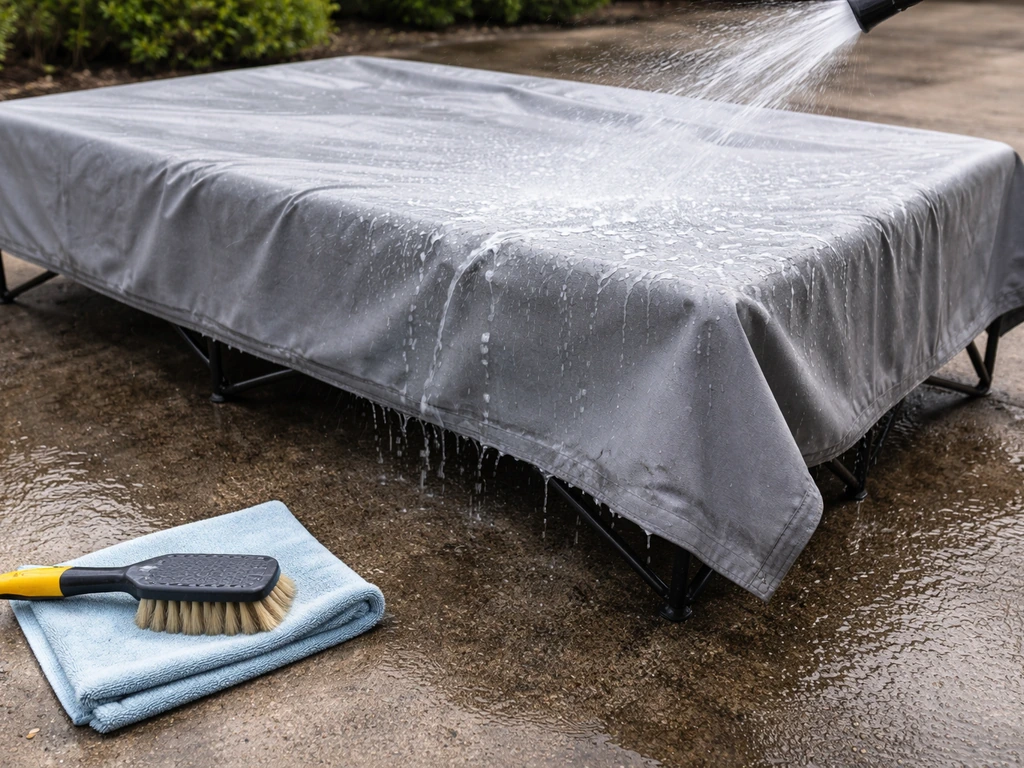
A cover that's well maintained lasts significantly longer than one that gets ignored. The routine is simple: brush off debris regularly so it doesn't sit and hold moisture, hose down the cover every few weeks during heavy-use seasons, and do a deeper clean once or twice a year with a mild soap solution and a soft brush. Rinse thoroughly and let the cover dry completely before putting it back on the furniture or folding it for storage. Never fold or store a damp cover: this is the fastest path to mildew stains that are hard to fully remove.
For storage during off-seasons (or extended trips), fold the cover loosely and store it in a breathable bag or ventilated bin rather than an airtight plastic tote. Airtight storage traps any residual moisture and promotes exactly the mildew growth you're trying to avoid. A mesh storage bag or an open-weave fabric bag works well.
If you do get mildew spots, catch them early: a solution of mild dish soap and white vinegar, applied with a brush and rinsed well, handles light mildew on most cover materials. For stubborn stains on acrylic covers, Sunbrella's own fabric cleaner (or similar acrylic-specific cleaners) is more effective than bleach-based products, which can degrade even good fabrics over time.
Lifespan expectations: a quality solution-dyed acrylic cover used year-round in a sunny climate should realistically last five to ten years with basic care. A good coated polyester cover in similar conditions will typically last two to four seasons before the UV coating starts to fail, showing up as fading, surface stickiness, or cracking at the folds. When you start to see any of those signs, it's time to replace the cover: a compromised cover provides less UV protection and starts to trap more moisture rather than shedding it, defeating the whole purpose.
One final check worth doing annually: flip the cover inside out and look at the underside. Pilling, thin spots, cracking along fold lines, and any mildew staining you can't fully remove are all signs of a cover that's past its useful life. Replacing it before it fails completely means your furniture stays protected through the transition rather than sitting exposed while you shop.
FAQ
How can I tell whether a cover is actually good for sun, not just rain?
If your cover has only “weather-resistant” language, it usually means water shedding, not guaranteed UV longevity. Look for an explicit UV metric such as UPF (for fabric rating) or at least a stated UV inhibitor/coating type, and confirm the stated fabric weight (for example, 600D+ polyester) for sun-heavy locations.
Do UV-resistant covers still need ventilation, or is that only for rainy areas?
For a solution-dyed acrylic cover, the main benefit is color that is chemically embedded in the fiber, so you typically see less rapid fading, but you can still get mildew if the cover traps condensation. In practice, you want both UV-resistant material and real ventilation, otherwise you may replace for odor or mildew even if color holds up.
Is a waterproof tarp a good option for protecting furniture from sun?
Do not choose a fully waterproof tarp-style cover for sun protection if your area has cool nights or regular humidity. Waterproof backings can lock in condensation, raising mildew risk and also increasing heat buildup under the cover in strong sun, so breathable water-resistant woven construction is the safer default.
What’s the biggest mistake people make when sizing patio furniture covers?
If the fit is too tight, straps and elastic hems can pull fabric into stretched stress points that fail at seams and fold lines. If it is too loose, wind-driven flapping abrades the surface and creates edge gaps for UV-exposed airflow. Aim for “snug but not stretched,” using the external dimensions guidance and adding a couple of inches as you measure.
How do I handle sun protection for sets with umbrellas and tall chair backs?
When a cover is marketed for “full set,” confirm it clears chair backs and any umbrella hardware by checking interior space needs, not just overall table dimensions. If your set includes a market umbrella, you often need a top vent, tie-off point, or a removable top section, otherwise the cover can bridge and leave an exposed gap around the pole area.
Do color choices (black vs light) affect how well a cover protects from sun?
Choose darker colors carefully. Dark covers absorb more heat, so even with good UV chemistry the inside temperature can rise quickly on hot days. If you live in extreme sun and heat, consider lighter or neutral colors (still UV rated) and prioritize ventilation and a heavier fabric to reduce heat-driven degradation.
What cleaning method helps covers last longer in sunny climates?
Washing matters because UV coatings and surface treatments can degrade faster with harsh detergents. Use mild soap, rinse thoroughly, and let the cover dry completely. Skip bleach as a general cleaner, since it can weaken fibers and alter acrylic performance over time.
What should I do if mildew starts forming under my sun-rated cover?
Yes, but use the right treatment. Light mildew that is caught early can often be lifted with mild dish soap plus white vinegar, then rinsed well. If mildew is recurring or you see cracking, pilling, or persistent staining, that points to fabric breakdown or trapped moisture issues, and replacement is usually more effective than repeated spot cleaning.
What signs mean my cover is no longer protecting against sun?
If you see fading plus “surface stickiness,” it can indicate the coating has begun to fail, not just cosmetic color loss. Cracking at fold lines and thin spots on the underside are also strong signs the cover is no longer maintaining its UV barrier or shedding moisture as well as it should.
How often should I inspect a patio furniture cover, and where should I look first?
Flip-and-check once per season. The underside is where condensation and debris sit, so pilling, thin fibers, fold cracking, and mildew staining that doesn’t come out are early warning signs. Catching those changes before the fabric fails helps prevent periods where furniture is exposed between replacements.
Next Articles
Best Patio Covers for Rain: Buyer Guide and Top Picks
Compare top rain-proof patio cover types and rain furniture covers, with fit, drainage, wind, and maintenance tips for c
Best Patio Furniture Covers for Snow: Buying Guide
Pick the best snow-ready patio furniture covers: sizing, breathable waterproof materials, windproof fit, and care tips.
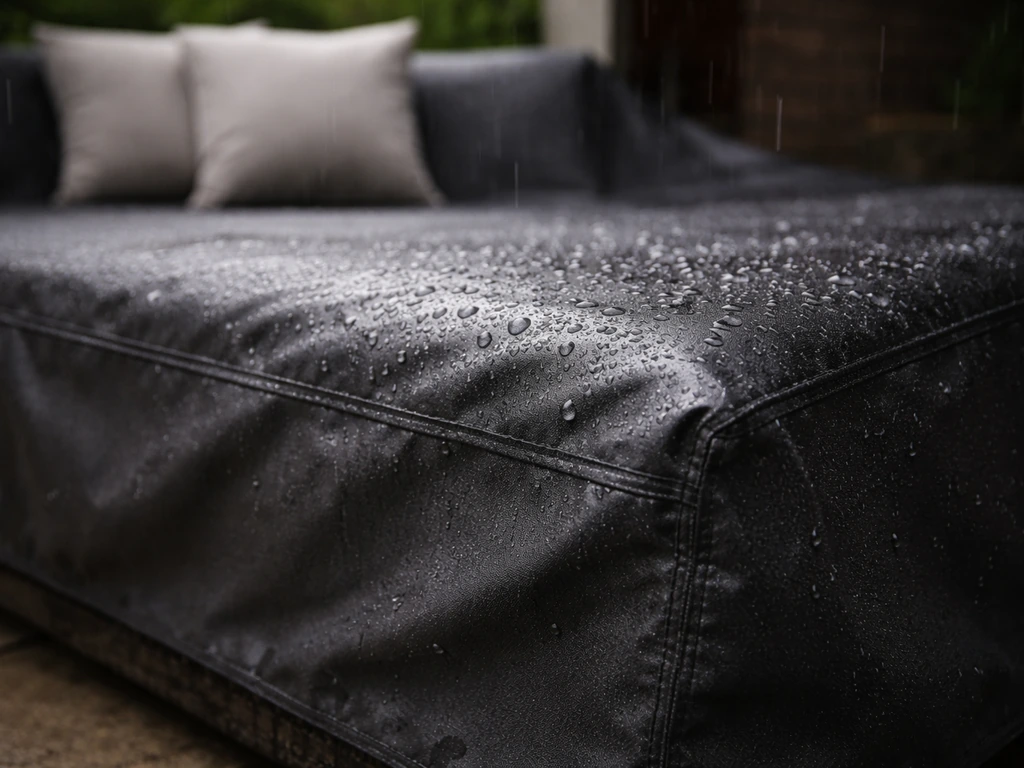
Best Waterproof Patio Furniture Covers: Buying Guide
Choose the best waterproof patio furniture covers with fit measuring tips, key features, and top rated picks.