
The best outdoor rugs for an uncovered patio are made from solution-dyed polypropylene or solution-dyed acrylic (like Sunbrella), have a low pile or flatweave construction, feature a non-slip rubber or latex backing, and are sized so that furniture legs stay on the rug even when chairs are pulled out. Those four criteria will get you 90% of the way to a rug that survives rain, UV exposure, and wind without turning into a faded, mildew-covered mess by midsummer.
Best Outdoor Rugs for Uncovered Patio: Buy Guide

Lark Perry
22 May 2026
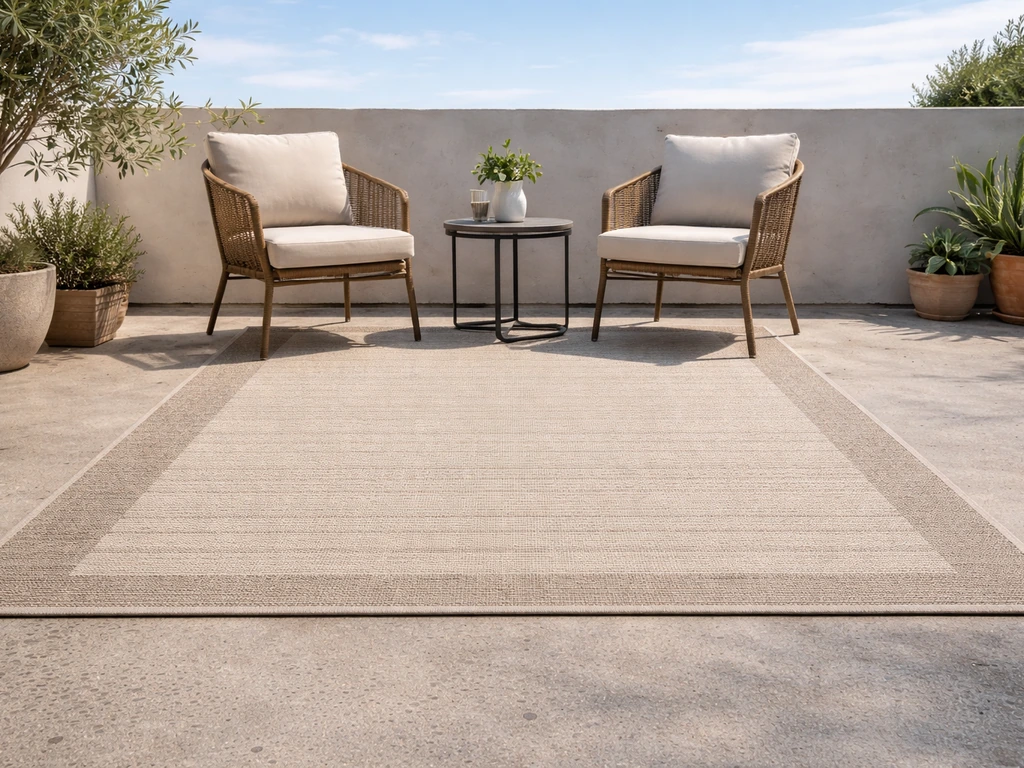
If you're shopping for a covered patio or a shaded deck, the calculus is a little different. But for a fully exposed, uncovered patio, you need to be strict about materials and construction because there's no canopy to give you a break. I've seen budget rugs that looked great in April turn gray and spongy by August sitting on an exposed concrete patio, and I've also seen mid-priced polypropylene flatweaves that held up through three full seasons with minimal care. The difference almost always comes down to the material and pile height, not the price tag.
How to choose the right size and layout for an uncovered patio
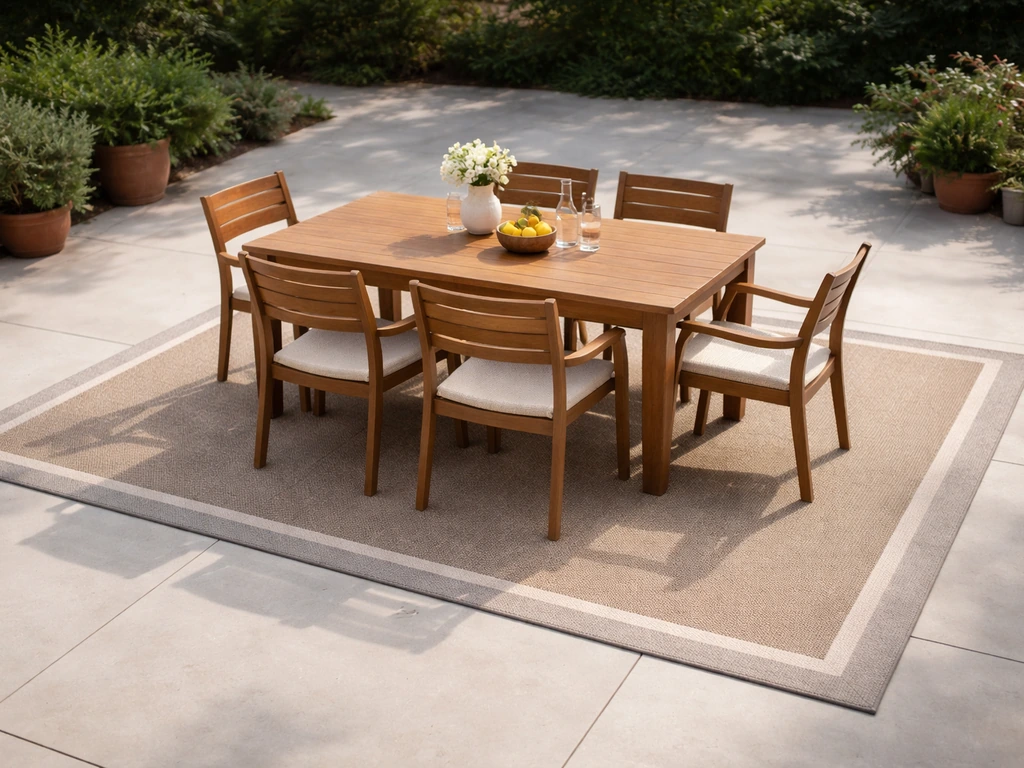
Sizing is where most people go wrong. The instinct is to measure the patio and buy something that fits the open floor area, but that rarely produces a functional result. Instead, size the rug to the furniture zone, not the total patio square footage. Think of the rug as defining a room within the patio, the same way you'd anchor a living room seating group indoors.
Sizing for a dining set
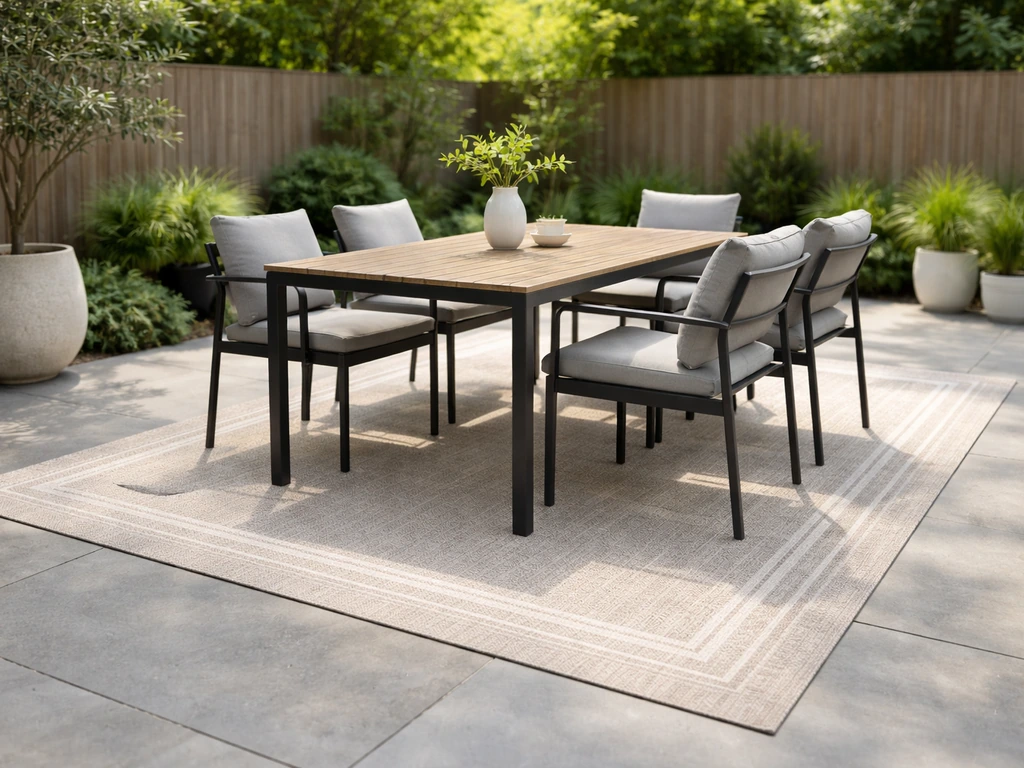
For dining areas, use the 24-inch rule: add at least 24 inches to each side of the table's length and width. So a 36-by-60-inch rectangular table needs a rug that's at least 7 feet by 9 feet, ideally 8 by 10. The goal is that when someone pulls their chair back to sit down or stand up, all four chair legs stay on the rug. If the back legs drop off the edge, you'll get rocking, tripping, and premature fraying from the edge catching chair feet. A good mental check is to pull a chair fully out from the table and see if all legs land on the rug with about 6 inches to spare.
Sizing for a lounge or seating area
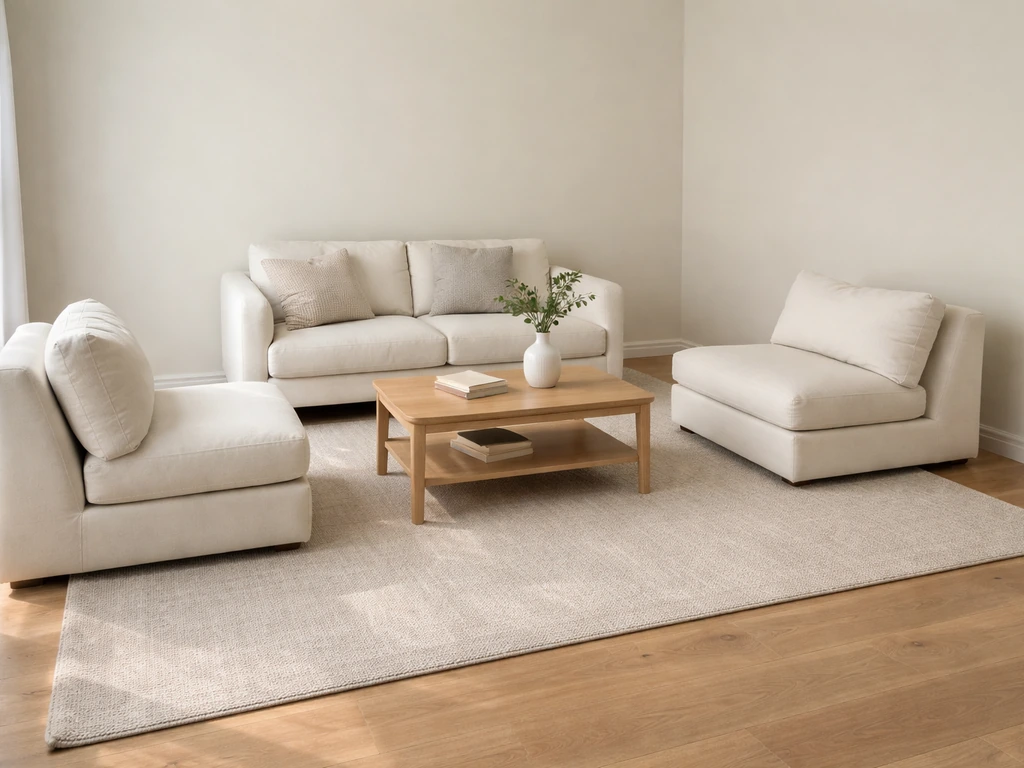
For a lounge group with sofas or deep-seat chairs, the front legs of all seating pieces should sit on the rug. A 5-by-8 rug works for a loveseat-and-two-chairs grouping on a small patio; step up to 8-by-10 or larger if you have a full sofa, two chairs, and a coffee table. If your patio is on a deck, leaving a visible border of 6 to 12 inches of decking around the rug's perimeter tends to look more intentional and also lets airflow get under the rug edges, which matters a lot for drying and preventing mildew on uncovered surfaces.
Pathway and entry zones
For a transition zone from a door to the patio, or along a walkway between zones, narrow runners in the 2-by-8 or 2.5-by-10 range work well. These are high-traffic areas where durability matters more than aesthetics, so keep the pile very low and opt for a rubber-backed mat or a polypropylene runner with reinforced edges.
Weather-proofing essentials: materials, construction, and backing
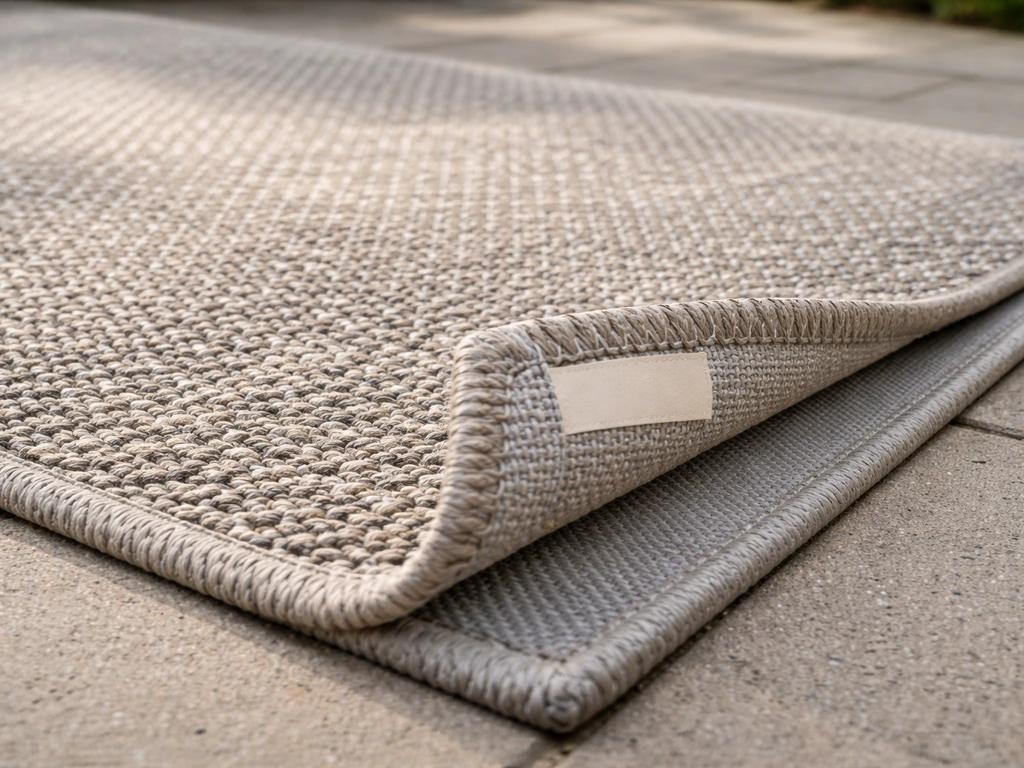
An uncovered patio subjects a rug to the full range of abuse: UV radiation, rain, pooling water, wind, bird droppings, and temperature swings. Here's what to actually look for when evaluating a rug's weather credentials.
Material: solution-dyed matters more than anything
Solution-dyed fibers have color and UV-stable pigments infused into the fiber before it's spun into yarn, not applied to the surface afterward. This is why Sunbrella's 100% solution-dyed acrylic fabrics hold their color even after years of direct sun exposure. Sunbrella says its performance fabrics are 100% solution-dyed acrylic, which makes them inherently fade resistant and UV protective, helping them stay colorfast in direct sun Sunbrella's 100% solution-dyed acrylic fabrics hold their color even after years of direct sun exposure. Polypropylene, when solution-dyed, offers essentially the same benefit at a lower price point. What you want to avoid is any rug described only as "colorfast" or "UV-treated" without specifying solution-dyed construction, because surface dyes fade faster and the UV treatment can wear off.
Construction: pile height and weave
Thick or high-pile rugs are a liability on uncovered patios. Water gets trapped in the pile, takes longer to dry, and creates a warm, dark environment where mildew grows. Low-pile rugs (under half an inch) and flatweaves drain faster and dry in hours rather than days. Flatweave polypropylene rugs are particularly good here because water passes through the weave rather than sitting in it. The tradeoff is underfoot comfort: a flatweave feels firmer than a plush rug, but for most patio uses, that's a reasonable trade for durability.
Water-resistant vs. waterproof: what the labels actually mean
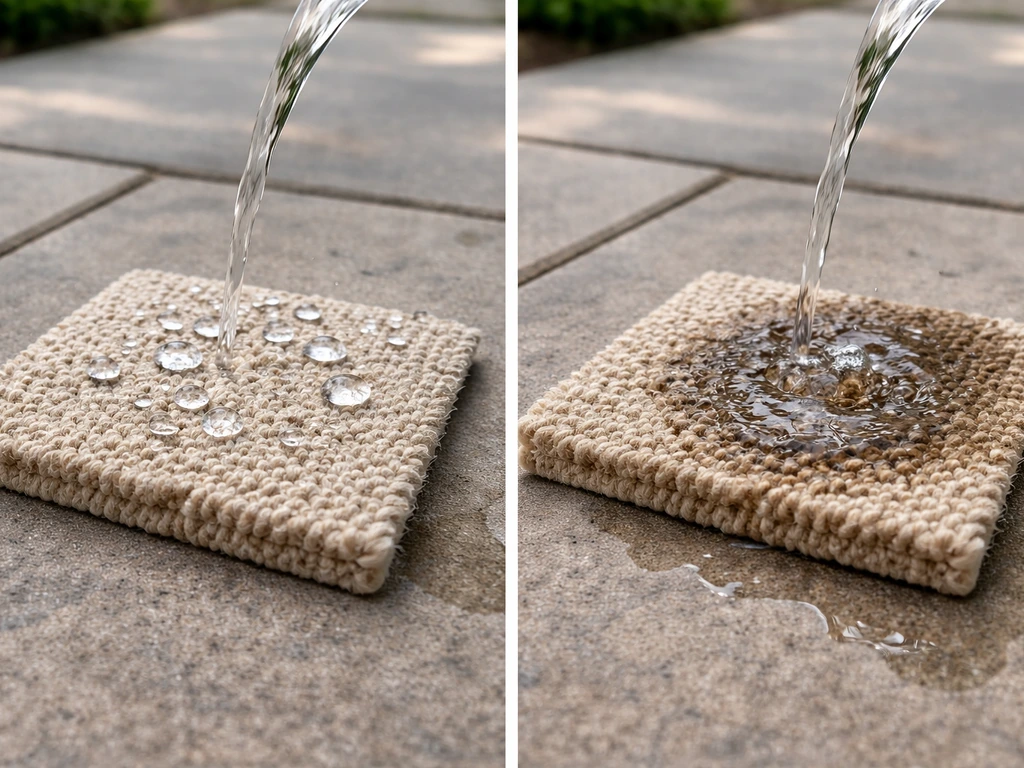
Most outdoor rugs marketed as "waterproof" are actually water-resistant. The distinction matters practically: water-resistant rugs repel surface moisture and allow water to drain through the weave, then dry relatively quickly. True waterproofing on a rug would mean water can't penetrate at all, which isn't really how woven rugs work. The more useful thing to evaluate is how quickly the rug dries after rain and whether the backing traps water against the patio surface, which creates mold risk under the rug even if the rug itself is mildew-resistant.
Backing: non-slip without trapping moisture
A rubber or latex backing gives you slip resistance, which is critical on smooth concrete, tile, or composite decking. The catch is that solid rubber backings can trap moisture underneath the rug and stain or damage certain deck surfaces over time. Look for rugs with open-weave or perforated backings, or use a purpose-made outdoor rug pad (products like StayPut Outdoor are specifically engineered for wood, tile, concrete, and composite decking) rather than a generic indoor rug pad that will deteriorate quickly outdoors. If your rug doesn't have a built-in non-slip backing, a good outdoor pad is worth adding, especially on a smooth or wet patio surface.
Edges and finishing
Fraying edges are one of the fastest ways an outdoor rug degrades. Look for heat-sealed, serged, or bound edges rather than raw-cut edges. On a flatweave, bound or serged edges significantly extend the rug's usable life because there's no loose yarn to catch on chair legs or unravel in the wind.
Best rug types for uncovered patios
Not every outdoor rug type performs equally when it's fully exposed to the elements. Here's how the main categories stack up. When you compare the options, the best patio rug choices are usually solution-dyed polypropylene flatweaves or low-pile rugs built to dry quickly after rain.
| Rug Type | Best For | Drying Speed | Comfort | Durability on Uncovered Patio |
|---|---|---|---|---|
| Flatweave polypropylene | Dining areas, high traffic | Very fast | Moderate | Excellent |
| Low-pile polypropylene | Lounge areas, family patios | Fast | Good | Very good |
| Solution-dyed acrylic (Sunbrella-style) | Premium lounge, hosting areas | Moderate | Very good | Excellent (fade resistance) |
| Washable/machine-washable (e.g., Ruggable) | Families, pets, kids | Moderate | Good | Good (rotate indoors seasonally) |
| Rubber/mat-style doormat | Entry zones, pathways | Very fast | Low | Excellent |
| Thick pile/shag outdoor | Not recommended | Slow | Excellent | Poor (mildew risk) |
Flatweave and low-pile: the workhorse options
Flatweave polypropylene rugs are the most practical choice for most uncovered patios. For a quick shopping shortcut, many people compare the best RV patio mats based on how fast they dry, how grippy the backing is, and whether the material stays flexible in heat and cold uncovered patios. They dry fast, resist fading well when solution-dyed, are easy to hose down, and are typically the most affordable option in a given size. Low-pile polypropylene adds a bit more texture and softness underfoot while still drying quickly. These are the rugs I'd recommend to almost anyone starting from scratch.
Washable rugs for high-turnover households
Machine-washable outdoor rugs, like those from Ruggable, are worth considering if you have kids, pets, or frequent entertaining. They're mold and mildew-resistant and designed to handle rain, but Ruggable themselves note that even their outdoor covers shouldn't be left sitting wet for extended periods. The convenience of throwing the rug cover in the washing machine is a real advantage for high-mess situations, but the long-term UV durability on a fully exposed patio may be shorter than a pure polypropylene option. Plan to rotate or store these seasonally if you're in a high-sun climate.
Solution-dyed acrylic for premium setups
If you're investing in a high-end patio furniture arrangement and want a rug that holds its look for years, solution-dyed acrylic (the same technology Sunbrella uses in cushion fabric) is worth the premium. The fade resistance is genuinely superior because the color is part of the fiber, not a surface treatment. These rugs tend to have a softer feel than polypropylene and can look more like indoor area rugs while still being weather-tough. They do cost more, but if you're spending serious money on a lounge setup, a premium rug anchors it well.
Top picks by use case: dining sets, lounge areas, and pathways
Under a dining set
Go with a 8-by-10 or 9-by-12 flatweave polypropylene rug in a low-contrast pattern (stripes, geometric, or a subtly distressed look). Patterns hide the food and dirt that inevitably happen at a dining table, and low contrast makes staining less obvious between cleanings. Prioritize bound or serged edges because chair legs will catch on them frequently. Solid backings are okay here since the table is relatively stationary and airflow underneath is less of a concern than in a lounge setup.
Under a lounge or deep-seat grouping
An 8-by-10 low-pile or solution-dyed acrylic rug works well here. Since people are walking on this rug with bare feet more often than in a dining zone, a slightly softer pile is appreciated. Opt for a perforated or open backing to let the rug breathe, especially if it sits on a non-porous surface like concrete or porcelain tile. A warm, neutral tone or a subtle boho or coastal pattern tends to complement most lounge furniture collections.
Families with pets and kids
Durability and cleanability take priority over looks. A mid-weight polypropylene flatweave in a dark or busy pattern is your best bet. It'll handle muddy paws, spilled drinks, and sandbox sand without showing the damage. Washable rug systems are genuinely useful here if you want easy cleaning. Avoid anything with loops or a hooked construction, since pet claws snag and pull loops out quickly.
Pathways and entry transitions
For the zone from a back door onto the patio, or between a dining area and a lounge area, a rubber-backed runner or a thick rubber-backed mat is more practical than an area rug. These see constant foot traffic, frequent wet feet, and heavy wear, and a doormat-style mat handles all of it better than an area rug would. Pair it with a scraper-style mat right at the door for keeping debris off the main rug.
Care, cleaning, and storage to prevent fading, mold, and fraying
Even the toughest polypropylene rug will degrade faster than it should if you don't maintain it. The good news is that maintenance on a quality outdoor rug is simple, it just needs to be consistent.
Routine cleaning
Shake or sweep the rug weekly to remove loose debris. Every few weeks, hose it down and scrub with a soft brush and mild dish soap diluted in water. The critical step that most people skip: rinse thoroughly with clean water to remove all soap residue, then lay the rug flat in a sunny, well-ventilated spot and let it air dry completely before putting furniture back on it or rolling it up. Soap residue left in the fibers attracts dirt and can break down the fiber coating over time. Avoid pressure washers and steam cleaners, both can damage the fibers and backing, and a strong stream can fray edges.
After storms and heavy rain
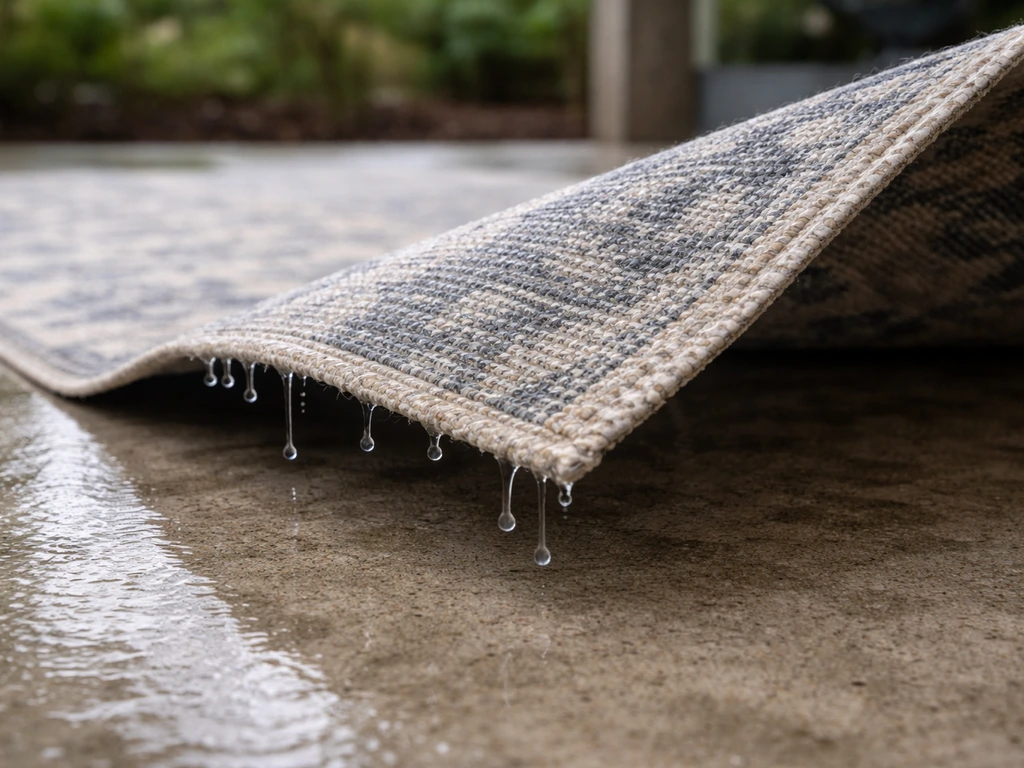
After a heavy rain event, move furniture off the rug and lift the rug to let both sides dry. On an uncovered patio, the underside of the rug is often the wetter side because water wicks under from the patio surface. Lean the rug against a wall or fence to get airflow on both faces. Don't let it sit flat and wet on a concrete or tile surface for more than a day. Even mildew-resistant rugs will eventually develop mold under the right conditions, and a trapped, wet underside is exactly those conditions.
Dealing with stains and mildew
For surface stains, a mild soap and water solution handles most issues on polypropylene. For mildew spots, a diluted white vinegar solution (1 part vinegar to 4 parts water) applied with a brush, then rinsed thoroughly, is effective for most cases. Consumer Reports notes that deep or persistent mildew may require professional cleaning, but if you catch it early and the rug is properly mildew-resistant, a good scrub and thorough dry usually solves it. Don't apply any water-repellent treatments until the rug is completely dry.
Seasonal storage
If you're in a climate with a real winter or a long wet season, storing the rug off-season extends its life significantly. Clean it thoroughly, let it dry completely (and I mean bone dry, not just surface dry), then roll it rather than fold it to avoid crease damage. Store it in a dry, enclosed space, a garage, shed, or basement. Avoid storing it in a bag or bin where condensation can build up. If you're leaving it out year-round, at least get a breathable outdoor furniture cover or a tarp that has ventilation to protect it from extended wet periods and UV radiation during low-use months.
Non-rug alternatives and add-ons worth knowing about
Sometimes an outdoor rug isn't the right tool. If your uncovered patio has constant standing water drainage issues, a very rough or uneven surface, or you're just looking for something lower-maintenance, a few alternatives are worth considering.
- Interlocking deck tiles: snap-together wood, composite, or stone tiles that sit directly on concrete or an existing deck surface. They define a zone visually, add texture underfoot, and drain freely. No mold risk, no fraying, and they're easy to remove and clean.
- Outdoor floor mats and modular mat systems: heavy-duty rubber or recycled plastic mats designed for patios, boats, and pool decks. These are fully waterproof, UV-stable, and extremely easy to clean. Less decorative than a rug but genuinely maintenance-free.
- Artificial turf patches: for a lawn-like feel on a concrete or gravel patio, small sections of quality artificial turf can serve as a rug equivalent. Drain fast, durable, soft underfoot, and pet-friendly. The look is polarizing but the performance is hard to beat.
- Outdoor rug pads as a standalone: if you have an existing rug that keeps slipping or you want to protect the patio surface, a purpose-built outdoor rug pad (compatible with wood, tile, concrete, and composite decking) is an easy add-on rather than a replacement.
If you already have a rug you love but it isn't holding up well on a specific uncovered surface, the fix is often the pad or backing situation rather than the rug itself. Getting airflow under the rug with the right pad can dramatically extend its lifespan even on the most sun-exposed, rain-prone patio. For more on broader rug selection for different patio setups, the comparisons between general outdoor patio rugs and patio-specific options are worth a look if your space has both covered and uncovered sections to think about. If you want extra comfort beyond rugs, consider the best outdoor blankets for patio lounging in cool or breezy weather.
Quick checklist before you buy
- Measure your furniture zone, not your patio, and add 24 inches on each side for a dining setup.
- Confirm the rug is solution-dyed polypropylene or solution-dyed acrylic, not just "UV-treated" surface dye.
- Choose flatweave or low-pile (under 0.5 inches) to maximize drainage and drying speed.
- Check that edges are heat-sealed, serged, or bound to prevent fraying.
- Verify the backing is non-slip rubber or latex, or plan to add an outdoor-rated rug pad.
- If you have pets or kids, prioritize a dark or patterned rug and consider a washable option.
- Plan a cleaning routine from day one: weekly sweeping, monthly hosing, and full drying after storms.
- If you're in a cold or wet-winter climate, budget for seasonal storage rather than year-round outdoor exposure.
FAQ
Will the best outdoor rugs for uncovered patios work if it rains hard and water pools for hours?
Not always. Many rugs labeled outdoor are only water-resistant, meaning they still absorb moisture if pooling occurs. If you get standing water on your uncovered patio, prioritize a flatweave or very low-pile rug (under about 1/2 inch) with an open or perforated backing, and pair it with a rug pad designed for outdoor surfaces so water can drain and air can circulate under the edges.
How often should I rinse or wash an outdoor rug on an uncovered patio?
In uncovered setups, it helps to clean after rainfall, not just when the rug looks dirty. A quick rinse every few weeks removes grit that grinds against fibers when chairs slide, and it reduces soap-related residue buildup. If your rug has a non-porous backing, skip soaking it like a sponge and instead scrub lightly, rinse thoroughly, then dry with airflow on both sides.
What type of rug pad should I use under an outdoor rug on smooth concrete or tile?
You usually should not use a standard indoor rug pad. Indoor pads can break down outdoors, trap moisture, and start to smell as they deteriorate. Use either a rug with built-in non-slip/open backing, or an outdoor rug pad made for your patio surface (concrete, tile, wood, or composite) so it stays stable while letting water dry underneath.
Do solution-dyed outdoor rugs fade less on an uncovered patio in extreme sun?
Yes, but only in a limited way. Solution-dyed rugs tolerate UV well, but heat can still soften some backings and adhesives, especially in full sun. If your patio sees intense summer sun, choose low pile and open drainage designs, and consider rotating the rug seasonally so the same spots do not get maximum exposure month after month.
How do I measure correctly if my dining chairs slide or pull out at an angle?
Start with the furniture zone sizing method. For dining, make sure all four chair legs land fully on the rug even when someone pulls back, then confirm you have at least about 6 inches of rug visible beyond the chair legs at seating position. If your patio has a built-in bench or awkward seating, measure the chair pull-out path and use that as your effective width, not the tabletop footprint alone.
What’s the best way to dry an outdoor rug after a storm so mildew does not form?
If your rug dries slowly, the underside can become the problem even when the top looks dry. After heavy rain, lift the rug and check both faces for dampness. If one side stays wet, don’t put furniture back on it, and lean the rug to maximize airflow rather than leaving it flat on a non-porous surface.
Can I store my outdoor rug in a plastic bin or bag over winter?
Avoid folding for long-term storage. Rolling reduces crease damage, and the roll should be loose enough that trapped air does not stay moist against the backing. Also, store only when the rug is bone dry, in a dry enclosed space with ventilation, because condensation inside a bag or bin can undo your cleaning.
Is vinegar mildew treatment safe for solution-dyed polypropylene and acrylic outdoor rugs?
You can address mild mildew quickly, but the key is timing and thorough rinsing. Use diluted vinegar (about 1 part vinegar to 4 parts water), scrub gently, then rinse until you no longer smell vinegar and let it air dry completely. Do not apply any water-repellent coatings while the rug is still damp, because treatments can trap moisture and worsen odor.
How can I tell if an outdoor rug is truly good for uncovered patios versus just marketing claims?
Look for construction details, not marketing labels. “Waterproof” often means only water-resistant, and “UV-treated” can mean a surface finish rather than solution-dyed fiber. A better decision aid is to confirm the rug is solution-dyed polypropylene or solution-dyed acrylic, then choose low pile/flatweave plus bound or serged edges to reduce wind-driven fraying.
Should I use an area rug or a runner near the back door on an uncovered patio?
For high-traffic zones like near a back door or entry path, a runner or doormat-style mat often lasts longer than an area rug. Pair a scraper mat at the door with a rubber-backed runner on the path, then keep an area rug reserved for the main seating or dining zone where furniture anchors the edges and airflow can still dry it efficiently.
My patio rug edges fray quickly, what causes it and how do I stop it?
If chair legs keep catching and edging is unraveling, it often indicates the rug edges are not bound/serged or the pile is too high for your chair legs. Upgrade to heat-sealed, bound, or serged edges and keep pile low so there is less snagging from chair movement and wind. If possible, also ensure the rug is sized so legs stay on the rug without dragging across the edge.
Are washable outdoor rug systems a good choice for fully uncovered patios?
Yes, but only if you manage wetness and expectations. Washable systems can be convenient for pets and kids, but they still may not match the long-run UV and drying performance of a pure solution-dyed polypropylene rug on a fully exposed patio. Plan to rotate or store seasonally in very high-sun areas, and do not leave the cover sitting wet for long periods after cleaning or rain.
Next Articles
Best Outdoor Blankets for Patio: Buyer Guide and Top Picks
Find the best outdoor patio blankets: sizes, warmth, durable fabrics, care tips, and top picks for every budget.
Best RV Patio Mats Guide: Choose Size, Material, Grip
Choose the best RV patio mats by size, material, grip, drainage, and cleaning needs for your exact setup.
Best Patio Rug Guide: Choose, Size, and Care for Outdoors
Pick the best patio rug for your space with size tips, materials, weather resistance, and easy care guidance.