
The best patio rug for most people is a solution-dyed polypropylene flatweave in the right size for your furniture layout. It resists fading, drains fast, cleans with a garden hose, and holds up whether you get afternoon sun or afternoon thunderstorms. Everything else, pile height, pattern, backing type, comes down to how your specific patio is set up and how hard you use it.
Best Patio Rug Guide: Choose, Size, and Care for Outdoors

Lark Perry
12 May 2026
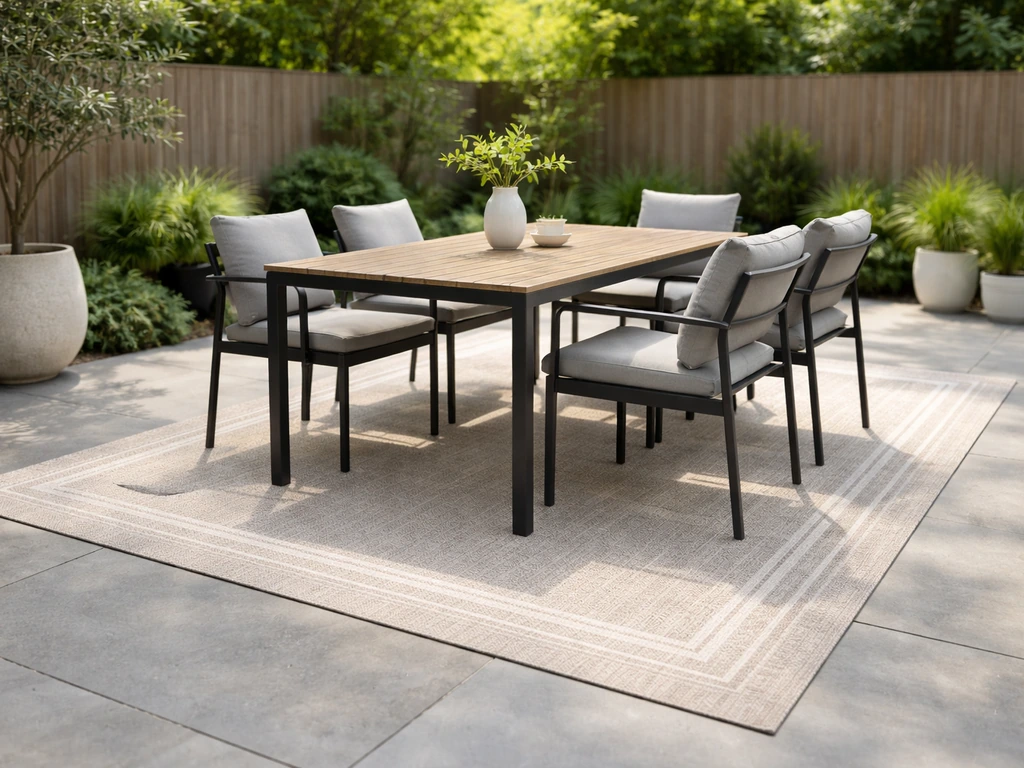
What makes a patio rug actually 'the best'
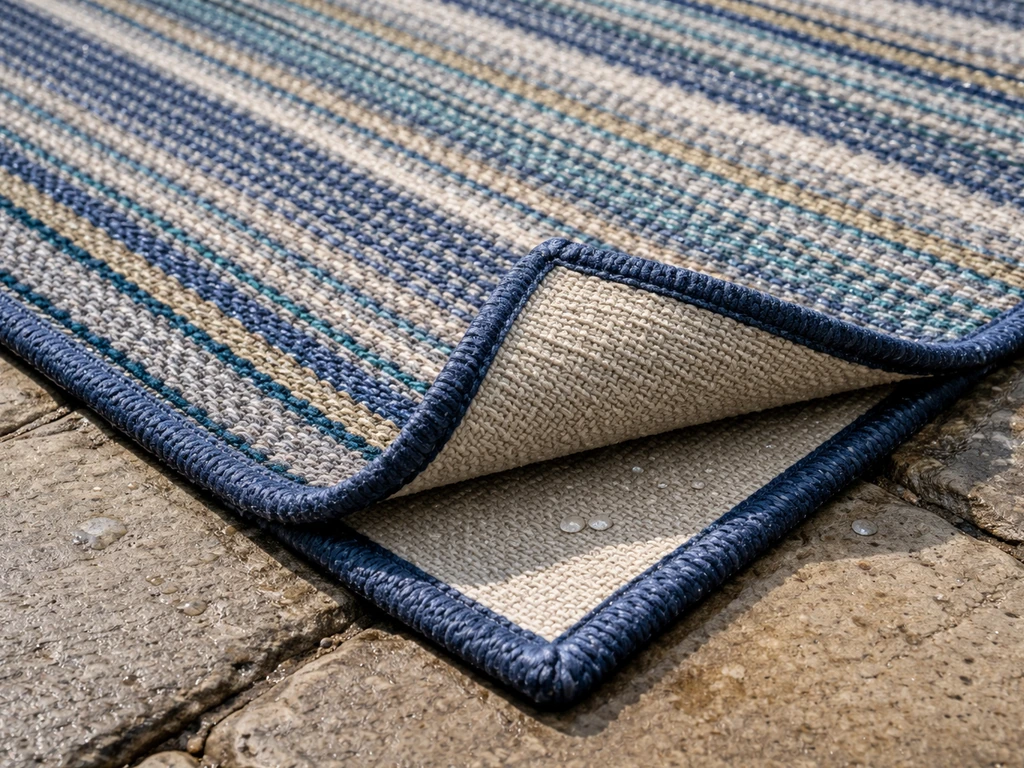
Not every rug marketed as 'outdoor' can handle real outdoor conditions. Some fade in one summer. Some grow mildew underneath after a single rainstorm. Before you buy anything, run through this quick performance checklist to filter out the rugs that will disappoint you.
- UV and fade resistance: The color should be locked into the fiber, not sitting on the surface as a dye coating. Solution-dyed polypropylene means the pigment is part of the fiber itself, so sun exposure doesn't bleach it out over time.
- Water drainage and drying speed: A good outdoor rug should let water pass through rather than trap it underneath. Flatweaves and open-weave constructions drain fastest. Thick pile holds moisture longer and takes much longer to dry.
- Mold and mildew resistance: Synthetic fibers like polypropylene don't feed mold the way natural fibers do. But even a synthetic rug can trap organic debris underneath, so drainage and airflow matter as much as the fiber itself.
- Cleanability: You should be able to hose it down, let it dry, and be done. If a rug requires dry cleaning or special treatments to stay looking decent outdoors, it's the wrong rug.
- Slip safety: Outdoors, a rug that shifts underfoot is a real hazard, especially on smooth concrete or composite decking. Look for a non-slip backing or plan to use a rug pad underneath.
- Durability under foot traffic: Low-pile and flatweave constructions hold up to foot traffic, furniture legs, and dragging chairs much better than high-pile options that crush and mat down quickly.
Pick the right material for your patio's conditions
Material is the single biggest decision you'll make, and it drives every other performance factor. Here's how the main options stack up in real patio conditions.
| Material | UV/Fade Resistance | Water & Drainage | Mildew Resistance | Cleaning | Best For |
|---|---|---|---|---|---|
| Solution-dyed polypropylene | Excellent (color in fiber) | Fast-draining, dries quickly | Excellent | Hose off, air dry | Most patios, uncovered or covered |
| Standard polypropylene (surface-dyed) | Good but fades faster | Fast-draining | Good | Hose off | Covered patios, lower budgets |
| Polyester | Moderate | Slower to dry | Moderate | Hose or mild soap | Covered patios with low moisture |
| Natural fiber (jute, sisal, sea grass) | Poor | Absorbs water, very slow to dry | Poor | Spot-clean only | Indoor-only or very protected covered areas |
| Recycled PET plastic | Good to excellent | Fast-draining | Good | Hose off | Eco-conscious buyers, covered or uncovered |
| Nylon (outdoor-rated) | Good | Moderate drainage | Good | Mild detergent + hose | High-traffic covered patios |
If your patio gets direct sun and rain with no roof over it, solution-dyed polypropylene is the clear winner. Natural fibers like jute and sisal look beautiful in photos, but outdoors they absorb water, grow mold quickly, and deteriorate fast. Save those for a very sheltered, covered porch that barely sees moisture, or skip them entirely for patio use.
How to size your patio rug correctly
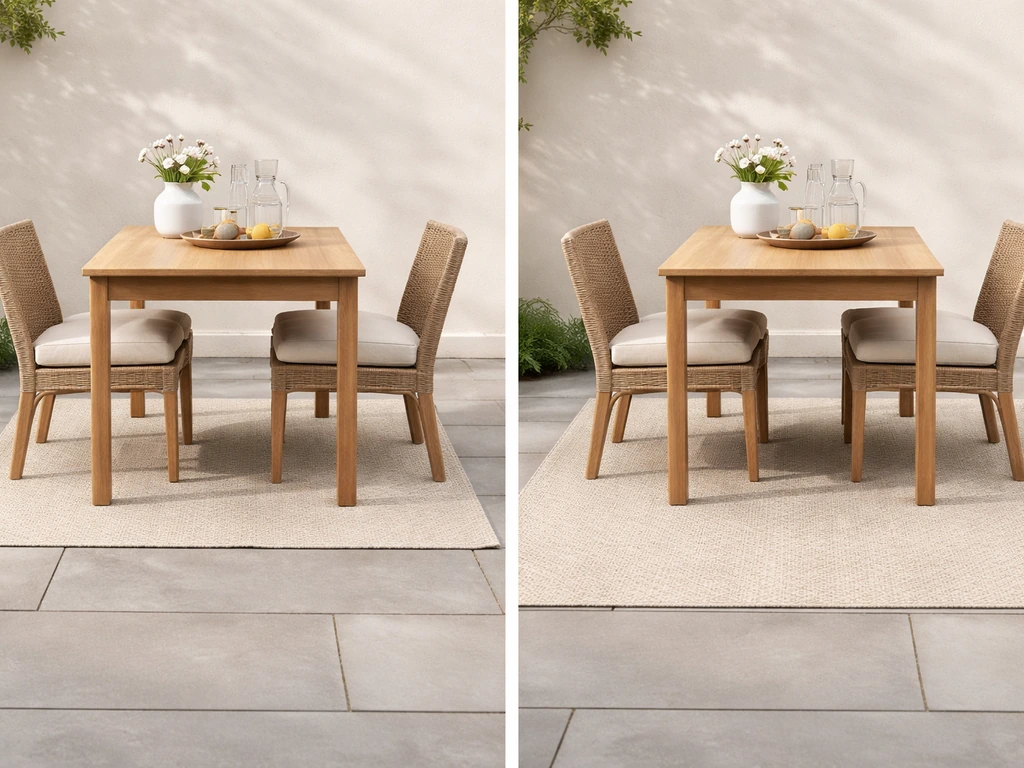
Sizing is where most people go wrong. The instinct is to buy smaller than you need, and the result is a rug that looks like a postage stamp under your furniture. Here's how to size it properly for the two most common patio setups.
Dining areas
For a dining table, the rug needs to be large enough so that chairs stay on the rug even when pulled back to sit down. The standard rule is to add 24 to 28 inches to the table's dimensions on each side. So if your dining table is 36 by 60 inches, you need a rug that's at least 84 by 108 inches, which is roughly a 7x9 or 8x10. Getting this wrong means chair legs catch the rug edge every time someone scoots out, which wears out the rug fast and becomes genuinely annoying.
Seating and lounge areas
For a seating group, like a sofa and chairs around a coffee table, the front legs of all your furniture should sit on the rug. This anchors the conversation zone and keeps the layout looking intentional instead of floating. Build in at least 6 inches of rug beyond the front legs on all sides. If you have a sectional or a large L-shaped setup, size up to an 8x10 or 9x12 before anything else. Going smaller is the most common and most visible sizing mistake on patios.
Quick sizing reference
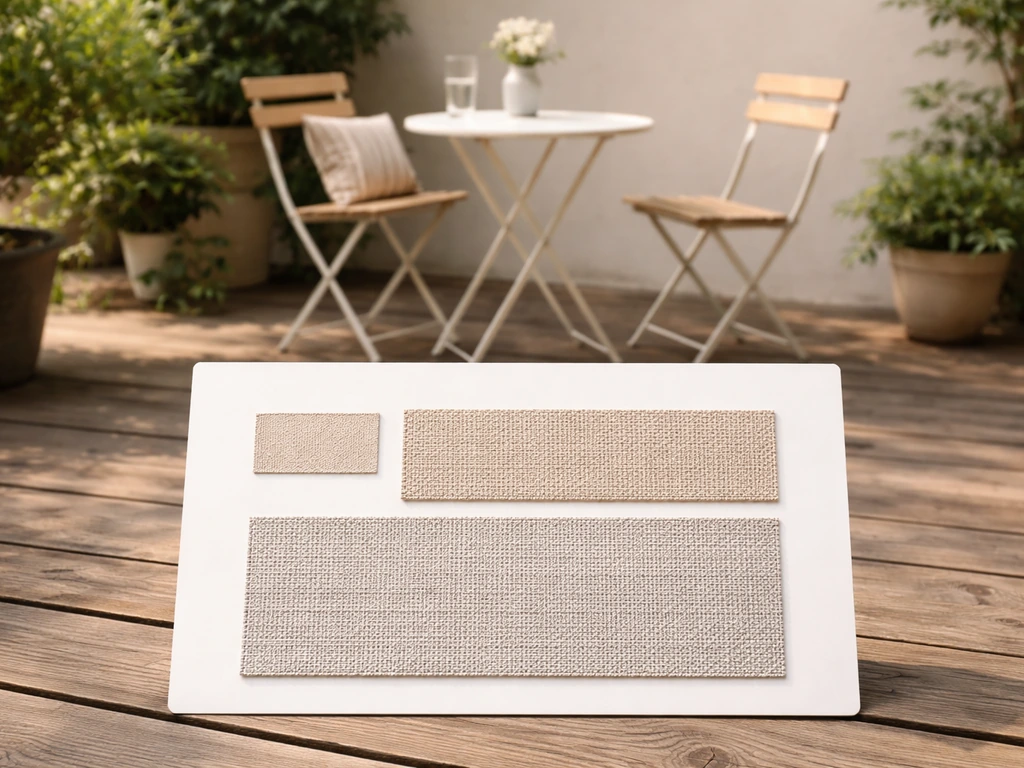
| Patio Setup | Recommended Rug Size |
|---|---|
| Small bistro table (2 chairs) | 4x6 or 5x8 |
| Medium dining table (4–6 chairs) | 8x10 or 9x12 |
| Large dining table (6–8 chairs) | 9x12 or larger |
| Small seating group (loveseat + 2 chairs) | 6x9 or 8x10 |
| Large sectional lounge area | 9x12 or 10x14 |
| Narrow balcony or runner placement | 2x8 or 3x10 runner |
Pile, backing, slip safety, and comfort: what the construction details mean
Pile height
Low-pile (under 0.25 inches) and flatweave rugs are the practical choice for outdoor use. They dry faster, handle foot traffic without crushing, and chair legs don't catch on them. Higher pile feels more cushioned underfoot but traps moisture, debris, and pet hair, and it won't bounce back after heavy furniture sits on it for a season. If you want something softer underfoot, a rug pad under a flatweave is a smarter approach than buying a thick-pile outdoor rug.
Construction: woven vs. braided vs. tufted
Flatwoven and power-loomed polypropylene rugs (like those from Safavieh's Courtyard line or Nourison's Positano collection) offer the best balance of durability, drainage, and easy cleaning. Braided rugs are sturdy and casual-looking, but the construction can trap more debris between the braids. Tufted outdoor rugs can look premium but are harder to keep dry and clean if they have any pile to them.
Backing and slip safety
Many outdoor rugs have a latex or rubber backing that provides some grip, but those backings can degrade outdoors, crack in cold temperatures, or leave residue on certain deck surfaces. If slip safety is a concern, especially on smooth pavers, composite decking, or tiles, a separate outdoor rug pad is the more reliable solution. More on that below. For bare concrete or brick, many polypropylene rugs with woven or open backings stay put reasonably well on their own.
Best patio rug by scenario
Uncovered patio in a sunny or rainy climate
This is the hardest use case. You need solution-dyed polypropylene with an open or flatweave construction so water drains instead of pooling. Look for rugs that explicitly state they can be cleaned with a garden hose and air-dried flat. Avoid any rug with a thick backing that blocks drainage. If you're in a very wet climate, consider lifting the rug to dry the concrete underneath occasionally, since trapped moisture breeds mildew even under a synthetic rug.
Covered or screened porch
A covered patio gives you more flexibility. You can get away with slightly softer constructions, a bit more pile, and even some indoor-outdoor hybrid rugs that look more refined. UV exposure is reduced, so even standard polypropylene holds its color longer. You still want a synthetic fiber for moisture resistance, but you have more style options here. This is where you might consider an indoor-outdoor rug that works double-duty if you rearrange seasonally.
Dining area with chairs that drag
Go flatweave every time. Chair legs dragging across a looped or pile rug will pull fibers and snag edges within one season. A tight flatweave polypropylene takes the daily abuse of a dining area without showing it. Size generously (see the dining sizing rule above) and make sure the edges are finished or bound so they don't fray from repeated foot and chair traffic.
Lounge and seating zone
A seating area is lower traffic and more about comfort and aesthetics. You have a little more room to prioritize texture and pattern. A low-pile polypropylene or a quality woven synthetic can work well. Size up to make sure all front legs of your furniture are on the rug, and consider a rug pad under it for comfort and stability if you're on a hard surface.
Homes with pets or kids
Prioritize rugs that can be fully hosed down, including the backing. Pet hair, dirt, and spills are a given. A flatweave polypropylene with minimal texture is easiest to sweep and hose clean. Avoid braided constructions that trap pet hair between the braids, and skip anything with a thick latex backing that can't get fully wet without degrading. Darker patterns or multicolor designs hide dirt and staining between cleanings.
RV patios and small outdoor spaces
Compact outdoor spaces like RV patios or small apartment balconies have their own quirks, including the need for lightweight rugs that can be rolled up and stored easily. Rugs designed as RV patio mats often have a polypropylene mesh or woven construction that drains perfectly and packs down small. For RV patio use in particular, these are often the best rv patio mats because they drain well and store easily when you need to pack up RVs patio mats. These overlap with the broader patio rug category but tend to prioritize packability alongside weather resistance.
Cleaning, care, and seasonal maintenance
Outdoor rugs are low-maintenance, but 'low maintenance' is not the same as 'no maintenance.' Here's the routine that keeps them looking good and lasting longer. DoItYourself.com recommends cleaning outdoor polypropylene rugs with a hose and also removing detergent residue so the rug does not stay sticky and attract dirt blank" rel="noopener noreferrer">keeps them looking good and lasting longer.
Regular cleaning
- Shake or sweep the rug weekly to remove loose dirt and debris. This prevents grit from working into the weave and abrading the fibers.
- Hose it down monthly (or after heavy pollen seasons or muddy foot traffic). Most polypropylene outdoor rugs, including options like Safavieh Courtyard and Nourison Positano, are explicitly designed to be cleaned this way.
- For stains, use a mild dish soap or detergent solution with a soft brush. Rinse thoroughly so no soap residue is left behind, which can attract more dirt.
- After washing, stand the rug on its edge or hang it to dry completely before laying it flat again. Laying a wet rug flat traps moisture underneath and can cause mildew on both the rug and the surface below.
What to avoid
- Don't machine-wash most outdoor rugs, even if they look like they'd fit in a front-loader. Manufacturers like Nourison explicitly advise against it because the backing and construction aren't designed for machine agitation.
- Don't leave a wet rug flat on a non-draining surface for extended periods. Lift it or prop it periodically after rain to let airflow underneath.
- Don't use bleach unless the manufacturer specifically says it's safe. Bleach degrades polypropylene fibers over time and can damage colored patterns.
- Don't ignore the surface beneath the rug. Concrete and wood can grow mildew under a rug that stays damp. Occasional cleaning of the patio surface under the rug matters.
Seasonal storage
If you're in a climate with hard winters, rolling the rug up and storing it indoors extends its life significantly. Clean and fully dry the rug before storing to prevent mildew from developing during storage. Roll it rather than folding to avoid permanent crease lines. If you leave the rug out year-round, expect some accelerated weathering, especially with cheaper surface-dyed options.
Troubleshooting: rug won't lay flat or started fading
New outdoor rugs often have memory from being rolled in packaging. Lay it flat in the sun for a day or two and the heat usually relaxes the curl. If edges keep curling, a rug pad underneath or double-sided carpet tape on the edges helps. For a rug that's fading unevenly, the likely culprit is that it was surface-dyed rather than solution-dyed. Nourison notes that solution-dyed polypropylene gets color embedded into the fiber during production, which is why it typically holds up better against UV and fading than surface-dyed rugs solution-dyed rather than surface-dyed. There's no reversing UV fade, but rotating the rug 180 degrees periodically evens out the sun exposure and extends its useful life.
Budget guidance and whether you need a rug pad
What to expect at each price point
| Budget Range | What You Get | Best Use |
|---|---|---|
| Under $50 | Basic polypropylene, often surface-dyed, limited size options, thinner construction | Covered patios, renters, seasonal use |
| $50–$150 | Solution-dyed polypropylene, better UV resistance, more pattern choices, standard sizes up to 8x10 | Most covered and uncovered patios |
| $150–$300 | Higher-quality construction, better edge finishing, wider selection of 9x12 and larger sizes, improved fade warranties | Uncovered patios, dining areas, long-term use |
| $300+ | Premium materials, designer patterns, polypropylene-polyester blends, heavy-duty construction, possible outdoor-rated backing | High-end patio design, large spaces, investment pieces |
Spending $100 to $200 on a solution-dyed polypropylene rug in the right size is genuinely the sweet spot for most patios. You get real UV and weather resistance without overpaying. Going under $50 often means surface-dyed fibers that fade visibly in one summer, which is frustrating and ultimately more expensive than buying right the first time.
Do you need a rug pad outdoors?
A rug pad isn't mandatory, but it's often worth it. On smooth surfaces like polished concrete, tile, or composite decking, an outdoor rug pad dramatically improves slip resistance and prevents the rug from creeping around under furniture. It also adds a layer of cushion underfoot, which makes a flatweave rug feel significantly more comfortable in a lounge or seating area. Make sure to buy a pad rated for outdoor use: standard indoor rug pads can degrade quickly from moisture and UV exposure, and some leave residue or staining on certain deck finishes. Look for open-weave or perforated outdoor pads that allow drainage rather than trapping water between the pad and the surface.
If you're shopping for a rug for a very specific use case, like a fully exposed uncovered patio, or you want to explore options suited for balconies and compact spaces, the overlap with outdoor rugs designed for uncovered patios is worth exploring. Those setups have their own nuances around drainage and sun angle that affect which products hold up best.
FAQ
How can I tell if an outdoor rug will mildew under it, even if it looks synthetic and clean?
Check whether the care instructions say the backing can be hose-rinsed and air-dried fully. If the rug has any thick, closed backing or a fabric-lined underside, water can stay trapped. Also look for guidance about drainage (open or flatweave construction) and plan to lift and dry it periodically if your patio stays wet after storms.
Is it better to choose a rug pad or rely on the rug backing for stability?
If your patio surface is smooth (polished concrete, tile, pavers, composite decking), a separate outdoor pad is usually more reliable because some latex or rubber backings degrade, crack, or leave residue. Choose an open-weave or perforated outdoor pad so water can still drain instead of creating a damp layer between rug and surface.
What rug material should I avoid if I have pets that shed year-round?
Avoid braided rugs and anything with deep texture where hair can lodge between fibers or into the construction. For easiest cleaning, pick a flatweave polypropylene with minimal texture so you can sweep and fully hose it down, including the backing if the product allows.
Can I use an indoor washable rug outdoors if I spray it off regularly?
Usually no. Even if it can be hosed, many indoor rugs use fibers or backings designed for low moisture exposure and can fade unevenly or deteriorate when left wet. Outdoor-appropriate polypropylene with solution-dyed fibers and a drainage-friendly construction is the safer choice.
How do I remove musty smells from an outdoor rug after a wet week?
Rinse thoroughly with clean water, then lay it flat in full sun until completely dry (including the underside). If it smells even after full drying, lift the rug and dry the concrete or decking underneath as well, since mildew can form on the surface contact point.
Will a darker patterned patio rug hide stains better, and is there a downside?
Darker and multicolor patterns typically camouflage dirt and minor staining between cleanings. The tradeoff is that some patterns can look uneven if the rug fades faster in high-sun areas, so rotating the rug 180 degrees periodically still helps extend its appearance life.
What’s the right way to store a patio rug for winter in cold climates?
Clean and fully dry it first, then roll it to avoid permanent crease lines. Store it indoors in a dry place, and do not trap a damp rug in plastic or tight bins, since moisture during storage is what drives mildew growth.
My rug edges are curling after purchase, what should I do first?
Let it relax flat in sun for a day or two to remove packaging curl. If edges keep lifting, use an outdoor rug pad beneath for support, or apply edge-secured outdoor carpet tape only along the rug perimeter (not over the full surface), and replace the tape if it loses grip.
How do I choose size for a rug under a sectional with irregular spacing?
Use the rule that all front legs should sit on the rug, then add extra clearance beyond the front legs on all sides. If your sectional footprint is large or the shape is L-shaped, size up beyond the minimum, because too-small rugs are the most noticeable layout mistake and chair or sofa legs can snag the edge.
What’s the best option for an uncovered, fully exposed patio during heavy rain?
Prioritize solution-dyed polypropylene with open or flatweave construction that explicitly supports hose cleaning and air-drying flat. Avoid thick backing that blocks drainage, and in very wet climates lift the rug occasionally to dry the surface underneath to prevent mildew.
Can I use seam binding or finished edges on an outdoor rug, or will they fail fast?
Finished or bound edges are important for outdoor longevity, especially in dining areas where chair legs scrape the perimeter. Still, expect edge wear, so choose a rug with tight flatweave and sturdy binding, and treat it like a high-friction zone by sizing correctly to prevent legs from catching the edge.
Are RV patio mats a different category than the best patio rug?
They overlap, but RV patio mats prioritize packability and fast drainage. If you need lightweight, rollable coverage for a compact outdoor space, a polypropylene mesh or woven RV-style mat is often a better fit than a heavier patio rug that is harder to store.
Next Articles
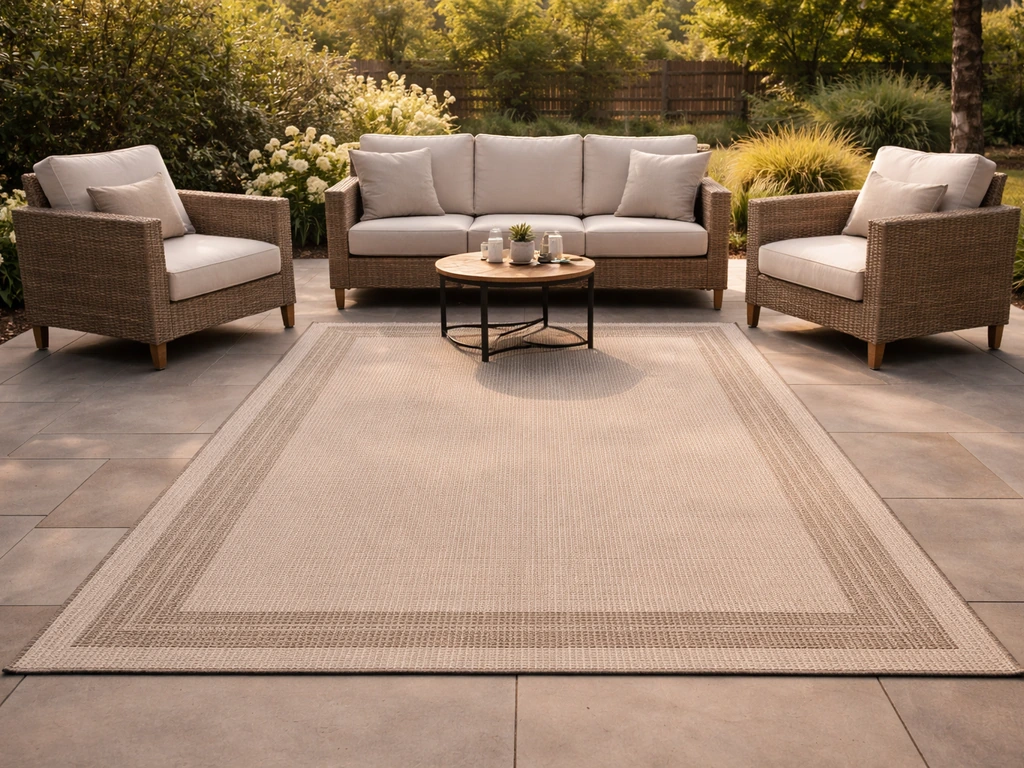
Best Outdoor Patio Rug: Buying Guide by Materials, Size, Care
Choose the best outdoor patio rug fast with material, size, layout, and care tips for sun, mildew, stains, and storms.
Best Sunbrella Patio Cushions: Top Picks, Guide & Maintenance
Find the best Sunbrella patio cushions: durable, fade‑resistant picks, buying tips, care, and top recommendations.
Alternative to Patio Cushions: Durable, Stylish Options and DIY
Alternative to patio cushions: durable, weatherproof seating options, pros, DIY tips & buying guide.