
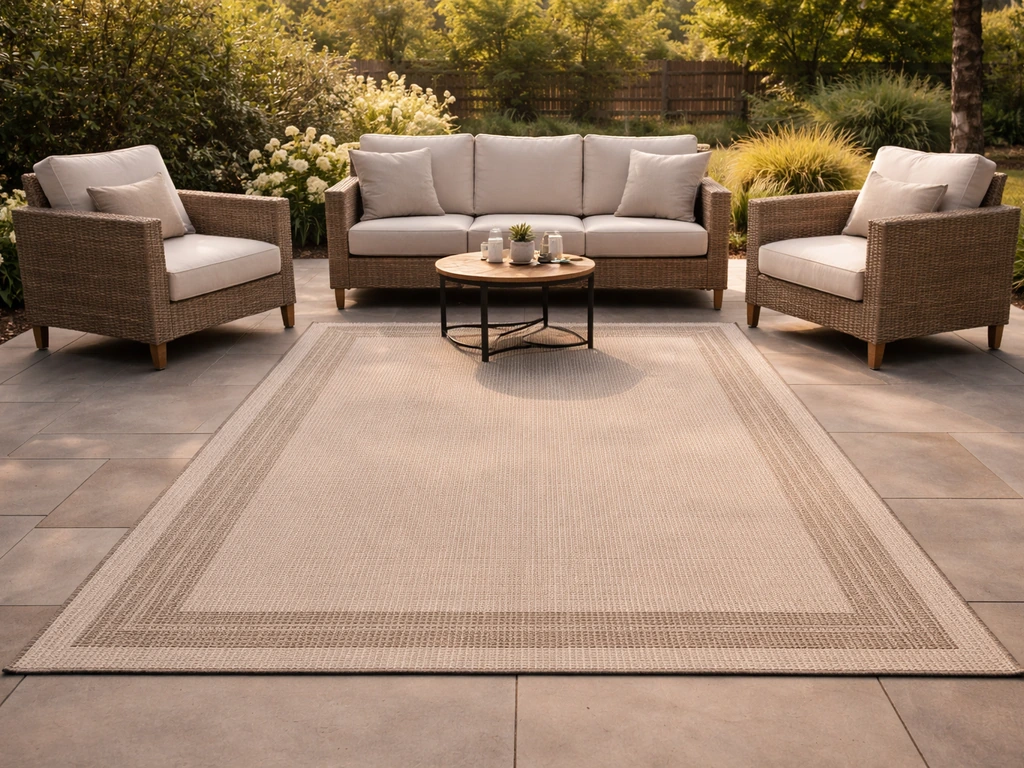
The best outdoor patio rug for most people is a flat-weave, solution-dyed polypropylene rug sized at least 8x10 feet for standard patio setups, or a 5x8 for tighter balconies and small seating areas. Polypropylene doesn't absorb water, resists mildew, dries fast, and holds color far better than most alternatives because the dye is baked into the fiber during manufacturing rather than applied on top. If you're shopping today and just want a straight answer, that's it. The rest of this guide helps you dial in the right size, style, and material for your specific situation so you don't waste money on something that fades out or grows mold under your furniture by August.
Best Outdoor Patio Rug: Buying Guide by Materials, Size, Care

Lark Perry
29 Apr 2026
How to Figure Out What You Actually Need Before You Buy
Before you filter by color or price, answer four questions: How much direct sun does your patio get? How often does it get wet, and does water pool or drain away? How much foot traffic are you dealing with? And are you renting or owning? Those four factors determine whether you need a bomber UV-resistant fiber, a quick-draining construction, a low-pile surface that's easy to hose off, or simply something cheap and replaceable.
High sun exposure is the number-one rug killer outdoors. Even rugs marketed as UV-resistant will fade with prolonged sun exposure, so don't treat that label as a permanent guarantee. What actually matters is whether the color is solution-dyed (meaning the pigment is integrated into the fiber itself, not coated on afterward). Solution-dyed polypropylene, PET, and olefin all hold color dramatically better than piece-dyed alternatives, especially after a full summer of direct sun.
High moisture or a covered patio that stays damp calls for rugs with open, breathable construction and low pile so water doesn't get trapped. If you're in a humid climate or your patio doesn't drain well, the material choice and the rug's backing matter as much as the fiber itself. A solid rubber backing traps moisture underneath and creates the perfect environment for mold. More on that in the weather performance section below.
Foot traffic level shapes how much you care about pile durability. A dining area with chairs being dragged in and out constantly is much harder on a rug than a low-traffic reading corner. Flat-weave and low-pile rugs perform better in high-traffic zones because there's less pile to compact or shred. If comfort underfoot is a priority for a lounge area, you can go slightly thicker, but keep in mind thicker pile holds more moisture and debris.
Renters often benefit from thinking about portability and ease of cleaning over longevity. A lighter, washable rug that can move with you is worth more than a heavy premium option tied to a space you might leave. For owners investing in a long-term setup, spending more on a well-constructed, UV-stable rug usually pays off over two to three seasons compared to replacing cheap ones every year.
Material Guide: Polypropylene, Polyester, PET, and Everything Else
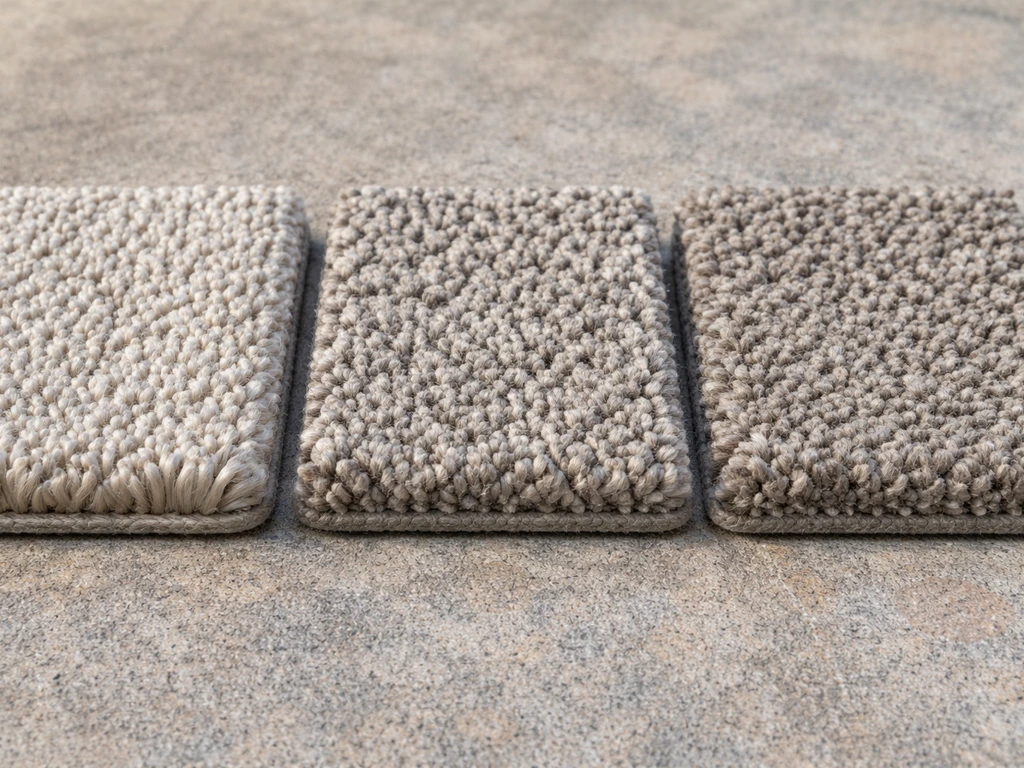
The fiber type is the single biggest factor in how an outdoor rug performs. Here's how the main options stack up in plain terms.
| Material | Water Resistance | Fade/UV Resistance | Feel Underfoot | Best For |
|---|---|---|---|---|
| Polypropylene (Olefin) | Excellent – doesn't absorb water | Excellent when solution-dyed | Firm, slightly coarse | High-traffic, full-sun, wet patios |
| Recycled PET (rPET) | Very good | Excellent when solution-dyed | Softer than polypropylene | Eco-conscious buyers, moderate traffic |
| Polyester | Good | Moderate – fades faster than poly/PET | Soft | Covered patios, low sun exposure |
| Natural fibers (jute, sisal, seagrass) | Poor – absorbs moisture, molds easily | Moderate | Textured, natural look | Covered, very dry patios only |
| Nylon | Good | Moderate | Soft and durable | Indoor/outdoor transitional spaces |
Polypropylene is the clear winner for most outdoor situations. Rain passes through the fibers rather than soaking in, which means the rug dries quickly and doesn't hold the moisture that causes mildew. When the color is solution-dyed (look for that phrase specifically in product descriptions), the pigment is part of the fiber structure itself, making fading much harder to trigger than with rugs where dye is applied after weaving. Brands like Surya and others in the performance outdoor space specify solution-dyed polypropylene or olefin for exactly this reason.
Recycled PET (made from plastic bottles) is a close second and becoming increasingly common. It shares most of polypropylene's weather-resistant traits, often feels a bit softer underfoot, and is the choice if sustainability matters to you. When solution-dyed, it's just as fade-resistant as polypropylene.
Avoid natural fibers like jute, sisal, or seagrass for any patio that gets rained on or stays humid. They absorb moisture, break down, and mold. They can look beautiful on a covered, very dry porch, but for anything else they're a short-lived and expensive mistake.
Sizing and Layout: Getting the Dimensions Right
The most common mistake people make is buying a rug that's too small. A rug that only fits under the coffee table legs looks like a floor sample, not a design decision. For a typical seating area with a sofa and chairs, an 8x10 or 9x12 rug anchors the space properly. For smaller patios or balconies, a 5x8 works well. For a dining set, size up more than you think you need.
Dining Areas Need More Rug Than You Expect
The rule for dining setups is simple: every chair leg should stay on the rug even when a guest pushes back from the table. Wayfair's sizing guidance recommends the rug extend at least 2 feet beyond each side of the table. So if your table is 36 inches wide by 60 inches long, you want a rug that's at least 60 inches wide by 84 inches long (5x7), and honestly a 6x9 or 8x10 gives you more comfortable clearance. If chair legs are constantly scraping off the rug edge, the edge will fray faster and chairs will catch, which is annoying and speeds up wear.
Shape: Rectangle, Runner, or Round
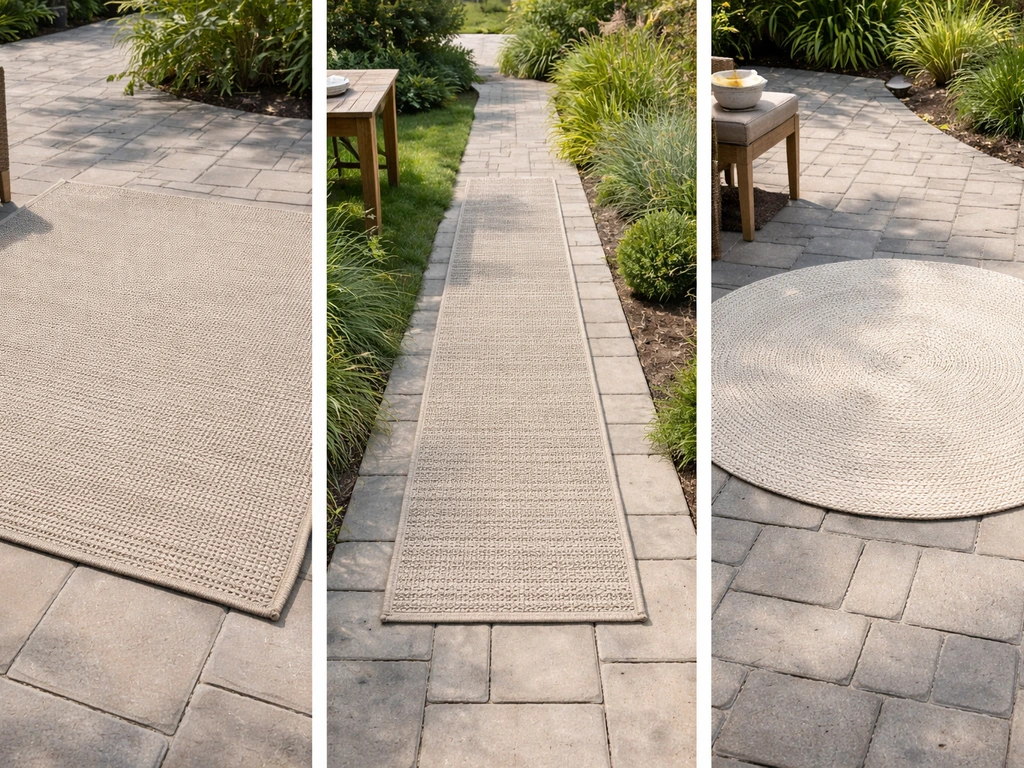
Rectangles work for nearly every setup and are the easiest to size. Runners (typically 2.5x8 or 3x10) are useful for narrow balconies, entries, or along a pool edge. Round rugs work well under round tables or in small defined conversation corners. The shape should follow the shape of your furniture arrangement, not fight it.
Quick Reference: Common Patio Sizes
| Patio Setup | Recommended Rug Size |
|---|---|
| Small balcony or bistro table (2 chairs) | 4x6 or 5x8 |
| Sectional sofa + coffee table | 8x10 or 9x12 |
| 4-person dining table | 6x9 (minimum), 8x10 preferred |
| 6-8 person dining table | 9x12 or larger |
| Narrow side patio or walkway | 2.5x8 or 3x10 runner |
| Large open patio with multiple zones | Two separate rugs to define areas |
Weather and Stain Performance: What the Labels Actually Mean
"UV resistant" on a product tag is a marketing claim, not a performance guarantee. Every outdoor rug fades eventually if left in full sun long enough. The real question is how fast. Solution-dyed fibers resist fading dramatically better than piece-dyed rugs because the color can't wash or bleach out of the surface since it's embedded in the fiber itself. If a product description says "UV-protected colors" but doesn't mention solution-dyed construction, be skeptical.
Mildew resistance depends on how quickly a rug drains and dries. Polypropylene's non-absorbent structure is a natural advantage here. But even a mildew-resistant rug can develop problems if it sits over standing water or has a solid backing that traps moisture underneath. If you're adding a rug pad (recommended for safety and to reduce slipping), look for open-weave or mesh construction rather than solid rubber. Solid pads block airflow and create a moisture trap between the pad and the patio surface, which leads to mold growth on the back of the rug and potentially stains on your concrete or deck.
Stain resistance in outdoor rugs comes mostly from the fiber's non-absorbent nature. Polypropylene and PET don't soak up liquids the way wool or cotton do, so most spills sit on the surface and can be blotted or rinsed away. For patio dining especially, this matters a lot. Low-pile and flat-weave constructions are easier to spot-clean than looped or high-pile options because there's less texture for debris to hide in.
One practical thing worth knowing: even the most weather-resistant outdoor rug benefits from being moved before a major storm if possible. Consumer Reports specifically recommends stowing rugs before heavy rain to prevent mold and mildew from building up underneath. It's a small habit that meaningfully extends a rug's life.
Style Match: Colors, Patterns, and Coordinating With Your Furniture
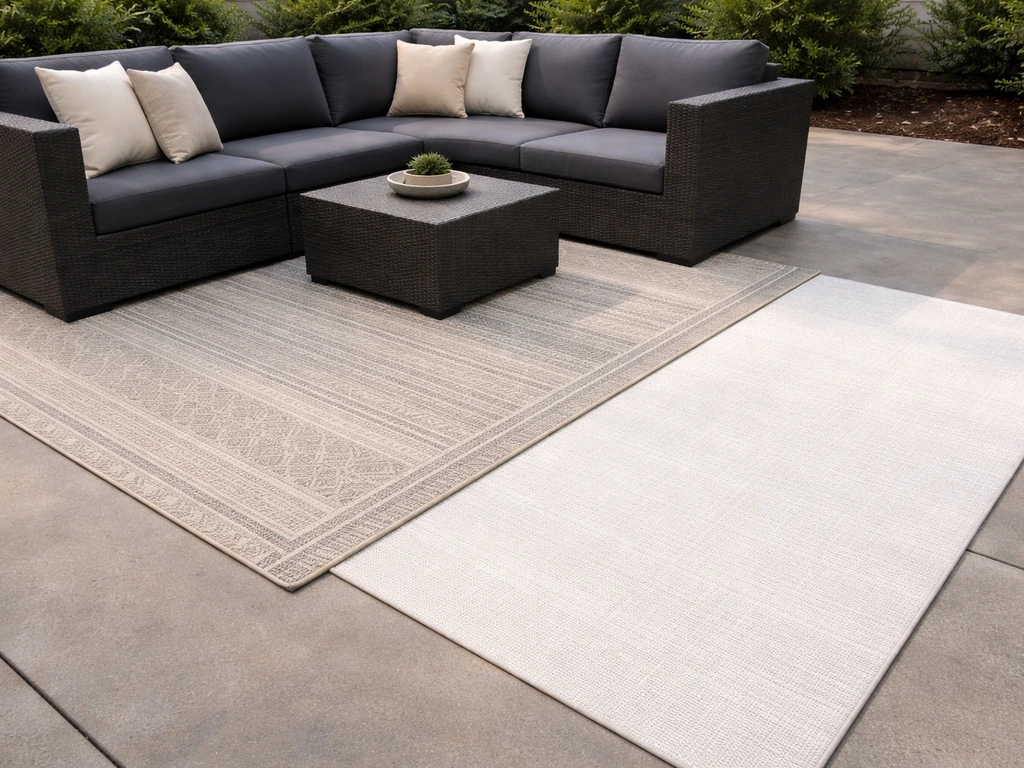
The most practical color advice for an outdoor rug: go medium-toned and patterned. Pure white shows every speck of dirt, bird dropping, and pollen stain. Very dark solids show fading clearly as they lighten unevenly. Medium-toned rugs in gray, terracotta, navy, sage, or warm beige hide day-to-day grime much better, and geometric or organic patterns break up any visible wear or discoloration even further.
Stripes and geometric patterns are perennially popular for outdoor spaces because they complement almost any furniture style, from teak and rattan to powder-coated aluminum. They also tend to photograph well, which matters if you care about how your outdoor space looks on social or in listing photos. Floral patterns work in more cottage or boho-leaning setups but can feel dated faster.
When coordinating with furniture, you don't need to match colors exactly. Pulling one color from your cushions or planters into the rug is usually enough to make the space feel intentional. If your furniture is neutral (black, white, natural wood), almost any rug color works. If your furniture is already colorful, a more subdued rug lets it breathe instead of competing.
For uncovered patios where fading is a real concern, lighter or more complex patterns tend to age more gracefully. A rug that starts as a crisp navy and fades to a dusty denim still looks intentional. A rug that starts as a vibrant tropical print and fades unevenly looks neglected.
Top Picks by Scenario
Small Balconies and Compact Spaces
For a small balcony with a bistro table or a loveseat, a 4x6 or 5x8 flat-weave polypropylene rug is the move. Keep it lightweight so it's easy to shake out, hose off, or bring inside. Bold patterns work well at smaller scales because the rug becomes more of a focal point in a tight space. If you're on a balcony above neighbors, check that your rug backing won't leave water dripping through the deck boards (open-weave construction is preferable here too).
Patio Dining Sets
Dining setups need a rug large enough that every chair stays on it when pulled out, plus a construction that handles food and drink spills easily. If you're specifically shopping for the best outdoor blankets for patio, look for similar weather-friendly materials and easy-care designs that handle spills and frequent use outdoor rugs. Flat-weave polypropylene or PET in a 8x10 or 9x12 is the most practical choice. Avoid high-pile textures that trap food particles and are hard to sweep. A medium-toned geometric or stripe pattern will hide everyday staining between cleanings.
High-Moisture and Humid Climates
If you're in the South, Pacific Northwest, Florida, or anywhere with regular rain and humidity, moisture management is your top priority. Consumer Reports notes that in humid and subtropical climates, outdoor rug life is often shorter because mold and mildew tend to be more damaging outdoors. Choose a rug with open construction or drainage holes, pair it with a mesh rug pad (never solid rubber), and commit to hanging the rug to dry after major rains rather than leaving it flat and wet on the patio. Polypropylene's non-absorbent fiber is non-negotiable here. Avoid any rug with a jute backing or natural-fiber accents, as those will mold faster than the rest of the rug.
Full-Sun Exposed Patios
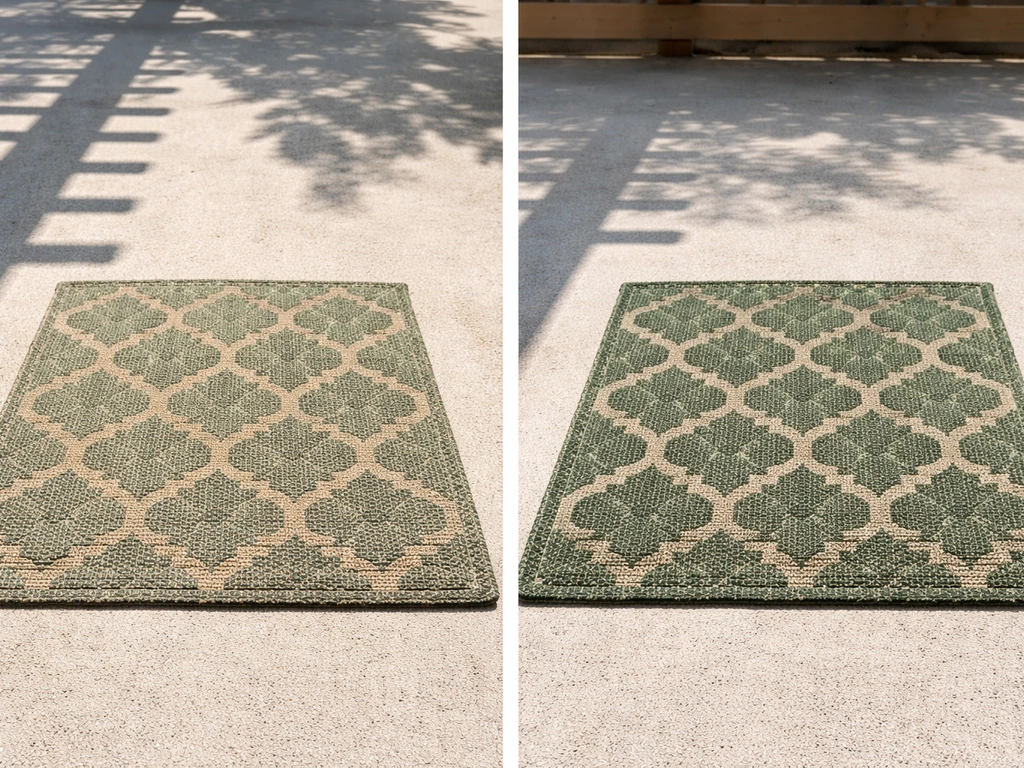
For a patio with no shade cover and direct sun most of the day, solution-dyed polypropylene or rPET is your only smart choice. Look specifically for the phrase "solution-dyed" in the product description, not just "UV resistant." Choose a medium or lighter pattern since darker solids will show uneven fading more obviously. Expect some fading after two or more full seasons regardless of material choice, and budget accordingly.
Covered or Semi-Shaded Patios
A covered patio with a pergola, awning, or roof overhang gives you more material flexibility. You can consider polyester or even a tightly woven indoor/outdoor blend without worrying as much about aggressive UV fading. You still want synthetic fibers over natural ones for moisture resistance, but the UV pressure is significantly lower. This is also where you can indulge in a thicker pile for comfort if that matters to you.
Care, Cleaning, and Knowing When to Replace
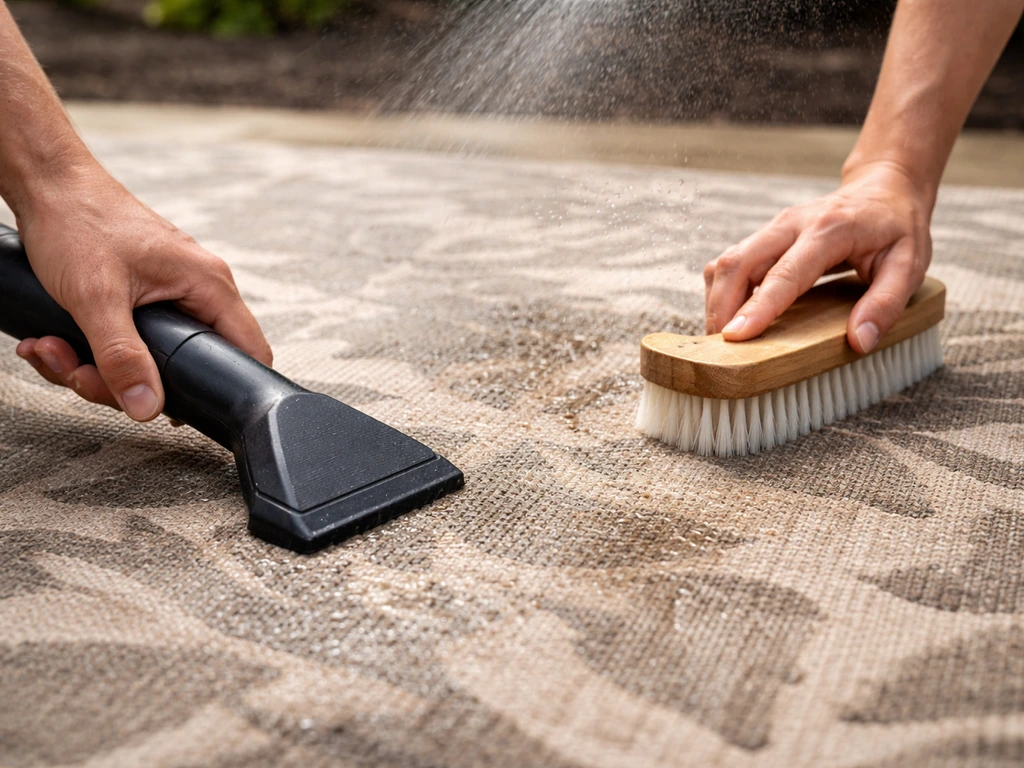
Most outdoor rugs are genuinely easy to maintain if you stay on top of a simple routine. Vacuum regularly using suction only, not a beater bar, which can damage the fibers and fray edges. For light soil and dust, a quick vacuum and shake is enough. For deeper cleaning, a hose-down with mild dish soap and water works well for most synthetic outdoor rugs. Spot-test any cleaning solution in a hidden area first.
After hosing down or after heavy rain, hang the rug to dry rather than leaving it flat. A wet rug lying on a patio surface is a mold farm waiting to happen. Lean it against a fence or drape it over a railing so both sides get airflow and sun. Make sure it's fully dry before putting it back down. This single habit will extend the life of almost any outdoor rug significantly.
After storms specifically, flip the rug and check the back. If you see mold spots, address them immediately with a diluted cleaning solution before they spread. If you've been diligent about drying and you're still getting mold on the back, your rug pad is probably the culprit, and switching to an open-weave outdoor pad will usually solve the problem.
Seasonal Care Checklist
- Vacuum weekly during active use seasons to remove loose soil before it works into the fibers
- Hose down and scrub with mild soap once a month during heavy-use summer months
- Hang to dry fully after hose-downs and after any heavy rainstorm
- Flip and inspect the back of the rug every few weeks for mold or mildew spots
- Roll and store flat or rolled (not folded) in a dry space for winter if you're in a cold climate
- Check the rug pad for moisture buildup at the start of each season
When It's Time to Replace
A good solution-dyed polypropylene outdoor rug should realistically last three to five seasons with proper care. Signs it's time to replace: significant uneven fading that cleaning won't fix, fibers that are matted or shredding, persistent mildew smell even after deep cleaning, or backing that's crumbling or has developed structural damage. Budget-tier outdoor rugs (under $50 for a 5x8) might last one to two seasons in full sun and heavy use, which is fine if you treat them as seasonal items rather than long-term investments. Spending $80 to $150 on a quality flat-weave polypropylene rug usually gets you double the life, which makes it the better cost-per-year value for most people.
If you're comparing notes with specific types of outdoor setups, the guidance for uncovered patios and RV patio mats follows similar logic on drainage and UV resistance but has its own quirks around portability and surface compatibility worth exploring separately. If you want, you can use these same uncovered patio guidelines to zero in on the best outdoor rugs for uncovered patio setups, especially in full sun. To narrow it down, look for the best RV patio mats that match your space and are easy to drain, dry, and clean after rain. The fundamentals here apply broadly: synthetic, solution-dyed, low-pile, and breathable construction wins outdoors almost every time.
FAQ
Can I use an indoor area rug outside if I only get light rain?
You can, but most indoor rugs are not built for repeated wet and drying cycles. Indoor options often have absorbent fibers, solid backing, or coatings that break down, so water can linger and mildew can form on the underside. If you do not have a fully covered, mostly dry porch, prioritize polypropylene, rPET, or another purpose-built outdoor rug (solution-dyed) and low pile.
What size outdoor patio rug should I choose if my patio is oddly shaped or has a partial cover?
Use the closest standard rectangle size and base it on coverage, not the furniture footprint. For conversation areas, make sure the front chair legs and the sofa edge sit on the rug, and leave at least a few inches of rug extending past the seating boundary. For partial covers, plan for more sun exposure on the uncovered side, and consider a rug pattern that hides uneven fade.
Do I need an outdoor rug pad, and what if my rug already has a backing?
A pad helps with slipping and can protect the patio surface, but it must stay breathable. If your patio gets humid or sees frequent damp, use an open-weave or mesh outdoor pad and avoid solid rubber pads, because they trap moisture between the rug and the surface. If your rug already feels stable and drains well, you may skip the pad on very dry decks, but you still should not use a non-breathable pad on damp patios.
How do I stop a rug from staining my deck or concrete?
The most common cause is moisture trapped under the rug pad or the rug staying wet for too long. Use a breathable pad, avoid leaving the rug flat after storms, and hang or drape it so both sides get airflow until it is fully dry. Also, rinse off cleaning soap thoroughly, because residue can leave dull spots once it dries.
Is it better to hose down the rug regularly, or should I spot-clean only?
Hose-down is best when debris accumulates or after pollen-heavy periods, because it removes grit from the fibers before it embeds. For everyday spills, blot, then rinse lightly and let it dry upright or suspended. Either approach works for synthetics, but routine rinsing plus proper drying prevents buildup that can cause odor even on mildew-resistant materials.
What should I do if my outdoor rug develops a mildew smell but looks clean on top?
Check the back immediately and verify the rug dried fully after the last rain. If odor persists, mildew is often underneath or in trapped moisture. Address it by cleaning and drying both sides, and if it is linked to moisture underneath, switch to an open-weave pad or remove the pad entirely to restore airflow.
Will a darker rug hide fading better, or does it show it more?
Dark rugs hide dirt better, but they can show fading patterns more clearly when sun bleaches them unevenly. Lighter and medium-toned patterns usually age more gracefully because variations are less noticeable, especially on uncovered patios. If your patio gets strong direct sun, favor solution-dyed fibers and a pattern that breaks up discoloration.
How can I tell if a rug is truly solution-dyed or just marketed that way?
Look for explicit wording in the product description that says solution-dyed. Vague terms like “UV protected colors” without mentioning solution-dyed construction are not the same thing. When in doubt, treat the rug as potentially piece-dyed and plan for faster fading in full-sun locations.
Can I leave a rug outside during winter, or should I store it?
It depends on your freeze and damp conditions, but storage is usually safer for rugs that are exposed to repeated freeze-thaw while wet. If you cannot store it, keep the rug off pooled-water areas, use breathable airflow, and dry it after storms. For long-term protection, stowing the rug during harsh weather reduces mildew risk and edge wear.
What are the early warning signs that my outdoor rug is due for replacement?
Replace when fading becomes strongly uneven and persists after cleaning, the fibers are matting or shredding, you can still detect a mildew odor after deep cleaning and proper drying, or the backing is degrading or crumbling. Also consider replacing if chair legs keep catching and fraying the rug edge, because that kind of wear tends to spread quickly.
Next Articles
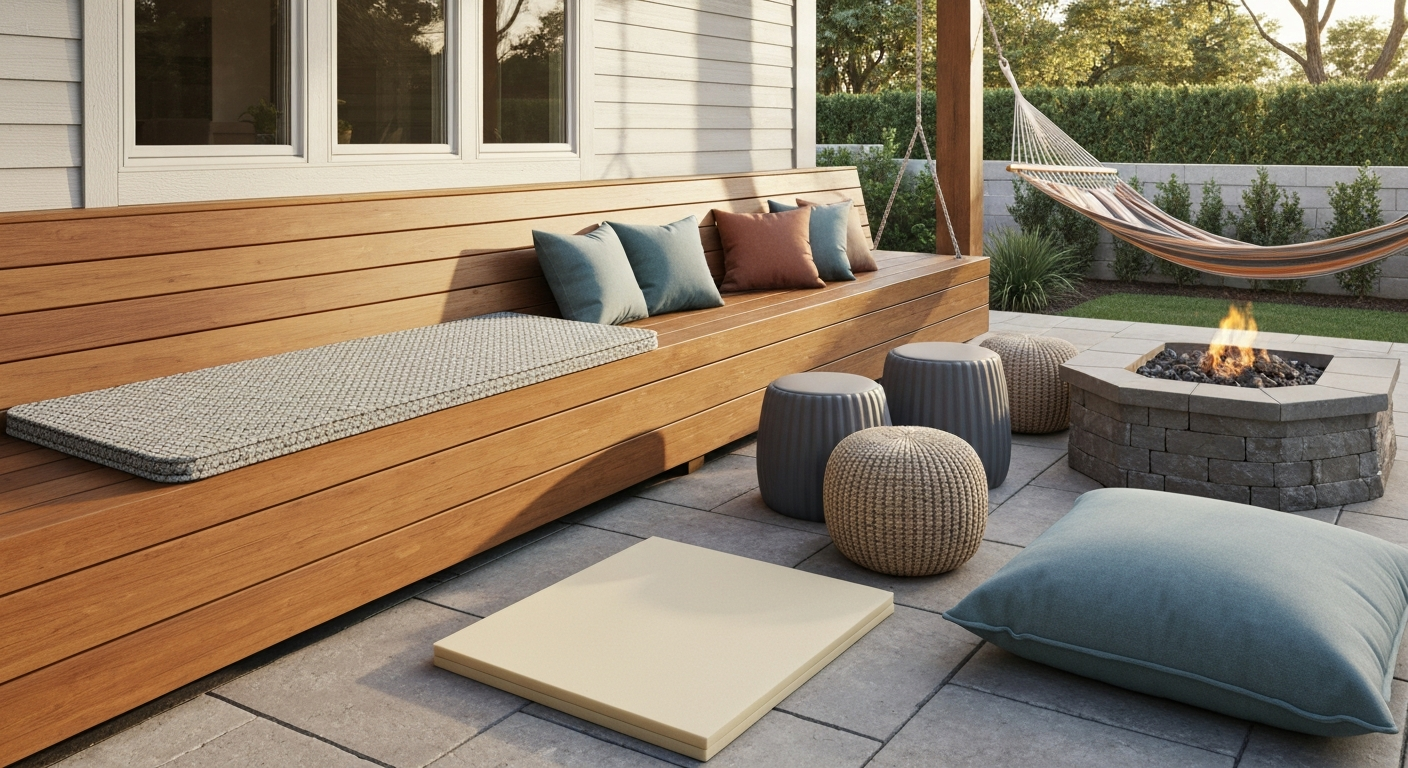
Alternative to Patio Cushions: Durable, Stylish Options and DIY
Alternative to patio cushions: durable, weatherproof seating options, pros, DIY tips & buying guide.
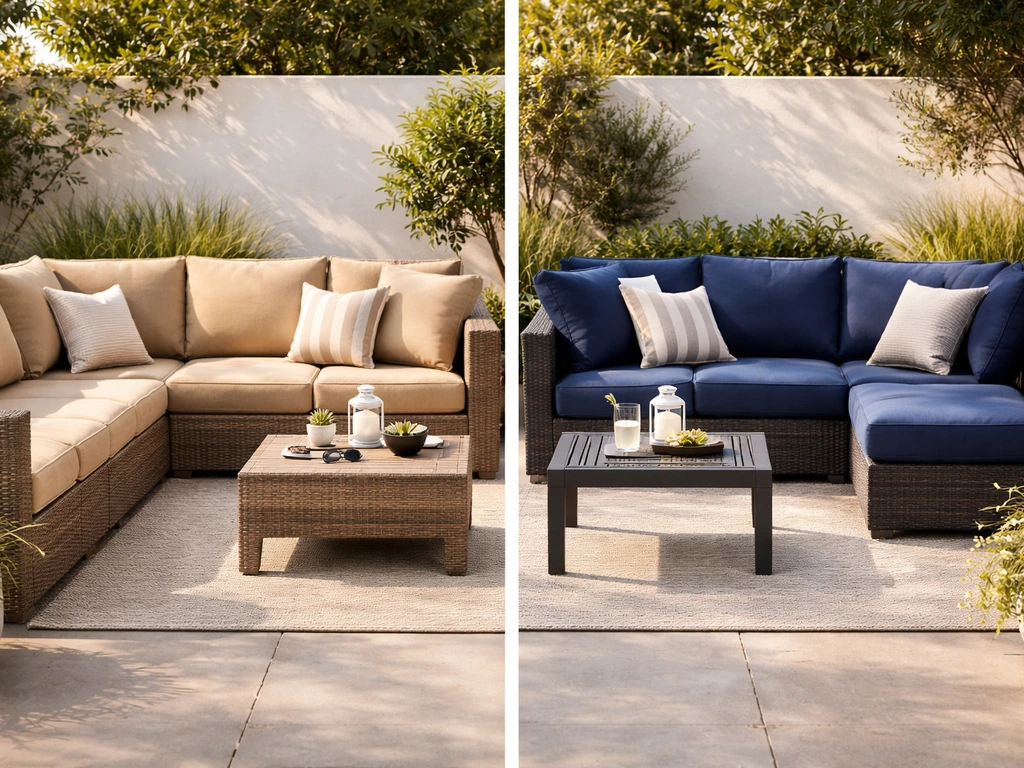
Best Color for Outdoor Patio Cushions in 2026
Choose the best cushion color for sun, heat, and fading in 2026, with pairing tips for patio furniture and durability.
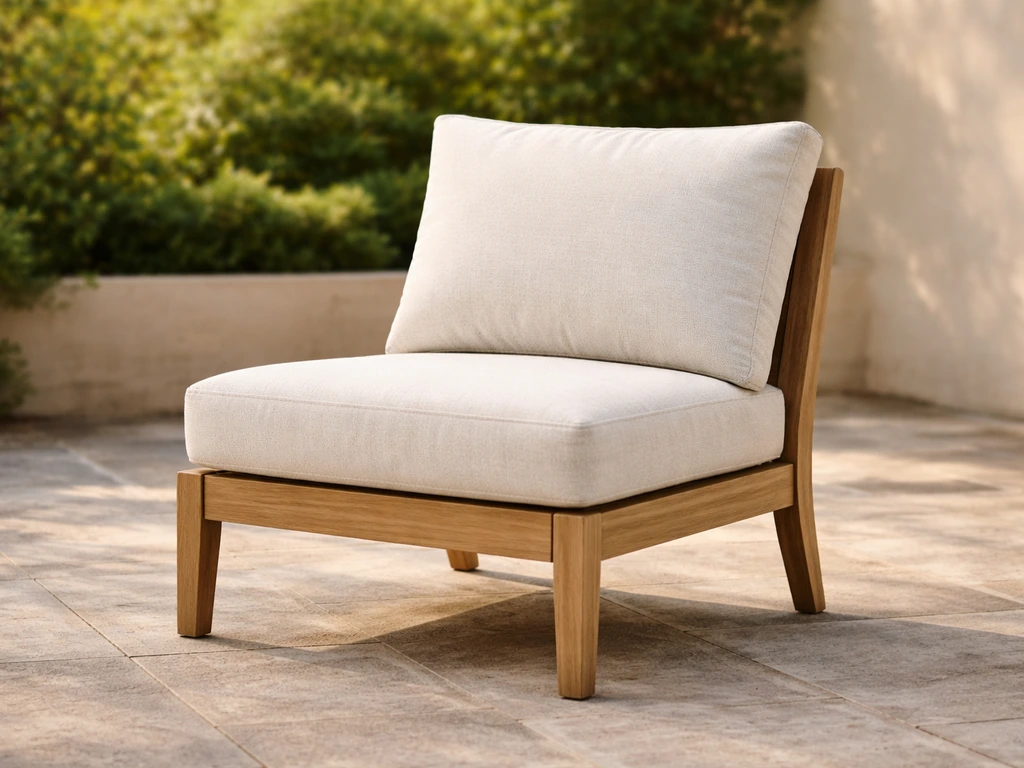
Top Rated Patio Cushions: How to Choose Fast and Right
Step-by-step guide to choose top rated patio cushions by fit, materials, weather durability, and easy cleaning for your