
The best RV patio mats in 2026 are polypropylene or polyester woven mats in sizes ranging from 8'x12' to 8'x20' for full patio coverage, or 18"x30" to 24"x36" for doorway-only use. For most RV setups, a reversible all-weather polypropylene mat like those from Lippert, Faulkner, or Camco hits the sweet spot: they drain fast, resist UV fading, lie flat on uneven ground, and roll up small enough to store in a truck bed or cargo bay. If you have pets, a high-pile turf-style mat or a closed-loop rubber-backed option gives you better traction and easier hose-down cleanup. The right choice depends on your surface (grass, gravel, concrete), how much shade your awning throws, and whether you're camping for a weekend or parked for a season.
Best RV Patio Mats Guide: Choose Size, Material, Grip

Lark Perry
15 May 2026
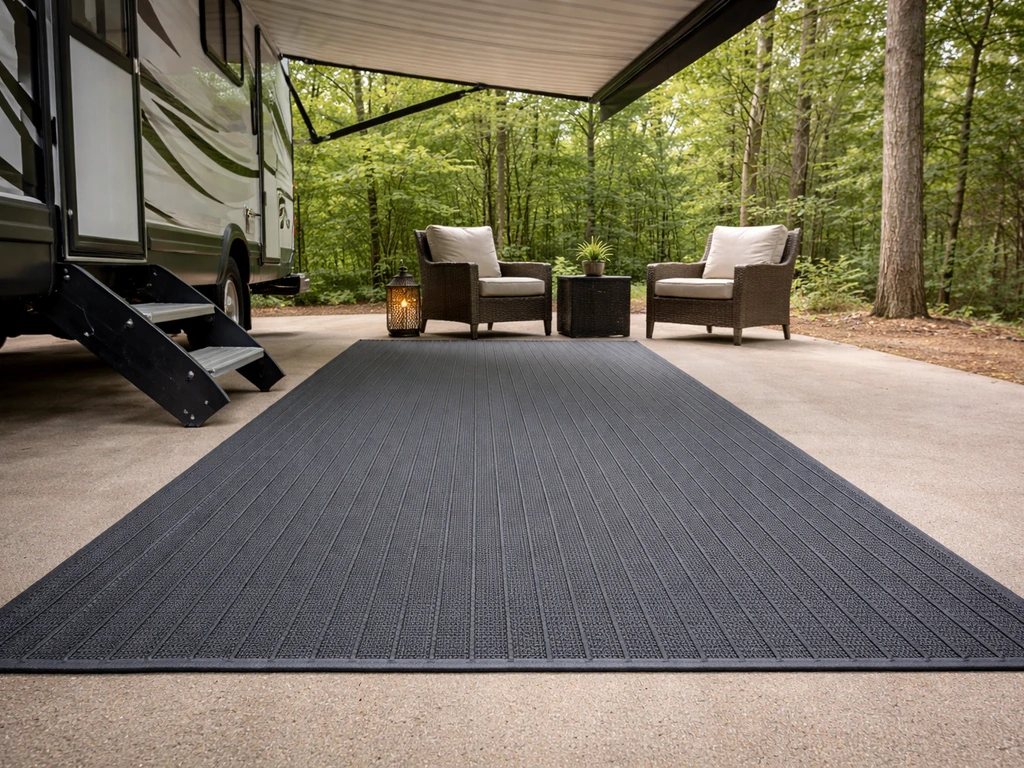
How to pick the right size and coverage for your RV patio
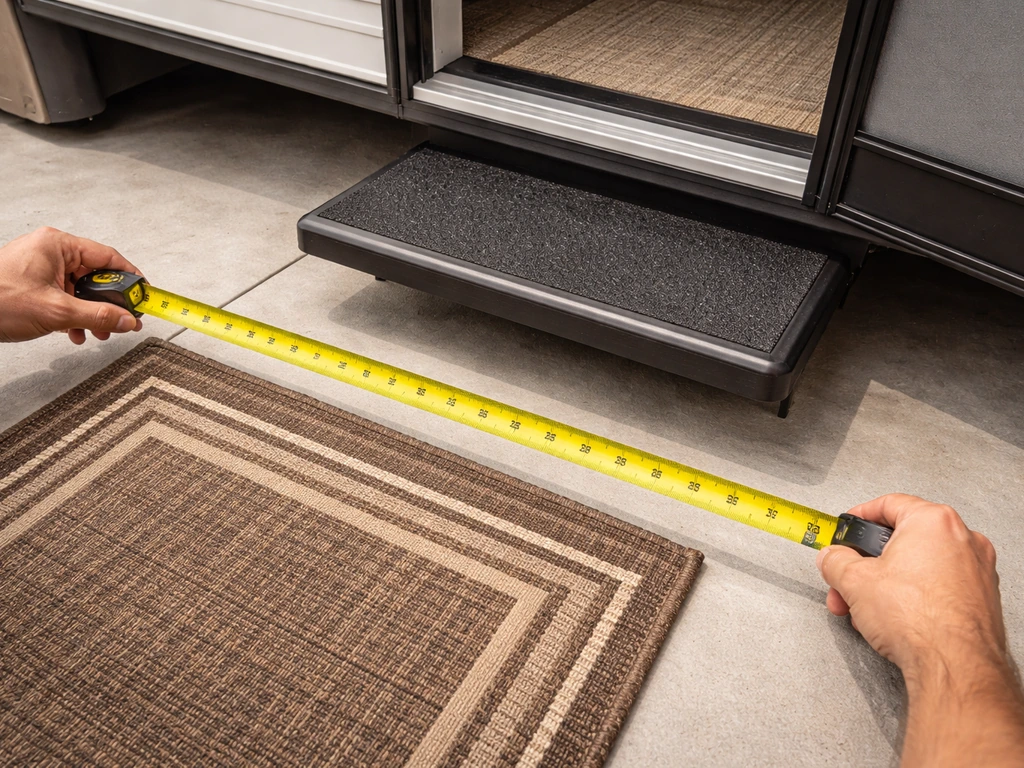
Sizing is where most people go wrong. They grab a small doormat and end up with a postage stamp that trips everyone up on the step. The general rule for entryway mats is that the mat should cover at least 80% of the door width so both feet land fully on it when stepping out. For a standard RV door that's roughly 28 to 30 inches wide, that means a mat at least 22 to 24 inches across. For a wider double-width entry, you want something in the 30 to 36 inch range.
For a full patio setup under an awning, think in terms of the awning's footprint rather than just the doorway. A 15-foot awning on a Class C or Class A rig typically calls for an 8'x12' or 8'x16' mat. Lippert makes sizes specifically for RV patios: 6'x9', 8'x12', 8'x16', and 8'x20', and those measurements reflect real-world RV awning layouts. The 8'x20' is really only necessary on a large Class A with a long slide-out patio. For a typical Class C or travel trailer, 8'x12' is the most versatile starting point.
One practical tip: measure your awning length, then subtract about 12 to 18 inches on each end so the mat doesn't stick out beyond the awning edge. Rain pouring off an awning onto an exposed mat will soak the edge and make it curl. Keeping the mat set back slightly also lets water run off the perimeter without pooling underneath.
The best materials for outdoor RV conditions
Material determines almost everything else: how the mat grips, how fast it dries, how long it holds its color, and how easy it is to clean after a muddy hike or a dog rolling in the dirt. Here's an honest breakdown of what actually works outdoors.
Polypropylene (olefin) woven mats
This is the workhorse material for RV patio mats and the one I'd recommend to most people. Polypropylene is solution-dyed, meaning the color goes all the way through the fiber rather than sitting on the surface, so UV fading is minimal even after years in full sun. It drains water right through the open weave, dries fast, and resists mildew because there's no place for moisture to sit and stagnate. It also rolls up tightly for travel storage. The downside is that thinner woven polypropylene mats can feel scratchy underfoot if you're barefoot and they tend to fray at cut edges over time. Look for heat-sealed or bound edges when buying.
Recycled plastic or PET fiber mats
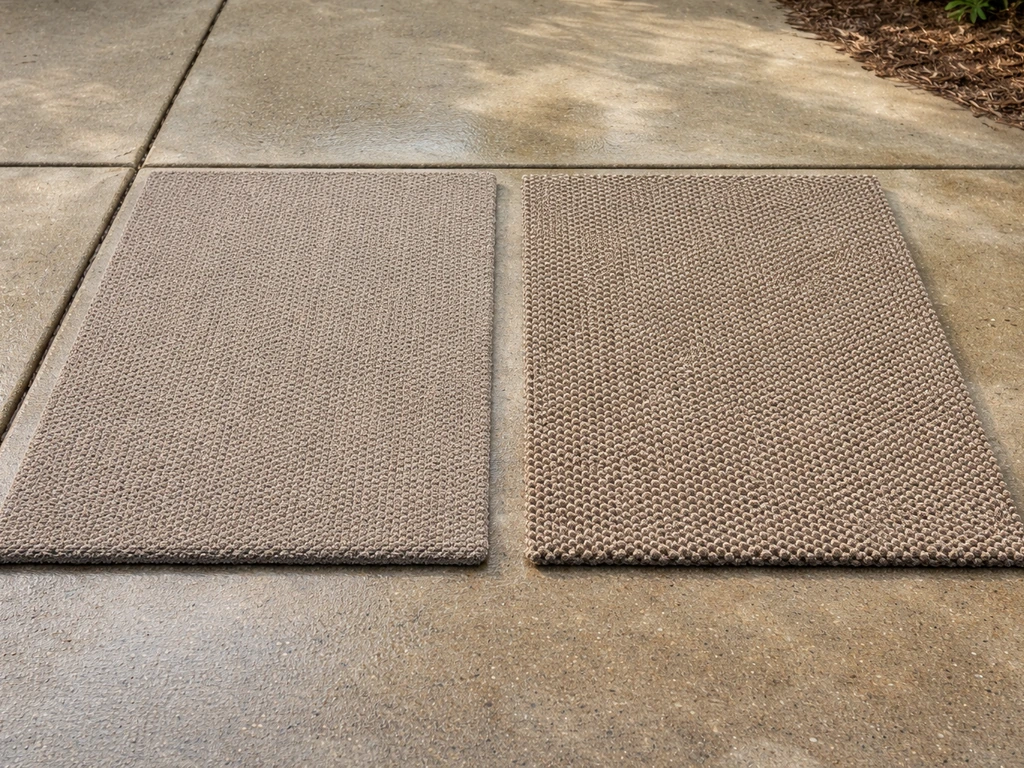
Made from recycled bottles, these have a softer feel than polypropylene weaves and often come in flatter, tighter weave patterns. They're UV-stable, dry quickly, and handle rain well. The recycled PET category has grown a lot in the last few years with better durability than early versions. They tend to cost a little more than straight polypropylene but hold up well for semi-permanent seasonal setups.
Rubber and vinyl loop mats
Rubber-backed or full-rubber mats are the grip champions. They stay put on concrete, asphalt, or a wood deck pad better than any woven option. Vinyl loop mats (the kind that look like interlocking loops) let dirt and water fall straight through, which is great for muddy campgrounds. The tradeoff is weight: rubber-heavy mats are significantly heavier than polypropylene, which makes rolling them up and loading them for travel a real chore. They also don't breathe as well, so on grass they can kill patches if left in place for more than a few days.
Artificial turf / grass mats
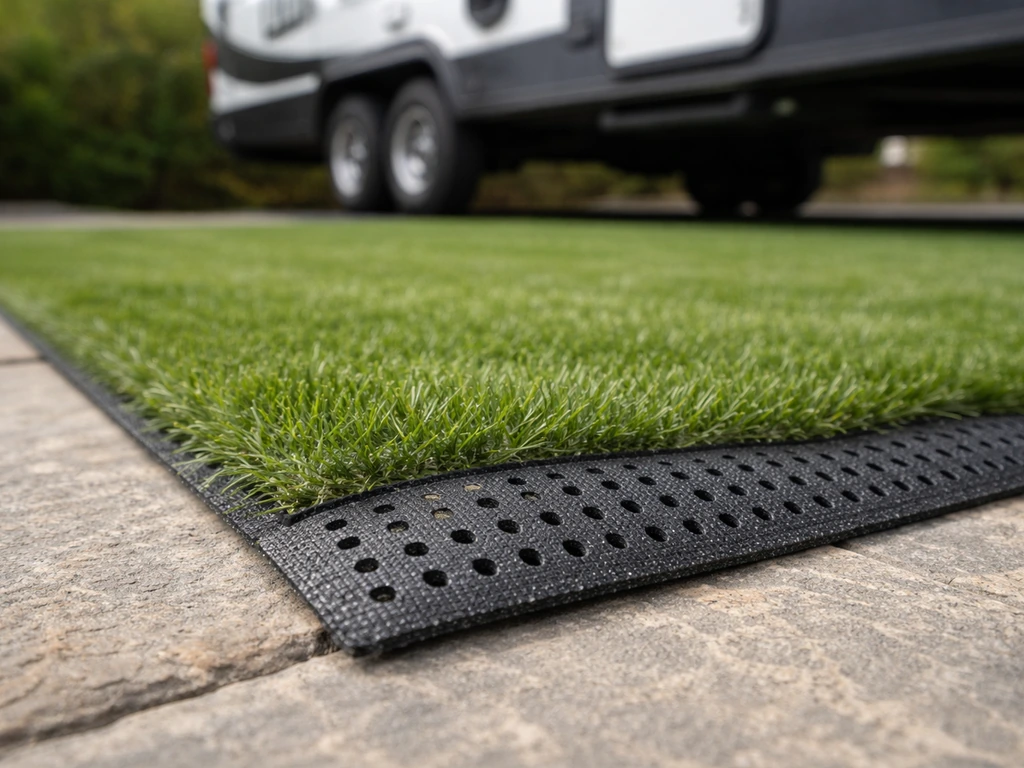
Turf mats have become popular in RV setups, especially for families with dogs. They look clean, feel comfortable underfoot, and most versions have perforated backing that drains well. The main issue is that they trap dirt and pet hair deep in the pile, so they need a more thorough cleaning than flat-weave mats. On soft ground they can also shift because the rubber backing grips poorly on loose gravel or sand. Best used on concrete or compacted dirt pads.
| Material | Best Surface | Drainage | UV Resistance | Travel Weight | Grip on Gravel |
|---|---|---|---|---|---|
| Polypropylene woven | Any | Excellent | Excellent | Light | Moderate |
| Recycled PET fiber | Concrete / compacted dirt | Good | Excellent | Light-medium | Moderate |
| Rubber / vinyl loop | Concrete / asphalt / wood | Excellent | Good | Heavy | Good |
| Artificial turf | Concrete / compacted dirt | Good | Good | Medium | Low-moderate |
Features that actually matter at a campsite
Traction and slip resistance
Traction matters in two directions: underfoot grip for the person walking on the mat, and grip on the ground so the mat doesn't slide when you step on it. For underfoot grip, textured weaves and loop-pile surfaces outperform flat smooth weaves. For ground grip, look for mats with a non-slip rubber or latex backing, or use a separate rug pad underneath. On grass or uneven gravel, no backing will hold the mat perfectly, so heavy-duty tent stakes or mat pegs through corner grommets are a practical solution. Many RV-specific mats like Faulkner and Camco come with corner grommets precisely for this reason.
Drainage and drying speed
A mat that holds water underneath is a mold and odor factory. Open-weave polypropylene and vinyl loop designs drain best because water has nowhere to pool. Closed-weave mats or those with solid rubber backing need to be lifted and dried periodically, especially in humid climates or on grass. If you're in a rainy climate or full-timing, prioritize drainage over cushioning and you'll thank yourself when the mat doesn't smell like a locker room after a week of rain.
UV and fade resistance
Fading is a real problem with cheap outdoor mats. Look for solution-dyed fibers or explicitly UV-stabilized materials. Polypropylene and most PET fiber mats are naturally UV-resistant, but cheaper polyester or nylon blends can fade noticeably within a single season in full sun. If your campsite gets 8-plus hours of direct sun daily, UV resistance is one spec worth verifying in the product description before buying.
Mildew and odor resistance
Mats that trap moisture grow mildew and eventually smell bad. The materials that resist this best are the ones that dry fastest: open-weave polypropylene, vinyl loop, and rubber. If you leave a mat down on grass for more than a couple of days without lifting it, even the best materials can start to trap organic matter underneath. Treat any mat like you would a piece of camp gear: air it out regularly, especially after rain.
Cleanup
The easier a mat is to clean, the more often you'll actually clean it. For day-to-day dirt, a hose or a shake-out is all most woven and loop mats need. For deep cleaning, polypropylene mats can be scrubbed with a mild soap and water, rinsed thoroughly, and left to dry in the sun. Turf mats need a stiff brush to get pet hair and embedded dirt out of the pile. Avoid pressure washers on mat backing because high pressure can separate the backing from the face material over time.
Best RV patio mats by use case
Doorway and step area
For the step area right outside your RV door, you want a smaller, grippy mat with a rubber or non-slip backing in the 18"x30" to 24"x36" range. The mat should cover at least 80% of the door width so both feet land on it cleanly. A WaterHog-style berber surface or a rubber-backed coir mat works well here because they scrape dirt off shoes aggressively. Camco's Premium Camping Mat and Faulkner's door mat options hit this use case well, with bound edges and built-in corner stakes.
Pets and families with kids
If you have dogs, a perforated turf mat or a vinyl loop mat is the most practical choice. Both rinse clean with a hose, dry fast, and handle muddy paws better than tight-weave rugs that trap debris. Look for mats with corner grommets so you can stake them on uneven ground, because pets and kids will bunch up any mat that isn't secured. Avoid light-colored mats in this category since they'll show dirt within hours.
Gravel and dirt pads
Gravel is the hardest surface to keep a mat on because there's no flat anchor point. Heavy polypropylene woven mats with corner grommets and stakes are your best option here. The open weave lets small gravel fall through so it doesn't build up under your feet, and the weight of a large mat (8'x12' or bigger) helps keep it from shifting in wind. Some campers put a thin rubber mat or rug pad under one corner to add grip on packed gravel, which actually works well.
Full patio coverage under an awning
For a proper outdoor living setup, a full-coverage mat in the 8'x12' to 8'x20' range from Lippert, Faulkner, or Camco is the right move. If you are choosing the best outdoor blankets for patio use, look for weather-resistant fabric, comfortable coverage size, and easy-clean features that match your typical conditions For a proper outdoor living setup.
For an uncovered patio, look for outdoor rugs that drain fast, resist UV fading, and stay put in wind so they perform in real weather best outdoor rugs for uncovered patio. These are specifically designed for RV awning footprints and come in reversible two-sided designs so you can flip them when one side gets dirty.
The reversible feature is genuinely useful, not just a marketing thing, because after a week of outdoor cooking and foot traffic the face gets grimy. Flip it, and you've got another clean surface while the first side airs out. Lippert's Reversible All-Weather mat is one of the better full-patio options with a heat-sealed edge, corner stake holes, and polypropylene construction.
Windy conditions
Wind is the enemy of any large mat. In exposed sites, stake all four corners and use a heavy mat. Heavier polypropylene mats (roughly 2 to 3 lbs per square foot) handle wind better than thin lightweight versions. If you're in a consistently windy area, avoid mats with lots of pile since the surface acts like a sail. A flat-woven mat staked at all corners and with chairs or furniture on it is the most wind-resistant setup you can build without gluing the mat to the ground.
Rainy and humid climates
Prioritize drainage above everything else. An open-weave polypropylene or vinyl loop mat will let rain pass straight through and dry within an hour or two of sun. Avoid any mat with a moisture-trapping foam or rubber backing in rainy climates. Mildew develops fast in humid conditions, and a mat that smells bad is worse than no mat at all. If you're parked in a spot with shade and persistent humidity (think Pacific Northwest or Florida summer), lift the mat and air it out every two to three days.
Comparing your options: a checklist before you buy
Before you commit to a mat, run through these practical checkpoints. A $30 mat that bunches up, fades in a month, and smells after one rain is a worse value than a $90 mat that lasts five seasons.
- Measure your awning length and door width before ordering anything. Write the numbers down.
- Check that the mat has grommets or corner holes for staking, especially if you park on grass or gravel.
- Confirm the material is solution-dyed polypropylene or UV-stabilized PET for long-term color. Anything described as simply 'polyester' without UV specs will fade fast.
- Look for heat-sealed or bound edges, not raw cut edges. Raw edges fray within a season.
- If you have pets or kids, choose a color that hides dirt: medium tones like tan, brown, olive, or grey.
- Check the rolled-up dimensions against your storage space. A large mat that won't fit in your bay is useless.
- Avoid mats with thick foam backing for outdoor RV use. Foam traps water and develops mildew quickly.
- Reversible designs give you roughly double the lifespan for the same price point. Worth paying a small premium for if available.
Budget vs. premium: where the money actually goes
Budget mats under $40 are typically thinner polypropylene with basic hemmed edges and limited color stability. They work fine for weekend trips but show wear quickly under full-season exposure. Mid-range mats in the $50 to $90 range (Camco, Faulkner) offer better edge finishing, UV resistance, and weight. Premium mats above $100 (Lippert, specialized RV brands) add reversible designs, heavier construction, and longer color warranties. For full-timers or anyone parked for 30-plus days at a stretch, the premium tier is worth it. For occasional weekend campers, the mid-range is the sweet spot.
It's worth noting that if you're already looking at outdoor rugs for a home patio, RV-specific mats are a distinct category. If you're also choosing the best patio rug for a home space, look for similar traits like fast drainage, UV resistance, and easy cleanup so it holds up outdoors.
If you want the best outdoor patio rug, focus on materials that dry fast, resist fading, and stay put in the conditions where you’ll use it outdoor rugs for a home patio. Home patio rugs often prioritize aesthetics and comfort over portability and drainage, whereas RV mats are designed to roll up, resist travel abrasion, and perform in unpredictable outdoor conditions.
The two can overlap, but a good-looking flat-weave outdoor rug that works beautifully on a covered home patio may not hold up as well to repeated rolling, gravel surfaces, and variable weather the way a purpose-built RV mat will.
How to install, position, and maintain your RV patio mat
Setup and positioning
Lay the mat out flat and give it 15 to 30 minutes in the sun before staking if it's been rolled up in cold storage. Cold or newly rolled mats have memory creases that need to relax before they'll lie flat. Pull the mat taut from opposite corners before staking so there's tension across the surface rather than a loose middle. Stake all four corners first, then add mid-edge stakes on larger mats (8x16 or bigger). Position the mat so the door end is set back about 6 inches from the RV step, not butting right up to it, which gives the door clearance to swing without catching.
Cleaning during a trip
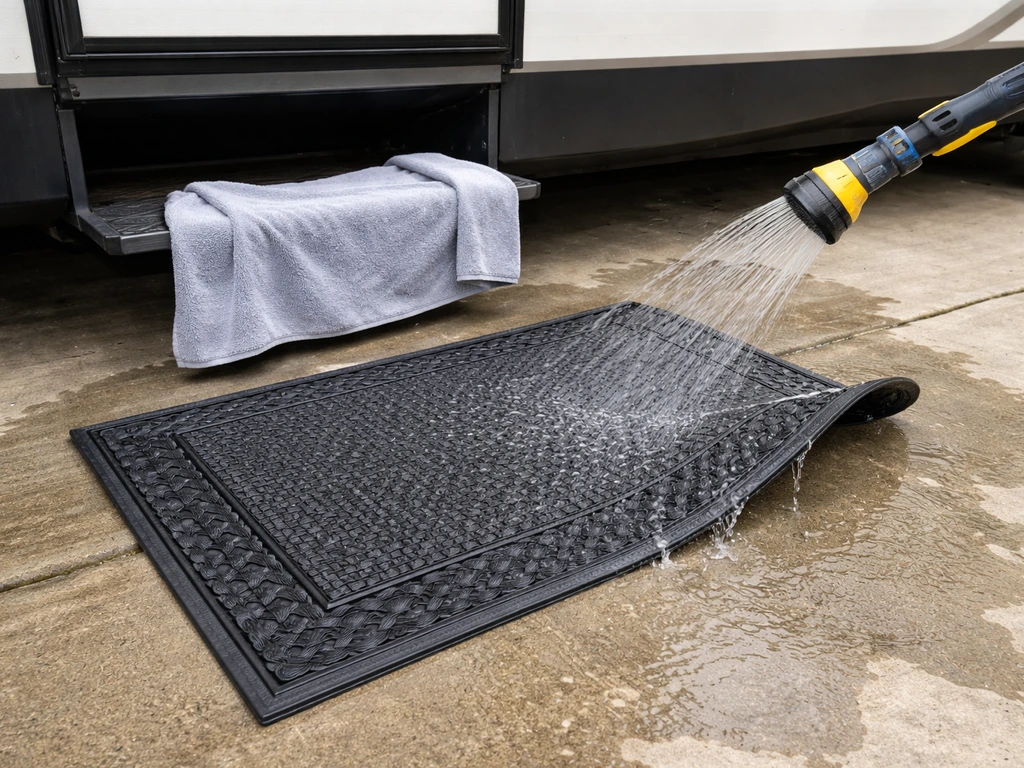
For daily maintenance, a quick shake or a sweep with a stiff broom handles most surface dirt. For a deeper clean during a multi-week stay, pull the stakes and fold the mat back on itself lengthwise, hose it down from the back side first to push embedded dirt forward, then rinse the face side thoroughly. Use a mild dish soap solution on any grease or food stains. Let it dry completely in the sun before repositioning, which usually takes 30 to 60 minutes on a warm day. Never roll a wet mat for storage.
Storing for travel and off-season
Sweep and shake the mat clean before rolling it up. Roll it tightly from one end, with the face side in, and secure it with a bungee or a Velcro strap. For off-season storage, make sure the mat is completely dry before putting it away. Store it horizontally if possible to prevent the rolled shape from developing a permanent curl. A breathable storage bag (not an airtight plastic bag) keeps dust off while allowing any residual moisture to escape. Mats stored wet in sealed bags are essentially composting in the dark, and no amount of cleaning brings back that smell.
Common problems and how to fix them
Curling edges
Curling almost always happens because the mat is cold or was stored tightly rolled. Let it warm up in the sun for 20 to 30 minutes before staking. If it's still curling after that, flip it upside down and let it lie flat with something weighted on the corners for a few minutes. For persistent curl on older mats, a rubber mat pad cut to the edge perimeter and placed underneath can hold stubborn edges flat.
Slipping and shifting
If your mat keeps shifting, the fix is almost always stakes or weight. Use corner grommets with RV-specific mat stakes (or plain 6-inch tent stakes), place chair legs on the mat edges, or put a rubber-grip pad under any slipping corner. On smooth concrete, a thin rubberized non-slip rug pad under the entire mat is the most effective fix. Avoid applying anti-slip sprays to the face of the mat since they can leave a residue that attracts more dirt.
Odors and mildew
A musty mat is a wet mat that wasn't dried out. First fix: pull the mat up, dry it completely in the sun on both sides. For existing mildew smell, mix one part white vinegar with two parts water and scrub the affected area with a stiff brush. Rinse thoroughly and dry completely in direct sunlight. UV light actually kills mildew spores, so outdoor drying on a sunny day does double duty. If the smell persists after two treatments, the backing may have absorbed moisture permanently and it's time for a new mat.
Stains from mud, food, or pet accidents
Let mud dry completely before trying to clean it. Wet mud spreads; dried mud brushes or shakes off. For food stains, a diluted dish soap and warm water scrub followed by a thorough rinse works on most polypropylene surfaces. For pet accidents, rinse with cold water first (hot water sets protein stains), then treat with an enzyme-based pet cleaner. Most enzyme cleaners are safe for polypropylene and synthetic fiber mats. Avoid bleach on colored mats since it will strip the dye even on solution-dyed fibers over time.
FAQ
Can I use an outdoor home patio rug as the best RV patio mat, or does it need to be RV-specific?
You can sometimes, but RV mats usually need to roll and store easily, handle corner stakes, and resist shifting on gravel. Home rugs often lack grommets or a backing that tolerates frequent lifting, so they can curl, trap moisture, or slide when you move the mat for maintenance.
What size should I buy if my awning has a little overhang or a funky shape (not a perfect rectangle)?
Use your awning footprint as the starting measurement, then subtract about 12 to 18 inches from each end so rain runoff does not hit exposed mat edges. If the footprint is irregular, choose a size that covers the high-traffic zone (door swing and step path) rather than trying to cover the entire awning projection.
How do I stop an RV patio mat from sliding on concrete or asphalt?
For most concrete/asphalt setups, use a mat with a non-slip rubber or latex backing, or add a thin non-slip rug pad underneath. Avoid spraying anti-slip products onto the top face, residue can make the surface tacky and attract more dirt.
Should I place a mat on grass, or will it damage the lawn?
It can damage grass if it stays down for more than a couple of days, especially with rubber-backed or closed-weave designs that block light and trap moisture. If you must use it on grass, prioritize open-weave drainage and lift it every 2 to 3 days for air-out and lawn recovery.
What is the best RV patio mat for rainy climates where mold is a concern?
Prioritize drainage and fast dry time, open-weave polypropylene or vinyl loop designs are usually the safest choices. Avoid moisture-trapping foam or solid rubber backing, and plan to lift and air out the mat every 2 to 3 days if your site has persistent humidity or shade.
Are thicker mats always better because they are more comfortable?
Not necessarily. Thicker and more cushioned mats often dry slower, and slower drying increases odor and mildew risk. For comfort, look for underfoot traction and cushioning in the surface texture, without adding a moisture-trapping foam layer.
Can I cut my RV patio mat to fit my space?
Sometimes, but only if the mat is designed with clean edge finishing. Thinner woven mats can fray at cut edges over time, so choosing a model with heat-sealed or bound edges matters. If your mat has grommets, avoid cutting near stake holes to preserve stability.
My mat has corner grommets, what stakes or anchors work best?
Use RV-specific mat stakes that match the grommet size, and on uneven ground consider tent stakes or add chair legs to the mat edges for extra hold. On packed gravel, stakes through grommets help, but using a thin rubber grip pad under one slipping corner can improve traction.
What should I do if my mat keeps curling after storage?
Warm it up in the sun for 20 to 30 minutes before staking, then pull it taut from opposite corners so the middle is not loose. If it still curls, flip it upside down and weight the corners briefly. Persistent curl on older mats can require adding a perimeter rubber mat pad underneath.
How often should I clean an RV patio mat during an extended stay?
For light daily dirt, shake or sweep most days. For a multi-week stay, do a deeper clean by removing stakes, folding lengthwise, hose from the back first to push debris forward, then rinse the face side and dry completely in sun before repositioning.
Can I use a pressure washer to clean an RV patio mat?
It’s best to avoid pressure washers, high pressure can separate the backing from the face material over time. Stick to hose rinsing and, for stubborn dirt, scrub with mild soap and water (and a stiff brush for turf-style pile).
What’s the best mat choice if I have pets and they bring in a lot of mud or hair?
A perforated turf mat or a vinyl loop mat is often the practical balance, they rinse clean and drain well. Avoid light colors because they show dirt quickly, and make sure the mat is stakeable with corner grommets so pets do not bunch up on an unanchored edge.
How do I remove food stains or grease stains without damaging the mat?
Use a mild dish soap solution with warm water, scrub gently on the surface, then rinse thoroughly. Grease and oily residues can linger if you do not rinse well, and you should let the mat dry completely before folding or storing.
Is it better to roll the mat face-in or face-out for travel storage?
Roll it tightly with the face side in (toward itself) to reduce friction and keep the top surface cleaner during transport. Never roll a wet mat, moisture trapped during storage is the fastest route to mildew and permanent odor.
What should I do if there is a musty smell even after cleaning?
Treat it as a ventilation problem first, dry it fully on both sides in direct sun. For mildew odor, scrub with a vinegar and water mix (one part vinegar to two parts water), rinse well, and dry again. If the smell returns after a couple of treatments, the backing may have absorbed moisture permanently.
Next Articles
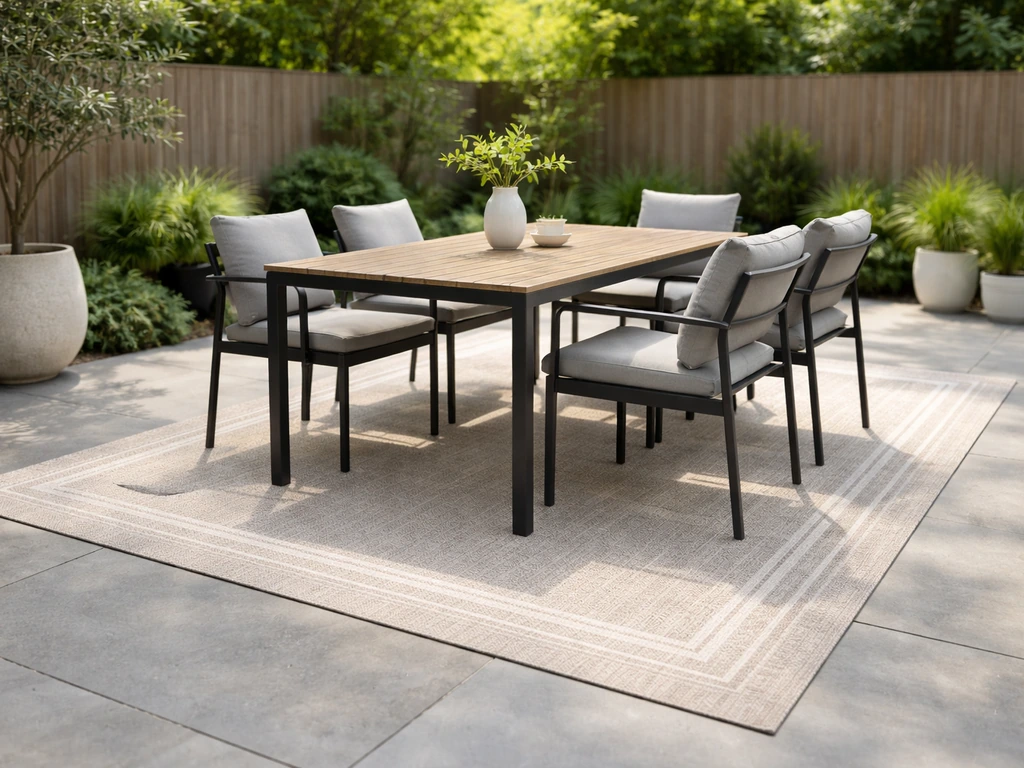
Best Patio Rug Guide: Choose, Size, and Care for Outdoors
Pick the best patio rug for your space with size tips, materials, weather resistance, and easy care guidance.
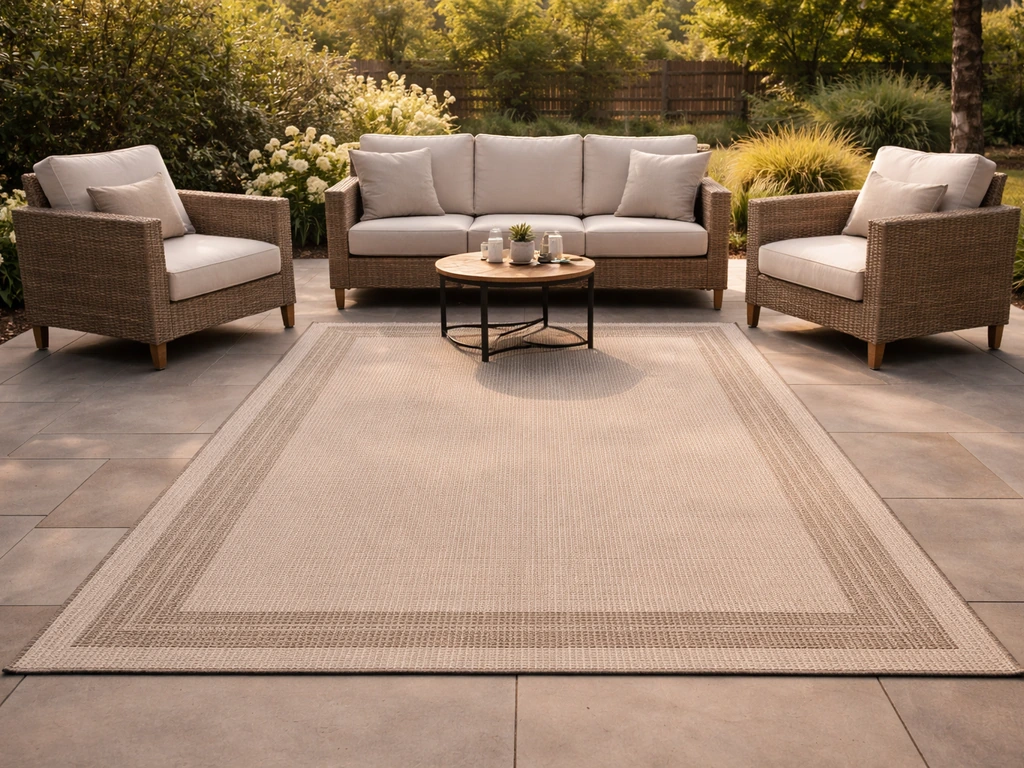
Best Outdoor Patio Rug: Buying Guide by Materials, Size, Care
Choose the best outdoor patio rug fast with material, size, layout, and care tips for sun, mildew, stains, and storms.
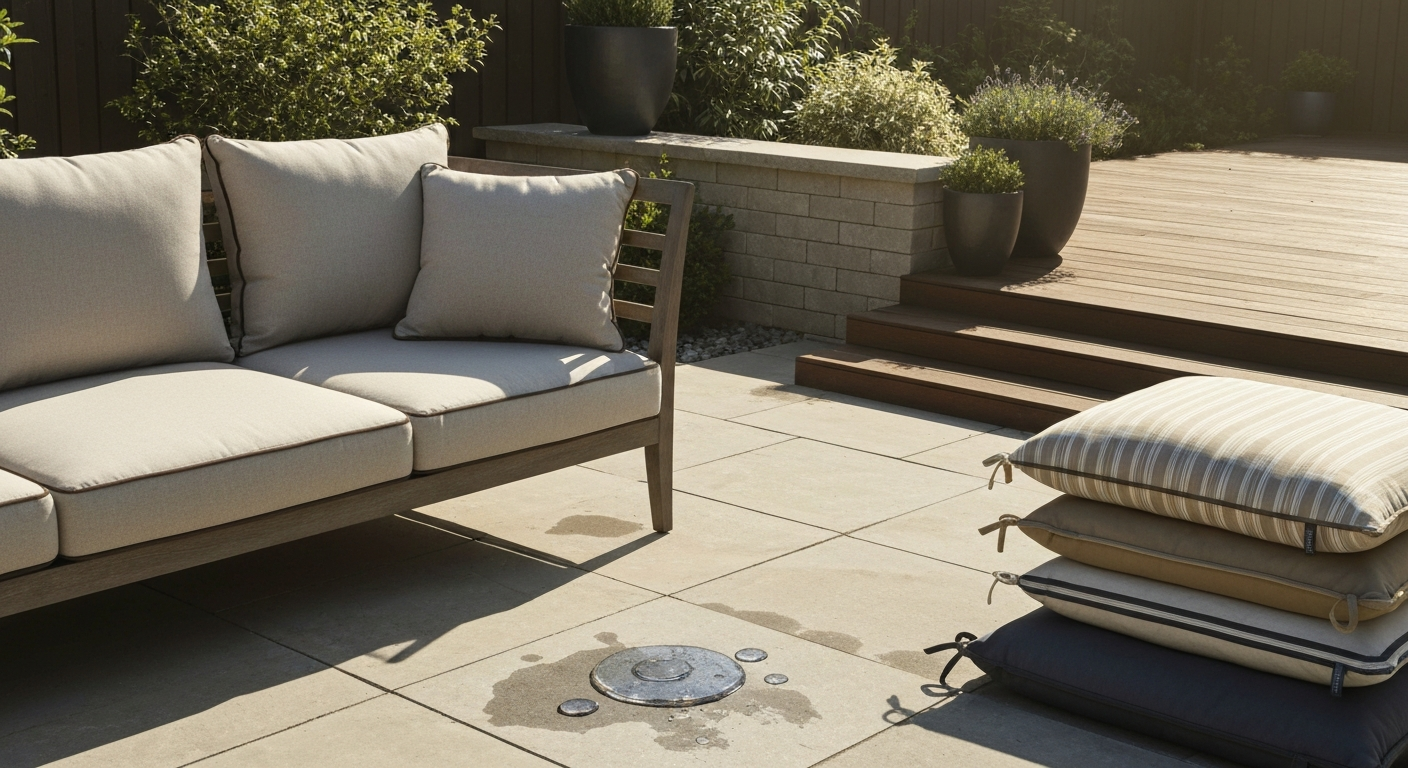
Best Sunbrella Patio Cushions: Top Picks, Guide & Maintenance
Find the best Sunbrella patio cushions: durable, fade‑resistant picks, buying tips, care, and top recommendations.