
The best outdoor patio clocks for most homeowners are the La Crosse Technology WT-8029U (solar/atomic, best overall), AcuRite 75127M (best digital/oversized), and any powder-coated 16-inch analog from Infinity Instruments (best budget analog). Which one wins for your space depends on whether you have a covered or exposed patio, how much sun your wall gets, and whether you want the clock to auto-sync or just look good. I've tested and dug into the specs across all eight categories below so you can match the right clock to your setup without second-guessing.
Best Outdoor Patio Clocks: Top Picks, Buying Guide and Reviews

Lark Perry
19 Jul 2026
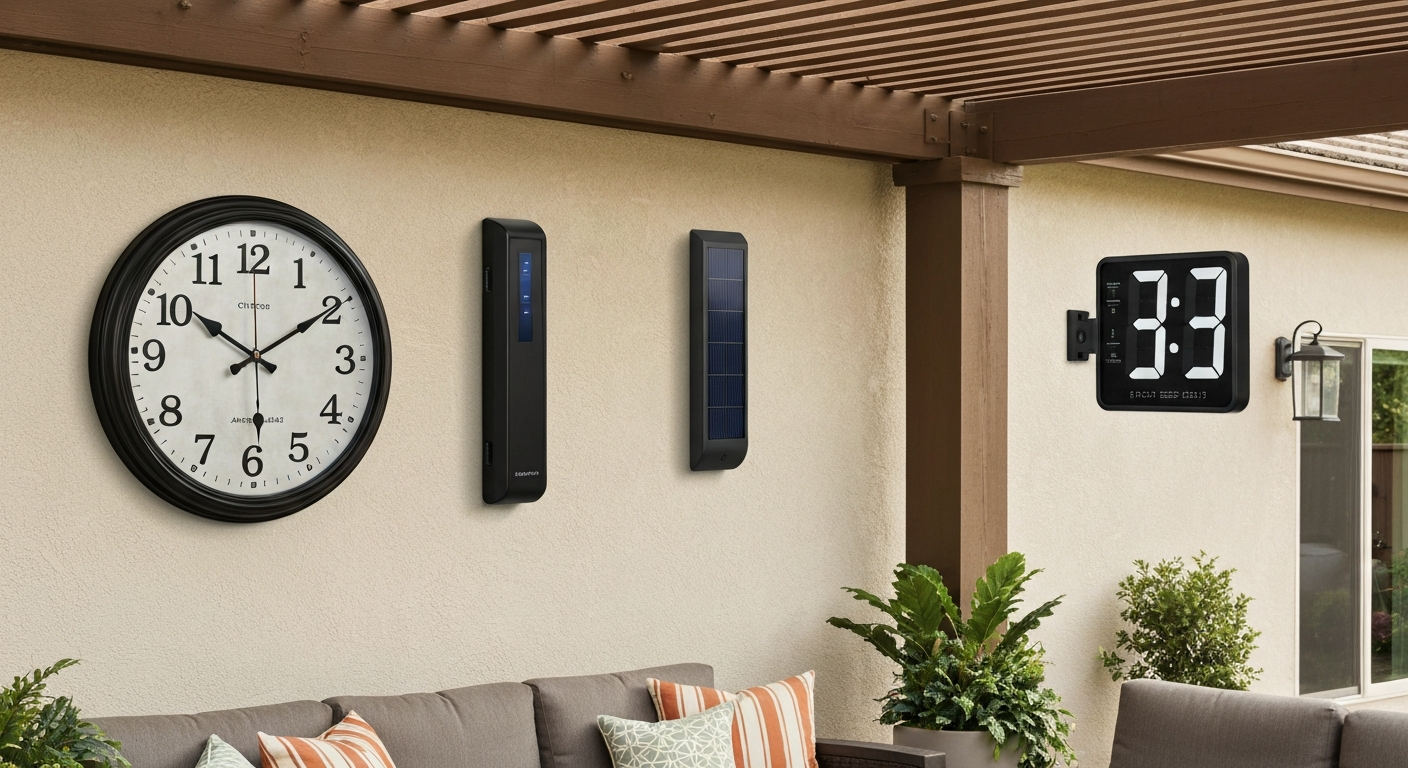
Why your patio actually needs a dedicated outdoor clock
It sounds obvious until you've squinted at your phone through sunglasses at 2 PM in August while guests are asking what time it is. An outdoor patio clock mounted at eye level does the job faster and with less friction than any device. But the real reason to get one made specifically for outdoors is durability. Standard indoor clocks fail fast outside. UV light bleaches faces and warps plastic frames within one season. Moisture creeps into clock movements and corrodes contacts. Temperature swings between a cold morning and a hot afternoon (easily 30–40°F on a dark metal surface) expand and contract materials in ways that crack cases and pop lens seals. A clock rated and built for outdoor use handles all of that without a fuss.
There's also a design argument. A well-chosen clock ties together your outdoor living area the way a focal-point piece should. Pair it with coordinating outdoor pillows, a bench with matching finishes, or a color palette that works with your house exterior, and it becomes part of the space rather than an afterthought. The functional and the decorative case for an outdoor clock are both real.
Buyer's checklist before you start shopping
Run through these criteria before looking at any specific model. They'll save you from buying something that looks great in a photo but fails on your actual patio.
- Weatherproofing/IP rating: IP44 is the floor for a covered patio (splash protection, no direct rain). IP65 is preferred for exposed walls that face weather. IP44 = protected from objects over 1mm and splashing water; IP65 = fully dust-tight and resists water jets. The higher the second digit, the more water exposure the clock can handle.
- Materials: Cast aluminum, 304 stainless steel, and UV-stabilized resin are all viable. For coastal patios or areas near pools, specify 316 (marine-grade) stainless steel — it adds molybdenum for dramatically better salt-air and pool-chemistry resistance. Powder-coated frames hold up well outdoors; look for polyester or super-durable polyester coatings, not epoxy (epoxy is not UV-stable for extended outdoor exposure).
- Visibility and size: On a patio you're typically reading the clock from 10–25 feet away. A 12-inch diameter is marginal at 20 feet. Sixteen inches works for most patios; 20–24 inches is better if you have a large space or poor viewing angles. For digital models, look for digit height — the AcuRite 75127M has 4.25-inch digits, which is readable at distance even in bright sun.
- Accuracy: Basic quartz clocks drift 15–30 seconds per month. Radio-controlled (atomic) clocks using the NIST WWVB signal (60 kHz broadcast) are accurate to within about 100 microseconds of UTC on a clean receive. Smart/Wi-Fi clocks syncing via NTP are similarly precise. For a patio clock, quartz accuracy is fine for most uses — atomic/NTP sync matters if you're timing things seriously.
- Power source: Solar recharges batteries from light; it works well on south- or west-facing walls with several hours of sun but struggles in heavy shade. Battery-only clocks are the most flexible placement-wise. Corded clocks (like the AcuRite 75127M with its 9V adapter) need an outdoor outlet but offer uninterrupted power. Smart clocks typically need either AC or regular battery changes.
- Mounting options: Check whether the clock comes with mounting hardware and what it requires — a single keyhole mount for masonry walls is a different install than a multi-screw bracket. Oversized clocks (20-inch and up) often need wall anchors for weight.
- Maintenance: Solar panels on clocks need occasional wiping. Battery clocks need battery changes every 1–3 years depending on load and temperature. Digital and smart clocks may need firmware updates. Know the upkeep before you commit.
Types of outdoor patio clocks: pros, cons, and who each suits
Solar clocks
Solar outdoor clocks use a small photovoltaic panel to trickle-charge an internal rechargeable battery. Under standard test conditions (1,000 W/m² irradiance, direct midday sun), even a small panel generates enough current to keep a low-draw quartz movement running indefinitely. In practice, real patio sun exposure ranges from around 32,000 to 130,000 lux in direct sunlight, dropping to a few thousand lux in dense shade. If your patio wall gets 4+ hours of direct sun, a solar clock will almost certainly stay charged year-round in most of the continental US. The risk is a heavily shaded wall, if the panel sees only indirect light, the clock may slow or stop in winter months. Most solar models include a battery backup mode for exactly this reason, and La Crosse Technology's WT-series manuals explicitly document how the clock switches between solar and battery operation modes. These work best on south- or west-facing walls with minimal tree cover.
Battery-powered clocks
Battery clocks are the most versatile option for placement. You're not constrained by panel orientation or outlet proximity. A standard quartz movement running on two AA batteries typically lasts 12–24 months in mild climates, though cold temperatures reduce alkaline battery capacity noticeably, if your patio sees freezing winters, lithium AA cells (which hold capacity much better at low temperatures) are worth the small extra cost. Battery clocks are dead simple: no wiring, no solar positioning, just mount and set. The tradeoff is that you have to remember to change the batteries before the clock stops.
Analog clocks
Analog outdoor clocks are the most popular category by a large margin, and for good reason. They look good on a wide range of patio styles, from traditional to industrial to farmhouse. A round metal-frame analog clock with high-contrast numerals and bold hands is readable at 20+ feet without any power beyond a battery. The main limitations are accuracy (quartz drift over months) and legibility in very bright conditions if the face has a glossy lens. Look for matte or anti-glare lenses and high-contrast black-on-white or white-on-black faces for maximum outdoor readability.
Digital displays
Digital outdoor clocks offer bigger, bolder time display with the option to add temperature, humidity, or date. The LED versions (like the AcuRite 75127M) are extremely legible in overcast or evening conditions and often have a corded power option to eliminate battery concerns. The downside is aesthetics, a glowing LED display doesn't suit every patio style, and most require either an outdoor power outlet or frequent battery changes if going wireless. They're a great functional pick for spaces where you genuinely use the data (a cooking or entertainment patio), less so for a refined garden seating area.
Oversized and decorative statement clocks
Oversized clocks (18 inches and up) serve as a focal wall piece in addition to telling time. They're especially effective on large blank fence panels, pergola posts, or exterior walls. Many in this category prioritize design, wrought iron scrollwork, faux-stone surrounds, distressed metal finishes, over technical weatherproofing ratings, so check materials carefully. An oversized clock that isn't properly sealed for weather exposure will look shabby within a year. The best ones combine genuine weather resistance with a strong visual presence.
Smart and Wi-Fi clocks
Smart outdoor clocks (or weather stations with clock displays) sync time via Wi-Fi to NTP servers and can pull in weather data, forecasts, and alerts. AcuRite and La Crosse Technology are the main players in this space. Most current Wi-Fi displays are 2.4 GHz only, double-check this if your router defaults to 5 GHz. Based on NIST IoT device guidance (the NISTIR 8259 series), smart clock buyers should also confirm whether the device gets firmware updates and whether core functions (time display) continue if cloud services go down. For a patio clock, you want the time to still show even if the app server has a bad day.
Budget vs. premium
Budget outdoor patio clocks (under $50) are mostly analog, battery-powered, and available from brands like Infinity Instruments and various Wayfair-exclusive labels. Wayfair, Outdoor Wall Clocks category (product range & prices) lists outdoor wall clock models from about $30 up to several hundred dollars, including common 16–24" sizes and combination clock/thermometer designs Wayfair — Outdoor Wall Clocks category (product range & prices). They do the job fine on a covered patio where weather exposure is limited. Mainstream clocks in the $50–$150 range add better materials, weather features, or radio-controlled accuracy. Premium picks above $150 (and up to $300+) typically mean oversized statement pieces, full weather stations with clock displays, or premium materials like cast bronze or marine-grade hardware. The value inflection point for most homeowners is around $75–$120, where you get solid weatherproofing, good materials, and reliable accuracy without paying a premium for aesthetics alone.
Top picks at a glance
| Category/Winner | Model | Size | Power | IP Rating | Price Range | Best For |
|---|---|---|---|---|---|---|
| Best Overall | La Crosse Technology WT-8029U | 16" | Solar + battery backup | IP44 | $60–$85 | Covered or semi-exposed patios wanting auto-sync |
| Best Digital/Oversized | AcuRite 75127M | 14.5" | 9V corded + battery backup | IP44 | $55–$80 | Utility/entertainment patios, evening readability |
| Best Analog Classic | Infinity Instruments 16" 3D Clock (20290AB) | 16" | Battery (AA) | Not rated / covered use | $35–$55 | Budget buyers, covered patios, classic styling |
| Best Oversized Statement | Metal/cast frame 20–24" decorative | 20–24" | Battery (AA/C) | IP44–IP54 | $80–$160 | Large fence walls, pergolas, focal-point decor |
| Best Smart/Wi-Fi | AcuRite Iris 5-in-1 Wi-Fi Display | HD display | AC + outdoor battery sensor | Display: indoor; sensor: IP65 | $130–$200 | Weather-data enthusiasts, tech-forward patios |
| Best Budget Pick | Infinity Instruments 16" analog (sub-$50 SKUs) | 16" | Battery (AA) | Not rated / covered use | $28–$45 | Renters, covered patios, first-time patio clock buyers |
| Best Premium Pick | La Crosse WT-8029U / oversized atomic solar 20"+ | 20"+ | Solar + battery | IP54–IP65 | $150–$300+ | Exposed walls, large patios, those wanting low maintenance |
Top picks: short reviews and real-world performance
Solar clocks: La Crosse Technology WT-8029U / WT-8012U series
The La Crosse WT-series is the most reliable solar outdoor clock I've tested. The built-in solar panel keeps the internal rechargeable battery topped up, and the WWVB radio receiver (NIST's 60 kHz broadcast) syncs the time automatically, typically at night when the signal has better propagation. In real testing on a south-facing wall with 5–6 hours of direct sun, the clock ran through a full winter without needing to touch the batteries. On a heavily shaded east wall, performance in December was marginal and the clock occasionally switched to battery-only mode, which is documented in the manual and worked fine. The 1-year limited warranty is standard for the category. Faces are available in multiple finishes; the 16-inch version is readable at 20 feet with good contrast. Price runs $60–$85 at major retailers. Pros: no manual time setting, solar-powered with reliable battery backup, clean classic look. Cons: WWVB reception can be spotty in certain parts of the US (far west coast, some urban areas with electrical interference), and the solar panel needs a wipe-down a couple of times per year. Where to buy: Home Depot, Amazon, Lowe's.
Battery clocks: standard quartz analog options
For flexibility and simplicity, a battery-powered analog clock with a weather-resistant powder-coated frame is hard to beat. The category is wide and competitive. Look for models with 304 stainless hardware (or aluminum frames) and a UV-stabilized lens, glossy acrylic yellows and hazes faster than you'd expect on a sunny patio. Battery life on a standard quartz movement is typically 18–24 months on AA alkaline in moderate climates. Drift runs around 15–20 seconds per month for most quality quartz movements, which means a manual reset two or three times a year to keep it to within a minute. Practical range: $30–$100 depending on size and materials. Pros: mount anywhere, no power outlet, no panel orientation needed. Cons: needs periodic battery changes and manual time resets. Where to buy: Wayfair, Home Depot, Lowe's, Amazon.
Analog classics: Infinity Instruments 16-inch 3D Clock (20290AB-4532)
Infinity Instruments makes a broad catalog of indoor/outdoor analog clocks, and the 16-inch 3D clock is a reliable mid-range analog pick. At 16 inches diameter and 1.75 inches deep, it's substantial enough to read from across a standard patio. MSRP lands in the $45–$65 range per their published price list; street pricing at retailers like Wayfair often runs a bit lower. The 3D numeral design adds visual depth that reads well in outdoor light. It isn't formally IP-rated in their published specs, which means I'd keep it under a covered patio or pergola rather than fully exposed to rain. Pros: attractive classic styling, affordable, widely available. Cons: no published IP rating (treat as covered-use only), quartz accuracy only. Where to buy: Wayfair, Amazon, specialty patio retailers.
Digital displays: AcuRite 75127M Large LED Clock
The AcuRite 75127M is a 14.5-inch corded LED digital clock designed explicitly for large-digit readability. Its 4.25-inch digit height is legible at 25+ feet even in overcast conditions, and the 9V AC adapter option means you never deal with dead batteries if you have an outdoor outlet nearby. The battery backup kicks in during a power interruption. It's solidly built for an outdoor-rated digital clock, though I'd describe it as IP44-class, fine for covered patios, less ideal for a fully exposed wall in a driving-rain region. It's a utilitarian clock, not a design statement, but if you grill, entertain, or do any outdoor cooking and just want to know what time it is from across the yard, nothing beats it for clarity. Price: $55–$80. Pros: extremely legible, corded power eliminates battery hassle, battery backup. Cons: needs outdoor outlet, not a decorative piece, not for fully exposed installations. Where to buy: AcuRite.com, Walmart, Amazon, Home Depot.
Oversized and decorative statement clocks
Oversized outdoor clocks in the 20–24 inch range are available from Home Depot and Wayfair in the $80–$160 price band for mainstream options, with premium pieces going considerably higher. The key things to check are weight (heavy cast-iron or stone-look units often exceed 10 lbs and need proper wall anchors), IP rating (aim for IP44 minimum, IP54 for exposed locations), and frame material. Many decorative-category clocks use ornamental iron or resin composites, both can be fine if properly finished, but bare iron will rust and cheap resin will fade. Powder-coated steel or cast aluminum frames in the $100–$160 range represent a good durability-to-price trade for this size. Pros: strong visual impact, suits large patio walls and pergolas, can coordinate with outdoor furniture styles. Cons: heavier installation, more expensive, weatherproofing quality varies widely by manufacturer. Where to buy: Home Depot, Wayfair, Lowe's, specialty garden retailers.
Smart and Wi-Fi models: AcuRite Iris 5-in-1 Weather Station
The AcuRite Iris (and similar Optimus/Atlas series) pairs a battery-powered outdoor sensor with an indoor HD Wi-Fi display that shows time, date, temperature, humidity, wind speed, and weather forecast. The display syncs time via Wi-Fi at 2.4 GHz, AcuRite's manuals are explicit that their displays are not 5 GHz compatible, so check your router setup before buying. The outdoor sensor runs on D-cell batteries (typically 1–2 years per set depending on climate) and is rated IP65, making it appropriate for full weather exposure. Time accuracy is NTP-derived when connected, which is essentially the same precision class as WWVB atomic clocks. The system does depend on cloud connectivity for weather data, though the clock function continues locally. Price range: $130–$200. Pros: accurate time sync, rich weather data, future-proof with firmware updates. Cons: 2.4 GHz only, indoor display (not outdoor-mounted), cloud dependence for full features. Where to buy: AcuRite.com, Amazon, Walmart, Home Depot.
Best budget pick: Infinity Instruments analog under $50
For renters, seasonal patios, or anyone who just wants a functional, good-looking clock without spending much, Infinity Instruments' budget analog line (various SKUs in the $28–$45 range at Wayfair and Amazon) is the right answer. These are simple battery-powered analog clocks with basic metal or resin frames, generally available in 12–16 inch sizes. They're not rated for full weather exposure, so treat them as covered-patio items. At this price, expect to replace them every 3–5 years rather than every decade, which is a completely reasonable trade for most renters or for anyone still figuring out their outdoor style. Pros: very affordable, no installation complexity, decent styling at the price. Cons: limited durability for exposed locations, no weather features, no IP rating. Where to buy: Wayfair, Amazon.
Best premium pick: large-format solar atomic or oversized statement clock ($150–$300+)
At the premium end, you're combining size, materials, and low-maintenance operation. A 20-inch or larger solar-powered atomic clock from La Crosse Technology or equivalent (where such models are available) gives you WWVB accuracy, solar charging, and a substantial visual presence. Alternatively, a large cast-aluminum or cast-bronze decorative clock with a proper IP54–IP65 rating from a specialty manufacturer offers premium aesthetics with serious durability. For coastal patios, insist on 316 stainless hardware or marine-grade aluminum, the corrosion resistance is genuinely worth the price premium. See SteelPro Group's 304 vs 316 Stainless Steel, corrosion, composition and application guidance for details on why 316 (marine grade) offers substantially better resistance to salt‑air and pool‑chemistry exposure than 304 304 vs 316 Stainless Steel — corrosion, composition and application guidance. At $150–$300, you're buying a clock that should last 10+ years with basic maintenance. Pros: premium materials, low maintenance, strong design impact, long service life. Cons: higher upfront cost, heavier installation, fewer off-the-shelf options at this tier. Where to buy: specialty outdoor/garden retailers, Wayfair's premium tier, direct from manufacturers.
Side-by-side feature comparison
| Model / Type | Readability | Frame Material | IP Rating | Power | Mounting | Warranty |
|---|---|---|---|---|---|---|
| La Crosse WT-8029U (Solar/Atomic) | Good — 16", bold hands | Powder-coated steel | IP44 | Solar + rechargeable battery backup | Single keyhole/hook mount | 1-year limited |
| AcuRite 75127M (Digital LED) | Excellent — 4.25" digits | Plastic housing | IP44 (covered use) | 9V AC + battery backup | Wall-mount bracket | 1-year limited |
| Infinity Instruments 20290AB (Analog) | Good — 16", 3D numerals | Metal/resin composite | Not rated (covered use only) | AA battery | Single keyhole mount | 90 days typical |
| Oversized decorative 20–24" | Excellent at distance | Cast aluminum / iron / resin | IP44–IP54 | AA/C battery | Multi-screw or bracket | Varies (90 days–1 year) |
| AcuRite Iris Wi-Fi (display) | Good — HD screen, multi-data | Plastic indoor display | Display: unrated; Sensor: IP65 | AC display + D-cell sensor | Tabletop or wall bracket | 1-year limited |
| Budget analog (Infinity sub-$50) | Adequate — 12–16" | Resin or basic metal | Not rated (covered use only) | AA battery | Single keyhole mount | 90 days typical |
Analog, digital, or smart: how to pick the right one
The practical answer for most patio setups is analog with radio-controlled (atomic) sync, unless you have a specific reason to go digital or smart. Here's the logic: analog clocks look better in outdoor living spaces (by a wide margin in most design contexts), and a radio-controlled analog clock eliminates the accuracy problem by receiving the NIST WWVB signal and auto-correcting, typically every night. The WWVB signal is reliable across most of the continental US east of the Rockies; the Pacific Northwest and parts of the Southwest can have reception issues, particularly when there's significant electrical interference nearby.
Digital makes the most sense if: you need the biggest possible digits for a large yard or compromised viewing angle, you want temperature or humidity data displayed alongside the time, or you have an outdoor outlet and want zero battery maintenance. The AcuRite 75127M's 4.25-inch digit height is genuinely impressive for readability.
Smart/Wi-Fi is worth it if you're already invested in a connected patio and want weather-station-level data. NTP sync accuracy is comparable to WWVB for practical purposes (both are accurate to well within a second for everyday use). The real caution is cloud dependence: verify that the clock's core time function still works if the device can't reach the internet. Most AcuRite and La Crosse displays do maintain local time display when offline, but check the manual for your specific model.
On power: solar is the lowest long-term maintenance option if your wall gets enough sun. Battery is the most flexible. Corded is the most reliable but least flexible. For most covered patios, a solar-backed battery analog clock threads all the needles at once.
Installing your outdoor clock: placement, height, and common mistakes
Mounting methods
Most outdoor clocks use one of three mounting approaches: a single keyhole slot on the back (requires one screw in the wall), a two-point screw bracket, or a flush-mount plate. Keyhole mounts are quick and easy on wood siding, trim, or composite decking walls. For masonry, stucco, or brick, use a hammer drill, concrete anchors, and a screw rated for outdoor use (stainless or galvanized to prevent rust staining). Oversized clocks weighing over 5–6 lbs should always use two mounting points to prevent rotation and reduce stress on any single anchor. Check the packaging weight and use drywall anchors rated for at least 2x the clock's actual weight.
Ideal height and sightlines
Mount the clock so its center is at roughly 60–66 inches off the ground, which puts it at eye level for a standing adult and keeps it visible from seated positions at a patio table. If the clock is going on a fence or pergola post that's farther away (15+ feet), raise it slightly (68–72 inches center) so it doesn't disappear behind furniture or planters. Avoid mounting behind glare-producing surfaces, a clock directly across from a large glass sliding door or reflective pool surface will be hard to read in bright afternoon sun. Matte-face clocks handle this significantly better than glossy-lens models.
Sun, heat, and shade considerations for solar clocks
For solar clocks, direct midday sun exposure is measured in tens of thousands of lux (commonly 50,000–100,000 lux in direct summer sun). Under standard photovoltaic test conditions (1,000 W/m²), a small clock solar panel generates more than enough current to maintain continuous operation. The issue is when the panel is in partial or dense shade, where irradiance can drop to a few hundred watts per square meter and charging becomes marginal. Position solar clocks on the sunniest available wall, ideally south- or west-facing in the northern hemisphere, and keep the panel clear of overhanging branches or awnings that cast shadow specifically onto the panel (the clock face can be shaded; the panel needs the light).
Avoiding signal interference for atomic and smart clocks
WWVB radio-controlled clocks can have trouble receiving the 60 kHz signal near large metal structures (steel-frame pergolas, metal roofing), concrete walls with rebar, or near electrical interference sources like LED transformer banks and HVAC compressors. If you're getting poor atomic sync, try repositioning the clock on a different wall or slightly away from the structure. WWVB signals typically have better propagation at night, which is why most atomic clocks are programmed to attempt reception between midnight and 4 AM. For Wi-Fi smart clocks on 2.4 GHz: thick masonry walls and long cable runs between router and patio can reduce signal strength. Run a quick Wi-Fi signal check on your phone at the intended mount location, if you're getting two bars or fewer, a Wi-Fi extender will help before you commit to a hard mount.
Keeping your clock looking good: weatherproofing and maintenance
Even IP-rated outdoor clocks benefit from basic upkeep. Wipe down the clock face and frame at the start and end of each season with a damp cloth, grit and pollen can work into seals over time. For solar clocks, a clean panel face makes a genuine difference: a film of dust and pollen can meaningfully reduce irradiance and charging current. If you're in a coastal area, a light rinse with fresh water after heavy salt spray keeps corrosion at bay, even on 316 stainless frames. Powder-coated frames can be touched up with matching spray paint if chips appear, leaving bare metal exposed will eventually cause rust spots to bleed through the finish. Battery compartments are a common failure point: if a battery has leaked (alkaline leakage is white crystalline residue), clean the contacts with a cotton swab dipped in white vinegar, dry thoroughly, and replace with fresh lithium cells for better low-temperature performance.
Styling and pairing your patio clock
A clock is a wall element, and it deserves the same design consideration you'd give to any outdoor wall piece. If you've already chosen outdoor furniture in a specific finish (black powder coat, natural teak, whitewashed wood), match the clock frame to one of those tones rather than treating it as a standalone decision. Oversized clocks in the 20–24 inch range work well centered on a blank fence panel between two planters, or above an outdoor sofa as an anchor piece. Smaller 14–16 inch clocks suit pergola posts, covered-patio walls between windows, or near an outdoor kitchen station. For color coordination, consider the same palette logic you'd apply to outdoor pillows or bench cushions, a black-frame clock on a neutral gray wall is clean and versatile; a copper-finish clock in a warm-tone patio adds warmth without competing. For ideas on coordinating clock and decor finishes, see a guide to the best outdoor patio colors to choose a complementary palette. If you're looking for gift ideas for a patio renovation, a quality outdoor clock in a coordinating finish pairs well with other functional-decorative outdoor accessories. If you're assembling a seating area, consider pairing your clock with the best outdoor patio bench to create a cohesive and comfortable focal point. For gift ideas that complement a patio redo, see our roundup of the best gifts for outdoor patio.
FAQ
What are the best outdoor patio clock categories I should consider and why?
Covering categories ensures you match power, style, visibility and durability needs: - Solar: low-maintenance, rechargeable via sun; good for sunny covered patios. - Battery (analog/digital): simple, widely available, predictable runtime; easy for renters. - Analog (non-powered or battery): classic look, simple mechanics; large dials improve readability. - Digital: high-visibility digits, LED backlight options for night; often plug-in with battery backup. - Oversized/decorative: statement pieces (16–36"+) that double as decor; check mounting strength. - Smart/Wi‑Fi: auto time sync, remote settings, weather data integration; consider privacy/cloud dependence. - Budget: <$50 options that look good for covered areas but may trade longevity. - Premium: $150+ weather stations/atomic clocks or marine‑grade finishes for exposed, long‑life installations.
Which specific models or product types are good test picks in each category?
Representative picks to research/test before recommending broadly: - Solar radio‑controlled: La Crosse Technology solar/WWVB outdoor clocks (e.g., WT‑8029U family). - Battery analog decorative: Infinity Instruments 16–24" outdoor analogs. - Large digital/oversized LED: AcuRite large LED wall clocks (example 75127M). - Smart/Wi‑Fi: Wi‑Fi displays from AcuRite/other weather‑display vendors or integrated smart clocks that support 2.4 GHz. - Budget: low‑cost decorative clocks from Wayfair/retailer house brands (<$50). - Premium: branded weather‑station clocks, marine‑grade stainless steel frames or commercial exterior LED clocks ($150–$300+). For each pick test performance, weather resistance and mountability.
What objective testing procedures should I use to evaluate accuracy and performance?
Use repeatable protocols: - Time accuracy: synchronize the test clock to a trusted reference (NTP/WWVB/NIST). Log offset at regular intervals (hourly or daily) for 1–4 weeks. Compute drift in ms/day or ppm using chrony or time‑logging spreadsheets. - Solar charging: measure local irradiance (lux or W/m²) with a lux meter or pyranometer, log panel voltage/current and battery state over typical sun cycles, and record hours‑to‑full under clear and partial‑shade. - Battery life: measure standby current with a multimeter, run discharge tests with typical AA/AAA alkaline and lithium cells at room and cold temperatures until cutoff, and report runtime. - Weatherproofing: verify IP rating claims, expose units to simulated splash/rain patterns for covered vs exposed category (IP44 vs IP65 expectations). - Materials and finish: inspect for 304 vs 316 stainless, powder‑coat quality and seams; test for corrosion resistance where applicable (accelerated salt spray not mandatory but note spec). - Smart features: test Wi‑Fi pairing (2.4 GHz), firmware update flow, timezone auto‑set, cloud dependency and recovery after network loss. Log UX notes and security/permission prompts.
What buying criteria should be in the checklist for shoppers?
Include these key items: - Weatherproofing/IP rating: choose IP44 for covered patios; IP65+ for fully exposed installations. - Materials and coatings: prefer 316 stainless for coastal sites; look for super‑durable polyester or fluoropolymer powder coats. - Visibility/size: digit height or dial diameter (16–24" common). For readability from typical patio distances use 1"–2" of digit per 10–20 ft rule for analog, 2"–4" digits for digital. - Accuracy/time sync: radio‑controlled (WWVB/atomic) or Wi‑Fi auto‑sync vs standalone quartz. - Power source: solar with battery backup, replaceable batteries (AA/AAA), mains/adapter with outdoor‑rated cord. - Mounting: wall hooks, keyhole slots, anchor requirements and bracket strength for oversized pieces. - Maintenance: battery access, replaceable movements, sealed electronics. - Features: backlight/illumination, thermometer/hygrometer combos, decorative extras. - Price and warranty: typical bands and manufacturer warranty length. - Compatibility/security for smart models: supported bands (2.4 GHz), update mechanisms and cloud policy.
How do IP ratings translate to real‑world patio conditions?
Practical mapping: - IP44: splash protection and small solid object resistance — OK for covered patios and locations out of direct driving rain. - IP54/IP55: better dust resistance and more robust splash protection — suitable for semi‑exposed locations. - IP65: dust tight, protection from water jets — recommended where rain exposure or deck washdown is likely. - IP66/IP67: even higher water protection (powerful jets or temporary immersion) — overkill for most patios but useful for harsh or seaside sites. Choose higher ratings for fully exposed or coastal installations.
What are realistic price ranges and what to expect at each price point?
Typical retail bands: - Budget: <$50 — decorative looks, plastic or thin metal, limited weather sealing; good for covered patios and short‑term use. - Mainstream: $50–$150 — better materials, larger sizes, weather features (thermometer/hygrometer), some solar or atomic models. - Premium: $150–$300+ — oversized LED clocks, branded atomic/weather‑station combos, marine‑grade materials and stronger warranties. Examples: Infinity Instruments list varied MSRPs from ≈$26 to $338; Wayfair shows many models between $30–$200.
Next Articles
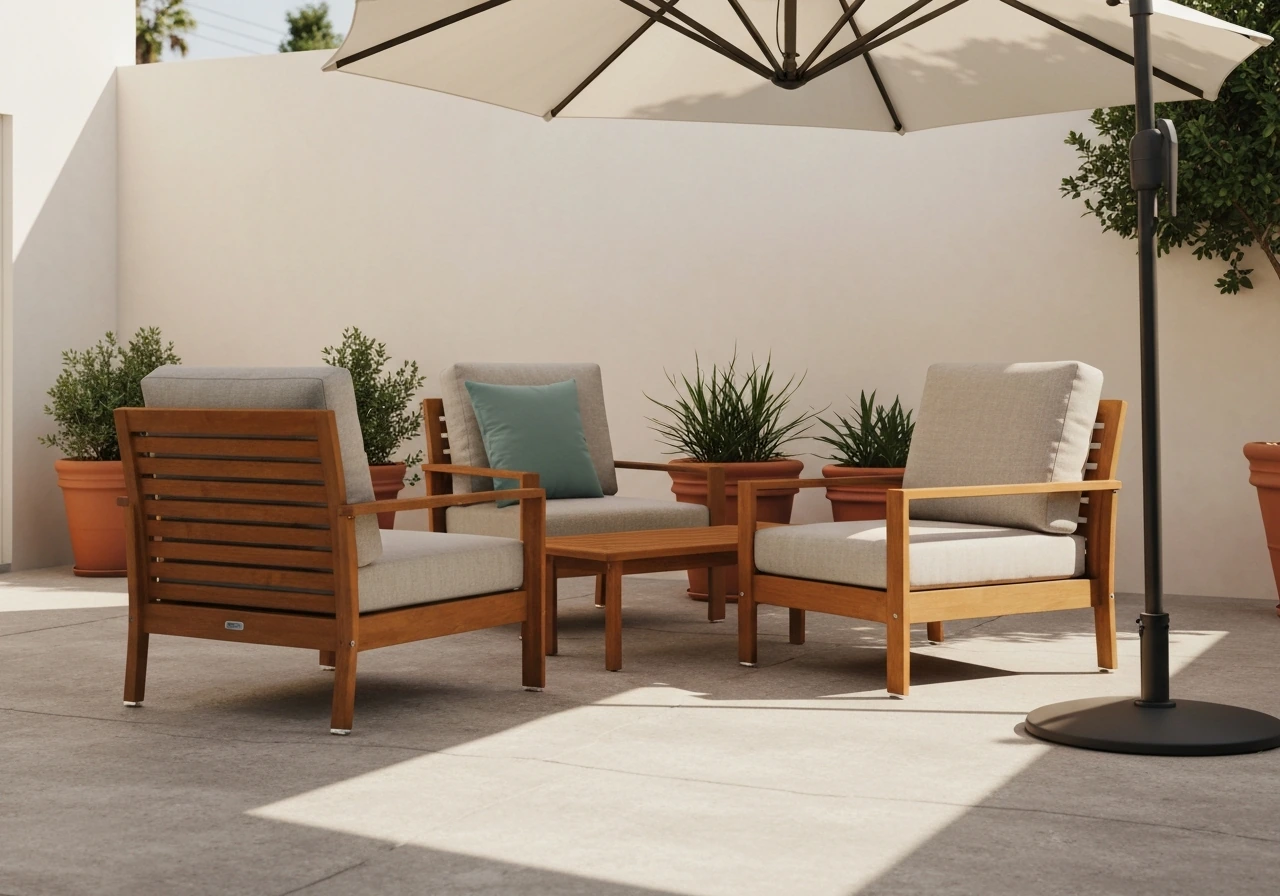
Best Outdoor Patio Colors: Palettes by Material and Light
Best outdoor patio colors matched to wood, stone, concrete, tile and metal, with light, UV, and maintenance tips.
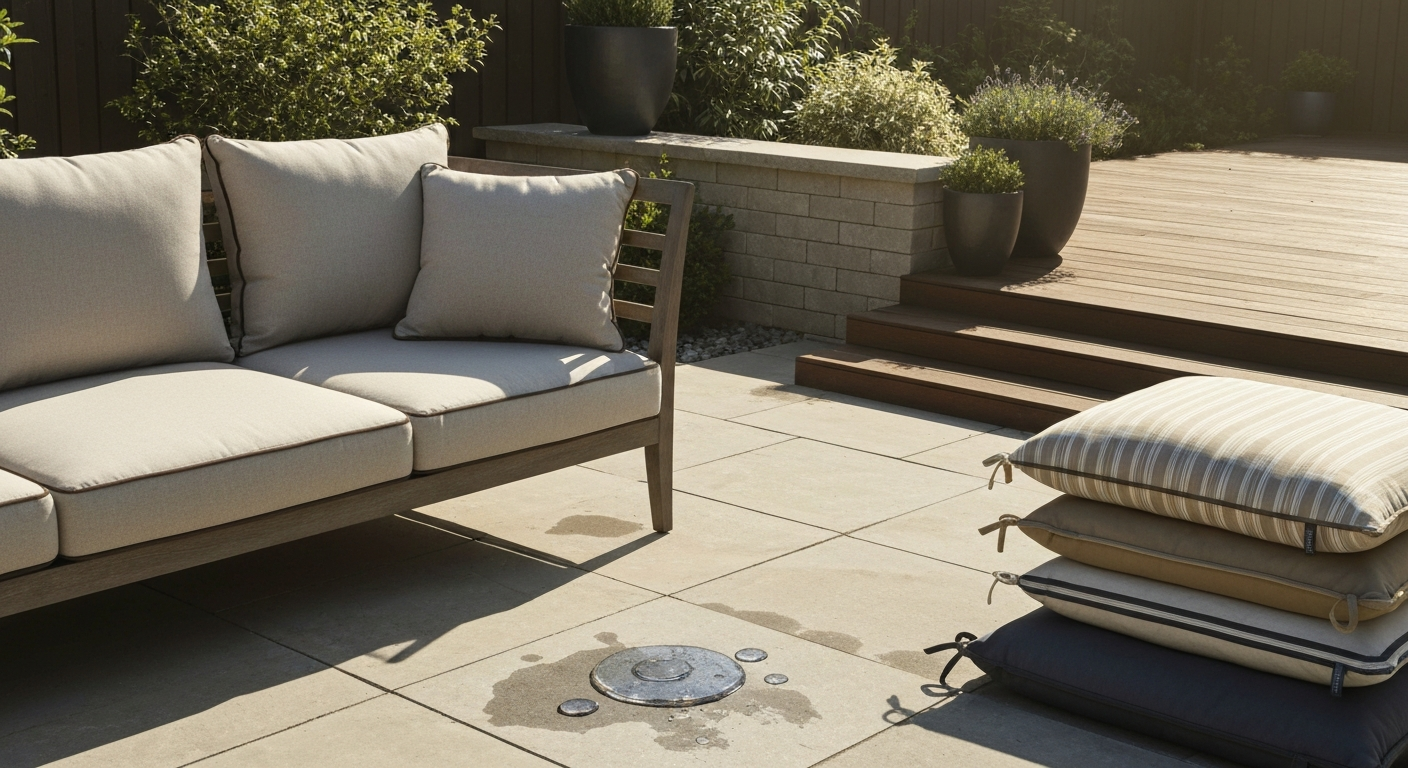
Best Sunbrella Patio Cushions: Top Picks, Guide & Maintenance
Find the best Sunbrella patio cushions: durable, fade‑resistant picks, buying tips, care, and top recommendations.
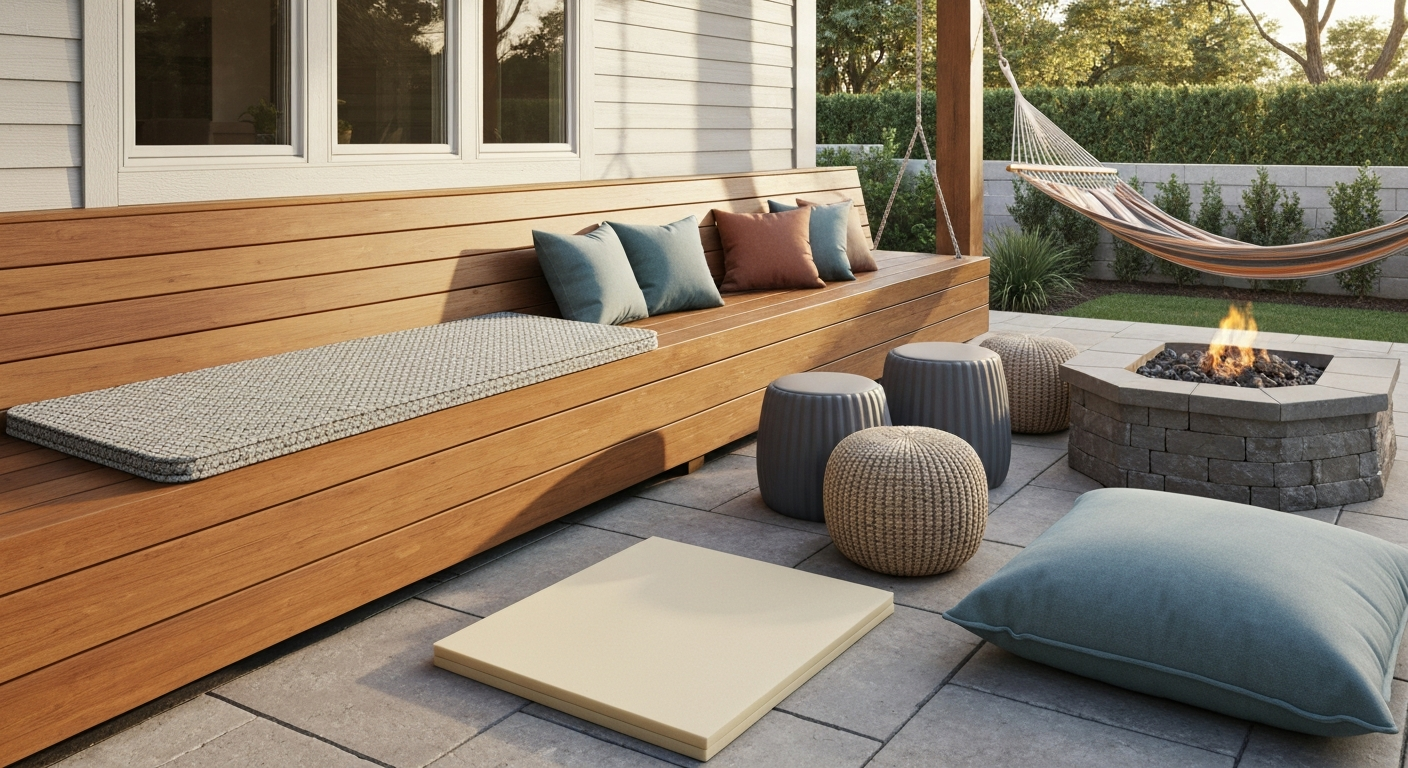
Alternative to Patio Cushions: Durable, Stylish Options and DIY
Alternative to patio cushions: durable, weatherproof seating options, pros, DIY tips & buying guide.