
For most patios, a 48-foot plug-in LED string light with G40 or S14 bulbs, 2700K warm white color, and an IP44 or higher weather rating is the right starting point. If you are comparing options, Amazon Basics patio string light kits are a common starting point to check basic specs like bulb type, temperature, and weather rating plug-in LED string light. If you want dimming control, you need to specifically look for strings labeled 'dimmable' and pair them with a compatible phase-cut (trailing-edge) dimmer or a smart controller. Most string lights sold today are NOT dimmable by default, and plugging a non-dimmable set into a dimmer is how you end up with flicker, buzzing, or a burned-out string.
Best LED Patio String Lights: Dimmable Buying Guide

Lark Perry
8 Jun 2026
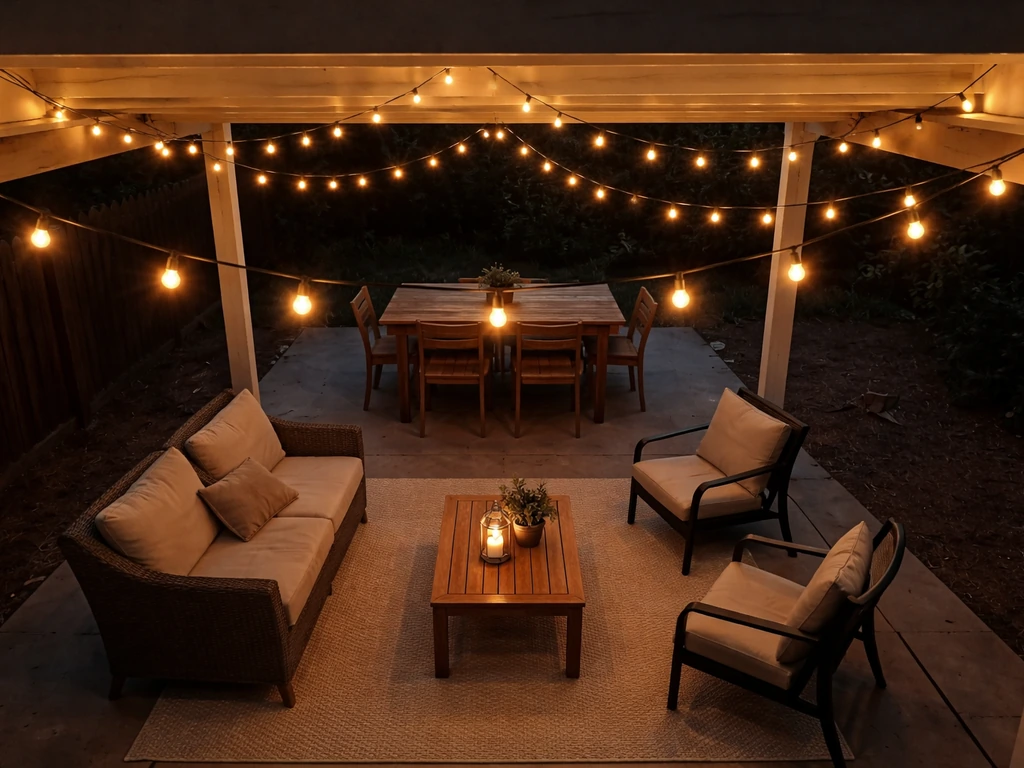
How to choose: dimmable vs. non-dimmable LED patio string lights
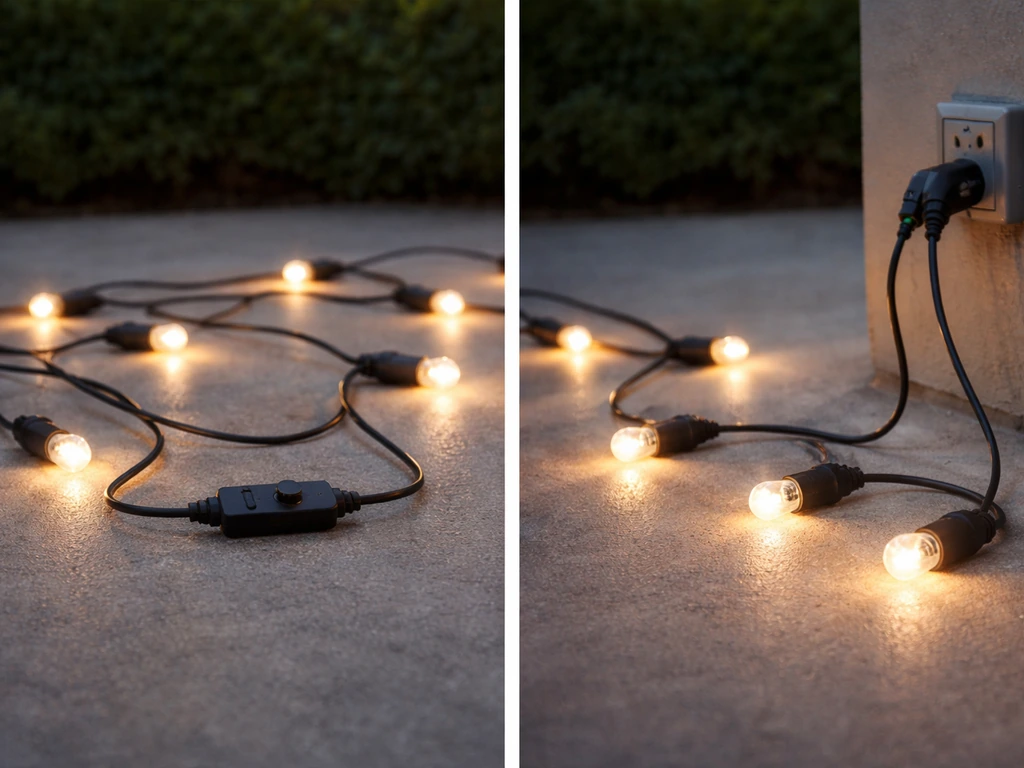
This is the decision that trips up most buyers, so let's settle it first. Non-dimmable LED string lights are simpler, cheaper, and compatible with any standard outdoor outlet. They work great for perimeter lighting, pathway borders, or any setup where you want a consistent glow and don't need to adjust the mood. Dimmable sets cost a bit more and require an extra step to set up correctly, but they give you real atmosphere control, which matters most for dining areas and lounging zones where you shift between bright and ambient light depending on what you're doing.
The critical thing to know: 'LED dimmable' is not a universal feature. Feit Electric's own support documentation flat-out states that most of its string light products are not dimmable or not compatible with standard dimmers, and that compatibility depends on the specific model. That's not unique to Feit. Most brands work the same way. You have to verify at the model level before you buy, not just assume any LED string light will dim. Look for it explicitly called out in the product title or spec sheet.
A third category worth knowing about: smart/app-controlled string lights. The Satco STARFISH S11272, for example, dims exclusively through the Starfish app rather than a traditional wall dimmer. That's a legitimate option and actually works very well for whole-setup scenes and schedules, but it means you're dependent on an app and a Wi-Fi connection rather than a simple rotary knob. Pick the control style that fits how you actually use your patio.
The features that actually matter for real patio performance
Brightness and lumens
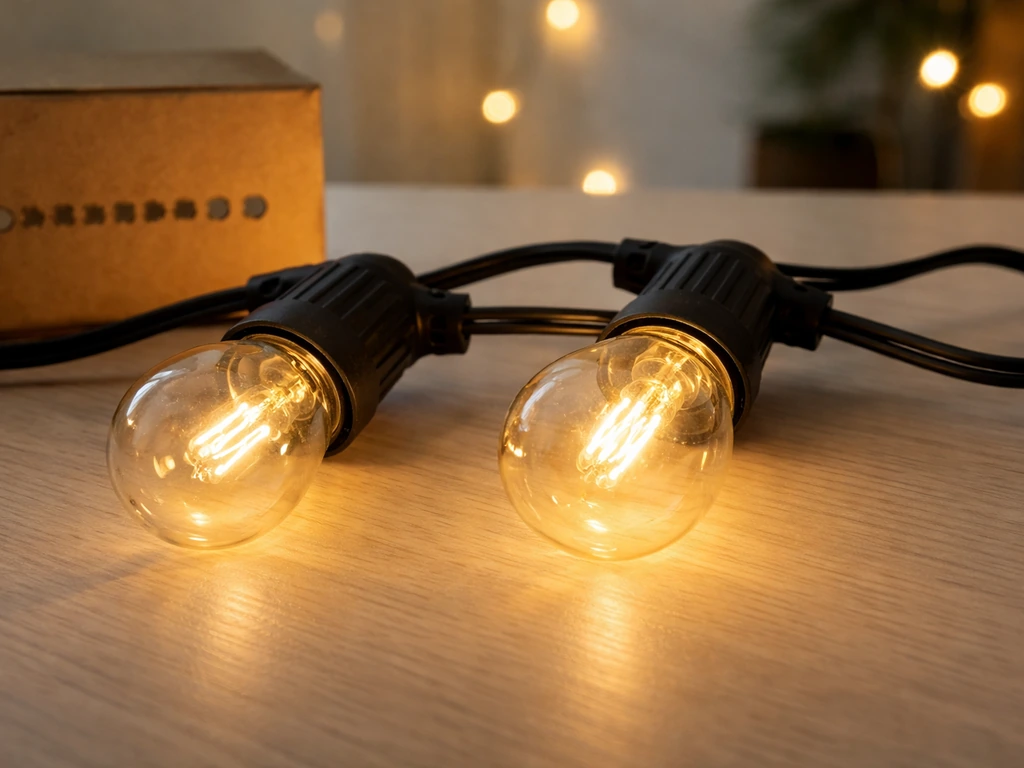
Most patio string lights fall in the range of 15 to 50 lumens per bulb. For reference, the Satco STARFISH S11272 puts out about 260 lumens total across the full 24-foot string at 10W, which works out to roughly 26 lumens per bulb. That's a soft, ambient glow, not work-surface brightness. For dining patios where you actually need to see your plate clearly, look for bulbs in the 40-60 lumen range each. For lounging and pure ambiance, 15-25 lumens per bulb is plenty and looks better in photos too.
Color temperature
Stick to 2700K warm white for almost any residential patio. It reads as golden, incandescent-like, and flattering on faces and food. Cooler color temperatures like 4000K or 5000K push toward a clinical, commercial look that most people don't want at home. The Satco STARFISH S11272 supports both 2700K and 5000K modes in the same fixture if you want the flexibility, but in practice, most people set it to 2700K and leave it there. If a listing doesn't specify color temperature, avoid it or assume it's on the cooler side.
Weather rating and durability
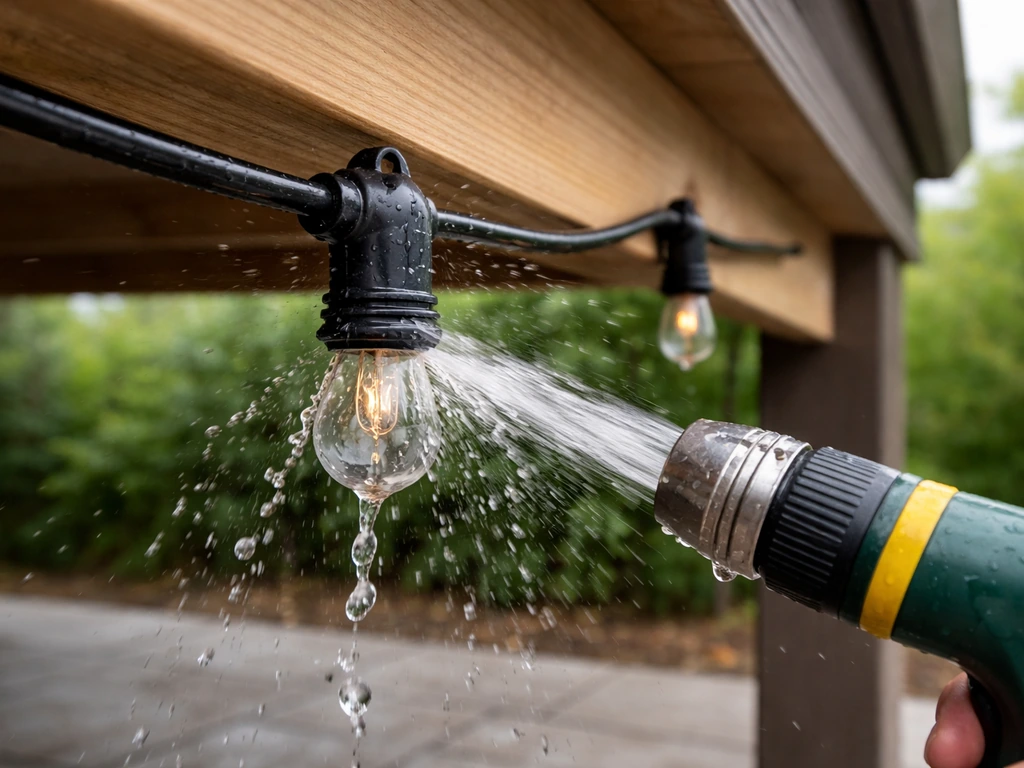
IP44 is the minimum you should accept for any covered patio or pergola situation. It handles splashing water from most angles. For exposed decks, rooftops, or anywhere rain hits the lights directly, go IP65 or higher. An IP65-rated string light can handle heavy downpours and even accidental spray from an irrigation system without skipping a beat. Beyond the IP rating, look at the cord material: SJTW jacketing (like the UV-resistant cord on the Satco STARFISH) is the standard for outdoor use and holds up to sun exposure much better than generic vinyl.
One thing most buyers overlook: the weakest point on any outdoor string light isn't the bulb or the cord, it's the plug and connection points. Moisture infiltrating at sockets, splices, or the main plug is the most common cause of flicker, partial outages, and early failure. Look for sets with tight-fitting, rubber-gasketed sockets and sealed connector points, especially if you're leaving them up year-round or in a coastal climate.
Rated lifespan
Quality LED string lights should be rated for at least 10,000 hours. The Satco STARFISH S11272 is rated for 15,000 hours. Running them 6 hours a night, that works out to roughly 7 years before you'd expect the first bulb failures, which is dramatically better than traditional incandescent patio strings that needed bulb swaps every season.
Power and installation: what you need to plan before you buy
Plug-in vs. hardwired
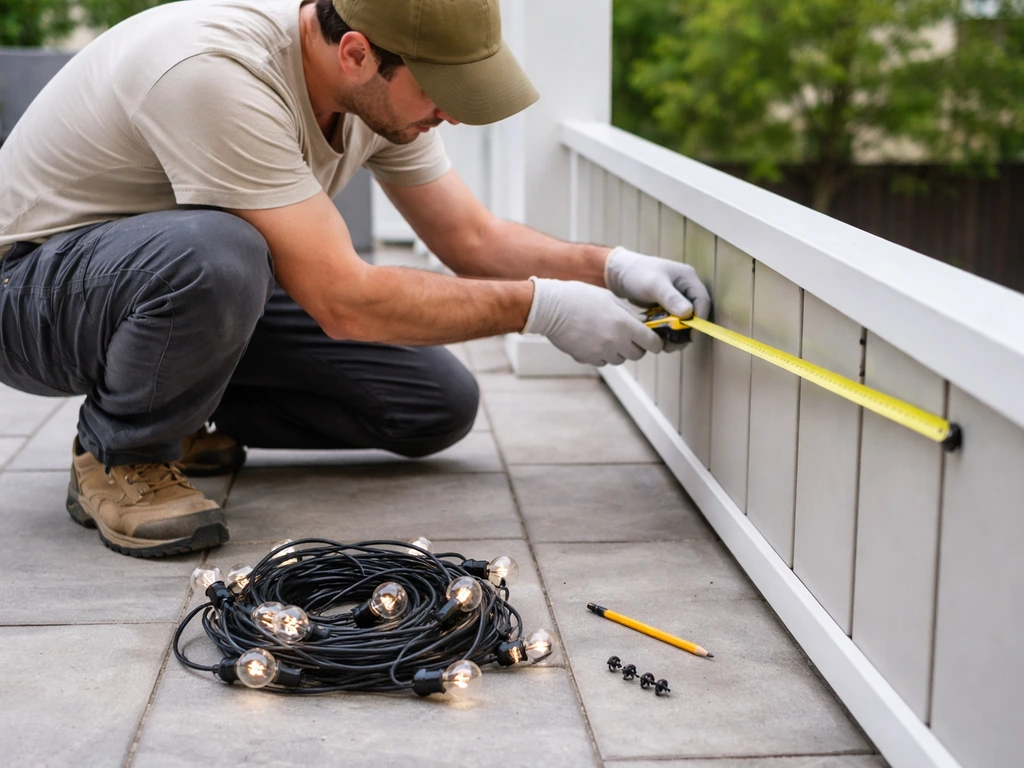
Plug-in is the right choice for renters, anyone on a budget, or situations where you might want to reconfigure the setup later. You need a GFCI-protected outdoor outlet within reach of the string's lead wire (the non-light portion at the plug end). Hardwired setups look cleaner and don't require a visible cord running to an outlet, but they involve an electrician and a permanent commitment. For most residential patios, plug-in wins on flexibility and cost.
Length, spacing, and coverage
Standard commercial-style patio strings come in 48-foot or 50-foot lengths with 24-inch bulb spacing. A 50-foot string with 24-inch spacing gives you 25 sockets, which covers a nice-sized dining patio in a single overhead run or wraps a mid-size pergola perimeter. For reference, a common commercial listing offers exactly that: 50 feet, 25 sockets, 24-inch spacing, plus separate lead and tail wires for clean connections.
If you need to connect multiple strings end-to-end, pay attention to the maximum extension limits. Feit Electric's installation manual for their 50-foot sets explicitly caps connections at 4 sections maximum, which puts the limit around 66 feet total for that configuration. Exceeding that limit causes voltage drop, dim performance, and can be a fire hazard. Every brand has a published limit; check it before daisy-chaining.
Mounting options
Overhead catenary (the classic V-shape or straight runs between posts) needs guide wire or heavy-gauge string to support the weight of the lights, especially in wind. Screw-in hooks on wood structures work well. For masonry or metal, use cup hooks with masonry anchors. Perimeter hanging along a fence or railing is easier and works well for smaller patios. Whichever method you use, avoid letting low-hanging sections pool water in the socket cups, which accelerates corrosion at the connection points.
Top picks by patio type and use case
| Patio type / use case | Recommended setup | Key specs to prioritize |
|---|---|---|
| Small balcony or apartment patio (under 100 sq ft) | 24-foot plug-in string, G40 bulbs, single run or perimeter | IP44+, 2700K, compact lead wire, lightweight cord |
| Mid-size dining patio (100-300 sq ft) | 48-50 ft string with 24" spacing, overhead catenary run | 40-60 lumens/bulb, dimmable if possible, IP65, SJTW cord |
| Large backyard or pergola (300+ sq ft) | Two 48-50 ft strings connected end-to-end or parallel runs | Confirm max extension limit, use guide wire for support, IP65 |
| Lounging/ambient patio | 48 ft string, G40 or Edison bulbs, lower lumen output | 2700K, dimmable, smart control optional, 15-25 lumens/bulb |
| Covered or screened porch | Any plug-in LED set, IP44 minimum acceptable | Lower priority on IP rating, focus on color temp and dimming |
For dining specifically, you want enough light to be functional without killing the atmosphere. A dimmable 48-foot overhead run works perfectly: bright for dinner setup and cleanup, dialed back to 30-40% for the actual meal. For pure lounging setups, non-dimmable at a lower lumen output is often simpler and still looks great. If you want the best rated patio string lights, focus on dimmable compatibility, warm 2700K color, strong weather ratings, and long-life LEDs. If you're shopping solar options for off-grid situations, the solar patio string lights category covers that specifically, since the performance tradeoffs are different enough to warrant separate consideration. If you want top rated solar patio lights, look for listings that prioritize real-weather durability, verified runtime, and consistent brightness from bulb to bulb. If you are comparing options, it helps to look at solar patio string lights reviews so you can spot which models hold up and how bright they feel in real use.
Getting smooth dimming control: bulbs, dimmers, and compatibility
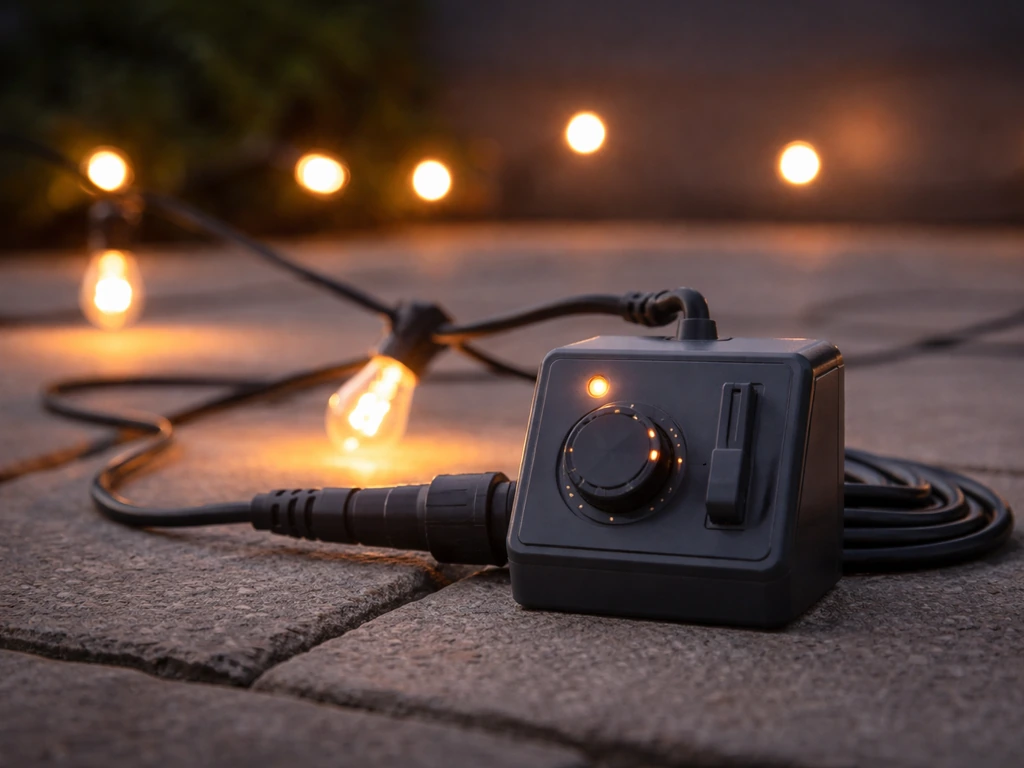
If you want dimmable patio string lights, here's the exact setup that works reliably. You need three things to line up: a string light set explicitly labeled dimmable, a compatible dimmer (almost always a trailing-edge or reverse-phase dimmer for LED loads), and ideally a set with UL-listed components throughout the cord, socket, and bulb assembly. The AQLightingGroup 120V dimmable string light, for example, carries separate UL component listings for cord, socket, and bulb, which is the kind of verified assembly you want for outdoor dimming use.
Lutron's dimming guidance for LED loads makes this clear: trailing-edge (reverse-phase) control is the standard for stable LED dimming. Forward-phase (leading-edge) dimmers, which are common in older homes, often cause flicker, buzzing, or an uneven dim range with LED loads. If you're adding an outlet-side dimmer plug or replacing a wall dimmer, look specifically for one rated for LED/ELV loads. Lutron publishes a compatibility list for their dimmers that takes the guesswork out of pairing.
For app-controlled strings like the Satco STARFISH, the dimming happens digitally through the app rather than through the electrical signal, which sidesteps the phase-cut compatibility issue entirely. It also opens up scheduling and scene features. The tradeoff is that you need your phone or a voice assistant to adjust the lights in the moment, which some people love and others find annoying after a while.
Dimming settings for dining vs. lounging
- Dining (prep and serving): 80-100% brightness, 2700K warm white, full overhead coverage
- Dining (during the meal): 40-60% brightness for atmosphere without losing visibility
- Lounging or entertaining: 20-40% brightness, creates a low glow without washing out the space
- Late night/accent only: 10-20% if your dimmer supports it cleanly without flicker at the low end
One practical note: not all dimmers perform well at the bottom of their range. Some LED dimmers flicker noticeably below 20%. Test yours at low settings before committing to a setup. If you see flicker, try a different dimmer before assuming the string light is the problem.
Maintenance, lifespan, and what to do when something fails
Keeping them working season after season
The main enemies of outdoor string lights are moisture at connection points, UV degradation of cheap cords, and physical damage from wind. Choosing a set with a UV-resistant SJTW cord and sealed sockets handles the first two. For wind, make sure any long overhead run is supported by a guide wire rather than letting the string bear its own tension, which stresses the sockets over time.
At the start of each season, do a quick visual check of all plug connections and socket areas for corrosion (greenish buildup on metal contacts is the warning sign). A light wipe with a dry cloth and making sure connections are fully seated goes a long way. If you're in a coastal or high-humidity area, IP65 or IP66 rated sets are worth the extra cost specifically because they protect those connector points better.
Replacing bulbs without replacing the whole string
Good news here: most quality LED string lights allow individual bulb replacement. Feit Electric explicitly supports this and provides a dedicated replacement guide. Even better, most modern string light designs keep the rest of the string lit if one bulb burns out or is removed, so a single failed bulb won't take down the whole run. Just match the bulb base type (usually E26 for standard Edison-style patio bulbs) and wattage when ordering replacements.
Troubleshooting common issues
- Section of lights is dark: Check the socket connections in that section first. Moisture at the socket is more likely the culprit than a failed bulb. Remove and reseat the bulb, dry the socket, and test again.
- Flickering: If you're using a dimmer, check dimmer compatibility. Switch to a trailing-edge LED dimmer if you haven't already. If you're not using a dimmer, check for a loose bulb or corroded socket contact.
- Whole string is out: Start at the plug. GFCI outlets trip on outdoor circuits; press the reset button. If the outlet is fine, check whether you've exceeded the maximum extension limit for connected sections.
- Dim performance on long runs: You've likely exceeded the recommended section limit or the wire gauge can't handle the load over that distance. Reduce the number of connected sections or run a second string from a separate outlet.
- Cord cracking or stiffening: This happens with cheap PVC cords after UV exposure. SJTW cords handle this much better. If the jacket is cracking, replace the string before moisture gets into the wiring.
Your quick-start checklist before you buy
- Measure your patio and figure out the total string length you need, adding 10-15% buffer for sag and routing around obstacles.
- Decide on your mounting points and whether you need a guide wire for overhead runs.
- Confirm you have a GFCI-protected outdoor outlet within reach, or plan for an extension with a proper outdoor-rated cord.
- Decide: dimmable or non-dimmable? If dimmable, identify your dimmer type before ordering the string.
- Check the maximum section/extension limit for any set you're considering before buying multiples to connect.
- Verify the IP rating matches your exposure level: IP44 for covered areas, IP65 for open/exposed patios.
- Confirm the color temperature is 2700K for warm ambiance, or 3000K at most if you want slightly crisper light.
FAQ
Can I use a normal wall dimmer with the best LED patio string lights?
Check whether the product is truly rated for dimmer use, not just “LED.” If it is dimmable, use a trailing-edge (reverse-phase) dimmer, and confirm the dimmer is rated for LED/ELV loads. If the listing does not explicitly say dimmable and dimmer compatible, expect stable brightness only and avoid using a wall dimmer.
How many extra strings can I connect end-to-end for a longer run?
Look for a listed “max extension” or “number of strings” limit in the manual. Even when connectors look standard, exceeding the limit can cause voltage drop, dimming inconsistency, and overheating at connections. If you need more coverage, add a separate outlet run or use a manufacturer-approved extension kit.
What happens if I try to dim an app-controlled string lights setup with a wall switch or dimmer?
Yes, but only if the dimming system matches the string type. For trailing-edge dimmable strings, the dimmer must be LED/ELV compatible. For app-controlled strings, you typically cannot wire in a traditional wall dimmer at all, since the fixture expects digital control through the app.
Is 2700K always the best choice, or when should I consider a cooler color?
Warm white is safest when you want “golden” patio lighting, but the bigger rule is to match color temperature to your space and furnishings. If you have white walls and light-colored furniture, 2700K often looks flattering and forgiving. If a listing gives no color temp, treat it as a risk and prefer models that explicitly state 2700K (or confirm via product photos and reviews).
How bright should LED patio string lights be for dining versus relaxing?
Use lumens per bulb as the guide, not just total watts. For dinner where you need to see plates and faces, aim roughly 40 to 60 lumens per bulb. For ambiance around seating, 15 to 25 lumens per bulb usually looks softer and more flattering.
My dimmable LED string lights flicker at low settings, what should I troubleshoot first?
If you see flicker or buzzing, it is often the dimmer, especially at the low end. Many dimmers only behave smoothly above a certain minimum percentage. Test the lowest setting, then raise the dim level slightly. If flicker continues at mid-range, swap to a trailing-edge LED/ELV dimmer rated for the load.
Why do my outdoor LED string lights flicker or partially go out?
First confirm the string is rated for outdoor wet locations (IP65 or higher where rain hits, IP44 minimum for covered areas). Then check for sealed sockets and a proper outdoor plug connection, ideally with a GFCI-protected outlet. If flicker happens even when dry, remove and re-seat connections and inspect for corrosion at plug and socket interfaces.
Can I use an extension cord with plug-in LED patio string lights?
For plug-in strings, use an outdoor GFCI-protected outlet, and make sure the outlet is located within reach of the string’s lead wire. If you need an extension cord, choose a heavy-duty outdoor-rated cord (outdoor marking) and avoid daisy-chaining cords, since poor cord quality can create voltage drop and heating.
If a bulb burns out, can I replace it myself, and what should I match?
Many quality strings allow bulb replacement, but replacements must match the exact bulb base type and bulb wattage limits. Also, buy the same model family if possible, because brightness and color can vary between generations even when the base matches. If the product supports “partial light” operation, verify whether removing a bulb keeps neighboring bulbs powered or switches the circuit off.
How do I install string lights to prevent water pooling and early corrosion?
To prevent corrosion and connection failures, keep water from pooling in socket cups. When installing, tension the run so sockets remain above standing water, and avoid sagging in the middle. Also use proper hook types and spacing so wind does not whip the string and stress connectors over time.
Next Articles
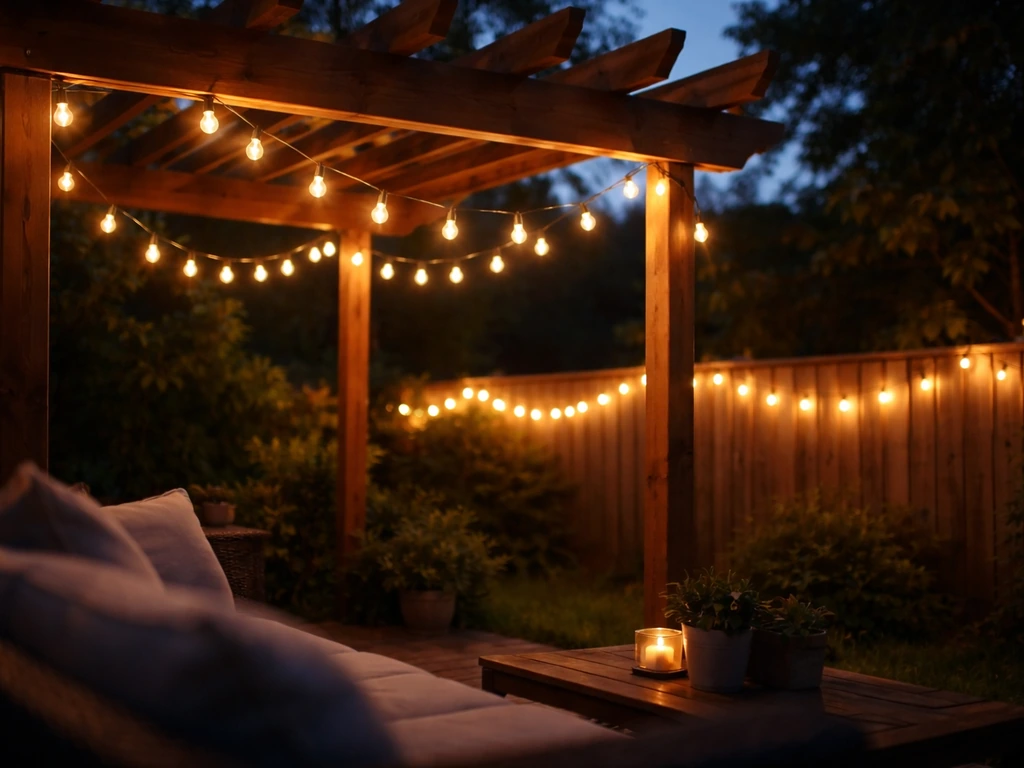
Best Rated Patio String Lights: How to Choose Today
Choose best rated patio string lights with specs, outdoor ratings, style match, and review tips for long-lasting glow
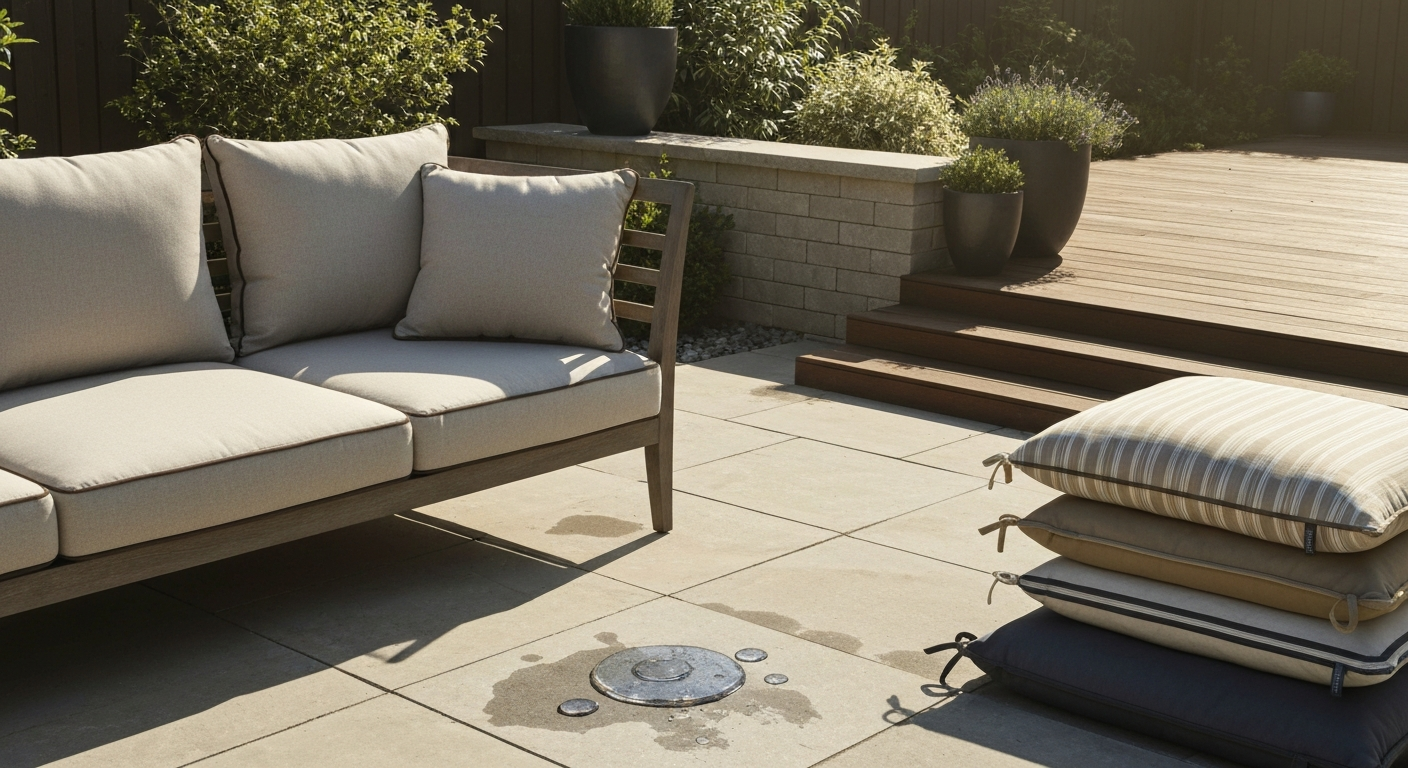
Best Sunbrella Patio Cushions: Top Picks, Guide & Maintenance
Find the best Sunbrella patio cushions: durable, fade‑resistant picks, buying tips, care, and top recommendations.
Alternative to Patio Cushions: Durable, Stylish Options and DIY
Alternative to patio cushions: durable, weatherproof seating options, pros, DIY tips & buying guide.