To get the right Aqua Patio pontoon bimini top, you need three numbers before you order anything: the mounting width (rail to rail where the bimini feet attach), the front-to-back length of coverage you want, and the height clearance above deck. If you are also shopping for the best 3 person patio swing with canopy, measure the seating area and check how the frame clears your patio before buying. Get those right, match them to your specific Aqua Patio model and year, and you'll end up with a top that fits cleanly, raises without a fight, and actually keeps the sun off. Skip any one of those steps and you'll be returning a top or living with a saggy, misaligned mess.
Aqua Patio Pontoon Bimini Top Guide: Buy, Measure, Install

Lark Perry
10 Jul 2026
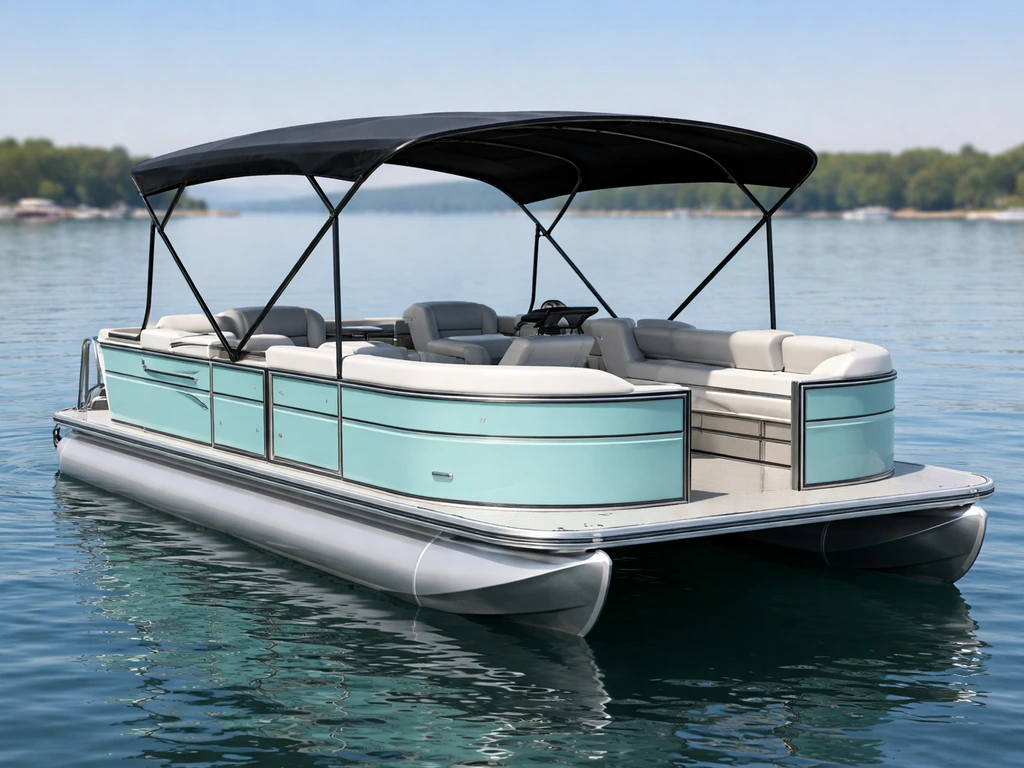
What a bimini top actually does on an Aqua Patio pontoon
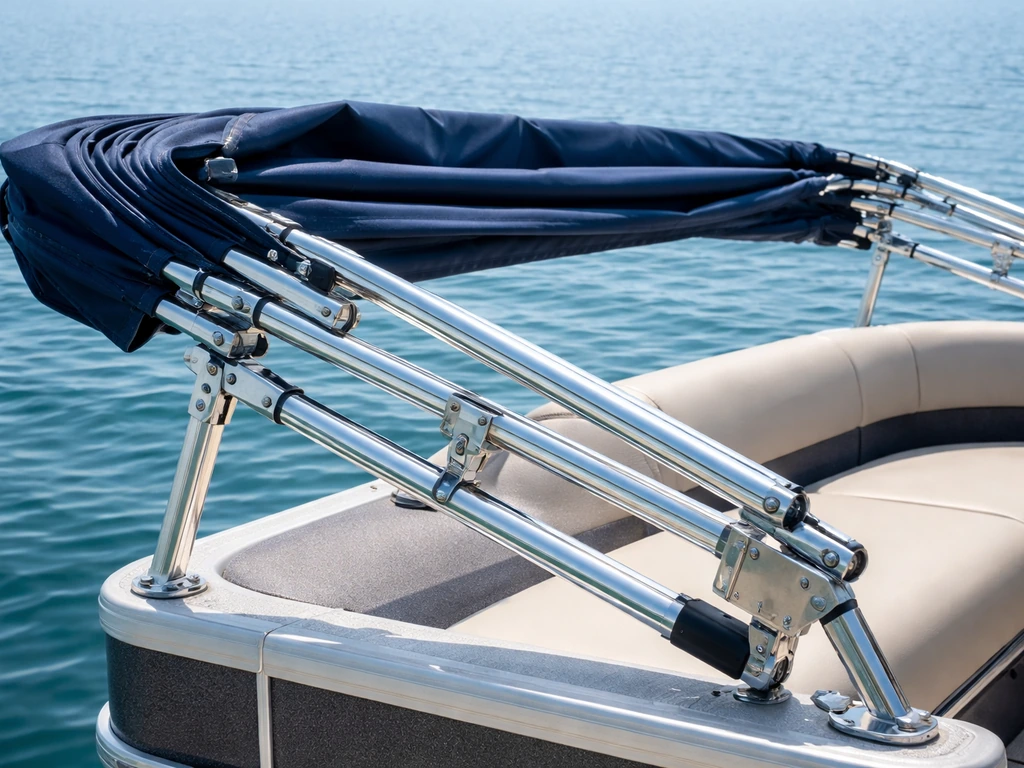
Aqua Patio pontoons (built by Godfrey Marine) are set up for a full overhead bimini as standard equipment. The bimini is the folding fabric-and-frame canopy that spans the width of the pontoon deck and gives you shade while you're anchored or cruising at lower speeds. It folds back when you want open sky and raises in seconds when you need cover. On most Aqua Patio models the bimini is the primary shade solution, so when it tears, fades, or the frame bends, the whole boating experience degrades fast.
You need a new or replacement bimini top when the fabric is cracked, faded through, or visibly mildewed beyond cleaning; when a bow (the curved frame tube) is bent or the hinge hardware is broken; or when you're outfitting a used Aqua Patio that came without one. There's also a coverage upgrade scenario: a standard bimini might just barely cover the helm, and a lot of owners end up switching to a larger buggy-style configuration or adding an extension to get full-deck coverage. Knowing which scenario you're in shapes every decision that follows.
How to measure your frame for the right fit
Measuring is the part most people rush and then regret. Take 10 minutes and get three measurements with a metal tape measure before you look at a single product listing.
- Mounting width: Measure rail to rail at the exact points where the bimini feet (deck hinges) will attach on each side. This is not the overall beam of the pontoon. The number you need is the inside spacing between the two mounting points. Most Aqua Patio models fall between 84 and 102 inches wide at the mounting rails, but confirm yours specifically.
- Coverage length: Measure front to back along the centerline of the deck from where the front bow will sit to where the rear bow will sit. A standard 4-bow pontoon top covers roughly 7 to 9 feet of deck. If you want helm-to-rear-seating coverage, measure that full run.
- Height: Measure from the deck surface to the underside of the bimini when it's in the raised position. Most Aqua Patio configurations use a height between 42 and 54 inches. You want enough clearance to stand comfortably without the bows catching you in the shoulders.
- Tube size: Check whether your existing frame uses 1-inch square tube or round tube. Aqua Patio models compatible with Carver/Covercraft tops and similar OEM-spec replacements typically use 1-inch square tube frames. This affects which mounting hardware fits.
- Mounting point pattern: Note how many mounting points are on each side rail and whether they're on top of the gunnel or inside the gunnel. This determines which slide track kit (if any) you need.
One practical note from forum experience: bimini tops do have some width adjustment built in, and you can sometimes compress or spread the feet slightly to match your rails. But if you're off by more than a couple of inches, don't count on that working cleanly. Order to your measured mounting width, not the boat's nominal beam.
Choosing the right bimini top: size, material, and style
Size and bow count
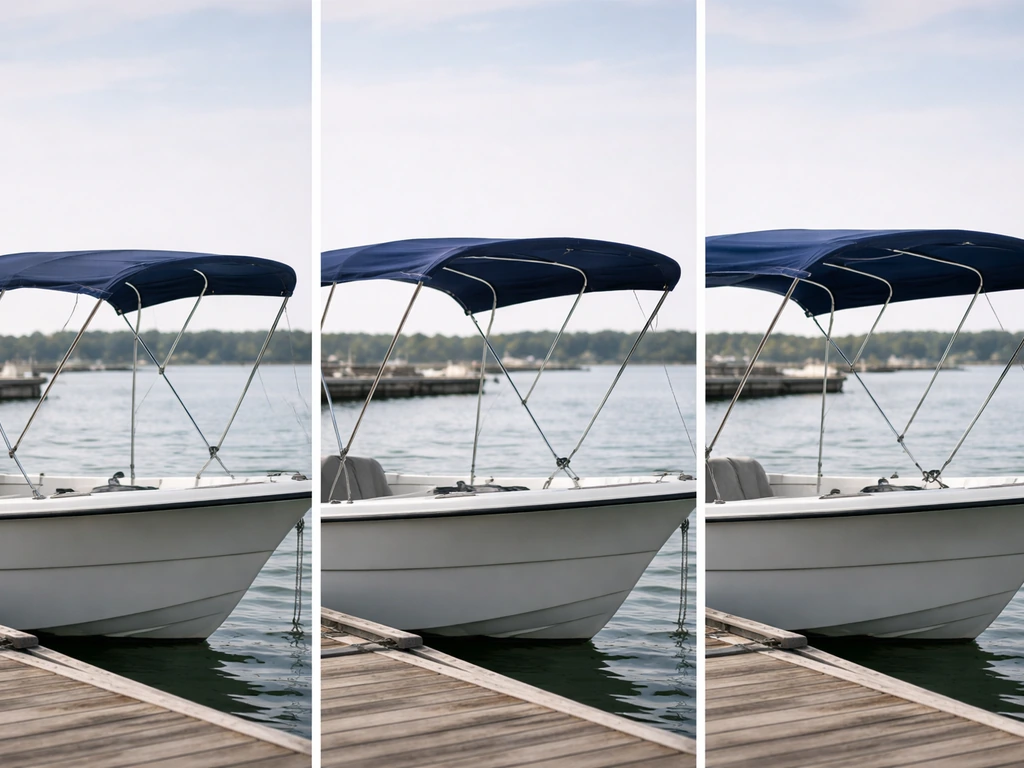
For most Aqua Patio models in the 235 to 259 range, a 4-bow bimini top is the standard. Four bows give you better fabric tension and shape than a 2-bow or 3-bow setup, and they handle wind and weather without collapsing in the middle. Buggy-style tops (which follow the curved profile of the pontoon's full deck perimeter) offer the best coverage and a cleaner look, but they're more expensive and require precise model/year matching. The Aqua Patio AP 235 SB Outboard (2022-2023), for instance, uses a specific 4-bow buggy-style configuration with a 1-inch square tube frame, and buying the wrong style for that model won't mount correctly regardless of dimensions.
Material: what actually matters
The fabric is where you should spend your budget. The standard for Aqua Patio-compatible tops from reputable suppliers is 9.25 oz marine-grade Sunbrella or Outdura acrylic. Both are 100% solution-dyed, which means the color goes all the way through the fiber rather than sitting on the surface. That matters because surface-dyed fabrics fade visibly within two or three seasons in direct sun, while solution-dyed fabrics hold their color for years. Sunbrella is the most widely recognized name and performs well for UV resistance, mildew resistance, and breathability. Outdura is the main alternative and performs comparably. Avoid any bimini marketed with polyester canvas or generic 'marine fabric' without an oz-weight spec. If the listing doesn't say 9.25 oz solution-dyed acrylic, keep shopping.
Style comparison
| Style | Coverage | Best for | Typical cost range | Notes |
|---|---|---|---|---|
| 4-Bow Square Tube (standard) | Helm to mid-deck | Straightforward replacement, most Aqua Patio 240/235 models | $300–$700 | Most common OEM match; easiest install |
| 4-Bow Buggy Style | Full deck perimeter | Aqua Patio AP 235, AP 259 and similar newer models | $500–$1,000+ | Requires model/year-specific fitment; best total coverage |
| Extended/Arch Style | Full deck plus rear | Owners wanting maximum shade | $700–$1,200 | May require additional mounting hardware or custom fitment |
| Electric Power Top | Full deck | Convenience-focused buyers | $1,200–$1,400+ | PontoonStuff lists a 10-ft electric top at $1,399; premium choice |
Replacement vs. new install: compatibility and mounting options
If you're replacing an existing Aqua Patio bimini top, your best starting point is the existing frame and mounting hardware. Check whether the frame is still structurally sound. If the aluminum bows are straight and the hinges are intact, you may only need to replace the canopy fabric, which is significantly cheaper than buying a complete top. If you need a full replacement (frame and fabric), look up your exact Aqua Patio model and year. Suppliers like Cover.world and Boat Covers Direct maintain model/year compatibility databases: for example, the Aqua Patio AP 240 RE Sterndrive (2001-2009) uses a specific 4-bow square-tube package with a rear brace kit and quick-release pins, and the AP 259 CBD Outboard (2018-2019) has its own 9-foot spec. Cover.world also lists the Aqua Patio AP 259 CBD Outboard (2018-2019) bimini top variant with 9.25 oz marine acrylic fabric and a 1-inch square tube frame as a model/year-compatible top the AP 259 CBD Outboard (2018-2019) has its own 9-foot spec. Using those lookups rather than eyeballing it saves a return trip.
For a new install on a used Aqua Patio that came without a bimini, you'll need to add deck hinges (the mounting feet) and potentially a slide track kit. Carver’s 1-inch square tube pontoon bimini assembly instructions list the mounting hardware and fastener specifics for installing deck hinges, including stainless steel screws for hinge mounting, plus configuration-dependent elements like brace kit usage blank" rel="noopener noreferrer">Carver’s 1-inch square tube bimini instructions. Slide tracks mount either on top of the gunnel or inside the gunnel depending on your rail configuration, and they let the bimini fold back without having to fully disassemble the hardware. Carver's slide track kits include mounting hardware and install on a flat, level surface along the rail. If your pontoon has no existing mounting points at all, this is a half-day job with a drill, 9/64-inch bit, stainless steel screws, and patience. If you already have deck hinge locations from a previous top, you're just swapping hardware.
Quick-release (Q/R) pins are worth paying attention to. They're included in most Aqua Patio-compatible complete-top packages and allow you to detach the rear brace kit quickly when folding or storing the top. If you're buying a replacement canopy only (not a complete top), confirm the pin configuration matches your existing brace kit before ordering.
Installation checklist and common problems to troubleshoot
What you'll need
- Drill with 9/64-inch bit
- Phillips head and flat head screwdrivers
- Tape measure and pencil
- Stainless steel screws (included in most kits, but confirm)
- A second person for raising and positioning the frame
Step-by-step install
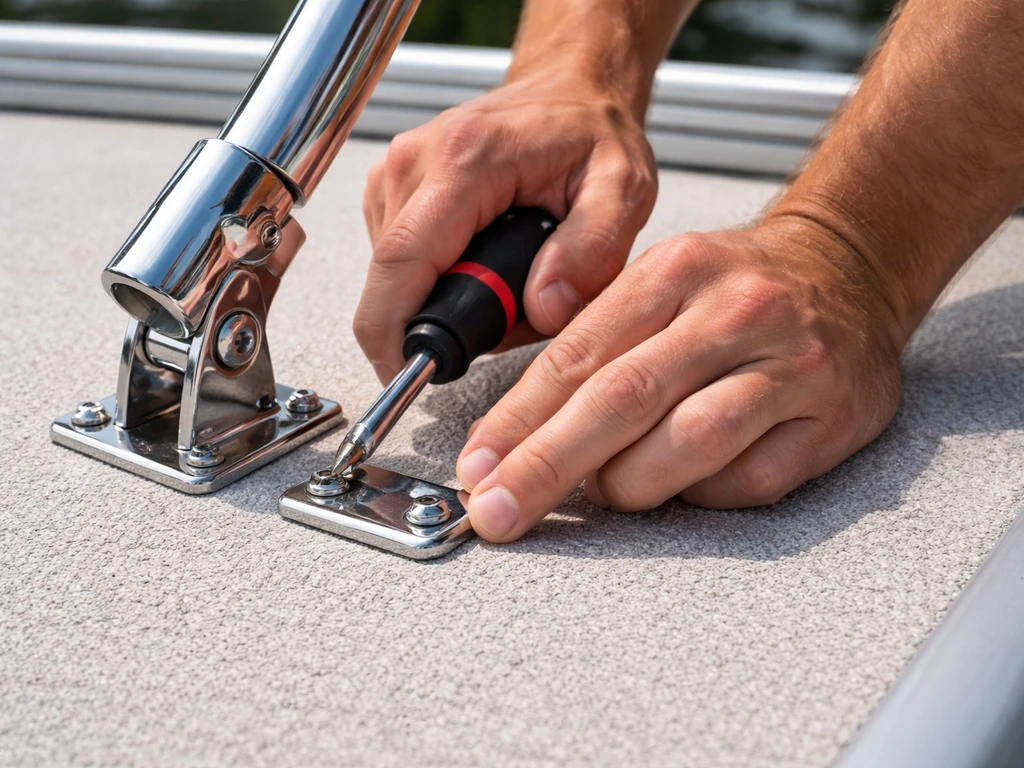
- Lay out all components before starting and confirm nothing is missing. A standard 4-bow pontoon top package should include: the bimini canopy fabric, the bow frame tubes, deck hinges/mounting feet, rear brace kit with Q/R pins, hold-down straps, nylon fittings, and a storage boot.
- Assemble the bow frame loosely on the deck before mounting anything. Thread the fabric onto the bows before you install the frame, since getting fabric onto assembled bows that are already mounted is frustrating.
- Position the deck hinges at your measured mounting points on each rail. Mark pilot holes with a pencil, drill at 9/64-inch, and fasten with stainless steel screws. Do not overtighten into aluminum rail stock.
- Attach the assembled frame to the deck hinges. Have your second person hold the frame upright while you secure the hinge pins.
- Install the rear brace kit and attach Q/R pins. The rear brace connects from the rear bows down to the aft rail and is what prevents the top from flexing forward at speed.
- Tension the hold-down straps to eliminate canopy sag. Straps connect from the front corners of the fabric to a cleat or rail fitting forward of the bow. Even tension on both sides is key.
- Test the raise/lower cycle several times and confirm the Q/R pins engage and release cleanly.
Common problems and fixes
- Locking pins won't engage: This is one of the most commonly reported issues on Aqua Patio setups. Usually caused by the bows being slightly out of alignment with the pin receivers. Loosen the deck hinge screws, re-position the hinge slightly, and retighten. Even a 1/4-inch adjustment usually fixes binding.
- Top is heavy and hard to raise: Friction in the hinge pivots is the usual culprit. A shot of silicone spray lubricant on all pivot points makes a significant difference. Gas struts are an aftermarket upgrade that several Aqua Patio owners have added to reduce raise/lower effort, especially on larger tops.
- Canopy sag in the middle: Hold-down straps are too loose or the bow count is insufficient for the canvas span. Re-tension straps symmetrically. If sag persists, check that the correct number of bows is installed for the top's length.
- Fabric pulls off bows at corners: The fabric sleeve fit is too tight for the bow curve at the corners. Wet the fabric with warm water to relax it, then work it over the bow ends. Don't force it dry.
- Top sits crooked or tilts to one side: Deck hinges are not at equal heights on each rail. Use a level across the two deck hinge positions before drilling pilot holes.
Maintenance, cleaning, and weatherproofing for longer life
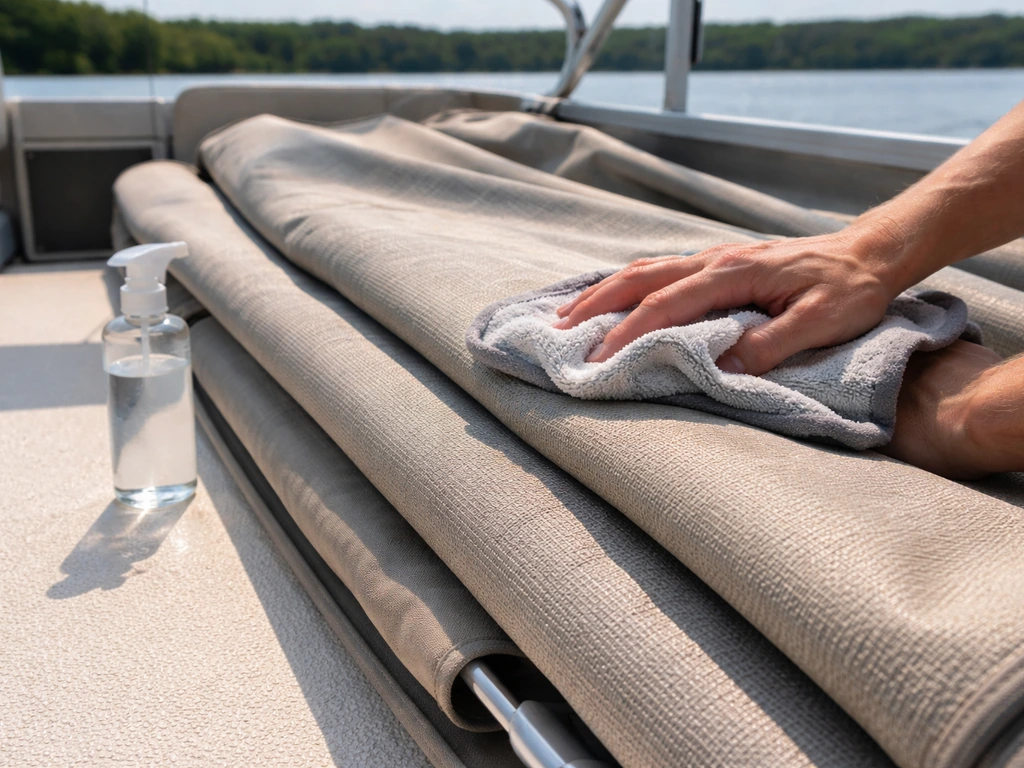
The biggest enemy of a pontoon bimini top isn't UV exposure, it's mildew from being folded up while damp. Aqua Patio owners in humid climates see this constantly. The fix is simple but requires consistency: never fold and store the top when the fabric is wet. After rain or washing, let it air dry fully in the open (raised) position before folding it into the storage boot.
For routine cleaning, rinse the Sunbrella or Outdura fabric with fresh water after every use in salt or treated water. For deeper cleaning (dirt, bird droppings, light mildew spots), use a diluted solution of mild soap and water with a soft brush. Rinse thoroughly. For heavier mildew, a solution of 1 cup bleach and 1/4 cup mild soap per gallon of water works on Sunbrella without damaging the acrylic fibers, but always rinse completely and let the fabric dry before re-treating or folding.
The storage boot is not optional equipment. It protects the folded canopy from UV exposure, debris, and moisture intrusion when the top is down. Most quality replacement tops include a matching zippered boot. A patio swing top cover is another way people protect outdoor areas when they are not using the space. If yours is missing or damaged, replacement boots are sold separately (DeckMate and others make universal-fit pontoon bimini boots). Keep the boot zipped closed whenever the top is in the stored position.
Once or twice a season, spray the fabric with a marine fabric protectant like 303 Aerospace Protectant or Star Brite Waterproofing spray. Solution-dyed acrylic fabrics have inherent water resistance, but the dressing restores the DWR (durable water repellent) finish that wears off with time and cleaning. You'll know it's time when water soaks into the fabric rather than beading up. Also apply silicone lubricant to all aluminum pivot points and nylon fittings to prevent corrosion seizing and make raising the top easier.
At end of season, if the pontoon is being stored under a boat cover or in a covered slip, remove the bimini top entirely if possible and store it flat in a cool, dry place. This extends frame life significantly by preventing stress on the hinges from long-term static tension. If you're using a full pontoon cover over winter, the bimini is typically folded and covered in place, which is fine as long as the fabric is bone dry going in. Products like the BestCovers BestFit 600HD pontoon cover (available for specific Aqua Patio AP model/year configurations) are made with antimicrobial treatment and UV protection specifically to reduce the mold and mildew risk in this scenario.
Budgeting and picking the best value option today
For a complete 4-bow replacement top with 9.25 oz Sunbrella or Outdura fabric in the correct Aqua Patio model/year configuration, expect to spend between $300 and $700 depending on size, color, and supplier. If you’re also searching for step2 all around playtime patio with canopy reviews, compare coverage size and fabric weight so the canopy performs the way you expect complete 4-bow replacement top. That's the sweet spot where you're getting OEM-equivalent material quality without paying for premium upgrades you may not need. Buggy-style tops for newer AP models run $500 to $1,000. At the high end, electric power tops top out around $1,400 (PontoonStuff lists a 10-foot electric pontoon top at $1,399.99), which is a significant jump for convenience alone.
The honest value call: if your existing frame is sound and only the fabric is shot, buy a replacement canopy only (often $150 to $350) rather than a complete top. It's the same fabric quality, same fit, and a fraction of the cost. If the frame is bent or hinges are broken, buy the complete kit because replacement hardware sourcing is time-consuming and rarely cheaper than a bundled package.
| Option | Approximate cost | Best for | Key trade-off |
|---|---|---|---|
| Replacement canopy only | $150–$350 | Existing frame is intact, hardware is good | Requires matching sleeve/bow dimensions exactly |
| Complete 4-bow top (standard) | $300–$700 | Full replacement or new install on most AP models | Best overall value; most widely available |
| Complete 4-bow buggy-style top | $500–$1,000+ | Newer AP models (235, 259 series); full-deck coverage | Requires precise model/year match |
| Electric power top | $1,200–$1,400+ | Convenience-focused, high-use boaters | Significant cost premium for motorized operation |
Before you place an order, answer these four questions: What is your Aqua Patio model and year? What is your measured mounting width (rail to rail)? Do you want a replacement canopy only or a full top with frame? And do you have existing slide tracks or deck hinges installed? With those four answers in hand, you can use Cover.world's or Boat Covers Direct's model/year lookup tools to pull the exact compatible SKU for your boat, confirm the fabric weight and bow configuration, and order with confidence. Boat Covers Direct also provides a blank" rel="noopener noreferrer">Carver buggy-style bimini option listing by pontoon size, including fabric and warranty details that help verify material and coverage expectations. That 10 minutes of prep work is what separates a clean install from a return shipping headache.
If you're also thinking through other shade solutions for your outdoor setup beyond the pontoon, the same principles around material durability and UV resistance apply to patio canopies and swing covers for land-based use. If you are shopping for a patio rattan daybed with a retractable top canopy, look for UV-resistant, solution-dyed fabric and a canopy that extends smoothly patio canopies. The fit-first, material-second approach works whether you're covering a pontoon deck or a backyard swing.
FAQ
How do I tell if I should buy the replacement canopy only or the complete aqua patio pontoon bimini top kit?
If the aluminum frame tubes are straight and the hinge hardware moves freely without wobble, you can usually replace just the canopy fabric. If any bow tube is visibly bent, if hinges are cracked or seized, or if the rear brace kit hardware is missing, plan on the full kit so the mounting geometry and Q/R pin setup matches.
What is a safe amount to rely on bimini “width adjustment,” and when should I stop and remeasure?
If you are within a couple of inches of your mounting width, minor foot spread or compression may get you close. If you are more than that, the fabric tension and latch alignment will often be off, leading to uneven coverage and binding when raising. In that case, remeasure mounting width (rail to rail) and order to that value.
Can I use the wrong bow count (for example, 3-bow instead of 4-bow) if the fabric looks close?
It is usually not a good idea. Bow count changes the frame stiffness and fabric tension, so the canopy profile may not sit correctly on the buggy or perimeter shape. Even if it mounts at the feet, the fabric can sag in the middle and the raise operation can become harder over time.
Do I need to match the frame tube size and shape (square tube vs other) when buying an aqua patio pontoon bimini top?
Yes. Some Aqua Patio models use a specific frame tube configuration and rear brace kit design, so a “dimensionally similar” top can still fail to mount or latch correctly. When the listing provides frame details (tube type, brace kit, pin configuration), match those to your model and year.
If my listing says “compatible,” how can I double-check before ordering to avoid returns?
Confirm four things from the product page or compatibility notes: your exact Aqua Patio model and year, the mounting width, the bow configuration, and whether it is canopy-only or a full frame package. Also check for Q/R pin and rear brace kit details, especially if you are replacing only the fabric.
What should I do if the bimini won’t fold smoothly after installation?
First, verify the feet are seated to the same mounting holes on both sides and that the rear brace kit is aligned with the hinge points. Then lubricate pivot points and nylon fittings with a marine-safe silicone lubricant. If it still binds, stop using it and re-check that the slide track (if installed) is level and correctly positioned.
Is it better to fold the bimini during light mist, or leave it open until dry?
Leave it open until the fabric is dry whenever possible. Folding while damp is the fastest way to trigger mildew in humid climates. If you must partially cover, at least air-dry the fabric fully in the raised position before storing it in the boot.
How should I clean solution-dyed Sunbrella or Outdura without damaging water resistance?
Rinse with fresh water after each use, then use mild soap and a soft brush for dirt. For mildew spots, use the diluted bleach-and-mild-soap mix described in the care routine and rinse thoroughly. After drying, you can reapply marine fabric protectant so water beads again rather than soaking in.
What’s the best way to store the aqua patio pontoon bimini top during the off-season?
If you can remove it, store it flat in a cool, dry place once the fabric is completely dry. If you must leave it in place under a full cover, fold only when bone-dry, keep the storage boot zipped, and ensure the boat cover allows airflow so moisture does not get trapped inside.
Do I need a storage boot even if my boat is covered most of the time?
Yes. A boot still protects the folded canopy from moisture intrusion and debris, and it reduces UV exposure at the highest-stress storage folds. Even with a slip cover, a damaged or missing boot can accelerate fading and mildew because the fabric stays trapped in the folded position.
How do I prevent corrosion and squeaks in the hinges and fittings?
After installation and periodically, lubricate aluminum pivot points and nylon fittings with marine-appropriate silicone lubricant. Also rinse off saltwater residue after use so salt deposits do not build up in hinge joints, which can cause stiff movement and early wear.
Can I add slide tracks or deck hinges later if my used aqua patio pontoon didn’t have them?
Often yes, but it depends on your rail configuration and whether any mounting points already exist. If there are no existing hinge locations, expect a drilling and hardware-mounting job and take time to drill level and square so the bimini folds without fighting the mechanism.
Next Articles
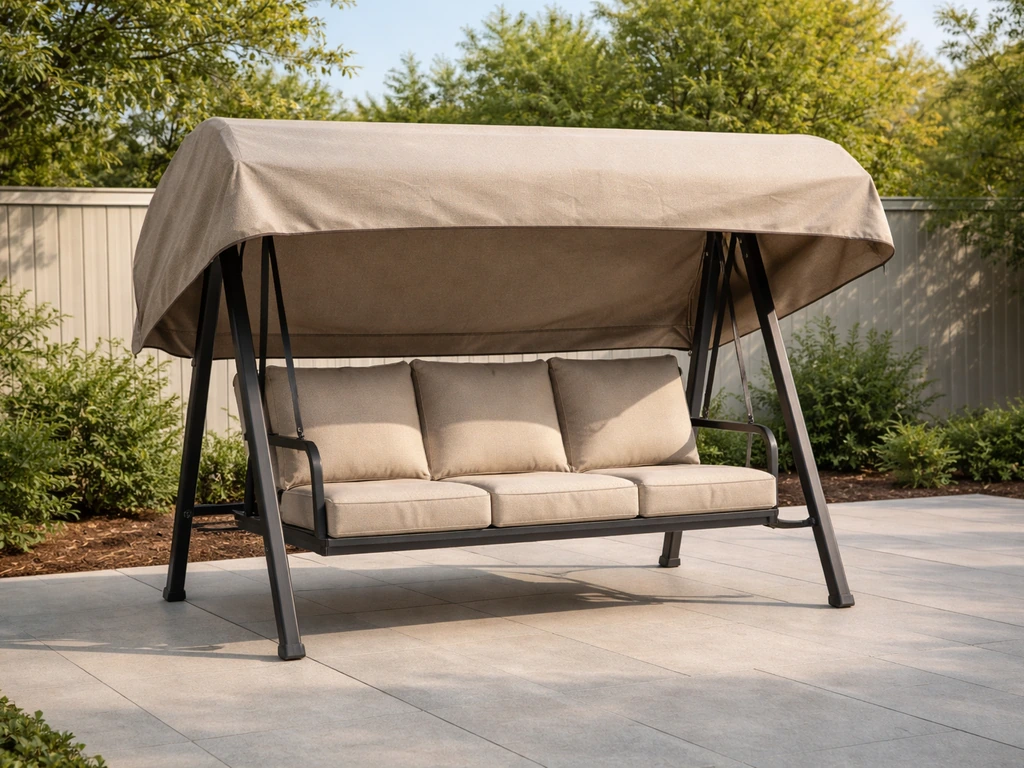
Patio Swing Top Cover Guide: Measure, Choose, Install
Measure and install a patio swing top cover to protect your swing from rain, UV, snow, and debris.
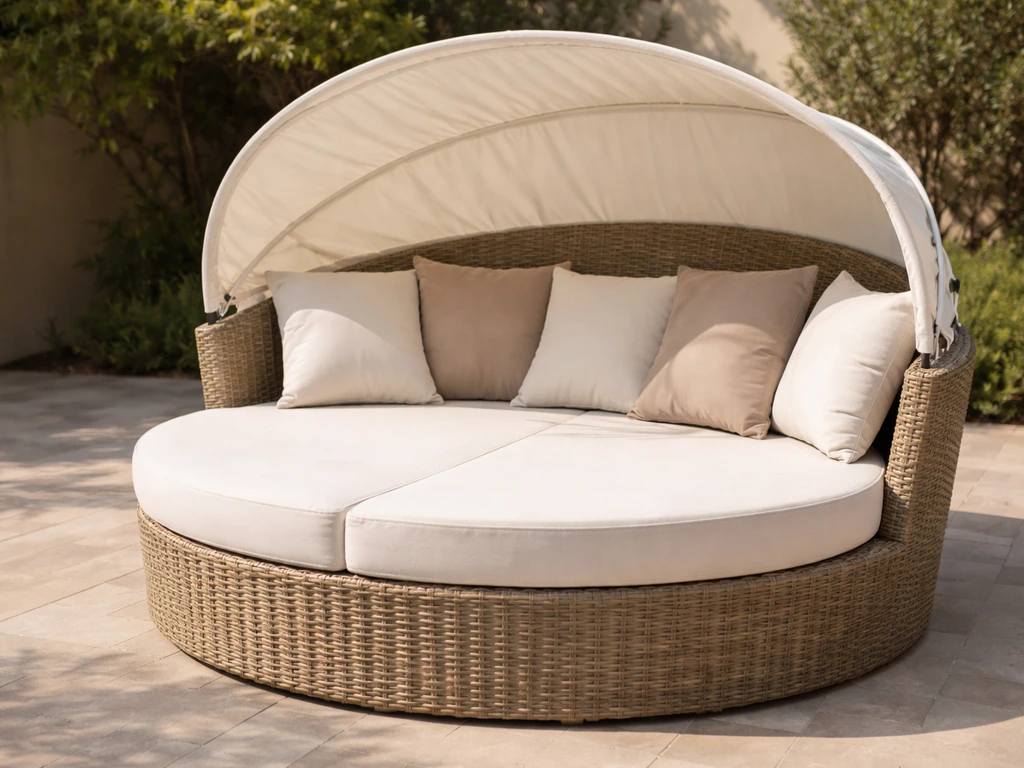
Patio Rattan Daybed with Retractable Top Canopy: How to Choose
Choose a patio rattan daybed with retractable canopy: size, canopy type, weatherproof rattan, comfort, and care tips.
Best Sunbrella Patio Cushions: Top Picks, Guide & Maintenance
Find the best Sunbrella patio cushions: durable, fade‑resistant picks, buying tips, care, and top recommendations.