
The best outdoor patio furniture covers are breathable, water-resistant (not just waterproof), and sized to fit your specific furniture with at least an inch of clearance on each side. For most people, a heavyweight woven polyester cover with a laminated backing, elastic hem cord, and click-close wind straps will handle rain, UV fading, and seasonal storage better than any fully sealed waterproof option. The single biggest mistake people make is buying a fully waterproof but non-breathable cover, which traps condensation underneath and causes exactly the mold and mildew damage they were trying to prevent.
Best Outdoor Patio Furniture Covers: Buy Guide and Sizes

Lark Perry
15 May 2026
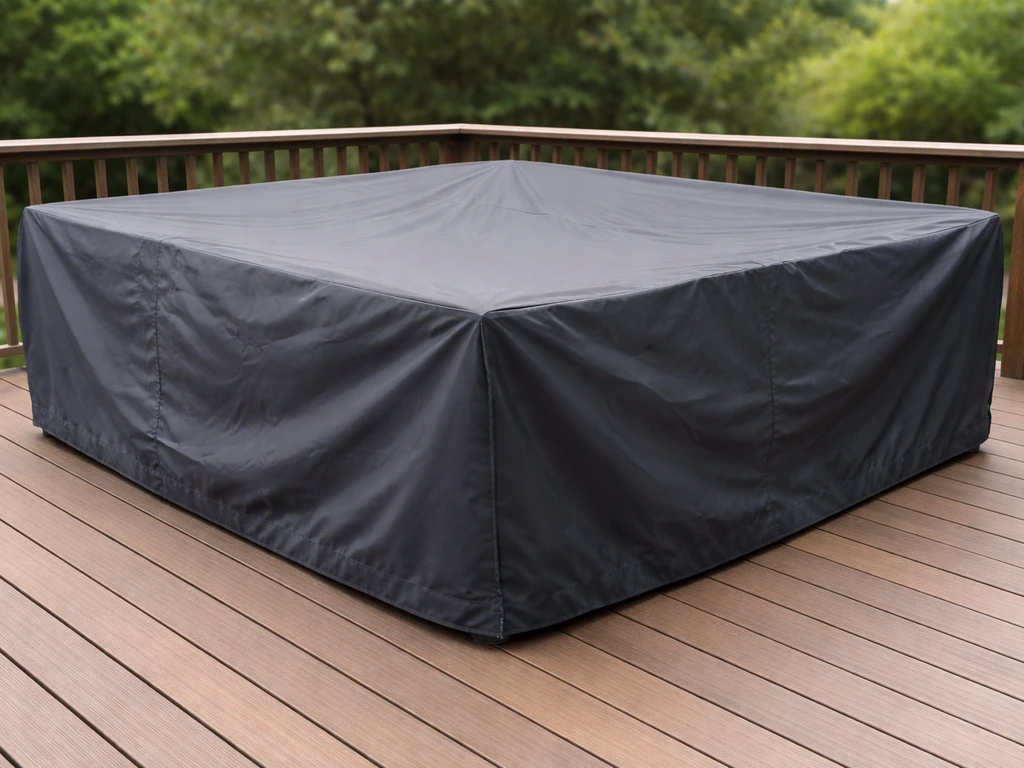
How to pick the right cover type for your setup
Before you start comparing brands, you need to decide what you're actually covering. The category you buy in changes everything, from sizing to material priorities to how you install it. If you want the fastest way to choose, these tips and fit principles make it easy to land on the best covers for patio furniture for your specific setup.
Full furniture set covers
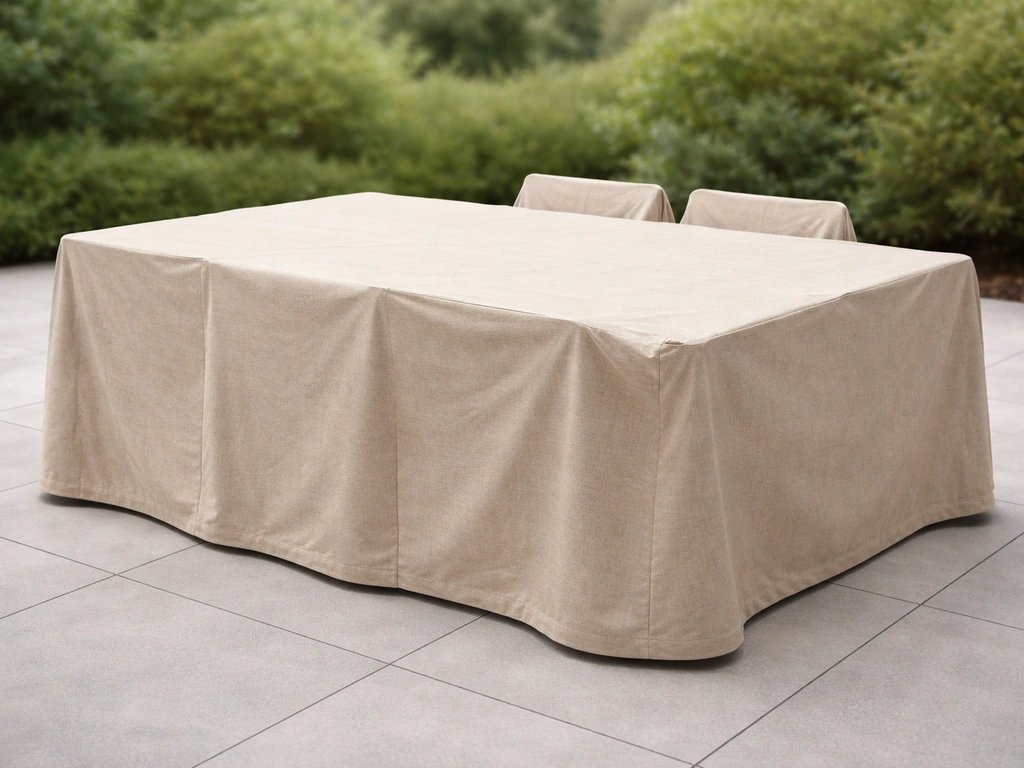
If you have a matching dining set, sectional, or lounge group, a full-set cover is usually the most practical choice. It drops over the entire arrangement in one piece, which means faster coverage and fewer gaps. The key here is geometry: rectangular covers work for straight-edged dining sets and sofas, round covers fit bistro sets and circular dining tables, and L-shaped or sectional-specific covers are built for corner configurations. Mismatching the cover shape to your furniture shape leaves pockets and exposed edges where rain and UV can work their way in.
Individual chair covers
Chair covers make sense when you store chairs separately, have mismatched seating, or want to cover only part of your set during shoulder seasons. They're also useful if you have high-value accent chairs you're more protective of. Look for covers that account for armrests in the width measurement, since many generic chair covers are sized for armless chairs and will pull tight or leave the arms exposed on anything wider.
Table covers
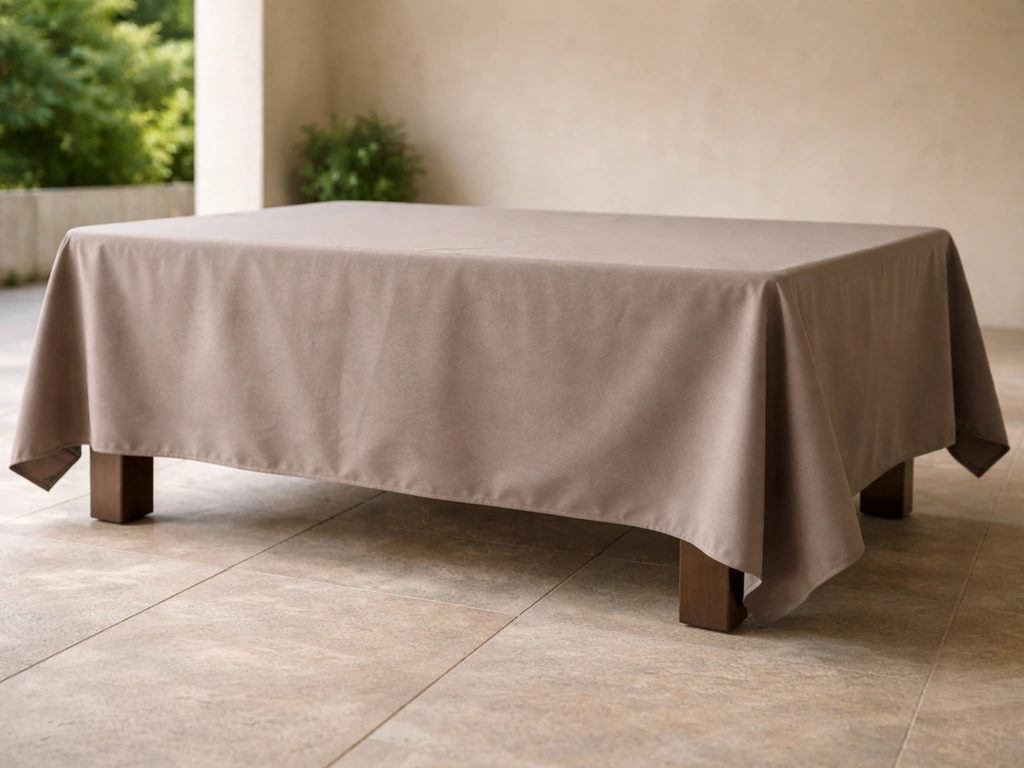
Table-only covers are ideal when your chairs are stackable and easy to store, but the table itself is heavy or fixed. For dining tables, you'll want a cover that reaches down to or just above the ground on all sides to keep rain from splashing up underneath. For pedestal tables, make sure the cover's hem accommodates the base without bunching.
Covered patio solutions (pergolas and canopy systems)
If you're thinking about an outdoor covered patio rather than individual furniture covers, you're in a different category entirely. Pergolas with fixed canopy panels, like the Trex Pergola ShadeRight polycarbonate system, protect the entire seating area overhead and can block up to 99.5% of UV A and B rays while handling rain and snow. This is a permanent or semi-permanent investment that runs well above the cost of furniture covers, but it eliminates the daily hassle of covering and uncovering individual pieces. If you're on the fence, ask yourself how often you actually put covers on your furniture. If the answer is "not consistently," a patio shelter structure might give you better real-world protection. If you want a more convenient option for keeping seating protected under changing weather, king do way patio furniture covers are worth considering for covered-patio use.
Materials and weather protection: what the specs actually mean
Cover material is the most technically confusing part of this purchase, but once you understand one key distinction, everything else falls into place: waterproof and breathable are not mutually exclusive, and the best covers try to be both.
Waterproof vs. water-resistant: why fully sealed can backfire
Fully waterproof, non-breathable covers stop rain from getting in from the outside, but they also stop any moisture vapor from escaping from the inside. Temperature swings between day and night create condensation under the cover, and that trapped moisture sits directly on your furniture. Over a season, you'll find mold, mildew, and rust even though the cover never leaked. Coverstore has written extensively about this, warning specifically against waterproof-but-non-breathable designs for exactly this reason. Water-resistant covers with a breathable construction allow that vapor to escape while still shedding rain during a storm. Gloster's protective covers documentation describes this well: a small amount of moisture can penetrate a breathable cover, but the benefit is significantly reduced dampness, condensation, and heat buildup underneath.
The best fabric constructions for outdoor covers
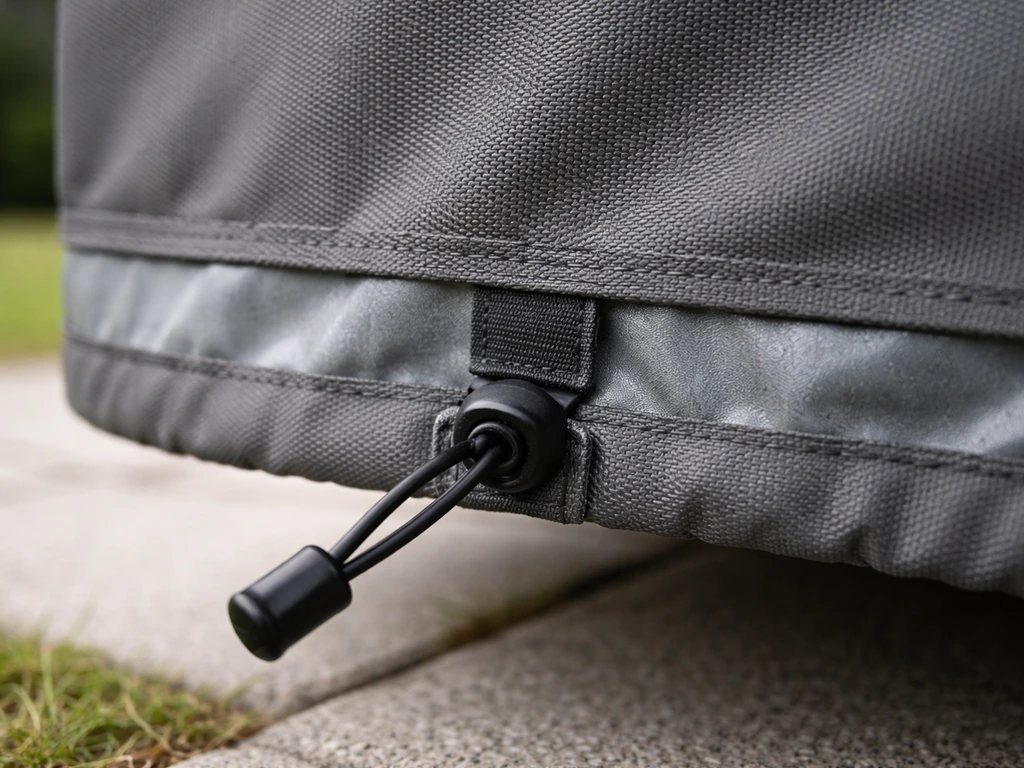
The current sweet spot in cover materials is a heavyweight woven polyester outer layer with a water-resistant laminated backing. Classic Accessories uses this approach in their Gardelle fabric system: woven polyester on top, laminated water-resistant backing underneath, and for some lines a splash-guard skirt at the hem. Eevelle's Marinex marine-grade fabric takes it further with solution-dyed 600D polyester, UV treatments, and antimicrobial additives built into the fiber, making it genuinely resistant to sun damage and mold rather than just shedding water.
| Material Type | Water Protection | Breathability | UV Resistance | Best For |
|---|---|---|---|---|
| Lightweight polyester (budget) | Water-resistant | Moderate | Low | Mild climates, seasonal use |
| Heavyweight woven polyester with laminated backing | Water-resistant to waterproof | Moderate to high | Good | Most homeowners, year-round use |
| Solution-dyed 600D polyester (marine-grade) | Waterproof and breathable | High | Excellent | Harsh climates, coastal areas, full-season exposure |
| Polycarbonate canopy panels (pergola system) | Rain/snow rated | N/A (overhead) | Up to 99.5% UV block | Permanent covered patio setups |
Sun and UV protection
UV fading is a slower killer than rain, but it's just as real. Light-colored fabrics on cushions and resin wicker fade significantly after two or three seasons of direct sun exposure without protection. Look for covers that explicitly state UV treatment or UV resistance in their specs, not just water resistance. Marine-grade fabrics like Eevelle's Marinex have UV inhibitors built into the dye process, which holds up much longer than a surface UV coating that can wear off after repeated washing.
Wind performance
Wind is the reason covers fail in practice even when the material is good. A cover that fits loosely will billow, catch air, and eventually blow off or tear at the hem. Cover weight helps, but the real solution is a combination of elastic hem cords, toggle adjusters, and click-close straps that anchor the cover to the furniture frame. Without at least one of these, expect to be chasing your cover across the yard after the first real storm.
Sizing and fit: how to measure so you actually get coverage
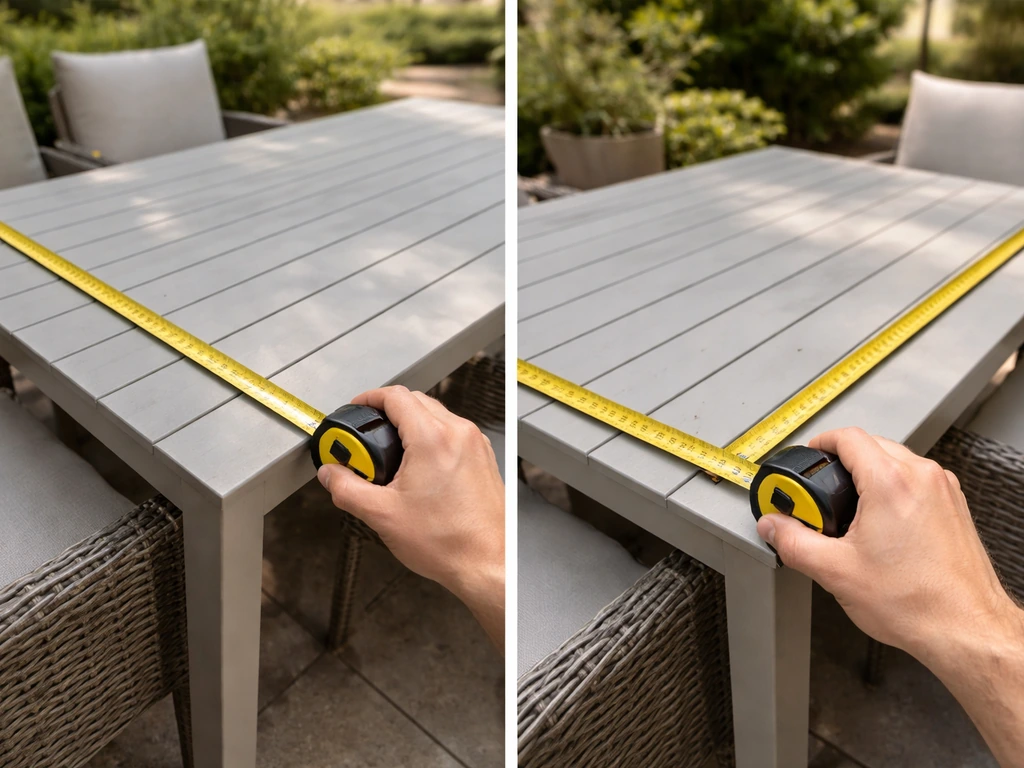
Most covers are sized to the furniture dimensions, not the cover's outer dimensions. That means a cover listed as 120 inches long is meant for furniture up to 120 inches, and the cover itself will be slightly larger to accommodate. When in doubt, check the manufacturer's sizing notes, because this varies by brand.
How to measure your furniture correctly
- Measure length from the outermost point to the outermost point, including any extended legs, armrests, or overhangs.
- Measure width at the deepest point, again including armrests or protruding cushions.
- Measure height from the ground to the tallest point (back of chair, top of umbrella base, or table surface).
- Round every measurement up to the nearest inch.
- If your furniture is arranged as a set, measure the entire footprint of the arrangement as if it were one object.
For sectional covers, measure the longest side and the deepest side of the L-shape separately, then find a cover that matches or slightly exceeds both dimensions. Cutting corners here is where most people end up with a cover that looks right on one side but leaves a foot of chair exposed on another.
Account for leg clearance and airflow
If you're buying a cover that reaches to the ground, make sure the hem length accounts for furniture leg height. IKEA's installation guidance for their outdoor furniture covers recommends leaving the cover slightly open at the bottom to allow air circulation, which is a practical anti-condensation move worth adopting regardless of which cover you buy. A cover that's sealed tight at the ground with no airflow underneath is asking for moisture problems.
Covered patio sizing (pergola and canopy)
For pergola or canopy covers, measure the total patio footprint you want covered, then add at least 12 to 18 inches on each side for weather overhang. A canopy that exactly matches your seating area will let rain blow in at the edges. Most freestanding pergola kits come in standard sizes (10x10, 10x12, 12x16, etc.), so measure your space and choose the next size up if you're between standard dimensions.
Features that actually make a difference
Cover marketing is full of words like "heavy duty" and "premium" that don't tell you much. These are the specific features worth checking for before you buy.
- Elastic hem cord with toggle: Allows you to cinch the cover's bottom edge tight to the furniture frame, closing the gap that wind exploits to lift the cover.
- Click-close buckle straps: Snap around furniture legs or bases to physically anchor the cover. Classic Accessories' Veranda line uses these alongside elastic hem cords for a two-point wind defense.
- Adjustable tie-down cords or grommet holes: Some covers include pass-through cords at the bottom that you can thread under furniture legs or tie to ground stakes in very windy areas. KoverRoos instruction manuals specifically address this for high-wind situations.
- Air vents: Mesh or reinforced vent panels near the top of the cover allow air to pass through, reducing ballooning in wind and cutting down on heat and condensation buildup underneath.
- Non-scratch interior liner: Furniture with painted finishes, lacquer, or powder coating can get scuffed by rough polyester fabric. A soft fleece or non-woven liner on the inside of the cover prevents contact marks.
- Zipper access panels: Useful for covers on furniture with fixed base structures, like fire pit tables or heavy dining tables, so you can access the base or storage compartment without removing the entire cover.
- Splash guard skirt: A reinforced lower skirt that sits at ground level to deflect rain splash-up. Classic Accessories includes this on several Veranda covers.
- Seam tape or welded seams: Sewn seams are a weak point for water intrusion. Taped or welded seams on the top panel eliminate this.
Best picks by category
These recommendations are based on material quality, real-world feature sets, and how well they address the common failure points described above. This isn't an exhaustive review of every brand, but a starting point for each major category. For more in-depth comparisons of specific top-rated products, the best rated patio furniture covers and best covers for patio furniture guides on this site go deeper on brand-by-brand performance.
Best full furniture set cover: Classic Accessories Veranda line
The Veranda series from Classic Accessories hits the right balance for most homeowners. The Gardelle fabric system gives you a water-resistant but breathable outer shell, the click-close straps and elastic hem cord handle wind reliably, and the splash guard skirt at the base deflects ground-level rain. It's available in multiple shapes including round, rectangular, and sectional configurations, which solves the geometry-matching problem for most common furniture arrangements. It's not a marine-grade material, but for typical residential use with seasonal exposure, it's more than adequate.
Best for harsh or coastal climates: Eevelle Marinex covers
If you're in a climate with heavy rain, strong UV, salty air, or year-round outdoor exposure, the step up to Eevelle's Marinex marine-grade fabric is worth it. The solution-dyed 600D polyester with built-in UV inhibitors and antimicrobial treatment addresses the failure modes that cheaper covers can't. It's more expensive, but when you're leaving furniture uncovered year-round in a coastal environment, the replacement cost math favors a premium cover.
Best chair covers: KoverRoos
KoverRoos has been making breathable fabric furniture covers for decades and their chair-specific options are particularly well-designed. The emphasis on breathability is baked into their product DNA (it's literally the headline topic of their instruction manual), and the elastic and cord systems at the base give a secure fit on chairs that tend to move around. They're not the flashiest covers on the market, but they're reliable and hold up well across multiple seasons.
Best table covers: Coverstore custom and standard options
Coverstore's table covers stand out because they offer both standard and custom sizing, which matters a lot for tables with unusual dimensions. Their fabric philosophy explicitly prioritizes breathable, water-resistant construction over fully sealed waterproofing, which aligns with what actually works long-term. If your table is a non-standard size, their custom covers (worth exploring in the best custom patio furniture covers guide on this site) eliminate the fit compromises you'd make with an off-the-shelf option.
Best covered patio solution: Trex Pergola with ShadeRight canopy
For anyone looking at a whole-patio shelter rather than individual furniture covers, the Trex Pergola ShadeRight Fixed Canopy system is a serious option. Polycarbonate panels that block 99.5% of UV A and B rays, combined with rain and snow protection, turn your patio into a genuinely protected outdoor room. It's a permanent installation and the cost is substantially higher than any furniture cover, but you stop thinking about covers entirely and get year-round usability out of a space that would otherwise sit empty half the year.
Maintenance and care: keeping your covers working longer
Cleaning
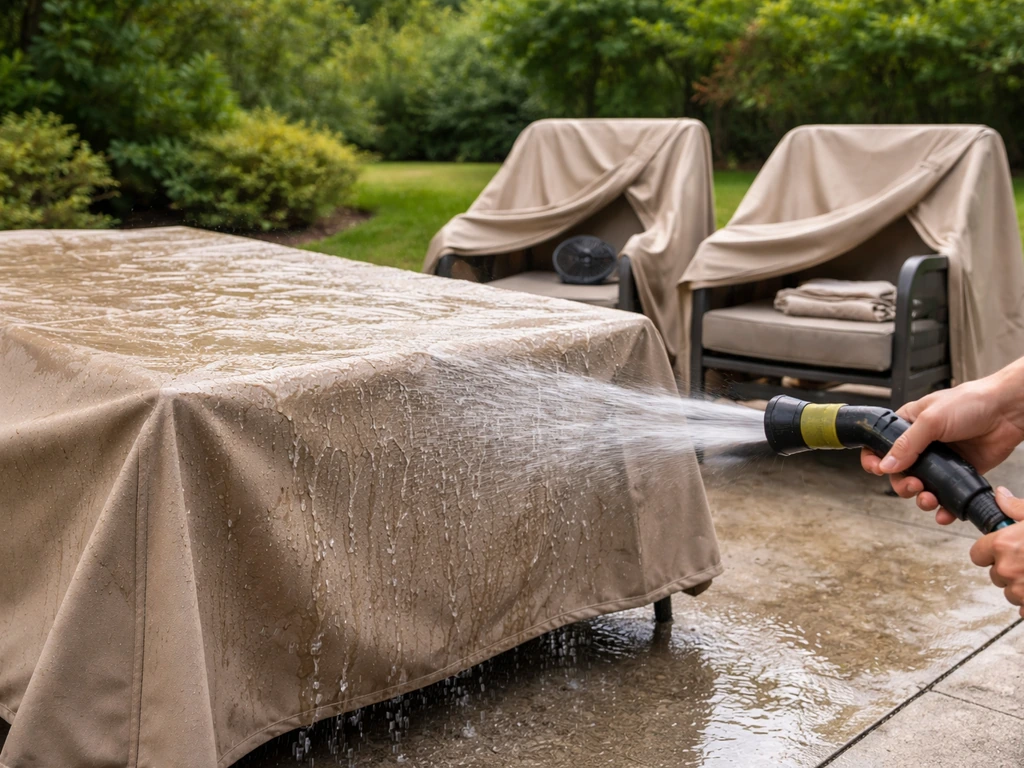
For most covers, a thorough rinse with a garden hose handles routine dirt and pollen. For actual grime or mildew spots, mild soap and water with a soft brush does the job. Do not use bleach, solvent-based cleaners, or pressure washers, as these break down the fabric's water-resistant coating faster than normal wear would. Classic Accessories specifically recommends air drying only, no machine drying, which applies to virtually every cover on the market. Putting a cover in a dryer will shrink the hem cord, warp any laminated backing, and generally shorten its life significantly.
Preventing mold and mildew
The two most effective things you can do are: choose a breathable cover in the first place, and remove it after extended wet periods to let the furniture underneath dry out before re-covering. Coverstore's care guidance is explicit about this, and it's the single most overlooked maintenance step. Leaving a cover on for two weeks after a rainy stretch, sealed tight against the furniture, is how you end up with mold even on expensive teak. After heavy rain, lift the cover, let the furniture air out for a few hours, then recover once everything is dry.
Off-season storage
If you're storing covers during winter or the off-season, make sure they are completely dry before folding and storing. Storing a damp cover in a bag or bin is a guaranteed way to open it in spring to a mildew problem. Most covers fold flat and fit in a large storage bag or bin. Store them out of direct sunlight if possible, since UV degrades the fabric coating even when the cover isn't in use.
When to replace your cover
Most mid-grade covers last 3 to 5 years with proper care, and premium marine-grade covers can go 7 or more. Signs it's time to replace: the fabric has cracked or peeled at the seams, water soaks through rather than beading, the elastic hem cord has lost all tension, or you notice mildew that won't clean off. A cover that's lost its water-resistant coating is actively holding moisture against your furniture, which is worse than no cover at all during wet weather.
Budget vs. premium: what you actually give up
Budget covers in the $20 to $50 range usually use thinner, lighter-weight polyester that fades and cracks faster, minimal or no tie-down systems, and non-breathable coatings. They work fine for mild climates with light seasonal use, especially if you're covering furniture that's being stored in a garage or shed anyway. If your furniture is sitting outside all year in a rainy or sunny climate, a budget cover will typically last one to two seasons before the coating fails.
| Price Range | Typical Material | Wind Security | Breathability | Expected Lifespan | Best For |
|---|---|---|---|---|---|
| $20–$50 (budget) | Thin polyester, basic coating | Minimal (drawstring only) | Low | 1–2 seasons | Mild climates, garage storage, short-term use |
| $50–$100 (mid-range) | Heavyweight woven polyester, laminated backing | Elastic hem + straps | Moderate | 3–5 seasons | Most homeowners, moderate climates |
| $100–$200 (premium) | 600D polyester or proprietary fabric systems | Multi-point straps + elastic hem | High | 5–7 seasons | Harsh climates, high-value furniture, year-round exposure |
| $200+ (marine/custom) | Marine-grade solution-dyed polyester or custom fabric | Full anchoring systems | High | 7+ seasons | Coastal areas, premium furniture, permanent setups |
The math on this is usually straightforward. If your patio furniture cost $800 or more, spending $80 to $150 on a good cover is an obvious value play. If you have a basic $200 bistro set and live somewhere with mild winters, a $30 cover replaced every couple of years is perfectly reasonable. Where people consistently overspend is on cheap covers for expensive furniture, then wonder why the wicker or cushions are faded and damaged after two years. The cover is maintenance, not an accessory, and it should scale with what it's protecting.
If you're on the Canadian market or looking for region-specific options, the best patio furniture covers Canada guide on this site covers availability and climate-specific considerations. And if you want the most precise fit possible for an oddly shaped set, the best custom patio furniture covers guide walks through that process in detail. The core principles, breathable materials, secure fit, and proper sizing, stay the same regardless of where you buy.
FAQ
Are waterproof patio furniture covers ever a good choice?
They can work for short-term storms, but for seasonal storage choose a breathable, water-resistant design. If you must use a waterproof style, don’t leave it sealed tightly for weeks after rain, lift it periodically to air out the furniture, and expect faster condensation when nights get cold.
How much clearance should I leave when sizing my cover?
Aim for at least about an inch of side clearance for proper tension and to reduce flapping. More clearance can still be fine if the cover has elastic hem cord and secure straps, but if it’s loose without anchors, wind will create gaps where water and UV reach the furniture.
Should the cover touch the ground, or is an open bottom better?
An open or slightly lifted bottom usually reduces condensation by allowing airflow underneath. If your cover is fully sealed against wet surfaces, moisture can stay trapped even when the fabric does not leak, which increases mold and rust risk over time.
What’s the best way to prevent wind from lifting the cover?
Use multiple anchor points, elastic hem cord, and click-close or toggle straps that attach to a frame or furniture legs. If your set has no solid structure to strap to, consider adding tie-down cords through designated grommets rather than relying on friction alone.
Can I use one cover for a mixed set (like chairs plus a table) ?
Sometimes, but only if the cover shape and dimensions match the overall footprint. Mixing chair types or leaving extra protrusions often creates pockets where rain pools, so it’s usually better to use a full-set cover with the right geometry or use separate chair and table covers.
Do I need UV protection if my cover is already water-resistant?
Yes, UV protection matters even if water resistance is excellent. Look for covers that explicitly mention UV resistance or UV-treated fabric, because some coatings help with rain but still allow fading of cushions and resin wicker in direct sun.
How often should I remove outdoor patio furniture covers after rain?
After extended wet periods, lift the cover for a few hours so the furniture can dry before re-covering. A practical routine is to check 24 to 48 hours after heavy rain, especially in humid or coastal climates where drying can be slow.
Is it safe to pressure-wash patio furniture covers to clean them?
No, avoid pressure washers and harsh solvents, they can damage laminated backings and reduce the water-resistant coating. Use a garden hose rinse for routine debris, and mild soap with a soft brush for spots, then air dry.
Can I machine dry or tumble dry my cover?
Usually not. Heat and tumbling can shrink or distort hem systems and warp the laminated layers, which makes the cover fit worse and lets wind in sooner. Air drying is the safer default for most covers.
What are the most common sizing mistakes with sectional covers?
People often measure only one side of the L-shape or ignore depth. Measure the longest side and the deepest side separately, then pick a cover that meets or slightly exceeds both dimensions to avoid exposed chair sections.
Should I store patio furniture covers folded or rolled?
Fold flat if possible, keep them completely dry, and store in a breathable bag or bin if your storage area is humid. Rolling can stress seams and hem cords, and storing damp covers in sealed containers often leads to mildew problems by spring.
How do I know when it’s time to replace my patio furniture cover?
Replace it when water no longer beads and instead soaks through, seams crack or peel, the hem cord no longer has tension, or mildew persists after cleaning. If you see the water-resistant layer failing, the cover can worsen moisture retention compared to leaving furniture uncovered briefly.
How long should I expect the best outdoor patio furniture covers to last?
With proper care, mid-range covers often last around 3 to 5 years, while marine-grade options can last 7 years or longer. Lifespan drops faster if the cover is left on through repeated rainy weeks without airing out, or if it’s exposed to constant direct sun.
Are budget patio furniture covers still worth buying?
Yes for mild climates or when the furniture is moved to a garage or shed part of the season. If the set stays outside year-round in heavy sun or rain, budget covers typically fail sooner due to thinner fabric, weaker tie-downs, and coatings that degrade faster.
Do custom covers actually fit better than standard sizes?
They fit best for unusually shaped sets or odd table dimensions where standard listings force you into compromises. If the article’s standard sizes leave extra gaps, custom sizing can reduce exposed edges and improve wind retention.
Citations
A cover’s fit is emphasized as a primary determinant of protection quality; measuring the furniture correctly helps ensure coverage and reduces exposed edges that can admit rain/UV.
https://www.coverstore.com/pages/how-to-measure-sectional-set
Cover sizing guidance for sectionals includes measuring from the deepest/widest points and rounding up to the nearest inch to get a better fit (cover dimensions refer to furniture dimensions).
https://www.coverstore.com/pages/how-to-measure-sectional-set
Regular (non-custom) “full set” coverage is typically achieved by choosing a rectangular/oval cover for straight-edged sets and a specific shape for round items; mis-matched geometry leads to gaps.
https://www.lowes.com/n/buying-guide/types-of-outdoor-furniture-covers
IKEA explicitly notes a condensation-control practice for outdoor furniture covers: leave the cover open slightly at the bottom to permit air circulation to prevent condensation from forming.
https://www.ikea.com/us/en/p/tosteroe-cover-for-outdoor-furniture-table-and-chairs-black-70532340/
Classic Accessories describes its Gardelle™ fabric system as a heavyweight woven polyester top with a water-resistant laminated backing (and for Veranda, a protective dark splash guard skirt).
https://classicaccessories.com/products/veranda-water-resistant-128-inch-round-general-purpose-patio-furniture-cover-56-087-011501-00-color-pebble-bark-earth
Classic Accessories’ Veranda line includes multiple wind/security elements: click-close straps that snap to secure on windy days plus an elastic hem cord for a tight/custom-like fit.
https://classicaccessories.com/products/veranda-water-resistant-128-inch-round-general-purpose-patio-furniture-cover-56-087-011501-00-color-pebble-bark-earth
Eevelle’s Marinex marine-grade fabric is described as solution-dyed 600D polyester with UV and antimicrobial treatments, positioned for resistance to sun damage and elements.
https://eevelle.com/weather-control-fabrics/
Eevelle’s Marinex fabric (example: W1 cover described in Eevelle’s Marine Gear content) is described as waterproof/breathable to prevent mildew and mold.
https://legacy.eevelle.com/home/marine/
Coverstore’s product philosophy explicitly warns against “waterproof but non-breathable” designs because trapped moisture can cause mold growth; it recommends breathable/water-resistant designs.
https://www.coverstore.com/patio-furniture-covers
Coverstore states that waterproof covers can still result in condensation/dew beneath the cover; it recommends seeking water-resistant AND breathable covers that allow any moisture to evaporate.
https://www.coverstore.com/blogs/news/dispelling-myth-waterproof-covers
Gloster’s protective covers guidance ties breathable construction to moisture handling: due to breathable construction, a small amount of moisture can penetrate the cover and the benefit is reduced dampness/condensation and heat build-up.
https://www.gloster.com/media/files/care-and-maintenance/en-us/Protective%20Covers.pdf
Coverstore gives a practical condensation/mold prevention practice: removing the cover after prolonged wet periods and thoroughly drying furniture before re-covering helps prevent mold/mildew.
https://www.coverstore.com/faq
KoverRoos instruction manual emphasizes breathability and includes tie-down adjustment guidance; it references adjustable elastic/cord systems to reduce sag and mentions grommet holes/cords at the bottom.
https://d23zy84q2vn4qy.cloudfront.net/PDF/KoverRoosPDFs/Koverroos_Instructions.pdf
Classic Accessories describes wind-ready fit features for Veranda covers: click-close straps and elastic hem cord with toggle adjustment for tight fit.
https://classicaccessories.com/products/veranda-water-resistant-128-inch-round-general-purpose-patio-furniture-cover-56-087-011501-00-color-pebble-bark-earth
IKEA includes a specific anti-condensation installation practice (leave cover slightly open at bottom for airflow) rather than sealing completely at the ground.
https://www.ikea.com/us/en/p/tosteroe-cover-for-outdoor-furniture-table-and-chairs-black-70532340/
Coverstore recommends cleaning approach for patio covers: rinse thoroughly with a garden hose for general cleaning, use mild soap, and ensure the cover is completely dry before storing or reusing.
https://www.coverstore.com/blogs/news/how-to-clean-outdoor-furniture-covers
Coverstore’s cover care page recommends cleaning with mild soap/water and using its listed fabric-care/nanoprotector products; it also emphasizes letting covers air dry before reassessment and reuse.
https://www.coverstore.com/pages/cover-care
Classic Accessories support states for its covers: ‘Air dry only.’
https://support.classicaccessories.com/hc/en-us/related/click?data=BAh7CjobZGVzdGluYXRpb25fYXJ0aWNsZV9pZGwrCD9n%2F9RTADoYcmVmZXJyZXJfYXJ0aWNsZV9pZGwrCJSlPVQ9BDoLbG9jYWxlSSIKZW4tdXMGOgZFVDoIdXJsSSI9L2hjL2VuLXVzL2FydGljbGVzLzM2MDA1NTc5MzQ3MS1Ib3ctZG8tSS1jbGVhbi1teS1jb3ZlcnMGOwhUOglyYW5raQk%3D--b7994b17a35e8173353c73eacdc8964552ca0b5b
KoverRoos instructions include durability-related weather protection language and focus on maintaining ‘optimal breathability’ (instruction manual headline topic).
https://d23zy84q2vn4qy.cloudfront.net/PDF/KoverRoosPDFs/Koverroos_Instructions.pdf
For outdoor shelter alternatives to covers, a freestanding/permanent solution is often a fixed canopy/pergola system; Trex Pergola’s ShadeRight Fixed Canopy system claims panels block 99.5% of UV A/B rays and is positioned as rain/snow/sun protection.
https://trexpergola.com/shaderight-polycarbonate-canopy/
Next Articles
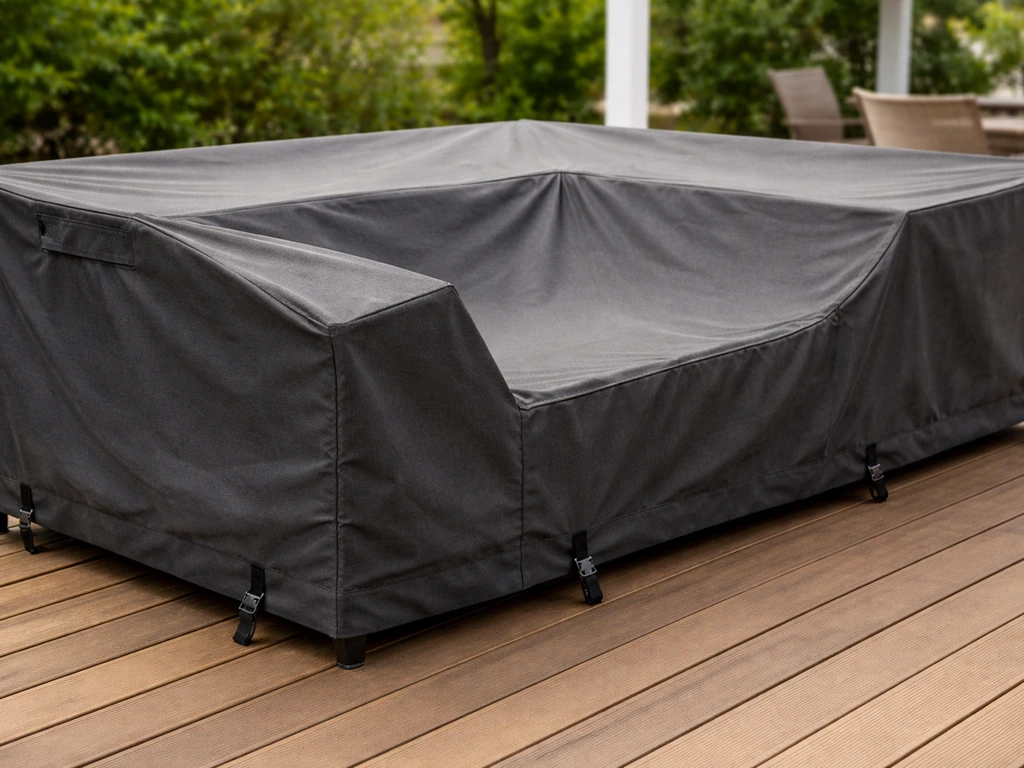
Best Covers for Patio Furniture: Buying Guide and Sizing Tips
Choose the best patio furniture covers with proper sizing, waterproof vs breathable types, wind security, UV and care ti
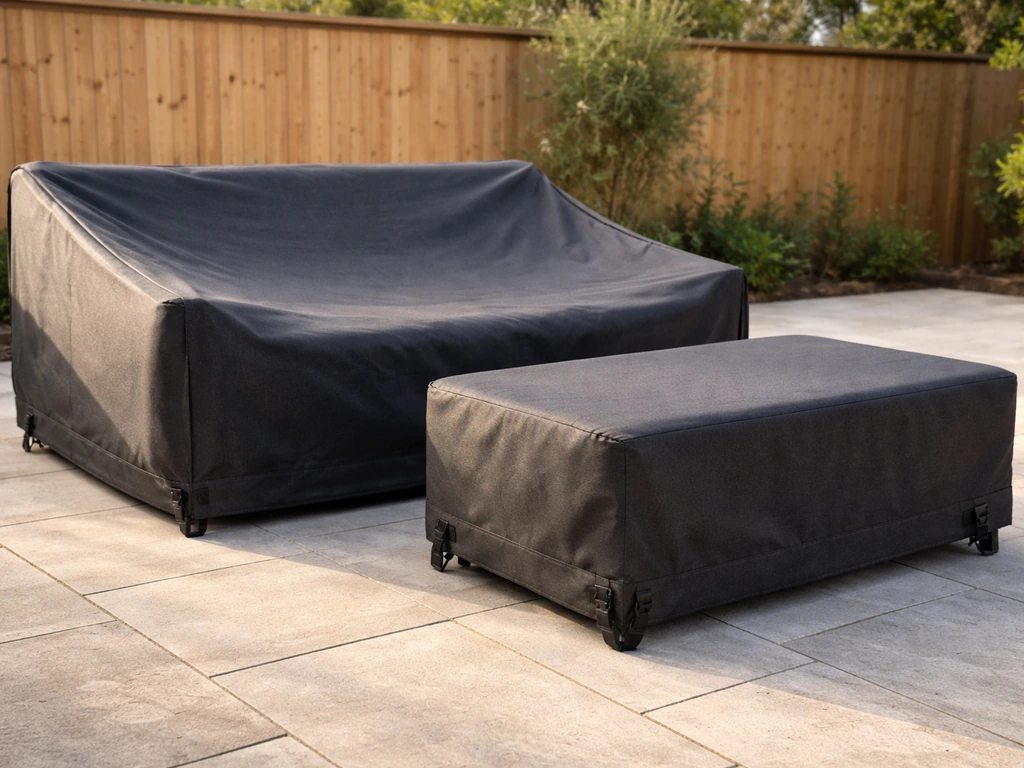
Best Rated Patio Furniture Covers: Buying Guide and Tips
Choose best rated patio furniture covers with fit, materials, waterproofing, UV and wind features, plus measuring and ca
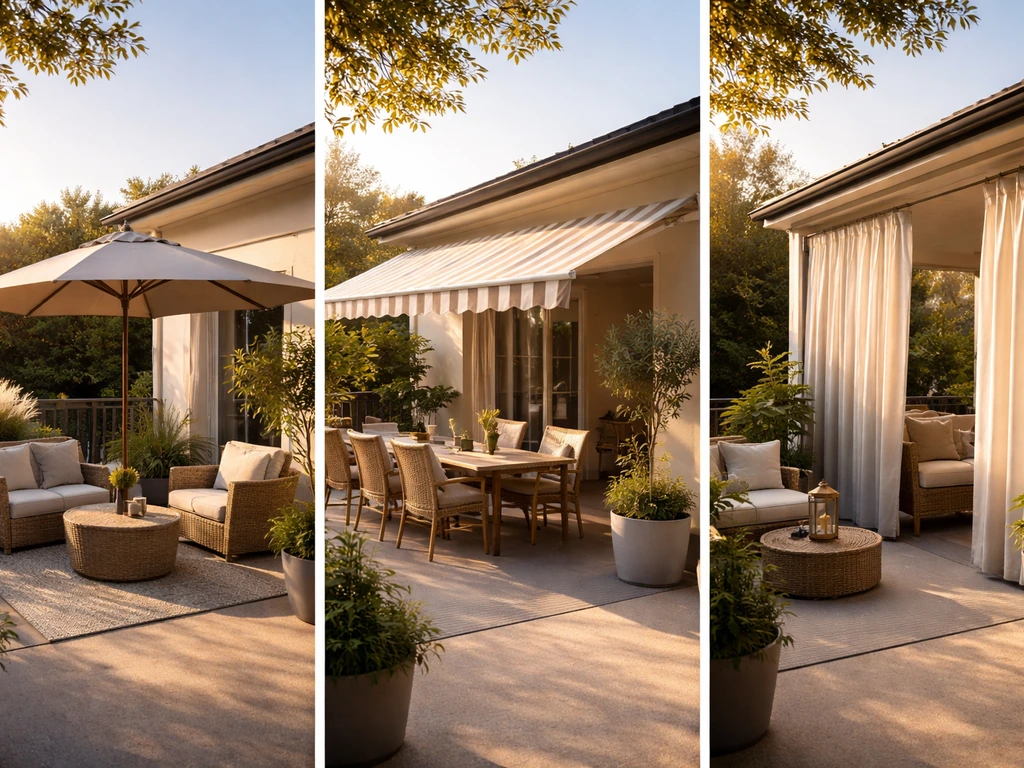
Best Outdoor Patio Shades: How to Choose the Right One
Compare best outdoor patio shades by sun blocking, coverage, wind proofing, privacy, and renter friendly setup to choose